
No products in the cart.
AI SEO Automated Keyword Clustering: The Complete Guide to Smarter Content Architecture

10
Aug
Aug
Search engine optimization has evolved far beyond simple keyword matching. Modern SEO professionals face thousands of search terms, each with subtle intent variations. AI SEO automated keyword clustering has emerged as the definitive solution to organize this chaos into structured, actionable groups. This technology uses machine learning algorithms to analyze search queries, identify semantic relationships, and group related keywords into clusters that inform content strategy, site architecture, and internal linking. By leveraging artificial intelligence, marketers can now process vast datasets in minutes, uncovering patterns that would take weeks to identify manually. This comprehensive guide explores how automated keyword clustering works, why it matters, and how to implement it effectively in your SEO workflow.
Understanding AI SEO Automated Keyword Clustering
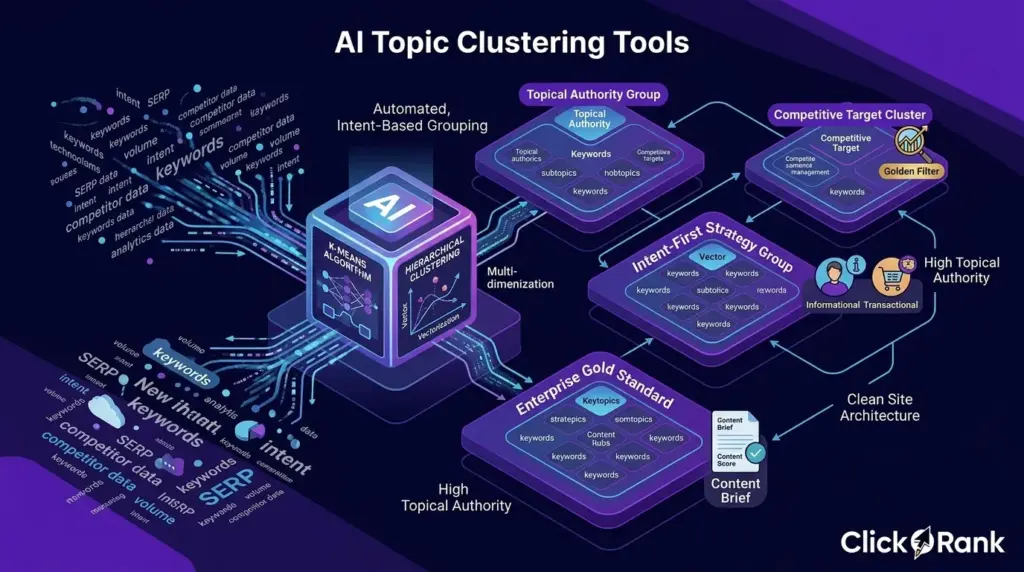
Keyword clustering is the process of grouping search queries that share similar search intent, topic relevance, or semantic meaning. Traditional clustering relied on manual analysis or basic spreadsheet sorting. AI-powered automation transforms this process by applying natural language processing (NLP) and machine learning models to understand the context, user intent, and topical relationships between keywords.
The core principle behind AI SEO automated keyword clustering is that search engines like Google use semantic understanding to match queries with content. When you group keywords that share intent, you create content that satisfies multiple search variations simultaneously. This approach aligns perfectly with how modern search algorithms evaluate topical authority and content comprehensiveness.
How AI Algorithms Process Keyword Data
AI clustering tools analyze multiple dimensions of each keyword. They examine search volume patterns, click-through rates, SERP features, and the actual content ranking for each query. The algorithms use vector embeddings to represent keywords as mathematical points in multidimensional space. Keywords that appear close together in this space share semantic similarity and get grouped into clusters.
Natural language processing models like BERT and GPT have revolutionized this process. These models understand the meaning behind words, not just the words themselves. For example, the query “best running shoes for flat feet” and “top sneakers for overpronation” would be clustered together because the AI understands both relate to footwear for specific foot conditions, even though they use different terminology.
Why Automated Keyword Clustering Matters for Modern SEO
The volume of search data available today makes manual clustering impractical. A typical e-commerce site might track thousands of keywords across hundreds of product categories. AI SEO automated keyword clustering handles this scale effortlessly, processing millions of data points in seconds.
Search engine algorithms have become increasingly sophisticated at understanding content depth and relevance. Single-page optimization for individual keywords no longer works effectively. Search engines now reward comprehensive content that covers entire topics. Keyword clusters provide the blueprint for creating such content, ensuring every subtopic and variation gets addressed within a cohesive content structure.
The Shift from Keywords to Topics
Google’s RankBrain and subsequent algorithm updates signaled a fundamental shift from keyword matching to topic understanding. Search results now prioritize content that demonstrates expertise across a subject area. AI SEO automated keyword clustering helps you identify these topic areas by revealing which keywords naturally belong together.
This topic-based approach improves user experience by delivering content that answers related questions comprehensively. When users find all their needs addressed in one place, they stay longer, engage more deeply, and are more likely to convert. These positive engagement signals feed back into search rankings, creating a virtuous cycle of improved visibility and user satisfaction.
Key Benefits of AI-Powered Keyword Clustering
Implementing AI SEO automated keyword clustering delivers measurable advantages across your entire SEO operation. The benefits extend beyond simple organization to impact content quality, site architecture, and overall search performance.
- Time Efficiency: What takes weeks of manual spreadsheet work gets completed in minutes. AI processes thousands of keywords instantly, freeing your team for strategic tasks.
- Improved Content Relevance: Clusters reveal the full scope of each topic, ensuring your content covers all relevant subtopics and variations.
- Better Internal Linking: Understanding which keywords relate helps you create logical link structures between pages, distributing authority effectively.
- Enhanced SERP Visibility: Content optimized for clusters ranks for multiple related queries, increasing your presence across search results pages.
- Reduced Keyword Cannibalization: Clear clustering prevents multiple pages from targeting the same keywords, eliminating internal competition.
- Data-Driven Strategy: AI analysis reveals patterns and opportunities that human analysis might miss, providing a competitive edge.
- Data Quality Matters: Garbage in, garbage out applies to AI clustering. Ensure your keyword data is accurate, complete, and up-to-date before running clustering algorithms.
- Human Oversight Remains Essential: AI provides powerful analysis, but human judgment validates results and makes final strategic decisions. Never blindly implement cluster output without review.
- Integration with Other SEO Activities: Clustering works best when combined with technical SEO, content quality, and link building. Treat clustering as one component of a comprehensive SEO strategy.
- Measure and Iterate: Track performance metrics before and after implementing cluster-based content. Use this data to refine your clustering parameters and content priorities over time.
- Consider User Experience: Clusters should serve users, not just search engines. Ensure your content architecture makes sense to human visitors navigating your site.
Measurable Impact on Search Performance
Case studies from enterprise SEO implementations show significant improvements after adopting automated clustering. Websites that reorganize their content architecture around AI-generated clusters typically see increases in organic traffic ranging from 20% to 50% within three to six months. The improvement comes from better content matching, reduced cannibalization, and more effective internal linking.
Conversion rates also benefit from clustering. When content addresses complete topics, users find answers faster and trust the source more. This trust translates into higher engagement and more conversions, whether the goal is newsletter signups, product purchases, or lead generation.
How AI SEO Automated Keyword Clustering Works
Understanding the technical process behind automated clustering helps you evaluate tools and interpret results effectively. The process involves several sophisticated steps that work together to produce meaningful keyword groups.
Data Collection and Preprocessing
The first step involves gathering keyword data from various sources. This includes search console data, keyword research tools, competitor analysis, and site analytics. The AI system cleans this data, removing duplicates, correcting misspellings, and standardizing formats. This preprocessing ensures the clustering algorithm works with high-quality input data.
Semantic Analysis and Vectorization
Each keyword gets converted into a numerical vector representation using embedding models. These vectors capture the semantic meaning of the query, including context, intent, and relationships to other concepts. The AI system compares these vectors to determine similarity scores between all keyword pairs.
Clustering Algorithm Application
Machine learning algorithms like K-means, hierarchical clustering, or DBSCAN group keywords based on their vector similarities. The AI determines the optimal number of clusters based on the data distribution and your specific goals. Some advanced tools allow you to adjust clustering sensitivity, controlling how strictly keywords must relate to be grouped together.
Cluster Validation and Refinement
After initial clustering, the system validates the results against known search behavior and SERP data. It checks whether keywords in the same cluster actually rank for similar content. The AI refines boundaries between clusters to ensure each group represents a coherent topic with clear intent.
Comparing AI Clustering with Traditional Methods

Understanding the differences between manual and automated clustering helps justify investment in AI tools. The comparison reveals significant advantages in accuracy, speed, and scalability.
| Aspect | Manual Clustering | AI Automated Clustering |
|---|---|---|
| Processing Speed | Days to weeks for large datasets | Minutes to hours regardless of volume |
| Semantic Understanding | Limited to human knowledge and intuition | Deep NLP understanding of context and intent |
| Scalability | Impractical beyond a few hundred keywords | Handles millions of keywords effortlessly |
| Consistency | Varies based on analyst experience and fatigue | Consistent algorithmic application every time |
| Insight Generation | Relies on manual pattern recognition | Identifies hidden relationships and opportunities |
| Cost Efficiency | High labor costs for skilled analysts | Predictable software costs with unlimited scale |
The comparison clearly shows that AI SEO automated keyword clustering provides superior results for any serious SEO operation. The technology has matured to the point where it outperforms even experienced human analysts in both speed and accuracy.
Practical Implementation Guide
Implementing AI SEO automated keyword clustering requires a systematic approach. Following these steps ensures you get maximum value from the technology and translate clusters into actionable SEO improvements.
Step 1: Audit Your Current Keyword Data
Begin by exporting all your keyword data from Google Search Console, your keyword research tools, and any other sources. Include search volume, difficulty scores, current rankings, and click-through rates. This comprehensive dataset provides the foundation for meaningful clustering.
Clean your data by removing branded keywords if you want to focus on non-branded opportunities. Remove keywords with extremely low search volume that offer no strategic value. Standardize your data format to ensure the AI tool processes everything correctly.
Step 2: Choose the Right AI Clustering Tool
Several excellent tools offer AI SEO automated keyword clustering capabilities. Popular options include Keyword Insights, ClusterAI, and Surfer SEO’s content planning features. Evaluate tools based on their clustering algorithms, integration capabilities, and pricing structures. Many offer free trials, allowing you to test their output quality before committing.
Consider whether you need real-time clustering or batch processing. Some tools integrate directly with Google Search Console, automatically pulling new queries and updating clusters as data changes. This automation keeps your content strategy aligned with actual search behavior.
Step 3: Configure Clustering Parameters
Set your clustering sensitivity based on your content strategy. High sensitivity creates many small, tightly focused clusters ideal for detailed content. Low sensitivity creates fewer, broader clusters suitable for pillar pages and comprehensive guides. Your site structure and content resources should guide this decision.
Define your intent categories if your tool supports this feature. Separate informational, transactional, and navigational keywords into different clusters. This separation ensures your content matches user intent at each stage of the buyer journey.
Step 4: Analyze and Validate Cluster Output
Review the clusters your AI tool generates. Check whether the groupings make logical sense from a user perspective. Look for any keywords that seem misplaced and adjust your parameters if necessary. Validate clusters against actual SERP results to confirm that pages ranking for one keyword in the cluster also rank for others.
Pay special attention to clusters with high search volume and commercial intent. These represent your most valuable content opportunities. Prioritize creating content for these clusters first to maximize return on your content investment.
Step 5: Map Clusters to Content Architecture
Translate your validated clusters into a content plan. Each cluster becomes a content topic with a primary page and supporting subtopics. Design your site architecture around these clusters, creating logical hierarchies that search engines can easily crawl and understand.
Develop internal linking strategies that connect pages within each cluster. Link from supporting pages to your main cluster page, passing authority and reinforcing topical relevance. This structure helps search engines understand your site’s expertise in each topic area.
Common Mistakes in Automated Keyword Clustering
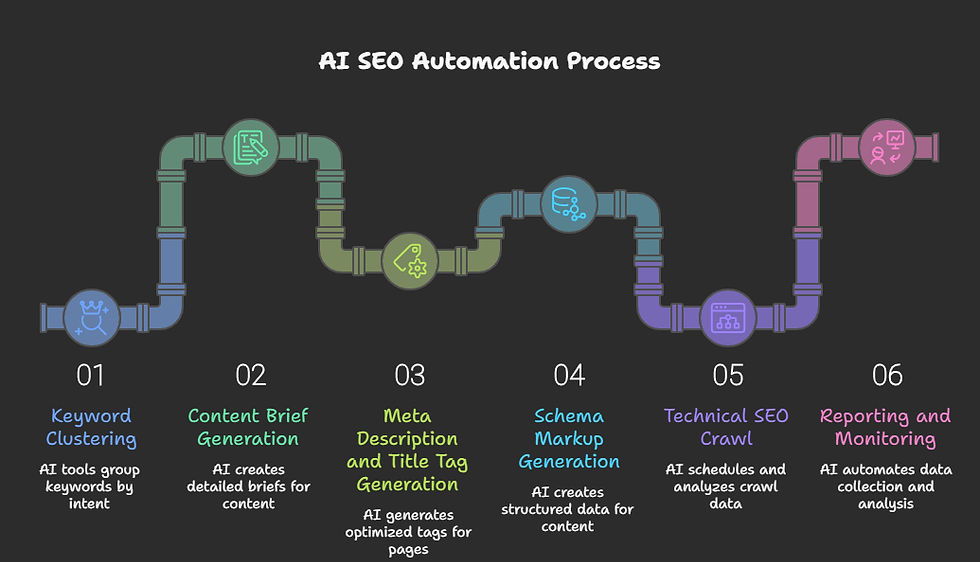
Even with powerful AI tools, SEO professionals make predictable errors when implementing keyword clustering. Recognizing these mistakes helps you avoid them and get better results from your clustering efforts.
Ignoring Search Intent Differences
Keywords that appear similar can have completely different user intents. The query “best coffee makers” indicates research intent, while “buy coffee maker” signals purchase intent. Clustering these together creates content that satisfies neither intent fully. Always review clusters for intent consistency and split clusters when intent varies.
Over-Clustering or Under-Clustering
Finding the right cluster granularity requires balance. Too many clusters create thin content that fails to establish topical authority. Too few clusters produce generic content that ranks poorly for specific queries. Test different sensitivity settings and evaluate which produces the best balance for your site.
Neglecting Cluster Evolution
Search behavior changes over time. New queries emerge, and existing queries shift in meaning. Set up regular re-clustering to keep your content architecture aligned with current search patterns. Quarterly re-analysis works well for most industries, with more frequent updates for rapidly changing niches.
Failing to Integrate with Content Workflow
Clustering provides no value if your content team doesn’t use the results. Integrate cluster data into your content management system and editorial workflow. Create clear briefs that show writers which keywords belong to each cluster and what subtopics to cover.
Advanced Strategies for Maximum Impact
Once you master basic clustering, advanced techniques can further enhance your SEO performance. These strategies leverage the full power of AI SEO automated keyword clustering to create competitive advantages.
Dynamic Cluster Updating
Implement systems that automatically update clusters as new search data arrives. Connect your clustering tool to Google Search Console to pull new queries weekly. The AI system adds these new keywords to existing clusters or creates new clusters as needed. This dynamic approach keeps your content strategy current without manual intervention.
Competitor Gap Analysis
Use clustering to identify content gaps in your competitors’ strategies. Cluster your competitors’ ranking keywords and compare their clusters to yours. Identify clusters where competitors have strong presence but you have no content. These gaps represent high-value opportunities for new content creation.
Predictive Trend Clustering
Advanced AI tools can analyze search trend data to predict emerging clusters before they peak. By identifying rising keywords that cluster together, you can create content ahead of the demand curve. This first-mover advantage often results in strong rankings that competitors struggle to overcome.
Important Notes for Successful Implementation
Several factors influence the success of your AI SEO automated keyword clustering initiative. Pay attention to these considerations to avoid common pitfalls and maximize your results.
Frequently Asked Questions
What is the difference between keyword clustering and keyword grouping?
Keyword grouping typically refers to simple categorization based on shared words or themes. Keyword clustering uses advanced algorithms to analyze semantic relationships, search intent, and topical relevance. Clustering produces more meaningful groups that reflect how search engines actually understand and rank content.
How many keywords should be in each cluster?
The ideal cluster size varies based on your content strategy and site structure. Generally, clusters of 5 to 20 keywords work well for focused content pages. Larger clusters of 50 or more keywords suit comprehensive pillar pages and topic hubs. Your AI tool’s sensitivity settings control cluster size, so adjust based on your content depth.
Can AI keyword clustering replace human SEO expertise?
No, AI clustering augments human expertise rather than replacing it. The technology handles data processing and pattern recognition at scale, but humans provide strategic direction, creative content development, and final judgment. The best results come from combining AI analysis with experienced SEO professionals.
How often should I re-run keyword clustering?
Most sites benefit from re-clustering every quarter. Rapidly changing industries may require monthly updates. Monitor your search performance and keyword landscape for signs that your clusters need refreshing, such as declining rankings or new competitor content targeting your topics.
What tools offer the best AI SEO automated keyword clustering?
Leading tools include Keyword Insights, which offers sophisticated clustering algorithms and Google Search Console integration. ClusterAI provides advanced semantic analysis and visualization features. Surfer SEO includes clustering in its content planning suite. Evaluate each tool against your specific needs and budget to find the best fit.
Conclusion
AI SEO automated keyword clustering represents a fundamental advancement in how SEO professionals approach content strategy and site architecture. The technology transforms overwhelming keyword datasets into clear, actionable topic clusters that align perfectly with modern search engine algorithms. By implementing automated clustering, you gain the ability to create comprehensive content that satisfies user intent, establishes topical authority, and achieves sustainable search visibility.
The shift from individual keyword optimization to cluster-based content strategy reflects the maturation of search engines toward semantic understanding. AI clustering tools provide the analytical power needed to operate effectively in this environment. The time saved through automation allows your team to focus on what matters most: creating exceptional content that serves your audience and builds lasting organic traffic.
Start by auditing your current keyword data, selecting an appropriate AI clustering tool, and implementing the systematic process outlined in this guide. Review your clusters regularly, integrate them into your content workflow, and measure the impact on your search performance. The organizations that embrace AI SEO automated keyword clustering today will establish competitive advantages that become increasingly difficult to overcome as the technology continues to evolve.
Xem thêm:
- AI SEO for Photography: The Complete Guide to Ranking Your Work in 2025
- AI SEO for Finance: The Complete Guide to Dominating Financial Search in 2025
- AI SEO Search Performance: The Complete Guide to Ranking in the Age of Machine Learning
- AI SEO Campaigns: The Blueprint for Data-Driven Organic Growth
- How to Use Perplexity for SEO: The Ultimate Guide to AI-Powered Search Insights
Bài viết cùng chủ đề:

AI SEO SEO Automation with Make: The Complete Workflow Guide

AI SEO SEO Automation with Zapier: The Complete Workflow Guide

AI SEO SEO Automation with n8n: The Complete Workflow Guide
AI SEO SEO Automation with Gemini: The Complete Guide to Scaling Organic Growth

AI SEO SEO Automation with Claude: The Complete Guide to Scaling Content in 2025

AI SEO SEO Automation with ChatGPT: The Complete Playbook for 2025

AI SEO & SEO Automation for Affiliate Sites: The 2025 Playbook for Passive Income Growth
AI SEO & SEO Automation for Bloggers: The Complete Guide to Scaling Your Content

AI SEO & SEO Automation for Agencies: The Complete 2025 Playbook

AI SEO and SEO Automation for Ecommerce: The Complete Playbook for 2025

AI SEO & SEO Automation for WordPress: The Complete Playbook for 2025
AI SEO SEO Automation Strategy: The Complete Playbook for 2025

Mastering the AI SEO SEO Automation Process: A Complete Guide to Scaling Organic Growth
AI SEO SEO Automation System: The Complete Guide to Scaling Organic Growth in 2025
AI SEO SEO Automation Platform: The Complete Guide to Scaling Organic Growth in 2025
AI SEO SEO Automation Software: The Complete Guide to Scaling Organic Growth in 2025















