
No products in the cart.
How to Use Perplexity for SEO: The Ultimate Guide to AI-Powered Search Insights
29
Jul
Jul
Search engine optimization has always demanded a deep understanding of how users ask questions and how search engines interpret intent. With the rise of AI-powered answer engines like Perplexity, SEO professionals now have a new ally for research, content planning, and competitive analysis. Learning how to use Perplexity for SEO is quickly becoming a core skill for anyone who wants to stay ahead as generative search reshapes the information landscape. This guide walks you through every practical way to integrate Perplexity into your daily SEO workflow, from uncovering hidden keyword opportunities to fact-checking AI-generated drafts.
What Is Perplexity and Why It Matters for SEO
Perplexity is a conversational answer engine that combines large language models with real-time web indexing. Unlike a traditional search engine that returns a list of blue links, Perplexity scans multiple sources, synthesizes information, and produces a concise, cited answer. The tool pulls from academic papers, news sites, forums, and authoritative domains, making it a unique window into how modern AI interprets topical authority.
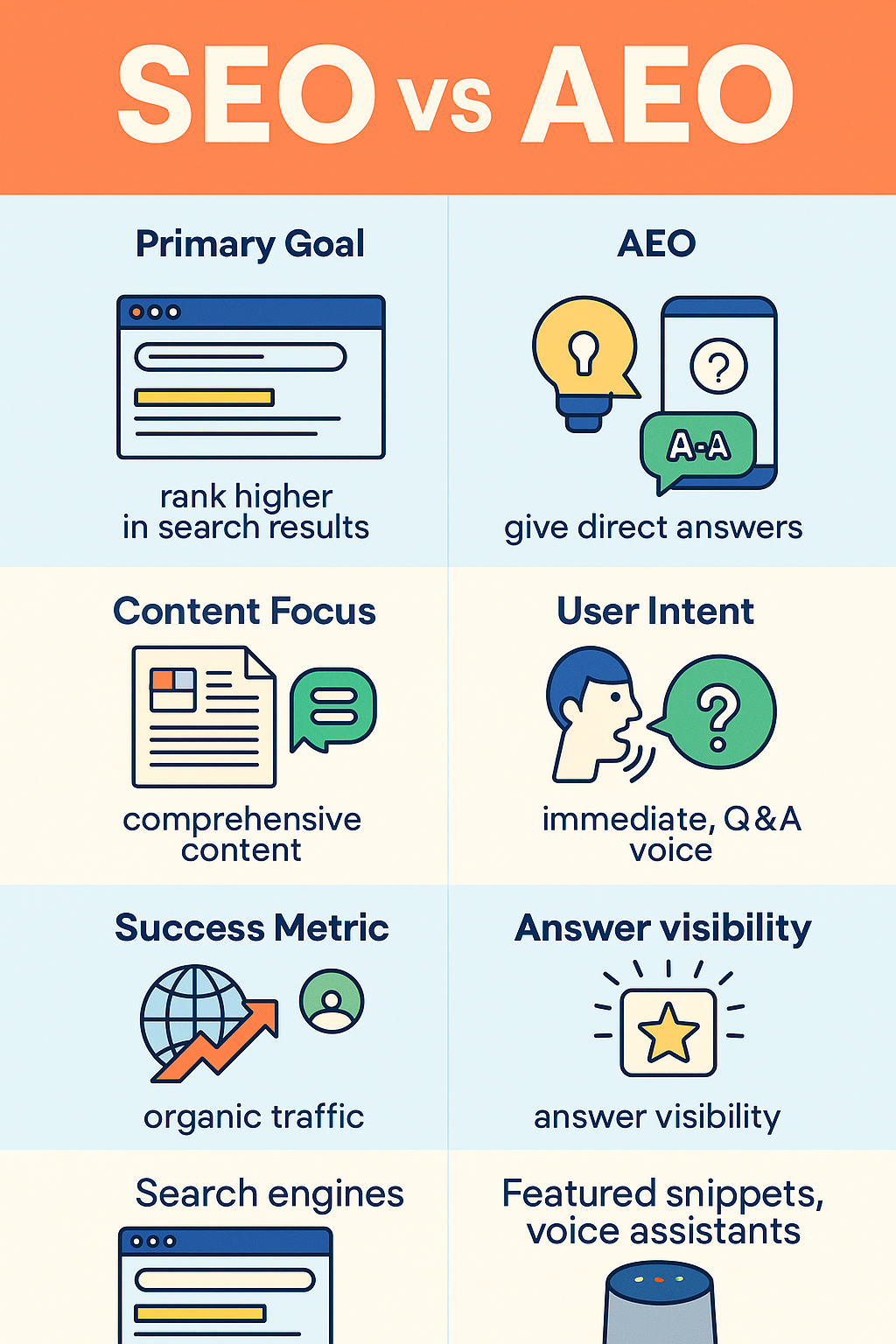
For SEO professionals, this matters because Perplexity mirrors the direction Google’s Search Generative Experience is heading. The answers Perplexity surfaces often highlight entities, sources, and content structures that the AI considers trustworthy. By analyzing those outputs, you can reverse-engineer the signals that may influence visibility in AI-generated search results. Perplexity also exposes gaps in your own content, reveals related long-tail questions that real users ask, and helps you understand the semantic connections between topics in a way that keyword research tools often miss.
How Perplexity Differs from Traditional Search Engines
To use Perplexity effectively for SEO, you need to understand what makes it fundamentally different from Google or Bing. Traditional search engines rank web pages based on hundreds of ranking factors—backlinks, page speed, on-page signals—and display a list of organic results with ads. Perplexity, on the other hand, retrieves information from multiple pages, compares them, and generates a single synthesized answer with direct citations. This distinction influences how you should approach Perplexity as an SEO tool rather than a replacement for a search engine.
| Feature | Traditional Search Engines | Perplexity AI |
|---|---|---|
| Output format | List of links, featured snippets | Cited, conversational answer |
| Source selection | Ranking algorithm based on authority, relevance | LLM chooses sources for factual grounding |
| Interaction model | Query-response, often iterative | Conversational, follow-up questions possible |
| Transparency | Limited insight into ranking logic | Direct citations show what was used |
| Bias | Algorithmic and commercial biases | Training data and source selection bias |
Recognizing these differences helps you avoid treating Perplexity as just another keyword tool. Instead, view it as a research layer that reveals how generative AI engines evaluate content quality and topical depth.
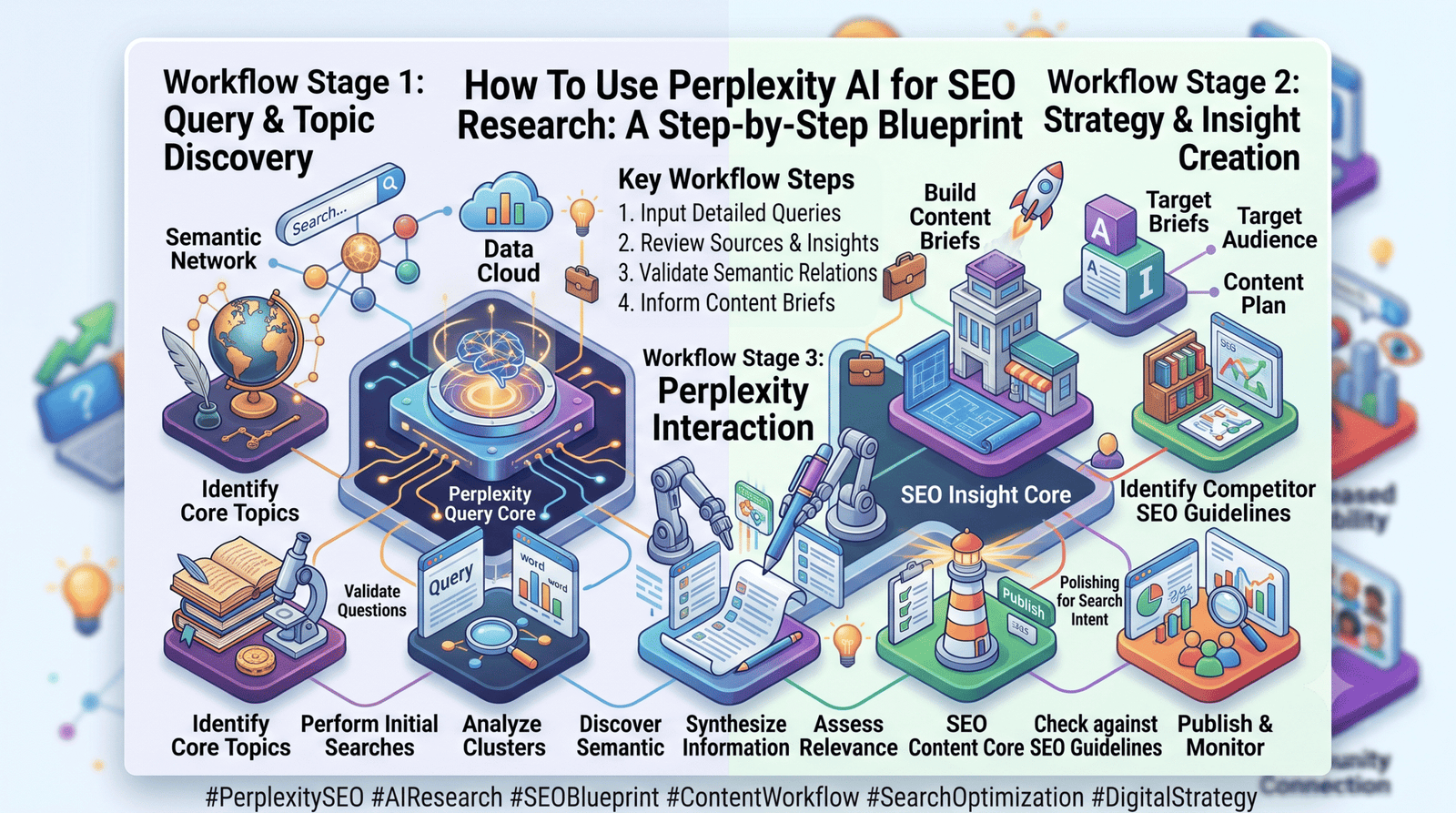
Step-by-Step Guide on How to Use Perplexity for SEO
1. Uncovering High-Intent Keyword Clusters
Traditional keyword research tools give you search volume and difficulty, but they rarely show the full conversational context around a topic. Perplexity excels at revealing the natural language questions people ask. Start by entering a broad topic related to your niche into the Perplexity search bar, then study the answer it generates. Scroll down to the “Related” section or initiate a follow-up conversation asking “What other questions do people ask about this topic?”
Perplexity will return a set of semantically related questions, many of which are long-tail queries never surfaced by Ahrefs or Semrush. These become the seeds for keyword clusters you can map to pillar pages and supporting blog posts. Because Perplexity bases its suggestions on actual web content and user behavior patterns, the keyword clusters tend to be more intent-aligned than tool-generated lists.
2. Analyzing the AI’s Source Selection for Competitor Intelligence
Every Perplexity answer comes with numbered citations. These are not just references; they are a direct look into what the AI considers the most relevant and authoritative pages for that query. Save each cited URL and analyze the content format, structure, length, and the entities mentioned. This reveals which competitors consistently earn AI visibility and what content characteristics correlate with being sourced.
Create a spreadsheet tracking the top-cited domains for your core topics. Look for patterns: Are they long-form guides, academic studies, first-person case studies, or data-rich articles? When you notice a competitor appearing repeatedly, study how they structure headings, use schema markup, and incorporate original data. These insights directly inform your content upgrade strategy.
3. Generating Content Briefs That Match Search Intent
Content briefs often suffer from vague intent classifications. By prompting Perplexity with a target query, you can extract the exact sub-topics, entities, and questions the AI expects a comprehensive article to cover. For example, if your keyword is “best running shoes for flat feet,” ask Perplexity: “Create an outline for an expert article about best running shoes for flat feet, including all the factors a reader needs to make a decision.”
The resulting outline will include sections on arch support, cushioning types, motion control, podiatrist recommendations, and comparative tables. Because the AI draws from multiple high-ranking sources, the outline reflects a consensus of what top-performing content covers. Use this as a baseline, then add your unique expertise, data, and product testing insights. This method ensures your content briefs are grounded in real search intent signals rather than guesswork.
4. Fact-Checking and Building Trustworthiness in Content
E-E-A-T—Experience, Expertise, Authoritativeness, and Trustworthiness—is critical for SEO. Perplexity can serve as an initial fact-checking layer for your drafts. After writing a section that includes data, claims, or statistics, run the claim through Perplexity with a prompt like “Is it true that over 80% of runners choose the wrong shoe size? Provide sources.” The answer will either confirm the statistic with citations or reveal that the claim is outdated or inaccurate.
This process helps eliminate factual errors that could harm credibility and rankings. It also surfaces fresh data you can cite, complete with direct links to source studies. Incorporating those citations into your content boosts both user trust and your perceived authority in the eyes of search engines.
5. Discovering Content Gaps and Cannibalization Opportunities
Enter a topic cluster you already cover into Perplexity and ask: “What important aspects of [topic] are often overlooked in online guides?” The A These could be niche use cases, historical context, regional considerations, or emerging research. Each gap becomes a high-value content opportunity that can rank quickly because the SERP is unsaturated.
Additionally, if your own site has multiple articles on similar sub-topics, Perplexity can help you audit cannibalization. Ask: “What is the difference between [article A topic] and [article B topic]?” The synthesized distinction tells you whether your pages are truly distinct enough. If Perplexity blends the two into one answer, they likely need to be merged or more clearly differentiated.
6. Reverse-Engineering Local and Entity-Based SEO Signals
Perplexity draws heavily on entity understanding and location-oriented data when answering “near me” or service-based queries. For local SEO, search for your target service in a city and note which business names, addresses, and review platforms Perplexity pulls. The AI often surfaces Google Business Profile data, Yelp ratings, and mentions on local news sites. If your business is absent from those sources, you now have a prioritized list of where to build citations and earn genuine reviews.
Similarly, for non-local queries, repeated entity mentions—such as specific experts, brands, or tools—reveal the Knowledge Graph connections that search engines value. Create content that associates your entity with those trusted entities in a natural, substantive way.
Benefits and Limitations of Using Perplexity for SEO
Key Benefits
- Real-time source transparency: Direct citations let you audit and learn from the pages the AI trusts, something no keyword tool provides.
- Conversational keyword discovery: The ability to ask follow-up questions mimics human curiosity, yielding long-tail queries that match natural language search trends.
- Content efficiency: Reducing research time for briefs, outlines, and fact-checking speeds up your editorial pipeline without sacrificing quality.
- Future-proofing for generative search: Understanding what Perplexity surfaces prepares you for Google’s SGE and the inevitable shift toward answer-engine optimization.
- No search volume data: Perplexity does not tell you how many people search for a keyword, so it must be paired with traditional SEO platforms for prioritization.
- Source bias and recency: The AI can overweight certain domains like Wikipedia or large publishers, and may miss fresh content not yet indexed or favored by its model.
- Answer variability: Slightly rephrasing a question can yield different answers, requiring manual verification before acting on insights.
- Limited technical SEO data: Perplexity does not crawl like a search bot, so it cannot replace log file analysis, site audits, or backlink checkers.
Notable Limitations
Common Mistakes to Avoid When Using Perplexity for SEO
Treating AI answers as absolute truth. Perplexity can hallucinate statistics or attribute them to the wrong source. Always click through to the original citation and verify the context and date before incorporating any claim into your content.
Over-relying on Perplexity for keyword selection. Without search volume data, you risk creating content for queries nobody actually types into Google. Use the conversation-driven insights as creative fuel, then validate with keyword tools to prioritize pages with real traffic potential.
Ignoring the sources that do not make the cut. SEO professionals often only study the cited URLs. The pages that Perplexity skipped are equally educational—they reveal what lacks topical depth or authority in the AI’s eyes.
Neglecting the human expertise layer. Perplexity can assemble facts, but it cannot replicate lived experience, original testing, or nuanced opinion. If your content reads like a rephrased Perplexity answer, it will fail both E-E-A-T and reader engagement signals.
Advanced Tactics: Leveraging Perplexity Pro for Deeper SEO Insights
Perplexity Pro’s ability to switch between models and handle file uploads opens up advanced research workflows. Upload a competitor’s long-form article as a PDF and prompt: “Identify every unsubstantiated claim in this document and suggest authoritative sources that refute or support each.” The output gives you a targeted list of content improvements and link-building opportunities—outreach to the sources you can cite when correcting misinformation.
Another tactic involves comparing AI models. The same query processed through GPT-4, Claude, and Perplexity’s default model can highlight consensus topics (the strongest signals) and divergent viewpoints (the controversial angles worth addressing in a balanced piece). Additionally, ask Perplexity to “simulate a search engine evaluator reviewing this page’s quality according to Google’s E-E-A-T guidelines.” The structured critique it returns mirrors many manual reviewer guidelines and can inform your content refresh priorities.
Frequently Asked Questions
Can Perplexity replace traditional keyword research tools?
No, Perplexity excels at uncovering semantic questions and content structures, but it does not provide search volume, keyword difficulty, or click-through rate data. It works best as a complement to tools like Semrush, Ahrefs, or Google Keyword Planner, giving you the conversational layer they miss.
How reliable are Perplexity’s citations for SEO research?
Citations are generally reliable because they link to actual web pages, but the AI can misinterpret statistics or cite sources that themselves contain errors. Always verify figures and dates directly from the original source. Treat citations as a starting point for your own expert analysis, not as a final reference list.
Does content that Perplexity cites rank higher in Google?
Not necessarily. Google’s ranking algorithms and Perplexity’s source selection criteria overlap on concepts like authority and relevance but are not identical. However, being cited by Perplexity can indicate strong topical coverage and trust signals that Google also values. It is a positive indicator but not a guarantee of high organic rankings.
How can I get my site cited by Perplexity?
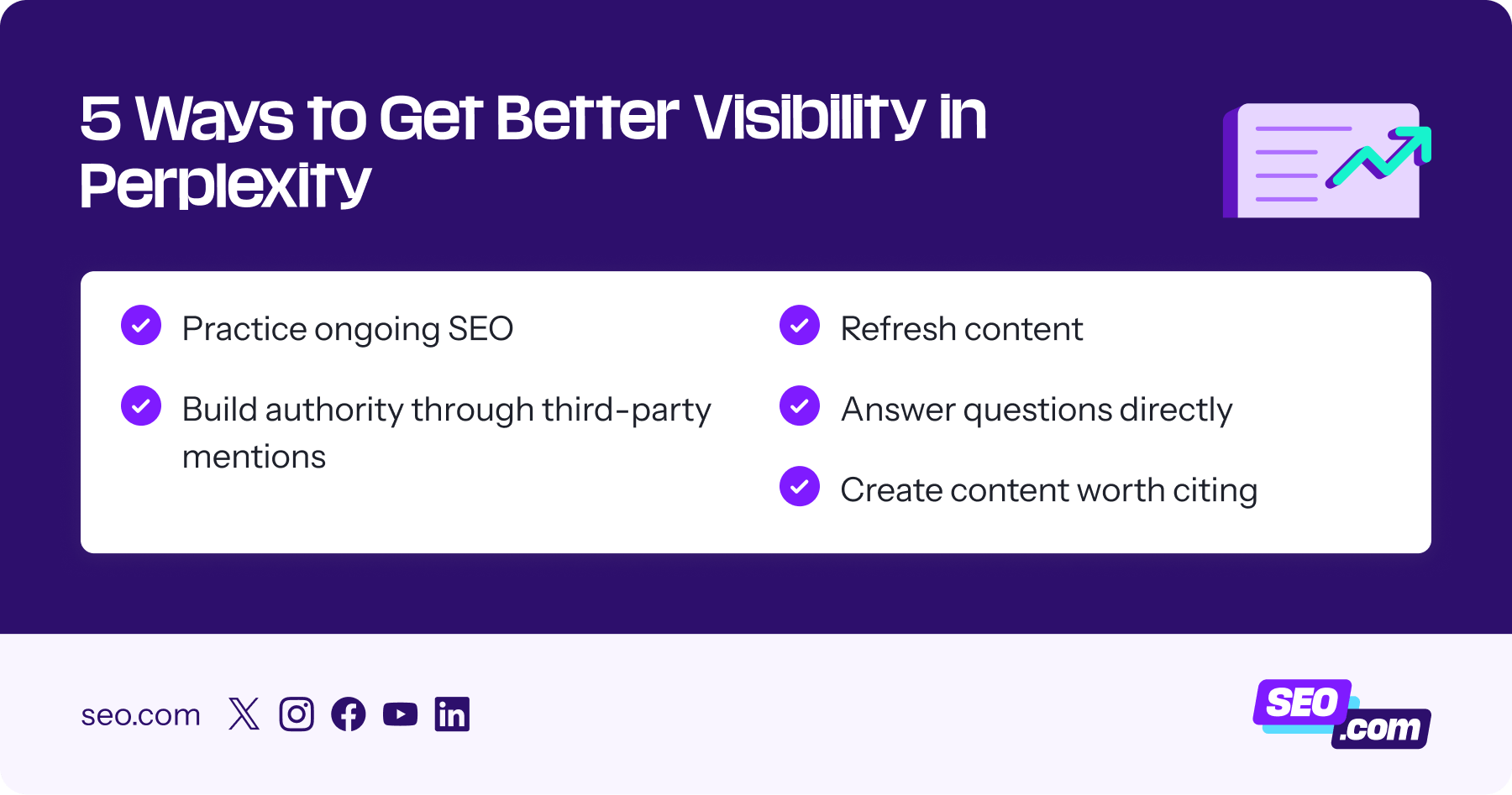
Focus on creating original research, comprehensive definitions, and content that directly answers specific, unambiguous questions. Use clear heading structures, schema markup, and cite reputable external sources. When your content is easy for an AI to parse and demonstrates clear expertise, the likelihood of being surfaced increases.
Is Perplexity useful for local SEO?
Yes, particularly for understanding which local directories, review platforms, and news sources the AI favors for location-based queries. Use this intelligence to prioritize citation-building efforts and improve your Google Business Profile consistency. However, Perplexity is not a direct local ranking tool.
Can I use Perplexity for technical SEO audits?
No, Perplexity cannot crawl your website to detect broken links, missing meta tags, or page speed issues. It can, however, answer specific technical questions and help generate structured data templates or robots.txt rules, but it should never replace a dedicated crawling tool.
Important Notes for Integrating Perplexity into Your SEO Routine
Integrating Perplexity into your workflow requires a shift in mindset from chasing rankings to understanding the informational context that AI models prioritize. The tool is most powerful when used for brainstorming, competitor insight gathering, and quality assurance rather than as a real-time monitoring dashboard. Document the questions you ask and the patterns you observe, because the AI’s responses evolve as models update, and tracking changes over time can reveal shifts in what information sources gain prominence.
Remember that Perplexity’s strength lies in synthesis, not creation. The raw material of great SEO content must still come from your own experience, original data, and unique perspective. Use Perplexity to sharpen your understanding of a topic, but never outsource your editorial judgment to an AI. When you combine the tool’s research acceleration with genuine subject matter expertise, you produce content that satisfies both human readers and the retrieval mechanisms of modern answer engines.
Conclusion
Mastering how to use Perplexity for SEO means embracing the tool as a research amplifier. It illuminates the semantic space around keywords, exposes competitor content strategies, helps you construct intent-matching outlines, and flags factual weaknesses before they hurt your rankings. While it cannot replace traditional SEO platforms or human editorial oversight, Perplexity gives you a direct line into the evolving logic of AI-driven search. By building a systematic habit of using Perplexity to question, verify, and ideate, you equip your SEO practice for a future where synthesized answers command more attention than ever before.
Xem thêm:
- AI Rewrite Tool: The Ultimate Guide to Rewriting Content with Artificial Intelligence
- AI SEO FAQ Generator: The Complete Guide to Automating Content That Ranks
- Mastering AI SEO Competitor Keywords: The Complete Guide to Outranking Your Rivals
- Generative Engine Optimization: The Ultimate Guide to Winning AI-Powered Search
- AI SEO for Google Business Profile: The Complete Guide to Ranking in 2025
Bài viết cùng chủ đề:

AI SEO SEO Automation with Make: The Complete Workflow Guide

AI SEO SEO Automation with Zapier: The Complete Workflow Guide

AI SEO SEO Automation with n8n: The Complete Workflow Guide
AI SEO SEO Automation with Gemini: The Complete Guide to Scaling Organic Growth

AI SEO SEO Automation with Claude: The Complete Guide to Scaling Content in 2025

AI SEO SEO Automation with ChatGPT: The Complete Playbook for 2025

AI SEO & SEO Automation for Affiliate Sites: The 2025 Playbook for Passive Income Growth
AI SEO & SEO Automation for Bloggers: The Complete Guide to Scaling Your Content

AI SEO & SEO Automation for Agencies: The Complete 2025 Playbook

AI SEO and SEO Automation for Ecommerce: The Complete Playbook for 2025

AI SEO & SEO Automation for WordPress: The Complete Playbook for 2025
AI SEO SEO Automation Strategy: The Complete Playbook for 2025

Mastering the AI SEO SEO Automation Process: A Complete Guide to Scaling Organic Growth
AI SEO SEO Automation System: The Complete Guide to Scaling Organic Growth in 2025
AI SEO SEO Automation Platform: The Complete Guide to Scaling Organic Growth in 2025
AI SEO SEO Automation Software: The Complete Guide to Scaling Organic Growth in 2025















