
No products in the cart.
AI SEO Campaigns: The Blueprint for Data-Driven Organic Growth
29
Jul
Jul
The digital landscape has shifted dramatically, making AI SEO campaigns the new standard for brands that want to dominate search engines without burning through endless hours of manual work. An AI SEO campaign weaves together machine learning, natural language processing, and predictive analytics to plan, execute, and refine every aspect of search optimization. Instead of guessing which keywords to target or how to structure content, these campaigns use algorithms that analyze massive data sets in seconds, uncover hidden opportunities, and adapt to algorithm changes before competitors even notice a shift. The result is faster rankings, higher-quality traffic, and a content engine that learns from its own performance.
Understanding AI SEO Campaigns
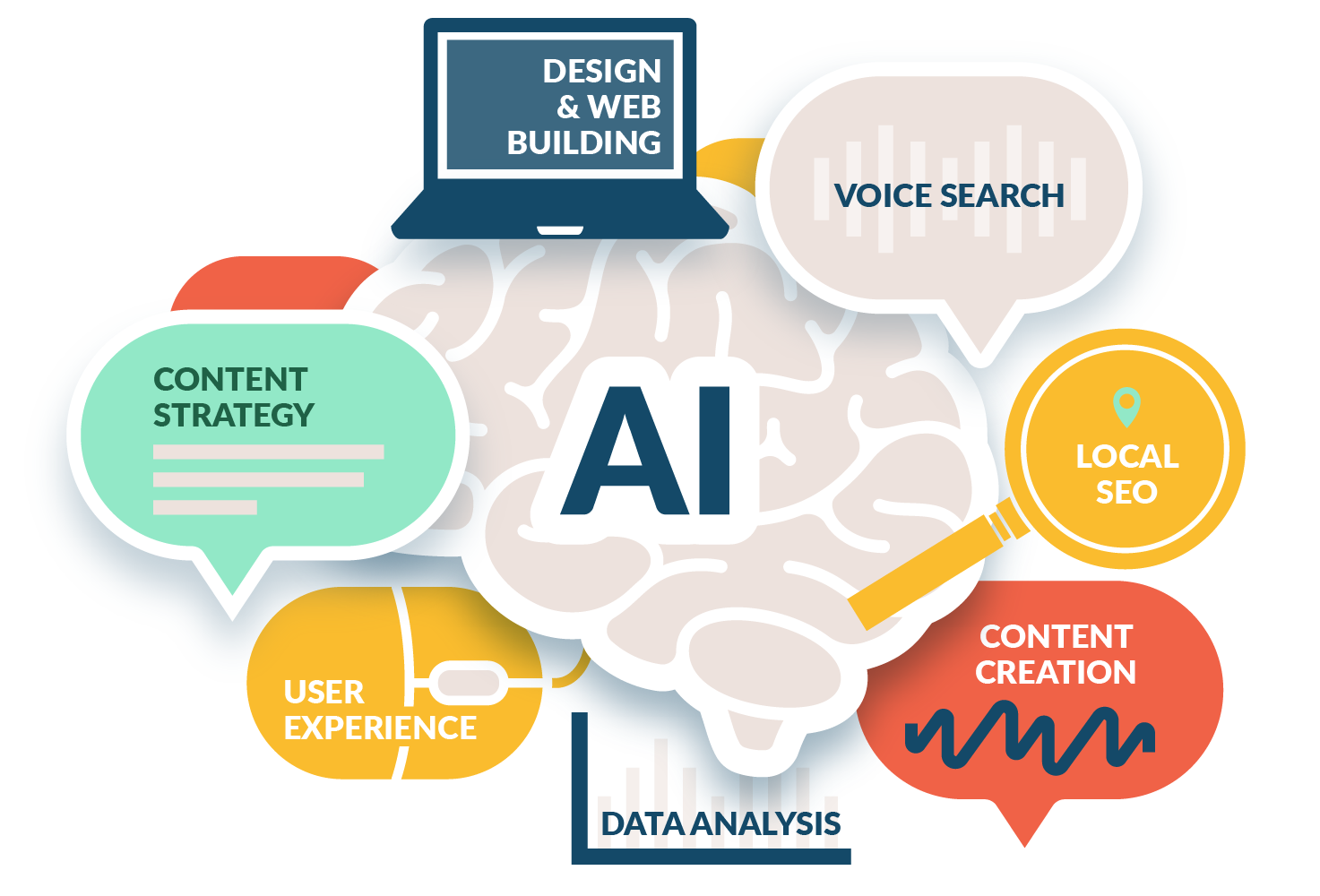
At its core, an AI SEO campaign is a coordinated marketing effort where artificial intelligence assists or fully automates tasks that have historically been done by SEO specialists. These tasks range from keyword discovery and content brief creation to on-page optimization and link-building outreach. The goal remains the same as any SEO campaign: increase organic visibility, attract qualified visitors, and convert them into customers. The difference lies in the method. AI handles pattern recognition at a scale no human team can match, sifting through millions of data points to find precisely which signals correlate with higher rankings for a specific query.
Modern AI models understand search intent with remarkable nuance. They can classify a query as informational, commercial, transactional, or navigational and then recommend content formats, word counts, and semantic entities that align with what Google rewards. This is not a case of robots replacing human creativity; rather, it is a symbiosis where AI accelerates research, surfaces insights, and reduces repetitive work so that strategists can focus on high-level decisions and creative storytelling.
The Core Components of an AI-Powered SEO Strategy
A successful AI SEO campaign is built on several pillars that work together. Each component leverages data and automation to eliminate guesswork and improve accuracy.
Intelligent Keyword Clustering and Topic Modeling
Traditional keyword research often produces a flat list of terms. AI transforms this into dynamic topic clusters. By analyzing semantic relationships, search volume curves, and competitive density, AI tools group thousands of keywords into meaningful clusters that represent a single topic. This allows a content plan to cover an entire subject domain rather than isolated terms. The campaign then earns topical authority through comprehensive coverage, a factor that modern search algorithms heavily weight.
Content Optimization with Natural Language Processing
AI-driven content optimization goes far beyond inserting a target keyword a certain number of times. Advanced NLP models evaluate top-ranking pages and identify the entities, subtopics, tone, and structure that correlate with success. They score content against hundreds of relevance signals, suggesting missing semantic terms, improved readability adjustments, and even the ideal heading hierarchy. This ensures every piece of content is engineered for both search crawlers and human readers from the first draft.
Predictive Performance Analytics
Machine learning algorithms can forecast how a page will perform before it is even published. By training on historical data from millions of URLs—factoring in domain authority, content depth, backlink velocity, and user engagement metrics—predictive models estimate potential traffic and ranking positions. This allows campaign managers to prioritize efforts on pages with the highest expected ROI and adjust strategies in real-time as forecasts change.
Automated Technical Audits and Issue Resolution
AI crawlers continuously scan websites for technical health, detecting critical errors like broken links, orphan pages, slow load times, and schema inconsistencies. The most advanced platforms not only flag issues but also generate exact fixes, from crafting new redirect rules to adjusting internal link structures. This reduces the time from problem detection to resolution from weeks to hours.
Link Building with AI-Enhanced Outreach
Earning high-quality backlinks remains a cornerstone of SEO. AI enhances this process by analyzing link graphs to identify prospect sites that are thematically relevant and have strong authority metrics. It can personalize outreach emails at scale, suggesting the exact context and anchor text that feels natural while carrying the most ranking power. Some systems even predict the likelihood of a response based on past campaigns, allowing teams to concentrate on the highest-probability targets.
Step-by-Step Process for Running an AI SEO Campaign
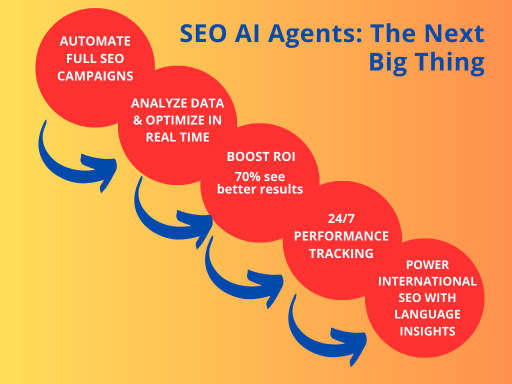
Launching a campaign does not require a complete overhaul of existing workflows. It is a methodical process that integrates AI tools into every stage.
Audit and Benchmarking: Start with a comprehensive AI audit of the current website. Tools scan for technical flaws, content gaps, and competitive weaknesses. They establish a baseline for organic traffic, keyword rankings, and conversion rates that will be used to measure progress.
AI-Driven Strategy Formation: Feed the AI with business goals, target audience profiles, and competitor domains. The system generates a full roadmap: which topic clusters to tackle first, content types needed, and an editorial calendar optimized for seasonal trends and search volume fluctuations.
Content Creation at Scale: AI writing assistants produce complete drafts, meta descriptions, and title tags that already satisfy the NLP requirements identified earlier. Human editors then refine these drafts for brand voice, unique insights, and emotional resonance. The collaboration marries machine precision with human originality.
On-Page Deployment: Automation platforms push optimized content live with correct internal links, schema markup, and image alt text. Real-time monitoring dashboards track indexation status and flag any crawl anomalies immediately.
Continuous Optimization and Retraining: After publication, AI systems analyze user behavior signals—click-through rate, dwell time, pogo-sticking—and compare them against predictions. If a page underperforms, the AI suggests specific updates: adding a data table, lengthening a section, inserting a video, or strengthening the call-to-action. The model retrains itself as it accumulates more performance data, making future predictions even sharper.
Benefits and Limitations of AI SEO Campaigns
Marketers who adopt AI into their search strategies often experience a step-change in productivity, but it is essential to understand both sides of the coin before committing resources.
Key Advantages
- Exponential speed in research and execution: Tasks that once took days—like manual competitor content analysis or link prospect vetting—now happen in minutes.
- Data-driven decisions over intuition: Every recommendation is backed by statistical evidence, reducing the emotional bias that leads to poor keyword choices or content angles.
- Scalable content production: AI enables a smaller team to produce a large volume of optimized content without sacrificing quality, provided human oversight remains in place.
- Real-time adaptability: Campaigns react to algorithm updates, seasonal shifts, and new competitor movements almost instantly, maintaining or improving rankings where manual campaigns would lag.
- Better ROI measurement: Predictive analytics and attribution modeling tie SEO performance directly to revenue, making it easier to justify continued investment.
- Risk of over-optimization: Blindly following AI recommendations can produce content that reads mechanically and fails to connect emotionally with a human audience.
- Data dependence: AI models are only as good as the data they are trained on. In niche industries with sparse data, predictions may be inaccurate or misleading.
- Compliance and ethical concerns: Depending on the tool, AI-generated content may raise questions about originality, copyright, or platform compliance. Google has stated it values helpful, people-first content, so full automation without human input carries a risk.
- Upfront integration costs: Many advanced AI SEO platforms come with significant subscription fees and require team training, which can be a barrier for smaller businesses.
- Automating everything without a human guardrail: Publishing raw AI content without expert review leads to factual errors, shallowness, and a generic tone that erodes trust with readers and search engines.
- Ignoring search intent for the sake of metrics: Chasing high-volume keywords that do not match the company’s offering results in traffic that never converts. AI may identify such keywords, but human judgment must filter them.
- Over-reliance on a single tool: No single AI platform captures the entire picture. Corroborating insights from multiple sources and cross-checking with manual analysis prevents systemic blind spots.
- Neglecting brand voice and E-E-A-T signals: Google’s emphasis on expertise, experience, authority, and trustworthiness means that content stuffed with optimized terms but devoid of genuine insight will eventually fade. AI can support these signals but cannot invent them.
- Failing to update AI models with fresh data: Search algorithms change frequently. Using an AI tool that relies on outdated training data yields recommendations that may conflict with current best practices. Always ensure the platform refreshes its models regularly.
- Sacrificing user experience for automation speed: Rapidly pushing out pages that load slowly, lack mobile optimization, or have aggressive interstitials damages core web vitals and user satisfaction, undercutting any ranking gains.
Notable Limitations
AI-Driven SEO Campaigns vs. Traditional SEO Campaigns
The table below highlights the operational differences between a campaign run primarily on manual effort and one infused with AI capabilities.
| Dimension | Traditional SEO Campaign | AI SEO Campaign |
|---|---|---|
| Keyword Research | Manual brainstorming, limited to a few hundred terms, often based on gut feeling. | Semantic clustering of thousands of keywords, intent classification, and predictive volume trend analysis. |
| Content Planning | Linear editorial calendar, reactive to immediate needs, sporadic gap analysis. | Dynamic content plan built on topic authority models, competitor content benchmarking, and revenue potential scoring. |
| On-Page Optimization | Checklist-based (H1, meta tags, density), manually implemented, prone to inconsistency. | NLP-driven content scoring, automated internal linking suggestions, real-time readability adjustments. |
| Technical SEO | Periodic manual crawls, error reports handled by developers, slow resolution cycles. | Continuous AI crawling, instant alerting, automated fix generation or one-click deployment. |
| Link Building | Manual prospecting, generic email templates, low response rates, high effort. | Graph-based prospecting, personalized outreach at scale, response likelihood modeling. |
| Performance Tracking | Monthly reports, lagging indicators, difficulty correlating actions with results. | Real-time dashboards, predictive traffic estimates, direct attribution to revenue, anomaly detection alerts. |
| Adaptation Speed | Slow reaction to algorithm updates, requires manual analysis. | Instant data refresh, automated strategy pivots based on detected ranking shifts. |
Practical Implementation Guide for an AI SEO Campaign
Businesses looking to transition from traditional methods should follow a phased approach that balances tool acquisition with team enablement.
Phase 1: Foundation and Tool Selection
Identify the most time-consuming bottlenecks in the current workflow. For most teams, these are content research, brief creation, and rank tracking at scale. Select AI platforms that integrate well with the existing tech stack. Look for tools that offer transparent data sources, explainable recommendations, and the ability to export data into internal reporting systems. Run pilot projects on a segment of the website, perhaps a blog category or a product line, before rolling out company-wide.
Phase 2: Process Redesign
Introduce AI into the daily workflow without discarding human expertise. Redesign the content production line: AI generates topic clusters and drafts, SEO strategists validate and adjust, writers add unique perspectives, and editors ensure brand consistency. Simultaneously, set up automated technical monitoring and link alerts so that no critical issue sits unresolved for more than a few minutes.
Phase 3: Training and Upskilling
The most successful AI SEO campaigns happen when practitioners learn to “talk” to the AI. This involves understanding how to craft effective prompts, interpret confidence scores, and question outlier recommendations. Invest in certifications or workshops focused on AI literacy in marketing. Encourage a culture where AI insights are debated, not blindly followed.
Phase 4: Measurement and Iteration
Define KPIs that reflect the campaign’s unique goals: organic traffic to revenue attribution, content ROI by topic cluster, time-to-index for new pages, or editorial throughput. Use AI dashboards to track these in real time, and schedule monthly deep-dive sessions where the team reviews anomalies, updates predictive models, and reallocates resources toward the highest-impact actions.
Common Mistakes to Avoid in AI SEO Campaigns
Even with powerful technology, missteps can derail performance and even incur penalties. Awareness of these pitfalls is crucial.
Key Considerations for Long-Term Success
Sustained organic growth through AI SEO campaigns requires a mindset shift from one-time optimization to continuous learning loops. The organizations that thrive treat AI as a co-pilot rather than an autopilot. They maintain a dedicated testing environment where new AI-driven tactics—dynamic internal links, personalized content modules, automated FAQ generation—can be trialed on subsets of traffic before broad deployment.
Data privacy and transparency are increasingly important. Collect user behavior data ethically, manage cookie consent carefully, and ensure AI content does not inadvertently scrape copyrighted material. Building an internal AI governance document that outlines acceptable use cases, review protocols, and ethical guidelines protects the brand’s reputation.
Finally, invest in community intelligence. Join professional groups, attend search conferences, and follow updates from Google’s Search Central. AI is evolving fast; what works today may be deprecated tomorrow. Keeping a human finger on the pulse of the industry complements the algorithmic vigilance of the AI tools, creating a resilient campaign engine.
Frequently Asked Questions
What exactly is an AI SEO campaign?
An AI SEO campaign is a systematic effort to improve a website’s organic search visibility using artificial intelligence for tasks like keyword research, content optimization, technical auditing, and link building. AI algorithms analyze data at scale, predict outcomes, and automate repetitive processes, allowing SEOs to make faster, more accurate decisions.
Can AI fully replace human SEO strategists?
No. AI excels at data processing, pattern recognition, and automation, but it lacks strategic intuition, brand empathy, and creative storytelling. The most effective campaigns combine machine speed with human oversight to ensure content remains original, trustworthy, and aligned with real user needs.
Which AI tools are typically used in such campaigns?
Common platforms include Surfer SEO and MarketMuse for content optimization, Clearscope for NLP analysis, Semrush and Ahrefs for keyword clustering and competitor intelligence, ChatGPT or Jasper for drafting assistance, and Botify or DeepCrawl for automated technical audits. The exact stack depends on business size and goals.
How long does it take to see results from an AI SEO campaign?
While some technical improvements can yield quick wins in days, meaningful organic traffic increases typically require three to six months. AI accelerates research and content production, but search engines still need time to crawl, index, and reassess rankings. Consistent application over time produces the strongest results.
Is AI-generated content penalized by Google?
Google does not explicitly penalize content solely because it is AI-generated. The focus is on content quality, helpfulness, and compliance with E-E-A-T guidelines. Content that is purely automated, lacks originality, or is designed to manipulate rankings without providing real value can be demoted. Human editing and fact-checking are essential safeguards.
How can small businesses afford AI SEO campaigns?
Many AI tools offer entry-level plans or pay-as-you-go options. Small businesses can begin with free AI extensions that assist with keyword clustering and basic content scoring, then scale up as ROI becomes evident. Outsourcing specific tasks to AI-savvy agencies is another cost-effective approach.
What metrics best indicate an AI SEO campaign is working?
Beyond traditional metrics like organic sessions and keyword rankings, look at content efficiency (time from brief to publish), topic cluster coverage, predictive accuracy (forecasted vs. actual traffic), and conversion attribution from organic traffic. A healthy campaign shows improving trends across these dimensions.
Conclusion
AI SEO campaigns represent the next evolution of search marketing—a discipline where data, automation, and human insight converge to create sustainable organic growth. By embracing intelligent keyword clustering, NLP-driven content optimization, predictive analytics, and automated technical upkeep, brands can outpace competitors who still rely on manual guesswork. The key is balance: pairing the analytical horsepower of artificial intelligence with the irreplaceable judgment of experienced marketers. Organizations that invest now in AI literacy, ethical frameworks, and robust tech stacks will not just survive algorithm changes; they will build resilient digital assets that consistently attract and convert the audiences that matter most.
Xem thêm:
- AI SEO and SEO Automation for Ecommerce: The Complete Playbook for 2025
- AI SEO Ranking Predictions: The Complete Guide to Future-Proofing Your Search Strategy
- AI SEO Mobile SEO: The Complete Guide to Dominating Search in 2025
- AI SEO Schema Markup Optimization: The Complete Guide to Structured Data in 2025
- WP Trove Content Automation: The Complete Guide to Scaling Your WordPress Content Workflow
Bài viết cùng chủ đề:

AI SEO SEO Automation with Make: The Complete Workflow Guide

AI SEO SEO Automation with Zapier: The Complete Workflow Guide

AI SEO SEO Automation with n8n: The Complete Workflow Guide
AI SEO SEO Automation with Gemini: The Complete Guide to Scaling Organic Growth

AI SEO SEO Automation with Claude: The Complete Guide to Scaling Content in 2025

AI SEO SEO Automation with ChatGPT: The Complete Playbook for 2025

AI SEO & SEO Automation for Affiliate Sites: The 2025 Playbook for Passive Income Growth
AI SEO & SEO Automation for Bloggers: The Complete Guide to Scaling Your Content

AI SEO & SEO Automation for Agencies: The Complete 2025 Playbook

AI SEO and SEO Automation for Ecommerce: The Complete Playbook for 2025

AI SEO & SEO Automation for WordPress: The Complete Playbook for 2025
AI SEO SEO Automation Strategy: The Complete Playbook for 2025

Mastering the AI SEO SEO Automation Process: A Complete Guide to Scaling Organic Growth
AI SEO SEO Automation System: The Complete Guide to Scaling Organic Growth in 2025
AI SEO SEO Automation Platform: The Complete Guide to Scaling Organic Growth in 2025
AI SEO SEO Automation Software: The Complete Guide to Scaling Organic Growth in 2025















