
No products in the cart.
AI SEO Automated SEO Reports: The Complete Guide to Smarter Reporting in 2025
10
Aug
Aug
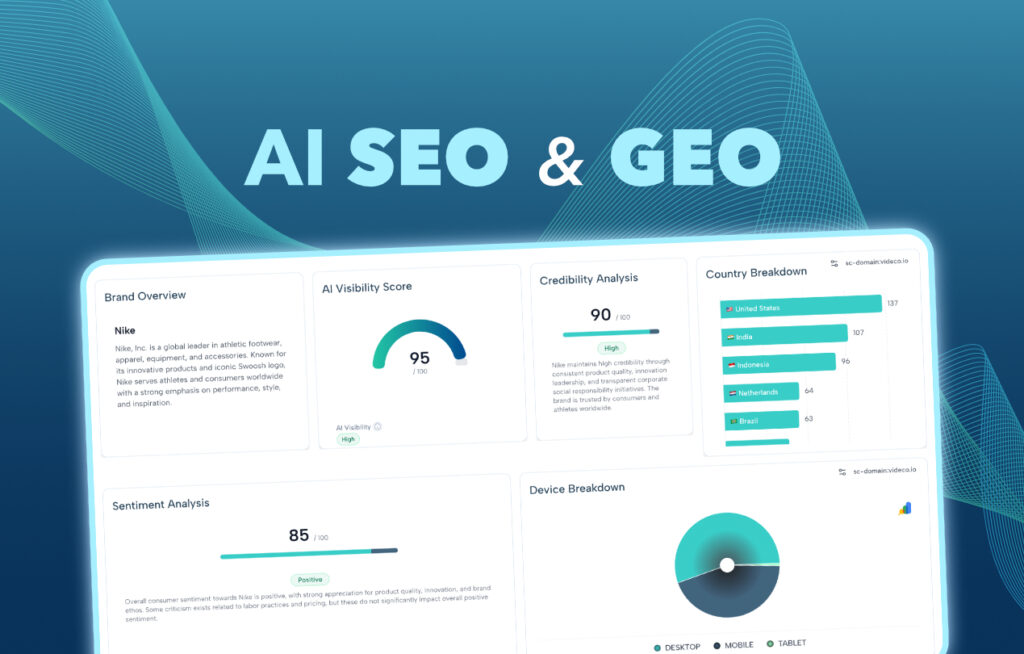
In the fast-paced world of digital marketing, the demand for AI SEO automated SEO reports has shifted from a luxury to a necessity. Marketing teams are no longer asking whether they should automate their reporting; they are asking how quickly they can implement it. The modern SEO landscape generates an overwhelming volume of data—from keyword rankings to Core Web Vitals—and manually compiling this into digestible insights is a recipe for burnout and human error. This guide explores how artificial intelligence is transforming the way agencies and in-house teams track, analyze, and present their search performance, ensuring that every report drives action rather than just filling an inbox.
What Are AI SEO Automated SEO Reports?
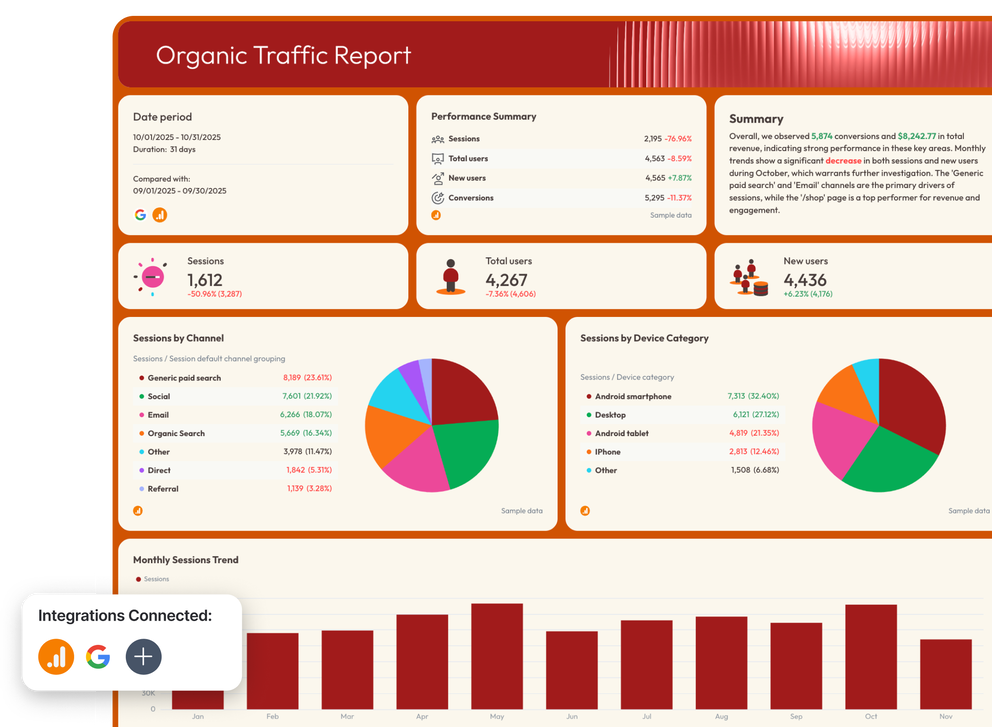
An AI SEO automated SEO report is a data-driven document generated by software that uses machine learning algorithms to collect, organize, and interpret search engine optimization metrics without manual intervention. Unlike traditional reports that simply pull raw numbers from Google Analytics or Search Console, these intelligent systems analyze trends, detect anomalies, and provide contextual recommendations. The core value lies in the automation of the entire pipeline: data fetching, cleaning, analysis, visualization, and narrative generation.
The technology leverages natural language processing (NLP) to convert complex data sets into plain-English summaries. For example, instead of showing a table with a 15% drop in organic traffic, an AI report will state that the decline correlates with a recent algorithm update and suggest specific pages to audit. This shift from descriptive reporting to prescriptive insights is the defining characteristic of modern AI-driven systems.
The Evolution from Manual Spreadsheets to Intelligent Automation
Ten years ago, an SEO report was a manual assembly of screenshots and Excel pivot tables. Specialists spent hours copying data from multiple dashboards, formatting charts, and writing explanations. This process was not only time-consuming but also prone to errors in data interpretation. The introduction of APIs allowed for basic data aggregation, but the analysis remained static. Today, AI SEO automated SEO reports represent a paradigm shift. They learn from historical data, understand seasonal patterns, and even predict future performance based on current trends. This evolution means that the report is no longer a historical record but a forward-looking strategic tool.
How AI Transforms the Reporting Process
To understand the impact of this technology, it is essential to break down the specific stages of the reporting workflow where AI adds the most value. The process is not just about saving time; it is about improving the quality of the decisions made from the data.
Automated Data Collection and Integration
The first step in any reporting system is gathering data from disparate sources. AI-powered tools integrate seamlessly with Google Search Console, Google Analytics 4, Bing Webmaster Tools, and third-party rank trackers. They handle API rate limits, data discrepancies, and timezone differences automatically. This integration ensures that the report provides a holistic view of performance, combining organic traffic, keyword positions, backlink profiles, and on-page technical health scores into a single unified dashboard.
Intelligent Anomaly Detection
One of the most powerful features of AI in this context is its ability to detect significant changes that a human might miss. The system establishes a baseline of “normal” performance based on historical data. When a sudden spike or drop occurs, the AI flags it immediately. For instance, if a high-value page loses 50% of its impressions overnight, the system will correlate this with recent Google updates, server errors, or competitor activity. This proactive alerting allows SEO managers to react in hours, not weeks.
Natural Language Generation for Narrative Insights
Raw data lacks context. AI SEO automated SEO reports use Natural Language Generation (NLG) to write executive summaries. These summaries explain the “why” behind the numbers. The system analyzes the correlation between different metrics—such as dwell time and keyword position—and articulates these relationships in clear, concise sentences. This feature is particularly valuable for presenting to non-technical stakeholders like CMOs or clients who do not have time to interpret complex charts.
Predictive Analytics and Forecasting
Advanced AI systems go beyond analyzing the past. They use regression models and machine learning to forecast future traffic and keyword performance. This allows businesses to set realistic goals and allocate budgets effectively. For example, the system might predict that a specific blog post will reach the top three positions for a target keyword within 60 days based on current velocity. This predictive capability transforms the report from a passive document into an active planning tool.
Key Features of Modern AI Reporting Tools
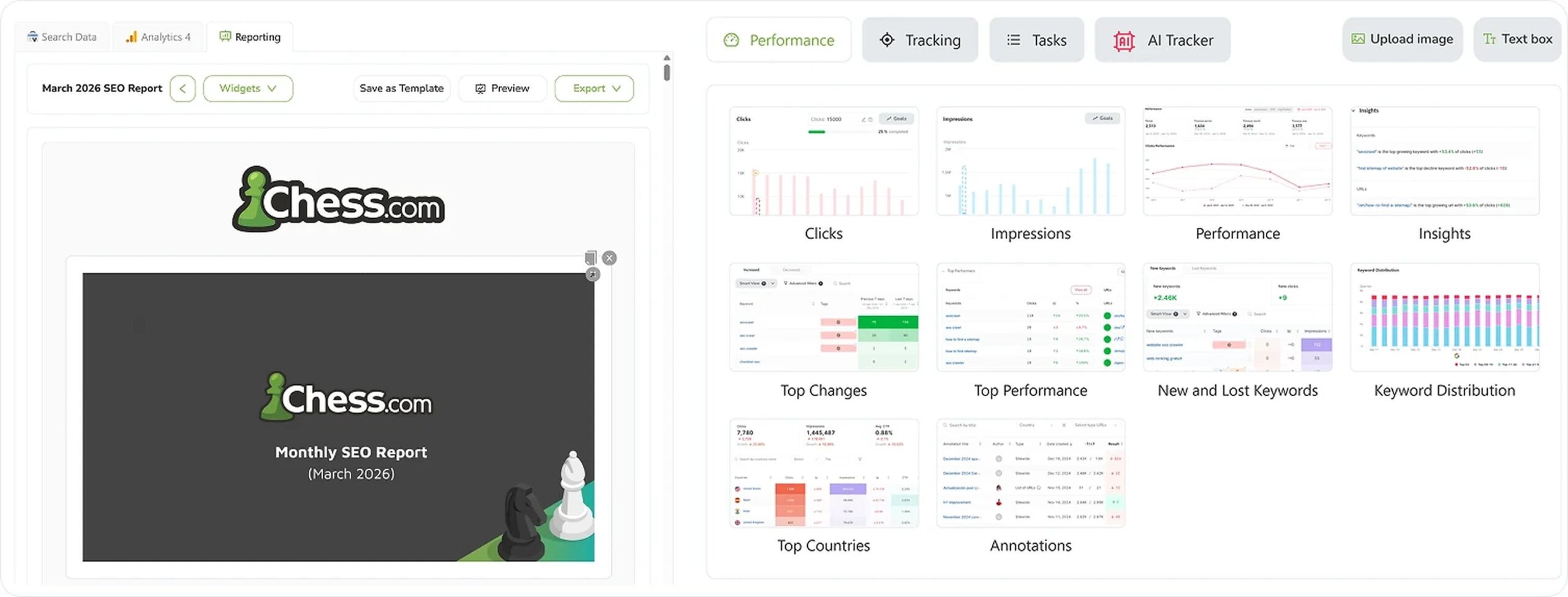
Not all automated reporting tools are created equal. When evaluating software for your needs, look for these critical features that distinguish a true AI solution from a simple automation script.
- Customizable Dashboards: The ability to drag-and-drop widgets and tailor the layout for different audiences (executives vs. technical teams).
- White-Labeling Capabilities: For agencies, the option to remove vendor branding and present the report as their own is essential for client retention.
- Real-Time Data Sync: While scheduled reports are standard, the best tools offer on-demand refresh capabilities for urgent analysis.
- Competitor Benchmarking: Integration of competitor domain data to provide context on market share and visibility changes.
- Goal Tracking: The ability to set specific KPIs (e.g., conversions from organic traffic) and automatically track progress against those targets.
- Anomaly Alerts: Proactive notifications sent via email or Slack when significant metric deviations are detected.
- Ignoring Data Governance: Failing to set user permissions and data access levels can lead to sensitive information being shared with the wrong people.
- Over-Automating the Narrative: While AI can write summaries, it is still important to inject human expertise and strategic commentary where necessary. A fully automated report can feel robotic and impersonal.
- Focusing Only on Vanity Metrics: Tracking impressions and rankings is important, but the report must tie these metrics back to business outcomes like leads and sales. Ensure your AI tool is configured to track conversions.
- Neglecting Mobile Data: With the majority of searches happening on mobile, ensure your reporting separates device data to identify mobile-specific issues.
- Skipping the “Why” Analysis: If the AI flags a drop in traffic, do not just accept the alert. Use the tool to dig into the underlying causes, such as technical crawl errors or content cannibalization.
Benefits of Implementing AI SEO Automated SEO Reports
The advantages of adopting this technology extend far beyond saving a few hours per week. The strategic benefits impact the entire organization, from junior analysts to the C-suite.
Time Efficiency and Resource Allocation
Manual reporting can consume 10-15 hours per month for a single client or project. By automating this process, teams can reallocate that time to high-value activities such as link building, content creation, and technical audits. The ROI on the software subscription is quickly realized through the increased productivity of the team. Agencies, in particular, can scale their client portfolios without proportionally increasing their headcount.
Enhanced Accuracy and Consistency
Human error is inevitable when copying data between spreadsheets. AI eliminates the risk of transposition errors and ensures that every report uses the same calculation methodology. This consistency is vital when comparing performance month-over-month or year-over-year. Stakeholders can trust that the numbers are accurate, which builds confidence in the SEO team’s reporting.
Improved Client Communication
For agencies, the quality of the report often dictates the health of the client relationship. AI-generated narratives provide clear, jargon-free explanations of performance. When a client sees a drop in rankings, the report explains the cause and outlines the remediation steps. This transparency reduces the number of “status update” meetings and prevents misunderstandings. The report becomes a conversation starter about strategy, not a defensive justification of tactics.
Scalability for Large Operations
Enterprise-level SEO involves managing thousands of keywords and hundreds of pages. Tracking this manually is impossible. AI systems process this volume effortlessly, providing a macro-level overview while allowing users to drill down into specific pages or queries. This scalability ensures that large organizations maintain oversight without losing the ability to focus on granular details.
Limitations and Challenges to Consider
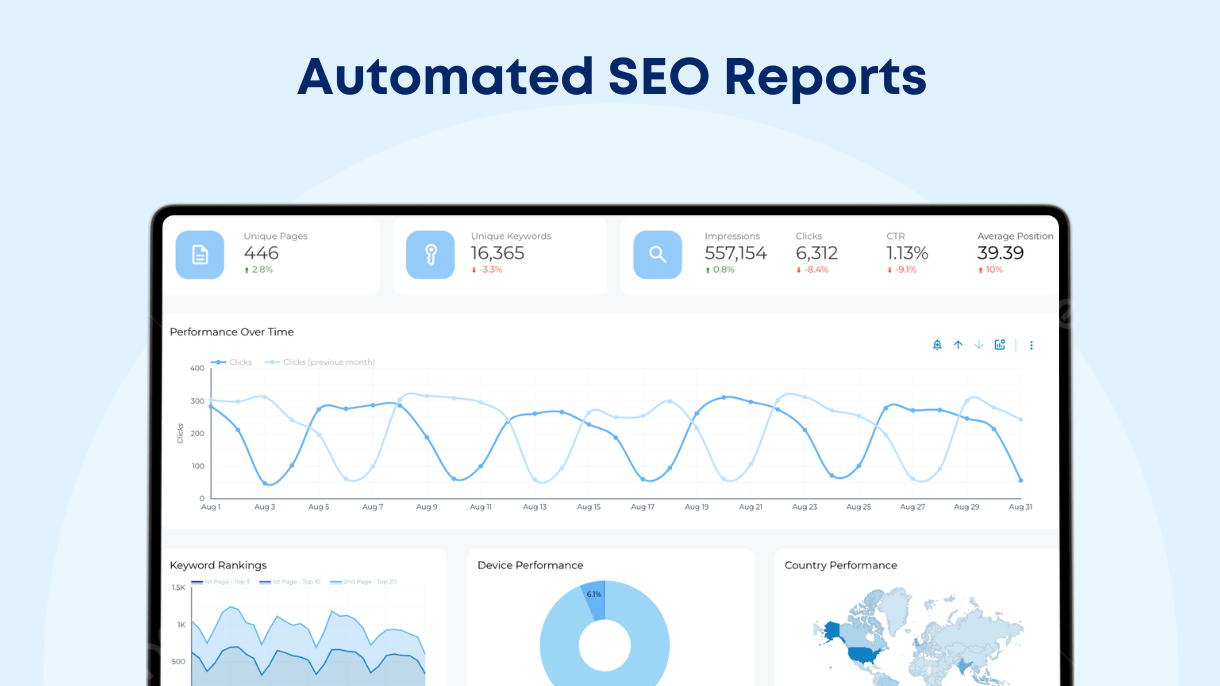
While the benefits are substantial, it is important to approach AI reporting with a critical eye. There are limitations that must be managed to avoid over-reliance on the technology.
Data Quality Dependency
The output of an AI system is only as good as the input data. If your Google Analytics is misconfigured, or if your tracking codes are missing on certain pages, the A It is crucial to maintain data hygiene and perform regular audits of your tracking infrastructure. Garbage in, garbage out remains a fundamental rule.
Lack of Creative Context
AI excels at identifying patterns and correlations, but it cannot understand the nuances of brand voice or the impact of an offline marketing campaign. For example, if a brand appears on a national TV show, the resulting traffic spike might be misinterpreted by the AI as an organic SEO win. Human oversight is still required to provide the qualitative context that the algorithm lacks.
Initial Setup Complexity
Configuring an AI reporting tool is not a plug-and-play process. It requires defining custom metrics, setting up data source connections, and training the system on historical data. This initial setup can take several days and requires a certain level of technical expertise. However, the long-term payoff usually justifies the upfront investment.
AI SEO Automated SEO Reports vs. Traditional Reporting
To clearly illustrate the differences, the following table compares the key aspects of traditional manual reporting against AI-driven automated reporting.
| Feature | Traditional Manual Reporting | AI Automated Reporting |
|---|---|---|
| Data Collection | Manual export from multiple dashboards | Automated API integration and syncing |
| Analysis | Human interpretation of static charts | Machine learning for trend detection and anomaly alerts |
| Narrative | Manually written summaries | Natural Language Generation for instant insights |
| Time to Produce | 4-8 hours per report | 15-30 minutes (mostly for review) |
| Error Rate | High risk of human error | Low risk, consistent calculations |
| Scalability | Difficult to scale across many clients | Easily scalable with cloud infrastructure |
| Predictive Insights | Not available | Forecasting and “what-if” scenarios |
This comparison highlights that the shift is not merely about convenience but about the depth and accuracy of the insights generated. Traditional reports tell you what happened; AI reports tell you why it happened and what to do next.
Practical Guide: How to Implement AI Reporting in Your Workflow
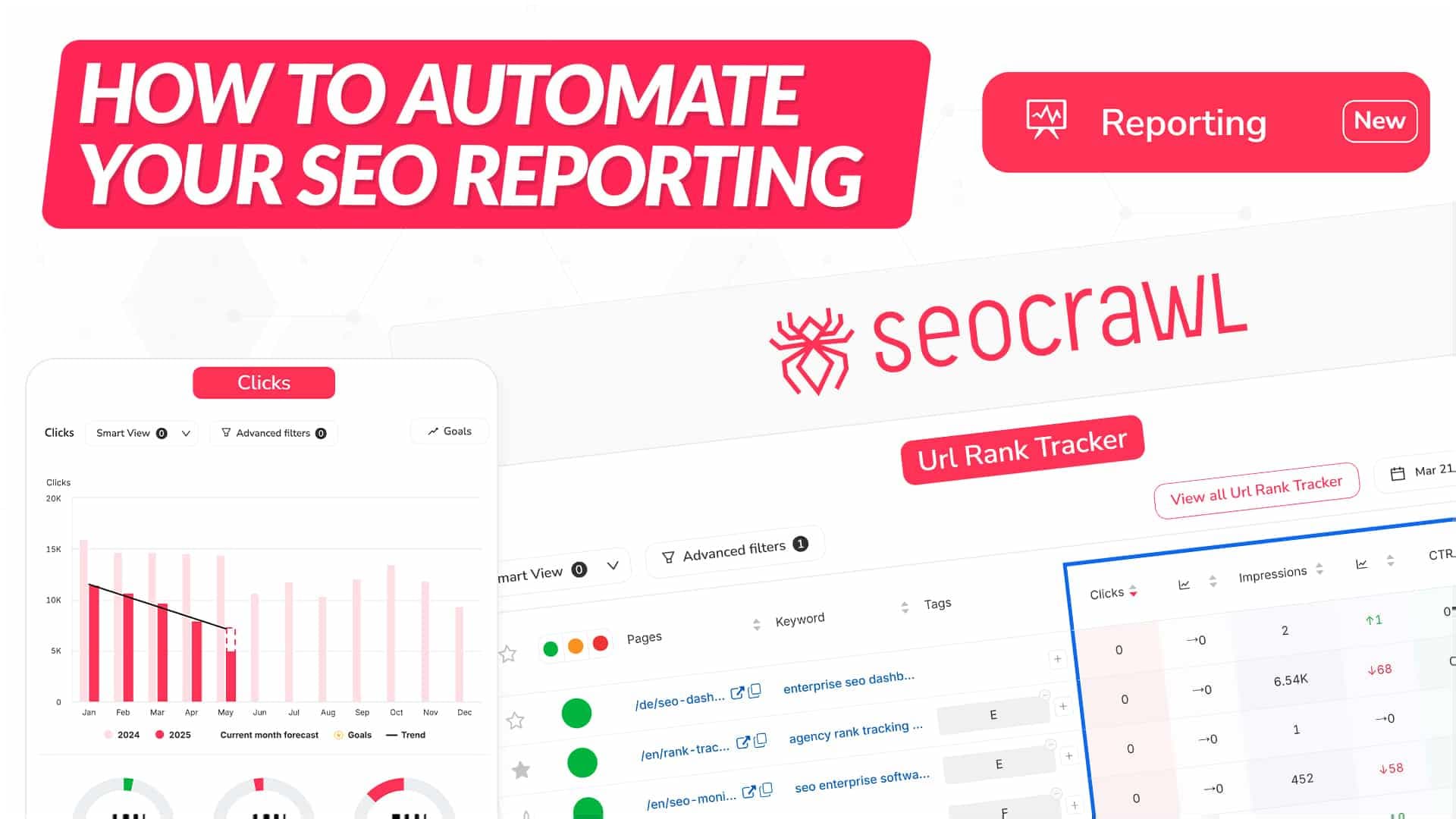
Transitioning to AI SEO automated SEO reports requires a structured approach.
Step 1: Audit Your Current Reporting Stack
List all the data sources you currently use. Identify which metrics are most important to your stakeholders. Determine the frequency of reporting (weekly, monthly, quarterly). This audit will help you define the requirements for your new tool. It is also the perfect time to clean up your analytics setup and remove any redundant tracking tags.
Step 2: Select the Right Tool
Evaluate software options based on your specific needs. Consider factors such as budget, integration capabilities, and the complexity of the AI features. Popular tools in this space include Looker Studio with AI add-ons, Semrush’s My Reports, and specialized platforms like Reportz or Whatagraph. Request a demo and test the anomaly detection and NLG features with your own data before committing.
Step 3: Define Your KPIs and Goals
Configure the tool to track the metrics that align with your business objectives. If you are an e-commerce site, focus on revenue per visitor and conversion rate. If you are a content publisher, focus on engagement time and page views per session. The AI needs clear goals to provide relevant recommendations.
Step 4: Train the System with Historical Data
Most AI tools allow you to import historical data to establish a baseline. Provide at least 12 months of data if possible. This training period allows the algorithm to understand seasonal trends and normal fluctuations. The more data you provide, the more accurate the anomaly detection will be.
Step 5: Review and Refine the Output
For the first few months, manually review the AI-generated narratives to ensure they make sense. Provide feedback to the system if the insights are off-target. Over time, the system will learn your preferences and produce more relevant commentary. Establish a workflow where the AI generates the draft, and a human approves the final version before sending it to stakeholders.
Common Mistakes to Avoid with AI Reporting
Implementing this technology comes with a learning curve. Avoiding these common pitfalls will help you maximize the value of your investment.
Important Notes for Maximizing Value
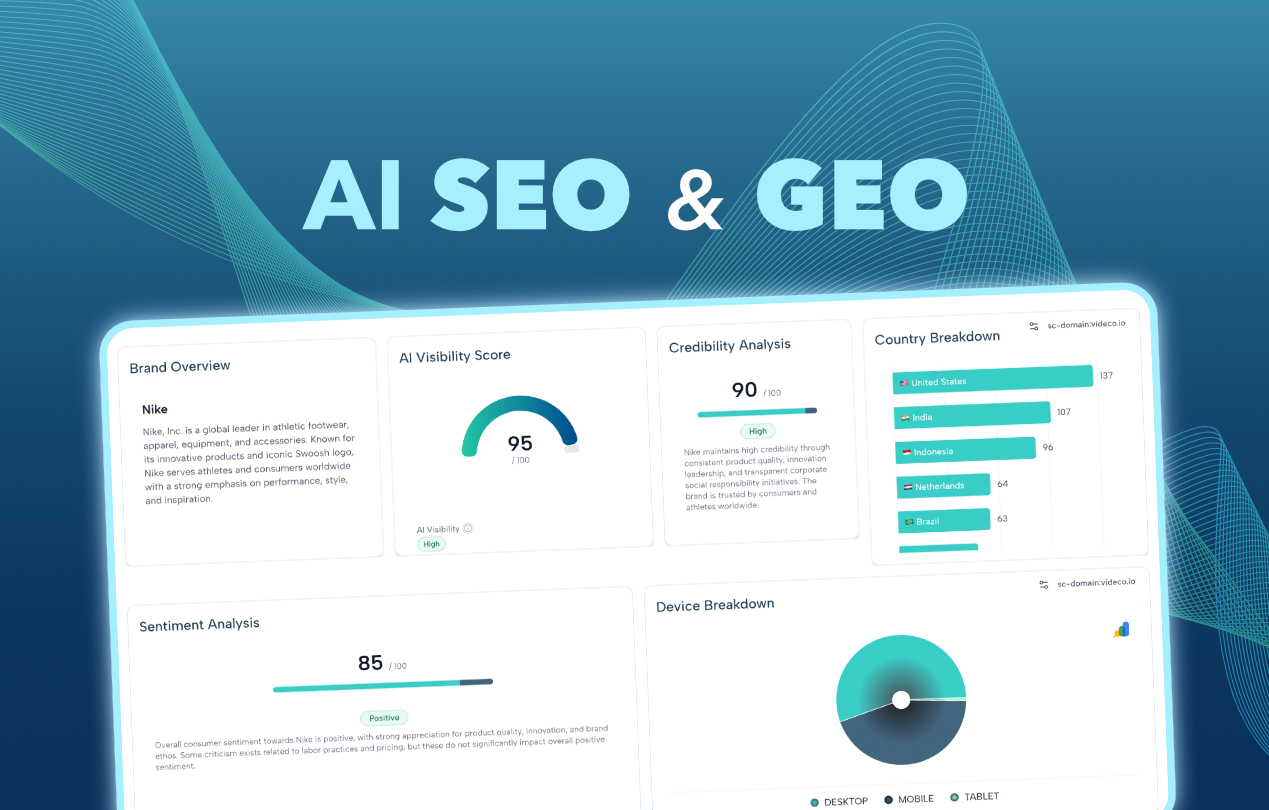
To get the most out of AI SEO automated SEO reports, consider these strategic notes that go beyond the basic setup.
First, integrate your SEO reporting with other marketing channels. Combining organic data with paid search and social media data provides a complete picture of your digital footprint. This holistic view helps in understanding cross-channel attribution and optimizing the overall marketing mix.
Second, use the time saved to focus on strategic initiatives. The goal of automation is not to eliminate the SEO role but to elevate it. With the reporting burden lifted, professionals can spend more time on creative content strategies, building high-quality backlinks, and improving user experience.
Third, ensure that your reporting cadence matches the speed of your business. A news website might need daily reports, while a B2B manufacturing company might only need monthly reports. Configure the AI to deliver insights at the right frequency to avoid alert fatigue.
Frequently Asked Questions
What is the difference between automated reporting and AI reporting?
Automated reporting simply pulls data from sources and formats it into a template on a schedule. AI reporting goes further by analyzing the data, detecting patterns, and generating written insights and recommendations. AI adds a layer of intelligence that interprets the numbers, while basic automation only displays them.
Will AI SEO reports replace the need for SEO analysts?
No, A Analysts will shift from data gathering and spreadsheet manipulation to strategic interpretation and creative problem-solving. The AI handles the heavy lifting of data processing, allowing humans to focus on the “why” and “how” of SEO strategy.
How long does it take to set up an AI reporting system?
The initial setup typically takes between one and three days, depending on the complexity of your data sources and the number of custom metrics you need. The training period for the AI to learn your historical data patterns usually takes an additional 30 to 60 days to achieve optimal accuracy in anomaly detection.
Can AI reporting tools integrate with Google Looker Studio?
Yes, many AI reporting tools offer native integrations with Looker Studio (formerly Google Data Studio). This allows you to leverage the visualization capabilities of Looker while adding the AI-powered narrative and anomaly detection on top. This combination is popular among agencies that want to maintain a specific visual brand identity.
Are AI-generated reports accurate for local SEO tracking?
Yes, modern AI tools can track local pack rankings, Google Business Profile insights, and review sentiment. The AI can analyze location-specific trends and provide recommendations for local content optimization. This is particularly useful for multi-location businesses that need to compare performance across different regions.
Conclusion
The adoption of AI SEO automated SEO reports is no longer a competitive advantage; it is becoming a standard expectation in the industry. The ability to deliver accurate, insightful, and timely reports is critical for maintaining trust with clients and stakeholders. By leveraging machine learning for data analysis and natural language generation for communication, businesses can move beyond the limitations of manual reporting. The key to success lies in choosing the right tools, configuring them properly, and maintaining a balance between automated insights and human strategic oversight. As search algorithms continue to evolve, the organizations that embrace this intelligent automation will be the ones best positioned to adapt and thrive in the dynamic world of search engine optimization.
Xem thêm:
- AI SEO for Niche Sites: The 2025 Playbook for Dominating Small Markets
- AI SEO Course: The Definitive Guide to Automating and Dominating Search Rankings
- AI SEO for Education: The Complete Guide to Dominating Search in 2025
- AI SEO Social Distribution: The Complete Guide to Automated Content Amplification
- AI SEO Anchor Text Generator: The Complete Guide to Smarter Internal Linking
Bài viết cùng chủ đề:

AI SEO SEO Automation with Make: The Complete Workflow Guide

AI SEO SEO Automation with Zapier: The Complete Workflow Guide

AI SEO SEO Automation with n8n: The Complete Workflow Guide
AI SEO SEO Automation with Gemini: The Complete Guide to Scaling Organic Growth

AI SEO SEO Automation with Claude: The Complete Guide to Scaling Content in 2025

AI SEO SEO Automation with ChatGPT: The Complete Playbook for 2025

AI SEO & SEO Automation for Affiliate Sites: The 2025 Playbook for Passive Income Growth
AI SEO & SEO Automation for Bloggers: The Complete Guide to Scaling Your Content

AI SEO & SEO Automation for Agencies: The Complete 2025 Playbook

AI SEO and SEO Automation for Ecommerce: The Complete Playbook for 2025

AI SEO & SEO Automation for WordPress: The Complete Playbook for 2025
AI SEO SEO Automation Strategy: The Complete Playbook for 2025

Mastering the AI SEO SEO Automation Process: A Complete Guide to Scaling Organic Growth
AI SEO SEO Automation System: The Complete Guide to Scaling Organic Growth in 2025
AI SEO SEO Automation Platform: The Complete Guide to Scaling Organic Growth in 2025
AI SEO SEO Automation Software: The Complete Guide to Scaling Organic Growth in 2025















