
No products in the cart.
AI SEO Ranking Predictions: The Complete Guide to Future-Proofing Your Search Strategy
10
Aug
Aug
The landscape of search engine optimization is shifting beneath our feet. What worked in 2020—keyword stuffing, link schemes, and thin content—now risks severe penalties. The driving force behind this change is artificial intelligence. Understanding AI SEO ranking predictions is no longer optional; it is the cornerstone of sustainable digital visibility. This guide breaks down how machine learning models, natural language processing, and predictive analytics are rewriting the rules of organic search, offering a clear roadmap for brands that want to stay ahead of the curve.
What Are AI SEO Ranking Predictions?
At its core, AI SEO ranking predictions refer to the use of machine learning algorithms to forecast how web pages will perform in search engine results pages (SERPs). Unlike traditional SEO tools that analyze historical data, AI systems process vast datasets in real-time. They identify patterns in user behavior, content quality, and backlink profiles to predict which pages will rank for specific queries.
These predictions are not static. They evolve continuously as the AI learns from new search queries, click-through rates, and engagement metrics. For marketers, this means moving from reactive optimization to proactive strategy. Instead of asking “why did my page drop?”, you can now ask “what will make my page rise?” The technology leverages deep learning to understand semantic relevance, not just keyword matching.
The Shift from Keywords to Entities
Traditional SEO relied heavily on exact-match keywords. Modern AI systems, however, prioritize entities—people, places, concepts, and things. Google’s Knowledge Graph is a prime example. When you search for “best running shoes,” the AI doesn’t just look for pages containing those words. It analyzes the relationship between the entity “running shoes” and attributes like “cushioning,” “durability,” and “price.”
This shift means that AI SEO ranking predictions focus on topical authority. A page that covers a subject comprehensively, using related terms and answering follow-up questions, will outperform a page that merely repeats a keyword phrase. The AI predicts that the comprehensive page satisfies user intent better, leading to higher rankings.
How Machine Learning Models Predict Rankings
Search engines like Google use a combination of models, including RankBrain and BERT, to process queries. These models analyze the context of words in a sentence. For example, the word “bank” could mean a financial institution or a riverbank. The AI uses surrounding words to determine the correct meaning. This contextual understanding is central to ranking predictions.
Predictive algorithms also examine user interaction data. Metrics like dwell time, bounce rate, and organic CTR serve as signals. If users click on a result but quickly return to the search page, the AI interprets this as a poor match. Conversely, if users stay on a page and read multiple sections, the AI predicts that the content is valuable and boosts its position.
The Role of Natural Language Processing (NLP)
NLP allows machines to read and understand text like a human. It breaks down sentences into grammatical components, identifies sentiment, and extracts key facts. For SEO, this means that content quality is judged on readability and coherence. Long, rambling paragraphs with no clear structure are flagged as low-quality. Clear headings, concise sentences, and logical flow are rewarded.
When making AI SEO ranking predictions, NLP evaluates whether your content directly answers the query. If a user asks “how to bake a cake,” the AI looks for step-by-step instructions, ingredient lists, and baking times. If your page provides a personal anecdote without the actual recipe, the AI predicts poor user satisfaction and ranks you lower.
Key Factors Influencing AI Ranking Predictions
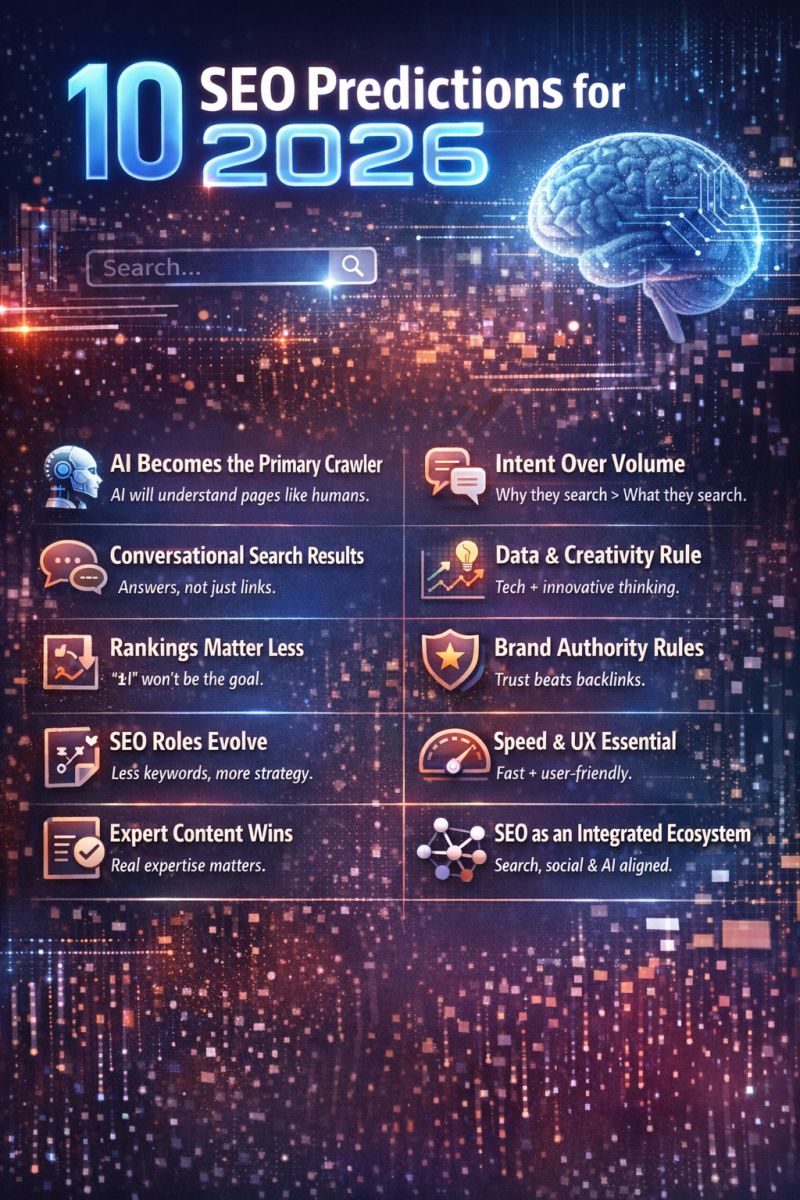
Several variables feed into the predictive models. Understanding these helps you align your content strategy with what the AI expects.
- Content Freshness: AI predicts that updated content is more relevant. Pages that are regularly revised with new data and statistics tend to rank higher for time-sensitive queries.
- E-E-A-T Signals: Experience, Expertise, Authoritativeness, and Trustworthiness. The AI analyzes author bios, citations, and external references to gauge credibility.
- Page Experience: Core Web Vitals—loading speed, interactivity, and visual stability—are direct ranking factors. AI predicts that fast, stable pages provide a better user experience.
- Backlink Quality: Not all links are equal. AI evaluates the context of the linking page. A link from a reputable industry journal carries more weight than a link from a random blog.
- Search Intent Matching: The AI classifies queries into informational, navigational, transactional, or commercial investigation. Your page must match the dominant intent to rank.
- Speed: AI processes millions of data points in seconds, providing insights that would take a human analyst weeks to compile.
- Accuracy: Machine learning models identify subtle correlations that are invisible to the human eye, leading to more precise forecasts.
- Scalability: Whether you manage one website or a portfolio of hundreds, AI can monitor and predict performance across all of them simultaneously.
- Proactive Adjustments: Instead of reacting to a ranking drop, you can adjust your content before the drop occurs based on predictive alerts.
- Over-Reliance on Automation: AI provides predictions, but it cannot replace human judgment. You still need to understand your audience and your brand voice. Blindly following AI suggestions can lead to generic, soulless content.
- Ignoring User Feedback: AI analyzes data, but it does not read comments or emails. If your users are asking questions that your content does not answer, the A Pay attention to direct feedback and update your content accordingly.
- Chasing Every SERP Feature: Not every page needs to target a featured snippet. Trying to force a short answer into a page that requires a deep dive can hurt readability. Focus on the features that align with your content type.
- Neglecting Mobile Experience: AI predictions heavily weight mobile usability. If your page has intrusive pop-ups or slow loading times on mobile, no amount of content optimization will save your rankings.
Analyzing SERP Features
Modern SERPs are crowded with features: featured snippets, people-also-ask boxes, image packs, and video carousels. AI SEO ranking predictions include the likelihood of your page being selected for these features. For instance, a concise, well-structured answer at the top of your article increases the chance of winning a featured snippet.
The AI predicts that users prefer quick answers. If your content provides a direct response in a bulleted list or a short paragraph, it is more likely to be featured. This visibility often leads to higher organic CTR, even if the user doesn’t click through to your site.
Benefits of Using AI for SEO Predictions
Adopting AI-driven tools for ranking predictions offers tangible advantages over manual analysis.
Limitations and Challenges
Despite the power of AI, there are limitations. Predictive models are not clairvoyant. They rely on historical data, which means they may miss sudden shifts in user behavior or algorithm updates. A viral trend or a major news event can disrupt predictions overnight.
Additionally, AI tools can be expensive. High-end platforms with advanced predictive capabilities often require a significant subscription fee. For small businesses, this cost may be prohibitive. However, even free tools like Google Search Console provide basic performance data that can be manually analyzed for trends.
AI SEO Ranking Predictions vs. Traditional SEO Forecasting
To appreciate the value of AI, it helps to compare it with traditional methods.
| Feature | Traditional SEO Forecasting | AI SEO Ranking Predictions |
|---|---|---|
| Data Source | Historical rankings and backlinks | Real-time user behavior, NLP, and SERP features |
| Analysis Method | Manual review and spreadsheet tracking | Machine learning and pattern recognition |
| Update Frequency | Weekly or monthly | Continuous, real-time |
| Focus | Keyword positions | User intent and content relevance |
| Adaptability | Reactive to algorithm changes | Proactive to predicted changes |
Traditional forecasting tells you where you were. AI predictions tell you where you are going. The latter is far more valuable in a competitive market where early adaptation is key.
Practical Applications: How to Use AI Predictions in Your Strategy
Integrating AI predictions into your daily workflow requires a structured approach.
Step 1: Conduct an AI-Powered Content Audit
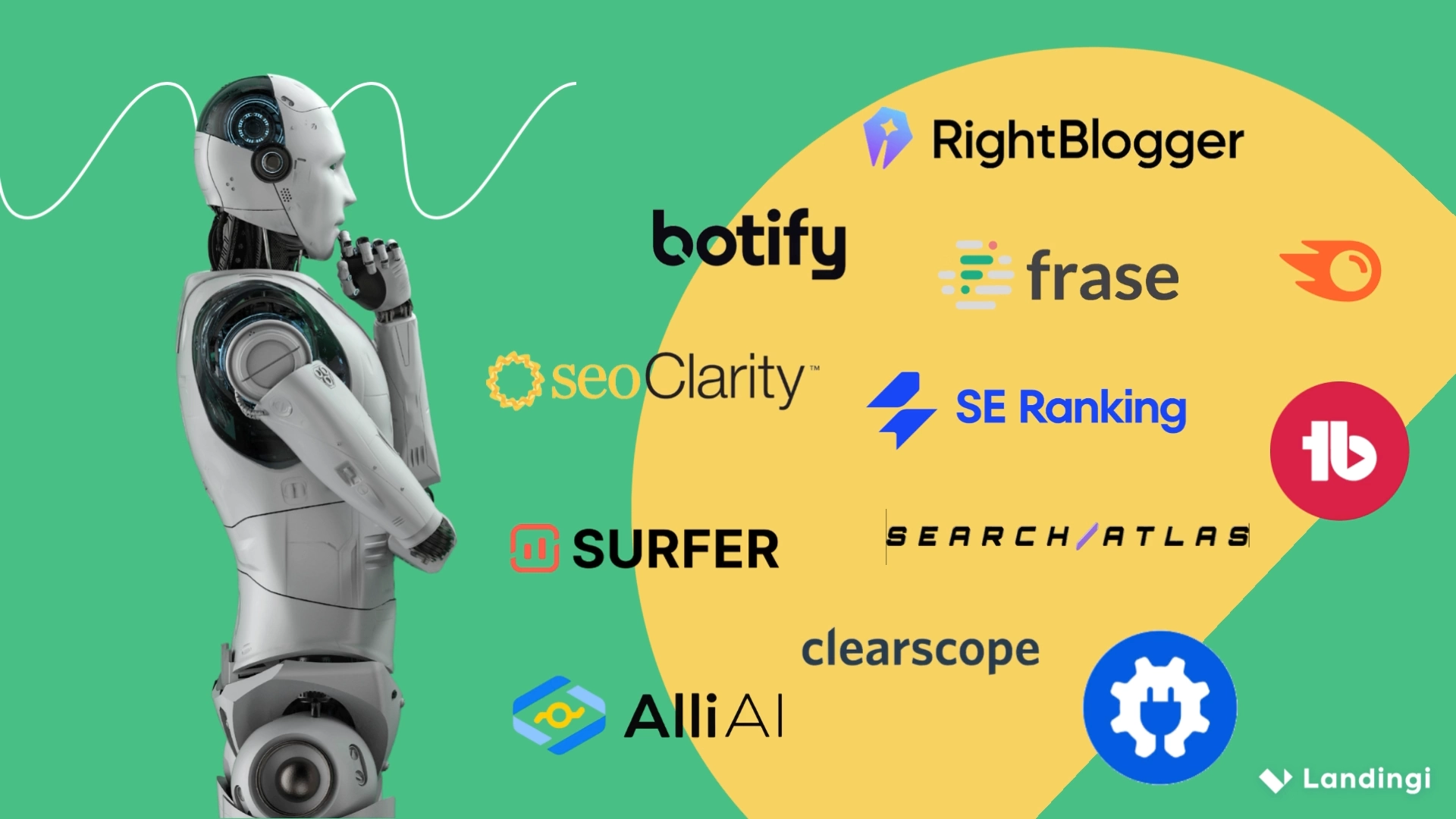
Start by using tools like Clearscope, Surfer SEO, or MarketMuse to analyze your existing content. These platforms use AI to compare your pages against top-ranking competitors. They identify gaps in topical coverage, missing keywords, and readability issues. The output is a prioritized list of pages that need updates.
Focus on pages that are on the second or third page of results. These are the ones where small improvements can push you into the top ten. The AI prediction will show you the estimated traffic gain for each optimization, helping you prioritize your efforts.
Step 2: Optimize for Search Intent, Not Just Keywords
Use AI tools to analyze the top 10 results for your target keyword. Look at the format of the content. Are they listicles, guides, or product pages? Are they long-form or short? The AI can classify the dominant intent and suggest the optimal content structure.
For example, if the top results for “best CRM software” are all comparison tables, your content should include a detailed comparison table as well. The AI predicts that users looking for this query want to compare features side-by-side, not read a philosophical essay on customer relations.
Step 3: Enhance Content with Structured Data
Schema markup helps AI understand your content better. By adding structured data for articles, FAQs, reviews, and products, you provide explicit signals about the meaning of your page. This increases the accuracy of AI SEO ranking predictions for your site.
Implementing FAQ schema is particularly effective. It allows your content to appear in the “People Also Ask” section, which is a high-visibility SERP feature. The AI predicts that pages with clear, structured answers are more likely to be shown in these rich results.
Step 4: Monitor Predictive Metrics Regularly
Set up a dashboard that tracks predictive scores from your AI tools. Look for sudden drops in content score, which may indicate that a competitor has published a better piece or that the algorithm has shifted. Respond quickly by updating your content with new information, better examples, or improved formatting.
Also, monitor your click-through rate from the SERP. If your impressions are high but clicks are low, the AI predicts that your title tag and meta description are not compelling enough. Use A/B testing to try different variations and see which ones improve CTR.
Common Mistakes in Using AI Predictions
Even with advanced tools, marketers often fall into traps that undermine their efforts.
How to Avoid These Pitfalls
The solution is a balanced approach. Use AI as a guide, not a dictator. Combine data-driven insights with qualitative analysis. Read your content out loud to see if it flows naturally. Ask a colleague to review it for clarity. The best results come from a partnership between human creativity and machine efficiency.
Regularly review your analytics to see if the AI predictions are accurate. If the tool predicted a traffic increase but you saw a decrease, investigate why. The algorithm may have changed, or your competitors may have launched a new campaign. Use this information to refine your future strategies.
Important Notes on Algorithm Updates
Search engines are constantly evolving. Google releases thousands of updates each year, though most are minor. Major core updates, however, can significantly impact rankings. AI prediction tools are designed to adapt to these changes, but they require time to recalibrate.
After a core update, do not panic if your rankings fluctuate. Wait a few days for the dust to settle. Then, use your AI tools to re-evaluate your content. The predictions will reflect the new reality, showing you which pages need attention. Historically, pages that focus on genuine user value and expertise tend to recover or even improve after core updates.
It is also crucial to diversify your traffic sources. Relying solely on organic search is risky. Build a presence on social media, email newsletters, and other channels. This way, if an algorithm update temporarily hurts your rankings, you do not lose all your traffic.
Frequently Asked Questions
How accurate are AI SEO ranking predictions?
Accuracy varies by tool and industry. Generally, they are highly accurate at identifying trends and potential issues. However, they cannot predict sudden external events like a competitor’s viral campaign or a global news story. They are best used as a strategic guide rather than a guarantee of specific positions.
Do I need expensive software to use AI predictions?
No. While premium tools offer advanced features, you can start with free resources. Google Search Console provides data on impressions, clicks, and average position. Google’s PageSpeed Insights gives you Core Web Vitals scores. Combining these free tools with manual analysis can give you a solid foundation.
Will AI replace SEO professionals?
A Routine tasks like keyword research and meta tag generation will be automated. The focus will shift to strategic thinking, content creation, and user experience design. Professionals who embrace A
How often should I update my content based on AI predictions?
T It depends on your industry and the competitiveness of your keywords. For fast-moving niches like technology or finance, monthly updates may be necessary. For evergreen topics, a quarterly review is often sufficient. The key is to monitor your predictive scores and act when you see a decline.
What is the biggest factor in AI ranking predictions?
Content relevance is the biggest factor. The AI wants to show users the most helpful result. This means your content must thoroughly answer the query, be easy to read, and demonstrate expertise. Secondary factors include page speed, mobile-friendliness, and backlink quality.
Conclusion
The era of guessing and hoping in SEO is over. AI SEO ranking predictions offer a data-driven path to higher visibility, allowing you to anticipate changes and act with confidence. By understanding how machine learning models evaluate content, you can create pages that satisfy both the algorithm and the human reader.
The key takeaway is to integrate AI insights into a holistic strategy that values quality, relevance, and user experience. Do not chase every metric blindly. Instead, use predictions to inform your creative process. Write for your audience first, but let the data guide your structure, format, and topics.
As search engines become more intelligent, the gap between technical optimization and genuine value will narrow. The websites that thrive will be those that treat AI as a partner in delivering exceptional content. Start using predictive tools today, monitor your results, and adapt. The future of search belongs to those who prepare for it now.
Xem thêm:
- AI SEO NeuronWriter: The Complete Guide to Data-Driven Content Optimization
- AI SEO Ecommerce Schema: The Complete Guide to Structured Data That Drives Sales
- AI SEO Server Logs: The Complete Guide to Unlocking Hidden Search Insights
- AI SEO Content Research: The Complete Guide to Data-Driven Content That Ranks
- AI SEO Masterclass: The Complete Guide to Dominating Search in 2025
Bài viết cùng chủ đề:

AI SEO SEO Automation with Make: The Complete Workflow Guide

AI SEO SEO Automation with Zapier: The Complete Workflow Guide

AI SEO SEO Automation with n8n: The Complete Workflow Guide
AI SEO SEO Automation with Gemini: The Complete Guide to Scaling Organic Growth

AI SEO SEO Automation with Claude: The Complete Guide to Scaling Content in 2025

AI SEO SEO Automation with ChatGPT: The Complete Playbook for 2025

AI SEO & SEO Automation for Affiliate Sites: The 2025 Playbook for Passive Income Growth
AI SEO & SEO Automation for Bloggers: The Complete Guide to Scaling Your Content

AI SEO & SEO Automation for Agencies: The Complete 2025 Playbook

AI SEO and SEO Automation for Ecommerce: The Complete Playbook for 2025

AI SEO & SEO Automation for WordPress: The Complete Playbook for 2025
AI SEO SEO Automation Strategy: The Complete Playbook for 2025

Mastering the AI SEO SEO Automation Process: A Complete Guide to Scaling Organic Growth
AI SEO SEO Automation System: The Complete Guide to Scaling Organic Growth in 2025
AI SEO SEO Automation Platform: The Complete Guide to Scaling Organic Growth in 2025
AI SEO SEO Automation Software: The Complete Guide to Scaling Organic Growth in 2025















