
No products in the cart.
AI SEO Schema Markup Optimization: The Complete Guide to Structured Data in 2025
10
Aug
Aug
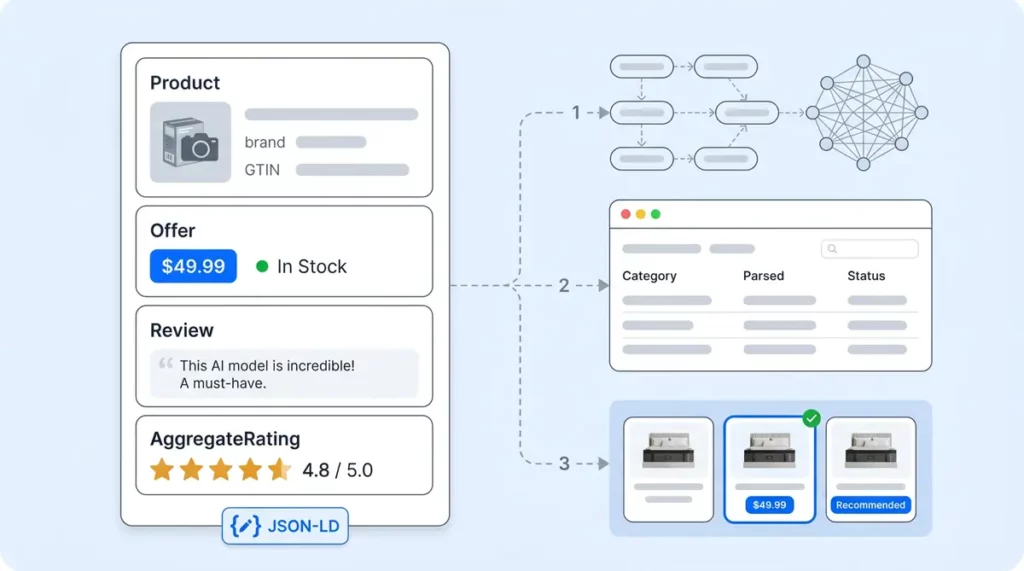
AI SEO Schema Markup Optimization has become the defining factor between websites that capture rich results and those buried on page two of search results. As search engines increasingly rely on machine learning to interpret content, structured data acts as the universal translator that helps AI systems understand exactly what your pages mean. This comprehensive guide explores how artificial intelligence transforms schema implementation, why it matters for modern search visibility, and how you can leverage these techniques to outperform competitors in an AI-driven search landscape.
Understanding AI SEO Schema Markup Optimization

Schema markup, also known as structured data, is a semantic vocabulary of tags that you add to your HTML to improve the way search engines read and represent your page in search results. When we talk about AI SEO Schema Markup Optimization, we refer to the process of using artificial intelligence tools and machine learning algorithms to create, implement, test, and refine structured data at scale.
Traditional schema implementation required manual coding and constant updates. AI-powered optimization changes this dynamic entirely. Machine learning models analyze search engine result pages (SERPs), identify which schema types generate rich results for specific queries, and automatically recommend or implement the most effective markup for your content.
The Evolution from Manual Markup to AI-Driven Schema
In the early days of structured data, webmasters manually added JSON-LD or microdata snippets to their templates. This approach worked for simple pages but failed at scale. Large websites with thousands of product pages, articles, or event listings found it impossible to maintain accurate, up-to-date schema across every URL.
AI SEO Schema Markup Optimization solves this scalability problem. Natural language processing (NLP) models read your content, identify entities, relationships, and attributes, then generate appropriate schema markup automatically. This dynamic approach ensures that structured data always matches the actual content on the page, eliminating the common problem of outdated or mismatched markup.
Why AI-Powered Schema Markup Matters for Search Rankings
Search engines like Google have explicitly stated that structured data is not a direct ranking factor. However, the indirect benefits are substantial. Rich results generated from schema markup lead to higher click-through rates (CTR), which correlates with improved rankings over time.
More importantly, AI-driven search systems like Google’s Search Generative Experience (SGE) and Bing Chat rely heavily on structured data to source answers. When your content has clear, comprehensive schema markup, AI systems can confidently cite your website as the source for featured snippets, knowledge panels, and AI-generated answers.
How AI Search Engines Use Schema Data
Modern search engines process schema markup through entity-based indexing. Instead of treating your page as a string of keywords, AI systems extract entities (people, places, products, events) and their relationships. This entity graph allows search engines to understand context, answer complex queries, and connect your content to related topics across the web.
For example, a recipe page with proper Recipe schema tells Google’s AI not just that the page contains cooking instructions, but that it includes specific ingredients, cooking times, nutritional information, and user ratings. This granular understanding enables the AI to match your content with highly specific user queries like “gluten-free chocolate cake recipe under 30 minutes.”
Core Components of AI SEO Schema Markup Optimization
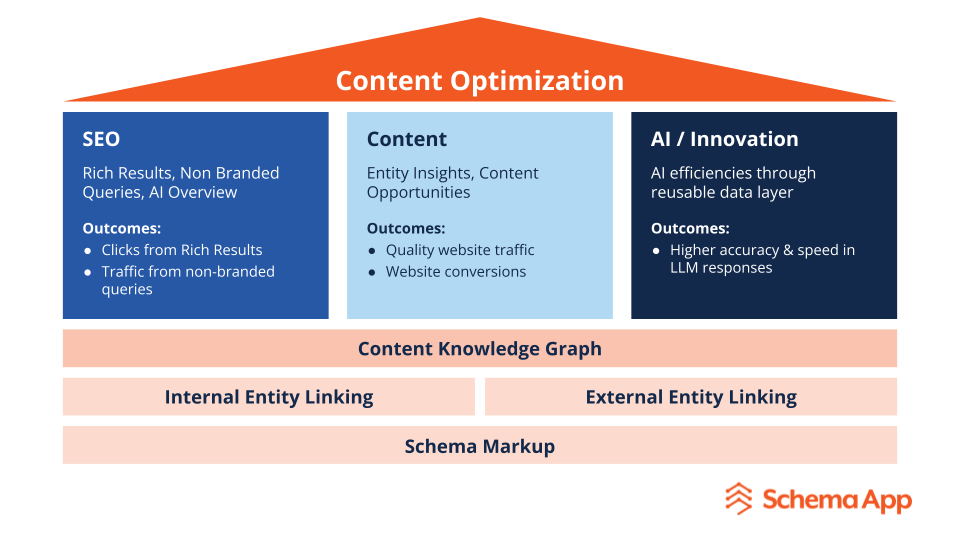
Effective AI-driven schema optimization involves several interconnected components that work together to maximize search visibility.
Entity Recognition and Knowledge Graphs
AI systems excel at identifying entities within your content. Through named entity recognition (NER), machine learning models extract people, organizations, locations, products, and concepts. This information feeds into knowledge graphs that connect your content to broader semantic networks.
When optimizing schema with AI, the system ensures that your markup aligns with the entities actually present in your content. This alignment prevents the common error of marking up entities that don’t exist on the page, which can trigger manual actions or reduce trust signals.
Dynamic Schema Generation
Static schema templates become outdated quickly. AI SEO Schema Markup Optimization uses dynamic generation that adapts to content changes in real-time. If you update a product price, add a new FAQ section, or change an event date, the AI system automatically updates the corresponding schema markup.
This dynamic capability is particularly valuable for e-commerce sites with fluctuating inventory, news sites with constantly updating articles, and local businesses with changing hours or services.
Predictive Schema Selection
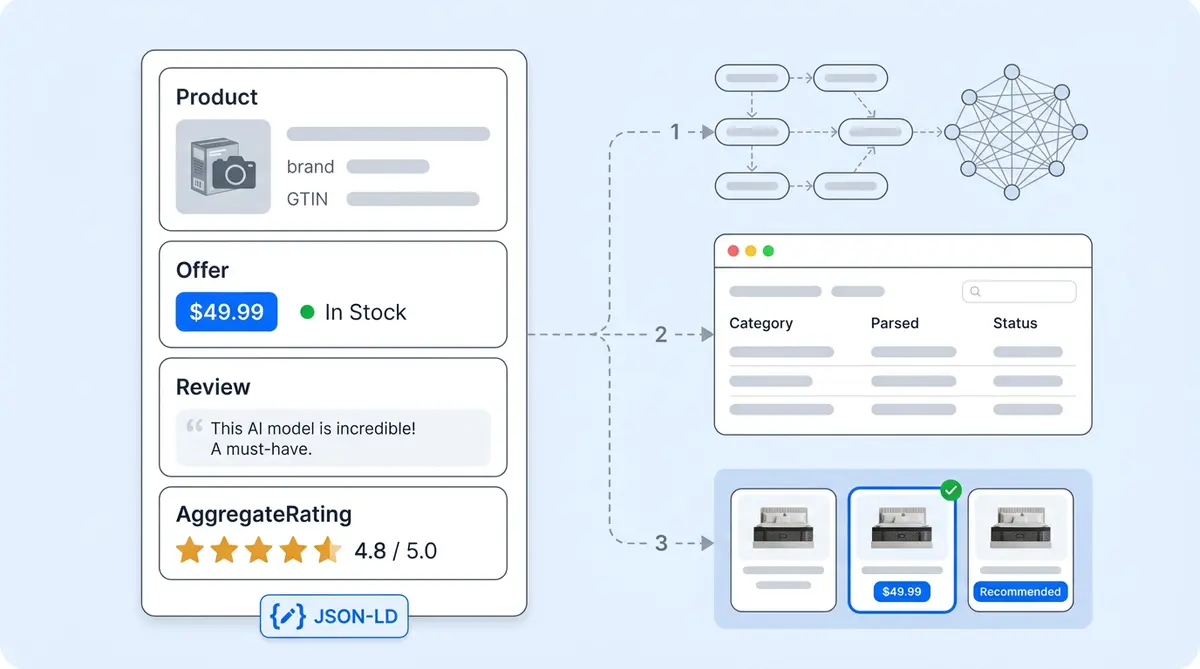
Not all schema types are equally valuable for every page. AI algorithms analyze your content, industry, competition, and search intent to predict which schema types will generate the most beneficial rich results. For a product page, the AI might prioritize Product, Offer, and Review schema. For a blog post, it might recommend Article, FAQPage, and HowTo schema.
This predictive selection prevents schema bloat, where websites add every possible schema type without strategic consideration. Search engines may ignore excessive or irrelevant markup, so precision matters more than volume.
Types of Schema Markup That Benefit Most from AI Optimization
While AI can optimize any schema type, certain structured data formats show particularly strong results when enhanced with machine learning.
Product and Offer Schema
E-commerce websites benefit enormously from AI-optimized Product schema. Machine learning models extract accurate pricing, availability, review ratings, and shipping information directly from your database or content management system. This automation eliminates the manual effort of updating schema every time inventory changes.
AI systems also detect price inconsistencies across different pages and ensure that structured data matches what users actually see, which is critical for maintaining Google’s merchant listing eligibility.
Article and NewsArticle Schema
Publishers use AI SEO Schema Markup Optimization to ensure their articles appear in Google News, Top Stories carousels, and rich results. AI tools analyze headline patterns, publication dates, author information, and image metadata to generate accurate NewsArticle markup that meets Google’s strict guidelines.
These systems also help publishers implement proper article expiration dates and avoid the common mistake of marking up opinion pieces as news articles, which can lead to penalties.
FAQ and HowTo Schema
FAQPage and HowTo schema are prime candidates for AI optimization because they require understanding of question-answer relationships and step-by-step instructions. NLP models identify natural question patterns in your content and structure them appropriately for rich results.
AI systems also monitor changes in Google’s rich results policies. When Google removed FAQ rich results for most websites in 2023, AI-powered tools quickly identified which pages lost eligibility and recommended alternative schema strategies.
Local Business and Event Schema
Local businesses benefit from AI-optimized LocalBusiness schema that automatically updates hours, addresses, and service areas. Event schema powered by AI ensures that dates, locations, and ticket availability remain current without manual intervention.
These automated updates are particularly important for businesses with multiple locations or events that change frequently, where manual schema maintenance would be impractical.
Practical Implementation Guide for AI SEO Schema Markup Optimization

Implementing AI-driven schema optimization requires a strategic approach that combines technology selection, content analysis, and continuous monitoring.
Step 1: Audit Your Current Schema Implementation
Begin by using Google’s Rich Results Test and Schema Markup Validator to assess your current structured data. Identify pages with errors, warnings, or missing schema opportunities. This audit provides a baseline for measuring the impact of AI optimization.
Pay special attention to pages that rank on page one but lack rich results. These pages represent immediate opportunities for CTR improvement through better schema.
Step 2: Select the Right AI Schema Tools
Several AI-powered schema tools exist in the market, each with different strengths. Some popular options include:
- Schema App with its AI-powered structured data generation
- WordLift, which uses NLP to create entity-based schema
- Merchant Center’s automatic product feed enhancements
- Custom machine learning pipelines built on Google Cloud or AWS
- Always use JSON-LD format, which Google explicitly recommends over microdata and RDFa
- Include all required properties for each schema type; missing required fields prevent rich result generation
- Ensure schema markup is crawlable and not blocked by robots.txt or meta tags
- Use absolute URLs in schema properties to avoid crawl errors
- Test schema changes in a staging environment before deploying to production
- Maintain a schema inventory document that tracks all implemented markup across your site
- Coordinate schema efforts with your content team to ensure alignment between structured data and editorial strategy
Choose tools that integrate with your content management system and support the schema types most relevant to your business.
Step 3: Map Schema to Search Intent
Use AI analytics tools to understand the search intent behind your target keywords. Different intents require different schema types. Informational queries benefit from Article and FAQ schema. Transactional queries need Product and Offer schema. Navigational queries may require Organization or WebSite schema.
AI tools can analyze SERP features for your target keywords and identify which rich results appear. This competitive analysis reveals which schema types your competitors use successfully.
Step 4: Generate and Implement Schema
Once you have identified the optimal schema types, use AI generation tools to create JSON-LD markup. Ensure that the markup is placed in the head section of your HTML or injected via Google Tag Manager. Test each implementation using the Rich Results Test before deploying to production.
For dynamic websites, implement server-side rendering of schema that pulls data directly from your database. This approach ensures that schema always reflects current content.
Step 5: Monitor Performance and Iterate
Track the appearance of rich results in Google Search Console. Monitor CTR changes for pages with schema versus those without. Use AI-powered analytics to identify patterns in which schema types drive the most engagement.
Regularly review Google’s structured data documentation for policy changes. AI tools can automate this monitoring and alert you to potential compliance issues.
Benefits of AI SEO Schema Markup Optimization
The advantages of combining artificial intelligence with structured data optimization extend beyond simple rich result generation.
Enhanced Search Visibility
Websites with comprehensive, accurate schema markup appear in more SERP features. These include carousels, knowledge panels, sitelinks, and AI-generated answers. Each additional SERP feature increases your brand’s visibility without additional advertising spend.
Improved Click-Through Rates
Rich results occupy more space on the search results page and provide users with immediate information. This enhanced presentation naturally attracts more clicks. Studies consistently show that pages with rich results achieve significantly higher CTRs than plain listings.
Voice Search Optimization
Voice assistants like Siri, Alexa, and Google Assistant rely heavily on structured data to answer user queries. AI-optimized schema ensures that your content is accessible to voice search, capturing traffic from this growing segment.
Future-Proofing for AI Search
As search engines become increasingly AI-driven, the importance of structured data will only grow. AI systems need clear, unambiguous signals to understand and cite your content. Schema markup provides these signals in a format that machine learning models can process efficiently.
Limitations and Challenges of AI Schema Optimization
While AI SEO Schema Markup Optimization offers significant benefits, it also presents challenges that require careful management.
Data Quality Dependency
AI systems are only as good as the data they process. If your content contains inaccuracies, outdated information, or ambiguous language, the AI-generated schema will reflect these issues. Maintaining high content quality remains essential.
Implementation Complexity
Integrating AI schema tools with existing content management systems can be technically challenging. Organizations with legacy systems may require significant development resources to implement automated schema generation.
Policy Compliance Risks
Search engines frequently update their structured data guidelines. AI systems must be continuously trained on these updates to avoid generating markup that violates current policies. Non-compliant schema can result in manual actions or loss of rich result eligibility.
AI SEO Schema Markup Optimization vs Traditional Methods
Understanding the differences between AI-driven and traditional schema implementation helps organizations make informed decisions about their approach.
| Aspect | Traditional Schema | AI-Powered Schema |
|---|---|---|
| Implementation Speed | Manual, time-consuming | Automated, near-instant |
| Scalability | Limited by human resources | Unlimited, handles thousands of pages |
| Accuracy | Prone to human error | High, with continuous learning |
| Adaptability | Requires manual updates | Self-adjusting to content changes |
| Cost | High labor costs | Initial tool investment, lower ongoing costs |
| Competitive Insights | Limited, manual research | Real-time SERP analysis |
Traditional methods still work for small websites with minimal schema needs. However, for organizations with dynamic content, multiple product lines, or aggressive growth targets, AI-powered optimization provides a clear competitive advantage.
Common Mistakes in AI SEO Schema Markup Optimization
Even with advanced AI tools, organizations frequently make errors that undermine their structured data efforts.
Over-Optimization and Schema Stuffing
Adding excessive schema types to a single page confuses search engines and dilutes the impact of relevant markup. AI tools should be configured to select only the most valuable schema types for each page, not to maximize the number of schema properties.
Ignoring Content-Schema Alignment
Schema markup must accurately reflect the visible content on the page. AI systems sometimes generate markup based on incomplete or misinterpreted content. Regular audits ensure that structured data matches what users and search engines actually see.
Neglecting Mobile Schema
With mobile-first indexing, schema markup must be optimized for mobile rendering. Some schema types, like HowTo, have specific mobile display requirements. AI tools should test schema across multiple device types.
Failing to Monitor Rich Result Performance
Implementing schema is not a one-time task. Rich result eligibility changes, search engine policies evolve, and competitor strategies shift. Continuous monitoring and adjustment are essential for sustained success.
Important Notes for Successful AI Schema Implementation
Several critical considerations ensure that your AI SEO Schema Markup Optimization efforts deliver maximum return on investment.
Frequently Asked Questions
What is AI SEO Schema Markup Optimization?
AI SEO Schema Markup Optimization is the process of using artificial intelligence and machine learning algorithms to create, implement, test, and refine structured data markup on websites. This approach automates schema generation, ensures accuracy at scale, and adapts markup to changing content and search engine requirements.
Does schema markup directly improve search rankings?
Schema markup is not a direct ranking factor according to Google. However, it improves click-through rates through rich results, enhances content understanding for AI search systems, and increases the likelihood of appearing in featured snippets and knowledge panels. These indirect benefits contribute to improved search performance over time.
Which schema types are most important for AI search optimization?
The most impactful schema types include Product, Article, FAQPage, HowTo, LocalBusiness, Event, Review, and Organization. The optimal selection depends on your content type and target search intent. AI tools can analyze your pages and recommend the most valuable schema types for your specific situation.
How long does it take to see results from schema optimization?
Rich results can appear within a few days of implementing valid schema markup. However, significant improvements in CTR and rankings typically take several weeks to materialize as search engines recrawl and reprocess your pages. Continuous optimization and monitoring are necessary for sustained results.
Can AI tools replace manual schema implementation entirely?
AI tools can automate most schema generation and maintenance tasks. However, human oversight remains important for strategic decisions, policy compliance, and handling edge cases that AI systems may not fully understand. The most effective approach combines AI automation with human expertise.
Conclusion
AI SEO Schema Markup Optimization represents the convergence of two powerful trends in digital marketing: the increasing sophistication of search engine algorithms and the practical application of artificial intelligence to solve complex SEO challenges. As search engines continue to evolve toward entity-based understanding and AI-generated answers, structured data becomes the critical bridge between your content and machine learning systems.
Organizations that embrace AI-powered schema optimization position themselves for success in the AI-driven search landscape. The ability to generate accurate, scalable, and adaptive structured data provides a sustainable competitive advantage that goes beyond traditional SEO tactics. By implementing the strategies outlined in this guide, you can ensure that your website communicates effectively with both human users and the AI systems that increasingly mediate access to information.
The future of search is intelligent, and intelligent search requires intelligent structured data. AI SEO Schema Markup Optimization is not just a technical enhancement; it is a fundamental component of modern search visibility strategy. Start implementing these techniques today to secure your place in the rich results of tomorrow.
Xem thêm:
- AI SEO Article Outline Generator: The Complete Guide to Smarter Content Planning
- AI SEO Engagement Metrics: The Complete Guide to Measuring What Truly Matters in 2025
- AI Robots.txt: The Complete Guide to Controlling AI Crawlers on Your Website
- Mastering AI EEAT Optimization: The Strategic Blueprint for Next-Level Search Authority
- AI SEO for Coaches: The Complete Guide to Ranking in 2025
Bài viết cùng chủ đề:

AI SEO SEO Automation with Make: The Complete Workflow Guide

AI SEO SEO Automation with Zapier: The Complete Workflow Guide

AI SEO SEO Automation with n8n: The Complete Workflow Guide
AI SEO SEO Automation with Gemini: The Complete Guide to Scaling Organic Growth

AI SEO SEO Automation with Claude: The Complete Guide to Scaling Content in 2025

AI SEO SEO Automation with ChatGPT: The Complete Playbook for 2025

AI SEO & SEO Automation for Affiliate Sites: The 2025 Playbook for Passive Income Growth
AI SEO & SEO Automation for Bloggers: The Complete Guide to Scaling Your Content

AI SEO & SEO Automation for Agencies: The Complete 2025 Playbook

AI SEO and SEO Automation for Ecommerce: The Complete Playbook for 2025

AI SEO & SEO Automation for WordPress: The Complete Playbook for 2025
AI SEO SEO Automation Strategy: The Complete Playbook for 2025

Mastering the AI SEO SEO Automation Process: A Complete Guide to Scaling Organic Growth
AI SEO SEO Automation System: The Complete Guide to Scaling Organic Growth in 2025
AI SEO SEO Automation Platform: The Complete Guide to Scaling Organic Growth in 2025
AI SEO SEO Automation Software: The Complete Guide to Scaling Organic Growth in 2025















