
No products in the cart.
AI SEO Category Descriptions: The Complete Guide to Automated Product Taxonomy
10
Aug
Aug
AI SEO category descriptions have transformed how e-commerce stores and content-heavy websites approach product taxonomy. These algorithmically generated text blocks explain what shoppers find within a specific collection, such as “Men’s Running Shoes” or “Organic Skincare for Sensitive Skin.” Unlike generic placeholder text, AI SEO category descriptions leverage natural language processing to match user intent, incorporate semantic keywords, and improve internal linking structure. This guide explores how artificial intelligence creates category copy that satisfies both search engines and human readers, while providing actionable strategies for implementation.
What Are AI SEO Category Descriptions?
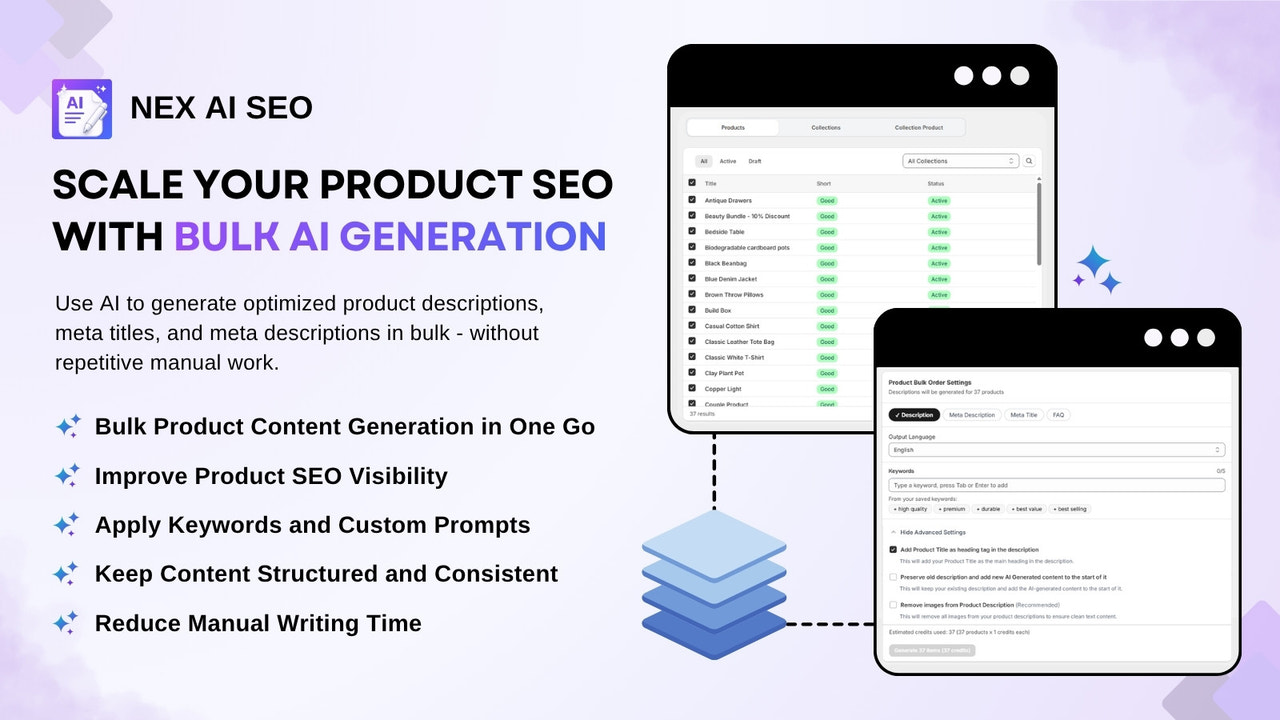
AI SEO category descriptions are automated text snippets generated by machine learning models to describe a group of related products or content pieces. These descriptions appear on collection pages, blog hub pages, or service category pages. The AI analyzes existing product data, customer search queries, competitor content, and on-site metrics to produce unique, contextually relevant copy that targets specific keyword clusters.
The core difference between traditional category descriptions and AI-generated versions lies in scalability and adaptability. A human writer might craft fifty category descriptions for a mid-sized store, but an enterprise marketplace with thousands of categories requires automation. AI systems generate descriptions at scale, update them based on performance data, and personalize variations for different audience segments.
How AI Understands Category Context
Modern AI models use transformer-based architectures trained on massive datasets of web content. When generating category descriptions, the system processes several inputs: the category name, product titles within that category, customer reviews mentioning the category, search query logs, and structured data like price ranges or material specifications. This multi-layered analysis ensures the output reflects actual inventory rather than generic templates.
For example, a category called “Wireless Earbuds” would trigger analysis of product specs like battery life, Bluetooth version, noise cancellation features, and price points. The AI then crafts descriptions that highlight these differentiators while naturally incorporating long-tail keywords such as “best wireless earbuds for running” or “affordable noise-cancelling earbuds.”
Why AI SEO Category Descriptions Matter for Rankings
Search engines evaluate category pages as important navigational hubs. A well-optimized category description signals relevance for a broad set of keywords, reduces bounce rates by setting clear expectations, and distributes link equity throughout the site architecture. Google’s helpful content system prioritizes pages that demonstrate expertise and direct experience with the subject matter.
Category pages often compete for high-intent keywords where users are close to making a purchase decision. A shopper searching “leather crossbody bags under 100” expects to land on a category page that immediately confirms product availability, price range, and style variations. AI-generated descriptions that incorporate these specific data points improve click-through rates and conversion potential.
Semantic Keyword Expansion Through AI
Traditional keyword research identifies exact-match phrases, but AI systems understand semantic relationships between terms. For a category like “Sustainable Activewear,” the AI recognizes related concepts: eco-friendly fabrics, recycled polyester, fair trade manufacturing, moisture-wicking properties, and athleisure trends. These related terms get woven into the description naturally, creating topical authority without keyword stuffing.
Natural language processing also identifies question-based queries. If users frequently search “how to choose running shoes for flat feet,” the AI incorporates guidance language into the category description, positioning the page as an informative resource rather than just a product listing.
Key Components of Effective AI-Generated Category Copy
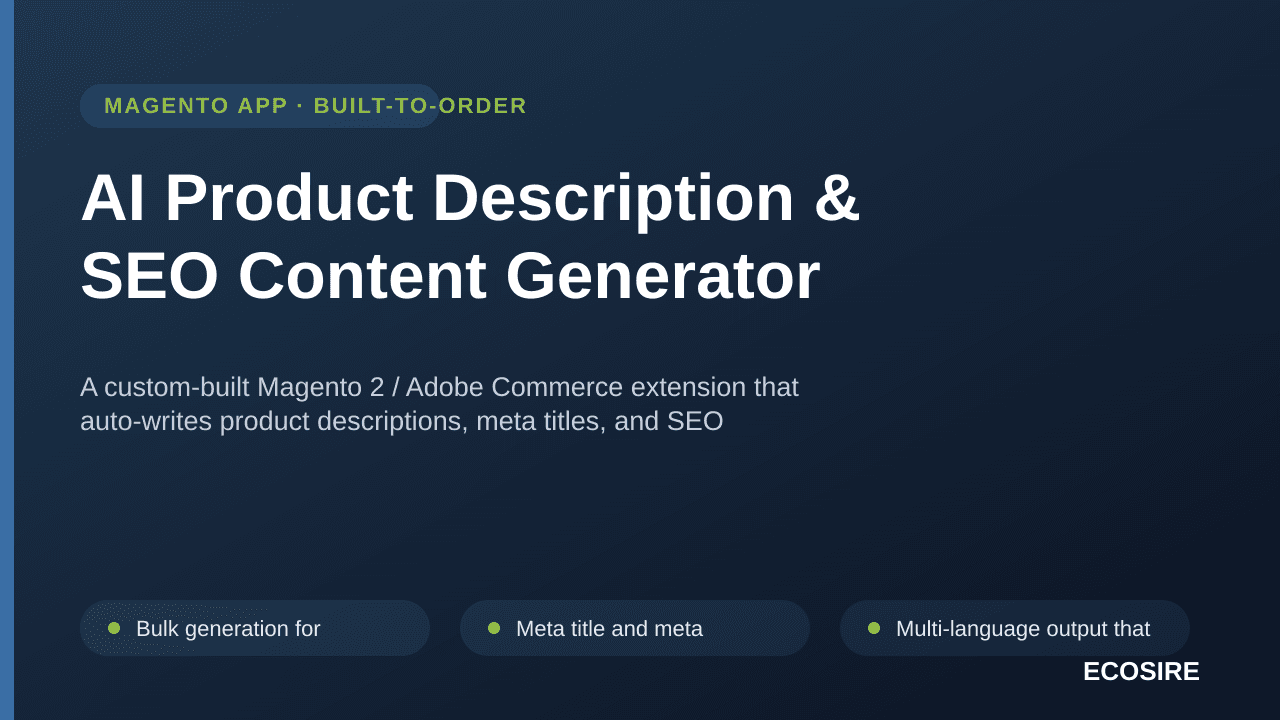
Not all AI-generated descriptions perform equally. High-performing examples share structural and linguistic characteristics that align with both search algorithms and user psychology.
Opening Statement with Primary Keyword
The first sentence should contain the exact category name and primary keyword phrase. This immediate relevance helps search engines understand page focus and assures visitors they found the right collection. For instance: “Explore our premium collection of handcrafted leather bags designed for modern professionals who value durability and timeless style.”
Product Range and Variety Details
Shoppers want to know what options exist within the category. AI descriptions should mention the number of products, available variations (sizes, colors, materials), and any notable subcategories. This information reduces uncertainty and encourages deeper exploration of the category page.
Benefits and Use Cases
Effective descriptions explain why products in this category solve specific problems. The AI analyzes customer reviews and product specifications to identify recurring benefits. For a “Home Office Desks” category, benefits might include ergonomic design, cable management systems, and space-saving dimensions for small apartments.
Trust Signals and Quality Indicators
Mentioning certifications, material sourcing, warranty information, or brand partnerships builds credibility. AI can extract this data from product feeds and integrate it into the description. Phrases like “OEKO-TEX certified fabrics” or “5-year manufacturer warranty” appear naturally within the copy.
Internal Linking Opportunities
AI descriptions can include contextual links to related categories, buying guides, or blog posts. These internal links distribute authority and guide users through the sales funnel. The AI identifies logical connections, such as linking “Camping Tents” to “Sleeping Bags” and “Outdoor Cooking Equipment.”
Benefits of Using AI for Category Descriptions
Implementing AI SEO category descriptions delivers measurable advantages across content operations and search performance.
- Massive Time Savings: Generating descriptions for hundreds of categories manually takes weeks. AI produces drafts in minutes, freeing human writers for strategic tasks.
- Consistent Brand Voice: AI models trained on existing brand guidelines maintain consistent tone and terminology across all category pages.
- Dynamic Updates: When inventory changes or new products arrive, AI regenerates descriptions to reflect current offerings automatically.
- Multilingual Expansion: AI translates and localizes category descriptions for international markets, preserving keyword relevance across languages.
- Data-Driven Optimization: AI systems analyze which descriptions drive conversions and adjust future generations based on performance metrics.
- Competitive Gap Analysis: AI scans competitor category pages to identify missing keywords or value propositions, then incorporates those insights.
Limitations and Challenges of AI-Generated Category Copy
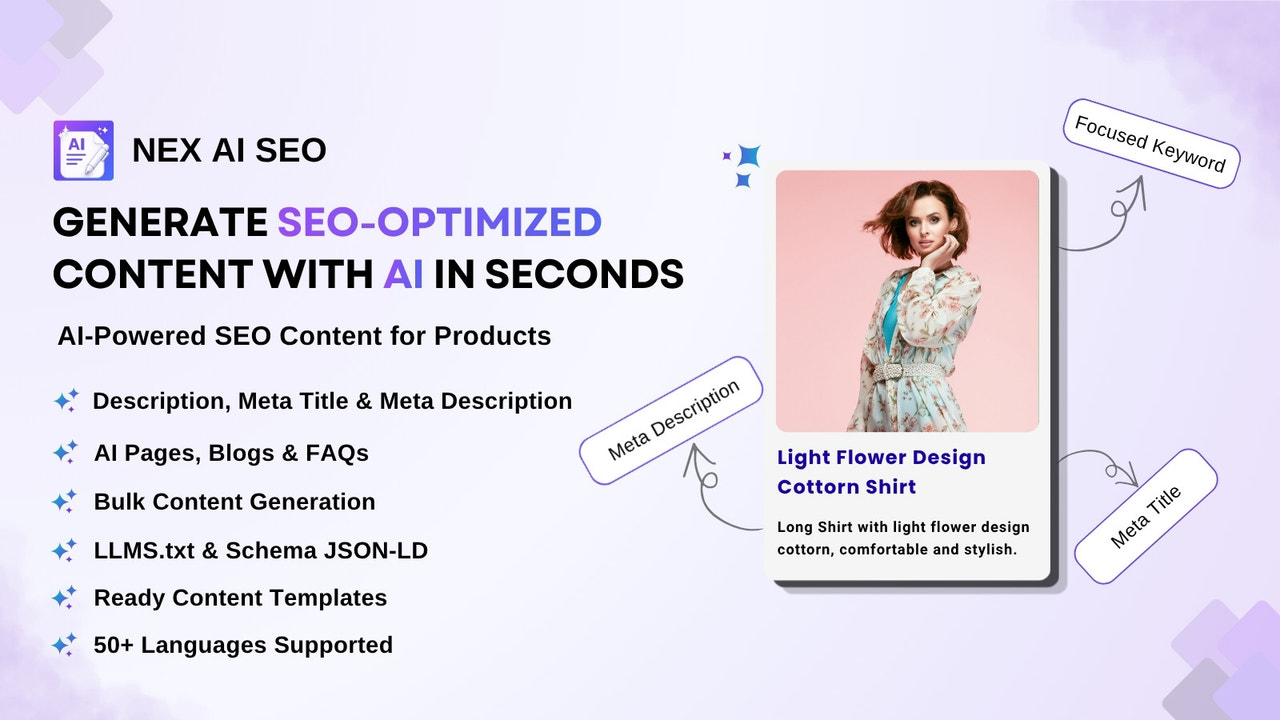
While powerful, AI SEO category descriptions have inherent limitations that require human oversight.
Factual Accuracy Risks: AI models occasionally hallucinate product details or fabricate specifications. A description might claim a product is waterproof when it is only water-resistant. Human review remains essential for verifying claims against actual inventory data.
Brand Nuance Gaps: AI struggles with subtle brand personality elements like humor, cultural references, or industry-specific jargon. A luxury brand’s sophisticated tone differs significantly from a budget retailer’s casual voice, and AI may miss these distinctions without extensive fine-tuning.
Duplicate Content Concerns: If multiple categories share similar products, AI might generate near-identical descriptions. Search engines penalize thin or duplicated content, so each category needs unique angles and differentiating language.
Emotional Connection Deficiency: AI-generated text often lacks the storytelling ability that creates emotional resonance. Descriptions may inform but fail to inspire, reducing engagement for lifestyle-oriented categories.
AI SEO Category Descriptions vs. Human-Written Copy
| Factor | AI-Generated | Human-Written |
|---|---|---|
| Production Speed | Minutes per description | Hours per description |
| Scalability | Unlimited volume | Limited by team capacity |
| Keyword Optimization | Systematic and data-driven | Relies on writer expertise |
| Brand Voice Accuracy | Requires training data | Intuitive understanding |
| Creativity | Formulaic patterns | Unique storytelling |
| Factual Verification | Needs human review | Writer verifies sources |
| Cost Efficiency | Low per-unit cost | High per-unit cost |
| Adaptability to Trends | Quick updates possible | Slower revision cycles |
The optimal approach combines both methods. AI generates initial drafts and handles routine categories, while human writers craft descriptions for flagship categories, new product launches, or pages requiring emotional storytelling.
Step-by-Step Guide to Implementing AI SEO Category Descriptions
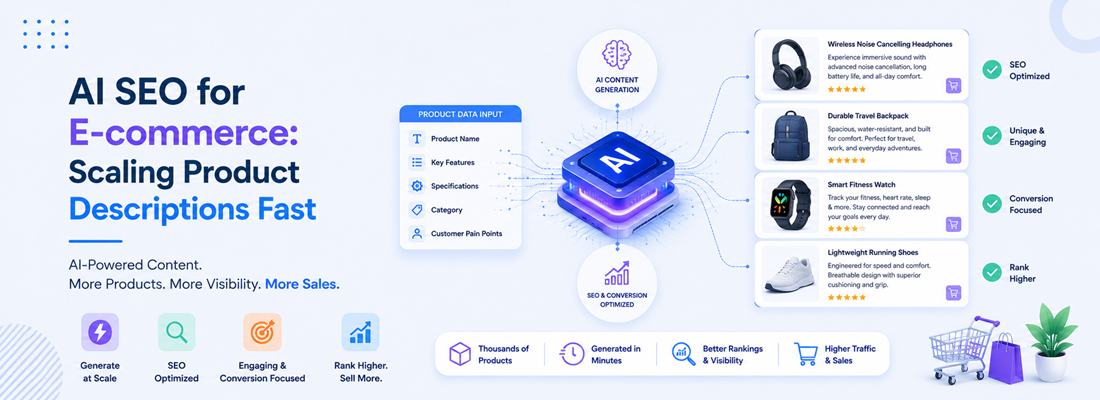
Successful implementation requires a structured workflow that integrates AI tools with human expertise and performance tracking.
Step 1: Audit Existing Category Pages
Review current category descriptions to identify gaps. Look for missing keywords, thin content, outdated product references, or poor readability. Export this audit data to prioritize which categories need AI-generated descriptions first.
Step 2: Prepare Structured Product Data
AI quality depends on input data quality. Ensure product feeds include accurate titles, descriptions, specifications, prices, and attributes. Clean up inconsistencies like duplicate products or missing categories before generating descriptions.
Step 3: Select the Right AI Tool
Several platforms specialize in e-commerce content generation. Options include Jasper, Copy.ai, Writesonic, and custom GPT-based solutions. Evaluate tools based on integration capabilities with your e-commerce platform, language support, and customization options for brand voice.
Step 4: Train the AI on Brand Guidelines
Provide the AI with examples of your best-performing category descriptions, style guides, and customer persona information. This training data helps the model understand your unique tone, preferred vocabulary, and content structure.
Step 5: Generate and Review Drafts
Generate descriptions in batches and assign human editors to review each one. Editors verify factual accuracy, check keyword placement, ensure natural readability, and make necessary adjustments. This hybrid approach maintains quality while maximizing efficiency.
Step 6: Implement and Monitor Performance
Publish approved descriptions and track key metrics: organic traffic to category pages, keyword rankings, time on page, bounce rate, and conversion rate. Use this data to refine prompts and improve future AI generations.
Step 7: Establish Continuous Optimization Cycles
AI descriptions should evolve with changing search trends and inventory. Schedule quarterly reviews where AI regenerates descriptions based on new performance data, updated product lines, and shifting customer preferences.
Common Mistakes When Using AI for Category Descriptions
Avoiding these pitfalls separates successful implementations from failed experiments.
Publishing Without Human Review: AI errors range from minor awkward phrasing to major factual inaccuracies. Always have a human editor review before publishing, especially for categories with complex product specifications.
Ignoring Search Intent Variations: Category pages serve different user intents. Some visitors are researching, others are comparing options, and many are ready to buy. A single description format may not serve all intents effectively. Consider creating variations or supplementary content blocks.
Keyword Over-Optimization: AI tools sometimes generate descriptions stuffed with exact-match keywords, creating unnatural reading experiences. Set guidelines for keyword density and prioritize semantic variations over exact repetitions.
Neglecting Mobile Readability: Category descriptions must be scannable on mobile devices. Avoid long paragraphs and ensure key information appears early in the text. Use bullet points or short sentences for product highlights.
Failing to Update Descriptions: Seasonal trends, new product launches, and changing customer preferences make static descriptions obsolete. Implement a regular update schedule to keep content fresh and relevant.
Important Notes for Maximizing AI Description Performance
Several technical and strategic considerations enhance the effectiveness of AI-generated category copy.
Schema Markup Integration: Pair AI descriptions with structured data markup like ItemList or Product schema. This helps search engines understand the category structure and display rich snippets in search results.
Internal Linking Architecture: Use AI descriptions to naturally incorporate links to subcategories, related products, and informational content. This creates a logical site hierarchy that search engines can crawl efficiently.
User-Generated Content Integration: Supplement AI descriptions with customer reviews, Q&A sections, or user-submitted photos. This authentic content adds freshness and social proof that AI text alone cannot provide.
A/B Testing Different Variations: Generate multiple description versions for high-traffic categories and test them against each other. Measure click-through rates and conversion metrics to identify the most effective approach.
Localization Considerations: For international sites, ensure AI descriptions are properly localized, not just translated. Cultural references, measurement units, and shopping behaviors vary by region and require adaptation.
Frequently Asked Questions About AI SEO Category Descriptions
How long should an AI-generated category description be?
Optimal length varies by industry and category complexity. For most e-commerce categories, 150-300 words provide sufficient detail without overwhelming users. Complex categories with many product variations may benefit from 400-500 words. Focus on covering key information rather than hitting a specific word count.
Will Google penalize AI-generated category descriptions?
Google does not penalize content simply because AI generated it. The search engine evaluates content quality, relevance, and usefulness. AI descriptions that provide accurate, helpful information and match user intent perform well. Thin, duplicated, or low-value AI content receives the same treatment as any other low-quality content.
Can AI descriptions replace human SEO writers entirely?
AI excels at generating baseline descriptions at scale, but human writers remain essential for strategic content, brand storytelling, and nuanced optimization. The most effective approach uses AI for initial drafts and routine categories while reserving human expertise for high-priority pages and creative direction.
What data should I feed into AI tools for best results?
Provide comprehensive product data including titles, descriptions, specifications, prices, and attributes. Include customer search query data, competitor analysis, and your top-performing existing content. The more relevant data the AI receives, the more accurate and effective the generated descriptions become.
How often should AI category descriptions be updated?
Review and update descriptions at least quarterly, or whenever significant changes occur: new product lines, seasonal shifts, rebranding efforts, or major algorithm updates. Continuous monitoring of performance metrics helps identify descriptions that need revision sooner.
Conclusion
AI SEO category descriptions represent a significant advancement in e-commerce content strategy, enabling businesses to maintain comprehensive, optimized category pages at scale. The technology excels at processing large datasets, identifying semantic keyword relationships, and generating consistent copy that aligns with search engine requirements. However, successful implementation demands human oversight for factual accuracy, brand voice consistency, and strategic alignment with business goals.
The most effective approach combines AI efficiency with human creativity and judgment. Start by auditing existing category pages, preparing clean product data, and selecting appropriate AI tools. Establish clear review workflows and performance monitoring systems to ensure continuous improvement. As AI technology evolves, category descriptions will become increasingly sophisticated, incorporating real-time data, personalization, and predictive analytics to deliver even greater SEO value.
Businesses that embrace AI-generated category descriptions while maintaining rigorous quality standards will gain a competitive advantage in search rankings, user engagement, and conversion rates. The key lies in treating AI as a powerful assistant rather than a complete replacement for human expertise, creating a symbiotic relationship that maximizes both efficiency and effectiveness.
Xem thêm:
- AI SEO Broken Link Opportunities: The Complete Guide to Automated Link Recovery
- The Future of AI SEO: How Artificial Intelligence Is Reshaping Search Optimization
- AI SEO Personalization: The Complete Guide to Hyper-Relevant Search Rankings in 2025
- AI Content Optimization: The Complete Guide to Boosting Rankings with Smart Automation
- AI SEO Content Writer: The Complete Guide to Automated SEO Copywriting
Bài viết cùng chủ đề:

AI SEO SEO Automation with Make: The Complete Workflow Guide

AI SEO SEO Automation with Zapier: The Complete Workflow Guide

AI SEO SEO Automation with n8n: The Complete Workflow Guide
AI SEO SEO Automation with Gemini: The Complete Guide to Scaling Organic Growth

AI SEO SEO Automation with Claude: The Complete Guide to Scaling Content in 2025

AI SEO SEO Automation with ChatGPT: The Complete Playbook for 2025

AI SEO & SEO Automation for Affiliate Sites: The 2025 Playbook for Passive Income Growth
AI SEO & SEO Automation for Bloggers: The Complete Guide to Scaling Your Content

AI SEO & SEO Automation for Agencies: The Complete 2025 Playbook

AI SEO and SEO Automation for Ecommerce: The Complete Playbook for 2025

AI SEO & SEO Automation for WordPress: The Complete Playbook for 2025
AI SEO SEO Automation Strategy: The Complete Playbook for 2025

Mastering the AI SEO SEO Automation Process: A Complete Guide to Scaling Organic Growth
AI SEO SEO Automation System: The Complete Guide to Scaling Organic Growth in 2025
AI SEO SEO Automation Platform: The Complete Guide to Scaling Organic Growth in 2025
AI SEO SEO Automation Software: The Complete Guide to Scaling Organic Growth in 2025















