
No products in the cart.
AI SEO Chatbots: The Complete Guide to Automating Search Optimization With Conversational Intelligence
29
Jul
Jul
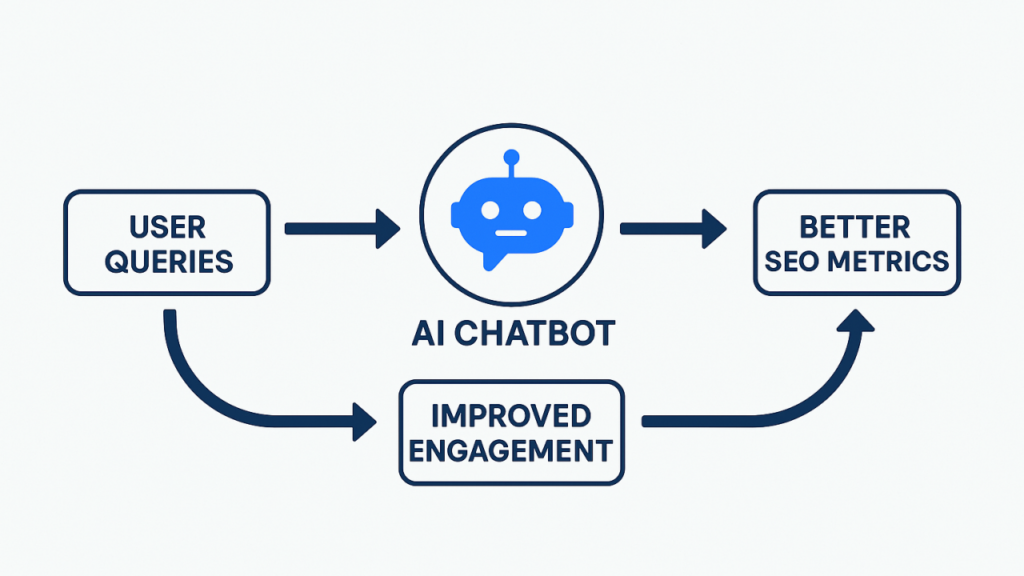
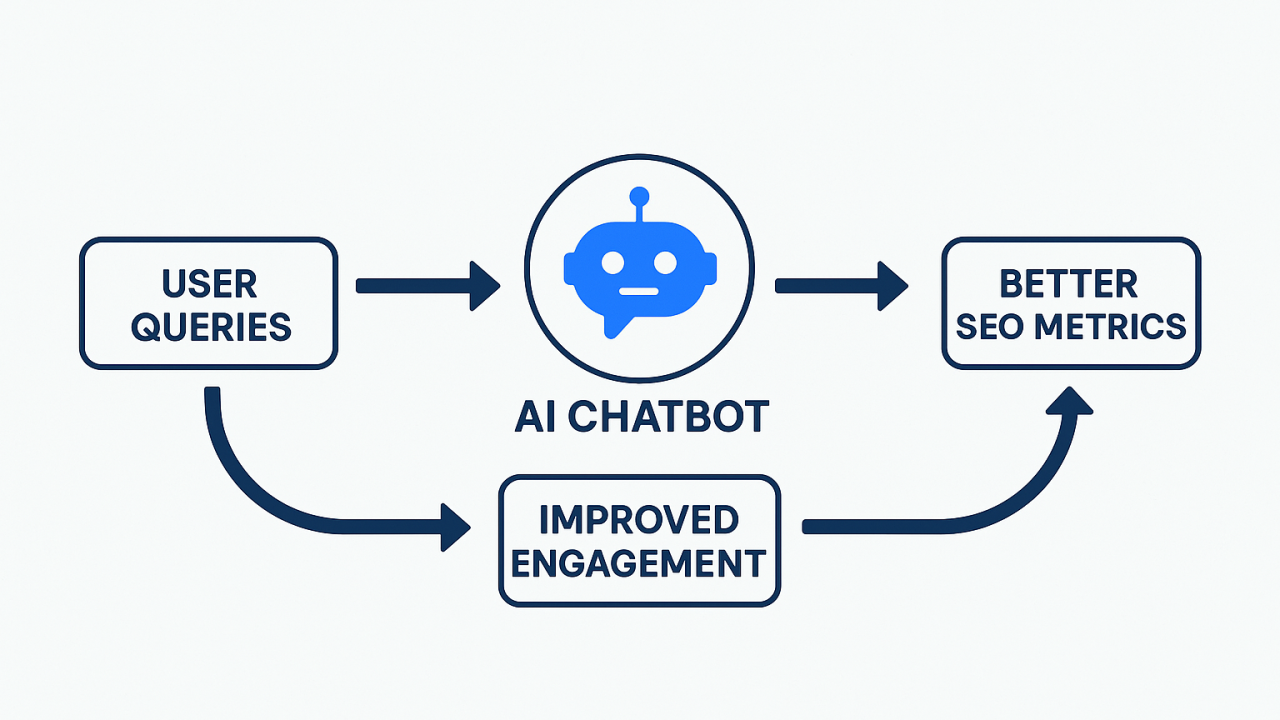
The way SEO professionals work is changing faster than ever. At the center of this shift is a new type of tool that blends natural language processing with hard data—AI SEO chatbots. These are not simple support bots. They are intelligent assistants that can analyze ranking factors, generate full content briefs, audit technical issues, and even offer real-time optimization advice in plain English. As search algorithms grow more complex, these chatbots are becoming essential for teams that want to scale organic growth without scaling headcount. In this guide, you will learn exactly what AI SEO chatbots are, how they function, where they shine, and how to avoid the most common pitfalls when integrating them into your workflow.
What Exactly Are AI SEO Chatbots?
An AI SEO chatbot is a conversational interface powered by a large language model that has been trained or fine-tuned on search engine optimization data. Unlike a standard keyword tool that spits out lists, you can ask a chatbot things like “Give me topic clusters for a vegan baking blog based on low-competition, high-volume terms” and receive a structured answer. Behind the scenes, these systems often connect to live APIs for SERP data, backlink indexes, and page speed metrics. They can remember context throughout a conversation, letting you refine strategies without starting from scratch each time.
The core difference from a classic chatbot is domain specialization. While generic models know a bit about SEO, dedicated AI SEO chatbots are baked into tools like Ahrefs’ AI assistant, Semrush’s ContentShake, or custom GPTs built on OpenAI’s platform with SEO-specific knowledge files. They don’t just understand words—they understand search intent, entity relationships, and technical jargon like canonical tags, crawl budget, and core web vitals. This lets them serve as a thinking partner, not just a search box.
How AI SEO Chatbots Differ From Traditional SEO Software
It is tempting to view these chatbots as just another feature tacked onto existing platforms. However, the interaction model creates a fundamental shift in efficiency. A traditional SEO dashboard presents data; you must interpret it, connect the dots, and decide on actions. An AI SEO chatbot interprets the data for you and suggests specific actions, often with a rationale. For instance, instead of scanning a crawl report for hours, you can type “Show me only the 5XX errors affecting pages with backlinks over 20 DR, sorted by traffic loss,” and get a cleaned-up table instantly.
This interactive layer cuts down analysis time dramatically. It also democratizes SEO knowledge. Team members without deep technical experience can ask complex questions and receive explanations in simple terms. The conversational history serves as documentation, too—every question, answer, and suggested fix lives in the chat log. This is a major leap away from static spreadsheets and siloed reporting tools.
Core Capabilities of a Powerful AI SEO Chatbot

Not all chatbots are built equally. The most effective solutions combine several key functionalities under one chat window. Understanding these capabilities helps you evaluate tools and decide where to inject them into your process.
Keyword and Topic Research
Instead of manually extracting seed keywords and waiting for a list, a capable AI SEO chatbot generates topic clusters, long-tail variations, and question-based keywords in seconds. It can analyze SERP features like “People Also Ask” boxes and extract related entities directly from top-ranking pages. Many tools also assign difficulty scores and predict click-through rates based on current SERP layouts. With a single prompt, you can request a month’s worth of blog topics filtered by commercial intent, each accompanied by a primary keyword and suggested secondary keywords.
Content Brief and Draft Generation
Content creation is one of the highest-value areas. After you give a target keyword, the chatbot scans the top 10 ranking pages, identifies common subtopics, and pulls out statistics, questions, and citation-worthy sources. It then outputs a detailed outline with recommended word count, heading structure, and internal linking suggestions. More advanced integrations allow you to push that brief directly into a CMS or AI writing tool like Jasper or Copy.ai, creating a seamless content pipeline. The result is not just a faster process—it is a more consistent one where every piece aligns with what search engines are rewarding right now.
Technical SEO Audits
Technical audits that used to take days can now be initiated with a short command. Connect the chatbot to your site’s crawling data or Google Search Console, and it can surface broken links, missing meta tags, duplicate content, slow-loading pages, and indexing issues. The conversational layer lets you drill down: “Show me only product pages with missing H1 tags that also have zero organic clicks in the last month.” This targeted filtering ensures engineers and content teams spend time on issues that actually move the needle.
Competitor Gap Analysis
By ingesting domain-level data from APIs like Ahrefs or Semrush, the chatbot can instantly compare your site against three competitors. It highlights keywords they rank for that you don’t, identifies content types that are under-represented in your niche, and even suggests the resource investment needed to close the gap. The output can be formatted as a prioritized task list, ready for a sprint planning session.
On-Page and Off-Page Recommendations
From internal linking opportunities to anchor text distribution, an AI SEO chatbot can scan your existing pages and suggest exact changes. If a key page is not ranking for its target term, you might ask, “Why isn’t this page in the top 10?” The chatbot can check content depth, entity coverage, loading speed, and backlink profile, then return a prioritized checklist of fixes. For off-page SEO, it can brainstorm outreach email templates and identify linkable asset ideas based on your brand’s unique data.
Types of AI SEO Chatbots Available Today
The market has split into several distinct categories. Understanding them helps you pick the right fit for your team’s technical maturity and budget.
- Platform-Native Assistants: Tools like Semrush’s AI Assistant, Ahrefs’ AI features, and Moz’s AI integration live inside their own ecosystems. They have direct access to the provider’s database, so answers are based on fresh, proprietary data. This is often the fastest path to accurate metrics.
- Custom GPTs and Assistants: OpenAI’s GPT Store and similar platforms let users create SEO-focused chatbots loaded with uploaded knowledge files, such as Google’s Search Quality Evaluator Guidelines, internal style guides, and sample SERP formats. These are highly customizable but require manual data injection.
- API-Driven SEO Chatbots: Developers can build dedicated chatbots using the APIs of Google Search Console, DataForSEO, or SERPAPI, paired with a language model. These bots are tailored exactly to a business’s workflow but need technical resources to maintain.
- All-in-One AI Writing Tools with SEO: Solutions like Surfer SEO’s integration with Jasper, or Frase with its AI chat, blur the line between writing assistant and SEO chatbot. They prioritize content optimization while still answering strategic questions.
- Data Staleness: Even when connected to live APIs, a chatbot might reference outdated training data if it fails to fetch real-time numbers. Always verify critical metrics like search volume or domain authority against the primary tool’s interface.
- Over-Optimization Temptation: Because the bot can generate perfectly optimized content outlines, it’s easy to churn out generic, competitor-mirroring pages. Google’s helpful content system penalizes sites that lack originality and genuine value. The bot should be a springboard, not a copy-paste machine.
- Security and Privacy: Feeding proprietary keyword data, client lists, or internal content plans into a public chatbot can breach NDAs. Enterprise teams need private instances or tools that guarantee data isolation.
- Misguided Technical Advice: Bots can misinterpret the severity of a technical issue. They might suggest a massive site structure change when a simple 301 redirect would suffice. Always apply human oversight to technical recommendations, especially at scale.
- Hallucination of Facts: Language models still invent statistics, citations, and even search volumes. Uphold a strict rule: every number that goes into a client report or published article must be double-checked against a primary source.
| Chatbot Type | Best For | Accuracy | Customization |
|---|---|---|---|
| Platform-Native (Semrush, Ahrefs) | Established SEO teams needing firm data | Very high | Limited |
| Custom GPTs | Agile teams with clear internal playbooks | Depends on knowledge files | Very high |
| API-Driven Builds | Enterprises with dev resources | High (if APIs are reliable) | Very high |
| AI Writing+SEO Combos | Content-heavy operations | Good for content, weaker for technical SEO | Moderate |
Key Benefits of Integrating an AI SEO Chatbot Into Your Workflow
The push toward conversational SEO is not just hype. Teams that adopt these tools report measurable improvements in speed, consistency, and revenue impact. Here are the concrete advantages.
Time Savings Across Every Stage
The most immediate win is reclaiming hours lost to manual research. Agencies using AI SEO chatbots can cut keyword research time by 60–70 percent, according to informal community surveys. Technical auditors stop writing lengthy checklists and instead converse directly with the data, slicing a full site audit from two days to a few hours. This frees experts to focus on strategy, testing, and creative link-building tactics that no algorithm can duplicate.
Reduced Human Error
SEO is filled with tiny but costly mistakes—a missing canonical on a critical page, misinterpreting a ranking fluctuation, forgetting to include key entities in a pillar page. A well-configured chatbot acts as a safety net. It applies rules consistently, never gets tired, and can cross-reference hundreds of data points before giving a recommendation. When a content request comes in, the bot ensures it matches the existing content strategy and avoids keyword cannibalization effortlessly.
Scalable Knowledge Sharing
Junior team members can onboard faster because they can ask the chatbot basic and intermediate questions without pulling a senior strategist away from deep work. The bot becomes a 24/7 mentor that explains difficult concepts with real examples from your own site data. This flattens the learning curve and keeps everyone aligned with the agency’s or brand’s standard operating procedures.
Real-Time Adaptation to Algorithm Changes
Search engines update constantly. An AI SEO chatbot connected to live news and SERP data can alert you to shifts in ranking patterns, new featured snippet formats, or Google updates. Instead of waiting for a weekly report, you can ask, “Did any of our tracked keywords lose featured snippets this week?” and react immediately. That proactive posture is difficult to match with manual monitoring alone.
Limitations and Risks You Must Know
Despite the promise, AI SEO chatbots are not magic. Over-reliance without understanding their current boundaries can damage your site’s performance. These are the most important risks to manage.
How to Build an Effective AI SEO Chatbot Workflow
Moving from scattered experimentation to a disciplined workflow is what separates top performers from the rest. Follow this step-by-step approach to embed an AI SEO chatbot deeply into your team’s rhythm without losing control.
Step 1: Define Clear Use Cases
Start with one high-friction area. For most teams, that is keyword research or content brief creation. Write down exactly what output you need: format, data points, and constraints. Example: “When I give a seed keyword, provide a list of 10 long-tail variations with monthly search volume, keyword difficulty, and current SERP features.” This precision trains the chatbot output into a reliable asset.
Step 2: Connect to Authoritative Data Sources
Hollow advice ruins trust. Link the chatbot to your Google Search Console, Ahrefs, Semrush, or Moz account so it pulls live data. If you’re using a custom GPT, upload a CSV export of your top 200 keywords, internal linking structure, and a content inventory. The bot’s quality is only as good as the data it has access to.
Step 3: Create Prompt Libraries
Standardize your team’s interactions. Build a library of proven prompts for common tasks: local SEO audits, ecommerce category page optimization, blog refresh prioritization, and so on. Store these in a shared document. Every team member using the same prompts reduces variance and makes results comparable week over week.
Step 4: Implement a Human Review Layer
Never publish or implement chatbot output directly. Designate a senior SEO specialist to spot-check automated recommendations, especially for technical changes and external outreach. As the bot learns from feedback, this review step becomes faster, but it should never disappear entirely. A quick sanity check prevents disasters.
Step 5: Track Impact Metrics
Measure the bot’s contribution. Track time saved per deliverable, organic traffic changes for content pieces created with versus without the bot, and number of technical issues resolved per sprint. This data justifies the tool’s cost and reveals where the chatbot adds the most leverage.
Common Mistakes When Using AI SEO Chatbots and How to Avoid Them
Most failures come from treating the tool as a replacement for expertise rather than an accelerator. Avoid these specific traps.
Mistake 1: Copying AI-Generated Content Without Differentiation. The bot gives you a perfectly optimized outline. You fill it in with generic text. The page ranks for a week, then tanks. Solution: Add unique data, original case studies, expert quotes, or proprietary frameworks that competitors cannot replicate. The bot handles the SEO skeleton; you must add the muscle that makes Google trust you.
Mistake 2: Ignoring Search Intent Nuance. A chatbot might confidently tell you to target a keyword with informational content when the top 10 results are all product pages. It incorrectly read intent. Solution: Always open the SERP manually for high-stakes keywords. Confirm the dominant intent type—informational, commercial, transactional, navigational—before committing to the content format.
Mistake 3: Overloading the Chatbot With Vague Prompts. “Make my SEO better” yields useless advice. Vague in, vague out. Solution: Practice writing prompts that specify the URL, the current problem, the desired outcome, and any constraints. “For the /services/cloud-migration page, the keyword is ‘AWS migration services’ but we rank #11. Check on-page factors, compare to the top 3 ranking pages, and suggest 5 changes to push into the top 10.” This prompt guides the bot toward actionable, specific help.
FAQ About AI SEO Chatbots
Can an AI SEO chatbot replace a human SEO specialist?
No. AI SEO chatbots automate data gathering, pattern recognition, and drafting, but they cannot replace strategic judgment, creative ideation, or the nuanced understanding of a brand’s audience. They free up experts to focus on higher-level tasks. Think of the bot as the most efficient junior analyst you have ever had, not a replacement for the director of SEO.
Are AI SEO chatbots safe to use with client data?
Safety depends on the tool and configuration. Platform-native chatbots from enterprise SEO tools typically operate within their own secure environment. Public models like ChatGPT store conversations by default unless you disable history and use an API with zero data retention. For client work, always check the privacy policy and, when possible, use a private instance or a secured API integration.
How accurate are the keyword data and recommendations from these chatbots?
Accuracy varies. Chatbots connected directly to live databases (such as a Semrush or Ahrefs integration) return precise, near-real-time metrics. Standalone bots relying on pre-training often produce outdated or hallucinated numbers. Always verify critical data points: search volume, keyword difficulty, and backlink counts. If the bot cannot cite a source, treat the number as a directional estimate only.
What’s the best way to start with an AI SEO chatbot for a small business?
Begin with a platform you already use. If you have a Semrush or Ahrefs subscription, activate their built-in AI assistant. If you have no paid tools, create a custom GPT and upload your Google Search Console data and top-performing pages. Start with one task, such as generating a content calendar for the next month, and measure the time saved before expanding to more complex workflows.
Do AI SEO chatbots understand multilingual SEO and local markets?
Many advanced models support dozens of languages and can analyze local SERP differences when connected to region-specific data sources. They can identify that Spanish-language search behavior in Mexico differs from Spain, for example. However, always involve a native speaker for content creation; the bot can structure and optimize, but cultural nuance still demands human insight.
Final Thoughts
AI SEO chatbots represent a genuine shift in how search optimization gets done. They collapse hours of manual research into minutes of conversation. They make data accessible to everyone on your team. And when properly governed, they reduce the silly mistakes that slip through even careful manual work. At the same time, they demand a new skill: the ability to craft precise prompts and interpret suggestions through the lens of real-world SEO experience. The winners in this next chapter will not be those who blindly trust the bot, but those who use it to amplify their own expertise. Start small, stay skeptical of unverified numbers, and always keep the final decision human. That combination of machine speed and human judgment is the formula that will drive sustainable organic growth for years to come.
Xem thêm:
- AI SEO Keyword Clusters: The Complete Guide to Building Topical Authority in 2025
- AI SEO for Affiliate Marketing: The 2025 Playbook for Dominating Search and Commissions
- AI SEO Future: How Intelligent Algorithms Are Reshaping Search Rankings in 2025 and Beyond
- AI SEO Claude Projects: The Complete Guide to Automating Search Rankings in 2025
- AI SEO LocalBusiness Schema: The Complete Guide to Smarter Local Rankings
Bài viết cùng chủ đề:

AI SEO SEO Automation with Make: The Complete Workflow Guide

AI SEO SEO Automation with Zapier: The Complete Workflow Guide

AI SEO SEO Automation with n8n: The Complete Workflow Guide
AI SEO SEO Automation with Gemini: The Complete Guide to Scaling Organic Growth

AI SEO SEO Automation with Claude: The Complete Guide to Scaling Content in 2025

AI SEO SEO Automation with ChatGPT: The Complete Playbook for 2025

AI SEO & SEO Automation for Affiliate Sites: The 2025 Playbook for Passive Income Growth
AI SEO & SEO Automation for Bloggers: The Complete Guide to Scaling Your Content

AI SEO & SEO Automation for Agencies: The Complete 2025 Playbook

AI SEO and SEO Automation for Ecommerce: The Complete Playbook for 2025

AI SEO & SEO Automation for WordPress: The Complete Playbook for 2025
AI SEO SEO Automation Strategy: The Complete Playbook for 2025

Mastering the AI SEO SEO Automation Process: A Complete Guide to Scaling Organic Growth
AI SEO SEO Automation System: The Complete Guide to Scaling Organic Growth in 2025
AI SEO SEO Automation Platform: The Complete Guide to Scaling Organic Growth in 2025
AI SEO SEO Automation Software: The Complete Guide to Scaling Organic Growth in 2025















