
No products in the cart.
AI SEO Keyword Clusters: The Complete Guide to Building Topical Authority in 2025
10
Aug
Aug
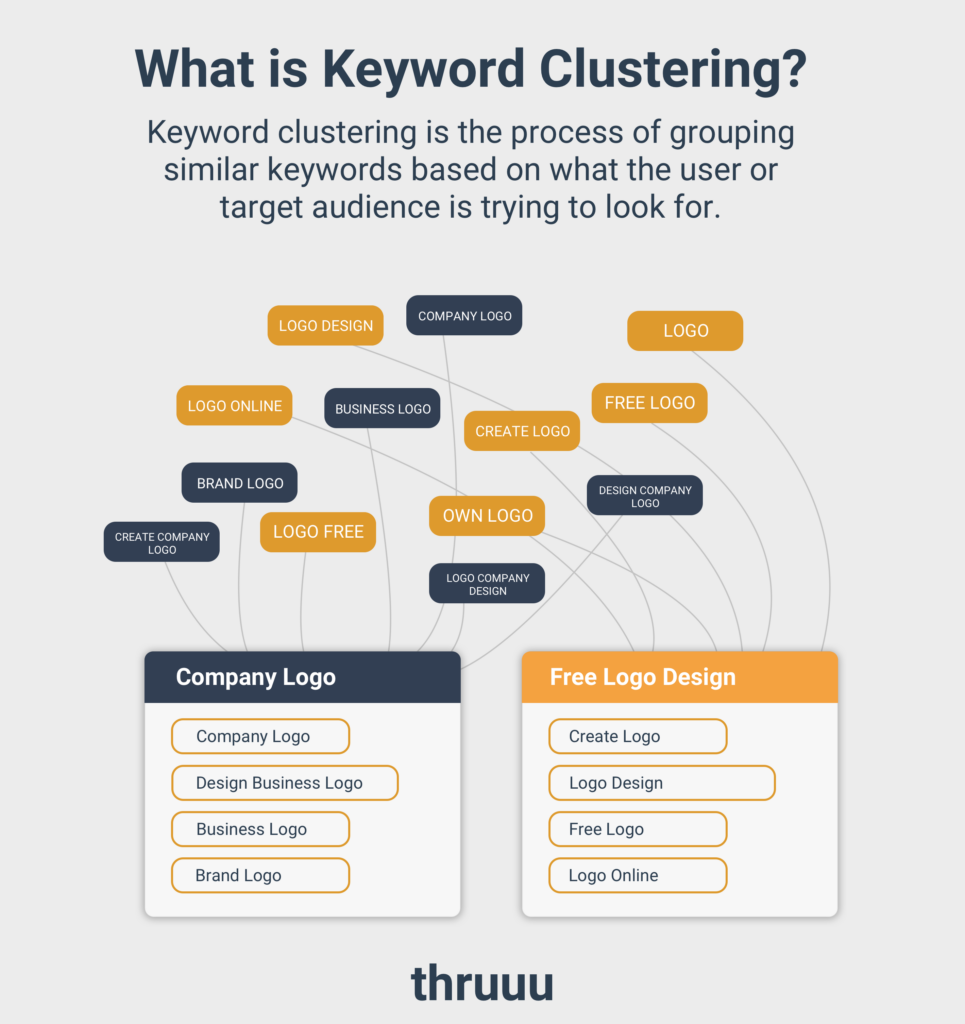
Search engine optimization has shifted dramatically from single-keyword targeting to comprehensive topical coverage. The concept of AI SEO keyword clusters has emerged as the most effective method for organizing content strategies that satisfy both search engines and users. By grouping related keywords into thematic clusters, websites can establish authority on specific subjects, improve crawl efficiency, and capture a wider range of search queries. This guide explains how artificial intelligence enhances the process of building keyword clusters, why they matter for modern SEO, and how to implement them successfully.
What Are AI SEO Keyword Clusters?
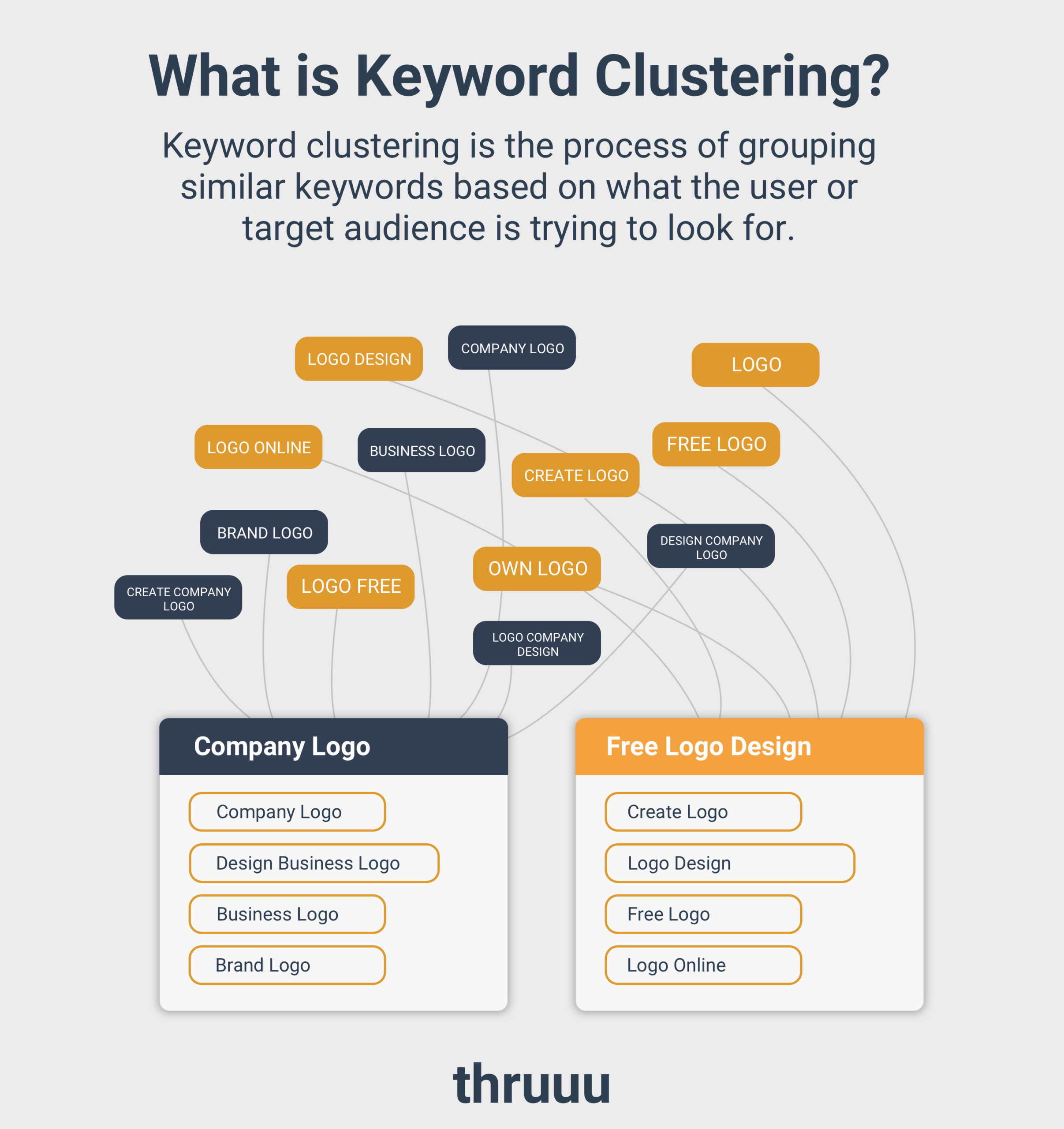
AI SEO keyword clusters are groups of semantically related keywords organized around a central pillar topic. Unlike traditional keyword research that treats each term in isolation, clustering recognizes that search queries naturally form thematic groups. For example, a cluster around “vegan protein sources” might include keywords like “plant-based protein foods,” “high-protein vegan meals,” “best vegan protein powder,” and “legume protein content.”
The artificial intelligence component refers to the use of machine learning algorithms to analyze search data, identify relationships between queries, and automatically generate these clusters. AI tools process millions of data points including search volume, user intent, SERP features, and content relevance to create clusters that human researchers might miss. This approach moves beyond simple keyword matching to understand the conceptual connections between terms.
Why Traditional Keyword Research Falls Short
Classic SEO practices involved picking a primary keyword, optimizing a page for it, and moving on to the next term. This approach created several problems. Pages competed against each other for similar queries, content quality suffered from thin targeting, and websites failed to demonstrate comprehensive expertise on any given topic. Search engines increasingly recognize this pattern and reward sites that show deep coverage of subject areas.
Traditional tools also struggled with the sheer volume of search data. A single topic can generate thousands of long-tail variations, making manual grouping impractical. The old method of listing keywords in a spreadsheet and guessing which ones belong together simply does not scale. AI SEO keyword clusters solve this problem by automating the grouping process and revealing patterns in search behavior that are not immediately obvious.
How AI Algorithms Identify Keyword Relationships
Artificial intelligence systems use several techniques to determine which keywords belong in the same cluster. Natural language processing (NLP) analyzes the semantic meaning of words and phrases, identifying synonyms, related concepts, and contextual usage. Machine learning models trained on search engine results pages (SERPs) learn which pages rank for multiple related queries, indicating topical overlap.
Another approach involves analyzing user behavior data. When users frequently search for one term and then click on results that lead them to search for another related term, the AI recognizes a connection. Search engines themselves provide data through autocomplete suggestions, related searches, and “People Also Ask” boxes, all of which AI tools can harvest and analyze.
Advanced clustering algorithms use vector embeddings, which represent words as mathematical points in multidimensional space. Keywords that appear in similar contexts end up positioned close together in this space, allowing the algorithm to group them automatically. This technique captures subtle relationships that keyword matching alone would miss, such as the connection between “budget travel” and “cheap flights” even when the words are completely different.
The Core Components of an AI-Driven Keyword Cluster Strategy
Building effective AI SEO keyword clusters requires understanding the structure that makes them work. Each cluster consists of several key elements that work together to create topical authority.
Pillar Content
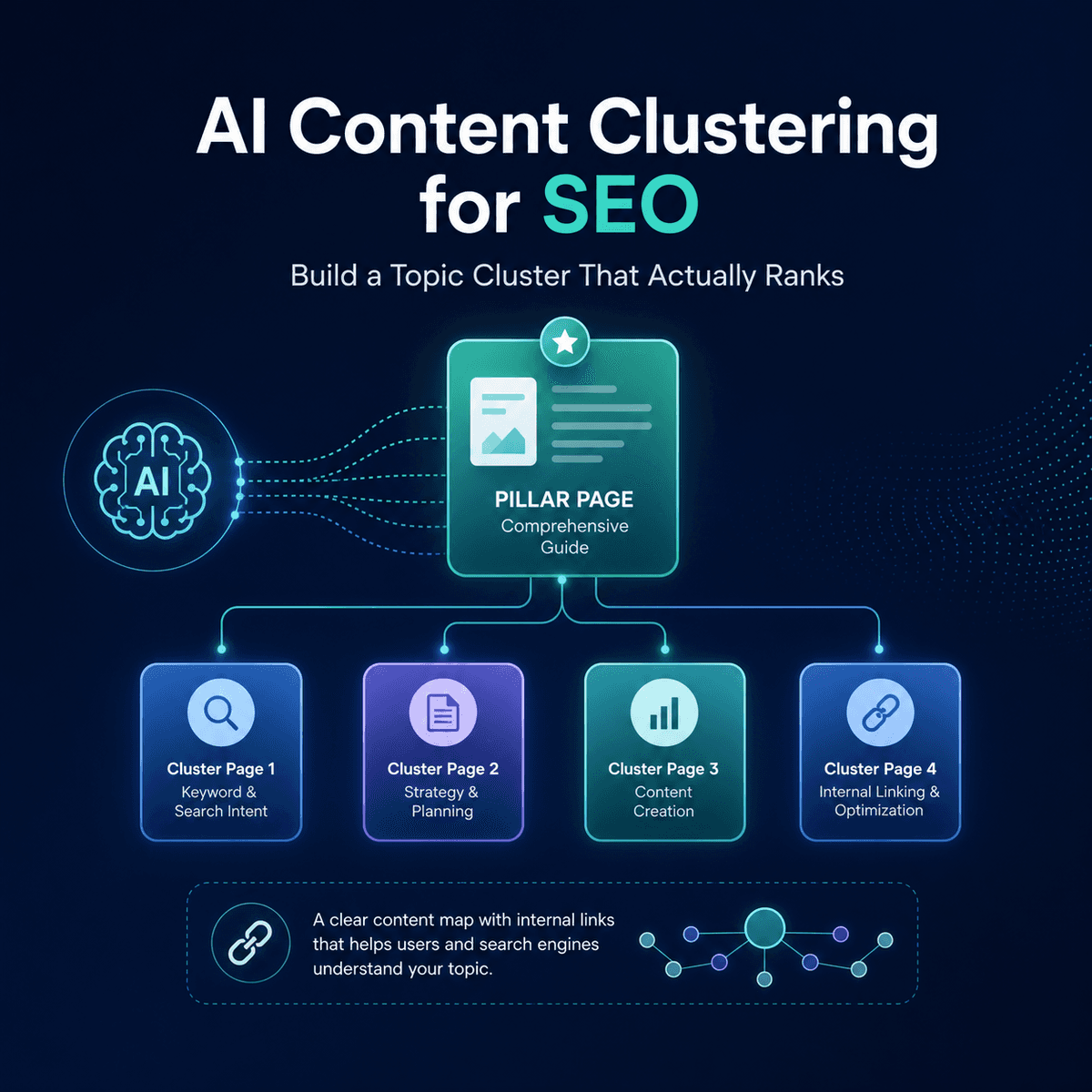
The pillar page serves as the comprehensive hub for the entire cluster. This is typically a long-form, authoritative piece of content that covers the broad topic in depth. For a cluster on “email marketing,” the pillar page would be a complete guide covering strategy, tools, metrics, and best practices. This page targets the highest-volume, most competitive keywords in the cluster.
Cluster Content
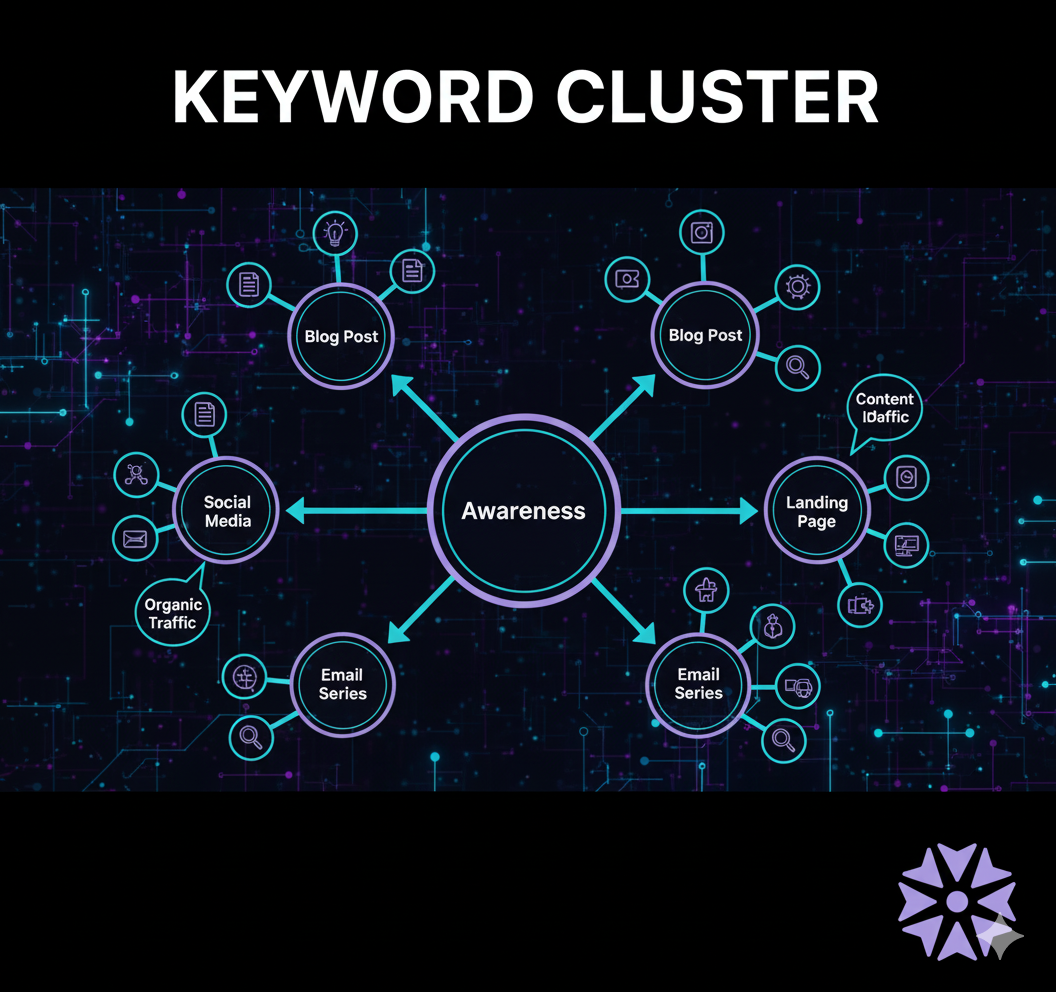
Surrounding the pillar are individual articles or pages that target specific subtopics. Each piece of cluster content focuses on one long-tail keyword or a small group of closely related terms. These pages link up to the pillar page, and the pillar links down to them, creating a hub-and-spoke structure. This internal linking pattern signals to search engines that all these pages belong to the same topical ecosystem.
Supporting Keywords
Within each cluster, keywords are categorized by search intent and difficulty. Informational keywords target users in the research phase, commercial keywords attract users ready to compare options, and transactional keywords capture users ready to take action. AI tools automatically classify keywords by intent, helping content teams prioritize which terms to target first.
Entity Relationships
Modern search engines understand entities—people, places, things, and concepts—and the relationships between them. AI keyword clustering takes entities into account, grouping keywords that reference the same entities even when the search phrasing differs. For example, “iPhone battery replacement” and “Apple phone battery repair” both reference the same entity relationship and belong in the same cluster.
Benefits of Using AI SEO Keyword Clusters
The shift to AI-driven clustering delivers measurable advantages across multiple dimensions of search performance.
- Improved topical authority: Search engines reward websites that demonstrate comprehensive coverage of a subject. Clusters prove expertise by addressing every facet of a topic.
- Higher click-through rates: When multiple pages from the same site appear in search results for related queries, users perceive the site as more credible and are more likely to click.
- Efficient content production: Instead of randomly generating articles, teams work from a structured cluster map that shows exactly what content needs to be created.
- Better internal linking: The cluster structure naturally creates a logical internal linking architecture that distributes page authority throughout the site.
- Reduced keyword cannibalization: Clear cluster boundaries prevent multiple pages from targeting the same keywords, eliminating the problem of pages competing against each other.
- Enhanced user experience: Users who land on a cluster page can easily navigate to related content, keeping them on the site longer and reducing bounce rates.
Limitations and Challenges of AI Keyword Clustering
While AI SEO keyword clusters offer significant advantages, they also come with challenges that require careful management.
AI tools are only as good as the data they are trained on. Search patterns change constantly, and algorithms can produce clusters based on outdated information. Regular review and manual adjustment of AI-generated clusters remain essential. Additionally, AI clustering tools often require subscription fees, which may be prohibitive for small businesses or individual content creators.
Another limitation involves the risk of over-optimization. When every page in a cluster targets a specific keyword and links to the pillar in the same way, the pattern becomes predictable. Search engines may view this as manipulative if the content does not genuinely serve user needs. The cluster approach works best when content quality remains the primary focus, with keyword targeting as a secondary consideration.
AI SEO Keyword Clusters vs. Traditional Keyword Groups
| Aspect | Traditional Keyword Groups | AI SEO Keyword Clusters |
|---|---|---|
| Grouping method | Manual sorting based on intuition | Machine learning algorithms analyzing search data |
| Keyword relationships | Surface-level matching of similar terms | Semantic understanding of concepts and entities |
| Scalability | Limited by human capacity | Handles thousands of keywords automatically |
| Content structure | Individual pages targeting single keywords | Pillar pages with supporting cluster content |
| Adaptability | Static, requires manual updates | Continuously learns from new search data |
| Search intent handling | Often ignored | Automatically classified and prioritized |
The comparison shows that AI-driven clustering represents a fundamental improvement in how keywords are organized and targeted. Traditional methods still work for small sites with limited content, but any serious SEO effort benefits from the automation and insight that AI provides.
Step-by-Step Guide to Building AI SEO Keyword Clusters
Implementing an AI keyword cluster strategy involves a systematic process that combines automated tools with human expertise.
Step 1: Define Your Core Topics
Start by identifying the main subject areas relevant to your business. These should be broad topics that you want to be known for. A digital marketing agency might choose topics like “search engine optimization,” “content marketing,” “social media advertising,” and “email automation.” Each core topic will become the foundation for one or more keyword clusters.
Step 2: Gather Comprehensive Keyword Data
Use keyword research tools to collect a wide range of related terms for each core topic. Include short-tail keywords, long-tail variations, question-based queries, and location-specific terms. Export this data into a format that your AI clustering tool can process. The more comprehensive your initial keyword list, the better the clusters will be.
Step 3: Run AI Clustering Algorithms
Feed your keyword data into an AI clustering tool. These tools analyze the relationships between keywords and group them into clusters automatically. Popular options include Keyword Insights, ClusterAI, and various features built into enterprise SEO platforms. Review the generated clusters and adjust the settings if the groupings do not match your understanding of the topic.
Step 4: Analyze Search Intent Within Each Cluster
Examine the keywords in each cluster and classify them by search intent. Informational keywords indicate users seeking knowledge, commercial keywords show comparison behavior, and transactional keywords signal purchase readiness. This classification determines which keywords go on the pillar page and which go on supporting articles.
Step 5: Map Content to Clusters
Create a content map that assigns each cluster to a specific pillar page and identifies the supporting articles needed. Prioritize clusters based on business value, search volume, and competition level. Start with the clusters that offer the quickest wins and build out the rest over time.
Step 6: Create the Internal Linking Structure
Plan the internal links between pillar pages and cluster content. Each supporting article should link to the pillar using descriptive anchor text. The pillar page should link to every supporting article, creating a complete hub-and-spoke network. This structure passes authority throughout the cluster and helps search engines understand the relationship between pages.
Step 7: Monitor and Refine
Track the performance of your clusters using analytics and search console data. Identify which clusters are ranking well and which need improvement. Update content regularly, add new keywords that emerge from search queries, and prune clusters that do not deliver results. AI tools continuously learn from new data, so re-run your clustering analysis periodically to capture evolving search patterns.
Practical Applications of AI SEO Keyword Clusters
AI keyword clusters work across different types of websites and industries. An e-commerce site selling fitness equipment might create a cluster around “home gym setup” with supporting articles on “best adjustable dumbbells,” “home gym flooring options,” “compact exercise machines,” and “workout routines for small spaces.” Each article targets a specific subtopic while linking back to the comprehensive home gym guide.
A B2B software company could build a cluster around “project management tools” with pillar content comparing the top platforms and cluster articles covering “agile project management software,” “free project management tools,” “project management for remote teams,” and “project management software pricing.” This structure captures users at different stages of the buying journey.
Local businesses benefit from geographic clustering. A dental practice might create clusters for “cosmetic dentistry,” “restorative dentistry,” and “emergency dental care,” with each cluster containing location-specific keywords for the cities and neighborhoods they serve. AI tools automatically group these location modifiers with the relevant service terms.
Common Mistakes When Implementing AI SEO Keyword Clusters
Several pitfalls can undermine the effectiveness of an AI keyword cluster strategy. Recognizing these mistakes early helps avoid wasted effort and missed opportunities.
Creating Clusters That Are Too Broad
When a cluster covers too many subtopics, the pillar page becomes unfocused and the supporting articles fail to rank for specific queries. A cluster on “digital marketing” is too broad; it should be split into separate clusters for SEO, content marketing, social media, and paid advertising. Each cluster needs a narrow enough focus to establish genuine authority.
Ignoring Search Intent Differences
Grouping keywords with different search intents into the same cluster creates confusion. A keyword like “best running shoes” indicates commercial intent, while “how to choose running shoes” indicates informational intent. These belong in different clusters or at least different sections of the same cluster, with content tailored to each intent.
Neglecting Internal Linking
Creating cluster content without proper internal links defeats the purpose of clustering. Search engines need clear signals that pages belong together. Every supporting article must link to the pillar, and the pillar must link to every supporting article. Additional contextual links between related cluster articles strengthen the network further.
Over-Reliance on AI Output
AI tools provide valuable insights, but they do not replace human judgment. Algorithms can group keywords incorrectly, miss important relationships, or create clusters that do not align with business goals. Always review AI-generated clusters and adjust them based on your knowledge of the industry and your audience.
Creating Thin Content for Every Keyword
The goal of clustering is not to create a separate page for every keyword variation. Some keywords are too similar to warrant individual articles. Group closely related keywords into single pieces of content that comprehensively address the topic. Quality always trumps quantity in cluster-based SEO.
Important Notes for Maximizing Cluster Performance
Several factors influence how well AI SEO keyword clusters perform in search results. Keeping these considerations in mind throughout the process improves outcomes.
Content quality remains the foundation of any SEO strategy. Clusters organize keywords, but the actual articles must provide genuine value to readers. Search engines increasingly use engagement metrics like dwell time and bounce rate to assess content quality, so well-written, informative articles outperform thin keyword-stuffed pages regardless of clustering.
Regular updates keep clusters relevant. Search trends shift, new competitors emerge, and user behavior evolves. Review your clusters quarterly and update content to reflect current information. Add new keywords that appear in search query reports and remove terms that no longer generate traffic.
Technical SEO factors affect cluster performance. Page speed, mobile responsiveness, and structured data all influence how search engines crawl and rank cluster pages. Ensure that your site architecture supports the cluster structure and that all pages are easily accessible to crawlers.
Frequently Asked Questions About AI SEO Keyword Clusters
How many keywords should be in an AI SEO keyword cluster?
The ideal number varies by topic and site authority. Small clusters may contain 10-20 keywords, while comprehensive clusters for broad topics can include 100 or more. The key is that all keywords in a cluster share a clear thematic relationship and can be covered by a reasonable number of content pieces. Focus on quality of grouping rather than hitting a specific number.
What is the difference between a keyword cluster and a topic cluster?
These terms are often used interchangeably, but t A keyword cluster refers specifically to the grouping of search terms, while a topic cluster includes the content strategy, internal linking structure, and pillar pages built around those keywords. In practice, AI SEO keyword clusters form the foundation for topic clusters.
Can AI SEO keyword clusters work for small websites?
Yes, small websites can benefit from clustering even with limited content resources. Start with one or two clusters in your primary niche and build them out thoroughly before expanding. A single well-executed cluster can establish authority and drive significant traffic, providing a foundation for future growth.
How often should I update my AI keyword clusters?
Re-run your clustering analysis at least quarterly to capture changes in search behavior. Major industry shifts, new product launches, or algorithm updates may require more frequent adjustments. Continuous monitoring of search query data helps identify new keywords to add to existing clusters.
Do AI SEO keyword clusters affect voice search optimization?
Yes, clustering naturally supports voice search optimization. Voice queries tend to be longer and more conversational, and these long-tail variations are exactly the type of keywords that AI clustering identifies and groups. Clusters that include question-based keywords and natural language phrases perform well for voice search.
Conclusion
AI SEO keyword clusters represent the evolution of search optimization from isolated keyword targeting to comprehensive topical authority. By leveraging machine learning to identify semantic relationships between search terms, websites can build content structures that satisfy both users and search engines. The benefits of improved rankings, reduced cannibalization, and more efficient content production make clustering an essential strategy for any serious SEO program.
The implementation process requires a combination of AI automation and human expertise. Defining core topics, gathering comprehensive keyword data, running clustering algorithms, and building the supporting content structure all contribute to success. Avoiding common mistakes like overly broad clusters and neglected internal linking ensures that the strategy delivers measurable results.
As search engines continue to refine their understanding of user intent and content relevance, the importance of AI SEO keyword clusters will only grow. Websites that adopt this approach now will be well-positioned to capture traffic and establish authority in their niches. The future of SEO belongs to those who understand that keywords do not exist in isolation—they form interconnected networks of meaning that intelligent clustering can unlock.
Xem thêm:
- AI Search Traffic: Your Complete Guide to Organic Visibility in the Age of Generative AI
- AI SEO Dynamic Pages: The Complete Guide to Automated Search Optimization
- AI SEO AI Search Monitoring: The Complete Guide to Tracking Your Brand in the Age of Generative Engines
- AI SEO for Local Business: The Complete Guide to Dominating Local Search with Artificial Intelligence
- AI SEO Zapier Automation: The Complete Guide to Scaling Your Organic Growth in 2025
Bài viết cùng chủ đề:

AI SEO SEO Automation with Make: The Complete Workflow Guide

AI SEO SEO Automation with Zapier: The Complete Workflow Guide

AI SEO SEO Automation with n8n: The Complete Workflow Guide
AI SEO SEO Automation with Gemini: The Complete Guide to Scaling Organic Growth

AI SEO SEO Automation with Claude: The Complete Guide to Scaling Content in 2025

AI SEO SEO Automation with ChatGPT: The Complete Playbook for 2025

AI SEO & SEO Automation for Affiliate Sites: The 2025 Playbook for Passive Income Growth
AI SEO & SEO Automation for Bloggers: The Complete Guide to Scaling Your Content

AI SEO & SEO Automation for Agencies: The Complete 2025 Playbook

AI SEO and SEO Automation for Ecommerce: The Complete Playbook for 2025

AI SEO & SEO Automation for WordPress: The Complete Playbook for 2025
AI SEO SEO Automation Strategy: The Complete Playbook for 2025

Mastering the AI SEO SEO Automation Process: A Complete Guide to Scaling Organic Growth
AI SEO SEO Automation System: The Complete Guide to Scaling Organic Growth in 2025
AI SEO SEO Automation Platform: The Complete Guide to Scaling Organic Growth in 2025
AI SEO SEO Automation Software: The Complete Guide to Scaling Organic Growth in 2025















