
No products in the cart.
The Ultimate AI SEO Checklist for Beginners: Rank Faster with Smart Automation

29
Jul
Jul
Starting with search engine optimization can feel like an endless maze of technical rules and content strategies. An AI SEO Checklist for Beginners transforms that chaos into a clear, repeatable workflow—one that leverages artificial intelligence to uncover opportunities, fix weak spots, and accelerate results. Within your first few minutes of reading, you will understand exactly how to blend proven SEO fundamentals with modern AI tools, so every task from keyword discovery to content polishing becomes faster and more data-driven. This guide distills expert knowledge and hands-on experience into a comprehensive checklist that removes the overwhelm and sets you on a path toward sustainable organic growth.
What Is AI SEO and Why Every Beginner Needs a Checklist
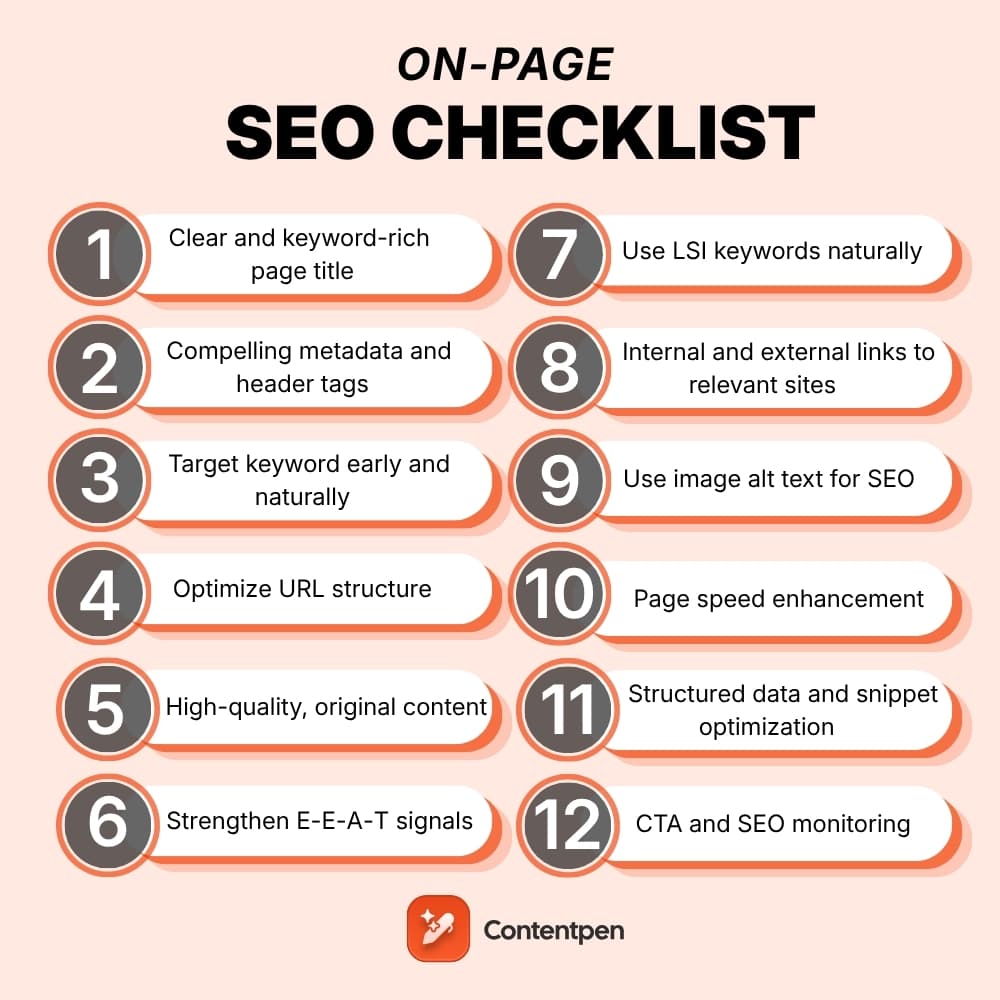
AI SEO is the practice of applying machine learning, natural language processing, and generative algorithms to optimize websites for search engines. Instead of manually sifting through spreadsheets of keywords or guessing which on-page elements to tweak, you lean on software that analyzes massive datasets, identifies patterns, and suggests precise actions. The approach does not replace human judgment; it amplifies it by automating repetitive analysis so you can focus on strategy and creativity.
A checklist tailored for AI-supported SEO becomes essential because beginners often freeze when faced with dozens of moving parts. You might have a list of article ideas, a crawl report, and multiple dashboards open—but no sequence to follow. An AI SEO Checklist for Beginners imposes order: it tells you which AI tool to use at each stage, what output to look for, and how to validate the recommendations. When you follow a step-by-step blueprint, you build momentum and avoid the common trap of tool-hopping without finishing any single optimization.
The Core Components of an AI SEO Checklist
Every effective AI SEO workflow can be broken into six interconnected phases. The checklist below covers pre-launch research, on-page refinement, technical health, content development, off-page signals, and ongoing monitoring. By treating each phase as a module you can revisit regularly, you will never overlook a ranking factor that an AI assistant could have flagged.
1. Pre-Launch AI Setup and Strategy
Before touching a live page, anchor your work in data. Begin with AI-driven keyword discovery tools that go beyond search volume. They analyze semantic relevance, user intent, and content gaps across the top ten results. Next, run a competitive landscape analysis using machine learning. Modern platforms examine an entire competitor domain, extract their top-performing pages, and reveal topic clusters you should cover.
- Seed keyword expansion: Feed a broad term into an AI keyword tool that clusters terms by intent (informational, commercial, transactional) and returns long-tail variations with low difficulty scores.
- Competitor content audit: Use AI to reverse-engineer a rival’s content strategy. Identify the exact headings, entities, and questions their content answers—then build a more complete version.
- Topic authority map: Let AI group keywords into pillar pages and supporting clusters. This visual map becomes your content calendar foundation.
- Search intent validation: Ask an NLP model to classify the intent behind each keyword. Ensure your planned page type (blog, product, tool) matches what Google already rewards.
- Title tag optimization: Test 5-7 AI-generated titles considering emotional triggers, numbers, and power words. Keep primary keyword near the front and under 60 characters.
- Meta description sculpting: Have AI output a 150-160 character summary that naturally weaves in the main keyword and a call-to-action, without sounding robotic.
- Header hierarchy with NLP guidance: Use an NLP content optimizer to suggest H2 and H3 subheadings. The tool scans competing pages and tells you which subtopics to include for topical depth.
- Internal link suggestions: Deploy an AI site search or a plugin that analyzes your existing content and recommends contextually relevant pages to link from the new post.
- Image alt text generation: Pass images through a vision AI to generate descriptive, keyword-aware alt attributes that improve accessibility and image search visibility.
- Entity and LSI keyword insertion: Let the AI highlight entities (people, places, concepts) missing from your draft. Sprinkle in related terms to strengthen topical relevance.
- Automated crawl budget analysis: Use AI to examine server logs and identify which pages Googlebot wastes time on. Prune or consolidate thin pages that drain crawl budget.
- Core Web Vitals optimization: Let AI performance monitors simulate real user conditions and point to render-blocking resources, oversized images, or layout shifts. Implement granular suggestions like lazy loading or critical CSS extraction.
- Schema markup generation: Feed your page content to a structured data generator that uses AI to determine the appropriate schema type—Article, Product, FAQ, HowTo—and output JSON-LD code without manual documentation diving.
- XML sitemap intelligence: An AI sitemap tool can assign priority scores based on traffic potential and automatically split large sitemaps when they exceed limits.
- Hreflang and canonical checks: Run a multilingual site through AI that detects missing hreflang tags or conflicting canonical signals across country versions.
- AI-powered content brief: Input your focus keyword into a briefing tool that aggregates top-ranking pages and outputs a recommended word count, heading structure, questions to answer, and media suggestions.
- Drafting with guided templates: Use a conversational AI to produce an initial draft based on the brief. Edit heavily for tone, originality, and factual accuracy.
- Content gap filling: Let a gap analysis tool compare your draft against competitors and flag subtopics you missed. Add those sections to achieve comprehensive coverage.
- Readability and engagement scoring: Run the text through an AI readability checker. Simplify sentences that exceed a set grade level, break up walls of text, and add transition phrases.
- Freshness update automation: Set an AI monitor to track when key statistics or seasonal references in your article may become outdated. Receive an alert to refresh the content.
- Link prospect discovery: Feed your competitor URLs into an AI backlink tool that finds domains linking to them but not to you. Filter by domain rating, traffic, and relevance.
- Outreach email generation: Use AI to draft personalized pitches. The system can pull the prospect’s recent article title, a compliment, and a natural reason why your resource adds value to their audience.
- Broken link building at scale: An AI crawler identifies 404 pages on relevant sites. You quickly create an analogous resource and suggest it as a replacement.
- Unlinked brand mention recovery: Monitor the web with an AI-powered alert system. When someone mentions your brand without a link, the AI flags it and helps craft a friendly request for a hyperlink.
- Guest post opportunity matching: AI can scan industry publications for “write for us” pages and rank them by domain authority, linking policy, and audience overlap.
- Rank tracking with trend prediction: Advanced rank trackers use machine learning to forecast position changes based on historical volatility and competitor movements.
- Anomaly detection in traffic: Connect Google Analytics or Search Console to an AI layer that learns your typical weekly traffic pattern and sends an instant alert when a spike or drop deviates from the norm.
- Automated SEO reporting: Schedule AI-generated dashboards that highlight wins, losses, and next-best actions in plain language. Share with stakeholders who don’t need raw data overload.
- Algorithm update impact analysis: When a core update rolls out, an AI system cross-references your rankings with industry chatter and known volatility patterns to estimate cause and effect, helping you pivot quickly.
- Define your target topic and primary keyword. Use an AI keyword explorer to generate a full list of related long-tail terms and their intent labels.
- Analyze the top five organic competitors. Run their URLs through an AI competitive analysis tool to extract content structure, backlink profiles, and on-page patterns.
- Map out a content cluster. Let AI group keywords into a hub-and-spoke model that guides your internal linking strategy.
- Create a data-backed content brief. Input your primary keyword into an AI brief generator. Note required word count, media types, and must-answer questions.
- Produce an AI-assisted draft. Use a generative AI writer for the first version, then manually edit for brand voice, unique examples, and current statistics.
- Optimize the draft with NLP insights. Run the text through a content optimizer. Add missing entities, adjust subheadings, and refine readability scores.
- Craft on-page elements. Let AI suggest multiple title tags and meta descriptions. Choose the most engaging variant and implement it.
- Enhance multimedia. Use a vision AI to generate alt text for images and compress files for faster loading.
- Strengthen internal linking. Deploy an AI link suggestion tool to connect your new page with at least three relevant existing pages.
- Add structured data. Generate schema markup through an AI-powered structured data assistant and test with Google’s validation tool.
- Perform a technical pre-publish check. Run a targeted crawl to verify noindex tags, canonical tags, and mobile responsiveness.
- Schedule off-page activities. Use an AI backlink tool to identify the first ten link prospects and draft personalized outreach.
- Set up monitoring. Connect your site to an AI analytics platform that tracks rankings, traffic anomalies, and Core Web Vitals changes.
- Establish a refresh cadence. Program an AI content monitor to scan for outdated data every quarter and alert you to refresh opportunities.
- Keep data privacy top-of-mind. When using cloud-based AI tools for content or analytics, review their data usage policies. Avoid uploading sensitive user information or proprietary strategy documents into public models.
- Train your eye for over-optimization. AI may stuff keywords into headers, meta tags, and body text if you don’t set natural language constraints. Read every output aloud—if it sounds mechanical, rewrite it.
- Stay updated on algorithm changes. AI models can lag behind Google’s latest updates. Pair tool recommendations with official announcements from Google Search Central and trusted SEO publications.
- Combine quantitative and qualitative insights. An AI can tell you that a page’s word count is lower than competitors, but it cannot gauge emotional resonance or brand differentiation. Always let human intuition be the final editor.
- Start small and iterate. Apply the full AI SEO checklist to one pillar page before scaling site-wide. Measure what worked, discard what didn’t, and refine your checklist for the next cycle.
2. AI-Powered On-Page Optimization Checklist
On-page elements remain the direct signals search engines read, and AI can craft them with surgical precision. Start with your target keyword and let an AI writing assistant generate multiple title tag variations that balance click-through appeal and keyword inclusion. For meta descriptions, use a language model trained on high-performing snippets to produce a compelling summary that stays within pixel limits.
3. Technical SEO with AI Checkpoints
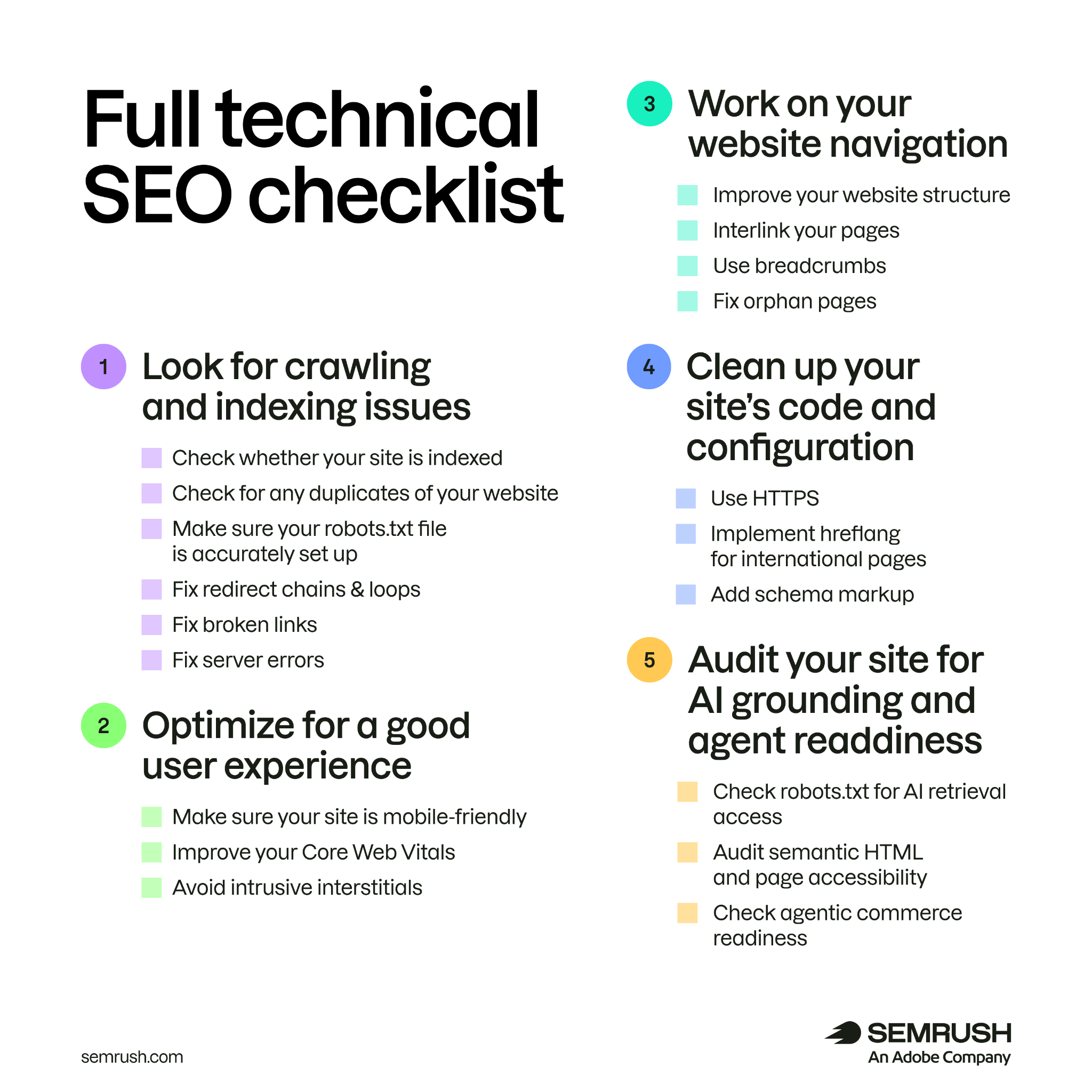
Technical health can make or break a site’s ability to get indexed. AI tools accelerate audits by crawling thousands of URLs in minutes and prioritizing issues that genuinely impact rankings, not just pedantic warnings. They spot patterns like slow-loading pages before users complain and suggest fixes tied to real user metrics.
4. Content Creation and Optimization Using AI
Content production with AI must stay balanced. Use generative models to accelerate research, outlines, and first drafts, but always inject human stories, data, and a brand voice. The checklist ensures AI works as a junior researcher, never the final author without oversight.
5. Off-Page and Link Building Assisted by AI
Backlink acquisition remains a trust signal, and AI shortens the prospecting cycle dramatically. Instead of manually browsing directories, you train algorithms to spot sites that fit your niche, gauge their authority, and even personalize outreach messages.
6. Monitoring and Analytics with AI
SEO is never a set-it-and-forget-it discipline. AI monitoring tools detect ranking fluctuations, algorithm updates, and traffic anomalies far faster than manual checking. They turn raw data into narratives you can act on.
Benefits and Limitations of Using an AI SEO Checklist

Working through an AI SEO checklist delivers three core advantages: speed, consistency, and data-informed decisions. Tasks that once took days—like keyword clustering or content gap analysis—shrink to minutes. Repetitive work gets automated, so human energy goes toward creative differentiation. The checklist also minimizes errors; you are less likely to skip meta descriptions or forget internal links when each step is codified.
However, AI brings limitations that a beginner must respect. Over-reliance on generated content without human verification can produce factual inaccuracies or bland copy that fails to connect with readers. Tool output sometimes reflects outdated training data, meaning you must double-check statistics and timeliness. Privacy considerations arise when you pipe proprietary data into third-party AI platforms. Finally, cost can escalate if you subscribe to too many specialized tools simultaneously. The checklist works best when you view AI as a co-pilot, not an autopilot.
Manual vs AI-Powered SEO: A Quick Comparison
| Aspect | Manual SEO | AI-Powered SEO |
|---|---|---|
| Keyword Research | Hours of spreadsheet work, manual grouping by intent | Minutes with automated clustering, intent classification, and difficulty prediction |
| Content Optimization | Writer guesses subtopics; trial and error | NLP tools provide exact heading structures and entity suggestions based on top pages |
| Technical Audits | One-by-one page checks, prone to oversight | Full-site crawls with prioritized, actionable fixes ranked by impact |
| Link Building | Manual prospect list building, generic outreach | Algorithmic prospect scoring, personalized email drafts, broken link detection at scale |
| Performance Tracking | Weekly manual report compilation | Real-time anomaly alerts, predictive ranking insights, auto-generated narratives |
| Learning Curve | Steep; requires memorizing hundreds of factors | Moderate; needs skill to interpret AI suggestions and avoid blind trust |
Step-by-Step Beginner’s AI SEO Checklist: Your Action Plan
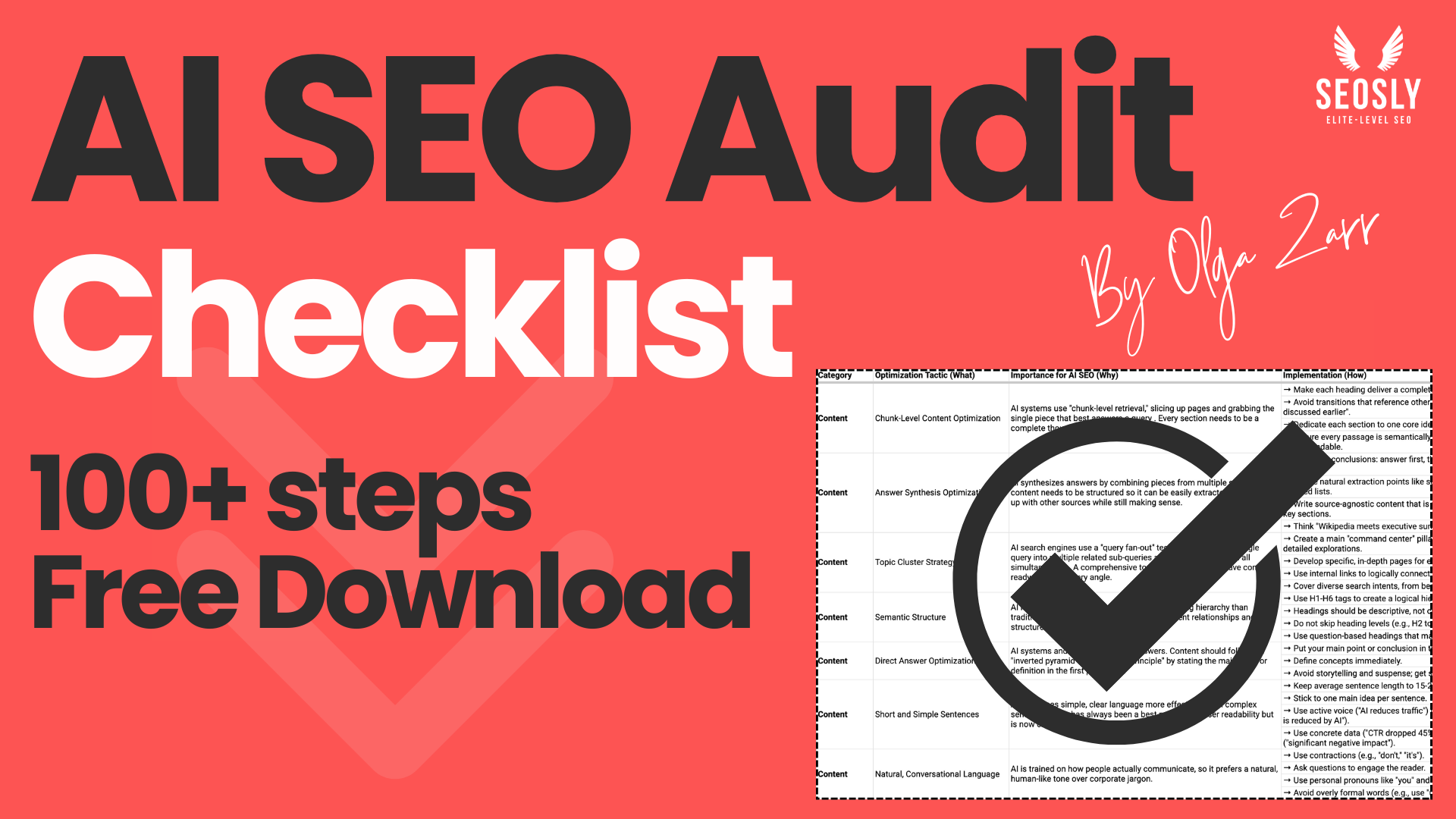
Consolidate everything into a single, sequential workflow. Print this out or save it in your project management board. Each step indicates the AI capability to lean on and the expected deliverable.
Common Mistakes Beginners Make with AI in SEO (and How to Avoid Them)
Mistake 1: Copying AI output verbatim. Search engines value original, helpful content. If you publish raw AI-generated text, it often lacks depth and may trigger Google’s helpful content signals. Always layer personal experience, case studies, and manual edits on top of AI drafts.
Mistake 2: Ignoring search intent nuances. A keyword tool might group “buy running shoes” and “best running shoes” together. AI suggestion engines sometimes miss the crucial distinction between commercial and informational intent. Always manually verify the intent label against actual SERPs before committing to a content format.
Mistake 3: Using too many AI tools at once. Beginners often subscribe to a dozen platforms, leading to analysis paralysis. Start with one all-in-one suite or two specialized tools that cover keyword research, content optimization, and technical auditing. Add more only when a clear gap appears.
Mistake 4: Neglecting technical foundations. Obsessing over content AI while your site loads in 5 seconds or has broken mobile rendering wastes effort. Run a technical health check early in the checklist, every time.
Mistake 5: Skipping human quality assurance. AI can hallucinate facts or misattribute quotes. Treat every AI statistic as tentative until you verify it with a primary source. This habit preserves trust and prevents embarrassing corrections.
Important Notes for Maximizing Your AI SEO Success
Frequently Asked Questions About AI SEO Checklist for Beginners
What is the first step in an AI SEO checklist?
The first step is always strategic: use an AI-powered keyword research tool to identify your primary topic and related long-tail queries. This data shapes every decision that follows, from content structure to internal linking. Without this foundation, AI optimizations lack direction.
Can a beginner use AI SEO tools without technical knowledge?
Yes. Most modern AI SEO platforms feature intuitive interfaces and guided workflows. They translate complex metrics into simple scores and offer one-click recommendations. A beginner still benefits from learning basic HTML and crawling concepts, but you can see meaningful improvements without being a developer.
How do I choose the right AI SEO tool for my checklist?
Focus on the tasks that consume the most time in your current process. If content creation is the bottleneck, pick an NLP-driven content optimizer that provides detailed briefs. If technical errors hold you back, select an AI audit crawler. Many starters succeed with a multipurpose platform that covers research, on-page, and rank tracking while staying within budget.
Does AI-generated content hurt SEO rankings?
AI-generated content can hurt rankings if it is low-quality, unedited, or lacks original insight. Google’s guidelines reward content that demonstrates experience and expertise. When you use AI to assist—generating outlines, summarizing research, or suggesting headings—and then add human nuance, the final product can rank well. The key is transparency and value, not mass-produced text.
How often should I update my AI SEO checklist?
Revisit the full checklist quarterly and whenever Google announces a major core update. Adjust steps based on new AI capabilities, such as the release of a more accurate NLP model or a tool that automates schema testing. Keep a changelog so your process stays aligned with both search engine evolution and your growing skills.
Conclusion

An AI SEO Checklist for Beginners removes the guesswork from modern search optimization by blending machine intelligence with structured, repeatable steps. From the initial keyword clustering to the final monitoring dashboard, each checkpoint ensures you work efficiently and never miss a critical ranking factor. The checklist also builds long-term discipline—you transform scattered efforts into a system that consistently produces helpful, well-optimized content. Embrace AI as a tireless assistant that handles data crunching and pattern spotting, but keep your own judgment at the center. Start with the action plan outlined above, adapt the sequence to your niche, and watch your organic presence grow step by step.
Xem thêm:
- AI SEO Regional SEO: The Complete Guide to Dominating Local Search in 2025
- ChatGPT vs Claude for SEO: The Ultimate AI Assistant Showdown for Search Optimizers in 2025
- AI SEO Short Tail Keywords: The Complete Guide to High-Volume Search Domination
- AI SEO Comparison Generator: The Complete Guide to Smarter Competitive Analysis
- AI SEO Content Optimization: The Complete Guide to Ranking Higher in 2025
Bài viết cùng chủ đề:

AI SEO SEO Automation with Make: The Complete Workflow Guide

AI SEO SEO Automation with Zapier: The Complete Workflow Guide

AI SEO SEO Automation with n8n: The Complete Workflow Guide
AI SEO SEO Automation with Gemini: The Complete Guide to Scaling Organic Growth

AI SEO SEO Automation with Claude: The Complete Guide to Scaling Content in 2025

AI SEO SEO Automation with ChatGPT: The Complete Playbook for 2025

AI SEO & SEO Automation for Affiliate Sites: The 2025 Playbook for Passive Income Growth
AI SEO & SEO Automation for Bloggers: The Complete Guide to Scaling Your Content

AI SEO & SEO Automation for Agencies: The Complete 2025 Playbook

AI SEO and SEO Automation for Ecommerce: The Complete Playbook for 2025

AI SEO & SEO Automation for WordPress: The Complete Playbook for 2025
AI SEO SEO Automation Strategy: The Complete Playbook for 2025

Mastering the AI SEO SEO Automation Process: A Complete Guide to Scaling Organic Growth
AI SEO SEO Automation System: The Complete Guide to Scaling Organic Growth in 2025
AI SEO SEO Automation Platform: The Complete Guide to Scaling Organic Growth in 2025
AI SEO SEO Automation Software: The Complete Guide to Scaling Organic Growth in 2025















