
No products in the cart.
ChatGPT vs Claude for SEO: The Ultimate AI Assistant Showdown for Search Optimizers in 2025
29
Jul
Jul
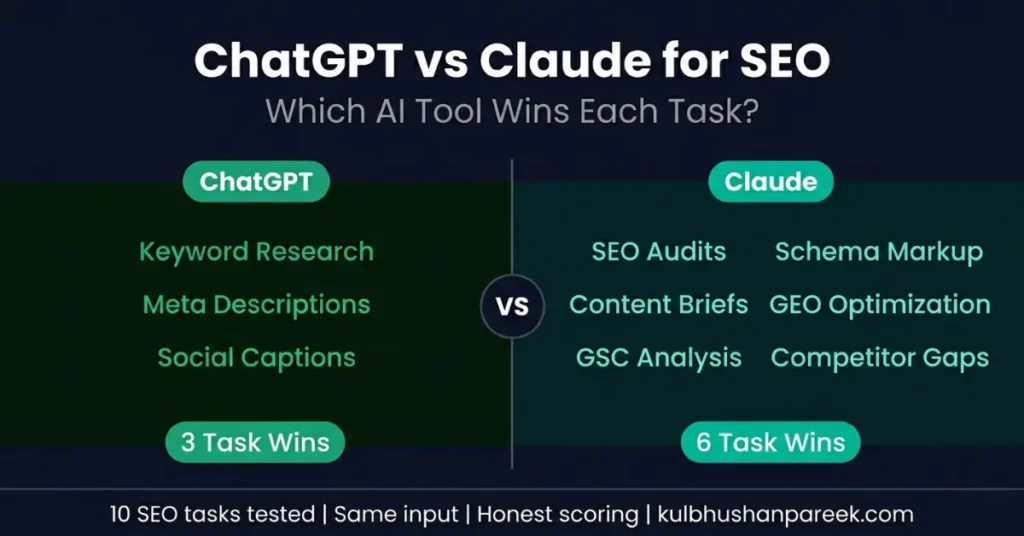
The race between leading AI language models has fundamentally changed how SEO professionals approach content strategy, keyword research, and on‑page optimization. Terms like “ChatGPT vs Claude for SEO” now surface daily in practitioner forums as teams scramble to identify which assistant delivers the most ranking‑ready output with the least amount of rework. Both tools promise to slash the hours that used to go into crafting meta tags, clustering search intent, or building topical authority. However, they approach the same task with noticeably different strengths, limitations, and hidden quirks that directly affect organic performance.
This article provides a deep, side‑by‑side analysis of ChatGPT and Claude across every dimension that matters for modern search engine optimization. You will find concrete use cases, output comparisons, workflow integrations, and the evidence‑based insights needed to decide where each tool fits into an SEO tech stack without risking E‑E‑A‑T signals.
Why AI Assistants Have Become Central to SEO Workflows
SEO has shifted far beyond keyword stuffing. Modern search engines reward content that demonstrates experience, expertise, authoritativeness, and trustworthiness – all while satisfying nuanced user intent. AI language models can accelerate every stage of that value chain when used responsibly. Instead of staring at a blank document, strategists now feed a topic cluster into a prompt and receive a detailed outline, a list of semantically related entities, and a first draft in minutes.
The reason tools like ChatGPT and Claude are gaining traction is their ability to process enormous volumes of data and mimic human writing patterns convincingly. They interpret complex instructions, maintain tone of voice, and structure information hierarchically – all critical for search crawlers that parse heading tags and content flow. Yet, because each model is trained on different data and aligned with distinct safety and style philosophies, their usefulness for SEO varies dramatically depending on the task.
Overview of the Two Leading AI Assistants
ChatGPT: The Versatile Powerhouse
OpenAI’s ChatGPT, especially versions powered by GPT‑4 and GPT‑4o, rapidly evolved from a conversational curiosity into a full‑fledged productivity engine. Key features for SEO professionals include native web browsing (on paid plans), image generation, advanced data analysis, and a rich ecosystem of bespoke GPTs built specifically for content marketing and keyword research. ChatGPT excels at following meticulous formatting directions, generating Python scripts for SEO audits, and processing uploaded spreadsheets containing keyword data. However, its outputs sometimes lean toward a recognizable “AI texture” unless carefully guided with tone and style instructions.
Claude: The Context‑Rich Specialist
Anthropic’s Claude, currently led by the Claude 3.5 Sonnet and Opus families, sets itself apart with an industry‑leading context window of up to 200,000 tokens. That capacity allows it to consume entire research papers, multi‑article topical maps, or a full competitive analysis in one go without losing the thread. Claude has a reputation for generating prose that feels more organic and less stilted, often requiring fewer passes to sound authentically human. Its Constitutional AI training places a premium on giving nuanced, thoughtful answers, which aligns well with crafting high‑E‑E‑A‑T content. The trade‑off is that Claude lacks native internet search unless manually equipped with a browser tool, and its formatting can sometimes be less predictable than ChatGPT’s.
How to Evaluate AI Tools Specifically for SEO
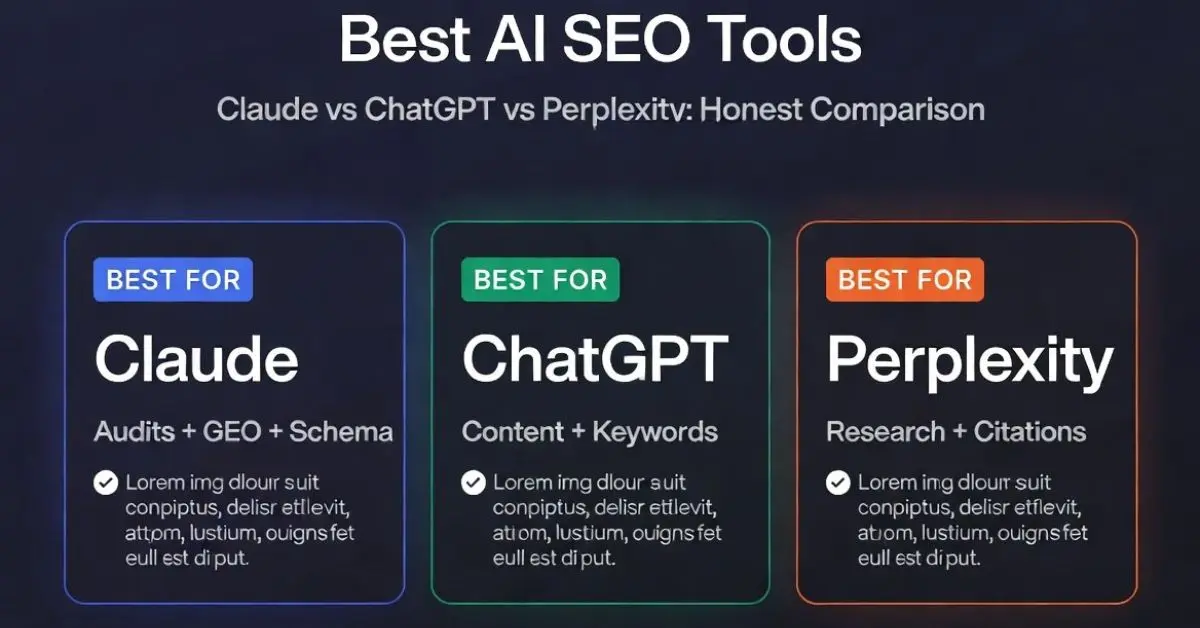
Choosing between ChatGPT and Claude for SEO means looking beyond generic benchmarks. A tool that writes beautiful marketing copy might still fail at the technical precision search engines need. Practitioners should assess models against five key SEO dimensions:
- Content quality and originality: Does the draft sound like a real expert wrote it, or does it regurgitate familiar tropes?
- Keyword and entity handling: Can the assistant naturally weave in primary and secondary keywords while also enriching the text with related people, places, and concepts?
- Instruction adherence: SEO prompts are often long and precise – specifying heading order, word count, meta character limits, and tone simultaneously.
- Factual reliability: Hallucinated statistics or invented product features instantly erode user trust and can trigger a manual review.
- Workflow integration: The tool must fit into existing processes such as bulk content creation, schema markup generation, or internal linking analysis.
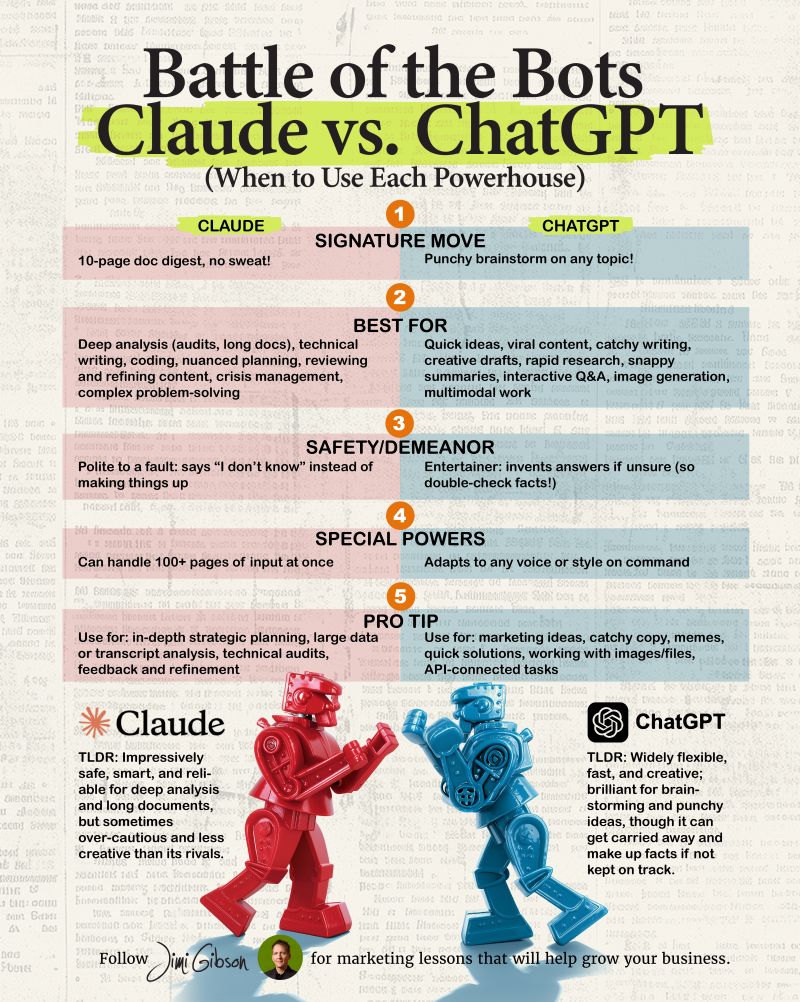
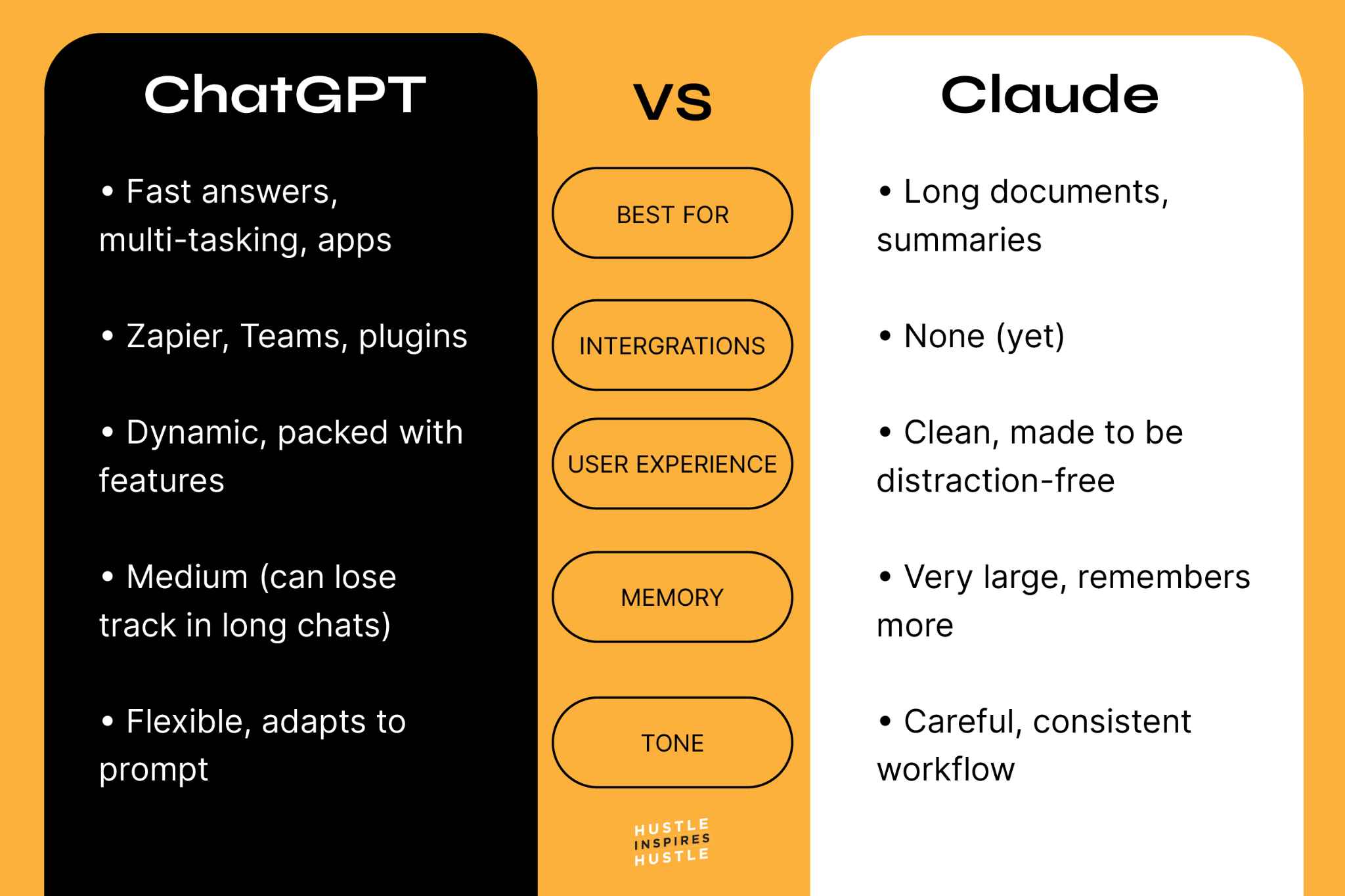
- ChatGPT’s Strengths: Broad feature set including live browsing and multimodal inputs; vast third‑party integrations; superior handling of explicit formatting, tables, and code; reliable for high‑volume, templated SEO tasks.
- ChatGPT’s Limitations: Occasional overly confident fabrications; can produce detectable AI patterns if not steered carefully; complex multi‑part prompts may lose mid‑thread coherence over long sessions.
- Claude’s Strengths: Exceptionally long context window; more human‑like writing style; thoughtful handling of nuanced topics; strong alignment with E‑E‑A‑T principles; tends to say “I don’t know” rather than invent.
- Claude’s Limitations: No native real‑time browsing; formatting can be inconsistent without repeated instruction; smaller ecosystem of dedicated SEO tools compared to ChatGPT’s custom GPT repository.
Detailed Comparison Table: ChatGPT vs Claude for SEO
| SEO Factor | ChatGPT (GPT‑4o) | Claude (3.5 Sonnet) |
|---|---|---|
| Content Tone & Human‑like Quality | Structured and thorough but can sound formulaic; requires explicit style guidance | Often more fluid and organic right out of the box; fewer robotic patterns |
| Handling Long‑Form SEO Briefs | Excellent with ordered lists and clear markdown; may lose complex context over very long chats | Exceptional context retention; can recall instructions across tens of thousands of words |
| Keyword & Entity Integration | Strong when keywords are explicitly listed; tends to prioritize them mechanically | Integrates semantic entities more subtly; good at generating natural variations |
| Fact‑Checking & Hallucination Rate | Capable of real‑time browsing to verify facts (paid plans); still confident on invented data | No native browsing; tends to express uncertainty more visibly, reducing fabrication |
| Customization for SEO Workflows | Extensive library of community GPTs for keyword research, schema generation, and audits | Projects feature allows uploading style guides and past content to align tone across tasks |
| Output Formatting for CMS | Highly reliable when asked for HTML, markdown, or plain text; follows tag instructions well | Can produce formatted output but occasionally drifts from requested HTML structure |
| Cost & Accessibility | Free tier with limited capabilities; Plus and Team plans unlock full features and browsing | Free tier available with usage limits; Pro plan offers higher usage and priority access |
Practical Application: Using ChatGPT and Claude at Each Stage of SEO
Keyword Research and Topic Clustering
Both assistants can generate seed keyword lists and cluster them by search intent when fed with a core topic. A common workflow involves uploading a list of raw keywords from Ahrefs or Semrush and asking the AI to group them into pillar pages and supporting subtopics. ChatGPT tends to produce more spreadsheet‑friendly output, making it easier to export to Google Sheets. Claude, with its larger context window, can ingest a full keyword report with volume and difficulty metrics and return a narrative that explains the relationships between terms, which some strategists find more insightful for content planning.
Creating Detailed Content Briefs
The ideal SEO brief contains the primary keyword, semantic variations, recommended headings, questions to answer, and competing URLs. With ChatGPT’s browsing capability, you can paste a top‑ranking page and ask it to extract the outline and identify content gaps. Claude cannot browse live pages directly, but if you supply the pasted text, it excels at deconstructing the structure and suggesting missing subtopics based on its own training knowledge, often surfacing angles a competitor overlooked.
Writing Full SEO‑Optimized Articles and Landing Pages
When drafting, many SEOs report that Claude’s first drafts require fewer stylistic edits to sound like a knowledgeable practitioner rather than a generic encyclopedia. For industries where E‑E‑A‑T is paramount – healthcare, finance, legal – Claude’s cautious tone and tendency to qualify statements help avoid overpromising. ChatGPT, on the other hand, remains superior for content that needs to be tightly formatted, such as listicles with precise item counts, tables, and frequently asked questions sections, because it adheres more rigidly to structural commands.
Meta Tags and SERP Snippets
Generating ten unique title tags and meta descriptions under 600 pixels is a mechanical task that demands deliberate character counting. ChatGPT succeeds here almost without fail, returning exactly the number of variants requested. Claude can require an extra prompt reminder about pixel or character limits; once reminded, its creative copy often reads more click‑worthy and less templated. For large‑scale e‑commerce stores, the speed and reliability of ChatGPT can save hours, but for a handful of high‑stakes service pages, Claude’s nuance may bring a better click‑through rate.
Schema Markup and Technical SEO Coding
Both models understand JSON‑LD schema types such as Article, Product, FAQ, and LocalBusiness. ChatGPT’s code output is generally more syntactically pristine, and its code interpreter can validate JSON before delivery. Claude, when given the same prompt, will produce correct schema but may occasionally wrap it in extraneous explanatory text. For SEOs who want clean code snippets without commentary, ChatGPT’s formatting discipline gives it a clear edge.
Internal Linking Suggestions and Site Architecture
An advanced use case is feeding a list of existing URLs and their titles into the AI and asking for internal linking recommendations. Claude’s massive context window makes it uniquely suited to ingest dozens of URLs at once and propose semantically relevant connections based on topic overlap. ChatGPT can handle this too, but the task often bumps against its shorter memory limit unless broken into smaller batches.
Benefits and Limitations of Each Platform for SEO Professionals
Common Mistakes When Using ChatGPT or Claude for SEO
Treating AI Output as Publish‑Ready Without Fact‑Checking. Even the best models invent book titles, statistics, and product specifications. Publishing unverified claims can lead to ranking drops and lost reader trust. Always cross‑check data points against primary sources.
Ignoring Search Intent Behind the Keywords. Both assistants can over‑optimize for a phrase while missing whether the user wants a definition, a tutorial, or a product comparison. Start every prompt with explicit intent context to avoid content that fails to satisfy the query.
Pasting Entire Competitor Pages and Expecting Unique Content. AI models trained on the same web data can inadvertently mirror the source’s phrasing. Use competitor pages as input for structure and gap analysis, not for rephrasing. Instruct the tool to write from a distinct angle.
Neglecting E‑E‑A‑T Signals. Cutting out the human expert review step to save time backfires quickly. Google’s quality raters look for evidence of first‑hand experience and author credibility. Pair AI drafts with author bios, expert quotes, and original data wherever possible.
Using the Same Tone for Every Type of Content. ChatGPT tends to default to a helpful, neutral tone. Claude may default to a warm, calmer voice. Neither will automatically match the bold voice of a startup or the formal register of a medical journal without explicit, detailed prompting.
Important Notes for Safe and Effective AI‑Assisted SEO
Google has repeatedly stated that AI‑generated content is not inherently against its guidelines, provided it is useful, people‑first, and demonstrates E‑E‑A‑T. The danger lies in scaled, low‑value content created without human oversight. When using ChatGPT or Claude for SEO, keep a human editor in the loop to inject unique anecdotes, verify claims, and adjust voice. Documenting the AI’s role in the creation process internally can also prepare you for any future transparency requirements.
Rotate between tools based on the task rather than committing to a single assistant. A workflow could start with Claude to outline a long‑form guide and draft sections that require nuanced explanation, then use ChatGPT to generate the meta tags, FAQ schema, and bullet‑point summaries because of its formatting consistency. Experiment with team accounts that allow uploading internal style guides to maintain brand consistency across thousands of pages.
Frequently Asked Questions
Which AI assistant is better for writing SEO content that ranks?
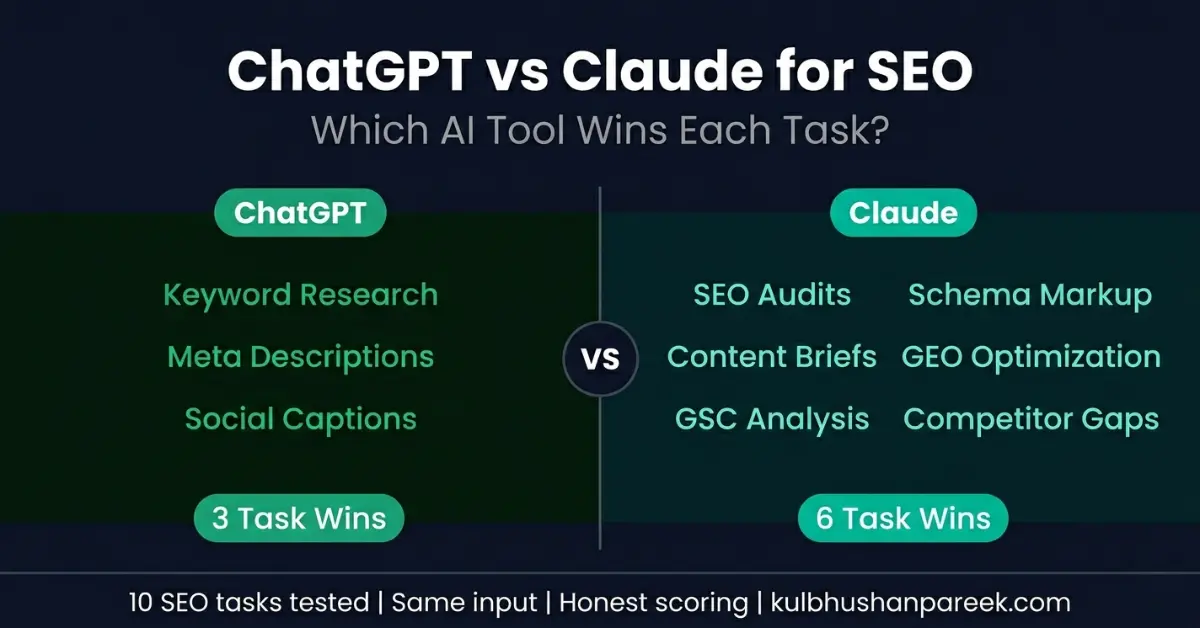
Neither tool guarantees rankings on its own. Claude often produces more natural, human‑sounding prose that aligns with E‑E‑A‑T, while ChatGPT provides tighter control over structure and formatting. For content where trust and nuance matter most, Claude edges ahead. For high‑volume, templated landing pages, ChatGPT’s reliability on instruction adherence makes it the preferred choice among many SEO teams.
Can ChatGPT and Claude be used effectively together in one SEO workflow?
Yes, many advanced practitioners use both. A common pattern is to let Claude extract insights from a large research file and produce a detailed outline, then pass that outline to ChatGPT for drafting meta information, schema code, and final formatting adjustments. This combination leverages each tool’s strengths without over‑relying on a single model’s weaknesses.
Do ChatGPT or Claude offer any SEO‑specific tools or integrations?
ChatGPT has a wide range of custom GPTs built by third‑party developers that perform keyword research, on‑page audits, and SERP analysis. Claude offers Projects, where you can upload brand guidelines and past articles so every output remains consistent. Neither tool ships with a native SEO suite, but their flexibility allows them to plug into existing SEO software via copy‑paste workflows or API connections.
Is there a risk of duplicate content when using AI for SEO?
The risk exists if prompts are not specific enough or if the assistant is asked to simply paraphrase a single source. Asking the model to synthesize multiple inputs, adopt a unique angle, and include proprietary data dramatically reduces similarity with other AI‑generated pages. Both ChatGPT and Claude can produce original output when guided away from generic, surface‑level summaries.
Which model handles long technical SEO documents better?
Claude’s 200,000‑token context window makes it superior for ingesting and analyzing sprawling technical audits, multiple competitor pages, or entire content inventories in one session. ChatGPT can handle long documents too but may need chunking or summarization if the material exceeds its current context limit.
Conclusion: Choosing the Right Assistant for Your SEO Strategy
The debate encapsulated by “ChatGPT vs Claude for SEO” does not have a single winner. Each platform carves out a distinct advantage depending on the specific task inside an SEO workflow. ChatGPT excels when you need surgical formatting, code‑level precision, and reliable adherence to character limits. Claude shines where deep context, subtle voice, and E‑E‑A‑T‑driven nuance separate trustworthy content from mass‑produced filler. The most effective SEO teams are refusing to pick sides, instead building agile processes that deploy the right model at the right stage.
Whichever tool you lean on, remember that search engines reward content shaped by genuine expertise. Use ChatGPT and Claude as accelerators for research, structure, and first drafts, then layer on original insight that no large language model can manufacture. That combination is what ultimately turns technically optimized copy into pages that attract both clicks and sustained rankings.
Xem thêm:
- AI SEO Clearscope: The Definitive Guide to Data-Driven Content Optimization
- AI SEO Monitoring: The Ultimate Guide to Smarter Search Performance Tracking
- AI SEO Semantic Entity SEO: The Complete Guide to Future-Proof Rankings
- The AI SEO Workflow for Agencies: A Complete Guide to Scaling Results With Smart Automation
- AI SEO Competitor Backlinks: The Complete Guide to Automated Link Gap Analysis
Bài viết cùng chủ đề:

AI SEO SEO Automation with Make: The Complete Workflow Guide

AI SEO SEO Automation with Zapier: The Complete Workflow Guide

AI SEO SEO Automation with n8n: The Complete Workflow Guide
AI SEO SEO Automation with Gemini: The Complete Guide to Scaling Organic Growth

AI SEO SEO Automation with Claude: The Complete Guide to Scaling Content in 2025

AI SEO SEO Automation with ChatGPT: The Complete Playbook for 2025

AI SEO & SEO Automation for Affiliate Sites: The 2025 Playbook for Passive Income Growth
AI SEO & SEO Automation for Bloggers: The Complete Guide to Scaling Your Content

AI SEO & SEO Automation for Agencies: The Complete 2025 Playbook

AI SEO and SEO Automation for Ecommerce: The Complete Playbook for 2025

AI SEO & SEO Automation for WordPress: The Complete Playbook for 2025
AI SEO SEO Automation Strategy: The Complete Playbook for 2025

Mastering the AI SEO SEO Automation Process: A Complete Guide to Scaling Organic Growth
AI SEO SEO Automation System: The Complete Guide to Scaling Organic Growth in 2025
AI SEO SEO Automation Platform: The Complete Guide to Scaling Organic Growth in 2025
AI SEO SEO Automation Software: The Complete Guide to Scaling Organic Growth in 2025















