
No products in the cart.
AI SEO Content Planning: The Complete Guide to Smarter Content Strategies
10
Aug
Aug
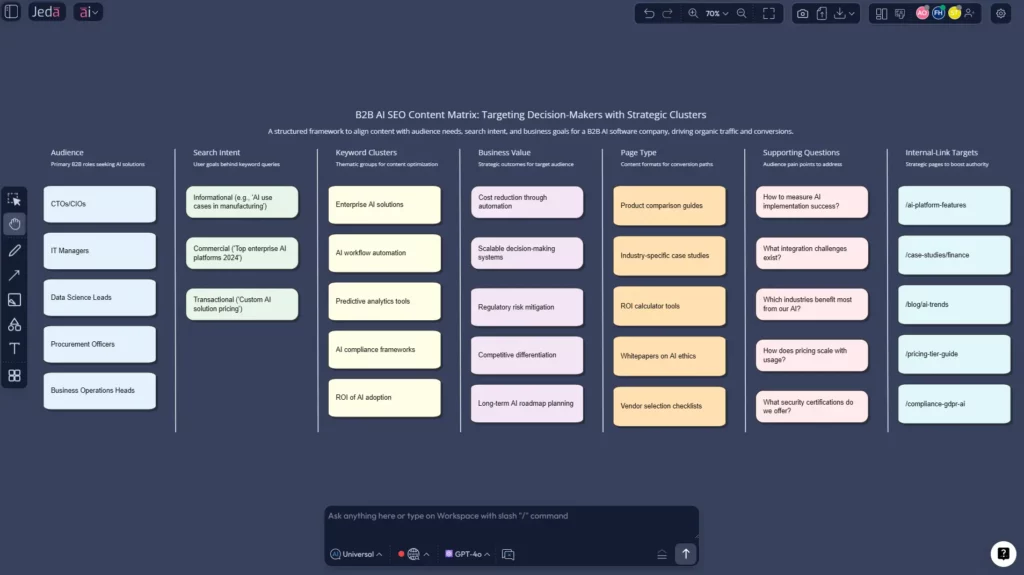
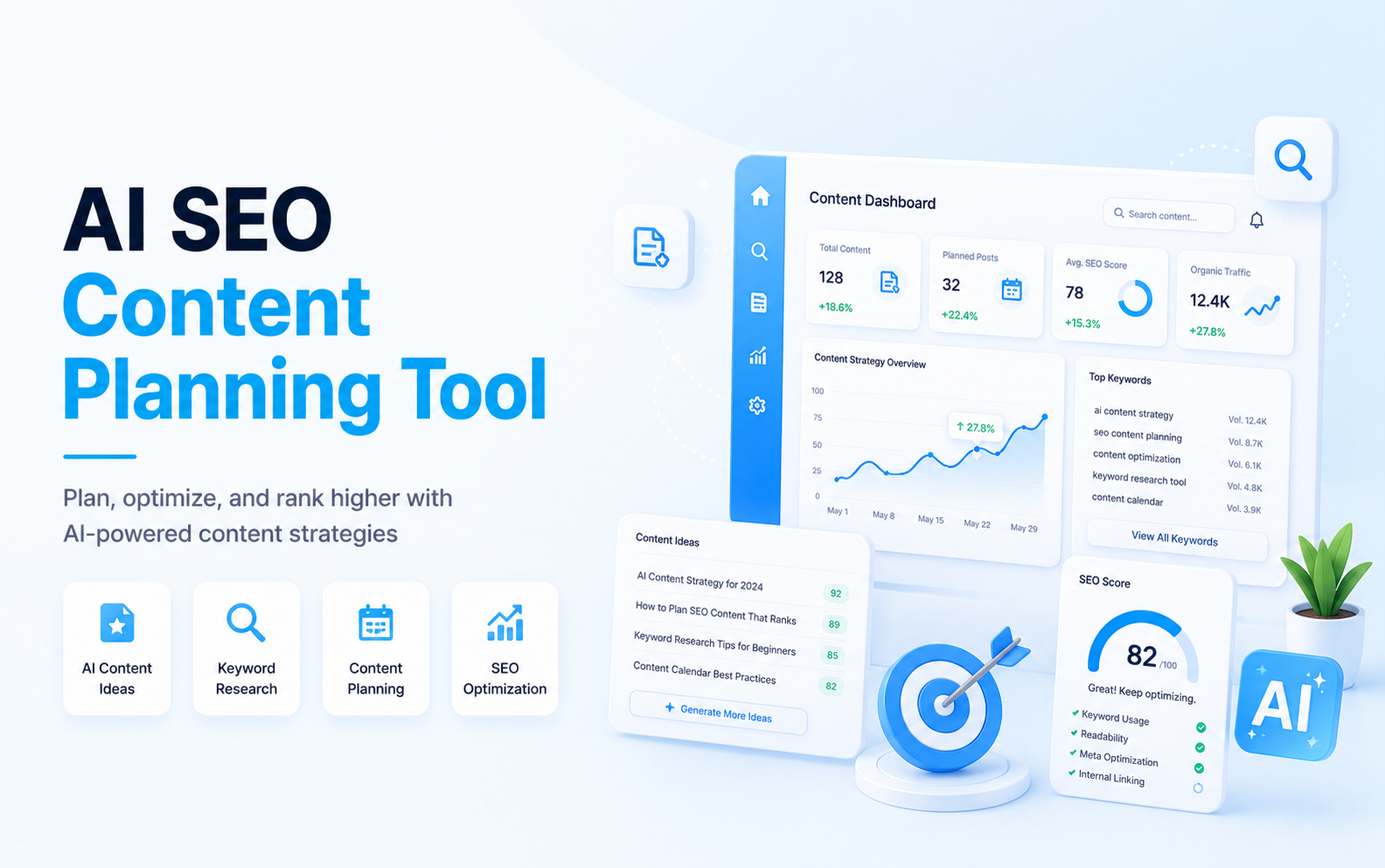
AI SEO content planning has transformed how digital marketing teams approach their editorial calendars and keyword strategies. Instead of relying on guesswork and manual research, modern marketers now use artificial intelligence to identify content gaps, predict search trends, and structure articles that genuinely satisfy user intent. This shift is not about replacing human creativity but about amplifying it with data-driven precision. In this comprehensive guide, you will learn exactly how to integrate AI into your content planning workflow, what tools deliver real results, and how to avoid the common pitfalls that lead to generic, low-performing content.
What Is AI SEO Content Planning?
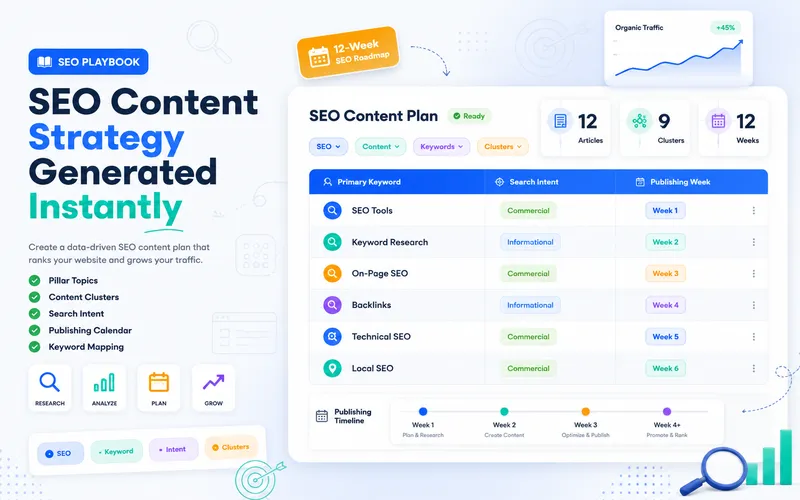
AI SEO content planning refers to the process of using machine learning algorithms and natural language processing to inform every stage of your content creation strategy. This includes keyword research, topic clustering, content brief generation, competitor analysis, and performance prediction. The core objective is to move beyond simple keyword matching and instead understand the semantic relationships between topics, questions, and search intents.
Traditional content planning often involved manually sorting through thousands of keywords, guessing at user intent, and hoping that a piece would rank. AI changes this by analyzing vast datasets of search queries, SERP features, and user behavior patterns. It can identify which topics are gaining traction, which questions remain unanswered, and which content formats (video, listicles, long-form guides) are most likely to earn featured snippets.
The Difference Between AI-Assisted and Fully Automated Planning
It is important to distinguish between tools that assist human planners and those that attempt to automate the entire process. AI-assisted planning uses tools like Surfer SEO, Clearscope, or MarketMuse to provide recommendations on keywords, structure, and readability. A human editor still makes the final decisions about angle, tone, and expertise. Fully automated planning, on the other hand, involves systems that generate entire content calendars and draft outlines without human intervention. While the latter saves time, it often lacks the strategic nuance required for brand differentiation.
Why AI SEO Content Planning Matters in 2025
The search landscape has become incredibly competitive. Google’s algorithms now prioritize content that demonstrates Experience, Expertise, Authoritativeness, and Trustworthiness (E-E-A-T). Simply publishing articles stuffed with keywords no longer works. AI SEO content planning helps you meet these quality standards by ensuring that every piece of content is backed by research and aligned with what users actually need.
Another critical factor is the rise of AI-generated content across the web. As more businesses use tools like ChatGPT to produce bulk articles, the internet is flooding with mediocre, repetitive text. To stand out, you need a planning process that identifies unique angles, original data, and specific insights that generic AI cannot replicate. Strategic planning is the antidote to content commoditization.
Core Components of an AI-Driven Content Planning Workflow
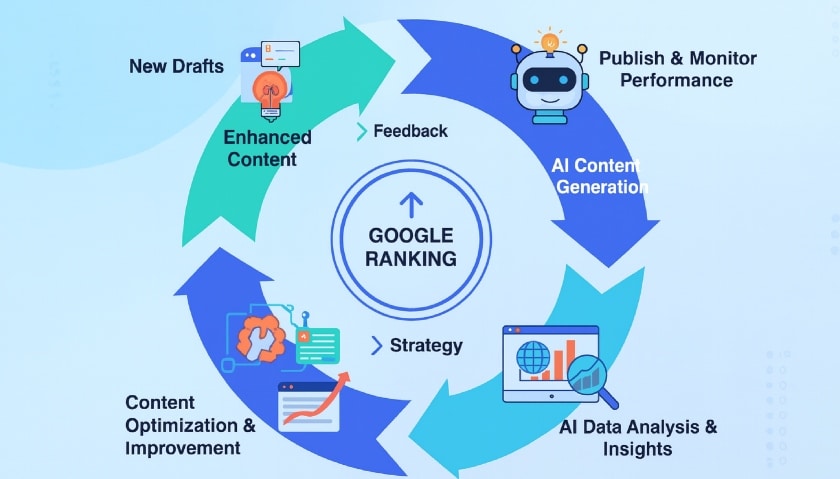
Implementing AI into your workflow does not mean abandoning your editorial instincts. It means enhancing them. A robust AI SEO content planning system typically involves five distinct stages.
1. Automated Keyword and Topic Discovery
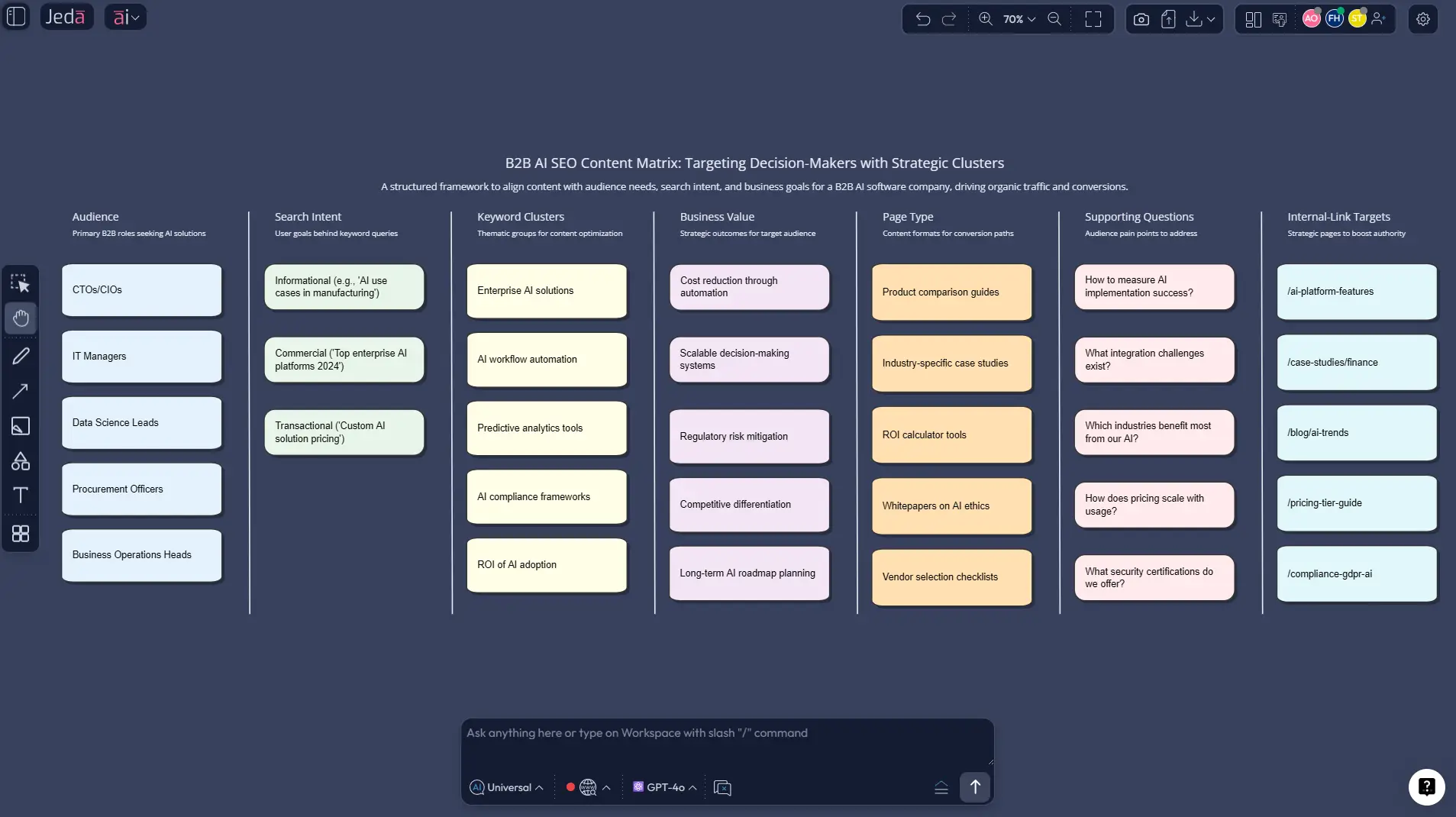
AI tools can process millions of search queries in minutes. They group keywords into topical clusters based on semantic similarity, not just exact-match phrases. For example, a tool might group “best running shoes for flat feet” with “overpronation correction” and “stability running shoe reviews” because they share the same underlying user need. This clustering allows you to create comprehensive pillar pages and supporting articles that cover a topic exhaustively.
2. Search Intent Classification
Not all searches are the same. Some users want information (informational intent), some want to compare products (commercial investigation), and some are ready to buy (transactional). AI algorithms can classify keywords by intent with high accuracy by analyzing the language patterns and the types of results currently ranking. This classification ensures that you do not waste resources creating a buying guide when users are actually looking for a tutorial.
3. Content Gap Analysis
AI can compare your existing content library against your competitors’ libraries. It identifies topics that your competitors rank for but you do not. More importantly, it can find subtopics that no one has covered well, giving you the opportunity to create definitive resources. This gap analysis is one of the most valuable outputs of AI planning because it directly informs your editorial calendar.
4. Predictive Performance Modeling
Some advanced platforms use historical data to predict how well a piece of content might perform based on factors like keyword difficulty, domain authority, and content length. While these predictions are not guarantees, they help you prioritize which topics to tackle first. You can focus your efforts on opportunities with the highest potential return on investment.
5. Dynamic Content Brief Generation
Once you have selected a topic, AI can generate a detailed content brief. This brief includes recommended headings, related questions to answer, entities to mention, and suggested word count. It also provides readability guidelines and internal linking suggestions. This brief serves as a roadmap for your writers, ensuring consistency and completeness across your team.
Benefits of Using AI for Content Planning
The advantages of integrating AI into your planning process are tangible and measurable. Below is a breakdown of the primary benefits based on industry data and case studies.
| Benefit | Impact | Example |
|---|---|---|
| Time Efficiency | Reduces research time by up to 70% | A team that spent 10 hours per week on keyword research can cut it to 3 hours. |
| Improved Content Relevance | Higher engagement and lower bounce rates | Articles that answer specific user questions keep visitors on the page longer. |
| Better SERP Visibility | Increased chances of ranking for featured snippets | Structuring content with clear Q&A sections targets position zero. |
| Scalability | Ability to plan hundreds of topics without adding staff | Enterprise sites can maintain a consistent publishing cadence. |
| Data-Backed Decisions | Reduces reliance on gut feeling | Choosing topics based on search volume trends rather than internal preference. |
Limitations and Risks to Consider
While the benefits are compelling, AI SEO content planning is not a silver bullet. There are significant limitations that you must manage carefully.
Risk of Generic Output
AI tools rely on existing data. If you feed them generic prompts, they will produce generic plans. The output is only as good as the input. Without a clear brand voice and unique perspective, your content plan will mirror what everyone else is doing. You must inject your own expertise and proprietary data into the process.
Data Accuracy and Recency
AI models are trained on historical data. They may not account for sudden market shifts, breaking news, or emerging trends. A topic that looks promising based on six months of data might be irrelevant tomorrow. Always combine AI insights with real-time social listening and industry news monitoring.
Over-Reliance on Metrics
Search volume and keyword difficulty are useful metrics, but they do not capture brand awareness or customer loyalty. A topic with low search volume might be incredibly valuable for your specific audience. Do not let AI dictate your entire strategy at the expense of human judgment.
How to Implement AI SEO Content Planning: A Step-by-Step Guide
To get the most out of AI, follow this practical implementation framework. This process works for solo bloggers, marketing teams, and enterprise organizations.
Step 1: Audit Your Current Content
Before planning new content, you need to know what you already have. Use an AI tool to crawl your site and categorize your existing pages by topic, performance, and relevance. Identify pages that are underperforming and could be updated rather than replaced. This audit prevents cannibalization and ensures you are building on existing authority.
Step 2: Define Your Core Topics
Based on your business goals, define 5-10 core topic pillars. These are broad categories that align with your products or services. For example, a fitness brand might have pillars like “Nutrition,” “Workout Routines,” “Recovery,” and “Supplements.” AI tools can help you expand each pillar into dozens of subtopics.
Step 3: Use AI for Keyword Expansion
Input your core topics into a keyword research tool like Ahrefs, SEMrush, or a dedicated AI platform. Generate a list of long-tail keywords and questions. Filter this list by search intent and relevance. Aim for a mix of high-volume head terms and low-competition long-tail phrases.
Step 4: Create a Data-Driven Editorial Calendar
Using the keyword clusters and intent classification, map out a publishing schedule. Prioritize topics that fill content gaps and target commercial intent if you are looking to drive conversions. Assign each piece a primary keyword, a secondary keyword list, and a target format (blog post, video, infographic).
Step 5: Generate and Refine Content Briefs
For each topic, use an AI content brief generator. The brief should include an outline, suggested headings, related entities, and frequently asked questions. Review the brief critically. Add your own expertise, unique data points, and internal links. The AI provides the skeleton; you provide the flesh and blood.
Step 6: Write, Optimize, and Publish
Your writers use the brief to create the draft. After writing, use an AI optimization tool to check for keyword density, readability, and semantic coverage. Make necessary edits. Publish the content and monitor its performance in Google Search Console.
Step 7: Iterate Based on Performance Data
AI planning is not a one-time event. Review your analytics monthly. Identify which pieces are ranking and which are not. Feed this performance data back into your AI tool to refine future topic suggestions. This creates a continuous improvement loop.
Common Mistakes in AI SEO Content Planning and How to Avoid Them
Many teams make avoidable errors when adopting AI. Here are the most frequent mistakes and the strategies to overcome them.
Mistake 1: Ignoring Search Intent
Focusing only on keyword volume while ignoring intent leads to high bounce rates. If a user searches “how to fix a leaky faucet,” they do not want a product page for plumbers. They want a DIY guide. Always verify the current top-ranking results for your target keyword. If the results are all blog posts, do not create a product page.
Mistake 2: Copying Competitor Structures Blindly
AI tools often suggest outlines based on what is currently ranking. If you copy this exactly, you will create a “me-too” article that offers no differentiation. Instead, use the competitor analysis to find weaknesses. If all top articles are text-heavy, add a video. If they lack case studies, include original research.
Mistake 3: Neglecting Human Review
Publishing AI-generated briefs without human oversight is dangerous. The AI might suggest outdated statistics or irrelevant subtopics. Every brief must be reviewed by someone with subject matter expertise. This is non-negotiable for maintaining E-E-A-T.
Mistake 4: Focusing Only on New Content
AI planning is often used to generate new ideas, but updating existing content is equally important. Use AI to identify old posts that have dropped in rankings. Refresh them with new data, better formatting, and additional sections. This is often faster and more effective than creating new posts.
Mistake 5: Over-Optimizing for Keywords
Even with AI, some teams stuff keywords into every paragraph. This creates unnatural, robotic prose. Use AI to understand semantic relationships, not to force exact-match phrases. Write for humans first, then optimize for search engines.
Important Notes on Data Privacy and AI Ethics
When using AI tools, be mindful of data privacy. Do not input sensitive customer information or proprietary business data into public AI platforms. Ensure that your chosen tools comply with GDPR and other relevant regulations. Additionally, be transparent with your audience about your use of AI. While you do not need to disclose every tool, you should ensure that the final content is factually accurate and not misleading.
Another ethical consideration is the potential for bias in AI algorithms. If your training data is skewed, your content plan might ignore certain demographics or perspectives. Actively review your AI-generated topics to ensure they are inclusive and representative of your entire audience.
Frequently Asked Questions
What is the best AI tool for SEO content planning?
T MarketMuse and Clearscope are excellent for content optimization and brief generation. Surfer SEO is popular for on-page optimization. Ahrefs and SEMrush offer robust keyword research and gap analysis features. Many teams use a combination of these tools. Start with a free trial to see which interface and features align with your workflow.
Can AI replace human content strategists?
No. AI can process data and identify patterns, but it cannot understand brand nuance, emotional resonance, or strategic business goals. A human strategist is needed to interpret AI insights, make judgment calls, and inject creativity. The best results come from a partnership where AI handles the heavy lifting of data analysis and humans focus on strategy and storytelling.
How much does AI SEO content planning cost?
Costs vary widely. Basic keyword research tools start at around $99 per month. Premium content optimization platforms can cost $200 to $500 per month. Enterprise-level solutions with API access and custom models can run into the thousands. However, the return on investment is often significant. If you are a small business, you can start with a single tool and scale up as your revenue grows.
How do I measure the success of my AI content planning?
Track the same metrics you would for any content strategy: organic traffic, keyword rankings, engagement time, conversion rate, and backlinks. Compare your performance against your baseline before implementing AI. Look for improvements in the efficiency of your workflow, such as reduced time from idea to publication. Also, monitor the diversity of your content portfolio to ensure you are not over-focusing on one type of query.
Is AI-generated content penalized by Google?
Google does not penalize content simply because it is generated by AI. However, it does penalize low-quality, spammy content regardless of how it is produced. If you use AI to plan and draft content, you must ensure that the final output is accurate, helpful, and original. Always fact-check statistics and add unique insights that cannot be found elsewhere. Content that simply rehashes what is already on the web will not rank well.
Conclusion
AI SEO content planning represents a fundamental shift in how digital marketing operates. It empowers teams to make data-driven decisions, scale their output, and stay competitive in a crowded search landscape. However, the technology is a tool, not a replacement for human expertise. The most successful strategies combine the analytical power of AI with the creative judgment of experienced marketers. By following the workflow outlined in this guide, avoiding common pitfalls, and maintaining a commitment to quality, you can build a content engine that consistently delivers value to your audience and achieves your business objectives. Start small, measure your results, and refine your approach over time. The future of content planning is here, and it is a blend of artificial intelligence and human intelligence working in harmony.
Xem thêm:
- AI Robots.txt: The Complete Guide to Controlling AI Crawlers on Your Website
- WP Trove AI WordPress: The Complete Guide to AI-Powered Site Management
- AI SEO Regional SEO: The Complete Guide to Dominating Local Search in 2025
- AI SEO Funnel Optimization: The Complete Guide to Converting Search Traffic
- AI Rank Tracking: How Artificial Intelligence Revolutionizes SERP Monitoring
Bài viết cùng chủ đề:

AI SEO SEO Automation with Make: The Complete Workflow Guide

AI SEO SEO Automation with Zapier: The Complete Workflow Guide

AI SEO SEO Automation with n8n: The Complete Workflow Guide
AI SEO SEO Automation with Gemini: The Complete Guide to Scaling Organic Growth

AI SEO SEO Automation with Claude: The Complete Guide to Scaling Content in 2025

AI SEO SEO Automation with ChatGPT: The Complete Playbook for 2025

AI SEO & SEO Automation for Affiliate Sites: The 2025 Playbook for Passive Income Growth
AI SEO & SEO Automation for Bloggers: The Complete Guide to Scaling Your Content

AI SEO & SEO Automation for Agencies: The Complete 2025 Playbook

AI SEO and SEO Automation for Ecommerce: The Complete Playbook for 2025

AI SEO & SEO Automation for WordPress: The Complete Playbook for 2025
AI SEO SEO Automation Strategy: The Complete Playbook for 2025

Mastering the AI SEO SEO Automation Process: A Complete Guide to Scaling Organic Growth
AI SEO SEO Automation System: The Complete Guide to Scaling Organic Growth in 2025
AI SEO SEO Automation Platform: The Complete Guide to Scaling Organic Growth in 2025
AI SEO SEO Automation Software: The Complete Guide to Scaling Organic Growth in 2025















