
No products in the cart.
AI SEO Content Production: The Complete Guide to Scaling Your Rankings in 2025
31
Jul
Jul
AI SEO content production has transformed from a futuristic concept into a daily necessity for digital marketers. Businesses that leverage artificial intelligence to create, optimize, and distribute content are outperforming competitors who rely solely on manual processes. This guide explores how AI tools streamline workflows, improve search visibility, and generate measurable ROI. From understanding core algorithms to implementing advanced human-in-the-loop strategies, you will learn how to build a sustainable content engine that ranks.
What Is AI SEO Content Production?
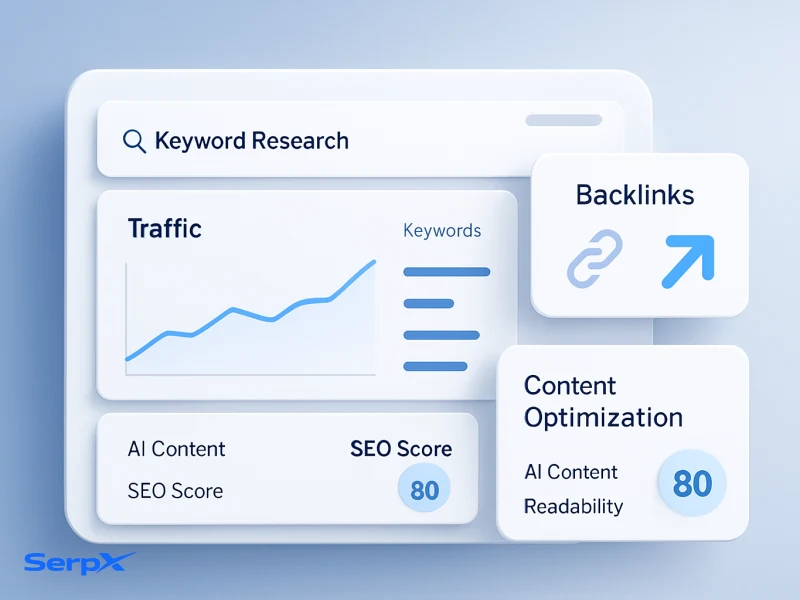
AI SEO content production refers to the use of machine learning models and natural language processing tools to generate, optimize, and manage written material designed to rank in search engines. This process goes beyond simple article writing. It includes keyword clustering, semantic analysis, internal linking suggestions, meta description generation, and content refresh cycles.
The core value lies in automation of repetitive tasks. AI systems analyze millions of search results to identify patterns in top-ranking pages. They then apply those patterns to new content, ensuring alignment with user intent and Google’s ranking factors. However, successful implementation requires a strategic blend of algorithmic efficiency and human editorial oversight.
The Evolution from Manual Writing to AI-Assisted Workflows
Traditional content production involved manual keyword research, drafting, editing, and formatting. A single article could take four to six hours. With AI, the drafting phase shrinks to minutes. Tools like GPT-4, Claude, and specialized platforms such as Surfer SEO or Clearscope now handle data-heavy tasks like outline generation and readability scoring.
This shift does not eliminate the need for writers. Instead, it elevates their role. Writers become editors and strategists, focusing on nuance, brand voice, and factual accuracy. The result is a production pipeline that produces more content without sacrificing quality.
Why AI SEO Content Production Matters for Search Rankings
Google’s algorithms prioritize helpful, relevant content. AI tools help meet these criteria by ensuring comprehensive topic coverage. They analyze the top 20 results for a keyword and extract common subtopics, questions, and entities. This data-driven approach reduces the guesswork in content creation.
Additionally, AI enables scalability. A single marketer can manage a content calendar that previously required a team of five. This scalability is critical for competitive niches where publishing frequency directly correlates with domain authority growth.
Understanding Google’s E-E-A-T Signals
Experience, Expertise, Authoritativeness, and Trustworthiness remain central to ranking. AI assists by flagging content gaps that undermine E-E-A-T. For example, an AI tool can detect missing author bios, outdated statistics, or insufficient citations. It can also suggest adding first-hand examples or case studies to boost the experience signal.
However, AI cannot fabricate genuine expertise. If your brand lacks real-world experience in a topic, no algorithm can compensate. Therefore, use AI to enhance existing knowledge, not replace it.
Core Components of an AI-Driven Content Production System
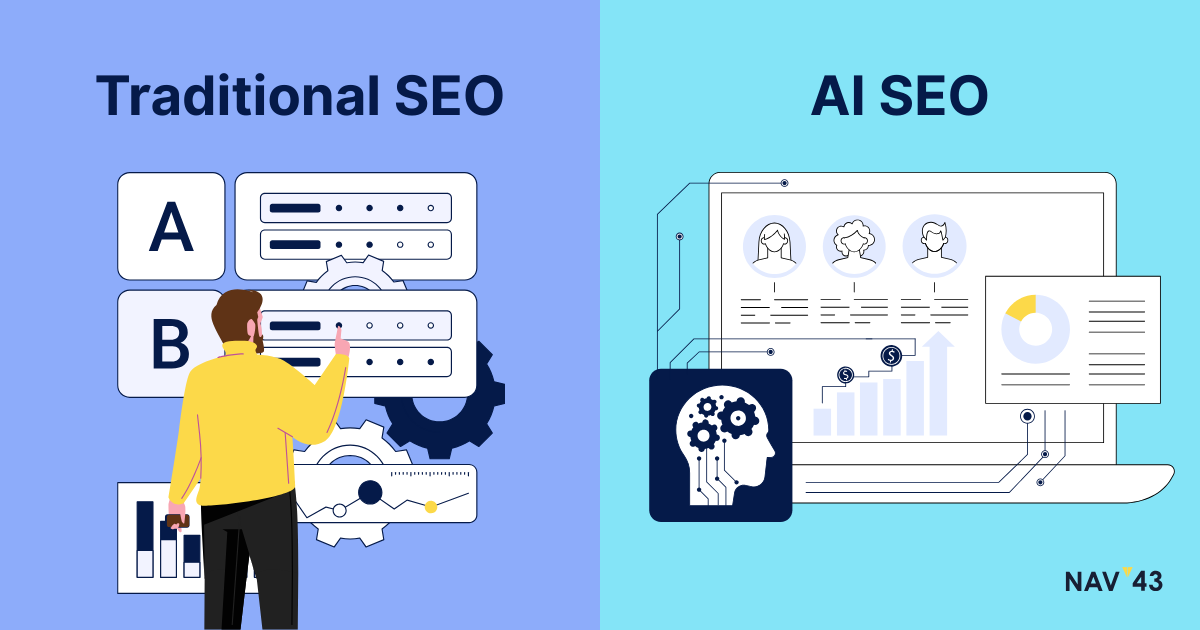
Building a robust AI SEO content production workflow involves several interconnected components. Each plays a distinct role in moving content from ideation to publication.
1. Automated Keyword and Topic Clustering
AI tools process vast datasets to group keywords by search intent. Instead of targeting individual keywords, you target topic clusters. For instance, a cluster around “AI SEO content production” might include “AI writing tools for SEO,” “content optimization software,” and “automated content workflows.”
This clustering informs your site architecture. Pillar pages cover broad topics, while cluster pages target long-tail variations. Internal links connect them, passing authority and improving crawlability.
2. AI-Powered Content Generation
Generative models produce drafts based on your input parameters. You provide the target keyword, desired tone, and key points. The AI generates a structured article with headings, paragraphs, and bullet points. Advanced tools allow you to specify brand guidelines and exclude certain phrases.
Quality varies by tool and prompt engineering. A well-crafted prompt yields a usable draft. A vague prompt produces generic fluff. The key is to treat AI as a junior writer who needs clear instructions.
3. On-Page Optimization and Semantic Analysis
After drafting, AI tools analyze the content against live search results. They check keyword density, heading hierarchy, image alt text, and internal link opportunities. They also evaluate semantic relevance by comparing your content’s entities with those in top-ranking pages.
Tools like Frase and MarketMuse provide real-time scoring. They highlight missing terms and suggest where to add them. This ensures your content covers the full breadth of the topic, not just the primary keyword.
4. Automated Content Refresh and Scaling
Search rankings decay over time. AI monitors your existing pages for performance drops. It flags outdated statistics, broken links, and declining traffic. You can then trigger an automated refresh that updates the content with new data and re-optimizes it for current search trends.
This continuous improvement cycle is a major advantage. Manual audits are time-consuming and often skipped. AI makes them routine, keeping your content library fresh and competitive.
Benefits of AI SEO Content Production
The advantages of integrating AI into your content operations are substantial. They extend beyond time savings to include strategic insights and performance gains.
- Cost Efficiency: Reduces the need for large content teams. A single editor can manage multiple AI-assisted writers.
- Speed to Market: Publish articles in hours, not days. This is crucial for news-related queries or trending topics.
- Data-Driven Decisions: AI provides concrete data on what works in your niche, eliminating subjective guesswork.
- Consistency: Maintains a uniform tone and structure across all published pieces, strengthening brand recognition.
- Scalability: Easily increase output from 10 to 100 articles per month without proportional cost increases.
- Improved Internal Linking: AI automatically suggests relevant links between your existing posts, distributing link equity effectively.
- Generation: ChatGPT, Claude, or Jasper for drafting.
- Optimization: Surfer SEO, Clearscope, or Frase for on-page scoring.
- Research: Ahrefs or SEMrush for keyword data and SERP analysis.
- Workflow: Notion or Airtable for content calendars and approvals.
- Target keyword and secondary keywords.
- Target audience description.
- Desired tone (professional, conversational, authoritative).
- Specific sections or questions to answer.
- Examples of competitor content to reference.
- Constraints (word count, banned phrases, required statistics).
Limitations and Risks to Manage
AI is not a magic bullet. Understanding its limitations prevents costly mistakes and ensures you use the technology responsibly.
Factual Accuracy and Hallucinations
Large language models can generate confident but incorrect statements. This is particularly dangerous for YMYL (Your Money or Your Life) topics like health, finance, and legal advice. Always verify AI-generated facts against authoritative sources before publishing.
Lack of Original Research
AI cannot conduct interviews, run surveys, or analyze proprietary data. Content that relies solely on AI output will lack unique insights. This diminishes your E-E-A-T and makes it harder to earn backlinks.
Algorithmic Bias and Repetition
AI models trained on existing web content may replicate common biases or produce formulaic text. This can lead to a homogenized web where every article sounds the same. Human editing is essential to inject personality and unique perspectives.
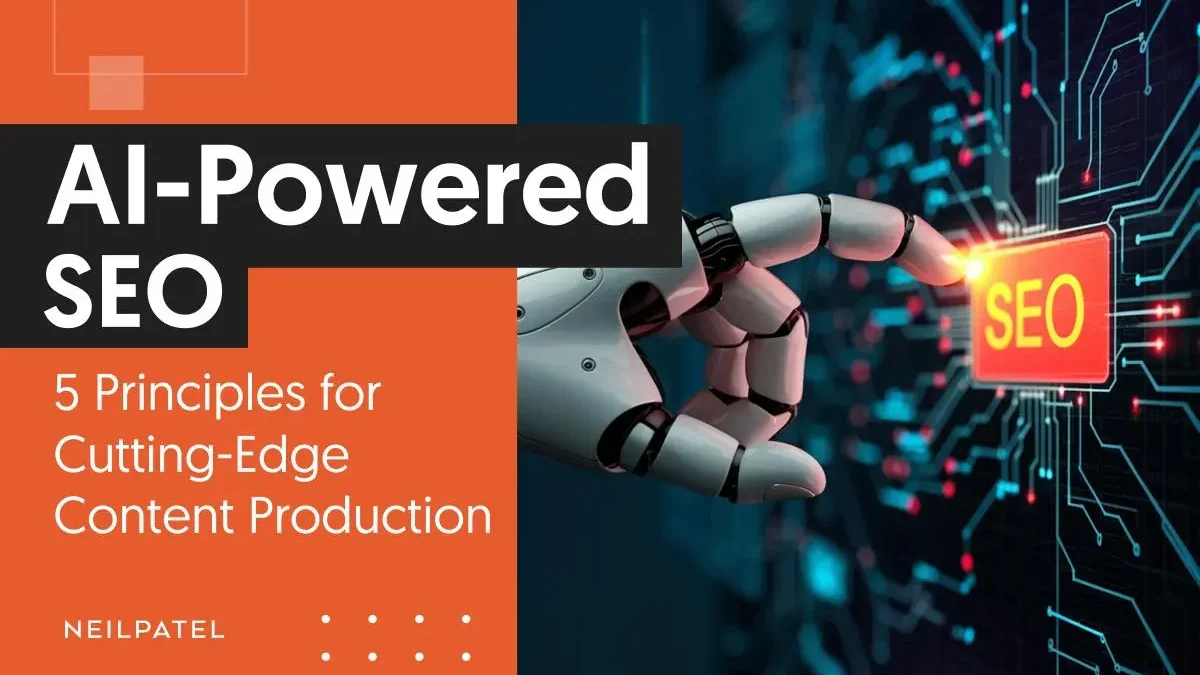
AI SEO Content Production vs. Traditional Methods: A Comparison
| Aspect | AI-Driven Production | Traditional Manual Production |
|---|---|---|
| Time per Article | 1-2 hours (including editing) | 4-8 hours |
| Keyword Research | Automated clustering and gap analysis | Manual spreadsheet analysis |
| Cost per Word | Lower due to reduced labor hours | Higher due to writer fees |
| Originality | Requires human input for unique data | Naturally includes human experience |
| Scalability | High, limited by editing capacity | Low, limited by hiring capacity |
| Error Rate | Potential for factual hallucinations | Lower, but prone to human typos |
| SEO Optimization | Built-in semantic analysis | Depends on writer’s SEO knowledge |
The table illustrates that AI excels in speed and scalability, while traditional methods offer inherent authenticity. The best approach combines both, using AI for heavy lifting and humans for quality control.
Practical Guide: How to Implement AI SEO Content Production
Implementing an AI workflow requires careful planning. Follow these steps to build a system that delivers results without compromising quality.
Step 1: Define Your Content Pillars and Audience
Start with a clear content strategy. Identify the main topics that align with your business goals. Create detailed buyer personas to understand search intent. AI tools work best when given specific parameters, so vague strategies lead to vague content.
Step 2: Select the Right AI Tool Stack
No single tool does everything. You need a combination:
Invest in tools that integrate with each other. For example, Frase connects with Google Search Console to identify content gaps directly from your existing performance data.
Step 3: Create Detailed AI Prompts
Your prompt quality determines output quality. A strong prompt includes:
Refine your prompts based on output. Keep a library of successful prompts for different content types like listicles, guides, or product comparisons.
Step 4: Implement a Human Review Process
Every AI-generated piece must pass through a human editor. The editor checks for factual errors, brand voice alignment, and readability. They also add original insights, quotes, or case studies that AI cannot produce.
Create a checklist for editors. Include items like “verify all statistics with primary sources” and “ensure the introduction hooks the reader.” This standardizes quality across your team.
Step 5: Monitor Performance and Iterate
Publishing is not the end. Track your content’s rankings, organic traffic, and engagement metrics. Use AI to analyze which pieces perform well and why. Feed this data back into your prompt library and topic selection process.
Set up a quarterly review. Identify underperforming pages and use AI to refresh them with new data and improved optimization. This continuous loop is where the real compounding benefits appear.
Common Mistakes in AI SEO Content Production and How to Avoid Them
Many businesses fail to see results because they repeat the same errors. Recognizing these pitfalls early saves time and resources.
Mistake 1: Publishing Unedited AI Output
The most common mistake is treating AI drafts as final products. This leads to generic, error-prone content that fails to engage readers. Always edit. Add personal anecdotes, industry examples, and unique data points.
Mistake 2: Ignoring Search Intent
AI can generate content, but it cannot determine if a user wants a tutorial, a comparison, or a list. Misinterpreting intent results in high bounce rates. Use AI for research but apply human judgment to match content format with user needs.
Mistake 3: Over-Optimizing for Keywords
Stuffing content with keywords, even with AI assistance, triggers Google’s spam filters. Focus on semantic relevance and natural language. Use variations and synonyms. The goal is to answer questions comprehensively, not to hit a keyword density target.
Mistake 4: Neglecting Fact-Checking
AI hallucinations are real. A single false statistic can destroy your credibility. Implement a strict verification protocol. Cross-reference every claim with at least two authoritative sources.
Mistake 5: Lack of a Clear Content Strategy
Using AI without a strategic framework produces random articles that do not support your business objectives. Define your funnel stages. Create content for awareness, consideration, and decision stages. Map each AI-generated piece to a specific goal.
Important Notes for Long-Term Success
AI SEO content production is not a set-and-forget solution. It requires ongoing management and adaptation to algorithm updates.
Google’s helpful content system rewards content that demonstrates first-hand expertise. Therefore, prioritize adding original research, proprietary data, or expert interviews to your AI-generated drafts. This differentiates you from the thousands of sites using the same AI tools.
Also, pay attention to user experience signals. AI can help you structure content with clear headings, short paragraphs, and bullet points. But it cannot measure how users interact with your page. Use analytics to identify pages with high exit rates and revise them.
Finally, stay updated on AI regulations and Google’s policies. Search engines are actively developing methods to detect and devalue mass-produced AI content. A human-centric approach that uses AI as an assistant, not a replacement, will always be safer.
Frequently Asked Questions
Is AI-generated content penalized by Google?
Google does not penalize content simply for being AI-generated. However, it penalizes content that is created primarily to manipulate search rankings and provides little value to users. If AI content is helpful, original, and demonstrates E-E-A-T, it can rank well. Always review and enhance AI output to ensure it meets quality standards.
What is the best AI tool for SEO content production?
T The optimal choice depends on your needs. For drafting, ChatGPT and Claude are popular. For optimization, Surfer SEO and Clearscope are industry standards. For research, Ahrefs and SEMrush are essential. A combination of these tools typically yields the best results.
How much does AI SEO content production cost?
Costs vary widely. Basic AI writing tools start at around $20 per month. Advanced optimization platforms can cost $100 to $300 per month. Enterprise-level solutions with API access and custom models can exceed $1,000 per month. Compare these costs to the salary of a full-time writer, which is significantly higher.
Can AI replace human SEO content writers?
AI cannot fully replace human writers. It lacks the ability to conduct interviews, draw on personal experience, or understand nuanced brand voice. However, it can replace the need for large writing teams. The most effective model uses AI for drafting and research, with humans focusing on editing, strategy, and adding unique insights.
How do I ensure AI content is original?
Use plagiarism detection tools like Copyscape or Grammarly’s originality checker. Additionally, customize AI output by adding your own data, examples, and opinions. Rewrite key sections in your own words. This reduces the risk of duplicate content issues and improves originality.
What is the ideal workflow for AI content production?
An ideal workflow includes: 1) Keyword and topic research using AI tools. 2) Creating a detailed content brief. 3) Generating a draft with AI. 4) Human editing for accuracy and voice. 5) On-page optimization using AI scoring tools. 6) Publishing and monitoring performance. 7) Refreshing content based on data.
Conclusion
AI SEO content production is a powerful methodology that, when executed correctly, delivers significant competitive advantages. It accelerates production timelines, reduces costs, and provides data-backed optimization insights. However, success depends on a balanced approach that combines algorithmic efficiency with human editorial judgment.
Focus on creating content that genuinely helps your audience. Use AI to handle the heavy lifting of research and drafting, but never skip the human review stage. Verify facts, inject original perspectives, and align every piece with a clear strategic goal. By doing so, you build a content engine that not only ranks well but also builds lasting trust with your readers and search engines alike.
Xem thêm:
- AI SEO Sitebulb: The Complete Guide to Smarter Technical Audits
- AI SEO Image Optimization: The Complete Guide to Boosting Rankings in 2025
- AI SEO GEO Audit: The Complete Guide to Future-Proofing Your Search Visibility
- AI SEO Knowledge Panel: The Complete Guide to Dominating Search Visibility
- AI NLP SEO: The Complete Guide to Optimizing Content for the Age of Intelligent Search
Bài viết cùng chủ đề:

AI SEO SEO Automation with Make: The Complete Workflow Guide

AI SEO SEO Automation with Zapier: The Complete Workflow Guide

AI SEO SEO Automation with n8n: The Complete Workflow Guide
AI SEO SEO Automation with Gemini: The Complete Guide to Scaling Organic Growth

AI SEO SEO Automation with Claude: The Complete Guide to Scaling Content in 2025

AI SEO SEO Automation with ChatGPT: The Complete Playbook for 2025

AI SEO & SEO Automation for Affiliate Sites: The 2025 Playbook for Passive Income Growth
AI SEO & SEO Automation for Bloggers: The Complete Guide to Scaling Your Content

AI SEO & SEO Automation for Agencies: The Complete 2025 Playbook

AI SEO and SEO Automation for Ecommerce: The Complete Playbook for 2025

AI SEO & SEO Automation for WordPress: The Complete Playbook for 2025
AI SEO SEO Automation Strategy: The Complete Playbook for 2025

Mastering the AI SEO SEO Automation Process: A Complete Guide to Scaling Organic Growth
AI SEO SEO Automation System: The Complete Guide to Scaling Organic Growth in 2025
AI SEO SEO Automation Platform: The Complete Guide to Scaling Organic Growth in 2025
AI SEO SEO Automation Software: The Complete Guide to Scaling Organic Growth in 2025















