
No products in the cart.
AI NLP SEO: The Complete Guide to Optimizing Content for the Age of Intelligent Search
29
Jul
Jul
The way search engines understand and rank content has undergone a seismic shift. At the heart of this transformation lies the convergence of artificial intelligence, natural language processing, and search engine optimization — what industry experts now call AI NLP SEO. This isn’t just a buzzword; it’s the new foundational layer for any content strategy that aims to survive and thrive in a world where Google’s algorithms interpret meaning, intent, and context with near-human precision. From BERT to MUM, and from GPT-driven content creation to entity-based optimization, mastering AI NLP SEO means understanding how machines read your content and how to align with that process without sacrificing human creativity.
What Exactly Is AI NLP SEO?
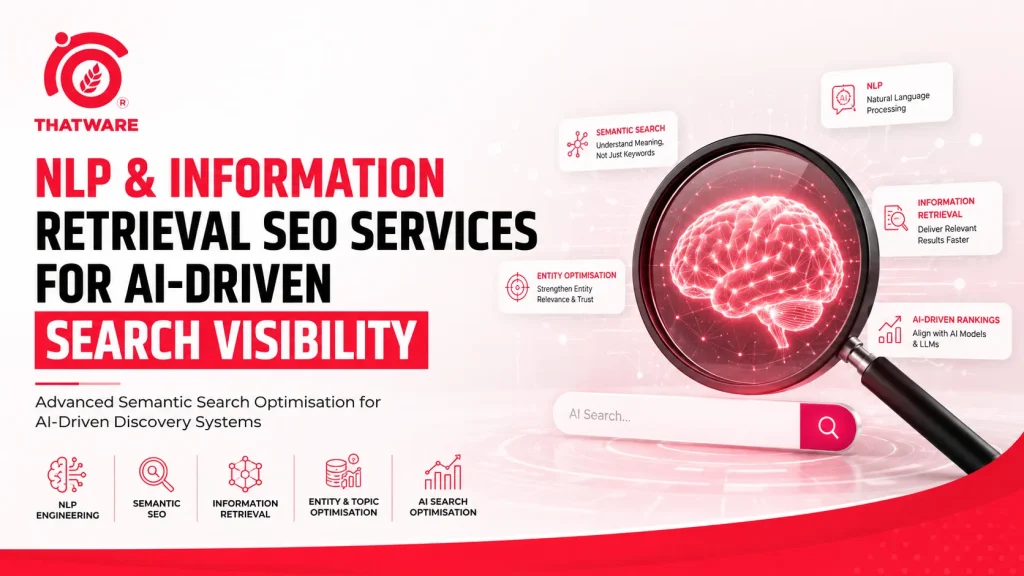
AI NLP SEO refers to the practice of optimizing digital content by leveraging the principles of Natural Language Processing (NLP) — a branch of AI that enables computers to understand, interpret, and generate human language — to align with how modern search engines process queries and web pages. Traditional SEO relied heavily on exact-match keywords and link volume. Today, Google’s algorithms, powered by AI models like RankBrain, BERT, and the Multitask Unified Model (MUM), dissect the semantics, user intent, and relational meaning of every sentence. AI NLP SEO therefore is a strategic fusion: using AI tools to research, write, and refine content while simultaneously ensuring that content is structured and phrased in ways that NLP-driven crawlers can parse effectively.
The core idea is to move beyond keyword density toward topical authority and search intent satisfaction. When you optimize for NLP, you’re optimizing for entities, relationships, salience, and sentiment — factors that modern search engines use to decide whether your page truly answers a user’s query. This approach doesn’t just improve rankings; it builds trust and relevance at a granular level.
How Search Engines Use NLP to Rank Content
To build an effective AI NLP SEO strategy, you must first understand how search engines apply NLP. Google processes billions of searches daily, and by 2024, the vast majority are parsed through deep learning models. Here are the key technologies and how they impact ranking:
- BERT (Bidirectional Encoder Representations from Transformers): Introduced in 2019, BERT analyzes the full context of a word by looking at the words that come before and after it. It excels at understanding prepositions, nuanced phrases, and conversational queries. For SEO, this means exact-match keywords are less important than clear, context-rich sentences that leave no ambiguity.
- RankBrain: Google’s first AI system for search, RankBrain interprets novel queries and maps them to known topics. It learns associations between words and entities, rewarding pages that cover a topic comprehensively rather than just targeting a single keyword.
- MUM (Multitask Unified Model): MUM is multimodal and can transfer knowledge across languages and formats. It’s designed to answer complex questions that require multiple steps. For NLP SEO, this implies that content that integrates information from diverse, authoritative sources and connects subtopics seamlessly will have an edge.
- Entity Recognition and the Knowledge Graph: NLP models extract entities (people, places, things, concepts) and their relationships. If your content clearly identifies entities and their attributes, it fits neatly into Google’s Knowledge Graph, increasing the chance of earning rich snippets and knowledge panels.
- Using clear antecedent-anaphor relationships (avoid vague pronouns).
- Structuring information in a logical hierarchy with descriptive headings.
- Answering questions concisely before expanding — perfect for featured snippets.
- Employing bullet points and tables to present structured data that NLP models love.
- Writing in active voice and simple language while maintaining depth.
- Add structured data (Article, FAQ, BreadcrumbList) using JSON-LD.
- Use concise, descriptive URLs.
- Optimize image alt text with entity-aware descriptions, not keyword stuffing.
- Link internally to other relevant pages on your site using anchor text that describes the entity of the target page.
- Treating NLP optimization as a checklist of keywords: Forcing every entity synonym into the text leads to unnatural writing. Instead, weave them in where context demands.
- Ignoring E-E-A-T in favor of AI-generated volume: Publishing hundreds of AI-written articles without human review signals low-quality. Google’s site reputation abuse policies punish mass-produced, unoriginal content. Always add genuine expertise.
- Overlooking sentence structure: BERT penalizes vague references. For example, writing “It is an important factor” without clarifying “it” confuses NLP models. Be explicit.
- Failing to update content for model changes: NLP algorithms evolve. A strategy fine-tuned for BERT may need adjustments for MUM’s multimodal capabilities. Quarterly content audits are essential.
- Skipping technical SEO basics: Even the best NLP-optimized text won’t rank if page speed is poor or core web vitals are neglected. AI NLP SEO must sit on a solid technical foundation.
- Original research is your moat: AI models can replicate existing knowledge, but they cannot create proprietary data. Surveys, original studies, and unique expert interviews boost your entity’s authority score.
- Multimodal content is the next frontier: As MUM integrates images, video, and audio, your AI NLP SEO strategy should expand to include transcripts, alt text for visuals, and YouTube chapters that describe entities.
- Author entities matter: Connect your content to real authors with established expertise. Google’s knowledge graph tracks author entities, and a recognized author can elevate a page’s trust.
- Avoid chasing algorithmic fluctuations: Focus on intent fulfillment and factual accuracy. These principles outlast any single algorithm update.
These systems evaluate your content at a semantic level. They measure salience (how central an entity is to the text), sentiment (positive, negative, neutral), and coherence. AI NLP SEO is about making these signals explicit through your writing and structure.
The Core Components of an AI-Powered NLP SEO Strategy
Building a strategy around AI NLP SEO requires more than just using an AI writer. It’s a systematic approach that merges content creation, technical SEO, and data analysis.
1. Topic and Entity Research Over Keyword Research
Traditional keyword research finds phrases with search volume. NLP SEO research expands those keywords into entities, related subtopics, and user questions. Tools like Google’s NLP API, SurferSEO, and MarketMuse analyze top-ranking pages to identify the clusters of entities and terms that Google expects. Your goal becomes entity coverage: ensuring your content mentions not just the primary keyword but also related people, locations, attributes, and concepts that establish authority.
For example, a page targeting “AI NLP SEO” should also cover “natural language understanding,” “Google BERT update,” “semantic search,” “entity SEO,” “content optimization tools,” and “NLP content writing.” A keyword-only approach would have missed half of these.
2. AI-Assisted Content Creation and Drafting
Large language models (LLMs) like GPT-4 can produce drafts, outlines, and even full articles. However, AI NLP SEO demands that the output be refined through a human lens. Use AI to generate the first pass, then manually enhance it for E-E-A-T signals (experience, expertise, authoritativeness, trustworthiness), add original data, case studies, and quotes. Ensure the text demonstrates first-hand experience where applicable. Google’s helpful content system rewards content written by people for people, but AI can accelerate research, formatting, and idea generation.
3. Natural Language Optimization (NLO)
NLO is the practice of editing content so that it reads naturally for humans and parses cleanly for machines. Techniques include:
4. Structured Data and Schema Markup
Schema is a direct line of communication with search engine crawlers. By marking up your content with schema types like Article, FAQ, HowTo, and Organization, you disambiguate entities and relationships. NLP models use this structured data to confirm the meaning of your content. For AI NLP SEO, schema is a multiplier: it boosts the chances of rich results and makes your entity relationships machine-readable.
Benefits and Limitations of AI NLP SEO
Like any methodology, AI NLP SEO offers significant advantages but also presents challenges. Understanding both is critical for balanced execution.
| Benefits | Limitations |
|---|---|
| Improved content relevance and user satisfaction because content matches the deeper intent. | Over-optimization risk: Writing solely for NLP scores can produce robotic, unnatural text. |
| Higher visibility for long-tail, conversational queries thanks to natural language patterns. | Algorithm dependency: As models change, optimization tactics may need rapid adjustment. |
| Better extraction of featured snippets and voice search answers due to concise, structured data. | Resource-intensive: Requires advanced tools and a steep learning curve for NLP concepts. |
| Scalable content creation when AI tools are used intelligently alongside human editors. | Potential for content homogeneity if everyone uses the same AI models and optimizes for the same entities. |
| Stronger E-E-A-T signals when original insights and expert quotes are embedded naturally. | Measurement complexity: Success isn’t just about rankings; it’s about semantic relevance, which is harder to track. |
AI NLP SEO vs. Traditional Keyword-Based SEO: A Direct Comparison
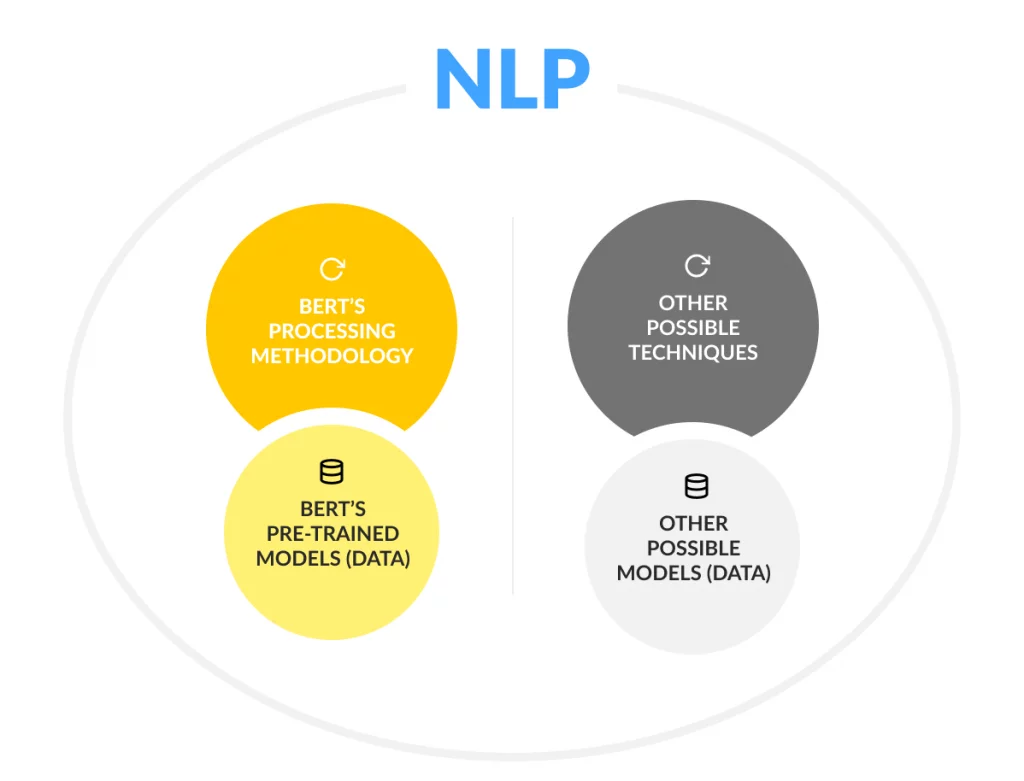
To clarify the paradigm shift, consider a side-by-side comparison of the old and new approaches. This will help you recognize the gaps in your current strategy.
| Aspect | Traditional SEO (pre-BERT) | AI NLP SEO |
|---|---|---|
| Core Focus | Exact-match keywords, backlinks, meta tags. | Topics, entities, search intent, semantic richness. |
| Content Creation | Write for search engines first, often with keyword stuffing. | Write for humans, use NLP models to validate entity inclusion. |
| Research Tools | Google Keyword Planner, Ahrefs for volume and difficulty. | SurferSEO, Clearscope, Google NLP API, entity extractors. |
| On-Page Signals | Keyword in title, H1, bold, alt text. | Entity-first headings, FAQ schema, concise answers, logical content flow. |
| Ranking Factor Priority | Domain authority, exact anchor text, page-level keyword usage. | Topical authority, page-entity relevance, content comprehensiveness. |
| User Intent Handling | Often guesswork; one page tried to rank for multiple intents. | Explicit intent matching; separate pages for informational, transactional, navigational. |
The takeaway is clear: AI NLP SEO does not discard traditional fundamentals; it elevates them with a layer of semantic intelligence. You still need quality backlinks, but your content must first prove its worth to an NLP algorithm that decides whether it’s truly valuable.
Practical Application: A Step-by-Step Guide to AI NLP SEO
Implementing AI NLP SEO requires a repeatable workflow. Below is a proven process that blends AI tools with human expertise.
Step 1: Map the User Journey and Intent Cluster
Before writing a single word, define the user’s goal. For “AI NLP SEO,” typical intents are: learning what it is, discovering tools, implementing a strategy, or comparing methods. Use tools like AlsoAsked or AnswerThePublic to collect questions. Group them into intent clusters. Each cluster may warrant a dedicated page or section.
Step 2: Extract Entities and Determine Topical Depth
Run the top 5 ranking URLs for your target query through an NLP entity extractor (Google’s free Natural Language API, TextRazor, or a tool like Frase). Note the entities that consistently appear: “search engine,” “natural language understanding,” “content optimization,” “Google,” “BERT,” etc. Build a checklist. Your content must address each major entity and its attributes at a minimum.
Step 3: Use AI to Generate an Outline, Then Write a Human-First Draft
Prompt a model like ChatGPT for a detailed outline based on your entity list and intent analysis. Critically evaluate it — does it show real experience? Insert your own case studies, anecdotes, and unique data. Write the draft manually or heavily edit the AI output. Aim for a tone that conveys expertise and genuine insight.
Step 4: Optimize for Natural Language Patterns
Read the draft aloud. Simplify any convoluted sentences. Ensure each paragraph starts with a clear topic sentence. Use transition words. For complicated concepts, follow up with a concrete example. This improves readability and helps NLP models parse the logic.
Step 5: Implement Technical NLP Enhancements
Step 6: Measure Semantic Relevance, Not Just Rankings
Track rank positions, but also use tools like InLinks or MarketMuse to see how your entity coverage compares to competitors. Monitor the number of long-tail keyword variations you rank for; an effective AI NLP SEO page will rank for hundreds of semantically related queries. Assess engagement metrics like dwell time and click-through rate — these reflect whether your content actually satisfies intent.
Common Mistakes in AI NLP SEO and How to Avoid Them
Even seasoned marketers stumble when transitioning to an NLP-driven framework. Here are the most frequent pitfalls:
Important Notes for Long-Term AI NLP SEO Success
Adopting AI NLP SEO is not a one-time project; it’s an ongoing discipline. Keep these principles in mind:
Frequently Asked Questions About AI NLP SEO
What is the difference between NLP SEO and traditional SEO?
Traditional SEO focuses primarily on keywords, backlinks, and technical signals. AI NLP SEO shifts the emphasis to understanding the meaning behind words, optimizing for entities and user intent rather than exact-match phrases. It aligns content with how modern search engines like Google use natural language processing to interpret and rank pages.
Do I need AI tools to do NLP SEO?
While not mandatory, AI tools significantly enhance efficiency and accuracy. You can manually research entities and intent, but Google’s NLP API or platforms like Clearscope and SurferSEO automate entity extraction and content grading, giving you a competitive edge. The key is to use AI as an assistant, not a replacement for human judgment.
How does Google use BERT for SEO?
BERT helps Google understand the full context of words in a search query and on a webpage. It pays attention to the relationships between all words in a sentence rather than processing them one by one. For SEO, this means that your content must be clear and contextually rich, as BERT can detect whether you’re genuinely answering a nuanced question.
Can AI-generated content rank well with NLP SEO?
Yes, but with conditions. AI-generated content that is fact-checked, edited for readability, enriched with original insights, and properly structured can rank well. However, raw AI output without human oversight typically lacks the E-E-A-T signals and freshness that Google’s algorithms value. Google rewards helpful, people-first content, so human refinement is non-negotiable.
What are the best tools for AI NLP SEO?
For entity extraction and content optimization, consider Google’s Natural Language API, MarketMuse, Frase, and SurferSEO. For schema and technical implementation, Screaming Frog and Rank Math are excellent. For writing assistance, ChatGPT or Claude can help with outlines and drafts, but always add human expertise.
How do I optimize for featured snippets using NLP?
Featured snippets favor clear, concise answers placed early in the content. Use structured headings (H2, H3) that mirror common question phrases. Answer the question in a short paragraph (40-60 words) immediately after the heading, then elaborate. Use bullet points or numbered lists for step-by-step answers. NLP models extract these well-formatted sections directly.
Is AI NLP SEO only for large websites?
No. Small and medium-sized sites can benefit more because they can be agile. By deeply covering a niche topic with entity-rich, intent-satisfying content, even a smaller site can outrank larger, less focused competitors. The barrier is knowledge, not scale.
Conclusion
AI NLP SEO is not a fleeting trend but the inevitable maturation of search engine optimization. As search engines become more adept at understanding language as humans do, the websites that succeed will be those that communicate with clarity, depth, and genuine authority. By shifting your mindset from keywords to entities, from mechanical writing to natural expression, and from one-size-fits-all content to intent-driven experiences, you future-proof your digital presence. Embrace AI tools to scale your efforts, but never forget that the ultimate goal is to serve the human reader. In the age of AI NLP SEO, the best optimization is to be truly helpful, and that’s something no algorithm update can invalidate.
Xem thêm:
- AI SEO Keyword Cluster Generator: The Complete Guide to Smarter Content Planning
- AI Page Speed: How Artificial Intelligence Transforms Your Website Into a Lightning-Fast Experience
- AI Search Intent: How Artificial Intelligence Transforms Query Understanding and Content Relevance
- AI SEO Assistant: The Ultimate Guide to Automating and Scaling Your Organic Growth
- AI SEO Keyword Semantics: The Complete Guide to Search Intent Optimization
Bài viết cùng chủ đề:

AI SEO SEO Automation with Make: The Complete Workflow Guide

AI SEO SEO Automation with Zapier: The Complete Workflow Guide

AI SEO SEO Automation with n8n: The Complete Workflow Guide
AI SEO SEO Automation with Gemini: The Complete Guide to Scaling Organic Growth

AI SEO SEO Automation with Claude: The Complete Guide to Scaling Content in 2025

AI SEO SEO Automation with ChatGPT: The Complete Playbook for 2025

AI SEO & SEO Automation for Affiliate Sites: The 2025 Playbook for Passive Income Growth
AI SEO & SEO Automation for Bloggers: The Complete Guide to Scaling Your Content

AI SEO & SEO Automation for Agencies: The Complete 2025 Playbook

AI SEO and SEO Automation for Ecommerce: The Complete Playbook for 2025

AI SEO & SEO Automation for WordPress: The Complete Playbook for 2025
AI SEO SEO Automation Strategy: The Complete Playbook for 2025

Mastering the AI SEO SEO Automation Process: A Complete Guide to Scaling Organic Growth
AI SEO SEO Automation System: The Complete Guide to Scaling Organic Growth in 2025
AI SEO SEO Automation Platform: The Complete Guide to Scaling Organic Growth in 2025
AI SEO SEO Automation Software: The Complete Guide to Scaling Organic Growth in 2025















