
No products in the cart.
AI SEO GEO Audit: The Complete Guide to Future-Proofing Your Search Visibility
10
Aug
Aug
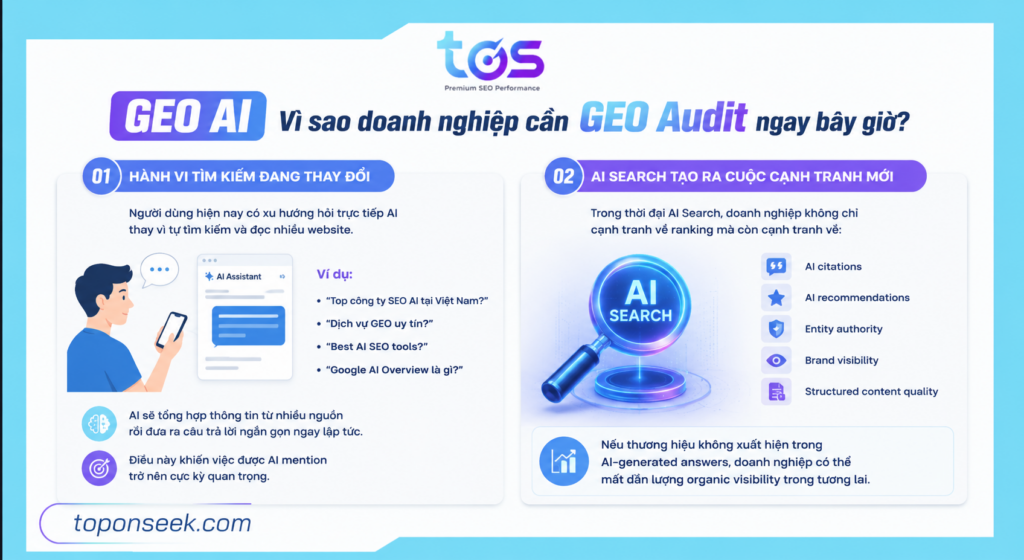
The digital landscape is shifting beneath our feet. Traditional search engine optimization (SEO) is no longer the sole driver of organic traffic. With the rise of generative engines like ChatGPT, Perplexity, and Google’s AI Overviews, a new discipline has emerged: Generative Engine Optimization (GEO). To succeed in 2025 and beyond, you need more than a standard technical audit. You need an AI SEO GEO Audit. This comprehensive process evaluates your website’s visibility not just in traditional search results, but also within AI-generated answers. This guide explains exactly what this audit entails, why it matters, and how to execute it effectively.
What is an AI SEO GEO Audit?
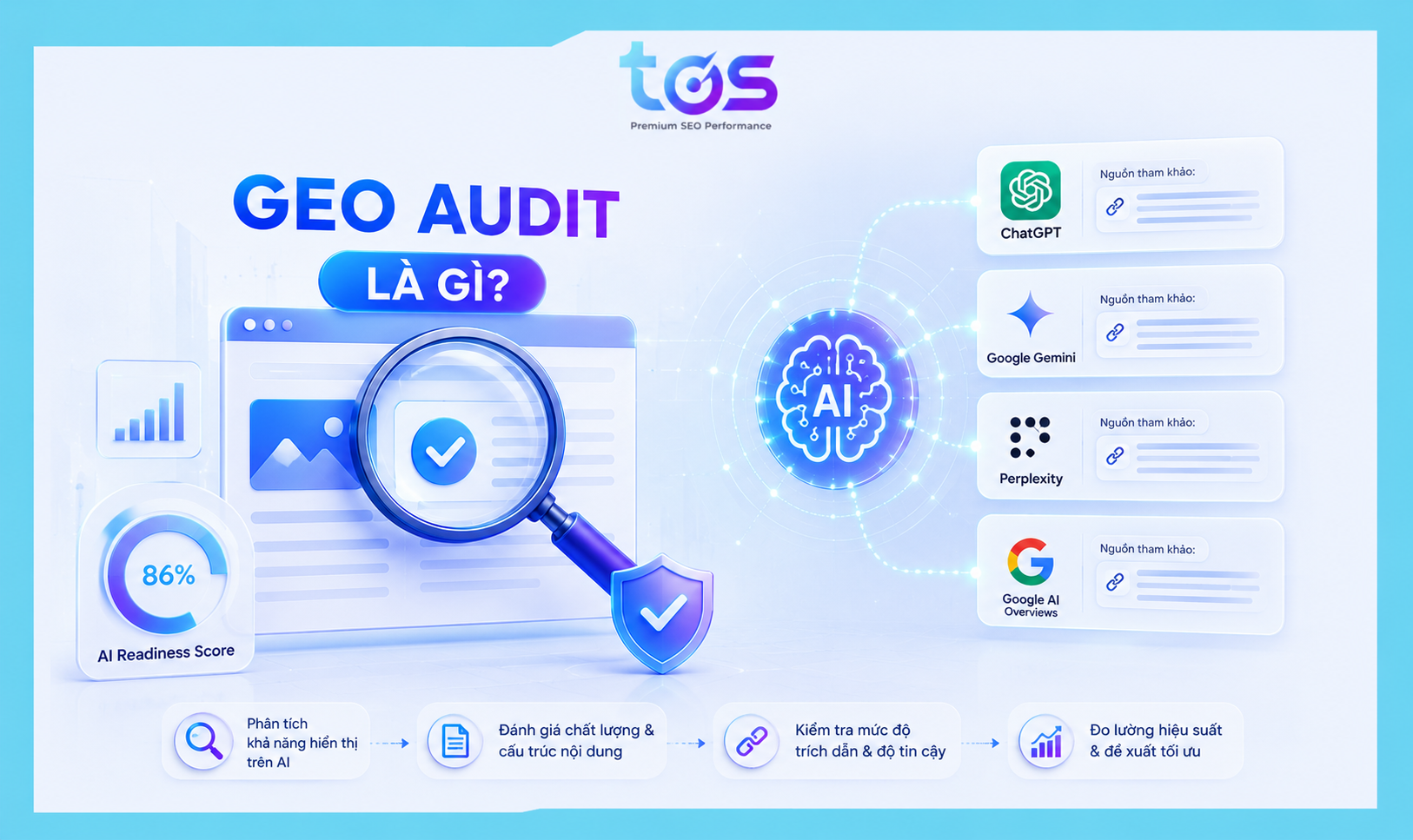
An AI SEO GEO Audit is a systematic evaluation of a website’s performance across two distinct but interconnected fronts: classic search engines (Google, Bing) and generative AI engines (ChatGPT, Claude, Perplexity, Google AI Overviews). It measures how well your content is understood, cited, and recommended by AI models when users ask questions related to your niche.
Unlike a traditional SEO audit that focuses on crawlability, backlinks, and keyword rankings, a GEO audit focuses on entity recognition, semantic relevance, and citation potential. It answers a critical question: “If an AI assistant answers a user’s query, does my brand get mentioned as a source?” This is the core of Generative Engine Optimization.
Why Traditional SEO Audits Are No Longer Sufficient
Standard audits look at metrics like Domain Authority, page speed, and meta tags. These remain important, but they fail to address the “zero-click” phenomenon. When a user asks ChatGPT for the “best CRM for small businesses,” the AI synthesizes an answer from multiple sources. If your website is not one of those sources, you lose the traffic entirely. T
Traditional SEO focuses on ranking for keywords. GEO focuses on being the source for answers. An AI SEO GEO Audit bridges this gap. It identifies where your content is missing from AI citations and provides a roadmap to fix it. Without this audit, you are essentially flying blind in a market where AI assistants control a growing share of information discovery.
Core Components of an AI SEO GEO Audit
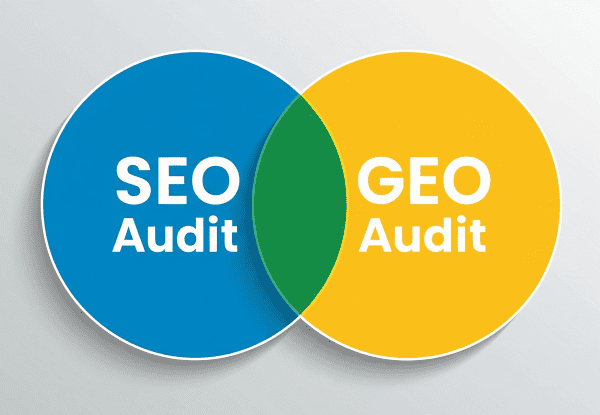
Conducting a thorough audit requires analyzing several layers of your digital presence. Here are the five critical pillars you must evaluate.
1. AI Visibility and Citation Analysis
This is the heart of the audit. You must determine whether AI engines currently reference your brand. Start by asking major AI tools specific, high-intent questions related to your industry. For example, if you sell project management software, ask “What is the best project management tool for remote teams?” and “Compare Asana vs. Monday.com.”
Record whether your domain appears in the response. If it does, check the context. Is it a positive mention? Is it listed as a top recommendation? If it does not appear, you have a visibility gap. Tools like ChatGPT, Perplexity, and Bing Chat can be used manually for this, while specialized software can automate the tracking of your “Share of Voice” in AI responses.
2. Content Structure and Semantic Depth
AI models favor content that is highly structured and semantically rich. They look for clear definitions, logical hierarchies, and comprehensive coverage of subtopics. During the audit, review your top pages. Do they use H2 and H3 tags effectively? Do they include lists, tables, and bullet points? These elements help AI parse information quickly.
Furthermore, the audit checks for “Entity Coverage.” Does your content mention related concepts, statistics, and examples? For instance, an article about “digital marketing” should naturally include entities like “ROI,” “PPC,” “content strategy,” and “conversion rate.” This depth signals authority to AI algorithms.
3. Technical Foundation for AI Crawlers
While AI models do not “crawl” like Googlebot, they rely on indexed data and APIs. Your technical setup must allow for efficient data retrieval. The audit checks your robots.txt file to ensure you are not blocking AI crawlers like GPTBot or Anthropic’s Claude bot. It also verifies that your XML sitemaps are clean and that your site architecture allows for logical internal linking.
Structured data (Schema.org) is vital here. Implementing FAQ, Article, and Product schema helps AI understand the context of your content. The audit will identify missing schema markup that could be preventing your content from being featured in rich AI summaries.
4. Authority and Trust Signals
Generative engines prioritize trustworthy sources. They are programmed to avoid misinformation. The audit evaluates your E-E-A-T (Experience, Expertise, Authoritativeness, Trustworthiness) signals. This includes checking for author bios, credentials, and citations to primary sources.
Your backlink profile is also scrutinized. AI models often use link popularity as a proxy for authority. The audit assesses whether your links come from reputable, relevant domains or if you have toxic backlinks that could harm your credibility in the eyes of AI filters.
5. Brand Mentions and Digital PR
AI engines learn from the broader web. If your brand is frequently mentioned in industry forums, news sites, and social media, the AI is more likely to consider you a relevant answer. The audit tracks unlinked brand mentions. It identifies opportunities where you are discussed but not linked, which are prime targets for digital PR outreach.
How to Perform an AI SEO GEO Audit: Step-by-Step Guide
Executing this audit does not require a massive budget, but it does require a systematic approach. Follow these steps to get a clear picture of your AI readiness.
Step 1: Define Your Core Query Set
List 20-30 high-value questions your customers ask. Group them into categories: “Best [Product],” “How to [Task],” “Compare [X] vs [Y],” and “[Topic] Statistics.” These queries will be your test set for AI visibility.
Step 2: Run the AI Query Tests
Use a clean browser profile to ask these questions to ChatGPT, Perplexity, and Google’s AI Overviews. Log the results in a spreadsheet. For each query, note: Does your brand appear? What position does it appear in (1st, 2nd, 3rd)? What is the sentiment of the mention? Repeat this process monthly to track changes.
Step 3: Analyze the Winning Content
Look at the sources that AI engines do cite for your target queries. What do they have in common? Usually, they have high word counts (1500+), include original data, use simple language, and have a clear “answer first” structure. Compare this to your own content to identify gaps in depth and format.
Step 4: Audit Your Technical Access
Check your server logs or CDN reports for traffic from GPTBot, ClaudeBot, and Google-Extended. If you see zero traffic from these bots, you may be blocking them. Review your robots.txt file immediately. Ensure you are allowing access to your high-value content while potentially blocking AI bots from crawling your checkout or login pages.
Step 5: Review Structured Data Implementation
Use Google’s Rich Results Test or Schema.org validator to check your key pages. Ensure you have “Organization,” “Article,” and “FAQPage” schema installed. For product pages, ensure “Product” schema with reviews is present. This markup is the language that AI models understand best.
Benefits of Conducting a GEO Audit
The advantages of this audit extend far beyond just “getting mentioned by ChatGPT.” It fundamentally improves your digital resilience.
- Future-Proofing Traffic: As AI adoption grows, you secure a share of the “answer market” before your competitors do.
- Improved Brand Authority: Being cited by AI engines is a powerful trust signal for human users who see the citation.
- Higher Conversion Rates: Users who come from AI recommendations often have higher intent because the AI has already pre-qualified them with information.
- Enhanced Content Quality: The audit forces you to create deeper, more useful content that ranks better in traditional search as well.
- Competitive Intelligence: You gain insight into who the AI considers the “thought leaders” in your space, allowing you to benchmark and surpass them.
- Lack of Standardized Metrics: Unlike Google Search Console, t You are relying on manual testing and third-party tools that are still evolving.
- Black Box Algorithms: We do not know exactly how AI models rank sources. The factors are inferred, not confirmed. What works today may change with the next model update.
- Volatility: AI responses are not static. The same query can yield different results on different days, making it difficult to track progress accurately.
- Resource Intensive: Creating content that is “GEO-optimized” often requires more research, data, and expert input than standard blog posts.
- Blocking AI Bots: In a misguided attempt to protect content, some sites block GPTBot. This is a fatal error. You are blocking your own visibility.
- Keyword Stuffing for AI: AI models penalize unnatural language. Write for humans first. The A
- Ignoring User Intent: The audit is not just about “getting mentioned.” It is about getting mentioned for the right queries. Focus on transactional and commercial intent queries that drive revenue.
- Copying Competitor Structure: Just because a competitor is cited does not mean their structure is perfect. Use the audit to find gaps in their content that you can fill with better data or more recent information.
- Neglecting Traditional SEO: GEO does not replace SEO. A site with terrible page speed and no backlinks will still struggle to be indexed, let alone cited. The audit should be an addition to, not a replacement for, your standard SEO efforts.
Limitations and Challenges of GEO Audits
It is important to approach this audit with realistic expectations. The field is still nascent, and there are significant challenges.
AI SEO GEO Audit vs. Traditional SEO Audit: A Comparison
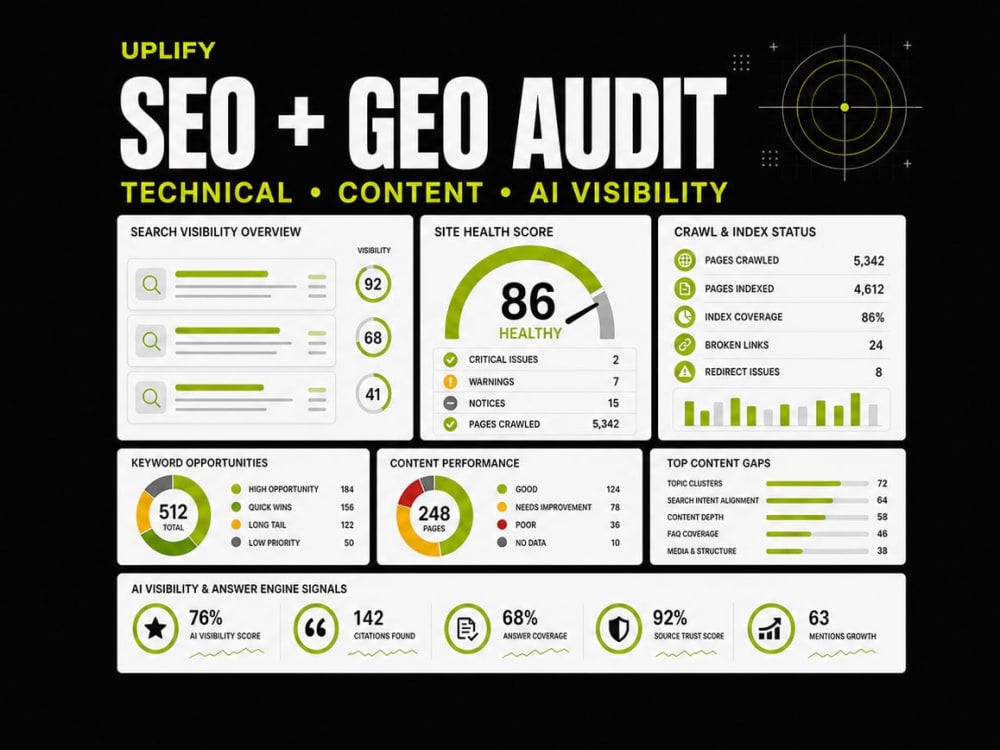
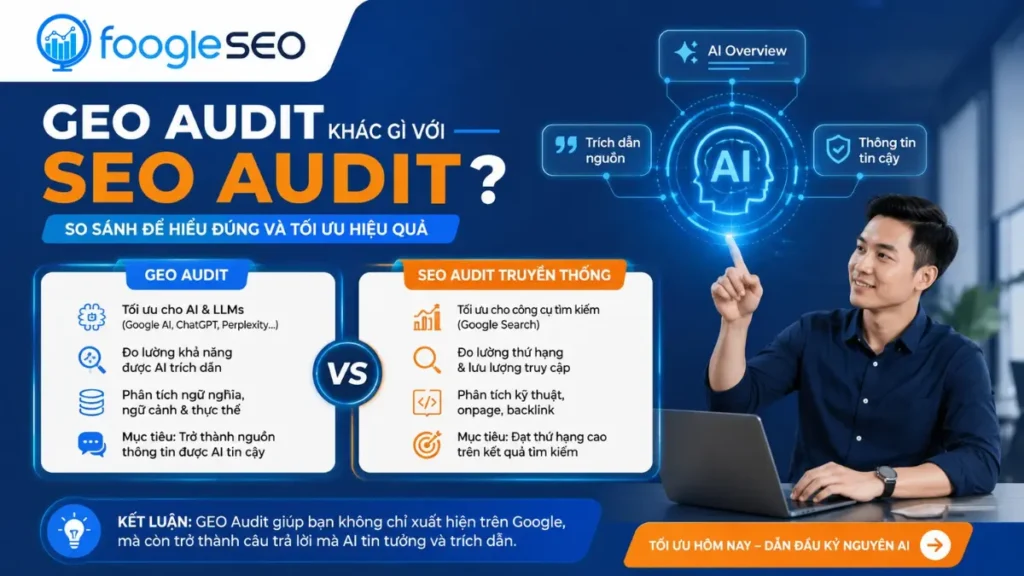
To understand the value, it helps to see the two side-by-side. They are complementary, not mutually exclusive.
| Feature | Traditional SEO Audit | AI SEO GEO Audit |
|---|---|---|
| Primary Goal | Rank for keywords in search results | Get cited as a source in AI answers |
| Key Metrics | Keyword rankings, organic traffic, bounce rate | AI citations, share of voice, brand mentions |
| Content Focus | Keyword density, meta tags, backlinks | Entity clarity, semantic depth, data citations |
| Technical Focus | Crawlability, site speed, mobile usability | Bot access (GPTBot), structured data, API readiness |
| Success Indicator | Click-through rate and conversions | Zero-click visibility and referral traffic from AI apps |
Practical Applications: How to Use Audit Results
Once the audit is complete, the real work begins. The findings should drive your content strategy for the next quarter.
Content Refreshing
Take your top 10 performing pages and rewrite them to be “GEO-ready.” This means adding a concise summary box at the top, using bullet points for key stats, and including quotes from industry experts. Ensure every claim is backed by a link to a reputable source.
Creating “Answer Hubs”
Develop dedicated pages that directly answer the core queries you identified in Step 1. These should be structured like Wikipedia entries—objective, detailed, and heavily cross-linked. These hubs become your “citation magnets” for AI engines.
Digital PR for Citations
Use the audit’s findings on missing brand mentions to pitch journalists and bloggers. Offer them exclusive data or expert commentary. The goal is to get your brand name mentioned in the same sentence as your target keywords on high-authority domains.
Common Mistakes to Avoid During the Audit
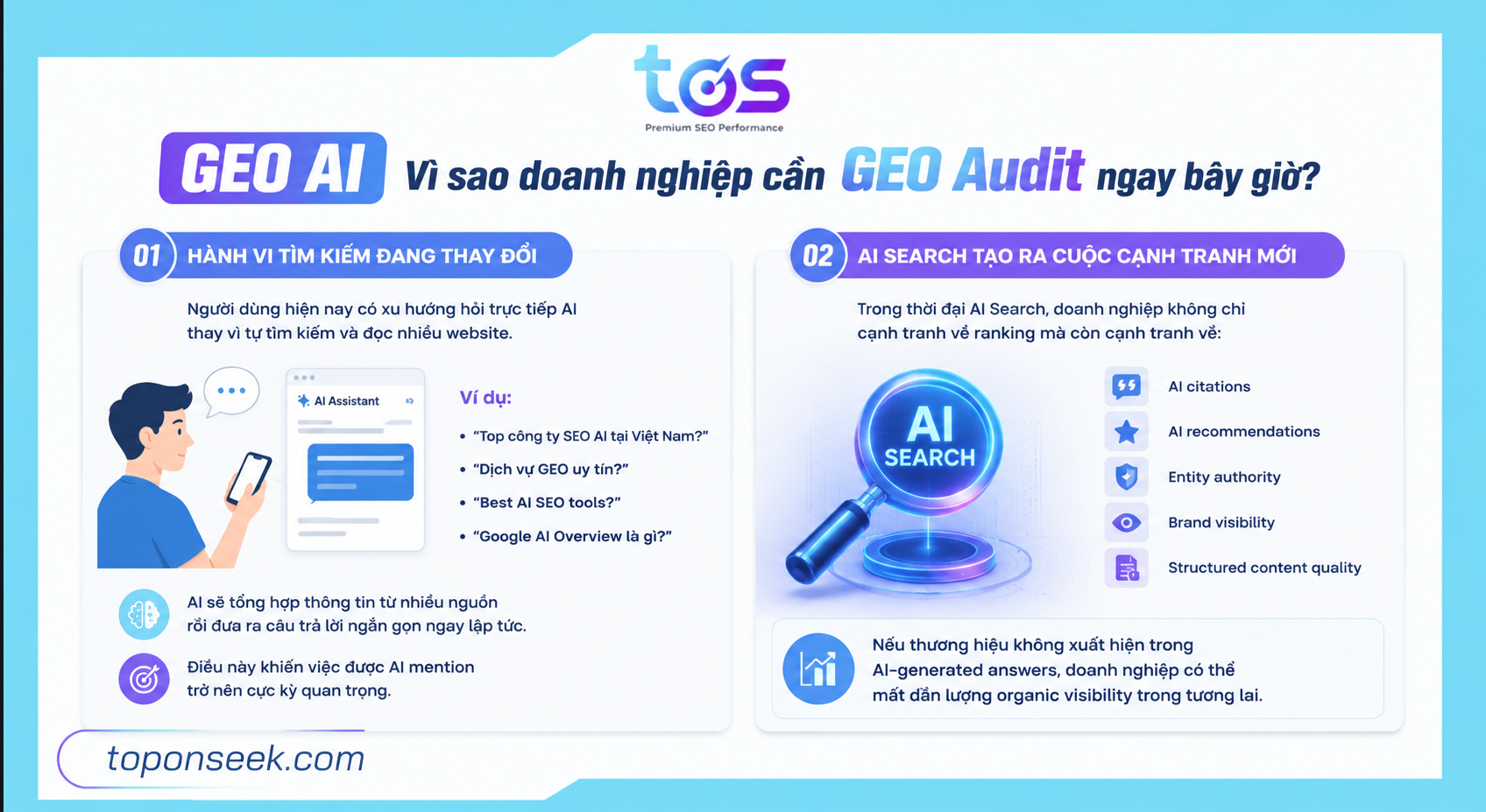
Many businesses make critical errors when trying to optimize for AI. Avoid these pitfalls.
Important Notes on Data and Privacy
When conducting an AI SEO GEO Audit, be mindful of the data you input into public AI tools. Do not paste proprietary code, customer lists, or confidential financial data into ChatGPT or Perplexity. These prompts may be used for training. Use internal tools or anonymized data when testing queries.
Additionally, understand that AI citation is not a “right.” It is a privilege granted by the model based on its training data. Your goal is to make your content so authoritative that the model has to cite you to provide a complete answer. This requires consistent effort and monitoring.
Frequently Asked Questions (FAQ)
How often should I run an AI SEO GEO Audit?
You should run a full audit quarterly. However, you should perform the “AI Query Test” (Step 2) on a weekly basis for your top 10 keywords. The AI landscape changes rapidly, and weekly monitoring helps you react to algorithm updates quickly.
What is the difference between SEO and GEO?
SEO (Search Engine Optimization) focuses on ranking in traditional search engines to get clicks. GEO (Generative Engine Optimization) focuses on being cited as a source within AI-generated answers. SEO targets the “10 blue links,” while GEO targets the “AI summary box.”
Can small businesses benefit from a GEO audit?
Absolutely. While large brands have an authority advantage, AI models often favor niche experts. A small business with deep, specific knowledge and strong local citations can easily outperform a generic national brand in AI responses for local queries.
Does Google’s AI Overviews affect my regular SEO?
Yes. Google’s AI Overviews are reducing click-through rates for traditional organic results. If your content is not featured in the AI Overview, you will see a drop in traffic. A GEO audit helps you optimize your content to be selected for these overviews, protecting your traffic.
What tools are available for AI SEO GEO Audits?
The market is emerging. Tools like Semrush and Ahrefs are adding AI visibility features. There are also specialized platforms like Profound and Peec AI that track brand mentions in ChatGPT. For a manual audit, a simple spreadsheet and a ChatGPT subscription are sufficient to start.
Conclusion
The era of “search only” is over. The era of “answer engines” is here. An AI SEO GEO Audit is no longer a luxury; it is a necessity for any brand that relies on organic discovery. By understanding how AI models perceive your content, you can make strategic adjustments that secure your visibility for the next decade. The audit reveals the gap between where you are and where you need to be in the AI ecosystem. It provides a clear, actionable roadmap to become the primary source of information in your industry. Start your audit today, because your competitors are already asking the AI where you are.
Xem thêm:
- Can AI Replace SEO? Why Human Strategy Still Dominates the Future of Search
- AI SEO Internal Link Optimization: The Complete Guide to Smarter Site Architecture
- Gemini vs ChatGPT for SEO: Which AI Tool Truly Elevates Your Search Rankings
- AI Editorial Calendar: Revolutionize Your Content Planning with Smart Automation
- AI SEO AI Search Visibility: The Complete Guide to Ranking in the Age of Generative Engines
Bài viết cùng chủ đề:

AI SEO SEO Automation with Make: The Complete Workflow Guide

AI SEO SEO Automation with Zapier: The Complete Workflow Guide

AI SEO SEO Automation with n8n: The Complete Workflow Guide
AI SEO SEO Automation with Gemini: The Complete Guide to Scaling Organic Growth

AI SEO SEO Automation with Claude: The Complete Guide to Scaling Content in 2025

AI SEO SEO Automation with ChatGPT: The Complete Playbook for 2025

AI SEO & SEO Automation for Affiliate Sites: The 2025 Playbook for Passive Income Growth
AI SEO & SEO Automation for Bloggers: The Complete Guide to Scaling Your Content

AI SEO & SEO Automation for Agencies: The Complete 2025 Playbook

AI SEO and SEO Automation for Ecommerce: The Complete Playbook for 2025

AI SEO & SEO Automation for WordPress: The Complete Playbook for 2025
AI SEO SEO Automation Strategy: The Complete Playbook for 2025

Mastering the AI SEO SEO Automation Process: A Complete Guide to Scaling Organic Growth
AI SEO SEO Automation System: The Complete Guide to Scaling Organic Growth in 2025
AI SEO SEO Automation Platform: The Complete Guide to Scaling Organic Growth in 2025
AI SEO SEO Automation Software: The Complete Guide to Scaling Organic Growth in 2025















