
No products in the cart.
AI SEO Entity Optimization: The Complete Guide to Future-Proof Rankings
10
Aug
Aug
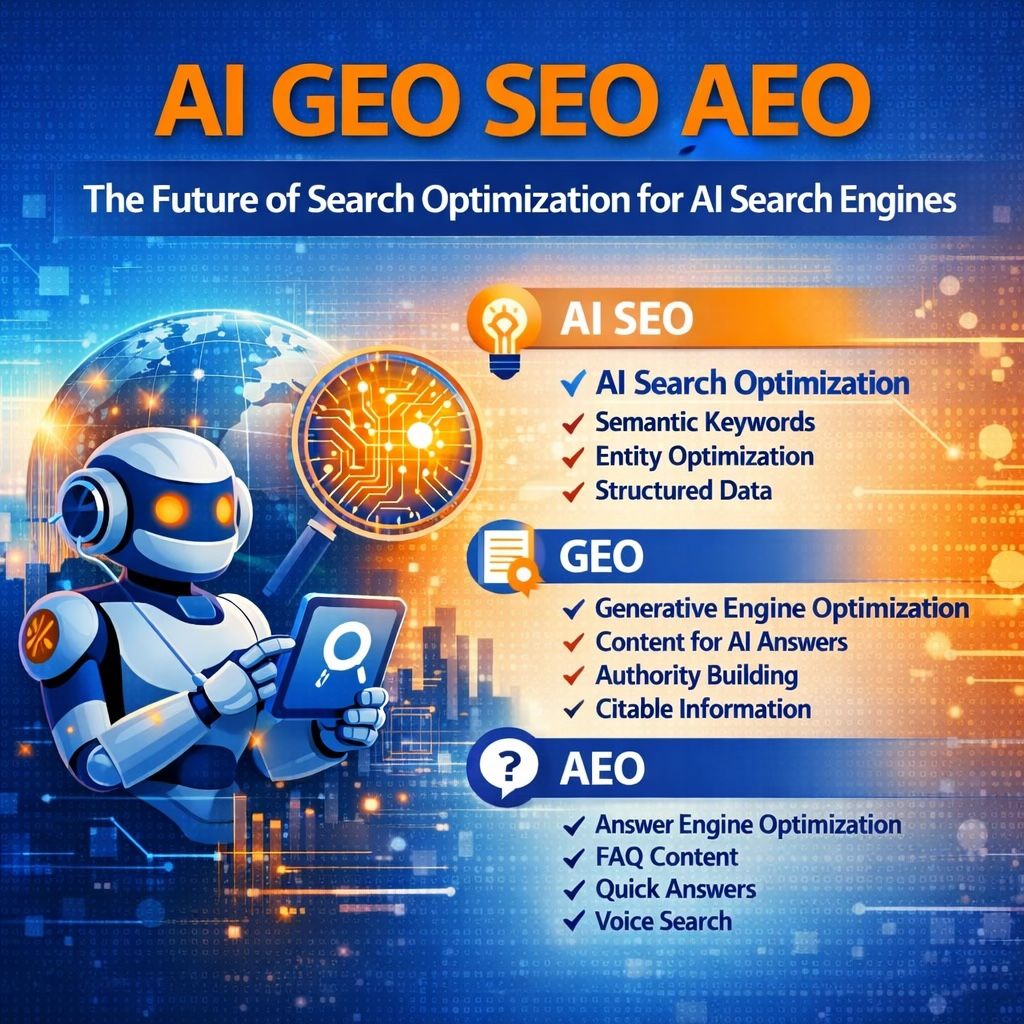
AI SEO Entity Optimization is transforming how search engines interpret and rank content. Instead of relying solely on keywords, modern algorithms like Google’s Knowledge Graph and RankBrain focus on understanding entities—people, places, organizations, and concepts—and the relationships between them. This shift means that optimizing for entities is no longer optional; it is a core requirement for achieving and maintaining high search visibility. This comprehensive guide explains what entity optimization is, why it matters in the age of AI, and exactly how to implement it for your website.
What is AI SEO Entity Optimization?
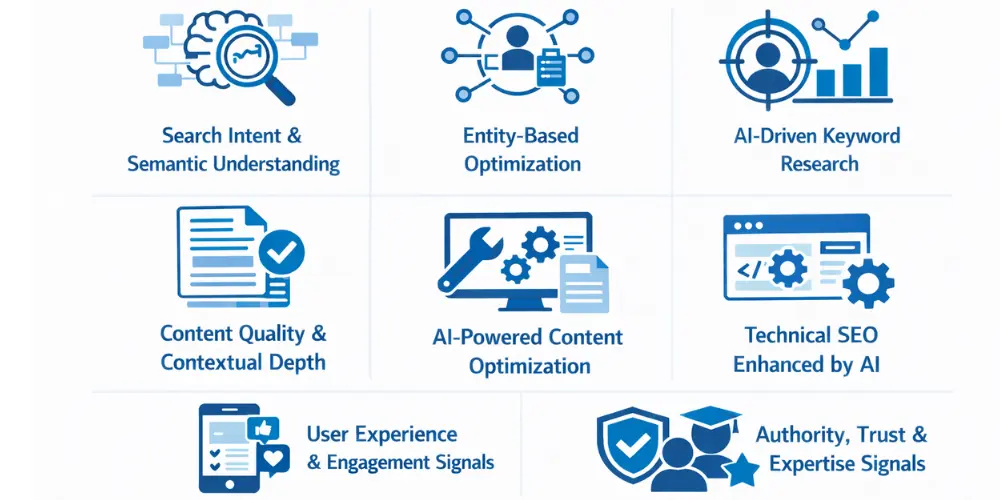
AI SEO Entity Optimization is the process of structuring your website’s content and technical foundation so that search engine AI can clearly identify the real-world entities you discuss and their contextual relationships. An entity is a distinct, well-defined object or concept that has a unique identity. It can be a specific person, a brand, a geographical location, a product model, a medical condition, or an abstract idea like “climate change.”
Traditional SEO focused on matching strings of text (keywords) to user queries. Entity optimization goes deeper. It helps search engines understand the meaning behind the words. For example, if you write about “Apple,” the AI must determine whether you mean the fruit or the technology company. By optimizing for entities, you provide clear signals that help the AI disambiguate these terms and connect your content to the correct entity in its knowledge base.
The Shift from Keywords to Entities
Search engines have evolved from simple keyword matchers to sophisticated AI systems. Google’s algorithms now use neural networks to process language, moving beyond exact-match keywords to understand semantic meaning. This is where entities become critical. The Knowledge Graph, a massive database of entities and their interconnections, powers the knowledge panels and rich results you see in search. When your content is properly optimized for entities, you increase your chances of appearing in these prominent positions.
The core difference lies in intent. Keywords tell the search engine what your page is about. Entities tell the search engine what your page is about, who it is for, and how it relates to other known facts. This deeper understanding allows the AI to rank your content not just for the exact query, but for a wide range of related queries that share the same entity context.
Why AI SEO Entity Optimization Matters for Rankings
The importance of entity optimization is directly tied to how AI-driven search engines evaluate content quality and relevance. When you optimize for entities, you align your content with the way the search engine’s AI actually thinks. This alignment leads to several critical benefits that directly impact your rankings.
Improved Search Intent Matching
AI algorithms are designed to satisfy user intent, not just match keywords. By clearly defining the entities in your content, you help the AI understand the exact intent behind your page. For instance, if your page is about “best running shoes for marathons,” you are targeting the entity “marathon running shoes.” By linking this to related entities like “cushioning technology” and “pronation support,” you signal to the AI that your content is comprehensive and relevant to users with that specific intent.
Enhanced Content Relevance and Authority
Search engines use entities to build topical authority. If your website consistently produces content that accurately references and connects the key entities within a specific niche, the AI begins to view your site as an authoritative source on that topic. This is a powerful signal. For example, a medical website that correctly identifies and links entities like “type 2 diabetes,” “insulin resistance,” and “HbA1c test” will be seen as more authoritative than a site that merely uses these phrases without establishing their relationships.
Increased Eligibility for Rich Results
Rich results, such as knowledge panels, FAQ snippets, and product carousels, are generated from structured data that explicitly defines entities. AI SEO Entity Optimization often involves implementing schema markup, which is a code that tells search engines exactly what your content means. This structured data is the language of the Knowledge Graph. Without it, your chances of earning these high-visibility features are significantly reduced.
Core Components of AI SEO Entity Optimization
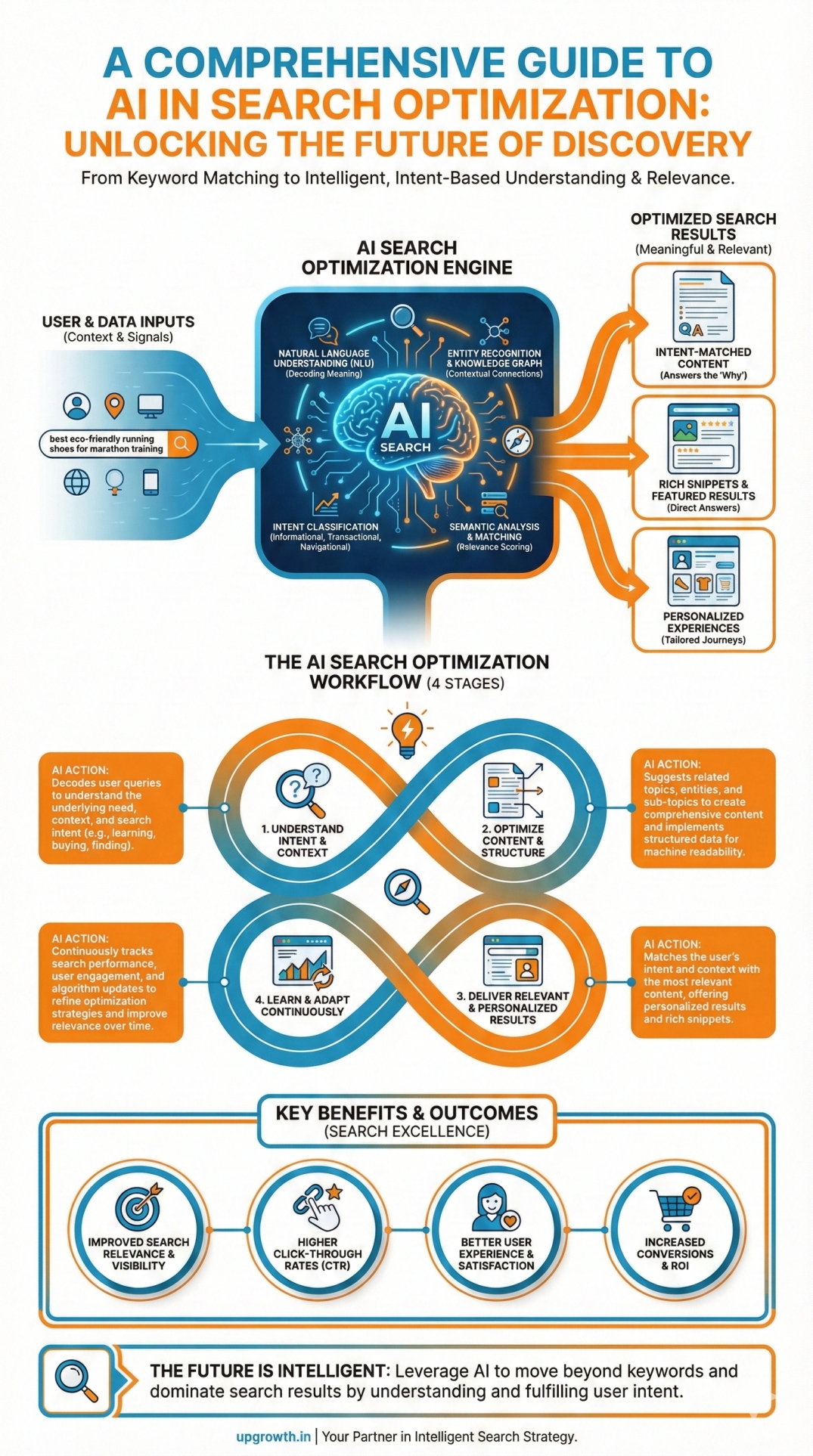
Implementing a successful entity optimization strategy involves several interconnected components. It is not a single action but a holistic approach to how you create and structure content. The following elements form the foundation of this process.
1. Entity Identification and Research
Before you can optimize, you must know which entities are relevant to your topic. This goes beyond keyword research. You need to identify the key people, places, things, and concepts that define your niche. Start by analyzing the top-ranking pages for your target keywords and look at the entities they mention. Tools like Google’s Knowledge Graph API can help you discover related entities and their unique identifiers.
For example, if you are writing about “electric vehicles,” your core entities might include “Tesla,” “Lithium-ion battery,” “Charging station,” “Regenerative braking,” and “Range anxiety.” Each of these is a distinct entity with its own properties and relationships.
2. Structured Data and Schema Markup
Schema markup is the most direct way to communicate entity information to search engines. It is a semantic vocabulary of tags that you add to your HTML to define the type of content on your page. For entity optimization, you should focus on schema types like Person, Organization, Product, Event, LocalBusiness, and Article.
Using schema, you can specify the exact name of an entity, its URL, its logo, its social profiles, and its relationships to other entities. For instance, you can use the sameAs property to link your content to the official Wikipedia page or Wikidata entry for that entity. This is a powerful signal that helps the AI confirm the identity of the entity you are referencing.
3. Content Semantics and Internal Linking
The words you use and how you link them together create a semantic web within your site. Using clear, descriptive language that naturally includes related entities is crucial. When you mention an entity, ensure it is in the correct context. For example, if you are writing about “Paris,” clarify whether you mean the city in France or the celebrity. This helps the AI disambiguate the entity.
Internal linking is also a key component. When you link from one article to another using descriptive anchor text that includes the entity name, you are telling the search engine that these two entities are related. This builds a network of contextual relevance across your entire domain.
Practical Guide: How to Implement AI SEO Entity Optimization
Now that you understand the core components, it is time to put them into practice. This step-by-step guide will walk you through the process of optimizing your website for entities, from initial research to technical implementation.
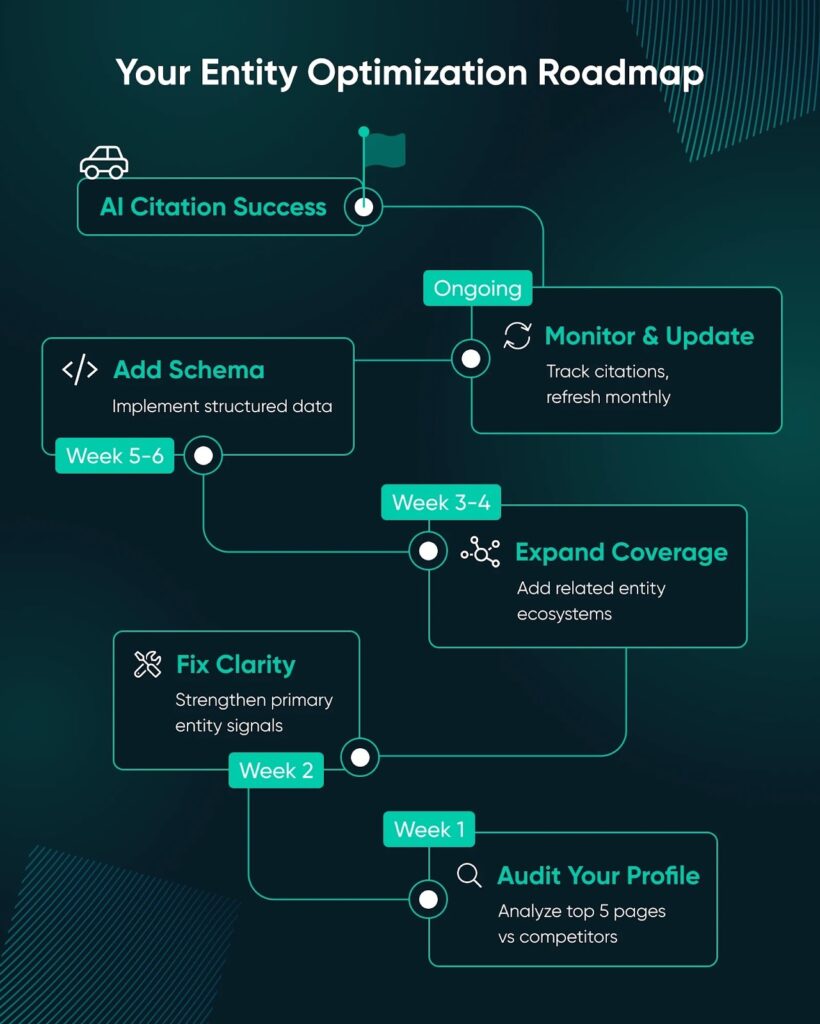
Step 1: Conduct Entity Research
Begin by creating a list of core entities for your primary topic. Use a combination of methods to build this list.
- Analyze Competitors: Look at the top 5-10 ranking pages for your target keyword. Identify the people, brands, and concepts they consistently mention.
- Use AI Tools: Tools like Google’s Natural Language API can analyze your content and identify the entities it detects. This is a great way to see what the AI sees.
- Check the Knowledge Graph: Search for your main topic on Google. The knowledge panel on the right side of the results page will show you the key entities Google associates with that topic.
- Higher Click-Through Rates: Appearing in rich results and knowledge panels increases your visibility and credibility, leading to more clicks.
- Better Voice Search Performance: Voice assistants rely heavily on entities to answer questions. Optimized content is more likely to be used as the source for voice answers.
- Long-Term Stability: Entity-based rankings are more stable than keyword-based ones because they are tied to the meaning of your content, not just the exact phrasing of a query.
- Competitive Advantage: Many websites still rely on outdated keyword tactics. Implementing entity optimization gives you a significant edge over these competitors.
- Technical Complexity: Implementing schema markup correctly requires technical knowledge. Errors in your structured data can lead to penalties or ignored markup.
- Time-Consuming: Proper entity research and content restructuring take time. It is not a quick fix but a long-term strategy.
- Difficult to Measure Directly: It is hard to attribute a specific ranking improvement solely to entity optimization, as it works in conjunction with other SEO factors.
- Accuracy is Non-Negotiable: Never provide false or misleading entity information in your schema. This is a violation of Google’s guidelines and can result in severe manual actions.
- User Experience Still Matters: Entity optimization is a technical enhancement, not a replacement for great content. Your pages must still be fast, easy to read, and genuinely helpful to users.
- Start with High-Value Pages: Do not try to optimize your entire site at once. Begin with your most important pages, such as your homepage, about page, and top product or service pages.
- Leverage Wikidata: Wikidata is the central storage for structured data used by Wikipedia and Google. Ensuring your entities have accurate Wikidata entries is a powerful way to strengthen your optimization.
Step 2: Map Entities to Your Content
Once you have your list, map these entities to specific pages on your website. Create a content matrix that shows which entities are covered on which pages. This helps you identify gaps in your content and ensures you are not cannibalizing your own rankings by targeting the same entities on multiple pages.
For each page, define the primary entity and the secondary entities that support it. The primary entity should be the main subject of the page, while secondary entities provide context and depth.
Step 3: Implement Schema Markup
This is the technical heart of entity optimization. Use the JSON-LD format to add structured data to your pages. For a standard article, you would use the Article schema. For a product page, you would use the Product schema.
Crucially, you would use the sameAs property to point to the organization’s official Wikipedia page and Wikidata entry. This explicitly tells Google which real-world entity your page represents.
Step 4: Optimize Content for Semantic Relevance
Write your content naturally, but with a focus on entity clarity. When you introduce an entity, use its full, official name. Avoid ambiguous pronouns. If you are writing about a person, use their full name at least once before using their last name only.
Build a strong internal linking structure. Link to your own relevant pages using anchor text that includes the entity name. This reinforces the relationships between the entities on your site.
Step 5: Monitor and Refine
Entity optimization is not a set-and-forget task. Use Google Search Console to monitor how your pages are performing for entity-related queries. Look for impressions and clicks on queries that mention your key entities. If you see a page ranking for the wrong entity, you may need to refine your schema or content to clarify the subject.
Common Mistakes in AI SEO Entity Optimization
Many website owners make critical errors when trying to implement entity optimization. Avoiding these pitfalls will save you time and prevent you from sending confusing signals to search engines.
Mistake 1: Keyword Stuffing Instead of Entity Building
This is the most common mistake. Simply repeating a keyword does not help the AI understand the entity. You must provide context and relationships. For example, writing “best coffee maker best coffee maker best coffee maker” is useless. Instead, you should write about the entity “best coffee maker” and link it to related entities like “drip coffee,” “espresso,” “thermal carafe,” and “programmable timer.”
Mistake 2: Inconsistent Entity Naming
If you refer to your company as “Acme Corp” on one page and “Acme Corporation” on another, the AI may treat them as two different entities. Consistency is key. Always use the exact same name for an entity across your entire website. This also applies to people. Use “John Smith” everywhere, not “J. Smith” or “John S.” on different pages.
Mistake 3: Ignoring the “sameAs” Property
This is a missed opportunity. The sameAs property is the strongest signal you can send to confirm an entity’s identity. It connects your content to the massive databases of Wikidata and Wikipedia. Ignoring this means you are relying on the AI to guess the identity of your entity, which is less reliable.
Mistake 4: Focusing Only on Google
While Google is the dominant search engine, Bing and other AI-powered platforms also use entities. They have their own knowledge graphs. By following the standards of schema.org, you ensure your content is compatible with all major search engines, not just Google.
Benefits and Limitations of Entity Optimization
Understanding the advantages and constraints of this approach will help you set realistic expectations and allocate resources effectively.
Key Benefits
Limitations to Consider
AI SEO Entity Optimization vs. Traditional SEO
To fully grasp the value of entity optimization, it is helpful to compare it directly with traditional keyword-focused SEO. The table below highlights the key differences.
| Feature | Traditional SEO | AI SEO Entity Optimization |
|---|---|---|
| Primary Focus | Exact-match keywords and phrases | Real-world objects, concepts, and relationships |
| Content Strategy | Targeting specific search queries | Building topical authority and semantic depth |
| Technical Implementation | Meta tags, URL structure, keyword density | Schema markup, Knowledge Graph connections, internal linking |
| Search Engine Understanding | Matches strings of text | Understands meaning and context |
| Ranking Stability | Vulnerable to algorithm updates | More resilient to changes in query phrasing |
| Goal | Rank for a specific keyword | Become the authoritative source for an entity |
Traditional SEO is not obsolete, but it is now a subset of a larger strategy. Keywords are still important, but they are the vehicles for describing entities, not the destination itself. Entity optimization builds a moat around your rankings that is much harder for competitors to attack.
Important Notes for Success
As you begin your journey with AI SEO Entity Optimization, keep these critical points in mind to ensure you are on the right track.
Frequently Asked Questions (FAQ)
What is the difference between a keyword and an entity in SEO?
A keyword is a specific word or phrase that a user types into a search engine. An entity is a distinct, well-defined concept or object that has a unique identity, such as a person, place, or brand. Keywords are strings of text, while entities are units of meaning. Entity optimization focuses on helping search engines understand the meaning and context of your content, rather than just matching text strings.
How does Google’s Knowledge Graph relate to AI SEO Entity Optimization?
The Knowledge Graph is Google’s massive database of entities and the relationships between them. It powers knowledge panels and rich results. AI SEO Entity Optimization aims to get your content connected to this graph. By using schema markup and the sameAs property, you help Google identify your content as being about a specific entity that already exists in its Knowledge Graph, which can increase your visibility.
Is schema markup required for entity optimization?
While it is technically possible to rank without schema markup, it is extremely difficult to achieve full entity optimization without it. Schema markup is the explicit language that tells search engines what your content means. It removes guesswork and provides a direct path for the AI to understand the entities on your page. It is a critical component of any serious entity optimization strategy.
How long does it take to see results from entity optimization?
Entity optimization is a long-term strategy. Unlike quick keyword wins, building entity authority takes time. You may start to see improvements in your search presence within a few months, but significant gains in knowledge panel visibility and topical authority can take six months to a year or more. Consistency and accuracy are more important than speed.
Can small websites benefit from AI SEO Entity Optimization?
Yes, absolutely. In fact, it can be a great equalizer. Small websites can compete with larger, more established brands by becoming the most authoritative source on a very specific entity or niche. By focusing on a narrow set of entities and covering them in extreme depth, a small site can outrank a large site that covers the topic superficially.
Conclusion
AI SEO Entity Optimization represents the current frontier of search engine optimization. As search engines become more intelligent, their ability to understand the world through entities will only grow stronger. By shifting your focus from simple keywords to the complex web of real-world entities, you align your website with the future of search. This approach requires a commitment to technical precision, content depth, and semantic clarity. The effort is substantial, but the rewards—stable rankings, enhanced visibility, and true topical authority—are well worth it. Start by identifying your core entities, implement structured data, and build your content around meaning, not just words. This is how you secure your place in the AI-driven search landscape.
Xem thêm:
- AI SEO Vector Search: The Complete Guide to Semantic Search Optimization
- AI SEO Landing Page Testing: The Complete Guide to Data-Driven Conversion Optimization
- The Best AI SEO Tools for 2025: A Comprehensive Guide to Smarter Content & Rankings
- AI SEO Content Performance: The Complete Guide to Measuring and Maximizing Results
- AI Black Hat SEO: How Automated Tools Fuel Manipulative Tactics That Destroy Rankings
Bài viết cùng chủ đề:

AI SEO SEO Automation with Make: The Complete Workflow Guide

AI SEO SEO Automation with Zapier: The Complete Workflow Guide

AI SEO SEO Automation with n8n: The Complete Workflow Guide
AI SEO SEO Automation with Gemini: The Complete Guide to Scaling Organic Growth

AI SEO SEO Automation with Claude: The Complete Guide to Scaling Content in 2025

AI SEO SEO Automation with ChatGPT: The Complete Playbook for 2025

AI SEO & SEO Automation for Affiliate Sites: The 2025 Playbook for Passive Income Growth
AI SEO & SEO Automation for Bloggers: The Complete Guide to Scaling Your Content

AI SEO & SEO Automation for Agencies: The Complete 2025 Playbook

AI SEO and SEO Automation for Ecommerce: The Complete Playbook for 2025

AI SEO & SEO Automation for WordPress: The Complete Playbook for 2025
AI SEO SEO Automation Strategy: The Complete Playbook for 2025

Mastering the AI SEO SEO Automation Process: A Complete Guide to Scaling Organic Growth
AI SEO SEO Automation System: The Complete Guide to Scaling Organic Growth in 2025
AI SEO SEO Automation Platform: The Complete Guide to Scaling Organic Growth in 2025
AI SEO SEO Automation Software: The Complete Guide to Scaling Organic Growth in 2025















