
No products in the cart.
AI SEO Content Performance: The Complete Guide to Measuring and Maximizing Results

10
Aug
Aug
AI SEO content performance has become the defining metric for digital marketing teams in 2025. As artificial intelligence tools reshape how content is researched, drafted, and optimized, the ability to measure what actually drives rankings and revenue has never been more critical. This guide breaks down the exact frameworks, metrics, and workflows that separate high-performing AI-assisted content from generic output. You will learn how to track performance accurately, which benchmarks matter, and how to refine your AI content strategy for sustainable organic growth.
What Is AI SEO Content Performance?
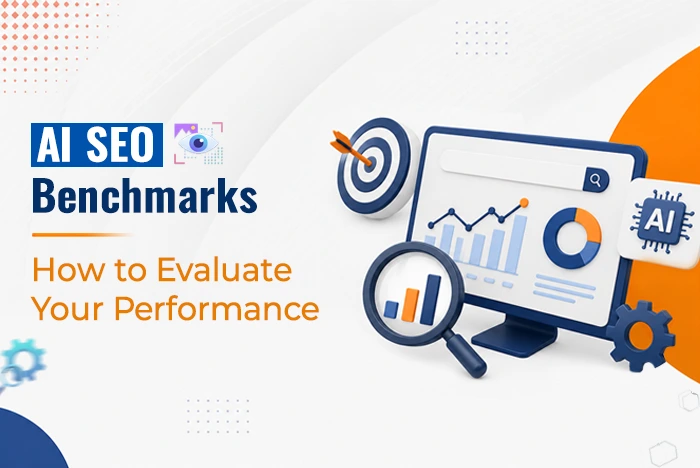
AI SEO content performance refers to the measurable impact that AI-generated or AI-assisted content has on search engine visibility, user engagement, and business conversions. It is not simply about whether an article ranks on page one. True performance measurement encompasses technical SEO metrics, user behavior signals, and revenue attribution.
The concept gained traction as tools like ChatGPT, Jasper, and Surfer SEO became mainstream. Marketers realized that producing content at scale was easy, but proving its value required a new analytical approach. Performance now includes factors like content freshness, entity coverage, and semantic relevance, all of which AI can influence positively or negatively depending on how it is used.
Core Components of AI Content Performance
To evaluate AI SEO content performance effectively, you must examine four interconnected layers:
- Technical SEO health: Indexability, crawlability, Core Web Vitals, and structured data implementation.
- Search visibility: Keyword rankings, impressions, click-through rates, and share of voice.
- User engagement: Time on page, bounce rate, scroll depth, and return visits.
- Business impact: Lead generation, sales, email sign-ups, and assisted conversions.
- Scalability without quality collapse: AI can produce drafts for hundreds of long-tail keywords, allowing you to capture niche search demand that competitors ignore.
- Faster adaptation to algorithm updates: When Google changes its ranking criteria, AI tools can quickly regenerate content to align with new requirements.
- Improved internal linking: AI can analyze your entire site structure and suggest contextual internal links that boost crawl efficiency and page authority distribution.
- Data-driven optimization: AI models can process search intent data at scale, identifying gaps in your content coverage that human researchers might miss.
- Target audience definition with specific pain points
- Search intent type (informational, transactional, navigational)
- Required sections and subheadings
- Desired tone and reading level
- Specific data points or statistics to include
- Competitor analysis summary
- Internal linking requirements
- Verifying all factual claims against primary sources
- Adding original examples and case studies
- Improving readability and sentence variety
- Ensuring alignment with your brand’s unique perspective
- Removing any robotic or repetitive phrasing
- Average position for target keywords
- Organic click-through rate
- Bounce rate and time on page
- Conversion rate and revenue per visitor
- Content refresh frequency
- Backlink acquisition rate
Each layer feeds into the next. A technically sound page with poor engagement will not sustain rankings. Conversely, engaging content that lacks technical optimization will struggle to get indexed. AI tools must be calibrated to support all four layers simultaneously.
Why Measuring AI SEO Content Performance Is Different from Traditional Content
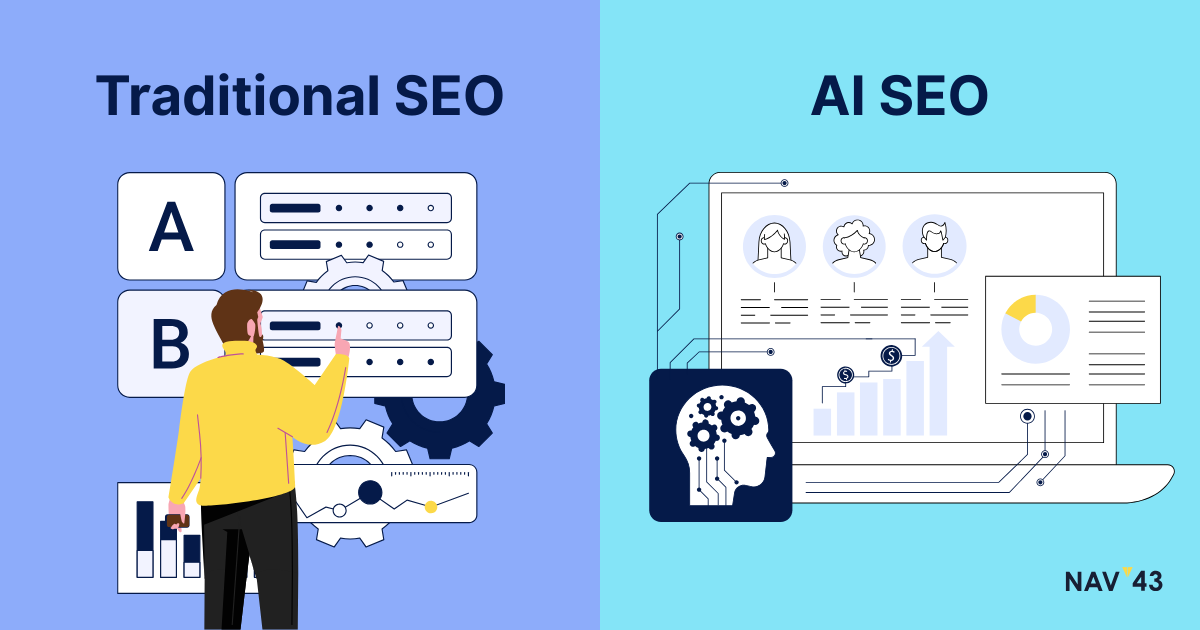
Traditional content performance measurement focuses on human-written material with predictable production timelines. AI content introduces variables that require new measurement protocols. The speed of production means you can test more hypotheses, but it also means you risk publishing unverified claims or thin content that fails E-E-A-T standards.
Another difference lies in the nature of the content itself. AI models generate text based on probability distributions. This means two prompts for the same topic can yield wildly different results. Performance tracking must therefore include prompt-level analytics, not just page-level analytics. You need to know which prompt structures produce content that earns backlinks and which produce generic filler.
Key Performance Indicators for AI-Generated Content
Standard SEO KPIs still apply, but they need augmentation with AI-specific metrics. The following table outlines the most important indicators to track:
| Metric | Traditional Content | AI Content | Why It Matters |
|---|---|---|---|
| Time to First Index | 3-7 days | 1-3 days | AI content can be published faster, but indexing speed varies |
| Content Refresh Rate | Quarterly | Weekly or monthly | AI allows rapid updates to maintain freshness signals |
| Factual Accuracy Score | High (human verification) | Variable | AI hallucinations can damage trust and rankings |
| Prompt Iteration Count | N/A | 5-20 per article | More iterations usually mean better quality output |
| Human Editing Ratio | 100% | 20-50% | Human oversight remains essential for nuance and accuracy |
Tracking these metrics helps you identify whether your AI workflow is producing content that aligns with search intent. A high refresh rate with low accuracy scores indicates a need for better fact-checking protocols.
How to Measure AI SEO Content Performance Accurately
Accurate measurement requires a combination of analytics platforms, search console data, and custom tracking. The following steps outline a reliable measurement framework.
Step 1: Set Up Baseline Tracking
Before launching any AI content initiative, establish baseline metrics for your current organic performance. Record your average position, click-through rate, and conversion rate for target keywords. This baseline allows you to calculate the incremental lift provided by AI-assisted workflows.
Use Google Search Console to export performance data for the last 90 days. Segment by page type, keyword intent, and content age. This segmentation reveals which areas benefit most from AI acceleration.
Step 2: Implement UTM Parameters and Event Tracking
Standard analytics tools often miss the nuance of AI content interactions. Add UTM parameters to internal links within AI-generated articles to track user journeys. Set up custom events for actions like copying code snippets, downloading resources, or clicking on comparison tables.
Event tracking is particularly important for AI content because users interact with it differently. They may scan faster or expect more structured answers. Heatmaps and session recordings provide qualitative data that complements quantitative metrics.
Step 3: Use AI-Specific SEO Tools
Tools like Clearscope, MarketMuse, and Frase offer content performance scoring that goes beyond basic rankings. They analyze semantic relevance, entity coverage, and topical depth. These scores correlate strongly with search visibility for AI-generated content.
Combine these tools with rank tracking software like Ahrefs or Semrush. The combination gives you both the qualitative assessment of content quality and the quantitative ranking data. Review these metrics weekly during the first month of any AI content campaign.
Step 4: Correlate Performance with Business Outcomes
Rankings and traffic are vanity metrics if they do not lead to revenue. Connect your AI content performance data to your CRM and e-commerce platform. Use Google Analytics 4 to set up conversion tracking for every AI-assisted page.
Calculate the return on content investment by dividing the revenue generated from AI content by the total cost of production, including tool subscriptions, human editing time, and distribution costs. This calculation provides the clearest picture of whether your AI strategy is working.
Benefits of Optimizing AI SEO Content Performance
When measured and optimized correctly, AI content delivers several distinct advantages over traditional methods.
These benefits only materialize when you have a robust measurement system in place. Without performance tracking, you are essentially flying blind, producing content that may or may not contribute to your bottom line.
Limitations and Risks of AI Content Performance

No technology is without drawbacks. Understanding the limitations of AI SEO content performance helps you mitigate risks before they become costly mistakes.
Hallucination and Factual Errors
Large language models occasionally generate plausible-sounding but completely false information. This is especially dangerous for YMYL (Your Money or Your Life) topics like health, finance, and legal advice. A single factual error can destroy your site’s credibility and trigger manual penalties.
Mitigation requires a strict human review process. Every statistic, quote, and claim must be verified against authoritative sources before publication. This verification step adds time but is non-negotiable for maintaining trust.
Content Saturation and Differentiation
Because AI tools are widely accessible, many sites publish similar content for the same keywords. This saturation leads to lower click-through rates and increased competition for featured snippets. Your content must offer unique angles, proprietary data, or original insights to stand out.
Performance metrics will show declining engagement if your AI content sounds like everyone else’s. Monitor your click-through rates closely. If they drop below industry benchmarks, it is a sign that your content lacks differentiation.
Algorithmic Detection and Penalties
Search engines are increasingly sophisticated at detecting low-quality AI content. Google’s helpful content system specifically targets content created primarily for search engines rather than humans. While AI-generated content is not automatically penalized, unedited, mass-produced AI text often triggers this filter.
Track your site’s overall visibility trends. A sudden drop in impressions across multiple pages may indicate an algorithmic penalty related to content quality. In such cases, pause AI production and conduct a thorough content audit.
Practical Guide to Improving AI SEO Content Performance
Improving performance requires a systematic approach that combines prompt engineering, human oversight, and continuous testing. The following workflow has proven effective across multiple industries.
Phase 1: Advanced Prompt Engineering
Your prompts determine the ceiling of your content quality. Generic prompts like “write an article about SEO” produce generic results. Instead, use structured prompts that include:
Test multiple prompt variations for the same topic. Track which prompts produce content that ranks and engages. Build a prompt library based on your best-performing inputs.
Phase 2: Human Editing and Fact-Checking
AI drafts should be treated as a starting point, not a finished product. A skilled editor must review every piece for accuracy, flow, and brand voice. The editing process should focus on:
Track the percentage of content that survives the editing process. If you are rewriting more than 70% of the AI output, your prompts need refinement. If you are rewriting less than 20%, you are likely publishing low-quality content that will underperform.
Phase 3: Structured Data and Schema Implementation
AI content performs better when search engines can understand its structure. Implement schema markup for articles, FAQs, how-to guides, and product reviews. This markup increases your chances of earning rich snippets and enhanced visibility.
Use AI tools to generate schema code automatically, but verify it with Google’s Rich Results Test before deployment. Invalid schema can cause errors that prevent rich snippet eligibility.
Phase 4: Continuous Performance Monitoring
Set up a weekly reporting dashboard that tracks your key performance indicators. Include metrics like:
Review this dashboard every Monday. Identify underperforming pages and prioritize them for updates. Use AI to generate updated versions, but apply the same human review process as the original publication.
Common Mistakes That Hurt AI SEO Content Performance
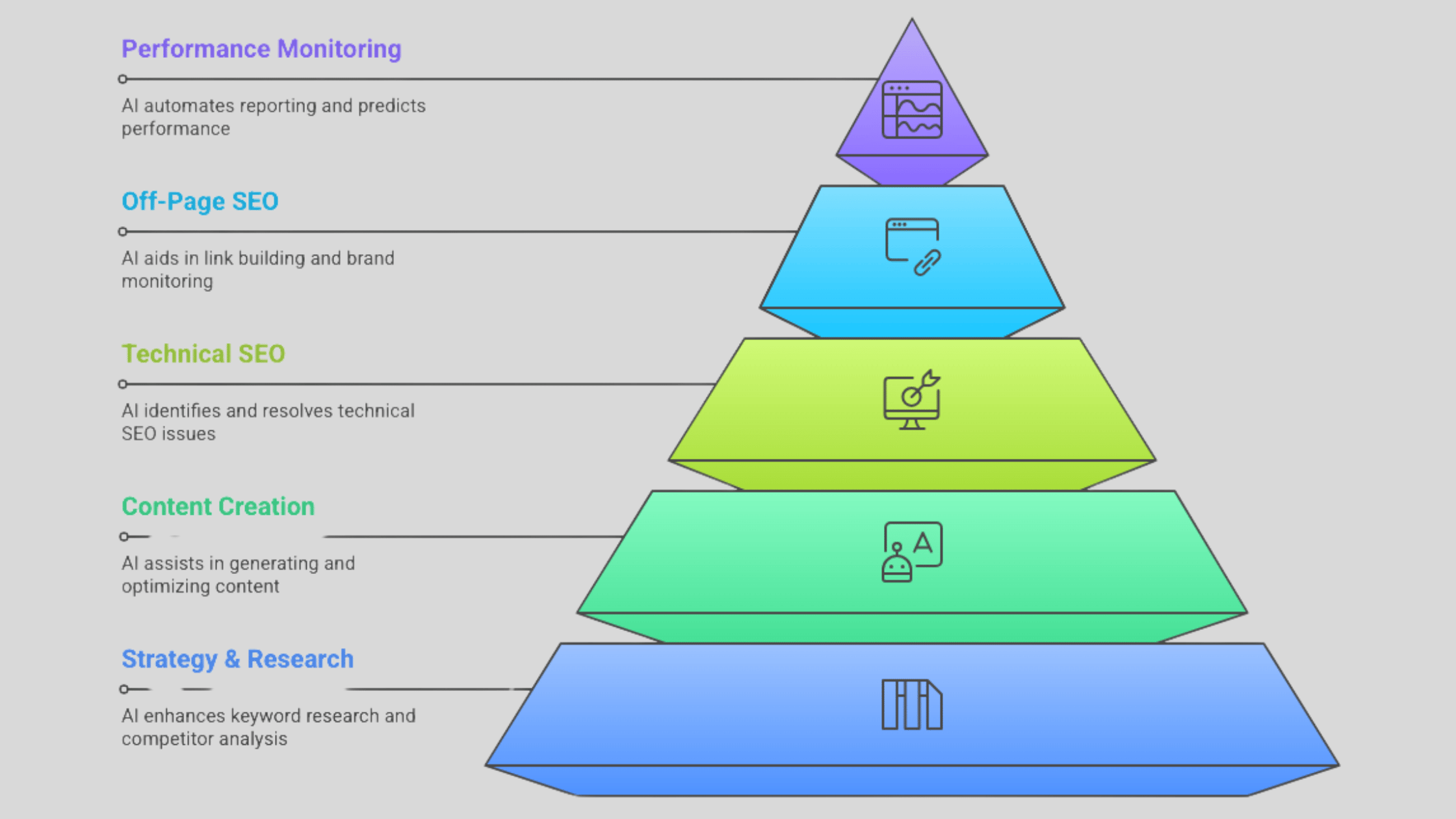
Many teams make avoidable errors that undermine their AI content strategy. Recognizing these mistakes early can save significant time and resources.
Mistake 1: Publishing Without Human Review
The most common and damaging mistake is publishing AI output directly without any human oversight. This practice leads to factual errors, awkward phrasing, and content that fails to connect with readers. Search engines increasingly flag such content as unhelpful.
Solution: Implement a mandatory two-step review process. First, a subject matter expert verifies accuracy. Second, an editor ensures readability and brand alignment.
Mistake 2: Ignoring Search Intent
AI tools often produce content that is topically relevant but fails to match the user’s actual intent. For example, a user searching “best running shoes” wants a comparison list, not a history of footwear manufacturing.
Solution: Analyze the top 10 ranking pages for your target keyword before generating content. Identify the common format, length, and structure. Instruct your AI tool to match that format while adding unique value.
Mistake 3: Keyword Stuffing in AI Output
Some AI models over-optimize for keywords, producing unnatural repetitions that harm readability. This practice triggers spam detection algorithms and reduces user trust.
Solution: Set a keyword density limit in your prompts. Use LSI keywords and synonyms instead of repeating the exact phrase. Review the output for any awkward keyword placement.
Mistake 4: Neglecting Content Refreshing
AI content becomes stale quickly, especially in fast-moving industries. Publishing once and forgetting about the page leads to declining rankings and traffic.
Solution: Schedule regular content audits. Use AI to identify outdated statistics, broken links, and new information that should be added. Refresh high-performing pages monthly and underperformers quarterly.
Important Notes for Sustainable AI Content Performance
Several contextual factors influence how well AI content performs over the long term. Keeping these notes in mind helps you build a resilient strategy.
E-E-A-T signals matter more than ever. Google’s quality raters look for evidence of experience, expertise, authoritativeness, and trustworthiness. AI content must be supplemented with author bios, citations, original research, and user-generated proof like reviews and testimonials.
Brand voice consistency is critical. AI models have a default neutral tone that may clash with your brand personality. Invest time in training your AI tools on your existing content. Create a style guide that the AI must follow, and enforce it through prompt instructions.
Content velocity has diminishing returns. Publishing 100 low-quality AI articles will not outperform 10 well-researched, human-edited pieces. Focus on quality over quantity, especially for competitive keywords where authority and depth matter.
Integration with other marketing channels amplifies results. AI content performs better when promoted through email, social media, and paid search. Use AI to generate variations of your content for different channels, but always link back to the original page.
Frequently Asked Questions
How long does it take to see results from AI SEO content?
Most sites see initial ranking movements within 2-4 weeks of publishing AI-assisted content. However, significant traffic growth typically takes 2-3 months. The timeline depends on your domain authority, keyword competition, and content quality. High-authority sites with strong backlink profiles can see faster results, while newer sites need more time to build trust.
Can Google detect AI-generated content?
Google does not specifically penalize AI-generated content, but its systems detect content that provides little value regardless of how it was produced. The key is not whether AI wrote the content, but whether it meets user needs. Content that is accurate, original, and helpful will rank well whether written by a human or an AI. Content that is thin, repetitive, or factually wrong will underperform regardless of its origin.
What is the ideal ratio of AI writing to human editing?
For most industries, a ratio of 30% AI writing to 70% human editing produces the best results. This ratio allows the AI to handle research, structure, and drafting while humans focus on accuracy, nuance, and brand voice. For highly technical or regulated topics, increase the human editing ratio to 85-90%. For evergreen, low-competition topics, you can reduce human editing to 50%.
How often should I update AI-generated content?
Update frequency depends on the topic’s volatility. News-related content should be updated daily or weekly. Evergreen topics like “how to tie a tie” can go months without updates. A good rule of thumb is to review every AI-generated page at least quarterly. Use analytics to identify pages with declining traffic and prioritize those for updates.
What tools are best for measuring AI SEO content performance?
Google Search Console and Google Analytics 4 are essential free tools. For deeper insights, consider Ahrefs or Semrush for rank tracking, Clearscope or MarketMuse for content quality scoring, and Hotjar or Microsoft Clarity for user behavior analysis. The best toolset combines search data, content analysis, and user experience metrics.
Conclusion
AI SEO content performance is not a set-it-and-forget-it metric. It requires continuous measurement, refinement, and human oversight. The teams that succeed treat AI as an accelerator, not a replacement for strategic thinking. They invest in prompt engineering, maintain rigorous editing standards, and track performance against business outcomes rather than vanity metrics.
Start by establishing your baseline metrics, then implement the measurement framework outlined in this guide. Use the data to refine your prompts, improve your editing process, and double down on content formats that resonate with your audience. With consistent effort, AI-assisted content can become one of your most reliable channels for organic growth and revenue generation.
Xem thêm:
- AI SEO URL Structure: The Complete Guide to Optimizing for Machine Learning Search Engines
- AI SEO Content Outlines: The Complete Guide to Smarter Content Planning
- AI SEO for Small Business: The Complete Guide to Smarter Rankings on a Budget
- AI SEO Alerts: The Ultimate Guide to Automated Search Monitoring and Real-Time Warnings
- AI SEO AI Search Audit: The Complete Guide to Future-Proofing Your Rankings
Bài viết cùng chủ đề:

AI SEO SEO Automation with Make: The Complete Workflow Guide

AI SEO SEO Automation with Zapier: The Complete Workflow Guide

AI SEO SEO Automation with n8n: The Complete Workflow Guide
AI SEO SEO Automation with Gemini: The Complete Guide to Scaling Organic Growth

AI SEO SEO Automation with Claude: The Complete Guide to Scaling Content in 2025

AI SEO SEO Automation with ChatGPT: The Complete Playbook for 2025

AI SEO & SEO Automation for Affiliate Sites: The 2025 Playbook for Passive Income Growth
AI SEO & SEO Automation for Bloggers: The Complete Guide to Scaling Your Content

AI SEO & SEO Automation for Agencies: The Complete 2025 Playbook

AI SEO and SEO Automation for Ecommerce: The Complete Playbook for 2025

AI SEO & SEO Automation for WordPress: The Complete Playbook for 2025
AI SEO SEO Automation Strategy: The Complete Playbook for 2025

Mastering the AI SEO SEO Automation Process: A Complete Guide to Scaling Organic Growth
AI SEO SEO Automation System: The Complete Guide to Scaling Organic Growth in 2025
AI SEO SEO Automation Platform: The Complete Guide to Scaling Organic Growth in 2025
AI SEO SEO Automation Software: The Complete Guide to Scaling Organic Growth in 2025















