
No products in the cart.
AI SEO Vector Search: The Complete Guide to Semantic Search Optimization
31
Jul
Jul
The digital landscape is shifting beneath our feet. Traditional keyword matching is giving way to a more intelligent, context-aware system known as AI SEO Vector Search. This technology, powered by machine learning and natural language processing, is fundamentally changing how search engines understand queries and how websites get discovered. For SEO professionals and content creators, understanding this shift is no longer optional; it is essential for maintaining visibility in an increasingly competitive online space.
What is AI SEO Vector Search?
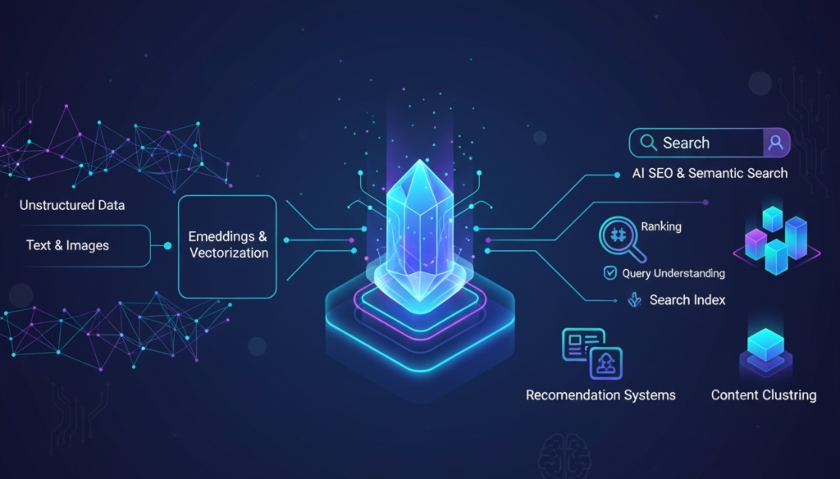
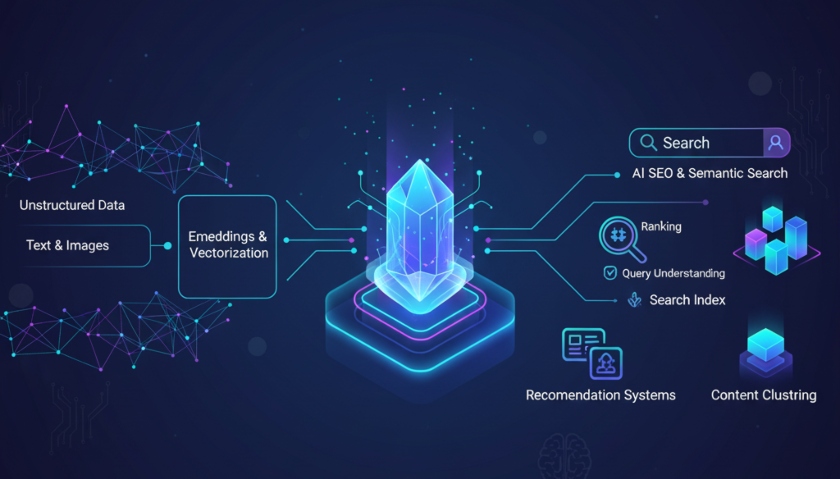
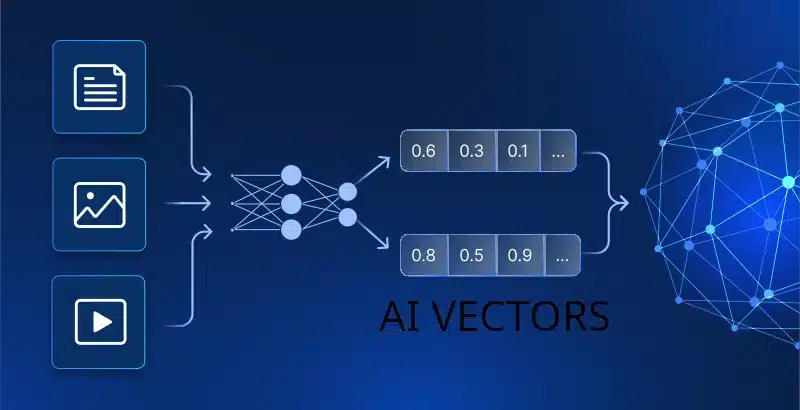
AI SEO Vector Search refers to the use of machine learning models to convert text (queries and documents) into numerical representations called vectors. These vectors capture the semantic meaning of words and phrases, allowing search engines to match a user’s query with content that is conceptually similar, even if it does not contain the exact keywords. Instead of looking for literal word matches, the system measures the distance between vectors to find the closest meaning.
This approach moves beyond lexical matching. A traditional search for “how to fix a leaky faucet” might miss a page titled “plumbing repair for dripping taps.” Vector search understands that “leaky faucet,” “dripping tap,” and “plumbing repair” are related concepts. This semantic understanding is the core of modern AI-driven search, enabling more accurate and helpful results for complex, conversational, and long-tail queries.
How Does Vector Search Work in SEO?
To grasp the mechanics, it helps to break down the process into three distinct stages. Each stage relies on sophisticated algorithms that process language in a way that mimics human understanding.
1. Text Embedding and Vectorization
The first step involves converting text into a mathematical format. An embedding model, such as BERT or GPT, analyzes the words in a sentence and their context. It then assigns each word or phrase a coordinate in a high-dimensional space. Words with similar meanings are placed closer together. For example, “car” and “automobile” will have vectors that are nearly identical, while “car” and “banana” will be far apart.
2. Indexing and Storage
Once a webpage is crawled, its content is broken down into smaller chunks (passages or paragraphs). Each chunk is converted into a vector and stored in a specialized database known as a vector database. These databases are optimized for high-speed similarity searches, allowing the search engine to quickly compare millions of vectors in milliseconds.
3. Query Matching and Ranking
When a user types a search query, the same embedding model converts that query into a vector. The search engine then calculates the distance between the query vector and all the document vectors in its index. The documents with the shortest distance (highest cosine similarity) are considered the most relevant. These results are then ranked and displayed to the user.
Key Differences: Traditional SEO vs. AI Vector Search SEO
The transition from keyword-based algorithms to vector-based systems represents a paradigm shift. Understanding the differences helps in adapting your strategy effectively.
| Aspect | Traditional SEO | AI SEO Vector Search |
|---|---|---|
| Matching Logic | Exact keyword and phrase matching | Semantic and contextual understanding |
| Query Handling | Struggles with synonyms and typos | Handles synonyms, typos, and natural language easily |
| Content Focus | Keyword density and exact-match anchors | Topic depth, entity coverage, and user intent |
| User Intent | Inferred from keywords | Directly modeled from query context |
| Ranking Factor | Backlinks and on-page keyword usage | Relevance of meaning and comprehensive coverage |
The table above illustrates a clear trend. While backlinks and technical health remain important, the primary ranking factor is shifting toward the semantic relevance of your content to the user’s underlying question.
Benefits of AI SEO Vector Search for Websites
Adopting a strategy aligned with vector search offers several distinct advantages. These benefits go beyond simple rankings and contribute to a better overall user experience.
- Improved Content Discovery: Your content can rank for a wider range of related queries without needing to target each keyword separately.
- Better Handling of Long-Tail Keywords: Conversational and specific queries are matched more accurately, capturing high-intent traffic.
- Enhanced User Experience: Users find exactly what they need, leading to lower bounce rates and higher engagement metrics.
- Resilience to Algorithm Updates: Content that focuses on deep semantic topics is less likely to be negatively impacted by core updates.
- Competitive Edge: Websites that optimize for meaning rather than just keywords can outrank larger competitors with weaker content.
- Computational Cost: Generating embeddings and running similarity searches requires significant computing power, which can be a barrier for smaller search engines.
- Data Requirements: Training effective embedding models requires massive datasets. For niche topics, the model might lack sufficient context.
- Lack of Interpretability: It is often difficult to understand why a specific document was ranked for a query, making SEO debugging harder.
- Potential for Bias: If the training data contains biases, the search results will reflect those biases, potentially excluding relevant content.
- Keyword Cannibalization: Creating multiple pages that target the same semantic topic confuses the search engine. Consolidate similar content into a single, authoritative resource.
- Ignoring User Intent: Focusing on keywords without understanding why the user is searching will lead to high bounce rates. Always match your content to the intent behind the query.
- Thin Content: Vector search rewards depth. Short, superficial articles that do not cover a topic comprehensively will struggle to rank.
- Over-Optimization: Stuffing exact-match keywords into your content makes it read unnaturally and can hurt your semantic relevance.
- Neglecting Internal Linking: A flat site architecture with no contextual links prevents search engines from understanding the relationship between your pages.
- E-E-A-T is Non-Negotiable: Experience, Expertise, Authoritativeness, and Trustworthiness are now more important than ever. Vector search models are trained to prefer content from credible sources.
- Monitor Search Console Regularly: Pay attention to the queries your pages are ranking for. You will often see that you are ranking for related terms you did not explicitly target, which is a sign of successful semantic optimization.
- Update Content Regularly: The semantic meaning of words can shift over time. Regularly updating your content ensures your vectors remain aligned with current usage.
- Focus on User Engagement: Metrics like dwell time, click-through rate, and pages per session are indirect signals that your content matches user intent. Optimize for a positive user experience.
Limitations and Challenges of Vector Search
Despite its power, AI SEO Vector Search is not without its challenges. Being aware of these limitations helps in setting realistic expectations and avoiding common pitfalls.
Practical Guide: How to Optimize for AI SEO Vector Search
Optimizing for vector search requires a shift in content creation and technical strategy.
Step 1: Focus on Topic Clusters, Not Keywords
Instead of creating separate pages for “best running shoes” and “best trail running shoes,” create a comprehensive pillar page about running shoes. Then, link out to specific cluster pages that cover subtopics in detail. This structure helps search engines understand the full scope of your expertise on a subject.
Step 2: Write for Entities and Concepts
Identify the key entities in your niche (people, places, products, concepts) and ensure your content covers them thoroughly. Use structured data (Schema.org) to explicitly tell search engines what these entities are and how they relate to each other.
Step 3: Answer Questions Directly
Vector search models are trained on question-answer pairs. Structure your content to directly answer common questions in your industry. Use clear headings that mirror the question format and provide concise, accurate answers in the first paragraph of the section.
Step 4: Use Natural Language Variations
Do not force the same keyword into every paragraph. Instead, use synonyms, related terms, and natural language variations. Write as if you are explaining a concept to a colleague, not trying to game an algorithm.
Step 5: Improve Technical Crawlability
Ensure your site is technically sound. Use a clear URL structure, an XML sitemap, and internal linking to help search engine crawlers discover and index all your content. A well-structured site allows the embedding model to process your pages more effectively.
Common Mistakes in AI SEO Vector Search Optimization
Many SEO professionals make critical errors when adapting to this new paradigm. Avoiding these mistakes will save you time and resources.
Important Notes for SEO Professionals
As you integrate vector search principles into your workflow, keep these critical points in mind. They will guide your decision-making process.
Frequently Asked Questions (FAQ)
What is the difference between vector search and semantic search?
Semantic search is the broader goal of understanding user intent and the contextual meaning of terms. Vector search is the technical method used to achieve this goal. It involves converting text into mathematical vectors to measure similarity. In essence, vector search is a powerful implementation of semantic search principles.
Does AI SEO Vector Search replace the need for backlinks?
No. While vector search prioritizes semantic relevance, backlinks remain a strong signal of authority and trustworthiness. A page with excellent semantic content but no backlinks may still struggle to rank against a page with strong authority. The two factors work together in the ranking algorithm.
How do I find the right keywords for vector search optimization?
Instead of focusing on individual keywords, focus on topics and questions. Use tools like Google’s “People Also Ask” and “Related Searches” to identify the breadth of a topic. Analyze the top-ranking pages for your main topic and identify the subtopics they cover. Your goal is to create a resource that covers the entire topic cluster comprehensively.
Is structured data still important for AI SEO Vector Search?
Yes, structured data is crucial. It provides explicit signals about the entities on your page and their relationships. This helps the embedding model understand your content more accurately, leading to better vector representations and improved matching for relevant queries.
Can small websites compete with large brands using vector search?
Yes. Vector search levels the playing field because it prioritizes the quality and depth of content over domain authority alone. A small, niche website that provides comprehensive, expert-level information on a specific topic can outrank a large brand with a shallow, generic article on the same subject.
Conclusion
AI SEO Vector Search is not a fleeting trend; it is the foundation of modern search technology. The shift from keyword matching to semantic understanding requires a fundamental change in how we approach content creation and website optimization. By focusing on comprehensive topic coverage, clear entity relationships, and genuine user intent, you can align your strategy with the algorithms that power today’s search engines. The future of SEO belongs to those who prioritize meaning over mere words, and vector search is the vehicle driving that transformation. Embrace this change, adapt your processes, and you will be well-positioned to thrive in the era of AI-driven discovery.
Xem thêm:
- How to Automate SEO with AI and Build a Scalable Organic Growth Engine
- AI SEO: The Complete Guide to Dominating Search with Artificial Intelligence
- AI SEO Search Trends: The Complete Guide to Ranking in 2025
- AI SEO Multi Agent Systems: The Complete Guide to Autonomous Search Optimization
- AI SEO Navigation: The Complete Guide to Smarter Site Architecture in 2025
Bài viết cùng chủ đề:

AI SEO SEO Automation with Make: The Complete Workflow Guide

AI SEO SEO Automation with Zapier: The Complete Workflow Guide

AI SEO SEO Automation with n8n: The Complete Workflow Guide
AI SEO SEO Automation with Gemini: The Complete Guide to Scaling Organic Growth

AI SEO SEO Automation with Claude: The Complete Guide to Scaling Content in 2025

AI SEO SEO Automation with ChatGPT: The Complete Playbook for 2025

AI SEO & SEO Automation for Affiliate Sites: The 2025 Playbook for Passive Income Growth
AI SEO & SEO Automation for Bloggers: The Complete Guide to Scaling Your Content

AI SEO & SEO Automation for Agencies: The Complete 2025 Playbook

AI SEO and SEO Automation for Ecommerce: The Complete Playbook for 2025

AI SEO & SEO Automation for WordPress: The Complete Playbook for 2025
AI SEO SEO Automation Strategy: The Complete Playbook for 2025

Mastering the AI SEO SEO Automation Process: A Complete Guide to Scaling Organic Growth
AI SEO SEO Automation System: The Complete Guide to Scaling Organic Growth in 2025
AI SEO SEO Automation Platform: The Complete Guide to Scaling Organic Growth in 2025
AI SEO SEO Automation Software: The Complete Guide to Scaling Organic Growth in 2025















