
No products in the cart.
AI SEO Framework: The Complete Blueprint for Search Dominance in 2025
31
Jul
Jul
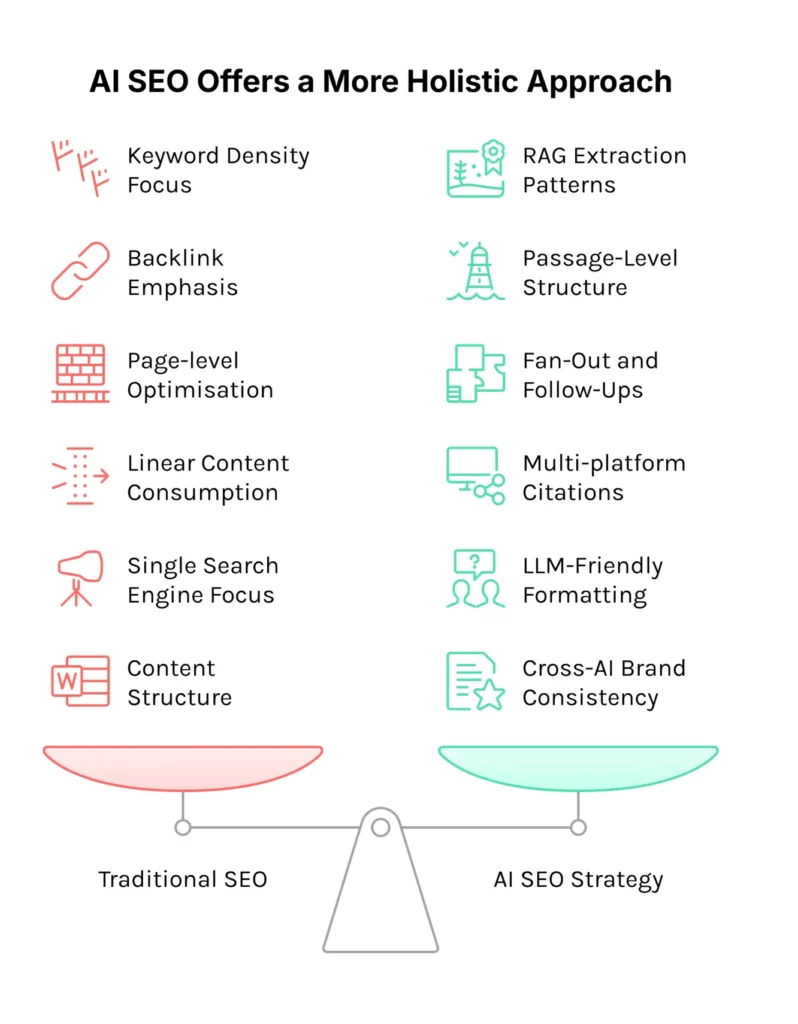
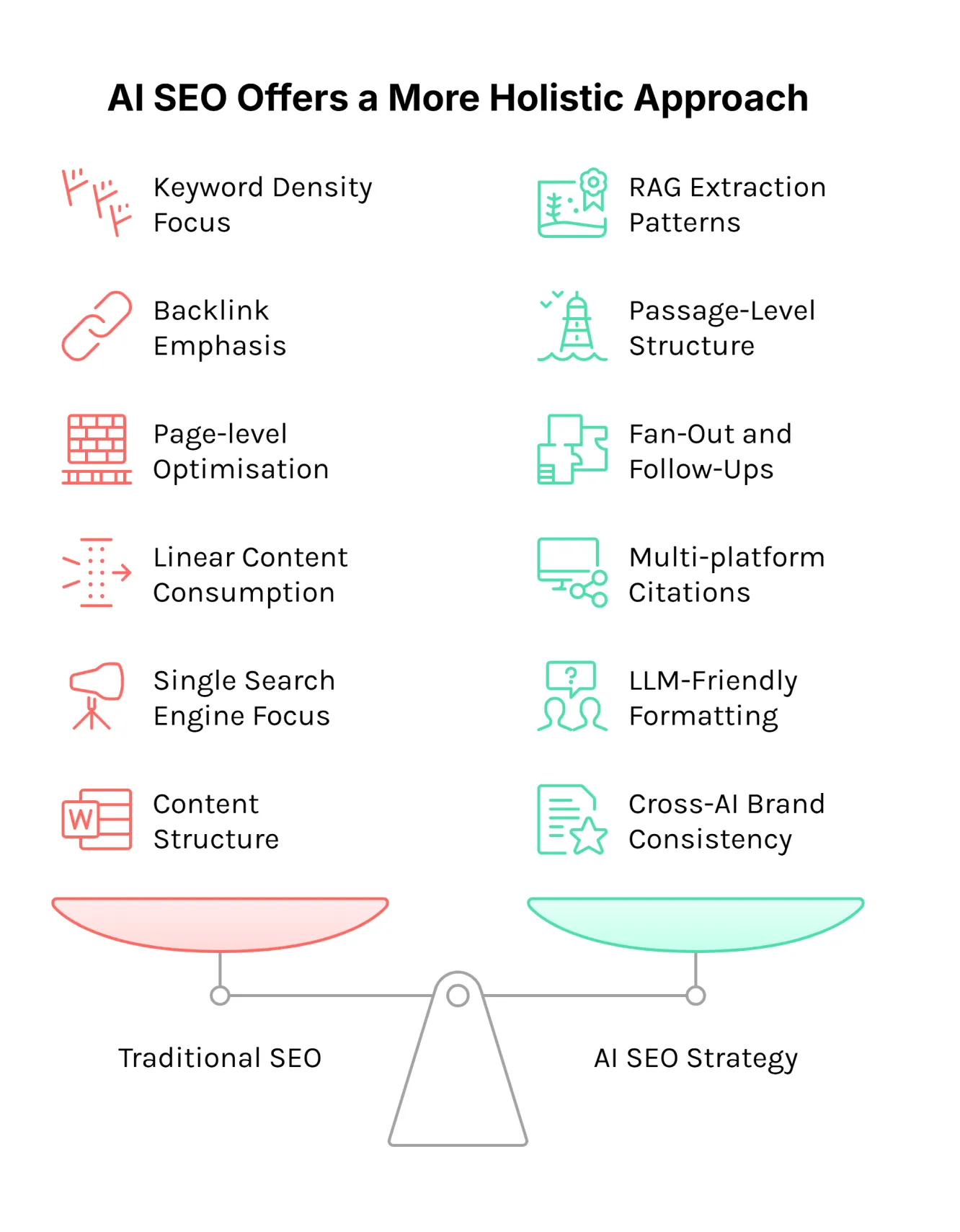
The digital marketing landscape has shifted beneath our feet. Traditional SEO relied on manual audits, keyword density checks, and backlink chasing. Today, search engines use machine learning to understand user intent, semantic relevance, and content quality at a scale humans cannot match. To stay competitive, you need an AI SEO Framework—a structured system that integrates artificial intelligence into every stage of your search optimization process. This guide breaks down the components, benefits, and practical implementation steps of a modern AI-driven SEO strategy, giving you a clear roadmap to higher rankings and sustainable organic growth.
What Is an AI SEO Framework?
An AI SEO Framework is a systematic approach that leverages machine learning algorithms, natural language processing, and predictive analytics to optimize a website for search engines. Unlike traditional methods that rely on guesswork and manual testing, this framework uses data-driven insights to automate repetitive tasks, uncover hidden patterns, and make real-time adjustments to your content and technical infrastructure.
The core principle is simple: instead of asking “what keywords should I target?” the framework asks “what does the user actually want to know?” It analyzes search engine results pages (SERPs), user behavior metrics, and competitor data to build a comprehensive strategy that aligns with how modern search algorithms like Google’s RankBrain and BERT operate.
The Evolution from Manual SEO to AI-Powered Optimization
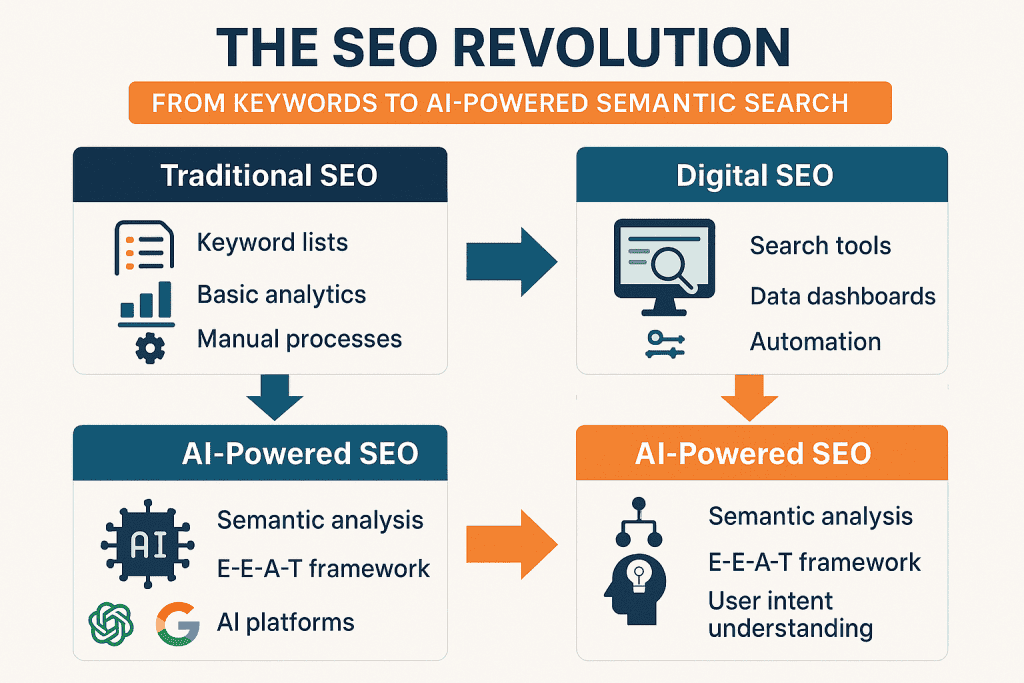
Manual SEO involved checking off boxes: adding meta tags, building links, and stuffing keywords. The problem is that search engines have evolved beyond these simplistic signals. Google now processes billions of queries daily, using neural networks to understand context and nuance. An AI SEO Framework adapts to this reality by continuously learning from data. It identifies which content pieces are underperforming, predicts which topics will gain traction, and automatically suggests structural changes to improve crawlability and indexation.
Core Components of a Modern AI SEO Framework
To build a functional AI SEO Framework, you must integrate several distinct components that work in unison. Each element addresses a specific part of the search ecosystem, from content creation to technical performance.
1. AI-Powered Keyword Research and Topic Clustering
Traditional keyword tools provide search volume and difficulty scores. An AI framework goes deeper. It uses semantic analysis to group keywords into topical clusters, understanding the relationships between terms. For example, if you run a fitness blog, the framework doesn’t just track “best protein powder.” It connects that query to related concepts like “whey vs. plant-based protein,” “post-workout nutrition timing,” and “protein absorption rates.”
This clustering allows you to create comprehensive pillar pages and supporting articles that cover a subject exhaustively. Search engines reward this depth because it satisfies user intent more completely. AI tools like Clearscope and MarketMuse use natural language processing to analyze top-ranking pages and suggest related terms you should include to match the semantic depth of your competitors.
2. Automated Content Generation and Optimization
AI writing assistants have moved beyond simple grammar checks. Modern tools can generate entire drafts, optimize existing content for readability, and ensure alignment with search intent. However, the framework is not about replacing human writers. It is about augmenting their capabilities. AI handles the data-heavy tasks: analyzing top SERP results, identifying content gaps, and suggesting structural improvements like heading hierarchy and internal linking opportunities.
For instance, an AI tool can analyze a 2,000-word article and recommend adding a comparison table, a FAQ section, or a specific example that top-ranking pages include. It can also adjust tone and complexity based on the target audience’s reading level, which is a ranking factor for voice search and featured snippets.
3. Predictive Analytics for Ranking Fluctuations
One of the most powerful aspects of an AI SEO Framework is its ability to forecast performance. By analyzing historical data on algorithm updates, seasonal trends, and competitor movements, AI models can predict when your rankings might drop or spike. This allows you to be proactive rather than reactive.
For example, if the framework detects that a competitor is rapidly gaining backlinks from high-authority domains, it can flag this as a threat and suggest a digital PR campaign to counterbalance. Similarly, it can predict the optimal time to update a piece of content based on when its organic traffic typically declines.
4. Technical SEO Auditing and Error Resolution
Crawling and indexing issues are silent killers of organic visibility. An AI framework automates the detection of broken links, duplicate content, slow-loading pages, and improper schema markup. More importantly, it prioritizes these issues based on their potential impact on revenue and rankings.
Instead of giving you a list of 500 errors, the AI system analyzes which errors are affecting your highest-traffic pages and provides step-by-step resolution guides. It can even generate the necessary code snippets for structured data or redirects, reducing the workload on your development team.
5. User Experience (UX) and Engagement Signal Analysis
Search engines use engagement metrics like dwell time, bounce rate, and click-through rate as proxies for content quality. An AI SEO Framework integrates with your analytics platform to monitor these signals in real-time. It identifies patterns—for example, if users from mobile devices bounce at a higher rate on a specific page, the framework will flag a potential responsive design issue.
This component also includes A/B testing automation. The AI can test different title tags, meta descriptions, and even page layouts to determine which version yields the highest engagement. This continuous optimization loop is essential for maintaining competitive rankings.
Benefits of Implementing an AI SEO Framework
The advantages of adopting this approach extend beyond just higher rankings. It fundamentally changes how your team operates, making your SEO efforts more efficient and effective.
- Scalability: AI can analyze thousands of pages and keywords in minutes, a task that would take a human team weeks. This allows you to expand your content footprint without proportionally increasing your headcount.
- Accuracy: Human error is inevitable when manually auditing a large website. AI reduces false positives and provides more precise recommendations based on statistical significance rather than anecdotal evidence.
- Speed to Insight: Real-time data processing means you can identify and fix issues before they cause significant traffic loss. This agility is a major competitive advantage in volatile markets.
- Cost Efficiency: While AI tools have subscription costs, they often replace the need for multiple specialized tools and reduce the hours spent on manual analysis, leading to a positive return on investment.
- Competitive Intelligence: AI can monitor your competitors’ strategies 24/7, alerting you to new content, backlinks, or technical changes they make. This allows you to adapt your strategy quickly.
- Ignoring Human Oversight: AI can generate content, but it cannot verify facts or understand cultural nuances. Publishing AI-generated content without human review can damage your brand’s credibility and lead to Google penalties for unhelpful content.
- Focusing Only on Content: An AI SEO Framework is not just about writing articles. It must also cover technical SEO, link building, and user experience. Neglecting these areas will limit your growth.
- Chasing Metrics Over Revenue: It is easy to get excited about increasing organic traffic. However, if that traffic does not convert into leads or sales, your SEO strategy is failing. Ensure your AI framework tracks business KPIs, not just vanity metrics like page views.
- Using AI for Black-Hat Tactics: Some tools promise to automate link building or generate spammy content at scale. These tactics violate Google’s guidelines and can result in severe penalties. Use AI to enhance quality, not to circumvent the rules.
- Failing to Update Models: Your AI tools need to be trained on your specific data. If you do not provide feedback or update your settings as your business evolves, the A
Limitations and Challenges of AI in SEO
Despite its power, an AI SEO Framework is not a magic bullet. Understanding its limitations is crucial for setting realistic expectations and avoiding costly mistakes.
| Challenge | Description | Mitigation Strategy |
|---|---|---|
| Data Quality Dependency | AI models are only as good as the data they are trained on. If your analytics tracking is broken or your historical data is sparse, the AI’s predictions will be inaccurate. | Ensure robust data collection via Google Analytics 4 and Search Console. Audit your tracking setup regularly. |
| Lack of Creativity | AI can optimize existing content but struggles to generate truly novel ideas or a unique brand voice. Over-reliance on AI writing can lead to generic, homogenized content. | Use AI for research and drafting, but always have a human editor inject personality, original insights, and real-world experience. |
| Algorithm Volatility | Search engine algorithms change frequently. An AI model trained on past data may not accurately predict future updates. | Combine AI insights with a strong understanding of SEO fundamentals. Do not blindly follow AI recommendations if they contradict core best practices. |
| Implementation Complexity | Integrating AI tools with your existing CMS, CRM, and analytics stack can be technically challenging, especially for small teams without dedicated developers. | Start with standalone tools that offer plug-and-play integrations. Gradually build a more complex architecture as your team’s expertise grows. |
How to Build Your Own AI SEO Framework: A Step-by-Step Guide
Implementing this framework requires a structured approach.
Step 1: Audit Your Current Data Infrastructure
Before you can leverage AI, you need clean, comprehensive data. Ensure that your website has proper tracking codes installed. Set up Google Search Console to monitor your indexed pages and search queries. Connect your analytics platform to your CRM to track conversions from organic traffic. This data foundation is the fuel for your AI engine.
Step 2: Select the Right AI Tools
T You will likely need a stack of specialized software. For content optimization, consider tools like Surfer SEO or Frase. For technical audits, use Sitebulb or Lumar with AI features. For predictive analytics, look into platforms like BrightEdge or Conductor. Start with one tool per category to avoid overwhelming your team and budget.
Step 3: Define Your Topical Authority Map
Use your AI keyword research tool to generate a comprehensive map of your niche. Identify the core topics that align with your business goals. For each topic, list all the subtopics and questions that users might have. This map becomes your content roadmap for the next 6-12 months.
Step 4: Automate Content Briefs
Instead of manually researching keywords for each article, configure your AI tool to generate detailed content briefs. These briefs should include the target keyword, related LSI terms, suggested headings, word count, and examples of what top-ranking pages cover. This ensures your writers are aligned with search intent from the very first draft.
Step 5: Implement Continuous Monitoring
Set up automated daily reports that track your keyword rankings, organic traffic, and technical health. Configure alerts for significant drops or spikes. Your AI framework should not be a “set and forget” system. It requires daily attention to refine its models and adjust your strategy based on new data.
Step 6: Create a Feedback Loop
The most critical step is closing the loop. When you publish new content or make technical changes, feed the performance data back into your AI system. This allows the machine learning models to understand what works for your specific audience and industry, making future recommendations more accurate.
Common Mistakes to Avoid When Using an AI SEO Framework
Many businesses fail to see results from AI SEO because they make fundamental errors in their approach. Being aware of these pitfalls will save you time and resources.
Important Notes on E-E-A-T and AI-Generated Content
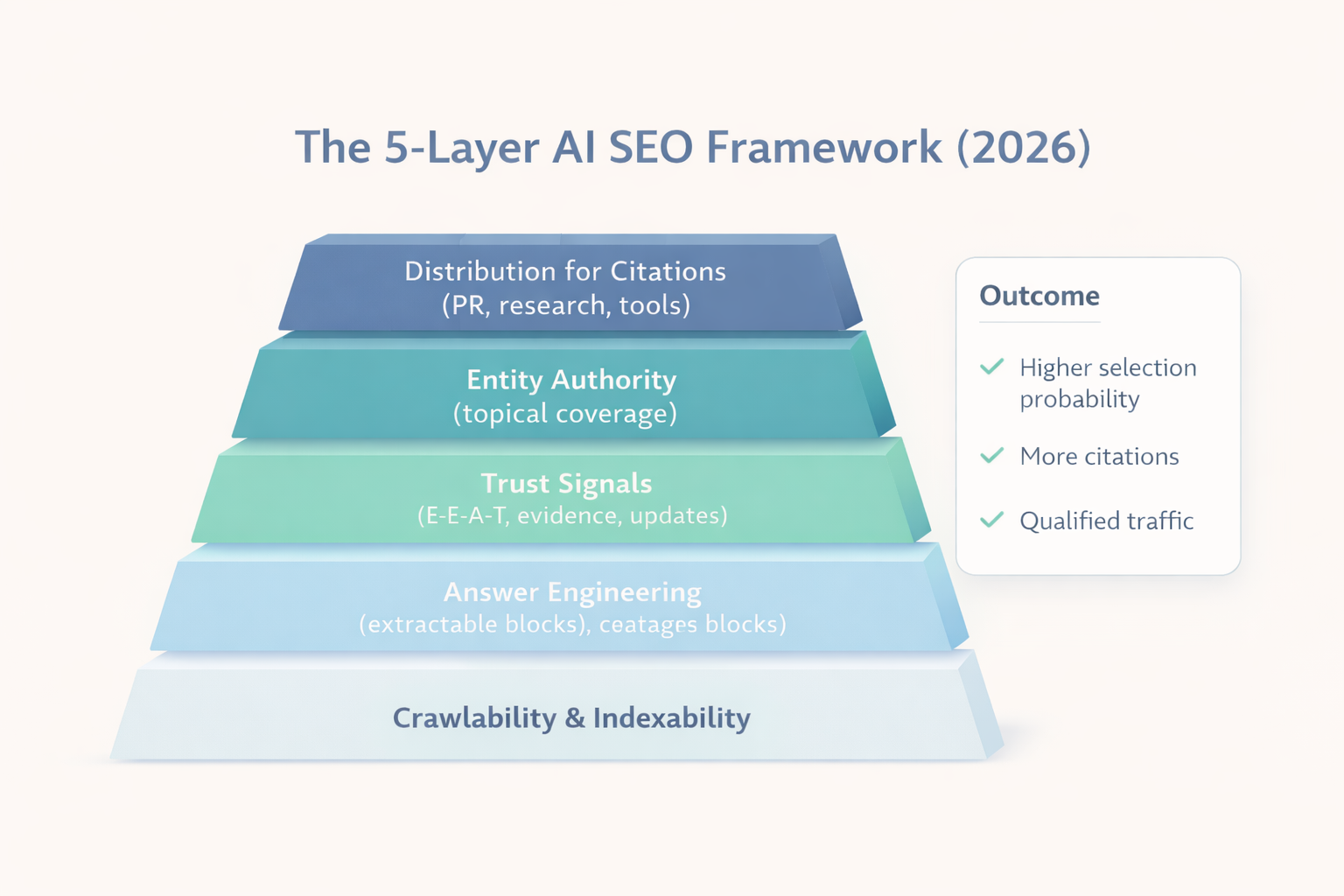
Google’s Quality Rater Guidelines emphasize Experience, Expertise, Authoritativeness, and Trustworthiness (E-E-A-T). This is a major challenge for AI-generated content. While AI can produce grammatically correct and factually accurate text, it lacks first-hand experience. For YMYL (Your Money or Your Life) topics like health, finance, and legal advice, this is a critical issue.
To align your AI SEO Framework with E-E-A-T principles, you must incorporate human expertise into the workflow. Have subject matter experts review and edit AI drafts. Include original research, case studies, and personal anecdotes that AI cannot generate. Display author bios with credentials and links to professional profiles. This human touch signals to Google that your content is trustworthy and authoritative.
Frequently Asked Questions (FAQ)
What is the difference between traditional SEO and an AI SEO Framework?
Traditional SEO relies on manual processes, historical best practices, and static keyword targeting. An AI SEO Framework uses machine learning to analyze real-time data, predict algorithm changes, and automate optimization tasks. It is more dynamic, scalable, and focused on user intent rather than just keyword matching.
Can small businesses benefit from an AI SEO Framework?
Yes. While enterprise-level tools can be expensive, there are many affordable AI-powered SEO tools designed for small businesses. These tools can automate time-consuming tasks like keyword research and technical audits, allowing small teams to compete with larger companies that have more resources.
Will AI replace SEO professionals?
A The role of the SEO expert is shifting from manual execution to strategic oversight. You will need to interpret AI insights, make strategic decisions, and ensure that the human elements of content creation—creativity, empathy, and experience—are not lost.
How long does it take to see results from an AI SEO Framework?
Results vary based on your niche, competition, and current website authority. Generally, you can expect to see improvements in technical health and content optimization within 4-6 weeks. Significant ranking improvements for competitive keywords typically take 3-6 months, as search engines need time to crawl, index, and evaluate your changes.
Is AI SEO considered a black-hat technique?
No. Using AI to analyze data and optimize content is a legitimate practice that aligns with Google’s guidelines. The problem arises when people use AI to create spammy, low-quality content at scale or to automate manipulative link schemes. As long as you use AI to enhance user experience and content quality, you are on the right side of the rules.
Conclusion
The AI SEO Framework is not a futuristic concept; it is a present-day necessity. Search engines have become too complex for manual optimization alone. By integrating AI into your keyword research, content creation, technical audits, and performance analysis, you gain a significant competitive edge. The key is to use AI as a powerful assistant, not a replacement for human judgment. Combine the analytical power of machine learning with the creativity, empathy, and ethical standards of your team. This hybrid approach will not only improve your search rankings but also build a sustainable, resilient online presence that can weather any algorithm update. Start small, focus on data quality, and continuously refine your process. The future of search belongs to those who can harness the power of AI while keeping the user at the center of every decision.
Xem thêm:
- AI SEO CDN Optimization: The Complete Guide to Faster Rankings in 2025
- Enterprise AI SEO: The Complete Guide to Scaling Organic Growth with Artificial Intelligence
- AI SEO for Finance: The Complete Guide to Dominating Financial Search in 2025
- AI SEO Perplexity Optimization: The Complete Guide to Ranking in the Age of Answer Engines
- AI SEO Predictive Analytics: The Complete Guide to Forecasting Search Performance
Bài viết cùng chủ đề:

AI SEO SEO Automation with Make: The Complete Workflow Guide

AI SEO SEO Automation with Zapier: The Complete Workflow Guide

AI SEO SEO Automation with n8n: The Complete Workflow Guide
AI SEO SEO Automation with Gemini: The Complete Guide to Scaling Organic Growth

AI SEO SEO Automation with Claude: The Complete Guide to Scaling Content in 2025

AI SEO SEO Automation with ChatGPT: The Complete Playbook for 2025

AI SEO & SEO Automation for Affiliate Sites: The 2025 Playbook for Passive Income Growth
AI SEO & SEO Automation for Bloggers: The Complete Guide to Scaling Your Content

AI SEO & SEO Automation for Agencies: The Complete 2025 Playbook

AI SEO and SEO Automation for Ecommerce: The Complete Playbook for 2025

AI SEO & SEO Automation for WordPress: The Complete Playbook for 2025
AI SEO SEO Automation Strategy: The Complete Playbook for 2025

Mastering the AI SEO SEO Automation Process: A Complete Guide to Scaling Organic Growth
AI SEO SEO Automation System: The Complete Guide to Scaling Organic Growth in 2025
AI SEO SEO Automation Platform: The Complete Guide to Scaling Organic Growth in 2025
AI SEO SEO Automation Software: The Complete Guide to Scaling Organic Growth in 2025















