
No products in the cart.
AI SEO GEO Optimization: The Complete Guide to Generative Engine Visibility
10
Aug
Aug
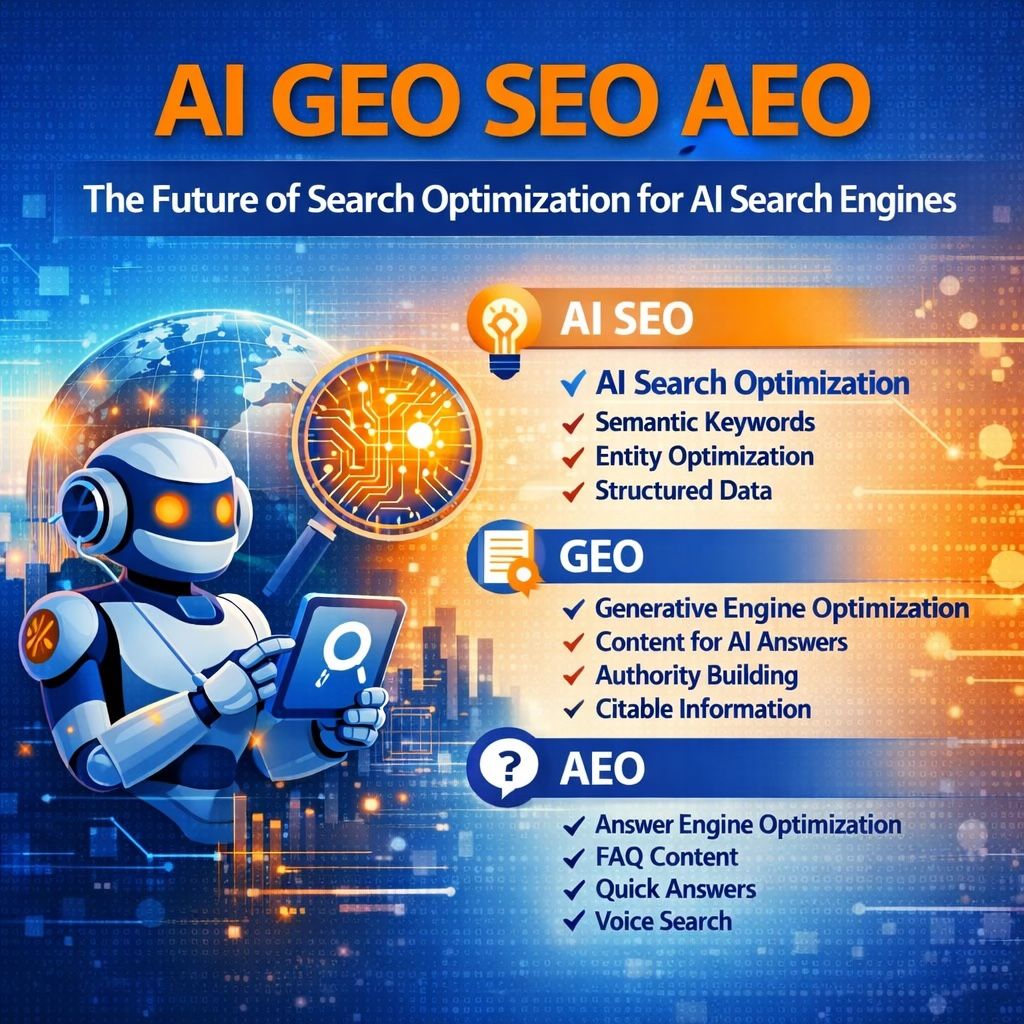
The digital marketing landscape is shifting beneath our feet. Traditional search engine optimization focused on Google’s blue links, but a new frontier demands attention: Generative Engine Optimization (GEO). When combined with artificial intelligence, this discipline becomes AI SEO GEO Optimization, a strategy designed to ensure your brand appears in AI-generated answers. As users increasingly turn to ChatGPT, Perplexity, and Google’s AI Overviews for answers, brands must adapt or face invisibility. This guide explains what AI SEO GEO Optimization entails, why it matters, and how to implement a winning strategy today.
What is AI SEO GEO Optimization?

AI SEO GEO Optimization is the practice of structuring and enriching your digital content so that AI models and generative engines cite, reference, and recommend your brand. It moves beyond ranking for keywords in a list of links. Instead, it focuses on becoming the primary source within an AI-generated paragraph, summary, or recommendation.
Generative engines pull information from vast datasets, but they prioritize content that is clear, authoritative, and easily parseable. By optimizing for these systems, you increase the probability that an AI assistant will quote your statistics, mention your product, or suggest your service when a user asks a question. This is not about tricking algorithms; it is about creating content that machines can understand and trust.
The Difference Between SEO and GEO
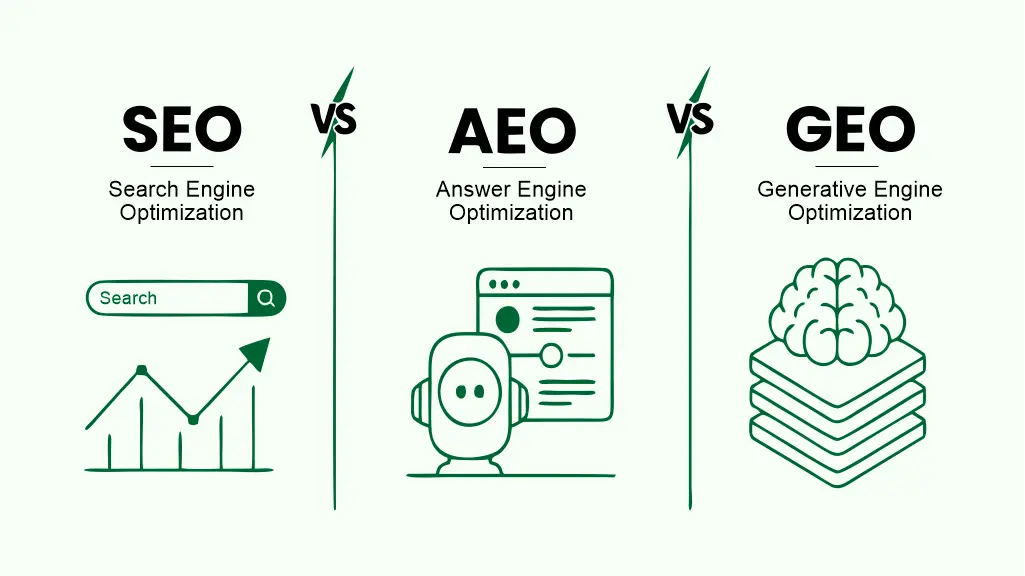
Traditional SEO targets crawlers and ranking algorithms. GEO targets large language models (LLMs) and their retrieval mechanisms. While both rely on quality content, the technical execution differs significantly.
| Aspect | Traditional SEO | AI SEO GEO Optimization |
|---|---|---|
| Primary Target | Search engine result pages (SERPs) | AI-generated answers and summaries |
| User Intent | Click-through to a website | Direct answer within the AI interface |
| Content Format | Long-form articles, backlinks | Structured data, citations, entity clarity |
| Success Metric | Ranking position, organic traffic | Brand mention in AI output, referral traffic |
| Optimization Focus | Keywords, meta tags, link equity | Source credibility, statistical relevance, semantic clarity |
The core shift is from optimizing for a query to optimizing for a conversation. AI SEO GEO Optimization requires you to think about how your content answers follow-up questions, provides context, and establishes factual authority.
Why AI SEO GEO Optimization Matters Now
The adoption of generative AI is not a future trend; it is a current reality. Studies indicate that a significant percentage of users now prefer asking an AI assistant over scrolling through search results. This behavior change directly impacts organic traffic. If your content is not referenced by these engines, you lose visibility to a growing audience segment.
Furthermore, AI Overviews in Google have reduced click-through rates for traditional organic listings. When a user gets a complete answer at the top of the page, they rarely click through to a website. To capture this traffic, you must be the source of that answer. AI SEO GEO Optimization is the only method to achieve this consistently.
The Role of Large Language Models
LLMs like GPT-4 and Claude do not browse the web in real-time for every query. They rely on training data and, increasingly, on retrieval-augmented generation (RAG). RAG systems fetch live data from indexed web pages to ground their answers. This is where your optimization efforts pay off. By making your content machine-readable and factually dense, you become a prime candidate for RAG retrieval.
Optimizing for these models involves understanding how they process information. They favor text that is direct, uses standard formatting, and clearly states entities, dates, and statistics. Fluffy marketing language is often ignored. Concrete, verifiable data is prioritized.
Core Components of an AI SEO GEO Strategy
Implementing AI SEO GEO Optimization requires a multi-faceted approach. It is not a single tactic but a comprehensive content and technical strategy. Below are the essential pillars.
1. Entity Clarity and Topical Authority
AI models need to understand who you are and what you know. You must clearly define your brand entity, your products, and your area of expertise. This involves consistent naming conventions, detailed “About” pages, and content that covers a topic comprehensively.
Build topical authority by creating content clusters. Instead of writing one article about a subject, write ten that cover every angle. This signals to AI systems that you are a reliable source for that specific domain. Use clear headings, define jargon, and link between related articles to create a semantic web that machines can navigate.
2. Structured Data and Schema Markup
While traditional SEO uses schema for rich snippets, GEO requires a deeper level of structure. Implement JSON-LD schema for organizations, articles, products, and FAQs. This provides explicit signals about the nature of your content.
More importantly, structure your on-page content with clear HTML tags. Use H2 and H3 headings that contain direct questions or key phrases. Break up text with bullet points and tables. AI models parse these elements to extract key information quickly. A wall of text is difficult for an LLM to summarize; a structured list is easy.
3. Statistical Density and Data Citations
Generative engines love numbers. They use statistics to add credibility to their answers. If your content includes original research, proprietary data, or specific metrics, you are more likely to be cited.
When you mention a statistic, ensure it is accurate and up-to-date. Link to the original source if it is not your own data. AI systems are trained to distrust unsourced claims. By providing verifiable data points, you increase your trust score within the model’s retrieval process.
4. Conversational and Question-Based Content
Users ask AI assistants questions in natural language. Your content must mirror this style. Include a dedicated FAQ section that addresses common queries directly. Use the exact phrasing a user might type into a chat interface.
For example, instead of a heading like “Benefits of Product X,” use “What are the benefits of Product X?” This alignment with natural language queries improves the chances of your content being matched to the user’s prompt. It also helps the AI extract a direct answer without needing to interpret complex prose.
Practical Guide: How to Implement AI SEO GEO Optimization
Knowing the theory is not enough. You need a step-by-step action plan to optimize your digital assets. Follow this process to start seeing results in AI-generated recommendations.
Step 1: Audit Your Current AI Visibility
Before making changes, establish a baseline. Ask various AI tools questions related to your industry. Note which brands and websites are mentioned. Are you included? If not, identify who is and analyze their content structure.
Use tools like ChatGPT, Perplexity, and Google’s AI Overviews to test your brand name. Ask questions like “What is the best
-93%

Security Plugins
Original price was: 69,00$.4,49$Current price is: 4,49$.
Step 2: Optimize for Information Retrieval
Rewrite your core service pages and blog posts to be more direct. Place the most important information in the first paragraph. Use the “inverted pyramid” style where the conclusion comes first, followed by supporting details.
Ensure every page answers a specific question. If a page is vague, A Create a “Definition” section on key pages that explains exactly what your product or service is in one or two sentences. This clarity is crucial for RAG systems.
Step 3: Build a Citation-Worthy Content Hub
Create a resource center filled with original data. Conduct surveys, analyze industry trends, and publish white papers. This type of content is highly cited by AI because it offers unique value that cannot be found elsewhere.
Promote this content to other websites to earn backlinks. While GEO focuses on AI, backlinks remain a strong trust signal. When reputable sites link to your data, AI models view your domain as more authoritative.
Step 4: Monitor and Refine Your GEO Metrics
Track your performance using AI-specific analytics. Monitor brand mentions in AI outputs. Use tools that scrape AI answers to see if your URL appears. Track referral traffic from AI chat interfaces, which is often labeled as “direct” or “chatgpt.com” in analytics.
Refine your strategy based on this data. If certain topics generate AI mentions, create more content on those topics. If a competitor is consistently cited, analyze their content structure and replicate their successful patterns.
Benefits and Limitations of AI SEO GEO Optimization
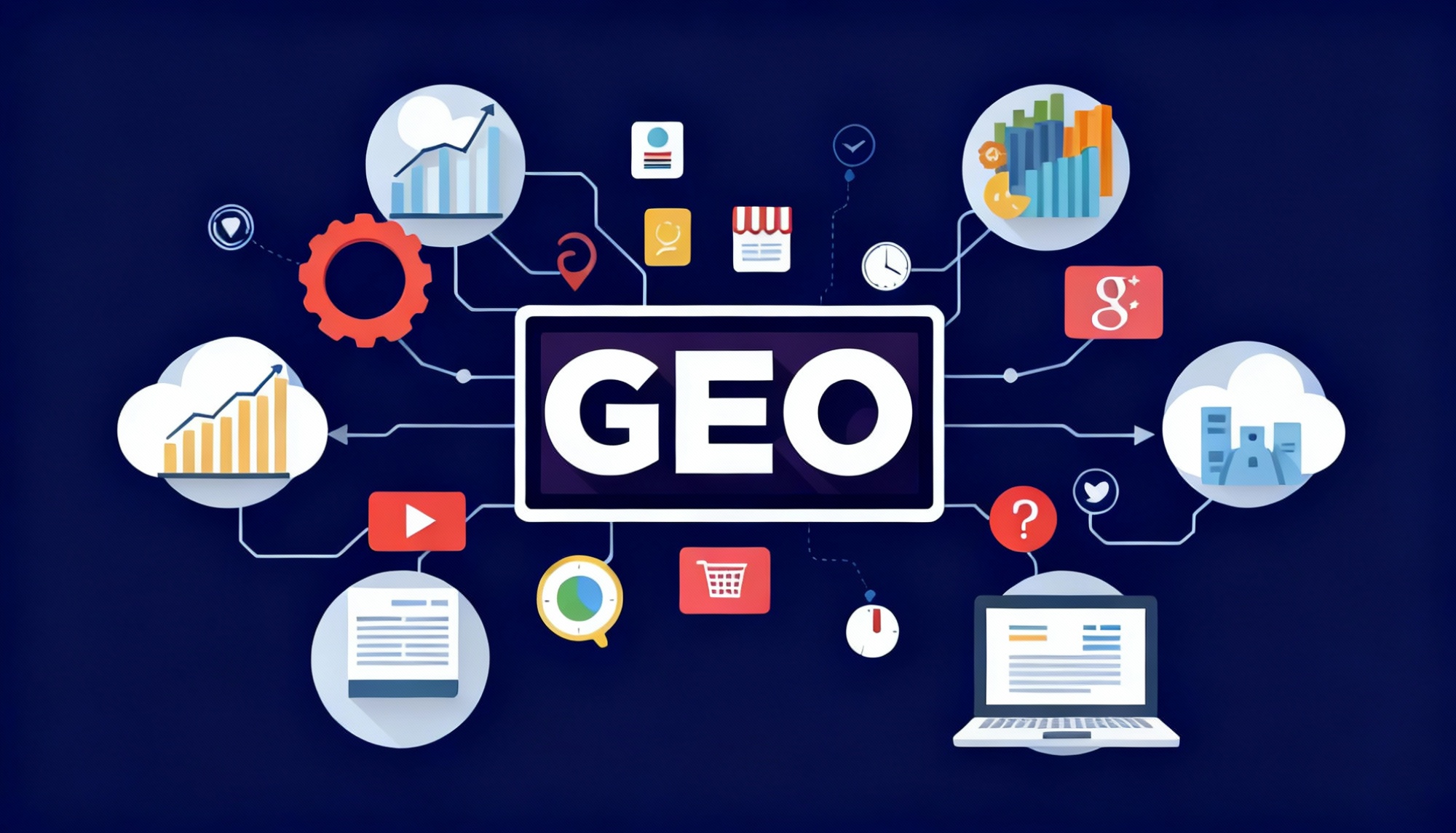
Like any strategy, this approach has distinct advantages and potential drawbacks. Understanding both helps you set realistic expectations and allocate resources effectively.
Key Benefits
- Future-Proofing: As AI adoption grows, you maintain visibility in new search paradigms.
- Brand Authority: Being cited by AI positions you as a thought leader in your niche.
- Higher Referral Quality: Users who click through from an AI answer are often highly qualified and ready to convert.
- Competitive Advantage: Few brands actively optimize for GEO, so early adopters gain a significant edge.
- Lack of Control: You cannot control how an AI model phrases its answer or whether it includes your link.
- Algorithm Volatility: AI models update frequently, and their citation behavior can change without notice.
- Resource Intensive: Creating citation-worthy data and structured content requires time and expertise.
- Measurement Difficulty: Tracking AI referrals is less precise than traditional analytics.
Potential Limitations
Despite the limitations, the benefits outweigh the risks. The key is to integrate GEO into your broader SEO strategy rather than treating it as a replacement.
Common Mistakes in AI SEO GEO Optimization
Many brands attempt to optimize for AI but fail due to common pitfalls. Avoiding these errors will save you time and improve your results.
Mistake 1: Keyword Stuffing in AI Prompts
Some marketers try to hide keywords in invisible text or meta tags to trick AI. This does not work. LLMs are trained to ignore spammy tactics. Focus on natural language and genuine value instead.
Mistake 2: Ignoring User Intent Context
AI answers are conversational. If your content is purely promotional, it will be ignored. Write to inform, not to sell. Provide balanced information that includes pros and cons. AI models often cite sources that present multiple perspectives.
Mistake 3: Neglecting Technical Structure
Publishing a great article without proper HTML structure is a missed opportunity. Use semantic HTML5 tags like <article>, <section>, and <address>. Ensure your page loads fast and is mobile-friendly. AI crawlers favor technically sound websites.
Mistake 4: Failing to Update Content
AI models prioritize fresh information. If your statistics are from 2019, they will be ignored in favor of newer data. Regularly audit your content and update dates, figures, and references. This signals to AI that your site is active and reliable.
Important Notes for Long-Term Success
AI SEO GEO Optimization is not a one-time project. It requires ongoing maintenance and adaptation. Keep these notes in mind as you develop your strategy.
First, prioritize user experience above all else. Content that satisfies human readers will generally satisfy AI algorithms. Do not sacrifice readability for machine optimization. Second, diversify your AI presence. Do not focus solely on ChatGPT. Optimize for Perplexity, Claude, Gemini, and emerging engines. Each has unique retrieval patterns.
Third, integrate GEO with traditional SEO. They are complementary, not mutually exclusive. A strong backlink profile helps with GEO. High-ranking pages are more likely to be included in training data. Finally, stay informed about AI policy changes. As regulations around AI content emerge, your strategy may need to adapt to remain compliant.
Frequently Asked Questions
What is the difference between SEO and GEO?
SEO focuses on ranking in search engine results pages to drive clicks. GEO focuses on being cited within AI-generated answers. GEO requires structured data, statistical density, and conversational content that LLMs can easily parse and reference.
How do I measure AI SEO GEO Optimization success?
Track brand mentions in AI outputs using manual queries or specialized tools. Monitor referral traffic from AI platforms in your analytics. Also, track your visibility in Google’s AI Overviews for your target keywords. An increase in these metrics indicates successful optimization.
Is AI SEO GEO Optimization the same as prompt engineering?
No. Prompt engineering is about crafting inputs to get better outputs from AI. GEO is about structuring your website content so that AI systems naturally choose to cite it. They are related but distinct disciplines. GEO is a content strategy; prompt engineering is a user skill.
How long does it take to see results from GEO?
Results vary based on your niche and content quality. Some brands see AI mentions within weeks of publishing structured content. Others take months. Consistency is key. AI models do not crawl your site daily, so it takes time for new content to be indexed and referenced.
Can small businesses benefit from AI SEO GEO Optimization?
Yes. While large brands have more resources, small businesses can compete by focusing on niche topics. AI models need specific, detailed answers. A small business with deep expertise in a local or specialized area can become the go-to source for that specific query, outperforming larger competitors.
Conclusion
AI SEO GEO Optimization is no longer optional for brands that want to remain visible in the evolving digital ecosystem. The shift from search engines to generative engines is profound, and it changes how users discover information. By implementing the strategies outlined in this guide—focusing on entity clarity, structured data, statistical authority, and conversational content—you position your brand to be the trusted source that AI recommends.
The time to act is now. Early adopters will define the standards for this new discipline. Start auditing your AI visibility today, restructure your content for machine readability, and commit to producing data-rich, authoritative resources. The future of search is conversational, and with the right approach, your brand will be leading the conversation.
Xem thêm:
- AI Keyword Generator: Transform Your SEO Strategy with Smart Automation
- AI SEO ROI: How to Measure and Maximize Your Return on Investment
- AI SEO Sitebulb: The Complete Guide to Smarter Technical Audits
- AI SEO Keyword Database: The Complete Guide to Smarter Search Rankings
- AI SEO Brand Mentions: The Complete Guide to Digital PR in the Age of Algorithms
Bài viết cùng chủ đề:

AI SEO SEO Automation with Make: The Complete Workflow Guide

AI SEO SEO Automation with Zapier: The Complete Workflow Guide

AI SEO SEO Automation with n8n: The Complete Workflow Guide
AI SEO SEO Automation with Gemini: The Complete Guide to Scaling Organic Growth

AI SEO SEO Automation with Claude: The Complete Guide to Scaling Content in 2025

AI SEO SEO Automation with ChatGPT: The Complete Playbook for 2025

AI SEO & SEO Automation for Affiliate Sites: The 2025 Playbook for Passive Income Growth
AI SEO & SEO Automation for Bloggers: The Complete Guide to Scaling Your Content

AI SEO & SEO Automation for Agencies: The Complete 2025 Playbook

AI SEO and SEO Automation for Ecommerce: The Complete Playbook for 2025

AI SEO & SEO Automation for WordPress: The Complete Playbook for 2025
AI SEO SEO Automation Strategy: The Complete Playbook for 2025

Mastering the AI SEO SEO Automation Process: A Complete Guide to Scaling Organic Growth
AI SEO SEO Automation System: The Complete Guide to Scaling Organic Growth in 2025
AI SEO SEO Automation Platform: The Complete Guide to Scaling Organic Growth in 2025
AI SEO SEO Automation Software: The Complete Guide to Scaling Organic Growth in 2025















