
No products in the cart.
AI Keyword Generator: Transform Your SEO Strategy with Smart Automation
29
Jul
Jul
The digital landscape moves fast, and staying ahead in search engine rankings demands more than guesswork. An AI keyword generator has become the cornerstone of modern content planning, turning hours of manual research into minutes of actionable insight. These intelligent tools analyze search patterns, user intent, and competitive gaps to deliver keyword suggestions that would take days to compile manually. For marketers, bloggers, and enterprise SEO teams, adopting this technology means uncovering hidden opportunities, avoiding wasted effort on low-impact terms, and crafting content that aligns precisely with what audiences actually search for. This article dives deep into how an AI keyword generator works, its practical applications, and the smart tactics that separate average results from truly profitable keyword strategies.
What Is an AI Keyword Generator?
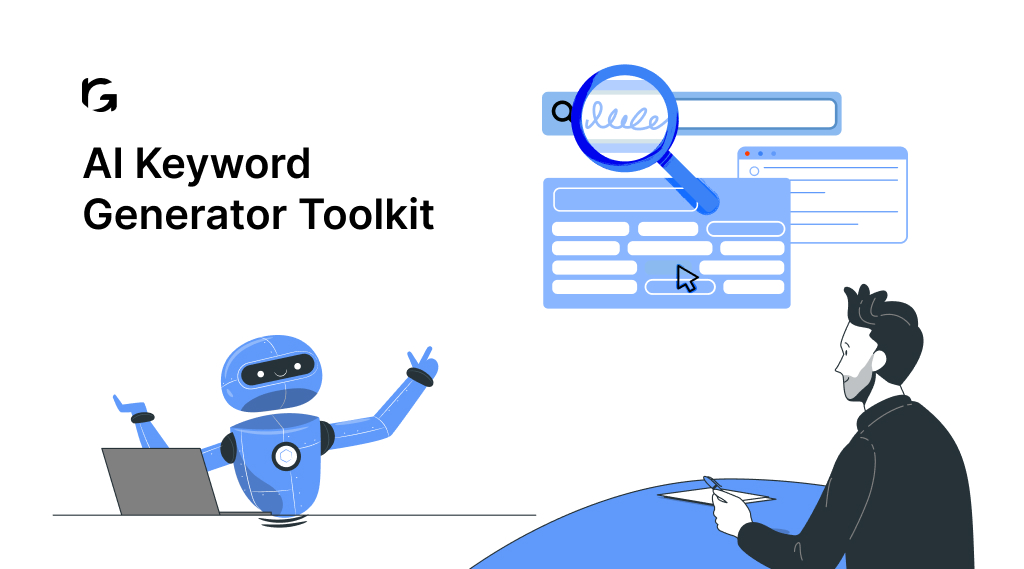
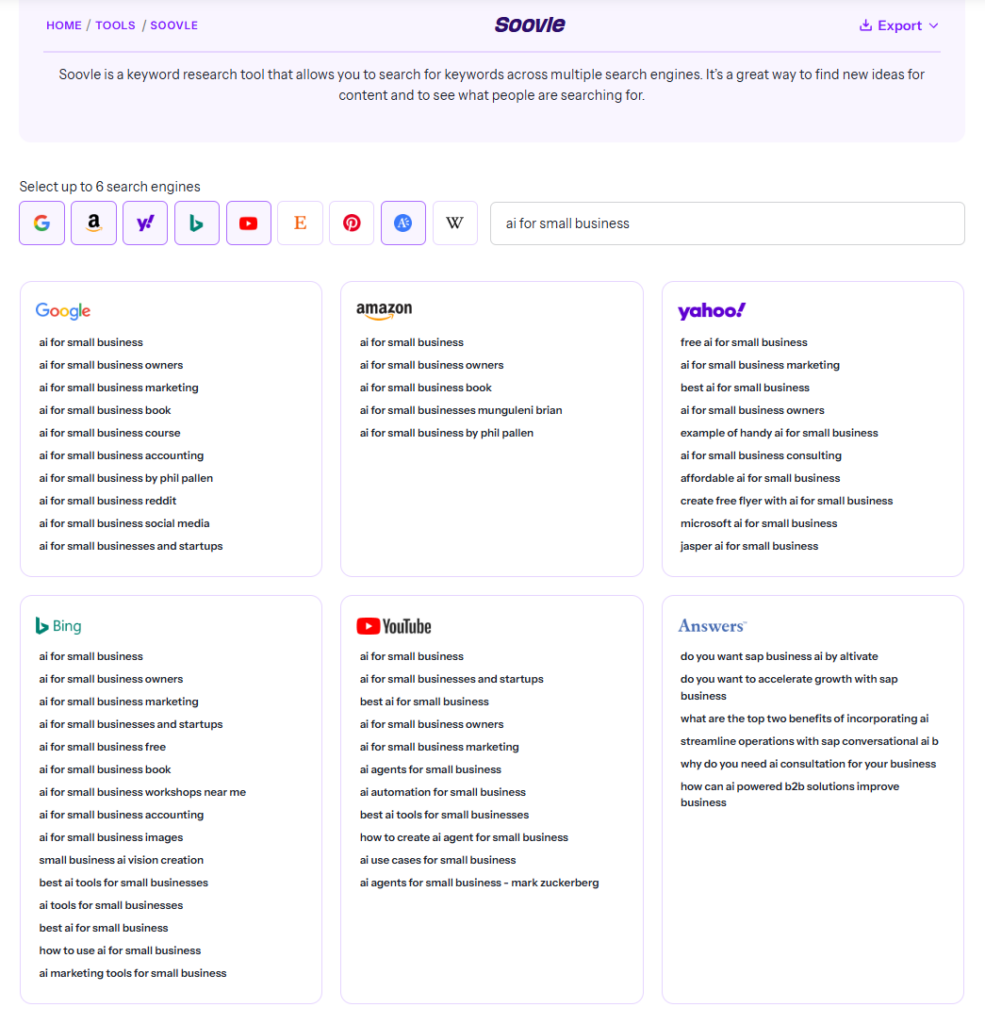
An AI keyword generator is a software application that leverages machine learning, natural language processing, and massive datasets to automatically produce relevant keyword ideas. Unlike basic keyword tools that simply pull related terms from seed words, these generators understand context, semantic relationships, and even the intent behind a search query. They can cluster topics, predict seasonal trends, and score keywords based on their likelihood to drive conversions.
The core differentiator is autonomy. Where a traditional tool might show you a static list of variations, an AI-driven platform interprets your niche, examines competitors, and suggests groupings that map to the buyer’s journey. This shifts keyword research from a reactive task to a proactive strategic function, arming you with a full content blueprint rather than a raw dump of strings.
The Core Technology Behind AI Keyword Generators
Several layers of artificial intelligence work together to make these tools possible. First, natural language processing (NLP) breaks down sentences into entities and understands how words relate to one another. Next, machine learning models trained on billions of search queries recognize patterns in user behavior—such as what people click after searching “best running shoes” versus “running shoes for flat feet.” Finally, predictive analytics forecast difficulty scores and traffic potential by examining historical data and current ranking pages. Some generators also incorporate large language models to deliver context-rich keyword groupings, long-tail suggestions, and even question-based queries that mirror voice search.
These technologies are often combined with real-time data from search engine APIs, clickstream analysis, and social listening platforms. The result is a dynamic system that adapts as search trends evolve, delivering recommendations that stay fresh and relevant.
How AI Keyword Generators Work: A Step-by-Step Process
Understanding the process behind an AI keyword generator helps users grasp why the output is so accurate and how to interpret it correctly. Though each tool has a unique interface, the underlying workflow generally follows these stages:
- Seed input processing: You supply a primary keyword, a domain, a competitor URL, or even a piece of content. The AI parses the context and identifies the core topic.
- Semantic expansion: Using NLP, the engine generates hundreds or thousands of related terms, synonyms, questions, and subtopics. It maps these onto a semantic graph to avoid irrelevant offshoots.
- Intent classification: Each suggested keyword is tagged with user intent—informational, commercial, transactional, or navigational. This allows the tool to group keywords into clusters that match different stages of the sales funnel.
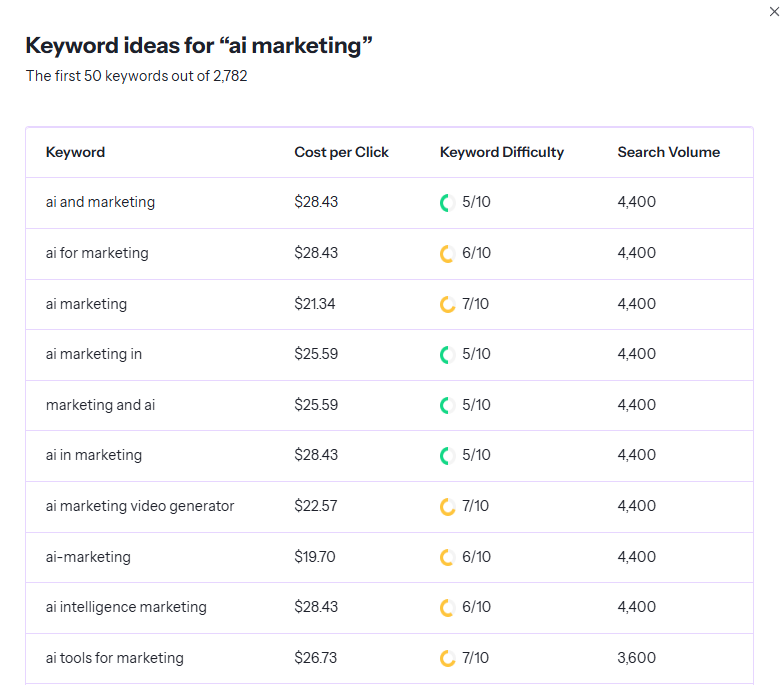
- Data enrichment: Metrics like monthly search volume, cost-per-click, keyword difficulty, and SERP features (featured snippets, image packs, etc.) are appended to each suggestion.
- Filtering and ranking: The AI applies proprietary scoring models or user-defined filters to surface the highest-potential keywords. Some tools rank by “opportunity score,” balancing volume against difficulty.
- Export and integration: Finally, you can export the list into a spreadsheet or directly push the keywords into SEO platforms, content planning tools, or campaign managers.
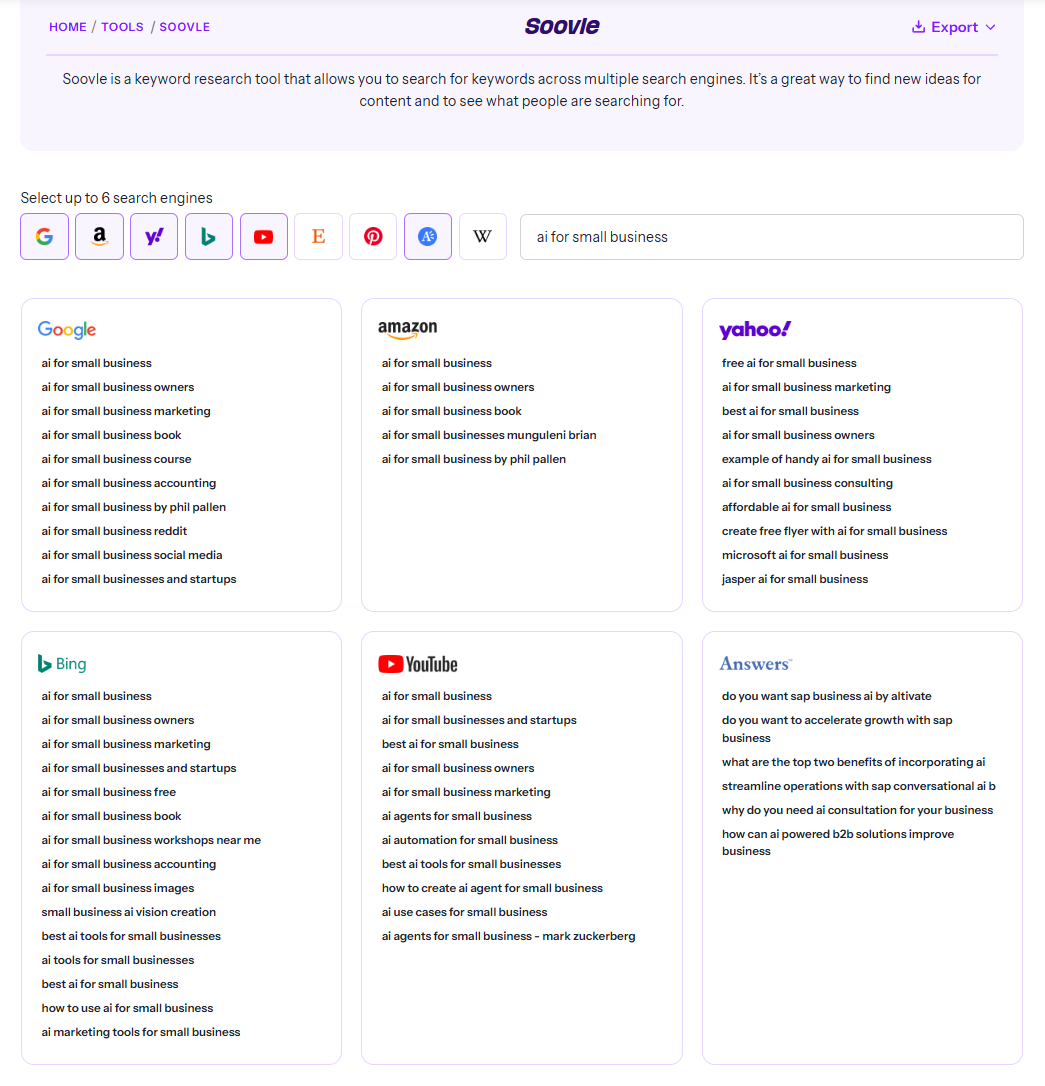
- General-Purpose Keyword Discovery Engines: Tools like Semrush’s Keyword Magic Tool or Ahrefs’ Keywords Explorer use AI to expand seed terms and apply filters. They are best for broad research across industries.
- Content-Focused Topic Generators: Platforms such as MarketMuse or Clearscope suggest keywords by analyzing top-ranking content and identifying gaps. They prioritize topical authority over raw volume.
- Search-Intent AI Assistants: Certain generators, including AlsoAsked and AnswerThePublic, focus on question-based keywords and the “People Also Ask” box. They are ideal for voice search and FAQ content.
- E-Commerce Product Keyword Tools: Solutions like Helium 10 Cerebro or Jungle Scout’s Keyword Scout are trained on marketplace data and consumer purchase behavior, offering product-level relevance.
- Real-Time Trend Analyzers: AI generators embedded in social listening suites (e.g., Brandwatch) spot emerging keywords from forums, news, and social media chatter before they appear in traditional keyword tools.
- Speed and scale: Generate thousands of keyword ideas in seconds, covering dozens of subtopics simultaneously.
- Intent-aware grouping: Automatically clusters keywords by buyer stage, allowing for funnel-aligned content calendars.
- Uncovers hidden gems: AI identifies low-competition, long-tail keywords that manual brainstorming often misses, such as conversational phrases from voice queries.
- Competitor blind spot detection: Analyzes entire domains to find keywords your rivals are not targeting effectively.
- Consistent data hygiene: Eliminates duplicate keywords, merges close variants, and refreshes metrics automatically.
- Multi-language and local support: Many generators can process queries in dozens of languages and apply local search nuances, crucial for international SEO.
- Over-reliance on training data: The models can inadvertently favor keywords that are common in their dataset, potentially overlooking hyper-niche or truly innovative angles.
- Context gaps: While NLP is powerful, it may misclassify intent for ambiguous terms or industry-specific jargon without human oversight.
- Metric inaccuracies: Search volumes are estimates. Third-party tools rarely match Google Search Console data exactly, so treating them as directional is essential.
- Creativity limits: The generator suggests based on existing queries; it cannot conceive a novel topic that has zero search history, which a human brainstorm might.
- Cost barrier: Premium AI keyword tools often come with monthly subscriptions that can be steep for freelancers or small businesses.
- Blindly following AI suggestions without vetting: Some suggested keywords may be irrelevant or too broad. Always manually check a sample of terms against actual SERPs to confirm they match your audience’s expectations.
- Ignoring local search nuances: If you operate in a specific region, ensure your generator’s location setting is accurate. A keyword like “best plumber” will differ vastly between New York and London.
- Targeting only high-volume keywords: AI tools automatically surface big numbers, but those often come with fierce competition. A balanced portfolio of low-difficulty long-tail terms builds traffic faster.
- Keyword stuffing based on the generated list: Seeing dozens of related terms can tempt you to cram them all into one article. Use them naturally and let the AI’s content score function guide you on optimal density.
- Not updating keyword lists regularly: Search trends shift. A keyword that showed zero volume two months ago might be trending now. Schedule a monthly refresh using your AI generator to stay current.
- Treating all intent keywords the same: Informational and transactional queries require completely different content formats. A product listing won’t satisfy someone looking for a definition.
- Combine multiple data sources: Use the AI generator alongside Google Search Console and Google Trends. The union of these datasets reveals queries where your site already gets impressions but lacks dedicated content—quick wins.
- Leverage competitor URL analysis: Instead of a generic seed, plug a competitor’s top-ranking blog post into the tool. It will reverse-engineer all the keywords that page targets, including secondary and latent semantic terms.
- Focus on question-based queries for voice and featured snippets: Many AI tools now isolate questions (who, what, where, when, why, how). Prioritize these as they often become featured snippets and capture voice search traffic.
- Validate commercial intent with cost-per-click data: Higher CPC often correlates with stronger purchase intent. Use the AI generator’s CPC column to spot transactional keywords worth heavy investment.
- Set realistic monitoring cycles: New websites should re-evaluate keyword lists quarterly; established sites can do so monthly. Don’t make daily changes—give content time to age and rank.
- Integrate internally: Feed generated keyword lists directly into your project management tool (Trello, Asana) or content calendar. The smoother the handoff, the more productive your team becomes.
This entire flow often completes in under a minute, compared to the multi-day process of manually brainstorming and checking metrics one by one.
Key Types of AI Keyword Generators
Not all AI keyword generators are built the same way. They can be categorized by their primary function and data source, each serving distinct SEO workflows.
Choosing the right type depends on whether you are optimizing a blog, an online store, a YouTube channel, or a local service page.
Benefits and Limitations of Using AI for Keyword Research
Adopting an AI keyword generator brings transformative advantages, yet it is not a magic wand. Understanding the trade-offs ensures you use the technology pragmatically.
Top Benefits
Notable Limitations
AI Keyword Generator vs. Traditional Keyword Research Tools: A Detailed Comparison

The difference between an AI-powered keyword generator and older spreadsheet-driven methods is stark. The table below highlights key aspects to help you decide when to switch.
| Feature | Traditional Keyword Tools (e.g., Google Keyword Planner, basic Ubersuggest) | AI Keyword Generator (e.g., Semrush with AI, Surfer, Frase) |
|---|---|---|
| Idea generation speed | Manual seed expansion; limited by the user’s ability to brainstorm. | Automatically expands into hundreds of context-relevant clusters in seconds. |
| Intent analysis | Typically absent or rudimentary; user must guess commercial vs. informational. | Advanced classification tags (intent, funnel stage) with high accuracy. |
| Topic clustering | Requires separate pivot tables and manual grouping. | Built-in semantic clustering and pillar page suggestions. |
| Competitor gap discovery | Side-by-side domain comparison with limited filtering. | AI pinpoints exact keywords competitors rank for that you don’t, sorted by opportunity. |
| Data freshness | Monthly updates; stale data can persist. | Some tools update weekly or daily with trend-aware spikes. |
| Content optimization guidance | None; stops at keyword list. | Recommends word count, related terms, and structure based on top-ranking pages. |
| Pricing | Often free or low-cost; Google Keyword Planner is free with ads account. | Typically subscription-based; can range from $30 to $300+ per month. |
Traditional tools still serve a purpose for quick volume checks or when budget is tight, but for anyone serious about scaling organic traffic, an AI keyword generator provides a strategic advantage that manual methods cannot match.
Practical Applications: How to Use an AI Keyword Generator Effectively
Moving from theory to practice,
Step 1: Define Your Seed Keywords and Core Niche
Start with five to ten broad terms that define your business. For a fitness brand, seeds could be “home workout,” “weight loss diet,” “yoga for beginners.” Input these into the generator and set the language and location filters. The A Don’t get overwhelmed; instead, export the full list to work through systematically.
Step 2: Filter by Intent to Align with Your Goals
Use the tool’s intent tags to sort the raw list. Keep commercial and transactional keywords for product pages, and informational ones for blog posts and guides. For instance, “best adjustable dumbbells” is commercial, while “how to use dumbbells at home” is informational. This separation prevents you from trying to rank a product page for a learning query, a frequent mistake.
Step 3: Create Topic Clusters Using the AI’s Grouping Feature
Most AI generators can cluster keywords around a pillar topic. Select a broad head term like “home workout routine,” and the tool will suggest subtopics: “home workout for beginners,” “10-minute home workout,” “home workout without equipment.” Each becomes a supporting article that links to a central pillar page. This structure signals deep topical authority to search engines.
Step 4: Prioritize by Opportunity Score and Existing Rankings
Instead of chasing the highest volume, look for keywords with a strong opportunity score—usually a blend of decent search volume and low difficulty. Also filter for keywords where your domain already ranks on page two or three. Updating and improving that content is often faster than creating new pages. The AI generator can compare your current URL’s performance and suggest missing terms to add.
Step 5: Automate Content Briefs and Outlines
Advanced AI keyword generators integrate with writing assistants. Once you select a target keyword, the tool can produce a content brief that includes recommended headings, the exact semantically related terms to incorporate, and even questions to answer. This transforms the keyword list into an actionable writing plan, cutting the time between research and publication dramatically.
Common Mistakes When Using AI Keyword Generators and How to Avoid Them

Even the smartest tool can backfire if you ignore fundamental SEO principles. These pitfalls trip up beginners and seasoned pros alike.
Important Notes for Getting the Most Out of an AI Keyword Generator
Maximizing your investment in an AI keyword generator requires more than clicking “generate.” These expert tips will help refine your output and build a smarter search strategy.
Frequently Asked Questions About AI Keyword Generators
What is an AI keyword generator?
An AI keyword generator is a software tool that uses artificial intelligence, natural language processing, and search data to automatically produce relevant keyword ideas. It goes beyond simple synonym generation by analyzing user intent, grouping topics into clusters, and scoring keywords based on ranking difficulty and traffic potential. This technology replaces manual brainstorming with a data-driven, strategic approach to SEO keyword research.
How accurate are AI keyword generator search volumes?
Search volumes from AI keyword generators are estimates derived from clickstream data, third-party partnerships, and historical trends. They are directionally useful for prioritizing keywords but rarely match Google Search Console impressions exactly. The best practice is to use the metrics to compare keywords against each other within the same tool rather than treating them as absolute numbers.
Can an AI keyword generator replace a human SEO strategist?
No, an AI keyword generator is an enhancer, not a replacement. It automates the heavy lifting of data collection and pattern recognition, but human expertise is still needed to interpret the results, perform SERP analysis, understand brand nuance, and craft compelling content. The technology handles scale; the strategist provides judgment and creativity.
Is there a free AI keyword generator that actually works?
Several platforms offer limited free versions. Google Keyword Planner is free but lacks advanced AI clustering. Tools like AnswerThePublic provide a few free searches daily and use AI to format question keywords. For unlimited access with full AI capabilities, most robust generators require a paid subscription. Freemium options can serve as a testing ground before committing to a premium tool.
How often should I use an AI keyword generator for my site?
For a blog or content-heavy site, running the generator monthly is ideal to capture seasonal trends and new competitor content. E-commerce sites should refresh product category keywords at least quarterly, while news outlets may use it more frequently. The key is consistency: schedule a dedicated keyword research session and use the same tool to maintain data consistency.
What’s the difference between an AI keyword generator and a regular keyword tool?
A regular keyword tool returns a list of related terms primarily based on seed word matching and simple modifiers like alphabet soup. An AI keyword generator understands context, predicts user intent, clusters keywords by topic, and even suggests content structure. It uses machine learning to deliver actionable groupings instead of a flat, unfiltered spreadsheet of words.
Conclusion
Embracing an AI keyword generator moves your SEO workflow from reactive guesswork to a structured, insight-driven process. The technology excels at unearthing niche queries, clustering them into strategic themes, and evaluating what actually stands a chance of ranking. However, the tool is only as effective as the human mind behind it. By combining AI-driven data with your own industry knowledge, thorough SERP analysis, and a commitment to quality content, you create a keyword foundation that supports sustained organic growth. Start with a clear seed set, filter ruthlessly by intent, and build topic clusters that demonstrate real expertise. The time saved on research can be redirected into crafting the kind of content that keeps both users and search engines coming back.
Xem thêm:
- Mastering the AI SEO Prompt Workflow: A Complete Guide to Scaling Organic Growth
- AI SEO Keyword Prioritization: The Complete Guide to Smarter Content Planning
- AI SEO AI Search Traffic: The Complete Guide to Winning Generative Engine Rankings
- AI SEO AI Brand Mentions: The Complete Guide to Automated Brand Monitoring
- AI SEO Team Workflow: The Complete Guide to Scaling Organic Growth in 2025
Bài viết cùng chủ đề:

AI SEO SEO Automation with Make: The Complete Workflow Guide

AI SEO SEO Automation with Zapier: The Complete Workflow Guide

AI SEO SEO Automation with n8n: The Complete Workflow Guide
AI SEO SEO Automation with Gemini: The Complete Guide to Scaling Organic Growth

AI SEO SEO Automation with Claude: The Complete Guide to Scaling Content in 2025

AI SEO SEO Automation with ChatGPT: The Complete Playbook for 2025

AI SEO & SEO Automation for Affiliate Sites: The 2025 Playbook for Passive Income Growth
AI SEO & SEO Automation for Bloggers: The Complete Guide to Scaling Your Content

AI SEO & SEO Automation for Agencies: The Complete 2025 Playbook

AI SEO and SEO Automation for Ecommerce: The Complete Playbook for 2025

AI SEO & SEO Automation for WordPress: The Complete Playbook for 2025
AI SEO SEO Automation Strategy: The Complete Playbook for 2025

Mastering the AI SEO SEO Automation Process: A Complete Guide to Scaling Organic Growth
AI SEO SEO Automation System: The Complete Guide to Scaling Organic Growth in 2025
AI SEO SEO Automation Platform: The Complete Guide to Scaling Organic Growth in 2025
AI SEO SEO Automation Software: The Complete Guide to Scaling Organic Growth in 2025















