
No products in the cart.
AI SEO Google AI Overviews Optimization: The Complete Playbook for 2025
10
Aug
Aug
The search landscape has shifted permanently. Google’s AI Overviews, powered by Gemini, now sit at the top of billions of search results pages, fundamentally changing how users consume information. For digital marketers, this is not a trend to observe but a reality to master. AI SEO Google AI Overviews Optimization is no longer an optional strategy; it is the core requirement for maintaining organic visibility. This comprehensive guide breaks down exactly how to adapt your content strategy to win clicks, citations, and conversions in an AI-first search environment.
Understanding the Shift: What Are Google AI Overviews?
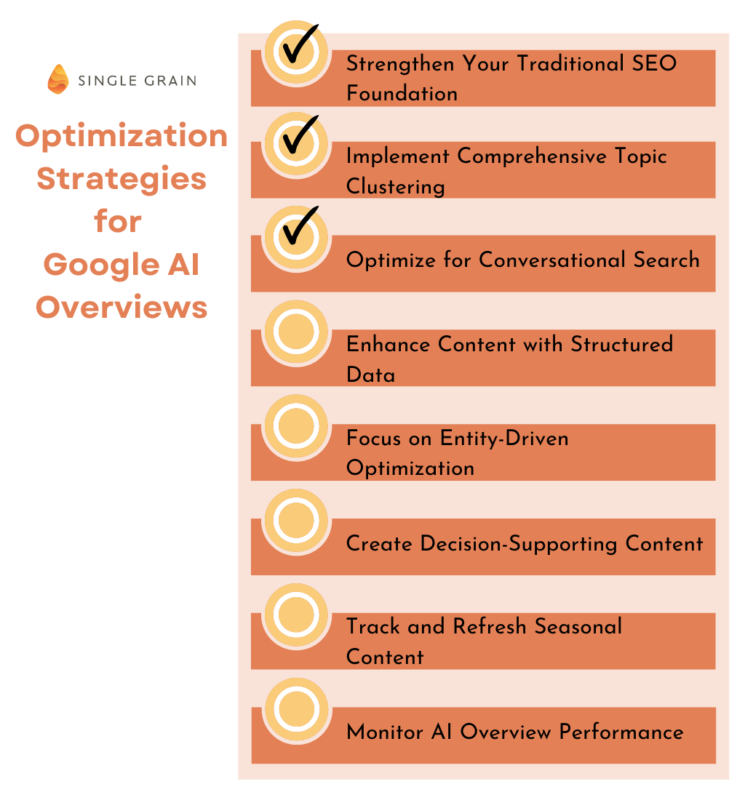
Google AI Overviews are AI-generated summaries that appear directly beneath the search bar and above the traditional blue links. These summaries synthesize information from multiple sources to answer a user’s query directly on the search engine results page (SERP). Unlike the old featured snippets, which pulled a single block of text, AI Overviews aggregate data, compare options, and provide step-by-step guides without requiring a click.
This shift means that the “zero-click” search phenomenon has accelerated. Users often find the answer they need without visiting any website. For businesses, this creates a paradox: you must optimize to be the source cited within the AI Overview, even if the user never clicks through. The goal of AI SEO Google AI Overviews Optimization is to make your content the primary reference point for the AI model.
The Anatomy of an AI Overview
To optimize effectively, you must understand the components of the AI-generated result. Typically, an AI Overview includes a text paragraph, a list of key points, and a carousel of source links. The text is paraphrased, not copied, which means your content must be structured in a way that the AI can easily parse and extract core concepts.
Google’s system prioritizes information that is clear, authoritative, and well-sourced. The AI looks for consensus across high-ranking pages. If your content contradicts the majority of other authoritative sources, it is less likely to be cited. Therefore, aligning your content with factual accuracy and industry consensus is the first step in this optimization process.
Why Traditional SEO Fails in the AI Era
Traditional SEO focused on keyword density, backlinks, and exact-match domains. While those elements still hold some weight, they are secondary to the AI’s need for semantic understanding. The AI does not look for keywords; it looks for concepts, entities, and relationships between them.
For example, a traditional article might target the keyword “best running shoes.” The AI Overview, however, wants to know the specific context: “best running shoes for flat feet,” “best running shoes for marathons,” and “best running shoes under $100.” If your content only covers the broad term without addressing the sub-intents, the A AI SEO Google AI Overviews Optimization requires a shift from keyword targeting to topic authority.
The Role of Entity Salience
Entity salience refers to how prominently a search engine recognizes and understands the main subjects of your page. In the AI era, you must explicitly define the entities you are discussing. If you are writing about “content marketing,” you must also clearly connect it to related entities like “SEO,” “audience engagement,” and “brand awareness.”
This helps the AI map your content to the correct knowledge graph. When the AI builds an overview, it pulls from the knowledge graph to verify facts. Your content must align with this graph to be considered trustworthy. This is a critical component of AI SEO Google AI Overviews Optimization that many marketers overlook.
Core Strategies for AI SEO Google AI Overviews Optimization
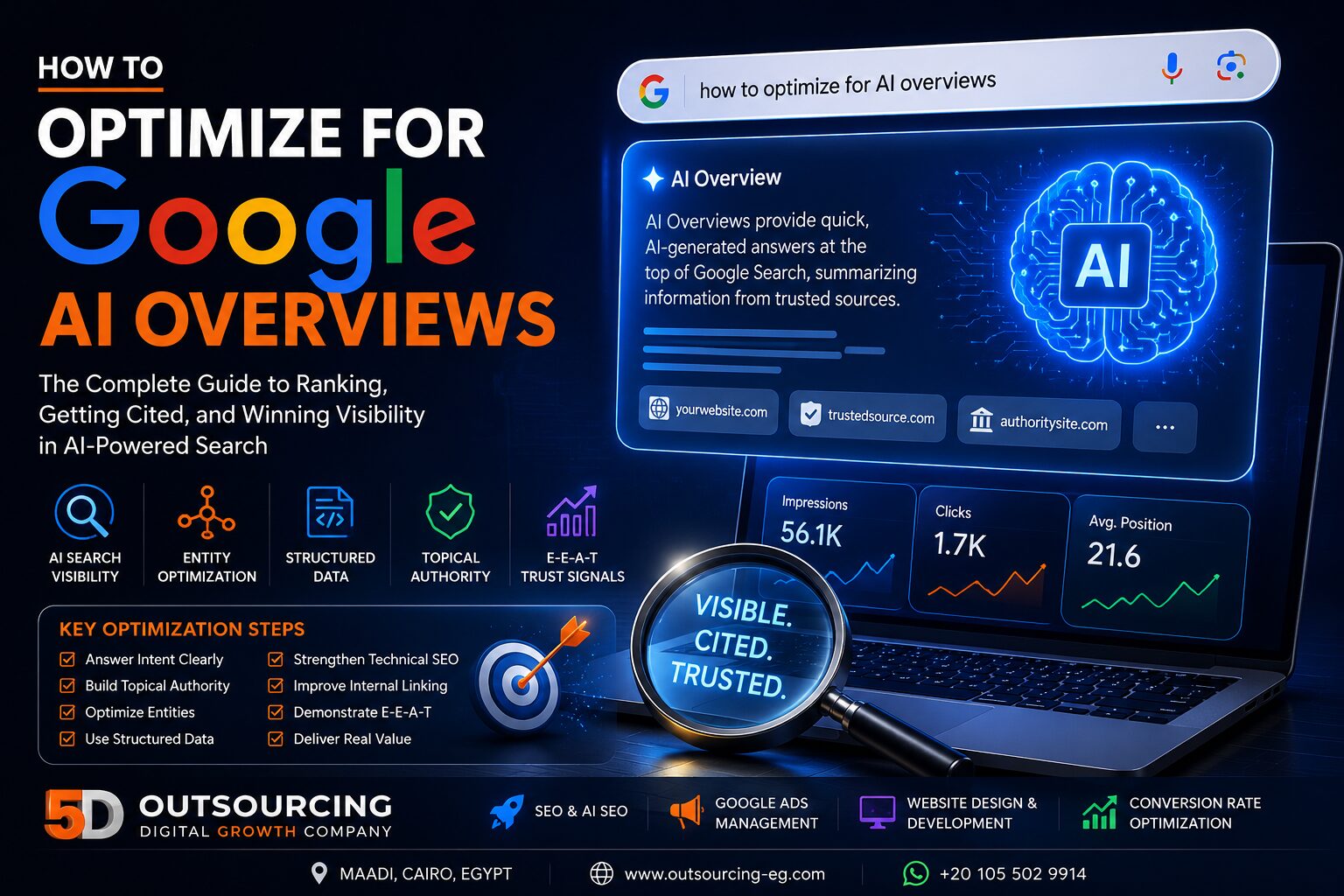
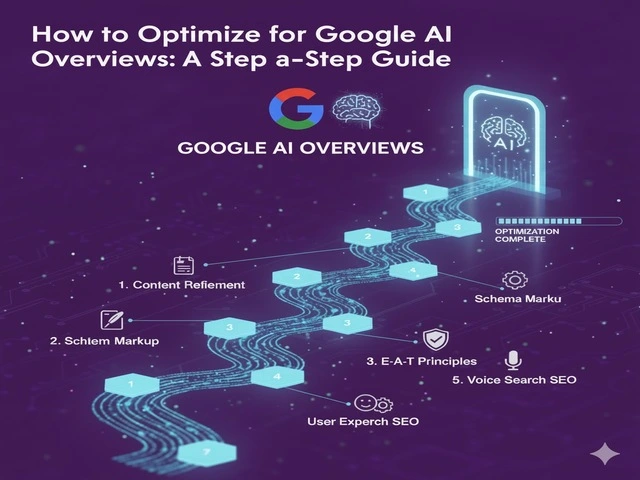
Optimizing for AI Overviews requires a multi-faceted approach that combines technical clarity with high-level content quality. The following strategies are proven methods to increase your chances of being cited as a source.
1. Prioritize Question-Based Content Architecture
AI Overviews are triggered by questions. Users type “how to,” “what is,” “why does,” and “compare” queries. Your content structure must mirror this conversational tone. Instead of writing a wall of text, break your content into distinct sections that directly answer specific questions.
Use H2 and H3 headings that are phrased as questions. For instance, instead of “Benefits of Optimization,” use “What Are the Benefits of AI Overview Optimization?” This structure helps the AI identify the exact segment of your content that answers the user’s query. This is the foundation of effective AI SEO Google AI Overviews Optimization.
2. Implement Structured Data for Enhanced Understanding
Schema markup is your direct line of communication to the AI. While the AI can read plain text, structured data removes ambiguity. Implement FAQPage schema, HowTo schema, and Article schema to explicitly tell Google what your content means.
This is particularly effective for the FAQ section of your article. When you mark up your FAQs, you increase the chance of appearing in the “People Also Ask” boxes and being used as a direct source in AI Overviews. The technical implementation of schema is a non-negotiable part of AI SEO Google AI Overviews Optimization.
3. Create “Listicle” and “Comparison” Content Formats
AI Overviews love lists. They are easy to parse and display. When a user asks for “best practices” or “top tools,” the AI generates a bulleted list. To get cited, your content should contain a clear, concise list that the AI can extract.
Similarly, comparison tables are highly favored. If the query involves “X vs Y,” the A Your content should include a detailed HTML table comparing features, prices, and pros and cons. This visual and structural clarity is a massive ranking factor for AI visibility.
Technical SEO: The Backbone of AI Visibility
While content is king, technical health is the crown. If Googlebot cannot crawl and index your page efficiently, your brilliant content will never be considered for an AI Overview. Technical SEO ensures that your content is accessible and understandable.
Core Web Vitals and Page Experience
Google has explicitly stated that page experience signals are used in ranking. While AI Overviews are generated by AI, the sources they cite are still subject to traditional ranking signals. A slow, clunky page with a high bounce rate signals to Google that the content is not valuable.
Focus on Largest Contentful Paint (LCP) under 2.5 seconds, First Input Delay (FID) under 100ms, and Cumulative Layout Shift (CLS) under 0.1. These metrics are part of the broader AI SEO Google AI Overviews Optimization strategy because they ensure your site is a reliable resource.
Content Freshness and Crawl Budget
AI Overviews prioritize current information. A page that was last updated in 2020 is less likely to be cited for a query about 2025 trends. You must implement a regular content refresh schedule. Update statistics, replace outdated examples, and add new sections to keep the content fresh.
Additionally, ensure your internal linking structure is logical. The AI uses links to discover related content. If your article on “AI SEO” links to your article on “Schema Markup,” the AI understands the relationship between those topics, strengthening your site’s overall authority.
Content Depth: The E-E-A-T Connection
Google’s quality raters use the E-E-A-T framework (Experience, Expertise, Authoritativeness, Trustworthiness) to evaluate content. The AI model is trained to mimic these raters. Therefore, your content must demonstrate all four pillars to be selected for an AI Overview.
Demonstrating Experience and Expertise
Generic content is easily ignored. You must provide unique insights that cannot be found elsewhere. Include original data, case studies, or personal anecdotes that prove you have hands-on experience with the topic. If you are writing about AI SEO, show a screenshot of a successful optimization you performed.
This “first-hand” experience is a differentiator. The AI looks for content that goes beyond surface-level definitions. It seeks out content that provides actionable, tested advice. This depth is what separates a cited source from a forgotten blog post.
Building Authoritativeness and Trust
Your author bio matters. Ensure every article has a clear author with credentials. Link to their LinkedIn profile or a portfolio that establishes their expertise. Furthermore, cite reputable sources within your content. Linking to.gov,.edu, or established industry journals increases your trust score.
Transparency is also key. Clearly state your sources for statistics. Do not hide affiliate links. A transparent page is a trustworthy page, and trust is the currency of AI SEO Google AI Overviews Optimization.
Common Mistakes That Block AI Citations
Many marketers are unknowingly sabotaging their chances of appearing in AI Overviews. Understanding these pitfalls is just as important as knowing the best practices.
Keyword Stuffing and Thin Content
The AI is sophisticated enough to detect keyword stuffing. If you repeat “AI SEO Google AI Overviews Optimization” unnaturally throughout the text, the A Write naturally. Use synonyms and related phrases. The AI understands semantics, so you do not need to force the exact match keyword.
Thin content is equally damaging. An AI Overview requires comprehensive answers. If your article is only 300 words, it lacks the depth needed to be a source. Aim for long-form content that covers the topic from every angle.
Ignoring the “People Also Ask” Box
The “People Also Ask” (PAA) box is a goldmine of AI Overview data. These questions are the exact queries the AI is trying to answer. If you ignore these questions in your content, you miss the mark. Scrape the PAA box for your target keyword and ensure you answer every single one of those questions within your article.
This alignment between PAA and AI Overviews is critical. The questions are often the same. By answering them clearly, you signal to the AI that your content is the most relevant result.
Practical Guide: How to Optimize an Existing Article
You do not need to start from scratch. You can retrofit your existing high-performing content to align with AI Overview requirements. Follow this step-by-step process to update your articles.
- Audit the SERP: Search for your target keyword and analyze the current AI Overview. What points does it make? What sources does it cite? Identify the gaps in your content.
- Rewrite the Introduction: The first 100 words are crucial. They must contain the main keyword and a direct answer to the query. The AI often pulls from the introduction for the summary.
- Add a “Key Takeaways” Box: Place a bulleted list of 3-5 key points immediately after the introduction. This gives the AI a quick reference point.
- Expand the FAQ Section: Add 5-10 specific questions and answers at the end of the article. Use the exact phrasing from the PAA box.
- Update Statistics: Replace any old data with 2024/2025 figures. Cite the source of the new data.
- Improve Readability: Break up long paragraphs. Use short sentences. Ensure a Grade 8 reading level for broad topics.
Measuring Success: KPIs for AI Visibility
Tracking your success in the AI Overview space requires new metrics. Traditional rankings are less relevant. Instead, focus on visibility and citation metrics.
| Metric | Traditional SEO | AI Overview Optimization |
|---|---|---|
| Primary KPI | Keyword Rank (Position 1-10) | Citation Presence (Cited or Not Cited) |
| Traffic Impact | High Click-Through Rate (CTR) | Low CTR but High Brand Impressions |
| Content Length | 1,000-1,500 words | 2,000+ words with deep sub-topics |
| Success Metric | Organic Sessions | Share of Voice in AI-generated answers |
You can track citations manually by searching your target keywords and checking if your domain appears in the source links of the AI Overview. Tools like Semrush and Ahrefs are beginning to offer AI Overview tracking features, but manual checks are still the most reliable method.
Important Notes on AI Overview Limitations
AI Overviews are not perfect. They can hallucinate or provide incorrect information. This is a risk for brands. If your content is cited in an AI Overview that contains a factual error, that error is associated with your brand.
To mitigate this, you must be extremely precise in your wording. Avoid ambiguous statements. The AI takes your text and paraphrases it. If your original text is vague, the AI’s paraphrase will be inaccurate. Clarity is your best defense against AI misrepresentation.
Furthermore, AI Overviews are not available for all queries. They are more common for informational queries than transactional ones. For “buy” or “near me” searches, traditional results still dominate. Your optimization strategy should reflect this split.
Frequently Asked Questions (FAQ)
How do I check if my content is in Google AI Overviews?
Perform a manual search for your target keyword. Scroll to the top of the SERP. If an AI Overview appears, look for the “Sources” icon or the link carousel. Click on it to see which URLs were used. If your URL is listed, you have been cited.
Does AI Overview optimization hurt traditional SEO rankings?
No. The strategies used for AI Overview optimization—improving content depth, technical speed, and schema markup—are the same strategies that improve traditional rankings. The two goals are aligned, not opposed.
What is the ideal content length for AI Overviews?
T Aim for 2,000 to 2,500 words. This allows you to cover the topic thoroughly and answer all secondary questions without being superficial.
Can small websites compete with big brands for AI Overview citations?
Yes. The AI does not prioritize domain authority as heavily as it prioritizes content clarity and relevance. A small blog with a perfectly structured, highly specific answer can beat a large publication with a generic overview.
How often should I update my content for AI Overviews?
Review your cornerstone content every 3-6 months. Check if the statistics are still current and if the AI Overview for your target keyword has changed. If the AI Overview has changed its structure, update your content to match the new format.
Conclusion: The Future of Search is AI-Driven
AI SEO Google AI Overviews Optimization is not a fleeting tactic; it is the new standard for organic search. The days of writing for a human reader alone are over. You must now write for a machine that reads, summarizes, and redistributes your content to millions of users.
The key takeaway is to focus on clarity, structure, and verifiable facts. Build content that answers questions directly, supports claims with data, and loads instantly. By implementing the strategies outlined in this guide, you position your brand as a primary knowledge source in the AI era. The brands that adapt now will own the search results of tomorrow, while those that cling to outdated methods will be left invisible in the AI-generated void.
Xem thêm:
- AI SEO Semantic Keywords: The Complete Guide to Smarter Content Optimization
- AI SEO Optimization: The Complete Guide to Dominating Search with Artificial Intelligence
- AI SEO Chatbots: The Complete Guide to Automating Search Optimization With Conversational Intelligence
- AI SEO GEO Checklist: The Complete Guide to Generative Engine Optimization
- AI Content Marketing: Transform Your Strategy Without Losing the Human Touch
Bài viết cùng chủ đề:

AI SEO SEO Automation with Make: The Complete Workflow Guide

AI SEO SEO Automation with Zapier: The Complete Workflow Guide

AI SEO SEO Automation with n8n: The Complete Workflow Guide
AI SEO SEO Automation with Gemini: The Complete Guide to Scaling Organic Growth

AI SEO SEO Automation with Claude: The Complete Guide to Scaling Content in 2025

AI SEO SEO Automation with ChatGPT: The Complete Playbook for 2025

AI SEO & SEO Automation for Affiliate Sites: The 2025 Playbook for Passive Income Growth
AI SEO & SEO Automation for Bloggers: The Complete Guide to Scaling Your Content

AI SEO & SEO Automation for Agencies: The Complete 2025 Playbook

AI SEO and SEO Automation for Ecommerce: The Complete Playbook for 2025

AI SEO & SEO Automation for WordPress: The Complete Playbook for 2025
AI SEO SEO Automation Strategy: The Complete Playbook for 2025

Mastering the AI SEO SEO Automation Process: A Complete Guide to Scaling Organic Growth
AI SEO SEO Automation System: The Complete Guide to Scaling Organic Growth in 2025
AI SEO SEO Automation Platform: The Complete Guide to Scaling Organic Growth in 2025
AI SEO SEO Automation Software: The Complete Guide to Scaling Organic Growth in 2025















