
No products in the cart.
AI SEO Keyword Forecasting: The Complete Guide to Predicting Search Trends

10
Aug
Aug
AI SEO keyword forecasting has transformed how digital marketers plan their content strategies. Instead of relying on gut feelings or historical data alone, modern SEO professionals use artificial intelligence to predict which keywords will gain traction, when search volumes will spike, and how competitive landscapes will shift. This guide explains everything you need to know about AI-driven keyword forecasting, from core concepts to practical implementation strategies that deliver measurable results.
What Is AI SEO Keyword Forecasting?
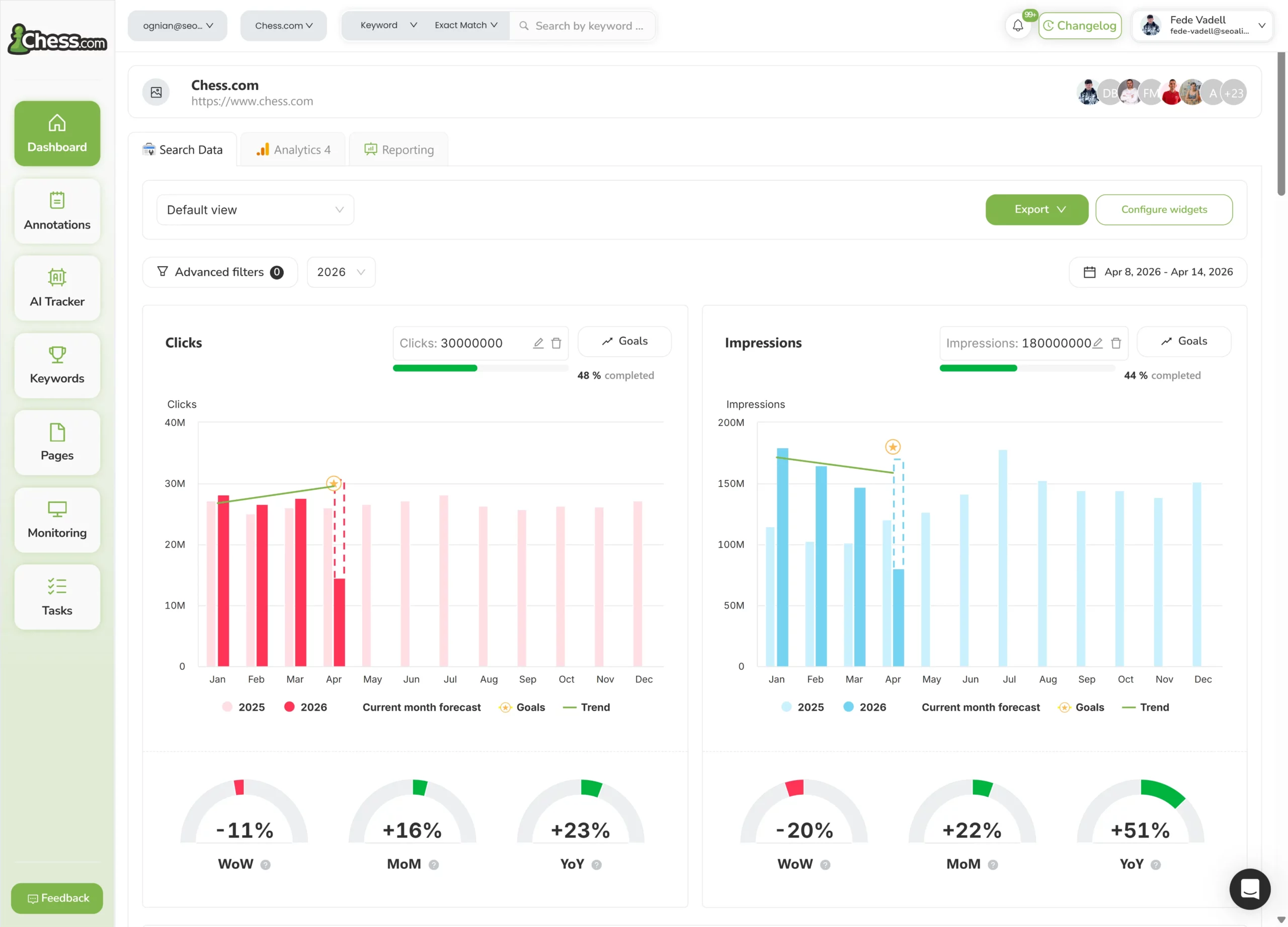
AI SEO keyword forecasting is the process of using machine learning algorithms and predictive analytics to estimate future search demand, keyword performance, and ranking potential. Traditional keyword research tools show you what happened in the past. AI forecasting goes further by analyzing patterns, seasonality, emerging topics, and user behavior shifts to project what will happen next.
The core difference lies in the analytical approach. Standard tools calculate average monthly search volumes from historical data. AI systems process millions of data points simultaneously, identifying correlations between search behavior, news cycles, social media trends, and even economic indicators. This allows marketers to anticipate demand before it peaks, positioning content ahead of the curve.
How AI Models Predict Keyword Performance
AI forecasting models rely on several data inputs to generate predictions. These include historical search volume trends, click-through rate patterns, competitor ranking movements, and semantic relationships between keywords. Machine learning algorithms detect recurring cycles and anomalies, then project those patterns forward with confidence intervals.
Natural language processing (NLP) plays a critical role in understanding keyword intent. AI systems classify whether a query is informational, transactional, or navigational, then forecast how that intent distribution might change over time. For example, a keyword like “best running shoes” might shift from informational to transactional during holiday shopping seasons, affecting conversion predictions.
Why AI Keyword Forecasting Matters for SEO Strategy
Accurate keyword forecasting directly impacts budget allocation, content production timelines, and revenue projections. When you know which keywords are rising in demand, you can create content before competitors saturate the search results. This first-mover advantage often translates into higher rankings, more backlinks, and sustained organic traffic growth.
Forecasting also improves resource efficiency. Instead of spreading content efforts across hundreds of keywords blindly, AI helps you focus on terms with the highest growth potential. This targeted approach reduces wasted effort and accelerates time-to-rank for priority pages.
Key Benefits of Predictive Keyword Analytics
- Early identification of emerging search trends before they become competitive
- More accurate traffic and revenue projections for stakeholder reporting
- Improved content calendar planning aligned with seasonal demand spikes
- Better budget allocation across SEO, PPC, and content marketing channels
- Reduced risk of investing in declining keywords with shrinking search volumes
- Forecasts should inform decisions, not dictate them. Combine AI predictions with human judgment and domain expertise.
- Document your forecasting methodology and assumptions. This transparency builds stakeholder trust and facilitates model improvements.
- Review forecast accuracy quarterly and adjust models as needed. Continuous refinement is the key to sustained accuracy.
- Integrate forecasting with your broader marketing analytics stack for a complete view of performance.
Core Components of an AI Keyword Forecasting System
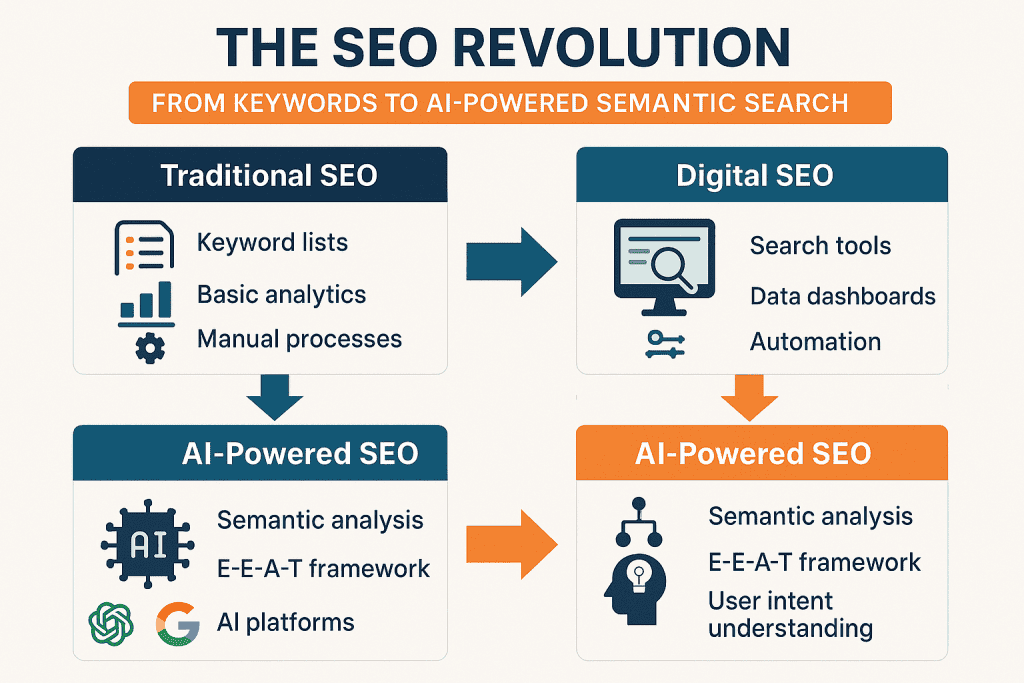
Understanding the technical building blocks helps you evaluate forecasting tools and build internal processes. Every AI forecasting system relies on three primary components: data ingestion, model training, and prediction output.
Data Ingestion and Integration
Forecasting systems pull data from multiple sources. Google Search Console provides actual impressions and clicks. Keyword research tools supply search volume history. Social listening platforms contribute trend signals. News APIs track media mentions. The more diverse the data inputs, the more accurate the predictions become.
Data quality matters more than quantity. Clean, consistent datasets with proper date stamps and metadata produce reliable forecasts. Many enterprise SEO platforms now offer direct integrations with these data sources, automating the ingestion process.
Machine Learning Models for Search Demand Prediction
Time series models like ARIMA and Prophet handle seasonality and trend decomposition. Regression models identify relationships between external factors and search volume. Neural networks, particularly LSTM architectures, excel at capturing complex patterns in sequential data. Most modern tools combine multiple model types to improve accuracy.
Model retraining frequency affects performance. Weekly retraining captures recent shifts without overreacting to noise. Monthly retraining provides stability for long-term planning. The best systems balance responsiveness with consistency.
Confidence Scoring and Uncertainty Estimation
Reliable forecasting tools provide confidence intervals alongside predictions. A keyword might show a projected 20% growth, but the confidence range could span from 5% to 35%. Understanding this uncertainty helps you make risk-adjusted decisions. High-confidence predictions warrant aggressive content investment, while low-confidence forecasts suggest a test-and-learn approach.
How to Implement AI Keyword Forecasting in Your Workflow
Implementing AI forecasting requires a structured approach. Start with clear objectives, then select tools that match your data infrastructure and team capabilities.
Step 1: Define Forecasting Objectives
Determine what decisions the forecasts will inform. Are you planning quarterly content production? Setting annual traffic targets? Allocating PPC budgets? Different objectives require different forecasting horizons. Short-term forecasts (1-3 months) suit tactical planning, while long-term forecasts (6-12 months) support strategic resource allocation.
Step 2: Audit Your Current Keyword Data
Review the quality and completeness of your existing keyword data. Identify gaps in historical coverage, inconsistent tracking, or missing segmentation. Clean data ensures accurate model training. If your historical data is sparse, consider supplementing with third-party keyword databases that offer longer time series.
Step 3: Select the Right Forecasting Tools
The market offers several AI-powered keyword forecasting solutions. Enterprise platforms like Semrush and Ahrefs have integrated predictive features. Specialized tools like Keyword Insights and Exploding Topics focus specifically on trend detection. Custom solutions using Python libraries like Prophet or scikit-learn offer maximum flexibility for teams with data science capabilities.
| Tool Type | Best For | Key Features |
|---|---|---|
| All-in-one SEO platforms | Integrated workflows | Forecasting combined with rankings, audits, and competitor analysis |
| Trend detection tools | Early signal identification | Real-time monitoring of emerging topics and viral content |
| Custom ML solutions | Advanced customization | Full control over model parameters and data sources |
Step 4: Validate Forecasts Against Historical Accuracy
Before trusting predictions, test the system against known outcomes. Take historical data from 12 months ago, run the forecasting model, and compare predictions to actual results. This backtesting process reveals model biases and accuracy levels. Adjust parameters until backtest performance meets your standards.
Step 5: Integrate Forecasts into Content Planning
Forecasts only deliver value when they influence action. Build a workflow where forecasted keywords feed directly into your content calendar. Assign priority scores based on predicted growth and business relevance. Schedule content production to align with projected demand peaks.
Practical Applications of AI Keyword Forecasting
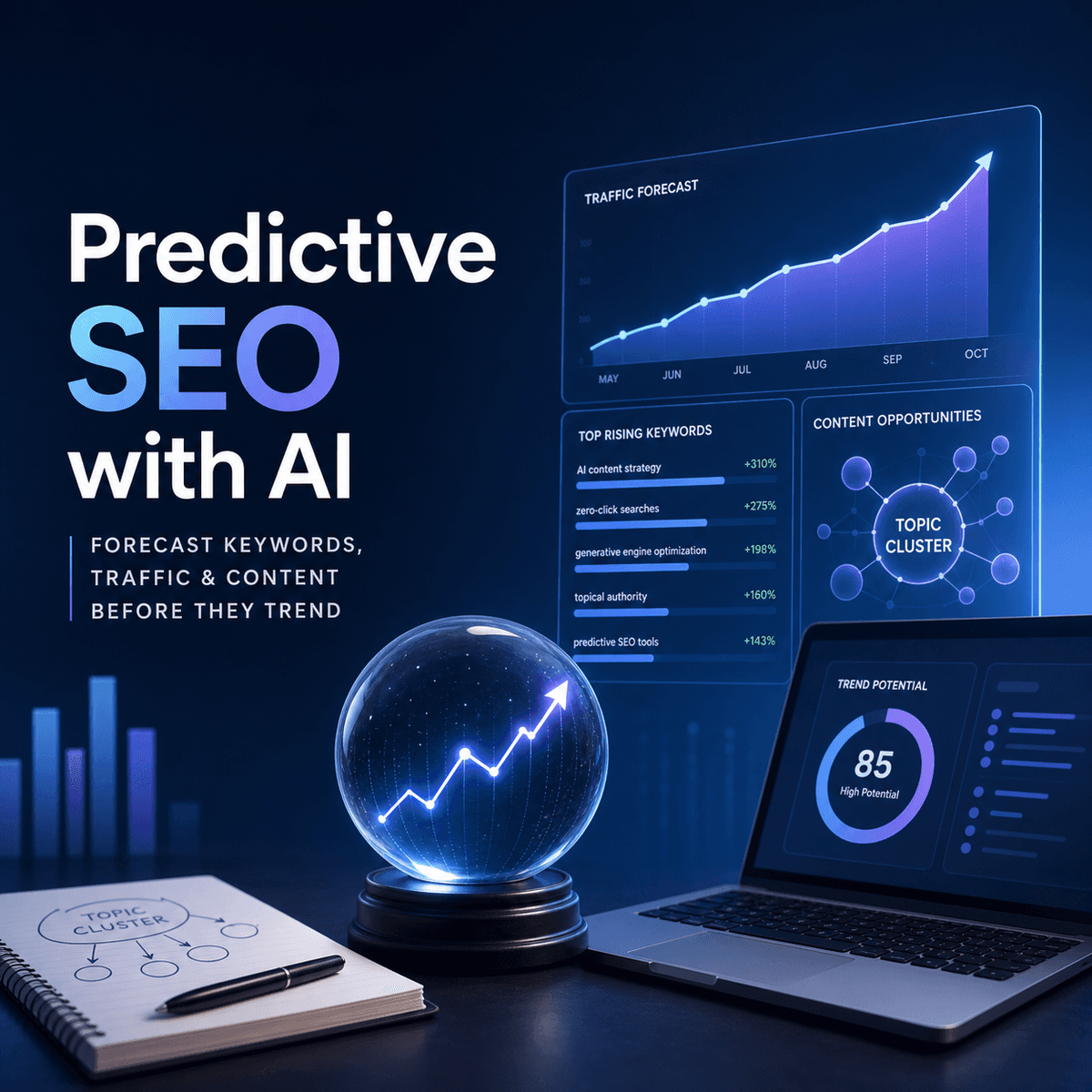
AI forecasting applies across multiple SEO activities, from content creation to technical optimization. Understanding these applications helps you maximize the value of your forecasting investment.
Content Clustering and Topic Authority Building
Forecasting identifies which subtopics within your niche are gaining search momentum. This allows you to build comprehensive content clusters around rising themes before competitors catch on. Each piece of content targets a forecasted keyword, creating a web of interlinked pages that establish topical authority.
Seasonal Campaign Planning
Retailers, travel companies, and B2B firms all experience seasonal search fluctuations. AI forecasting quantifies the timing and magnitude of these peaks with greater precision than manual analysis. Marketing teams can prepare landing pages, adjust budgets, and schedule promotions to coincide with maximum search demand.
International SEO and Market Expansion
Forecasting models can analyze search trends across different countries and languages. This helps international SEO teams identify which markets show growing demand for specific products or topics. Expansion decisions become data-driven rather than speculative.
Limitations and Challenges of AI Keyword Forecasting
AI forecasting is powerful but not infallible. Understanding its limitations prevents over-reliance and unrealistic expectations.
Data Availability Constraints
Google does not provide exact search volume data. Tools estimate volumes based on sampling and statistical modeling. These estimates carry inherent error margins. Forecasting amplifies these errors when projecting into the future. Always treat predicted volumes as directional rather than absolute.
Black Swan Events
Unexpected events like global pandemics, algorithm updates, or viral social media moments can disrupt even the most sophisticated forecasting models. These events introduce unprecedented patterns that historical data cannot predict. Maintain flexibility in your content plans to adapt to sudden shifts.
Model Drift and Degradation
Search behavior evolves continuously. Models trained on historical patterns may lose accuracy as user preferences change. Regular model retraining and performance monitoring are essential to maintain forecast reliability over time.
Common Mistakes in AI Keyword Forecasting
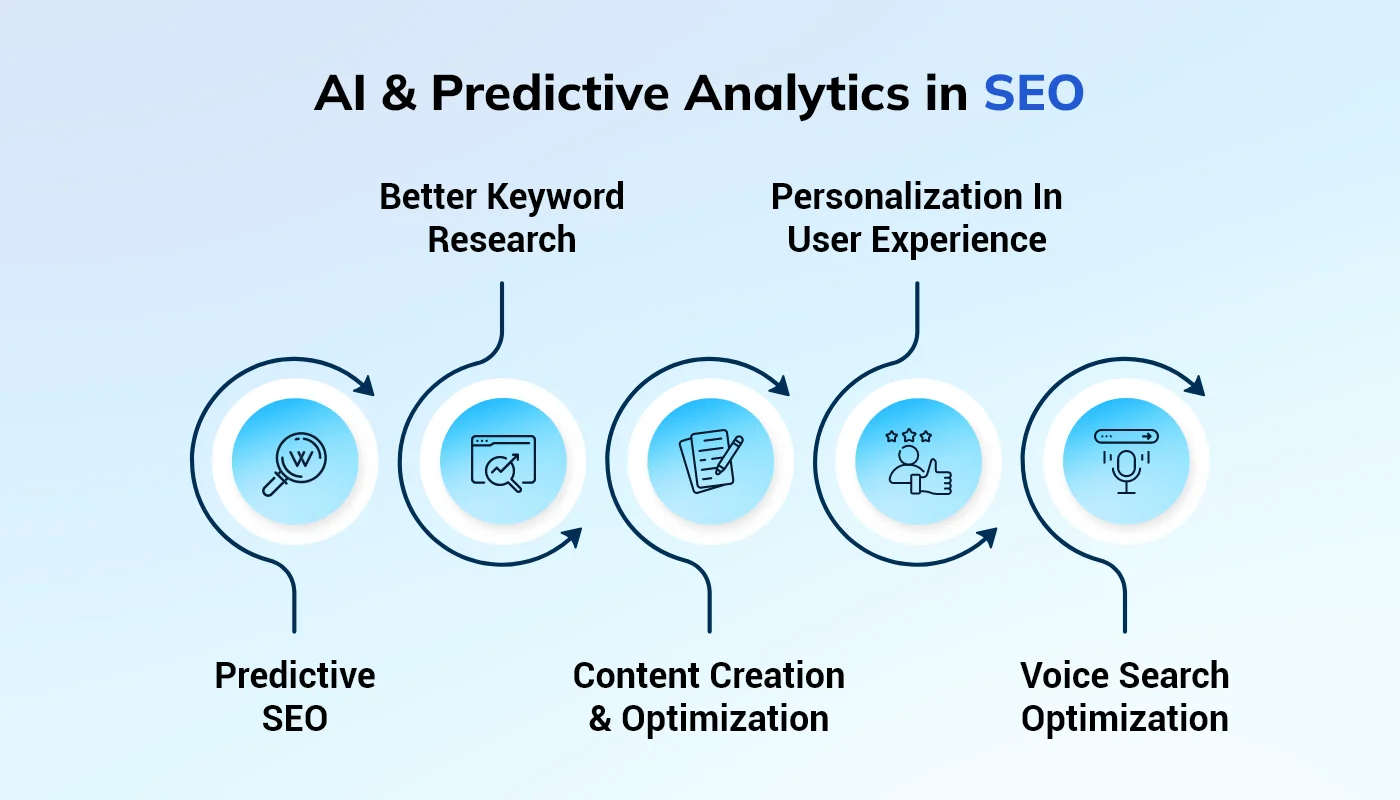
Avoiding these frequent errors improves the accuracy and usefulness of your forecasting efforts.
Ignoring Search Intent Shifts
Search volume predictions mean little if the underlying intent changes. A keyword might maintain steady volume while shifting from informational to commercial intent. Monitor SERP features and content formats to detect intent evolution alongside volume forecasts.
Overfitting to Recent Trends
Short-term spikes can distort forecasts if models weight recent data too heavily. A keyword might surge due to a temporary news event, leading to inflated long-term projections. Use smoothing techniques and longer training windows to balance responsiveness with stability.
Neglecting Competitor Actions
Forecasting search demand does not account for competitive responses. If ten competitors all target the same forecasted keyword, your ranking probability decreases regardless of demand growth. Incorporate competitive intelligence into your prioritization decisions.
Important Notes for Successful Implementation
Several practical considerations determine whether AI keyword forecasting delivers tangible business value.
Frequently Asked Questions

How accurate is AI SEO keyword forecasting?
Accuracy varies based on data quality, model sophistication, and forecasting horizon. Well-implemented systems typically achieve 70-90% accuracy for 3-month projections. Longer horizons reduce accuracy due to increasing uncertainty. Backtesting against historical data provides the best estimate of your specific system’s accuracy.
What is the difference between keyword research and keyword forecasting?
Keyword research analyzes current and historical data to identify viable targets. Forecasting uses predictive models to project future performance. Research answers “what keywords should we target now?” while forecasting answers “what keywords should we target next quarter?” Both are complementary components of a complete SEO strategy.
Can AI forecasting replace traditional SEO tools?
AI forecasting augments rather than replaces traditional tools. You still need rank tracking, site audits, and competitor analysis. Forecasting adds a predictive layer that helps you allocate resources more effectively. Most comprehensive SEO platforms now include forecasting features alongside their traditional capabilities.
How often should I update my keyword forecasts?
Monthly updates work well for most businesses. This cadence captures emerging trends without overreacting to short-term noise. High-velocity industries like news or fashion may require weekly updates. Low-velocity B2B niches might only need quarterly reviews.
What data sources improve forecast accuracy?
Google Search Console provides the most reliable first-party data. Supplement with Google Trends for broader pattern recognition, social media analytics for early signals, and industry reports for contextual factors. The combination of first-party and third-party data produces the most robust predictions.
Conclusion
AI SEO keyword forecasting represents a significant advancement in search marketing strategy. By leveraging machine learning to predict search demand, marketers can allocate resources more efficiently, capture emerging opportunities earlier, and build content strategies grounded in data-driven projections. The technology has matured to the point where accessible tools deliver meaningful accuracy improvements over traditional methods.
Success requires more than just adopting a forecasting tool. It demands clean data infrastructure, clear decision-making frameworks, and a commitment to continuous model refinement. Teams that integrate forecasting into their core planning processes gain a substantial competitive advantage in organic search. Start with a pilot project focused on your most important business keywords, measure the accuracy improvements, and scale from there. The future of SEO belongs to those who can see it coming.
Xem thêm:
- AI SEO SEO Automation Platform: The Complete Guide to Scaling Organic Growth in 2025
- WP Trove Content Generator: The Complete Guide to Automating Your WordPress Publishing
- AI SEO Entity Mapping: The Complete Guide to Future-Proofing Your Search Rankings
- LLM Optimization: The Complete Guide to Boosting Speed, Accuracy, and Cost Efficiency
- AI SEO Knowledge Panel: The Complete Guide to Dominating Search Visibility
Bài viết cùng chủ đề:

AI SEO SEO Automation with Make: The Complete Workflow Guide

AI SEO SEO Automation with Zapier: The Complete Workflow Guide

AI SEO SEO Automation with n8n: The Complete Workflow Guide
AI SEO SEO Automation with Gemini: The Complete Guide to Scaling Organic Growth

AI SEO SEO Automation with Claude: The Complete Guide to Scaling Content in 2025

AI SEO SEO Automation with ChatGPT: The Complete Playbook for 2025

AI SEO & SEO Automation for Affiliate Sites: The 2025 Playbook for Passive Income Growth
AI SEO & SEO Automation for Bloggers: The Complete Guide to Scaling Your Content

AI SEO & SEO Automation for Agencies: The Complete 2025 Playbook

AI SEO and SEO Automation for Ecommerce: The Complete Playbook for 2025

AI SEO & SEO Automation for WordPress: The Complete Playbook for 2025
AI SEO SEO Automation Strategy: The Complete Playbook for 2025

Mastering the AI SEO SEO Automation Process: A Complete Guide to Scaling Organic Growth
AI SEO SEO Automation System: The Complete Guide to Scaling Organic Growth in 2025
AI SEO SEO Automation Platform: The Complete Guide to Scaling Organic Growth in 2025
AI SEO SEO Automation Software: The Complete Guide to Scaling Organic Growth in 2025















