
No products in the cart.
AI SEO Keyword Mapping: The Complete Guide to Smarter Content Planning

10
Aug
Aug
AI SEO keyword mapping has transformed how digital marketers approach content strategy. Traditional keyword mapping involved manually sorting terms into spreadsheets, a process that consumed hours and often resulted in outdated structures. With artificial intelligence, SEO professionals now automate the discovery of semantic relationships, search intent classification, and content gap analysis. This guide explores how AI-powered tools reshape keyword mapping, delivering more accurate topical authority and higher search visibility. You will learn practical workflows, real-world examples, and the exact steps to implement AI SEO keyword mapping in your content pipeline.
What Is AI SEO Keyword Mapping?
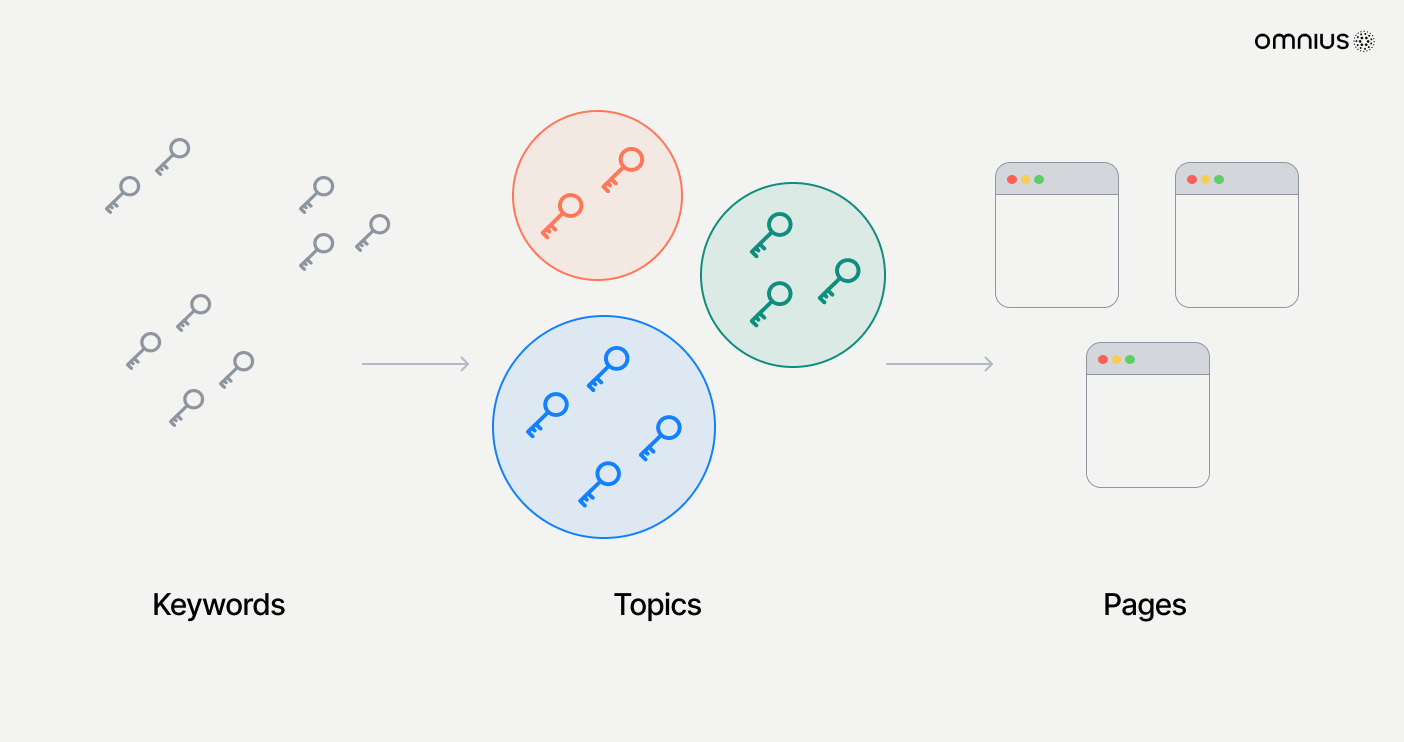
AI SEO keyword mapping is the process of using machine learning algorithms and natural language processing to organize keywords into structured clusters that align with specific pages on your website. Unlike manual methods, AI analyzes vast datasets from search engine result pages, user behavior signals, and semantic databases to determine which keywords belong together and which page should target them.
The core objective remains the same as traditional mapping: assign each keyword to a relevant URL to avoid cannibalization and maximize topical relevance. However, AI adds a layer of predictive intelligence. It identifies patterns in how search engines interpret queries, understands user intent at a granular level, and continuously updates mappings based on performance data.
How AI Differs from Manual Keyword Mapping
Manual mapping relies on human judgment, spreadsheet sorting, and basic metrics like search volume and difficulty. AI mapping introduces several distinct advantages:
- Semantic understanding: AI recognizes synonyms, related concepts, and entity relationships that humans might miss.
- Intent classification: Machine learning models categorize queries into informational, navigational, transactional, or commercial investigation intent with high accuracy.
- Dynamic updates: AI systems adjust mappings as search trends shift, whereas static spreadsheets become stale quickly.
- Scale: AI processes tens of thousands of keywords in minutes, a task that would take a team weeks to complete manually.
- Time efficiency: What takes days manually is completed in hours, freeing your team for strategic tasks.
- Accuracy: AI reduces human error in grouping and intent classification, leading to more effective targeting.
- Scalability: Large e-commerce sites and content publishers can manage millions of keywords without additional headcount.
- Improved topical authority: By mapping related keywords to the same page, you create comprehensive resources that search engines reward.
- Better internal linking: AI mapping reveals relationships between clusters, guiding anchor text and link placement.
- Adaptability: AI systems learn from performance data, automatically refining mappings to favor what works.
- Data quality dependency: AI models are only as good as the data they train on. Inaccurate or incomplete keyword data leads to flawed mappings.
- Over-automation risks: Blindly following AI suggestions without human oversight can result in unnatural content structures.
- Cost: Advanced AI SEO tools carry significant subscription fees, which may be prohibitive for small businesses.
- Black box problem: Some AI tools do not explain why they made certain mapping decisions, making it difficult to troubleshoot issues.
- Contextual nuance: AI may miss subtle brand-specific contexts that a human editor would catch.
- Does the cluster match the page’s primary topic?
- Does the page currently rank for any keywords in the cluster?
- What is the page’s current authority and traffic?
- Does the cluster contain commercial intent keywords that align with conversion goals?
- Combine AI with human expertise: AI provides the data-driven foundation, but your knowledge of the business, audience, and competitive landscape adds essential context.
- Focus on topical authority: Use AI mapping to build comprehensive resource hubs, not just to chase individual keywords.
- Integrate with content operations: Your mapping should feed directly into your editorial calendar and content briefs for maximum impact.
- Track performance metrics: Measure not just rankings but also organic conversions, engagement, and revenue per mapped cluster.
- Stay updated on AI capabilities: The field evolves rapidly, so periodically reassess your tools and workflows.
Why AI SEO Keyword Mapping Matters in 2025
Search engines have evolved from matching exact phrases to understanding user intent and semantic context. Google’s algorithms, including BERT and MUM, prioritize content that comprehensively covers a topic. AI SEO keyword mapping aligns your content architecture with this reality by ensuring each page targets a coherent cluster of related terms rather than isolated keywords.
The practical impact is significant. Websites that implement AI-driven mapping report higher rankings for long-tail queries, improved click-through rates, and reduced keyword cannibalization. Additionally, AI mapping supports programmatic SEO efforts, where thousands of pages need structured keyword assignments without manual intervention.
Core Components of AI SEO Keyword Mapping
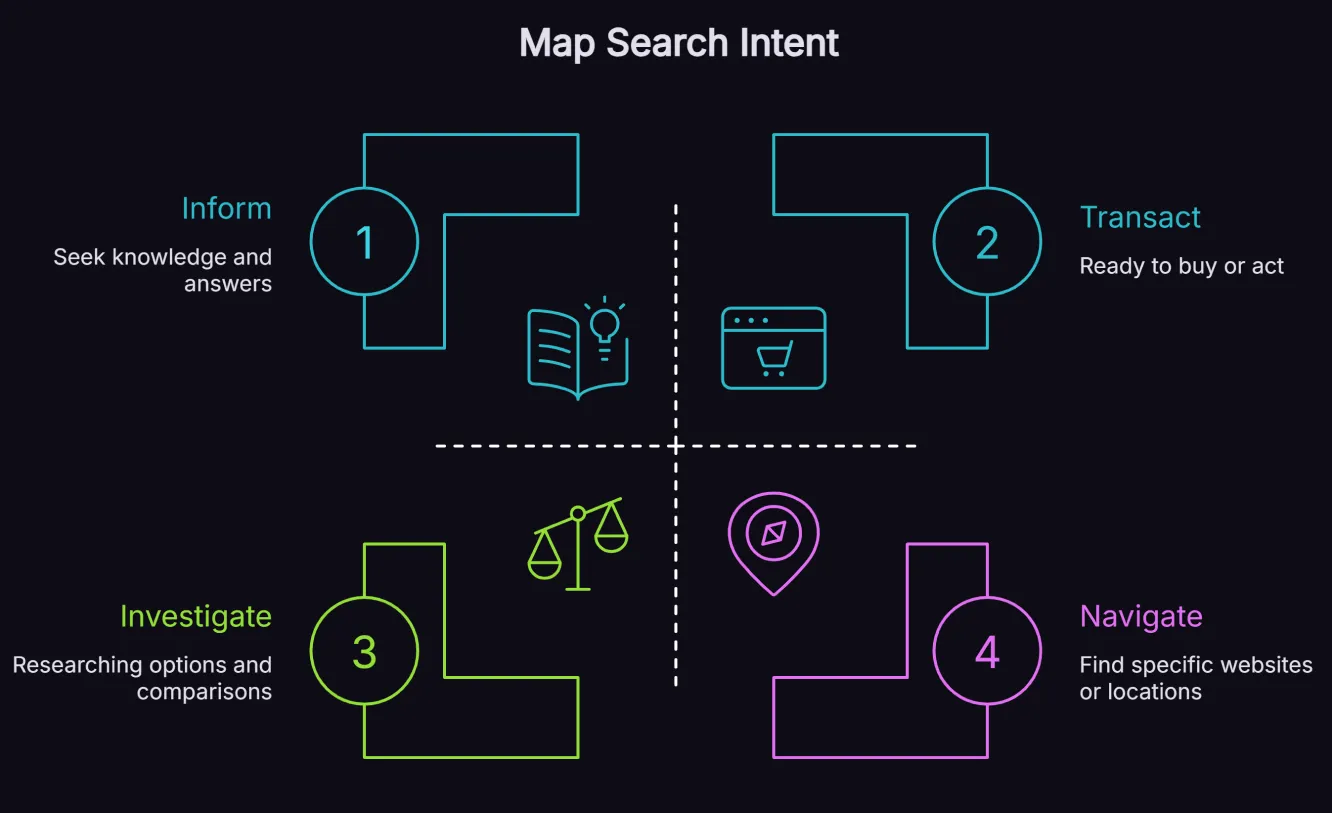
Understanding the building blocks of AI-driven mapping helps you evaluate tools and design effective workflows. The process typically involves four stages:
1. Data Collection and Enrichment
AI tools aggregate keyword data from multiple sources: Google Search Console, keyword research platforms, competitor analysis, and internal site search logs. They enrich this data with additional metrics like SERP features, click-through rates, and seasonal trends. The enrichment phase is critical because raw keyword lists lack the contextual information needed for intelligent grouping.
2. Semantic Clustering
Using natural language processing, AI groups keywords into clusters based on semantic similarity. For example, “best running shoes for flat feet” and “arch support sneakers for overpronation” would be clustered together because they share the same search intent and topical relevance. The AI considers factors like co-occurrence in top-ranking pages, entity relationships, and user behavior patterns.
3. Intent Classification
Each cluster receives an intent label. The AI analyzes the language patterns in queries to determine whether users are looking for information, ready to purchase, or comparing options. This classification ensures that a product page does not target informational keywords and vice versa.
4. URL Assignment and Prioritization
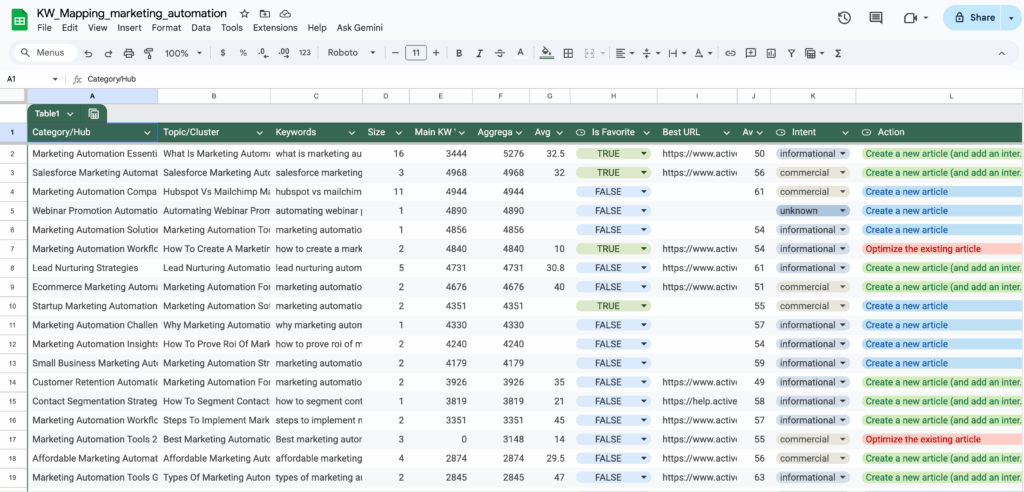
Finally, the AI maps each cluster to a specific URL on your site. It considers the existing content structure, page authority, and conversion potential. The system also prioritizes clusters based on business value, suggesting which pages need creation, which need optimization, and which should be consolidated.
Key Benefits of AI SEO Keyword Mapping
Implementing AI in your keyword mapping workflow delivers measurable improvements across several dimensions:
Limitations and Challenges to Consider
AI SEO keyword mapping is not without its drawbacks. Being aware of these challenges helps you set realistic expectations and implement safeguards:
AI SEO Keyword Mapping vs. Traditional Mapping: A Comparison
| Aspect | Traditional Keyword Mapping | AI SEO Keyword Mapping |
|---|---|---|
| Processing speed | Days to weeks for large sets | Minutes to hours |
| Semantic understanding | Limited to human knowledge | Deep NLP-based analysis |
| Intent classification | Manual, often inconsistent | Automated, high accuracy |
| Scalability | Poor for large sites | Excellent for any scale |
| Update frequency | Quarterly or yearly | Continuous or on-demand |
| Cost | Labor-intensive, high human cost | Software subscription, lower labor |
| Error rate | Higher due to human fatigue | Lower, but dependent on data quality |
Practical Applications: How to Implement AI SEO Keyword Mapping
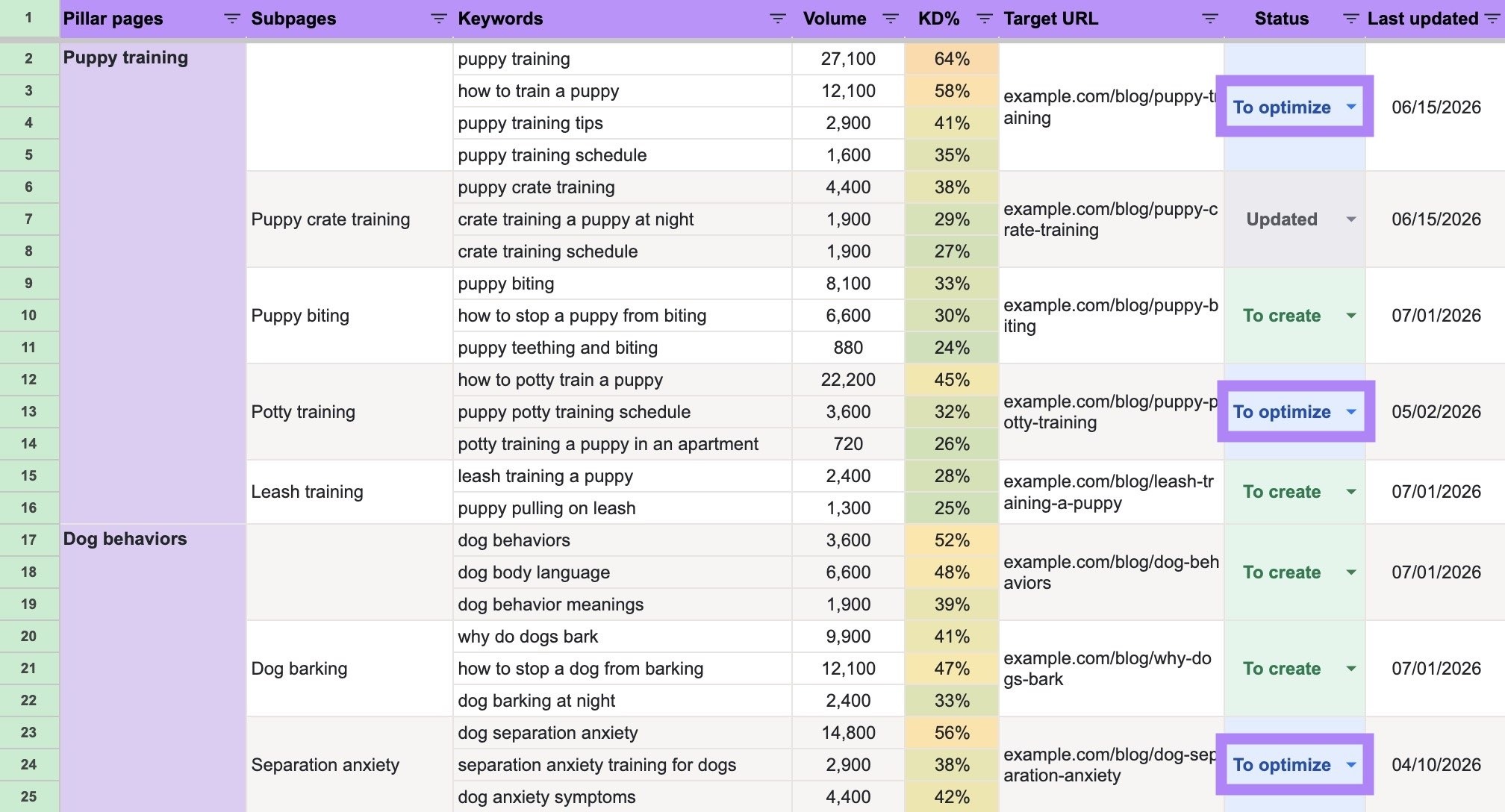
Implementing AI SEO keyword mapping requires a structured approach. The following workflow outlines the steps from tool selection to ongoing optimization.
Step 1: Choose the Right AI Tool
Several platforms offer AI-driven keyword mapping capabilities. Popular options include Clearscope, MarketMuse, Surfer SEO, and specialized tools like Keyword Insights AI. Evaluate tools based on your specific needs: content volume, budget, integration with existing SEO software, and the sophistication of their clustering algorithms. Most tools offer free trials, so test two or three before committing.
Step 2: Export and Clean Your Keyword Data
Start with a comprehensive keyword list from Google Search Console, Ahrefs, SEMrush, or similar sources. Remove duplicates, filter out irrelevant terms, and ensure your data includes metrics like impressions, clicks, and position. Clean data produces better AI clustering results.
Step 3: Run the AI Clustering Process
Upload your keyword list to the chosen tool. Configure the clustering parameters: similarity threshold, intent grouping, and the number of clusters you expect. Let the AI process the data. Review the generated clusters for logical coherence. Most tools allow manual adjustments, so refine any clusters that seem misaligned with your business logic.
Step 4: Map Clusters to URLs
For each cluster, identify the most appropriate existing page or determine if a new page is needed. Consider the following criteria:
Create a mapping document that lists each cluster, its assigned URL, the primary keyword, and secondary keywords. This document becomes your content roadmap.
Step 5: Optimize or Create Content
For existing pages, update the content to naturally incorporate the mapped keywords. Ensure the primary keyword appears in the title tag, H1, and first paragraph. Use secondary keywords in subheadings and body text where they fit naturally. For new pages, brief your writers using the cluster data, providing clear guidance on the subtopics to cover.
Step 6: Monitor and Iterate
AI SEO keyword mapping is not a one-time task. Review your rankings and organic traffic monthly. Feed performance data back into your AI tool to refine future mappings. Pay attention to pages that gain or lose visibility and adjust their keyword assignments accordingly.
Common Mistakes in AI SEO Keyword Mapping and How to Avoid Them
Even with advanced AI, mistakes happen. Recognizing these pitfalls helps you maintain a high-performing keyword architecture.
Mistake 1: Over-Clustering
Grouping too many keywords into a single cluster dilutes page focus. Search engines may struggle to understand the page’s primary topic. Avoid this by setting a reasonable cluster size limit, typically 10-20 keywords per cluster for most niches.
Mistake 2: Ignoring Search Intent Nuances
AI tools classify intent, but they may miss subtle differences. For example, “best running shoes” and “running shoes for beginners” have different intents even though they are semantically related. Review intent labels manually for high-value clusters.
Mistake 3: Mapping Keywords to Weak Pages
Assigning a high-value cluster to a page with low authority or thin content wastes the opportunity. Strengthen the page first or create a new, more robust page for the cluster.
Mistake 4: Failing to Update Mappings
Search trends change, and your mappings should evolve. Set a recurring schedule, such as quarterly, to re-run your AI clustering with fresh data.
Mistake 5: Neglecting Cannibalization Checks
AI reduces but does not eliminate keyword cannibalization. After mapping, verify that no two pages target the same primary keyword. Use site: searches or SEO tools to check for overlapping rankings.
Important Notes for Successful AI SEO Keyword Mapping

Several considerations ensure your AI mapping efforts deliver sustainable results:
Frequently Asked Questions
What is the difference between keyword mapping and keyword clustering?
Keyword clustering is the process of grouping related keywords based on semantic similarity and search intent. Keyword mapping takes clustering a step further by assigning each cluster to a specific URL on your website. Clustering answers the question of which keywords belong together, while mapping answers where those keywords should live on your site.
How long does AI SEO keyword mapping take?
For a typical website with 5,000 to 10,000 keywords, AI-powered mapping takes between 30 minutes and a few hours, depending on the tool and the complexity of your site structure. Manual mapping of the same dataset would take several days. Larger sites with hundreds of thousands of keywords may require a few hours of processing time.
Can AI SEO keyword mapping replace human SEO experts?
No. AI automates data processing and pattern recognition, but human expertise remains essential for strategic decisions, creative content development, and understanding nuanced business goals. The best results come from a collaboration where AI handles the heavy lifting and humans provide oversight and direction.
What tools offer AI SEO keyword mapping features?
Several platforms provide this functionality. MarketMuse and Clearscope focus on content optimization and semantic analysis. Surfer SEO offers clustering features. Keyword Insights AI specializes in large-scale clustering and intent classification. Ahrefs and SEMrush have introduced AI-assisted features in their keyword research modules. Each tool has different strengths, so choose based on your specific requirements.
How often should I update my keyword mappings?
For most businesses, a quarterly review is sufficient. However, if you operate in a fast-moving industry or launch new products frequently, consider monthly updates. Additionally, review mappings whenever you notice significant ranking drops or traffic changes on key pages.
Does AI SEO keyword mapping work for local SEO?
Yes. AI mapping is particularly useful for local businesses with multiple locations. The AI can cluster keywords by geographic modifiers, service types, and local intent, then map them to location-specific landing pages. This approach improves visibility in local search results and reduces duplication across location pages.
Conclusion
AI SEO keyword mapping represents a fundamental shift in how content strategies are built and maintained. By leveraging machine learning for semantic analysis, intent classification, and scalable clustering, you gain a significant competitive advantage. The technology eliminates tedious manual work, reduces errors, and provides insights that would be impossible to derive from spreadsheets alone.
The key to success lies in treating AI as a powerful assistant rather than a replacement for strategic thinking. Combine the efficiency of AI with your editorial judgment, continuously refine your mappings based on performance data, and keep your content architecture aligned with evolving search behavior. Websites that master this balance will achieve stronger topical authority, higher rankings, and more meaningful organic traffic growth.
Start small by testing AI mapping on one section of your website, measure the results, and then scale your efforts. The future of SEO belongs to those who embrace intelligent automation while maintaining a human-centric approach to content quality.
Xem thêm:
- AI SEO for Ecommerce: The Complete Guide to Outranking Competitors in 2025
- AI SEO Evergreen Content: The Complete Playbook for Sustainable Rankings
- AI SEO Natural Language Search: The Complete Guide to Ranking in the Conversational Era
- AI SEO Featured Snippet Generator: The Complete Guide to Winning Position Zero
- LLM Optimization: The Complete Guide to Boosting Speed, Accuracy, and Cost Efficiency
Bài viết cùng chủ đề:

AI SEO SEO Automation with Make: The Complete Workflow Guide

AI SEO SEO Automation with Zapier: The Complete Workflow Guide

AI SEO SEO Automation with n8n: The Complete Workflow Guide
AI SEO SEO Automation with Gemini: The Complete Guide to Scaling Organic Growth

AI SEO SEO Automation with Claude: The Complete Guide to Scaling Content in 2025

AI SEO SEO Automation with ChatGPT: The Complete Playbook for 2025

AI SEO & SEO Automation for Affiliate Sites: The 2025 Playbook for Passive Income Growth
AI SEO & SEO Automation for Bloggers: The Complete Guide to Scaling Your Content

AI SEO & SEO Automation for Agencies: The Complete 2025 Playbook

AI SEO and SEO Automation for Ecommerce: The Complete Playbook for 2025

AI SEO & SEO Automation for WordPress: The Complete Playbook for 2025
AI SEO SEO Automation Strategy: The Complete Playbook for 2025

Mastering the AI SEO SEO Automation Process: A Complete Guide to Scaling Organic Growth
AI SEO SEO Automation System: The Complete Guide to Scaling Organic Growth in 2025
AI SEO SEO Automation Platform: The Complete Guide to Scaling Organic Growth in 2025
AI SEO SEO Automation Software: The Complete Guide to Scaling Organic Growth in 2025















