
No products in the cart.
AI SEO Evergreen Content: The Complete Playbook for Sustainable Rankings
31
Jul
Jul
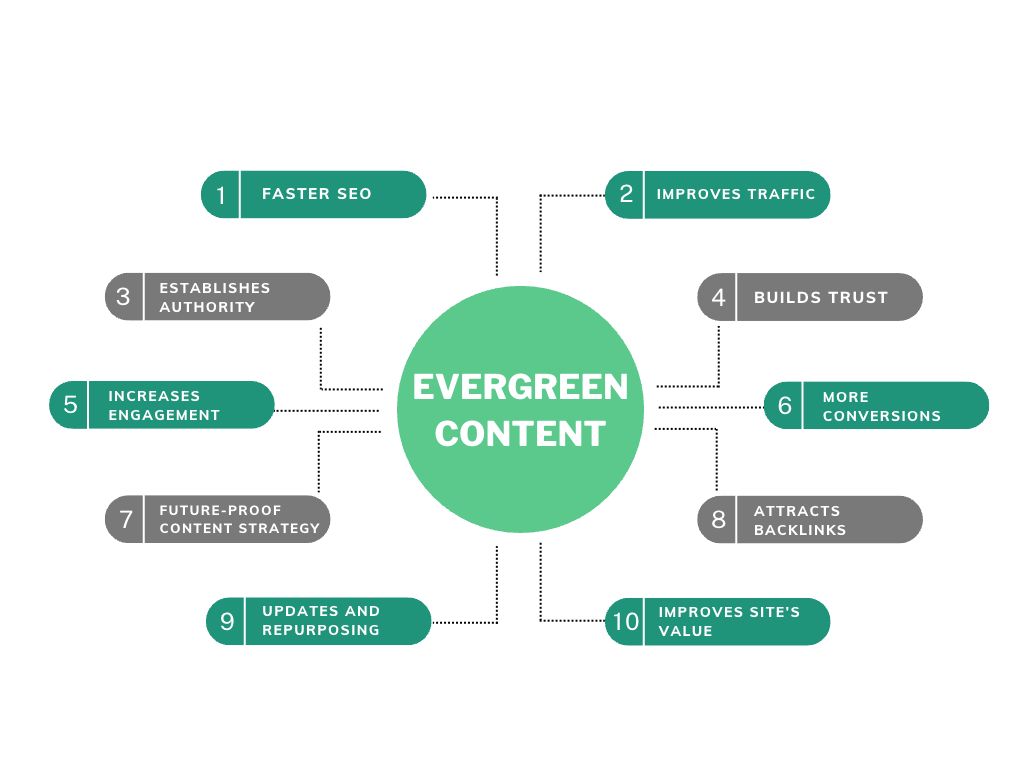
Creating content that ranks today and continues to rank years from now is the ultimate goal for any digital marketer. The rise of artificial intelligence has transformed how we research, write, and optimize, giving birth to a new discipline: AI SEO Evergreen Content. This approach combines the analytical power of machine learning with the timeless principles of valuable, durable information. In this comprehensive guide, you will learn how to leverage AI to produce articles that withstand algorithm updates, shifting trends, and evolving search behaviors, ensuring your website remains a consistent source of organic traffic.
What is AI SEO Evergreen Content?
AI SEO Evergreen Content refers to the strategic process of using artificial intelligence tools to create, optimize, and maintain content that remains relevant and valuable over an extended period. Unlike news articles or trend-based posts, evergreen content targets topics with consistent search volume, such as “how to tie a tie,” “best time to post on Instagram,” or “what is a mortgage.” The AI component involves using machine learning algorithms to analyze search intent, predict content gaps, suggest semantic keywords, and even generate drafts that align with what search engines deem authoritative.
The core distinction lies in the synergy between human creativity and machine efficiency. AI does not replace the writer; it augments their ability to produce data-backed, structured, and comprehensive pieces. This content type is designed to be updated periodically, but its foundational value does not decay. For example, a guide on “email marketing best practices” written in 2023 still holds relevance in 2025, provided it is refreshed with new statistics and tools. The AI helps identify which sections need refreshing and when, based on competitor analysis and search trend data.
Why Evergreen Content Matters in the Age of AI
Search engines prioritize content that demonstrates Experience, Expertise, Authoritativeness, and Trustworthiness (E-E-A-T). Evergreen content naturally aligns with these principles because it is comprehensive, well-researched, and designed to answer user queries thoroughly. When you combine this with AI, you gain the ability to scale production without sacrificing quality. AI tools can process thousands of search results in seconds, identifying patterns in top-ranking pages that human researchers might miss.
The financial argument is equally compelling. A single high-performing evergreen article can generate leads and conversions for years, reducing the need for constant new content creation. According to industry benchmarks, updating existing content can yield a 2-3x increase in traffic compared to publishing new posts. AI accelerates this process by automating the audit phase, flagging outdated statistics, and suggesting internal linking opportunities. This makes AI SEO Evergreen Content not just a tactic, but a long-term investment in your site’s organic visibility.
The Core Components of AI-Driven Evergreen Strategy
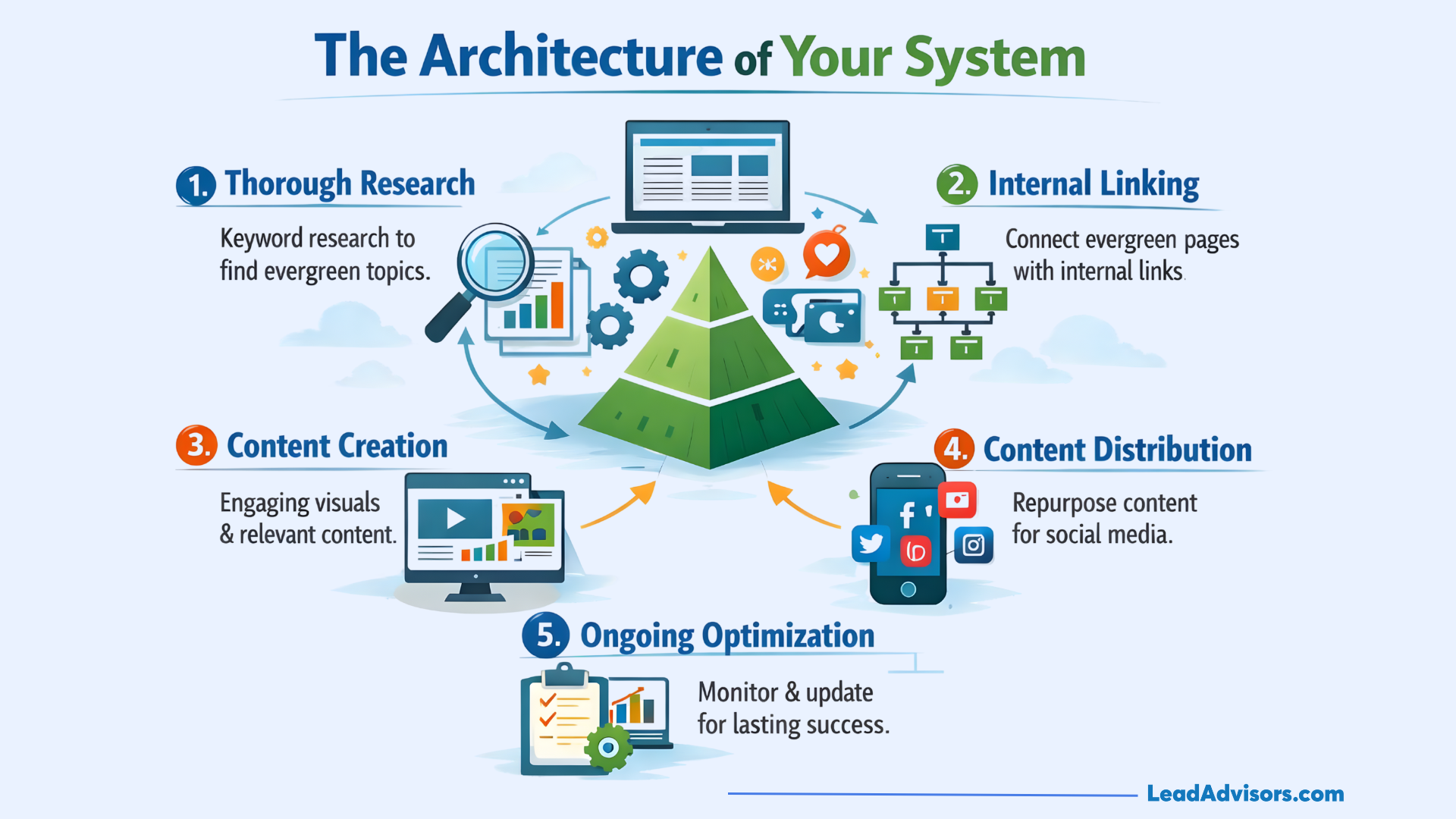
To successfully implement this strategy, you must understand its three foundational pillars: topic selection, content generation, and continuous optimization. Each component relies on specific AI capabilities that enhance, rather than replace, human judgment.
Topic Selection and Keyword Research
AI-powered tools like Ahrefs, Semrush, and Clearscope analyze search volume trends over years, not just months. They can distinguish between a fad and a permanent search pattern. For evergreen content, you need keywords with a stable or growing search curve. AI algorithms can also identify “topic clusters” – groups of related subtopics that allow you to create a comprehensive pillar page. For instance, if your main keyword is “AI SEO Evergreen Content,” the cluster might include “content refresh strategies,” “semantic search optimization,” and “machine learning for keyword research.”
The AI also evaluates the search engine results page (SERP) to determine the dominant content format. If the top results are listicles, your AI tool will suggest a similar structure. If they are in-depth guides, it will recommend a longer word count. This data-driven approach eliminates guesswork, ensuring you create content that matches user expectations from the outset.
Content Generation and Structuring
Modern AI writing assistants, such as GPT-4 based tools, can generate outlines, draft sections, and even write entire paragraphs. The key to using them effectively for evergreen content is providing strict parameters. You must feed the AI with your target keyword, secondary keywords, desired tone, and specific data points. The output should be treated as a first draft, not a final product. The human editor’s role is to inject real-world experience, add unique insights, and verify factual accuracy.
For example, an AI might generate a generic section on “link building.” A human expert would then add a personal anecdote about a successful outreach campaign, a specific case study with numbers, or a warning about a common pitfall. This combination of AI efficiency and human experience is what elevates content from “good” to “E-E-A-T compliant.” The structure should always include clear H2 and H3 headings, bullet points for scannability, and a table for comparative data when appropriate.
Continuous Optimization and Maintenance
Evergreen does not mean “set and forget.” It means the content has a long shelf life, but it still requires periodic updates to maintain accuracy. AI monitoring tools can track your keyword rankings and alert you when a piece starts to slip. They can also compare your content against newly published competitors, highlighting sections where you are missing information. This allows you to perform targeted updates rather than rewriting the entire article.
A practical workflow involves a quarterly content audit. Use AI to analyze your top 20 evergreen pages. Check for broken links, outdated statistics, and changes in search intent. For instance, a guide on “best SEO practices” written before Google’s helpful content update may need a new section on user experience signals. The AI can suggest these additions based on current top-ranking content, allowing you to stay ahead of the curve.
Benefits and Limitations of AI in Evergreen Content
Understanding the pros and cons of this approach is critical for setting realistic expectations and avoiding common pitfalls.
| Benefits | Limitations |
|---|---|
| Scalability: Produce more content in less time | Risk of generic, low-quality output if not edited |
| Data-Driven: Insights based on real search data | Lack of genuine personal experience and unique voice |
| Efficiency: Automates keyword research and audits | Potential for factual errors or hallucinated data |
| Consistency: Maintains a uniform tone and structure | Dependence on tool quality and training data |
| Cost-Effective: Reduces time spent on manual analysis | Cannot replicate human creativity or emotional intelligence |
The primary benefit is speed. A task that once took a week of research can now be completed in a day. The primary limitation is the “sameness” problem. If every website uses the same AI tools with the same prompts, the internet becomes a sea of identical content. To avoid this, you must use AI as a research assistant, not a ghostwriter. The final output must contain your unique perspective, proprietary data, or a novel angle that cannot be replicated by a machine.
Practical Guide: How to Create AI SEO Evergreen Content
This step-by-step process outlines a proven workflow for producing high-ranking, durable articles using AI assistance.
Step 1: Define Your Core Topic and Audience
Start with a broad topic that has proven longevity. Use AI to analyze search volume trends over the past five years. If the volume is stable or increasing, it is a good candidate. Define your target audience’s pain points. For example, if you are writing for small business owners, your content should focus on practical, low-cost solutions. This clarity will guide the AI prompts you use later.
Step 2: Conduct AI-Powered Keyword and SERP Analysis
Input your core topic into an SEO tool. Extract the top 10-20 related keywords and questions. Analyze the current top-ranking pages. What is their word count? What subtopics do they cover? What is the average domain authority? Use this data to create a content brief. The brief should specify the target word count (typically 2000-2500 words for comprehensive guides), the primary keyword density (aim for 1-2%), and the list of LSI keywords to include naturally.
Step 3: Generate an Outline with AI
Use an AI writing tool to generate a detailed outline based on your brief. Provide the tool with your primary keyword and the list of secondary keywords. Ask it to structure the article with an introduction, multiple H2 sections, and a conclusion. Review the outline critically. Remove any sections that feel redundant or off-topic. Add sections that reflect your unique expertise or address specific questions you know your audience asks.
Step 4: Write and Edit with Human Oversight
Use the AI to generate a first draft of each section. Then, rewrite each paragraph in your own voice. Add specific examples, case studies, or personal observations. Verify every statistic and claim. If the AI mentions a study, find the original source and confirm the numbers. This step is non-negotiable for building trust with both users and search engines. The final text should read as if a human expert wrote it, not a machine.
Step 5: Optimize On-Page Elements
Write a compelling meta title and description that includes your primary keyword. Use a short, descriptive URL slug. Add alt text to all images, describing what they show using relevant keywords. Ensure your content is structured with proper heading hierarchy (H1 for the title, H2 for main sections, H3 for subsections). Use internal links to other relevant evergreen content on your site, and external links to high-authority sources for credibility.
Step 6: Implement a Refresh Schedule
Set a calendar reminder to review the content every 6-12 months. Use AI to re-analyze the SERP and identify new competitors or changes in search intent. Update statistics, add new examples, and remove outdated information. This proactive maintenance is what separates evergreen content that thrives from content that slowly decays.
Common Mistakes and How to Avoid Them
Even with the best tools, many marketers fail to achieve results with AI-generated evergreen content. Recognizing these errors early can save you significant time and resources.
- Publishing Unedited AI Text: The most common mistake is treating AI output as final. This leads to generic, often inaccurate content that fails to engage readers. Always edit for voice, accuracy, and depth.
- Targeting the Wrong Keywords: Using AI to find keywords is only useful if you filter for true evergreen intent. A keyword like “AI news today” is not evergreen. Focus on “how-to” queries, definitions, and foundational guides.
- Ignoring Search Intent: If users want a quick answer, a 3000-word guide will not rank well. Use AI to analyze the SERP format. If the top results are short videos, consider creating a video or a concise, scannable article.
- Neglecting Internal Linking: Evergreen content needs a strong internal link structure to pass authority. Use AI to identify other relevant posts on your site and link to them contextually within the body text.
- Forgetting About User Experience: Content that is difficult to read, has no images, or is cluttered with ads will have high bounce rates. AI can help structure content, but you must ensure the page loads fast and is mobile-friendly.
Important Notes on E-E-A-T and AI Content
Google’s guidelines are clear: AI-generated content is against spam policies if it is used primarily to manipulate search rankings. However, AI-assisted content that provides value and demonstrates expertise is acceptable. The key is to ensure your content has a clear “human touch.” This includes author bios with real credentials, original research or data, and a unique perspective that cannot be found elsewhere.
Do not rely solely on AI for YMYL (Your Money or Your Life) topics such as health, finance, or legal advice. In these niches, factual accuracy is paramount, and AI hallucinations can be dangerous. Always have a subject matter expert review and approve the final content. Disclose your use of AI if you are publishing on platforms that require it, but for your own website, the focus should be on the quality of the final product, not the tools used to create it.
Frequently Asked Questions
What is the ideal length for AI SEO Evergreen Content?
T The length should be determined by the topic’s complexity and the depth of information required to fully satisfy search intent. Use AI to analyze your top competitors’ word counts as a baseline, then aim to be slightly more comprehensive.
How often should I update my evergreen content?
A good rule of thumb is to review your evergreen content every 6 to 12 months. However, topics that change rapidly, such as technology or digital marketing, may require updates every 3 to 6 months. Use AI monitoring tools to track ranking fluctuations; a sudden drop is a clear signal that an update is needed.
Can Google detect AI-written content?
Google can detect patterns that are common in AI-generated text, such as unnatural phrasing and a lack of depth. However, the goal is not to “hide” AI usage but to produce content that is genuinely helpful. If you edit and enhance AI drafts with your own expertise, the final product will be indistinguishable from human-written content and will perform well in search.
What are the best AI tools for evergreen content creation?
For research and optimization, tools like Semrush, Ahrefs, and Clearscope are excellent. For drafting, ChatGPT, Claude, and Jasper are popular choices. The best approach is to use a combination: one tool for keyword analysis, one for drafting, and your own judgment for final editing.
Is AI SEO Evergreen Content worth the investment?
Yes, when executed correctly. The return on investment is high because evergreen content compounds over time. A single article can bring in traffic for years, and AI reduces the cost of producing and maintaining it. The key is to invest time in the editing and strategy phases, not just the generation phase.
Conclusion
AI SEO Evergreen Content represents a powerful evolution in digital marketing strategy. By combining the analytical capabilities of artificial intelligence with the irreplaceable value of human expertise, you can build a library of resources that consistently attract, engage, and convert your target audience. The process requires a shift in mindset: from content creation to content curation and maintenance. You are no longer just a writer; you are a strategist who uses AI to identify opportunities, draft efficiently, and ensure long-term relevance.
The future of search is not about tricking algorithms but about providing genuine value. AI is the tool that helps you do this at scale. Start by auditing your existing content to identify evergreen opportunities. Then, apply the workflow outlined here to create new pieces that are data-driven, expertly crafted, and built to last. The effort you invest today in creating high-quality, AI-assisted evergreen content will pay dividends in organic traffic and brand authority for years to come.
Xem thêm:
- AI SEO Keyword Lists: The Complete Guide to Building High-Performance Keyword Sets
- AI SEO Dwell Time: The 2025 Playbook for Boosting Rankings with Machine Learning
- AI SEO CDN Optimization: The Complete Guide to Faster Rankings in 2025
- AI SEO Geo Targeting: The Complete Guide to Local Search Dominance in 2025
- AI SEO Content Consistency: The Complete Guide to Scaling Quality Without Losing Your Voice
Bài viết cùng chủ đề:

AI SEO SEO Automation with Make: The Complete Workflow Guide

AI SEO SEO Automation with Zapier: The Complete Workflow Guide

AI SEO SEO Automation with n8n: The Complete Workflow Guide
AI SEO SEO Automation with Gemini: The Complete Guide to Scaling Organic Growth

AI SEO SEO Automation with Claude: The Complete Guide to Scaling Content in 2025

AI SEO SEO Automation with ChatGPT: The Complete Playbook for 2025

AI SEO & SEO Automation for Affiliate Sites: The 2025 Playbook for Passive Income Growth
AI SEO & SEO Automation for Bloggers: The Complete Guide to Scaling Your Content

AI SEO & SEO Automation for Agencies: The Complete 2025 Playbook

AI SEO and SEO Automation for Ecommerce: The Complete Playbook for 2025

AI SEO & SEO Automation for WordPress: The Complete Playbook for 2025
AI SEO SEO Automation Strategy: The Complete Playbook for 2025

Mastering the AI SEO SEO Automation Process: A Complete Guide to Scaling Organic Growth
AI SEO SEO Automation System: The Complete Guide to Scaling Organic Growth in 2025
AI SEO SEO Automation Platform: The Complete Guide to Scaling Organic Growth in 2025
AI SEO SEO Automation Software: The Complete Guide to Scaling Organic Growth in 2025















