
No products in the cart.
AI SEO Keyword Strategy: The Complete Guide to Future-Proof Search Rankings
10
Aug
Aug
Search engine optimization has transformed dramatically with the rise of artificial intelligence. The days of simply stuffing pages with exact-match phrases are long gone. An effective AI SEO keyword strategy now requires understanding how machine learning algorithms interpret search intent, context, and semantic relationships. This comprehensive guide explores how to build a keyword framework that aligns with AI-driven search engines like Google’s RankBrain, BERT, and MUM, while also preparing for the growing influence of AI chatbots and zero-click search results.
Understanding the Shift: How AI Changed Keyword Research
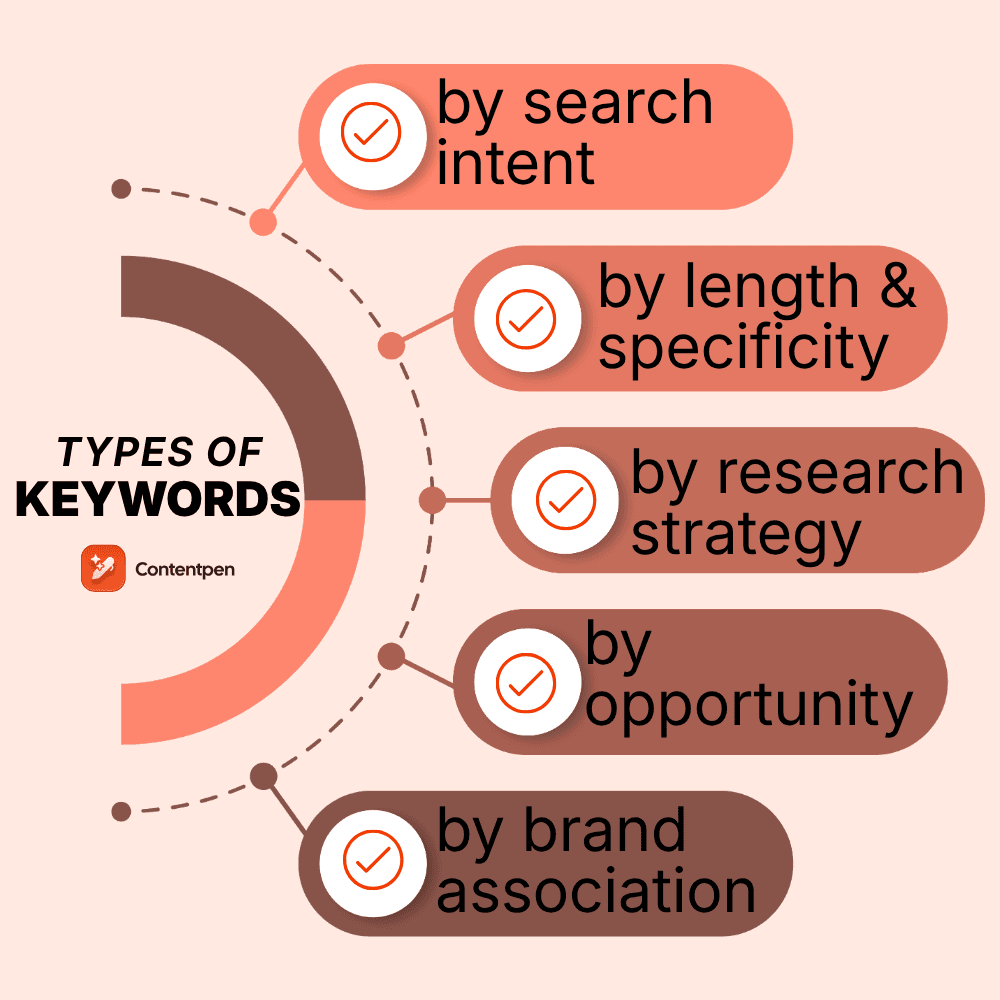
Traditional keyword research focused on finding high-volume terms and placing them strategically in titles, headings, and meta descriptions. AI-powered search engines changed this paradigm entirely. Instead of matching literal strings of text, modern algorithms analyze the meaning behind queries, the relationship between words, and the user’s underlying intent.
Google’s BERT update, launched in 2019, allowed the search engine to understand natural language processing at a deeper level. This means that a page optimized for “best running shoes” can now rank for “shoes for marathon training” if the content genuinely covers that topic comprehensively. An AI SEO keyword strategy leverages this understanding by focusing on topical authority rather than individual keywords.
The Role of Machine Learning in Search Rankings
Machine learning models continuously evaluate user behavior signals to refine search results. Click-through rates, dwell time, bounce rates, and engagement metrics all feed into these algorithms. When you build your keyword strategy around user intent and content quality, you naturally improve these behavioral signals, creating a positive feedback loop that boosts rankings.
AI systems also analyze entity relationships. For example, if you write about “content marketing,” the algorithm expects to see related entities like “SEO,” “blogging,” “audience engagement,” and “conversion optimization.” Your keyword strategy must therefore include semantic variations and related concepts to help AI systems understand your content’s depth and relevance.
Core Components of a Modern AI SEO Keyword Strategy
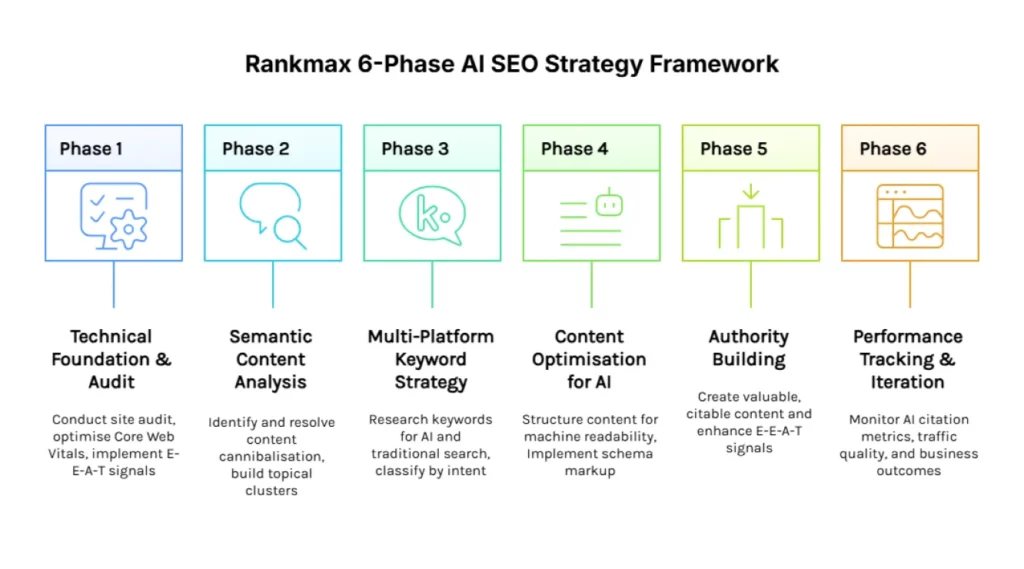
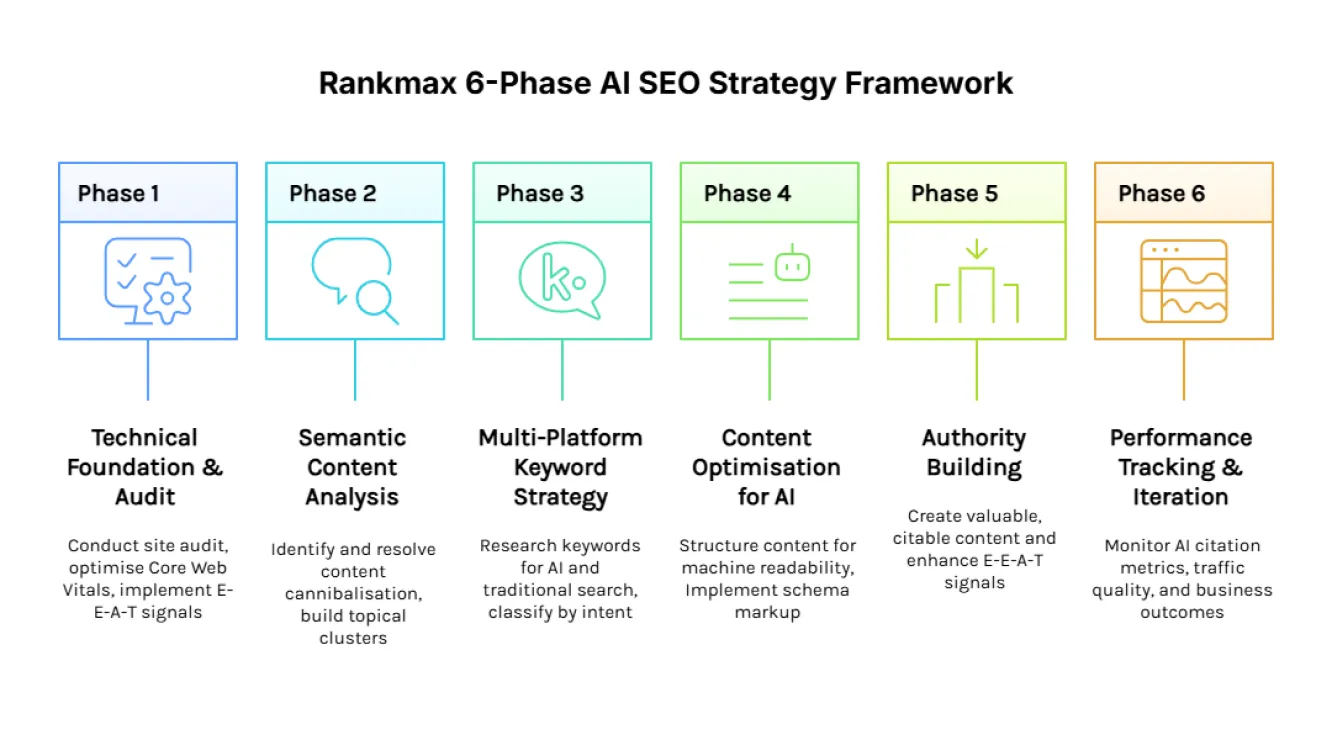
Building a robust keyword framework in the AI era requires a multi-layered approach. You cannot rely on a single keyword research tool or a simple spreadsheet of terms. Instead, you need a systematic process that combines data analysis, intent mapping, and content architecture planning.
Intent-Based Keyword Clustering
The foundation of any AI SEO keyword strategy is understanding search intent. Every query falls into one of four primary categories: informational, navigational, commercial, and transactional. AI algorithms are exceptionally good at detecting intent, and they prioritize pages that match the user’s stage in the buying journey.
For informational queries like “how to improve website speed,” users want guides and tutorials. For commercial queries like “best SEO tools for small business,” users want comparisons and reviews. Your keyword clusters must reflect these distinctions, ensuring that your content assets align with what users actually expect to find.
Topic Authority and Pillar Pages
AI search engines reward websites that demonstrate comprehensive knowledge of a subject. Instead of creating dozens of thin articles targeting long-tail variations, modern strategies focus on building topic clusters. A pillar page covers the broad subject in depth, while cluster content addresses specific subtopics and links back to the pillar.
This architecture helps AI systems understand your website’s structure and expertise. When you consistently produce high-quality content around a central theme, the algorithm begins to associate your domain with that topic, improving your visibility for a wider range of related queries.
Semantic Search and Natural Language Processing
Natural language processing allows search engines to understand synonyms, related concepts, and contextual meaning. Your keyword strategy must therefore include latent semantic indexing (LSI) keywords and natural language variations. For example, if your primary keyword is “digital marketing,” your content should naturally include terms like “online advertising,” “social media promotion,” “email campaigns,” and “brand awareness.”
AI tools like Clearscope, MarketMuse, and Surfer SEO analyze top-ranking pages to identify semantic terms that should appear in your content. These tools use machine learning to determine which related concepts are essential for ranking, giving you a data-driven approach to semantic optimization.
Practical Steps to Build Your AI SEO Keyword Strategy
Implementing an AI-driven keyword approach requires specific actions and tools. The following process outlines how to move from traditional keyword research to a comprehensive, AI-aligned strategy.
Step 1: Analyze Your Current Search Performance
Start by auditing your existing content and keyword rankings. Use Google Search Console to identify which queries currently drive traffic to your site. Look for pages that rank on page two or three of search results, as these represent opportunities for improvement. AI algorithms often reward content updates, so refreshing these pages with more comprehensive information can yield significant gains.
Pay attention to the average position, click-through rate, and impressions for each query. This data reveals which topics your audience cares about and where gaps exist in your current coverage.
Step 2: Leverage AI-Powered Keyword Research Tools
Traditional tools like Google Keyword Planner still provide valuable data on search volume and competition. However, AI-powered platforms offer deeper insights into intent, semantic relationships, and content gaps. Tools like Ahrefs, SEMrush, and Moz now incorporate machine learning to suggest related keywords and predict ranking difficulty.
More advanced AI tools like Frase and Outranking analyze the actual content of top-ranking pages to identify what topics and subtopics you need to cover. These platforms generate content briefs based on the collective wisdom of your competitors, ensuring your strategy aligns with what AI algorithms currently reward.
Step 3: Map Keywords to the Buyer’s Journey
Create a comprehensive map that connects your keywords to different stages of the customer journey. Awareness-stage keywords focus on problems and questions. Consideration-stage keywords involve comparisons and evaluations. Decision-stage keywords target product-specific or service-specific queries with high commercial intent.
This mapping ensures that you create content for every stage, guiding users from initial discovery to final conversion. AI algorithms recognize this comprehensive approach and reward websites that provide value throughout the entire funnel.
Step 4: Build Topical Maps and Content Clusters
Develop a visual representation of your core topics and their related subtopics. Each core topic becomes a pillar page, while subtopics become supporting blog posts, guides, or resources. This structure helps search engines understand the breadth and depth of your expertise.
For example, if your core topic is “email marketing,” your subtopics might include “email list building,” “automation workflows,” “subject line optimization,” “A/B testing,” and “deliverability best practices.” Each subtopic gets its own piece of content, all interlinked with the pillar page.
Step 5: Optimize for Entity Recognition
AI algorithms use knowledge graphs to understand the relationships between entities. An entity can be a person, place, organization, concept, or product. To optimize for entity recognition, ensure your content clearly identifies the main subjects and their attributes.
Use structured data markup like Schema.org to provide explicit signals about your content’s entities. Include author bios, company information, and clear definitions of key concepts. This helps AI systems connect your content to the broader knowledge graph, improving your chances of appearing in rich results and AI-generated answers.
Benefits of an AI-Driven Keyword Approach
Adopting an AI SEO keyword strategy offers numerous advantages over traditional methods. These benefits extend beyond simple rankings and impact the overall quality and performance of your digital presence.
- Improved Search Intent Matching: AI strategies prioritize user intent, leading to higher engagement metrics and better user satisfaction.
- Long-Term Sustainability: Content built around topics and entities remains relevant even as specific keyword trends change.
- Enhanced Content Quality: The focus on semantic depth naturally produces more comprehensive, valuable content.
- Better Voice Search Optimization: Natural language processing aligns with how people speak, improving visibility for voice-activated searches.
- Resilience to Algorithm Updates: Topic authority and entity optimization are less vulnerable to algorithm fluctuations than keyword-stuffed pages.
- Increased Featured Snippet Opportunities: Structured, intent-focused content is more likely to earn position zero in search results.
Limitations and Challenges of AI Keyword Strategies

While the benefits are substantial, an AI SEO keyword strategy also presents unique challenges that require careful consideration.
The most significant limitation is the increased time and effort required. Building comprehensive topic clusters demands significantly more content creation than traditional keyword targeting. Each pillar page requires extensive research, and every cluster piece must maintain high quality to support the overall authority.
Another challenge is the complexity of AI algorithms. Search engines constantly update their machine learning models, making it difficult to predict exactly what will rank. Strategies that work today may become less effective tomorrow, requiring continuous adaptation and monitoring.
Additionally, the rise of AI chatbots and generative search results threatens traditional organic traffic. As more users get answers directly from AI assistants, the competition for clicks becomes fiercer. Your keyword strategy must account for this shift by optimizing for AI answer engines as well as traditional search results.
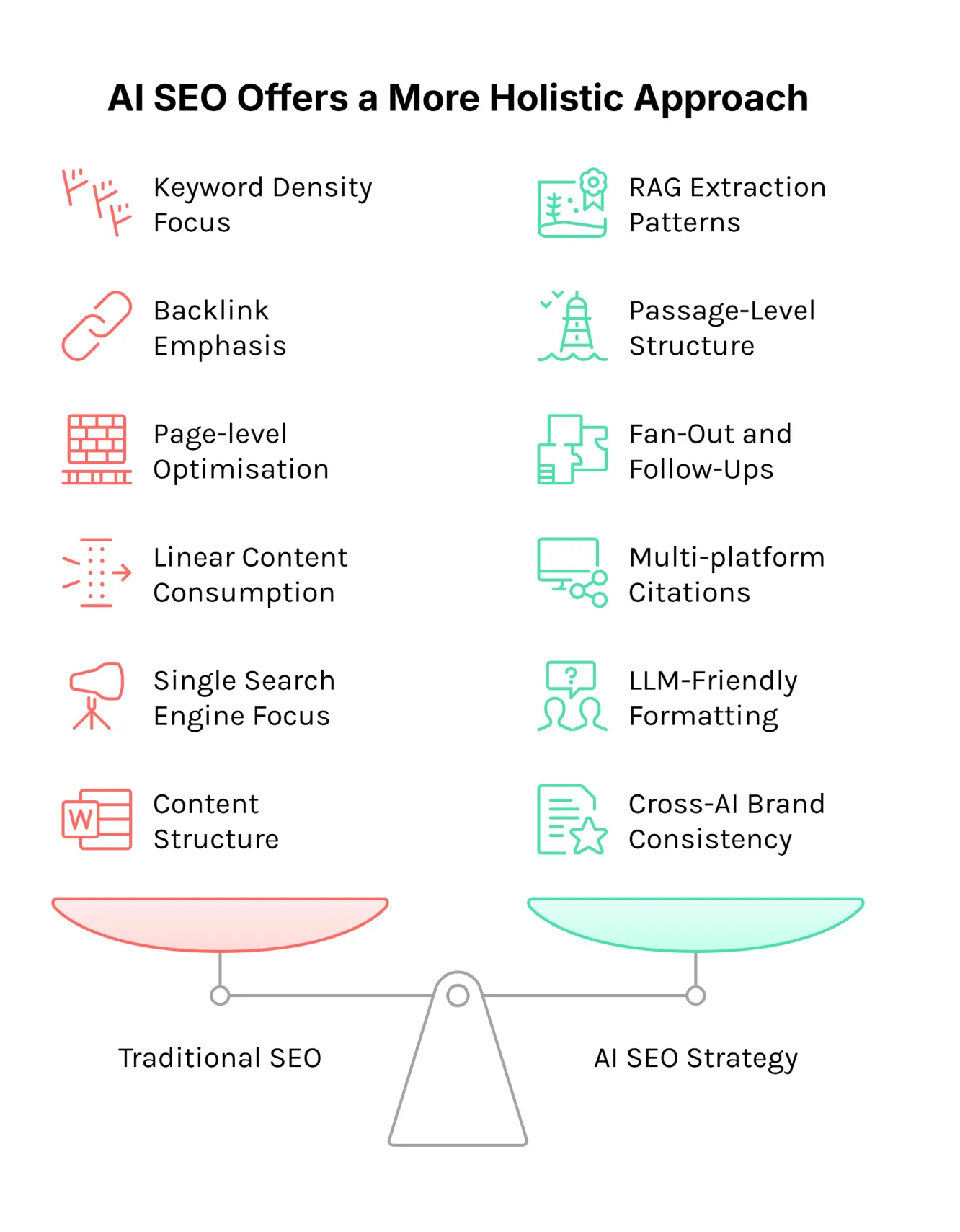
Comparison: Traditional vs. AI SEO Keyword Strategy
| Aspect | Traditional Keyword Strategy | AI SEO Keyword Strategy |
|---|---|---|
| Focus | Exact-match keywords and phrases | Topics, entities, and search intent |
| Research Method | Volume and difficulty metrics | Semantic analysis and intent mapping |
| Content Structure | Individual pages targeting single keywords | Pillar pages with interlinked topic clusters |
| Optimization | Keyword placement in meta tags and headings | Natural language, entity markup, and contextual relevance |
| Measurement | Rankings for specific terms | Topical authority and overall organic visibility |
| Adaptability | Vulnerable to algorithm updates | Resilient due to semantic depth |
Common Mistakes in AI SEO Keyword Strategy
Many marketers attempt to implement AI-driven approaches but fall into predictable traps. Recognizing these mistakes can save significant time and resources.
Ignoring User Intent in Favor of Volume
High-volume keywords often have ambiguous intent. A term like “marketing” could mean anything from job listings to educational content. Targeting such broad terms without understanding what users actually want leads to high bounce rates and poor engagement signals, which AI algorithms interpret as low quality.
Creating Thin Content for the Sake of Coverage
Some strategies attempt to target every possible long-tail variation with short, superficial articles. AI algorithms quickly detect this content farming approach. Each piece of content must provide genuine value, unique insights, or comprehensive information to earn visibility.
Neglecting Internal Linking Structure
Topic clusters only work when the internal linking structure clearly connects related content. Without proper links, AI systems cannot understand the relationships between your pages, and the topical authority signal is lost.
Over-Optimizing for AI Chatbots
While optimizing for AI search is important, some marketers go too far by creating content specifically designed to be scraped by chatbots. This often results in unnatural, robotic writing that fails to engage human readers. The best approach is to create genuinely helpful content that serves both humans and AI systems.
Failing to Update Existing Content
AI algorithms favor fresh, up-to-date information. Content that was comprehensive in 2020 may now be outdated and irrelevant. Regularly auditing and updating your pillar pages and cluster content is essential for maintaining topical authority.
Practical Application: Building Your First AI Keyword Strategy
To put these concepts into practice, follow this actionable framework for your next content campaign.
Begin by selecting a core topic that aligns with your business goals and audience needs. Use AI-powered tools to analyze the current search landscape for this topic. Identify the top-ranking pages and examine their content structure, subtopics, and semantic terms.
Create a comprehensive outline that covers the main topic from multiple angles. Include sections for definitions, processes, examples, case studies, and frequently asked questions. This ensures your content addresses the full spectrum of user intent.
Write your pillar page with depth and authority, naturally incorporating semantic variations and related entities. Then, plan a series of cluster articles that explore specific subtopics in greater detail. Each cluster piece should link back to the pillar page and to other relevant cluster content.
After publishing, monitor your performance using Google Search Console and analytics tools. Track not just rankings but also engagement metrics like time on page, scroll depth, and conversion rates. Use this data to refine your strategy and identify new content opportunities.
Important Notes for Long-Term Success
An AI SEO keyword strategy is not a one-time project but an ongoing process. Search algorithms evolve continuously, and your approach must evolve with them.
Stay informed about major algorithm updates and AI developments in search. Google’s Search Central blog and industry publications provide valuable insights into emerging trends. Attend webinars, participate in SEO communities, and continuously test new approaches.
Remember that AI algorithms ultimately serve human users. The most effective strategy is one that prioritizes genuine value, clear communication, and user satisfaction. When you focus on creating exceptional content that answers real questions, AI systems will recognize and reward your efforts.
Invest in building your brand’s expertise, authoritativeness, and trustworthiness (E-E-A-T). Publish author bios with credentials, cite reputable sources, and maintain transparent business information. These signals help AI systems verify your content’s reliability.
Frequently Asked Questions
What is the difference between traditional SEO keywords and AI SEO keywords?
Traditional SEO keywords focus on exact-match phrases and search volume metrics. AI SEO keywords emphasize topics, search intent, semantic relationships, and entity recognition. The AI approach prioritizes comprehensive content that answers user questions naturally, rather than targeting specific word combinations.
How does Google’s AI affect keyword research?
Google’s AI systems like RankBrain and BERT understand natural language and context. This means keyword research must go beyond volume data to include intent analysis, semantic topic exploration, and entity mapping. Tools now provide AI-powered suggestions based on what top-ranking content actually covers.
Can I still use traditional keyword tools with an AI strategy?
Yes, traditional tools remain useful for baseline data like search volume and competition levels. However, they should be supplemented with AI-powered platforms that offer semantic analysis, content gap identification, and intent classification. Combining both approaches provides the most comprehensive view.
How often should I update my AI SEO keyword strategy?
Review your strategy quarterly to account for algorithm updates, industry changes, and shifting user behavior. Additionally, continuously monitor your content performance and refresh underperforming pages. The most successful strategies are dynamic and responsive to real-world data.
Will AI chatbots replace traditional search engines?
AI chatbots are changing how users access information, but they are unlikely to completely replace search engines in the near term. Instead, search engines are integrating AI features into their results. Your keyword strategy should optimize for both traditional search results and AI-generated answers to maximize visibility.
What role does content length play in AI SEO?
Content length matters less than content depth and comprehensiveness. A well-structured 1,500-word article that fully answers a specific question can outperform a 5,000-word article filled with fluff. AI algorithms evaluate whether your content covers the topic thoroughly and satisfies user intent, regardless of word count.
Conclusion
An AI SEO keyword strategy represents the evolution of search optimization from a technical exercise to a user-centric approach grounded in semantic understanding. By focusing on topics, intent, and entities rather than individual keywords, you build a digital presence that resonates with both human readers and machine learning algorithms.
The transition requires effort, but the rewards are substantial. Websites that embrace this approach enjoy more stable rankings, higher engagement, and better resilience against algorithm updates. As AI continues to reshape the search landscape, those who adapt their keyword strategies accordingly will maintain a competitive edge.
Start by auditing your current approach, investing in AI-powered research tools, and restructuring your content around topic clusters. Monitor your results, learn from your data, and continuously refine your strategy. The future of search belongs to those who understand that keywords are no longer just words, but windows into user intent and pathways to meaningful connections.
Xem thêm:
- AI Metadata Generator: The Ultimate Tool for Streamlining Digital Asset Management
- AI SEO Automated SEO Reports: The Complete Guide to Smarter Reporting in 2025
- AI SEO Ecommerce Category Pages: The Complete Guide to Higher Rankings
- AI SEO for Crypto: The Complete Guide to Dominating Search in 2025
- AI SEO Answer Generator: The Complete Guide to Automated Content Intelligence
Bài viết cùng chủ đề:

AI SEO SEO Automation with Make: The Complete Workflow Guide

AI SEO SEO Automation with Zapier: The Complete Workflow Guide

AI SEO SEO Automation with n8n: The Complete Workflow Guide
AI SEO SEO Automation with Gemini: The Complete Guide to Scaling Organic Growth

AI SEO SEO Automation with Claude: The Complete Guide to Scaling Content in 2025

AI SEO SEO Automation with ChatGPT: The Complete Playbook for 2025

AI SEO & SEO Automation for Affiliate Sites: The 2025 Playbook for Passive Income Growth
AI SEO & SEO Automation for Bloggers: The Complete Guide to Scaling Your Content

AI SEO & SEO Automation for Agencies: The Complete 2025 Playbook

AI SEO and SEO Automation for Ecommerce: The Complete Playbook for 2025

AI SEO & SEO Automation for WordPress: The Complete Playbook for 2025
AI SEO SEO Automation Strategy: The Complete Playbook for 2025

Mastering the AI SEO SEO Automation Process: A Complete Guide to Scaling Organic Growth
AI SEO SEO Automation System: The Complete Guide to Scaling Organic Growth in 2025
AI SEO SEO Automation Platform: The Complete Guide to Scaling Organic Growth in 2025
AI SEO SEO Automation Software: The Complete Guide to Scaling Organic Growth in 2025















