
No products in the cart.
AI SEO Long Form Article Generator: The Complete Guide to Scaling Content Production

10
Aug
Aug
The demand for high-quality, in-depth content has never been greater. Businesses and marketers face the constant challenge of producing comprehensive articles that rank well in search engines while engaging readers. An AI SEO Long Form Article Generator has emerged as a powerful solution to this problem, enabling teams to create detailed, optimized content at scale. These tools leverage advanced language models to research topics, structure articles, and generate human-like prose that meets the rigorous standards of modern SEO. This guide explores how these generators work, their benefits, limitations, and how to use them effectively for your content strategy.
What is an AI SEO Long Form Article Generator?
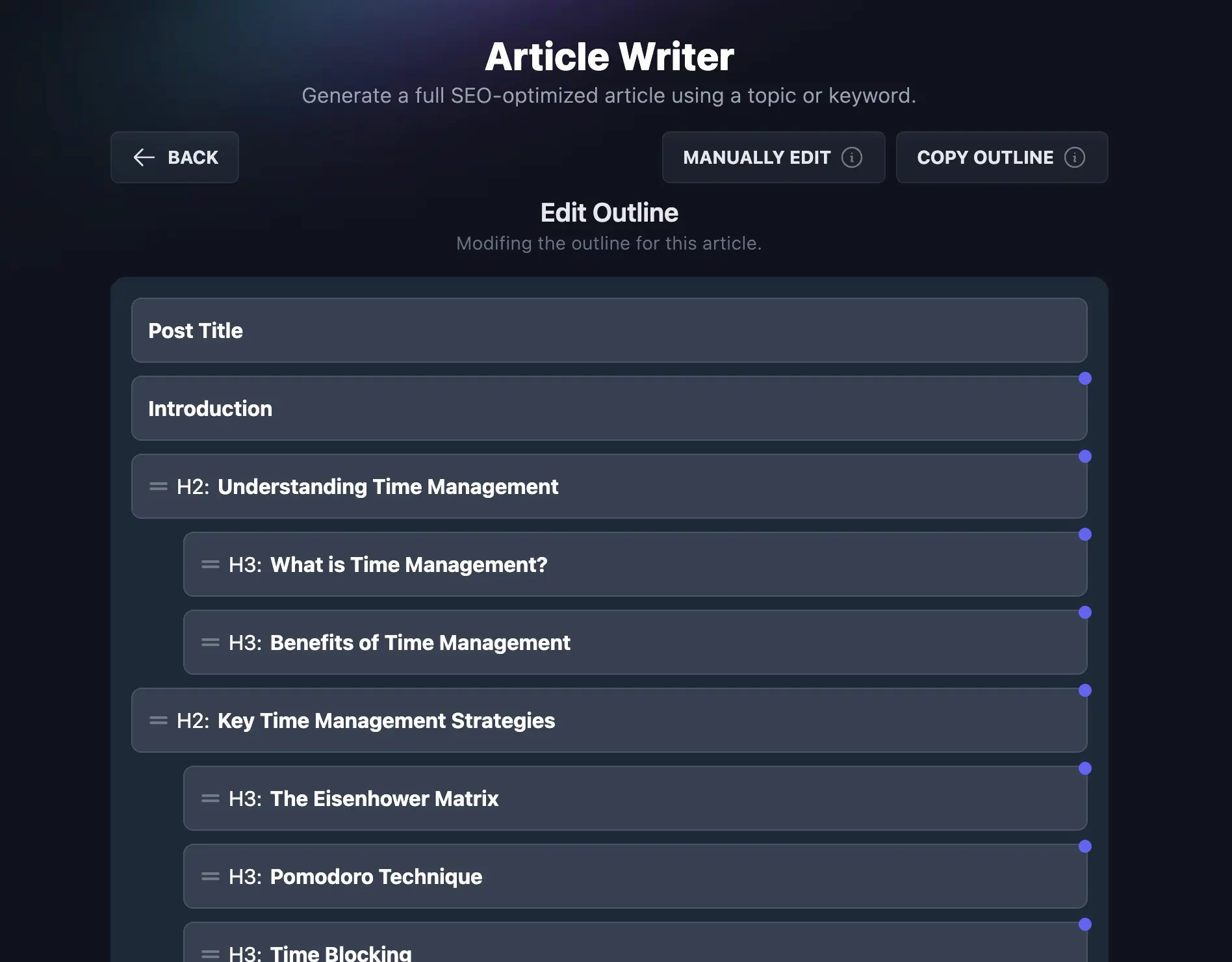
An AI SEO Long Form Article Generator is a software tool that uses artificial intelligence, specifically natural language processing (NLP) and machine learning, to automatically produce lengthy written content. Unlike basic AI writers that create short snippets, these specialized tools are designed to handle the complexity of long-form content, typically exceeding 1,500 words. They are programmed to incorporate SEO best practices, such as keyword placement, semantic relevance, and structural elements like headings and subheadings.
These generators are trained on vast datasets of existing web content, allowing them to understand language patterns, factual information, and stylistic nuances. When given a target keyword, the tool can generate an entire article outline, write each section in detail, and even suggest meta descriptions and title tags. The goal is to mimic the work of a human writer who is well-versed in both the subject matter and search engine optimization.
The Core Technology Behind AI Content Generation
The engine powering these tools is typically a large language model (LLM). These models use deep learning to predict the next word in a sequence, allowing them to generate coherent and contextually relevant text. For SEO purposes, the models are often fine-tuned with additional data about ranking factors, user intent, and content structure. This means the AI doesn’t just write; it writes with the specific goal of satisfying search algorithms and user queries.
Modern generators also integrate with live search data. They can analyze the top-ranking pages for a given keyword to understand what topics are covered, what questions are answered, and what format is most successful. This data-driven approach ensures that the generated content is not only original but also strategically aligned with what is currently performing well in search results.
How Does an AI SEO Long Form Article Generator Work?
Understanding the workflow of these tools helps in maximizing their potential. The process generally involves several key stages, from initial input to final output. While specific features vary by platform, the core methodology remains consistent across the industry.
Input and Keyword Analysis
The process begins with the user providing a target keyword or topic. The AI then performs a deep analysis of this keyword. It looks at search volume, competition level, and, most importantly, the search engine results page (SERP) to identify what type of content is currently ranking. This includes analyzing the top competitors’ articles to understand their structure, length, and the subtopics they cover.
Outline Generation and Content Structuring
Based on the analysis, the AI generates a comprehensive outline. This outline is not just a list of headings; it is a strategic framework designed to cover the topic exhaustively. It will typically include an introduction, several main sections (H2s), sub-sections (H3s), and a conclusion. The AI ensures that the outline covers the primary keyword and a wide range of related LSI (Latent Semantic Indexing) keywords to build topical authority.
Drafting and Writing
Once the outline is approved, the AI begins the drafting process. It writes each section in detail, pulling from its internal knowledge base and the data gathered during the analysis phase. The writing is designed to be informative, engaging, and natural-sounding. The AI also automatically places the target keyword in strategic locations, such as the first 100 words, H1 tag, and throughout the body text, without resorting to keyword stuffing.
On-Page SEO Optimization
After the draft is complete, the tool applies on-page SEO optimizations. This includes generating a meta title and meta description that are optimized for click-through rates. It also checks for proper use of header tags, image alt text suggestions, and internal linking opportunities. Some advanced tools even provide a readability score and suggest improvements to make the content more accessible to a wider audience.
Key Benefits of Using an AI SEO Long Form Article Generator
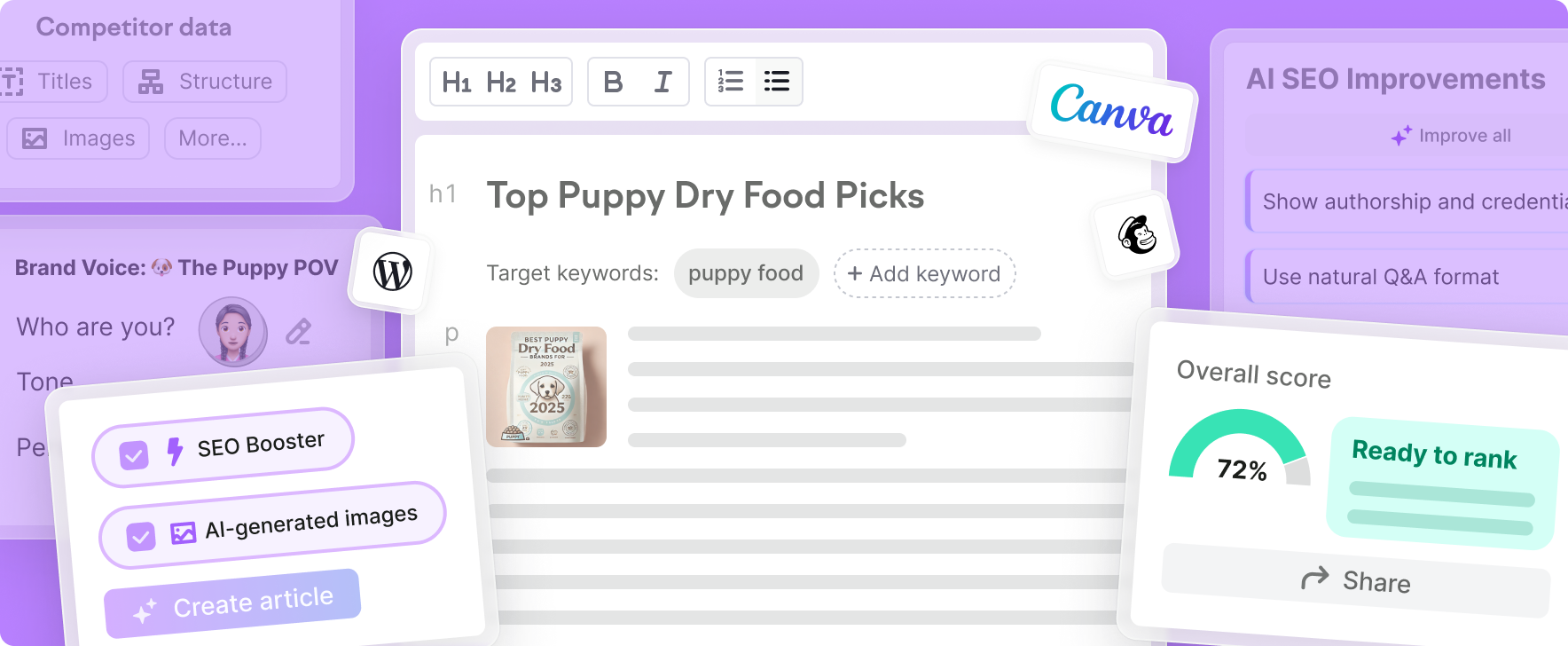
The adoption of AI for long-form content is driven by tangible business benefits. These tools offer significant advantages over traditional writing methods, particularly when it comes to scale, speed, and consistency. Below are the primary benefits that make them an attractive investment for content teams.
Unmatched Speed and Scalability
Writing a 2,000-word article can take a human writer several hours or even days, including research time. An AI generator can produce a draft of the same length in minutes. This speed allows businesses to scale their content production dramatically. Instead of publishing one article per week, a team can publish multiple articles per day, covering a wider range of keywords and topics. This is crucial for building topical authority and dominating search results in a niche.
Cost-Effectiveness for High Volume Needs
Hiring a team of freelance writers or an in-house content department is expensive. For businesses that need a high volume of content, the cost per article can be prohibitive. AI generators offer a subscription-based model that often costs less than the price of a single professionally written article. This makes it financially viable to produce hundreds of articles per month, which is often necessary for large-scale SEO campaigns.
Consistency in Tone and Style
Maintaining a consistent brand voice across hundreds of articles is challenging with multiple human writers. AI tools can be trained to follow specific style guidelines, ensuring that every piece of content sounds like it comes from the same source. This consistency helps in building brand recognition and trust with the audience. It also ensures that all content adheres to the same quality and formatting standards.
Data-Driven Content Strategy
AI generators are not just writing tools; they are research tools. They analyze top-ranking content and provide insights into what makes it successful. This data-driven approach helps content creators understand user intent better and structure their articles to meet those needs more effectively. It removes the guesswork from SEO and replaces it with a systematic, evidence-based approach.
Limitations and Challenges of AI-Generated Content
While the benefits are substantial, it is crucial to acknowledge the limitations of AI SEO Long Form Article Generators. Relying solely on AI without human oversight can lead to issues with accuracy, originality, and brand alignment. Understanding these challenges is the first step to mitigating them.
Potential for Factual Inaccuracies
AI models are not infallible. They can generate text that sounds plausible but is factually incorrect or outdated. This is often referred to as “hallucination.” For topics that require precise data, statistics, or recent events, the AI’s output must be carefully fact-checked by a human expert. Publishing inaccurate information can damage your brand’s credibility and authority.
Lack of Original Insights and Experience
AI generates content based on existing data. It cannot conduct interviews, perform original research, or share personal experiences. This means the content can sometimes feel generic or lack the unique perspective that sets a brand apart. For YMYL (Your Money or Your Life) topics, such as health or finance, this lack of first-hand experience is a significant drawback. Google’s E-E-A-T guidelines prioritize content that demonstrates experience and expertise, which is difficult for AI to replicate.
Risk of Duplicate or Thin Content
If not configured correctly, AI tools can produce content that is too similar to existing articles on the web. While the text is technically original, the ideas and structure may be repetitive. This can lead to what Google considers “thin content,” which does not provide additional value to users. To avoid this, the AI must be given specific instructions, unique angles, and access to proprietary data or insights.
AI SEO Long Form Article Generator vs. Human Writers
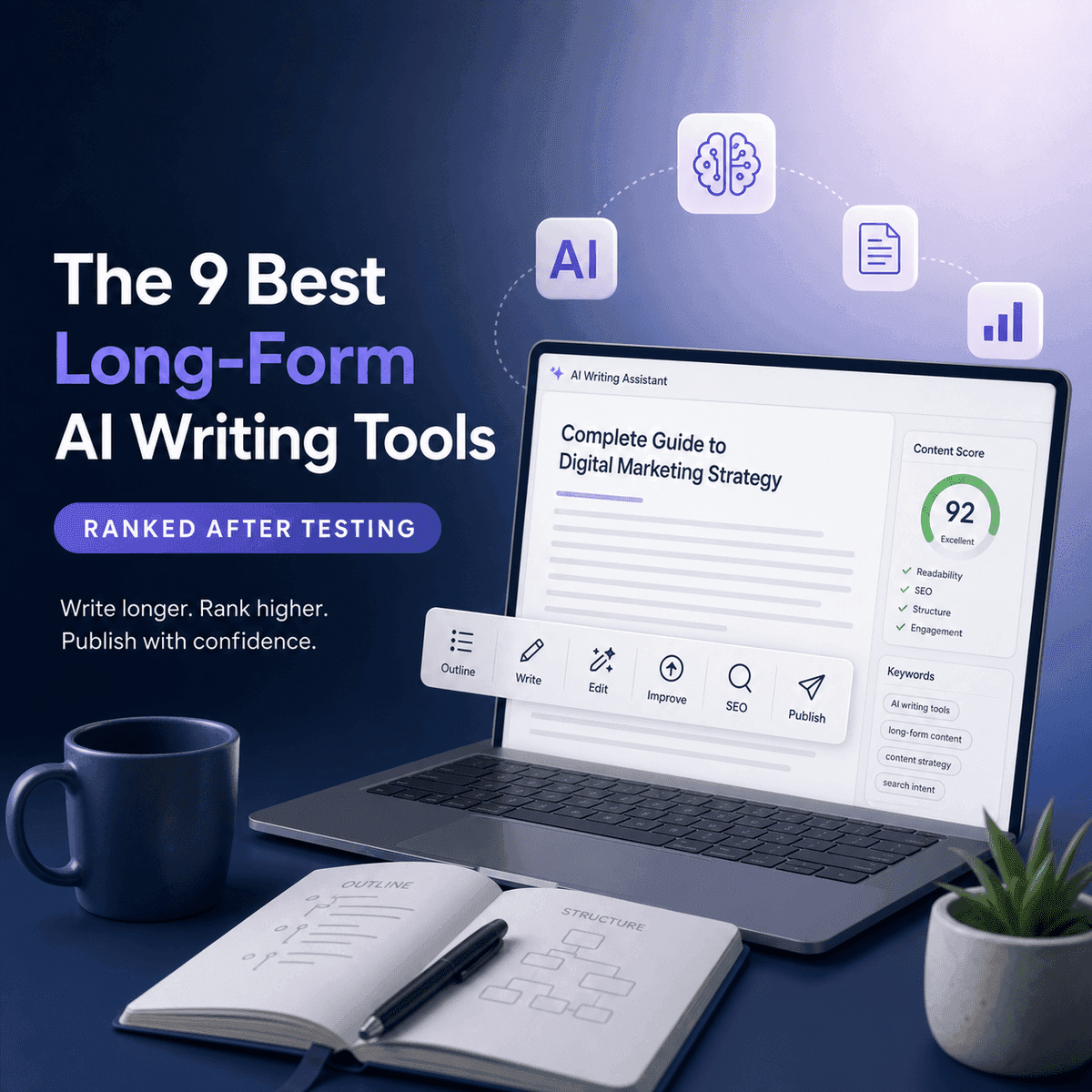
The debate between using AI and human writers is ongoing. The most effective strategy often involves a hybrid approach, leveraging the strengths of both. The table below provides a clear comparison to help you decide where to deploy each resource.
| Feature | AI Generator | Human Writer |
|---|---|---|
| Speed | Extremely fast (minutes per article) | Slow (hours to days per article) |
| Cost | Low, predictable subscription cost | High, variable per-article cost |
| Scalability | Unlimited, can produce hundreds of articles | Limited by team size and time |
| Originality | Can be generic without specific prompts | High, can provide unique insights and opinions |
| Factual Accuracy | Requires human fact-checking | High, can verify sources in real-time |
| SEO Optimization | Excellent, built-in keyword and structure analysis | Good, but depends on the writer’s SEO knowledge |
| Brand Voice | Can be trained, but may lack nuance | Excellent, can capture subtle brand nuances |
| E-E-A-T Signals | Weak, lacks personal experience | Strong, can demonstrate expertise and authority |
Practical Guide: How to Use an AI SEO Long Form Article Generator Effectively
To get the best results from an AI SEO Long Form Article Generator, you need a clear workflow. Simply inputting a keyword and publishing the output is a recipe for mediocrity. The following steps outline a professional approach to integrating AI into your content production pipeline.
Step 1: Define Your Content Strategy and Persona
Before you start generating, know exactly who you are writing for and why. Define the target audience persona, their pain points, and the stage of the buyer’s journey they are in. Provide the AI with this context. Instead of just a keyword, give it a detailed brief. For example, “Write for a marketing manager at a mid-sized B2B company who is looking to improve their organic traffic but has a limited budget.” This context helps the AI tailor the tone and content appropriately.
Step 2: Provide a Detailed Brief and Unique Data
The more specific your instructions, the better the output. Provide the AI with a list of key points you want covered, any specific statistics you have from your own research, and the primary call-to-action you want the reader to take. If you have proprietary data or a unique case study, include it in the prompt. This is the most effective way to ensure the content is not generic and adds value that cannot be found elsewhere.
Step 3: Generate and Review the Outline First
Most professional tools allow you to generate the outline before writing the full article. Always review this outline. Check if the structure is logical, if it covers all the necessary subtopics, and if it aligns with your keyword strategy. This is your chance to steer the direction of the article before the AI invests time in writing the full text. Edit the outline as needed, adding or removing sections to match your vision.
Step 4: Edit and Fact-Check the Draft
Once the draft is generated, the human editing phase begins. This is non-negotiable. You must fact-check every claim, statistic, and date. Verify that the information is current and accurate. Rewrite any sentences that sound awkward or robotic. Inject your brand’s voice and personality into the introduction and conclusion. Add internal links to your other relevant content and external links to authoritative sources.
Step 5: Optimize for Readability and User Experience
After editing for accuracy, focus on the user experience. Break up long paragraphs into shorter ones. Add bullet points, numbered lists, and relevant images or infographics. Ensure the article is easy to scan, as most online readers skim before they commit to reading. Use the AI’s readability score as a baseline, but use your judgment to make the text flow naturally for your specific audience.
Common Mistakes to Avoid When Using AI for Long-Form SEO

Many businesses fail to see results from AI content because they make critical errors in their approach. Avoiding these common pitfalls will significantly increase your chances of success and prevent your content from being penalized by search engines.
- Publishing Without Human Review: The biggest mistake is treating AI output as final. This leads to factual errors, poor readability, and a generic brand voice that fails to connect with readers.
- Keyword Stuffing: While AI tools are good at keyword placement, over-reliance on the AI’s default settings can lead to unnatural keyword repetition. Always review the content to ensure the keywords fit naturally into the context.
- Ignoring Search Intent: Generating content for a keyword without understanding why the user is searching for it is a waste of time. The AI might produce a product review when the user is looking for a tutorial. Always align the content type with the search intent.
- Neglecting E-E-A-T: As mentioned, AI struggles with experience and expertise. Failing to add your own insights, author bios, and citations to credible sources will make it hard to rank for competitive or sensitive topics.
- Using AI for YMYL Topics Without Expert Review: For topics related to health, finance, or legal advice, having a subject matter expert review the content is critical. Publishing inaccurate advice in these areas can have serious consequences for users and your brand’s reputation.
Important Notes on Google’s Stance on AI Content
Google’s official position is that it does not penalize AI-generated content simply because it is AI-generated. The search engine’s focus is on content quality, regardless of how it is produced. The Google Search Essentials guidelines state that the primary measure of quality is whether the content demonstrates E-E-A-T (Experience, Expertise, Authoritativeness, and Trustworthiness).
This means that AI content that is helpful, original, and people-first can rank well. However, content that is created primarily to manipulate search rankings, regardless of whether it is written by a human or AI, will be penalized. The key takeaway is that you must use AI as a tool to enhance your content creation, not as a replacement for quality control and human expertise. The “helpful content” system is designed to reward content that provides genuine value to users, and this should be your north star.
Frequently Asked Questions (FAQ)

What is the best AI SEO Long Form Article Generator?
T Popular options include Jasper, Copy.ai, Writesonic, and Frase. Each offers different features, such as SERP analysis, content optimization, and integration with other SEO tools. It is recommended to try free trials of several platforms to see which one aligns best with your content strategy.
Can Google detect AI-generated content?
Google can detect AI-generated content, but it does not automatically penalize it. The search engine uses sophisticated algorithms to assess content quality. If AI content is helpful, accurate, and provides a good user experience, it can rank. The issue arises when AI content is low-quality, spammy, or designed to manipulate rankings, which violates Google’s spam policies.
How long should an AI-generated article be for SEO?
The ideal length depends on the topic and the competition. For competitive keywords, long-form content of 2,000 to 3,000 words often performs well because it allows for comprehensive coverage of the topic. However, for less competitive or more straightforward queries, a shorter article of 1,000 to 1,500 words may be sufficient. The AI tool’s SERP analysis can help you determine the average word count of the top-ranking pages.
Is it ethical to use AI for content creation?
It is ethical as long as you are transparent and maintain quality standards. The ethical concerns arise when AI is used to mass-produce low-quality content that misleads users or when it is used to impersonate human authorship without disclosure. Being transparent with your audience about your use of AI, while ensuring the final product is accurate and valuable, is the most ethical approach.
Will AI replace human SEO writers?
A AI is excellent for generating drafts, conducting research, and optimizing for technical SEO. Human writers are still essential for strategy, creative direction, fact-checking, adding unique insights, and ensuring the content aligns with the brand’s voice. The future of content creation is a collaboration between human creativity and AI efficiency.
Conclusion
An AI SEO Long Form Article Generator is a transformative tool for modern content marketing. It offers the speed and scalability needed to compete in the digital landscape, allowing businesses to produce comprehensive, optimized content efficiently. However, it is not a magic bullet. The technology works best when paired with human oversight, editorial judgment, and a clear content strategy. By understanding the capabilities and limitations of these tools, and by following a rigorous process of review and optimization, you can leverage AI to significantly enhance your SEO performance while maintaining the quality and trust that your audience expects. The key to success lies in using AI to handle the heavy lifting of research and drafting, freeing up your human experts to focus on what they do best: adding insight, personality, and authority to the final product.
Xem thêm:
- 12 AI SEO Mistakes That Will Crash Your Rankings (And How to Avoid Them)
- AI SEO Predictive Analytics: The Complete Guide to Forecasting Search Performance
- The Ultimate AI Content Brief: How to Write Smarter, Rank Faster, and Outperform Every Competitor
- AI SEO Resource Page Links: The Complete Guide to Building High-Quality Backlinks in 2025
- AI SEO Moz: The Complete Guide to Moz’s AI-Powered SEO Tools in 2025
Bài viết cùng chủ đề:

AI SEO SEO Automation with Make: The Complete Workflow Guide

AI SEO SEO Automation with Zapier: The Complete Workflow Guide

AI SEO SEO Automation with n8n: The Complete Workflow Guide
AI SEO SEO Automation with Gemini: The Complete Guide to Scaling Organic Growth

AI SEO SEO Automation with Claude: The Complete Guide to Scaling Content in 2025

AI SEO SEO Automation with ChatGPT: The Complete Playbook for 2025

AI SEO & SEO Automation for Affiliate Sites: The 2025 Playbook for Passive Income Growth
AI SEO & SEO Automation for Bloggers: The Complete Guide to Scaling Your Content

AI SEO & SEO Automation for Agencies: The Complete 2025 Playbook

AI SEO and SEO Automation for Ecommerce: The Complete Playbook for 2025

AI SEO & SEO Automation for WordPress: The Complete Playbook for 2025
AI SEO SEO Automation Strategy: The Complete Playbook for 2025

Mastering the AI SEO SEO Automation Process: A Complete Guide to Scaling Organic Growth
AI SEO SEO Automation System: The Complete Guide to Scaling Organic Growth in 2025
AI SEO SEO Automation Platform: The Complete Guide to Scaling Organic Growth in 2025
AI SEO SEO Automation Software: The Complete Guide to Scaling Organic Growth in 2025















