
No products in the cart.
AI SEO Meta Description Generator: The Complete Guide to Higher Click-Through Rates
10
Aug
Aug
An AI SEO Meta Description Generator is a tool that uses machine learning and natural language processing to automatically create compelling, keyword-optimized meta descriptions for web pages. These tools analyze your page content, understand user search intent, and produce concise summaries that appear under your title tag in search engine results. For digital marketers and content creators, these generators have become essential for scaling on-page SEO efforts while maintaining quality and relevance. This guide explores how these tools work, their benefits, practical applications, and how to use them effectively to boost organic click-through rates.
What is an AI SEO Meta Description Generator?
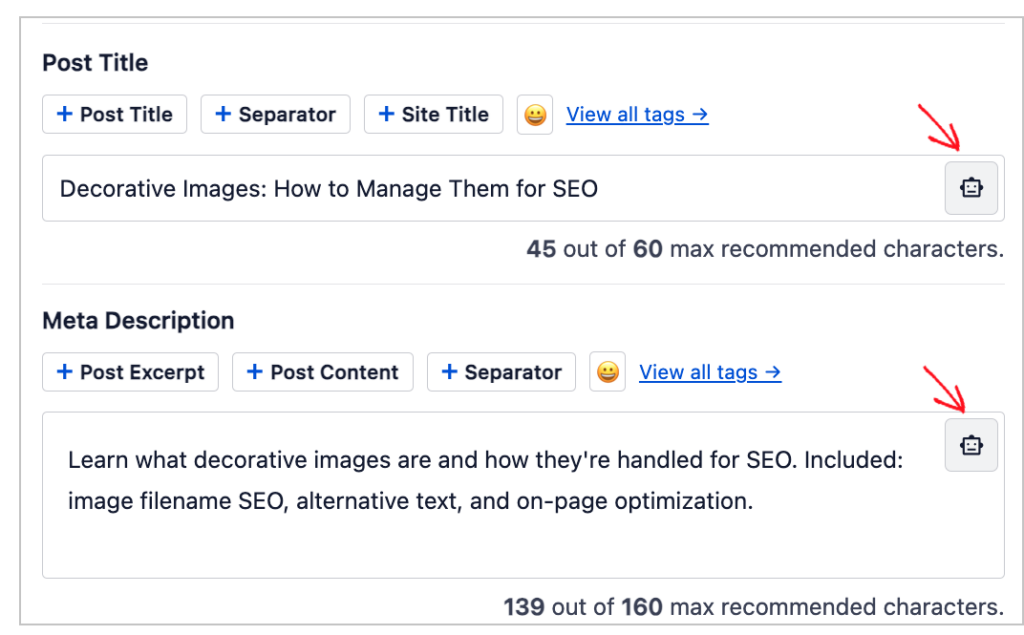
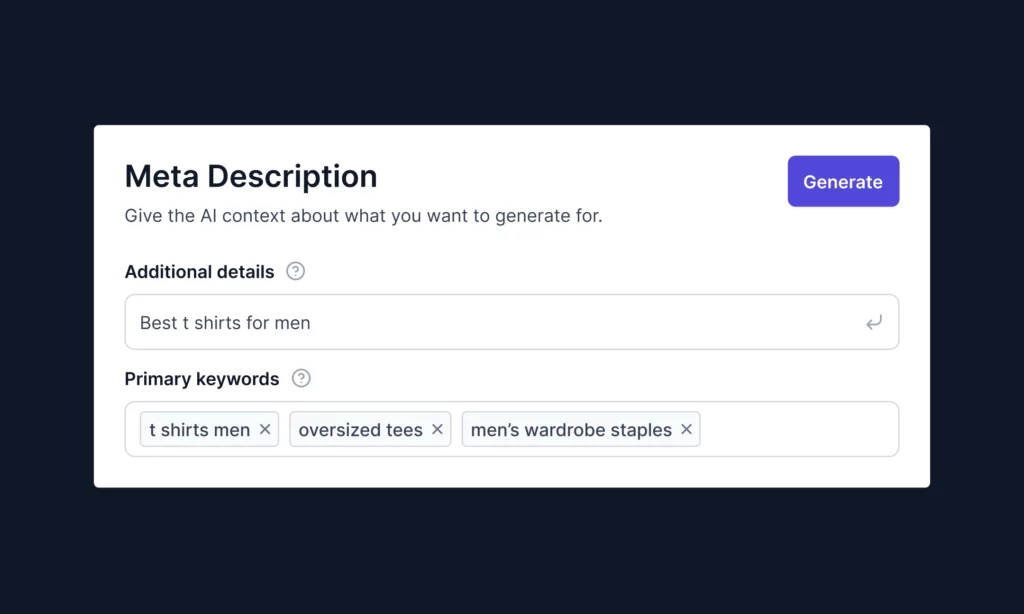
An AI SEO Meta Description Generator is a software application that leverages artificial intelligence, particularly large language models, to write meta descriptions automatically. A meta description is an HTML attribute that provides a brief summary of a webpage’s content. Search engines often display this snippet beneath the page title in search results, making it a critical factor in whether users decide to click through to your site.
Traditional meta descriptions require manual writing, which is time-consuming and often inconsistent across large websites. AI generators solve this problem by processing the entire content of a page, extracting key themes, and generating multiple description options that align with SEO best practices. The best tools also incorporate your target keywords naturally, match the appropriate tone, and adhere to the ideal character length of 150-160 characters to prevent truncation in search results.
How Does an AI Meta Description Generator Work?
Understanding the underlying mechanics helps you use these tools more effectively. Most AI SEO Meta Description Generators follow a similar process:
- Content Ingestion: The tool receives your page content, either through direct input, URL crawling, or API integration.
- Semantic Analysis: The AI parses the text to identify main topics, entities, keywords, and the overall intent of the page.
- Pattern Recognition: The model uses training data from millions of high-performing meta descriptions to understand what makes a snippet compelling.
- Text Generation: The AI constructs multiple variations of meta descriptions, often with different angles (e.g., benefit-focused, question-based, or urgency-driven).
- Optimization Check: The output is automatically checked for character count, keyword inclusion, and readability.
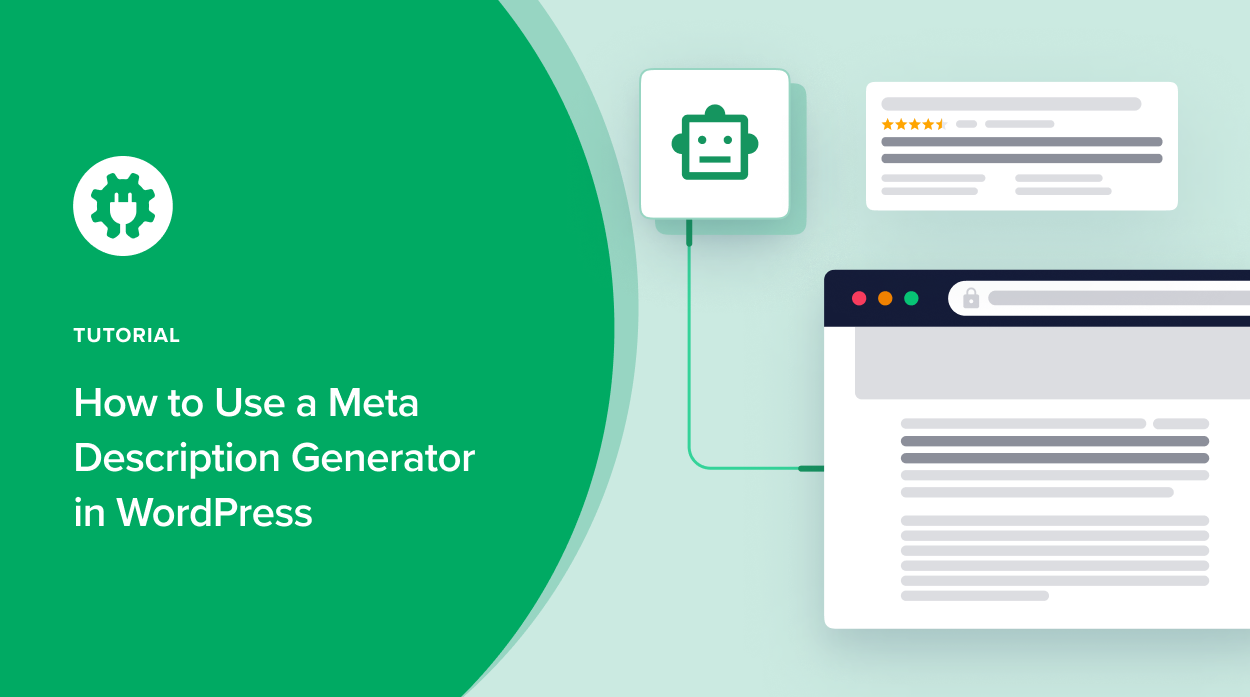
Advanced tools go a step further by analyzing search engine results pages (SERPs) for your target keywords. They can identify what competitors are doing and generate descriptions that differentiate your listing. Some platforms also integrate with content management systems like WordPress or Shopify, allowing for bulk generation and direct publishing.
Key Benefits of Using an AI SEO Meta Description Generator
Adopting AI for meta description creation offers several tangible advantages for SEO professionals and website owners.
Massive Time Savings
Writing unique meta descriptions for hundreds or thousands of product pages is a logistical nightmare. An AI generator can produce optimized descriptions for an entire site in minutes. This efficiency frees up your team to focus on high-level strategy, content creation, and link building.
Consistency Across Large Websites
E-commerce sites and large publishers often struggle with missing or duplicate meta descriptions. AI tools ensure every page has a unique, well-written snippet. This consistency helps search engines understand your site structure better and prevents the “duplicate meta description” warnings in tools like Google Search Console.
Improved Click-Through Rate (CTR)
AI models are trained on data that correlates with high CTR. They know how to incorporate emotional triggers, numbers, and calls-to-action that entice users. A well-crafted meta description can significantly increase the number of clicks your page receives, even if your ranking position stays the same.
Keyword Optimization Without Stuffing
Including the target keyword in the meta description is still a best practice, as Google bolds matching terms in search results. AI generators place keywords naturally within the sentence structure, avoiding the awkward phrasing that comes from manual keyword insertion.
Overcoming Writer’s Block
Even experienced copywriters hit creative walls. AI generators provide a starting point, offering multiple angles and styles that can be refined. This creative assistance often leads to discovering new value propositions you hadn’t considered.
Limitations and Challenges to Consider
While powerful, AI SEO Meta Description Generators are not a magic bullet. Understanding their limitations prevents over-reliance and potential SEO issues.
- Lack of Brand Voice: AI writes generically. If your brand has a unique, quirky, or highly specialized voice, the generated descriptions may feel flat or out of character.
- Factual Errors: The AI might misinterpret complex technical content or generate claims that are not entirely accurate. Every description must be reviewed for factual correctness.
- Missing Context: AI does not know your specific marketing campaign, seasonal promotions, or unique selling points that are not explicitly stated in the page content.
- Over-Optimization Risk: Some tools generate descriptions that are too keyword-dense, which can look spammy to users and potentially trigger search engine penalties.
These limitations highlight the need for a human-in-the-loop approach. Use the AI as a first draft generator, but always apply human judgment before publishing.
AI Meta Description Generator vs. Manual Writing
Choosing between AI and manual writing depends on your resources and goals. The table below compares the two approaches across key dimensions.
| Factor | AI Generator | Manual Writing |
|---|---|---|
| Speed | Generates dozens in seconds | 5-10 minutes per description |
| Scalability | Handles thousands of pages easily | Impractical for large sites |
| Brand Voice | Generic unless heavily customized | Fully aligned with brand personality |
| Creativity | Relies on training data patterns | Unlimited human creativity |
| Cost | Subscription fees or API costs | High labor cost |
| Accuracy | Requires human verification | High, based on direct knowledge |
| Keyword Optimization | Automatic and consistent | Depends on writer’s skill |
The most effective strategy often combines both. Use AI for bulk generation and baseline optimization, then manually refine the most important pages, such as your homepage, cornerstone content, and high-value product pages.
Practical Guide: How to Use an AI SEO Meta Description Generator
To get the best results from these tools, follow a structured workflow that maximizes output quality.
Step 1: Prepare Your Content
Ensure your page content is complete and well-structured. The AI can only generate a description based on what it reads. If your page is thin or poorly written, the meta description will reflect that. Use descriptive headings and include your primary keyword in the first paragraph of the body text.
Step 2: Input the Right Data
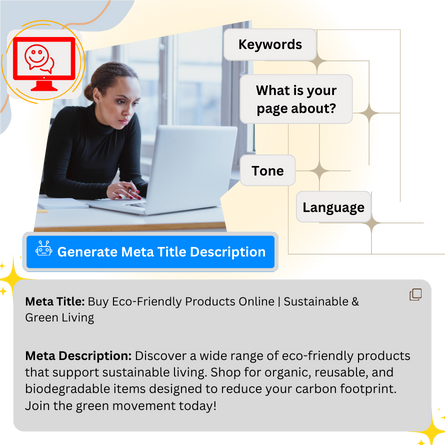
Most tools allow you to input the target keyword, the page title, and the content. Provide all three for the best results. If the tool offers a “tone” or “style” selector, choose options that match your brand. For example, select “professional” for B2B services or “playful” for consumer products.
Step 3: Generate Multiple Variations
Do not settle for the first output. Generate at least 5-10 variations. Look for different angles: one that highlights a benefit, one that poses a question, one that includes a statistic, and one that creates urgency. This variety gives you options to test.
Step 4: Edit and Refine
Take the best AI-generated option and edit it. Insert your specific value proposition, adjust the tone to match your brand, and verify the facts. Ensure the description reads naturally and compels action. Remove any fluff or generic phrases.
Step 5: Check Character Length
Keep the description between 150-160 characters. On mobile devices, Google typically displays around 120 characters. Put the most critical information and your keyword at the beginning of the description to ensure visibility on all devices.
Step 6: Implement and Monitor
Paste the final description into your CMS or HTML. After publishing, monitor your CTR in Google Search Console. If a page has a low CTR despite ranking well, generate new variations and A/B test them.
Top Features to Look for in an AI Meta Description Tool
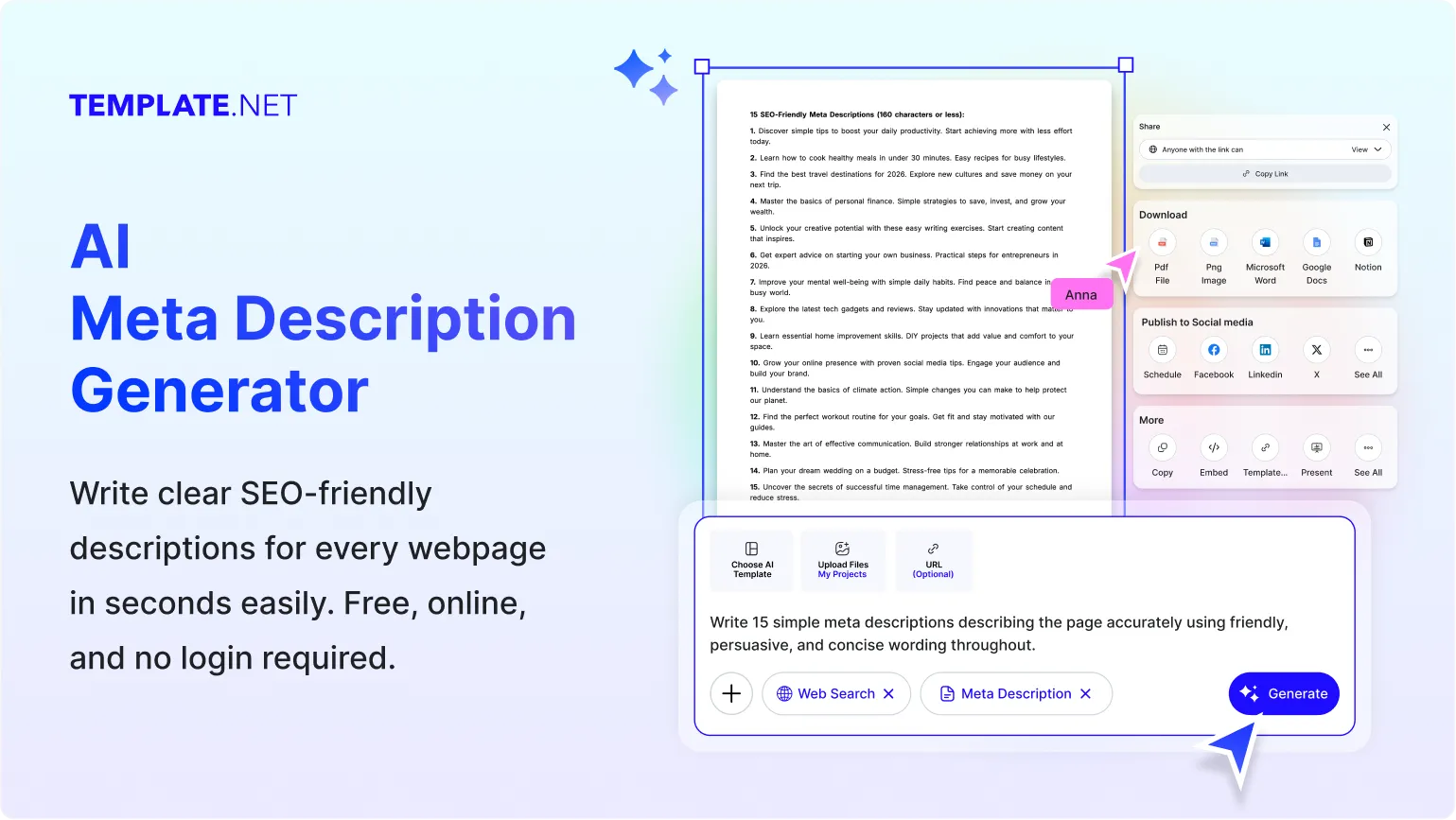
Not all generators are created equal. When evaluating software, prioritize these features to get the most value.
- Bulk Generation: The ability to upload a CSV file or connect to your CMS to generate descriptions for many pages at once.
- SERP Analysis: Tools that analyze current search results for your keyword and suggest ways to stand out from competitors.
- Character Counter: Real-time display of character count to prevent truncation.
- Keyword Integration: Automatic placement of your target keyword and related LSI terms.
- Multiple Tone Options: Flexibility to generate descriptions in different styles (e.g., persuasive, informative, urgent).
- Integration Capabilities: Native integrations with WordPress, Shopify, or popular SEO platforms like Ahrefs or Semrush.
- History and Versioning: The ability to save and compare different versions of descriptions.
Common Mistakes and How to Avoid Them
Even with AI assistance, many SEO professionals make avoidable errors. Here are the most frequent pitfalls and their solutions.
Mistake 1: Blindly Copying AI Output
Publishing AI-generated text without review leads to generic, sometimes inaccurate descriptions. Always read the output aloud. If it sounds like it could apply to any website, it needs rewriting.
Solution: Use the AI output as a skeleton. Add specific details about your product, service, or unique methodology.
Mistake 2: Ignoring Search Intent
An AI tool might generate a description that matches the content but not the user’s intent. For example, a page about “best running shoes” should have a description that implies comparison and recommendations, not just a product description.
Solution: Manually adjust the description to match the stage of the buyer’s journey. Informational pages need educational descriptions; transactional pages need action-oriented ones.
Mistake 3: Keyword Stuffing
Some tools over-optimize by repeating the keyword multiple times. This looks unnatural and can reduce CTR.
Solution: Ensure the keyword appears only once, and only if it fits naturally. Focus on readability over keyword inclusion.
Mistake 4: Forgetting the Call-to-Action
A meta description without a clear next step is a missed opportunity. Users need a reason to click.
Solution: Include action verbs like “Learn,” “Discover,” “Get,” or “Find out” in your final description.
Mistake 5: Using the Same Description for Multiple Pages
Even if the AI generates unique text, some users copy the same description across similar product pages. This creates duplicate content issues.
Solution: Use bulk generation features to ensure every page gets a unique description based on its specific content.
Important Notes on SEO Best Practices
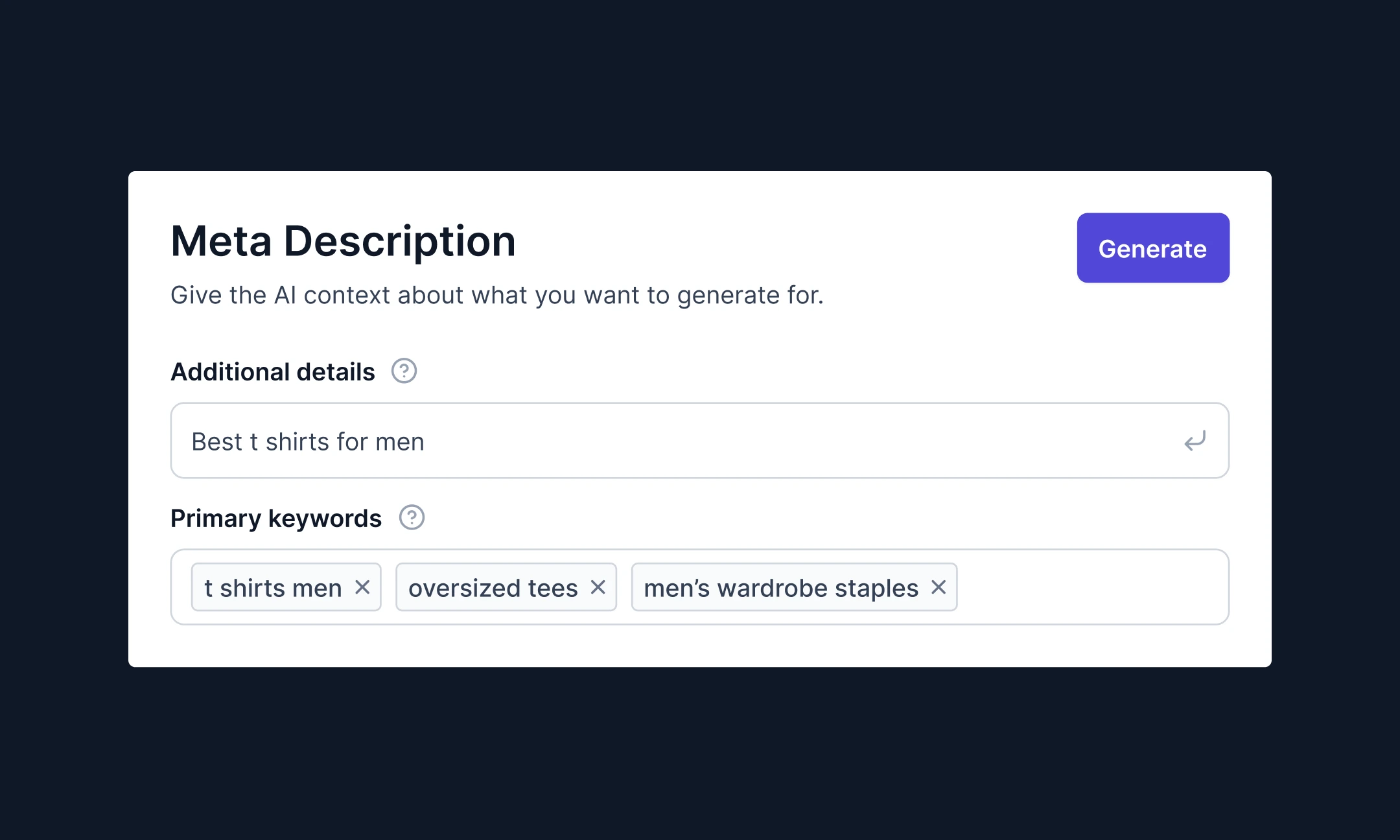
While meta descriptions are important, they are not a direct ranking factor. Google has confirmed that they do not influence search rankings. However, they are a critical factor for user engagement and CTR, which indirectly impacts SEO performance over time.
Google does not always use your meta description. The search engine may choose to generate its own snippet from your page content if it deems it more relevant to the user’s query. To increase the chances of your description being used, ensure it accurately reflects the page content and directly answers the likely query.
Additionally, keep your meta descriptions fresh. If you update a page’s content significantly, regenerate the meta description to match. Stale descriptions that no longer reflect the content can lead to high bounce rates.
Frequently Asked Questions
What is the ideal length for an AI-generated meta description?
The ideal length is between 150 and 160 characters. This ensures the full description is displayed in desktop search results. For mobile, aim to put the most important information in the first 120 characters, as longer text may be cut off.
Can an AI SEO Meta Description Generator replace human copywriters?
No. AI tools are excellent for generating drafts and scaling production, but they lack the brand understanding, emotional intelligence, and creative nuance of a human writer. The best results come from a collaboration where AI handles the heavy lifting and humans provide the final polish.
Are AI-generated meta descriptions considered duplicate content?
No, as long as each description is unique. AI tools generate original text based on the specific input content. However, if you use the same generic prompt for multiple pages without providing unique content, the outputs may be similar. Always provide the full page content to the tool.
Do meta descriptions affect Google rankings?
No, meta descriptions are not a direct ranking factor. They do not influence where your page appears in search results. However, they significantly impact click-through rates, which can lead to more traffic and engagement, indirectly benefiting your SEO over time.
How often should I update my meta descriptions?
Update them whenever you significantly change the page content. It is also wise to review them quarterly to ensure they still align with current search trends and user intent. If you notice a drop in CTR for a specific page, rewriting the meta description is a quick fix to test.
Can I use an AI generator for free?
Many SEO platforms offer free trials or limited free tiers. Standalone AI writing tools often have a free version with word limits. For bulk generation on large sites, a paid subscription is usually necessary. Evaluate your volume needs before choosing a plan.
Conclusion
An AI SEO Meta Description Generator is a powerful asset for any digital marketing strategy. It streamlines a tedious process, ensures consistency across large websites, and provides data-driven insights that can improve click-through rates. The technology excels at handling scale and generating baseline optimized text, but it requires human oversight to ensure brand voice, factual accuracy, and strategic alignment.
By integrating AI tools into your workflow, you can allocate more time to content creation and link building while maintaining a fully optimized website. The key is to treat the AI as a collaborative partner, not a replacement for strategic thinking. Start by using these tools for your lowest-priority pages, refine your process, and gradually expand to your most important content. The result is a more efficient SEO operation and a stronger presence in search engine results.
Xem thêm:
- AI Copywriting Tools: The Complete Guide to Automating High-Converting Content in 2025
- AI SEO Moz: The Complete Guide to Moz’s AI-Powered SEO Tools in 2025
- AI SEO Best Practices: The Complete Guide to Smarter Search Optimization
- AI SEO AI Visibility Tools: The Complete Guide to Dominating Search in 2025
- AI SEO Keyword Mapping: The Complete Guide to Smarter Content Planning
Bài viết cùng chủ đề:

AI SEO SEO Automation with Make: The Complete Workflow Guide

AI SEO SEO Automation with Zapier: The Complete Workflow Guide

AI SEO SEO Automation with n8n: The Complete Workflow Guide
AI SEO SEO Automation with Gemini: The Complete Guide to Scaling Organic Growth

AI SEO SEO Automation with Claude: The Complete Guide to Scaling Content in 2025

AI SEO SEO Automation with ChatGPT: The Complete Playbook for 2025

AI SEO & SEO Automation for Affiliate Sites: The 2025 Playbook for Passive Income Growth
AI SEO & SEO Automation for Bloggers: The Complete Guide to Scaling Your Content

AI SEO & SEO Automation for Agencies: The Complete 2025 Playbook

AI SEO and SEO Automation for Ecommerce: The Complete Playbook for 2025

AI SEO & SEO Automation for WordPress: The Complete Playbook for 2025
AI SEO SEO Automation Strategy: The Complete Playbook for 2025

Mastering the AI SEO SEO Automation Process: A Complete Guide to Scaling Organic Growth
AI SEO SEO Automation System: The Complete Guide to Scaling Organic Growth in 2025
AI SEO SEO Automation Platform: The Complete Guide to Scaling Organic Growth in 2025
AI SEO SEO Automation Software: The Complete Guide to Scaling Organic Growth in 2025















