
No products in the cart.
AI SEO Monitoring Workflow: The Complete Guide to Automated Rank Tracking and Performance Analysis
31
Jul
Jul
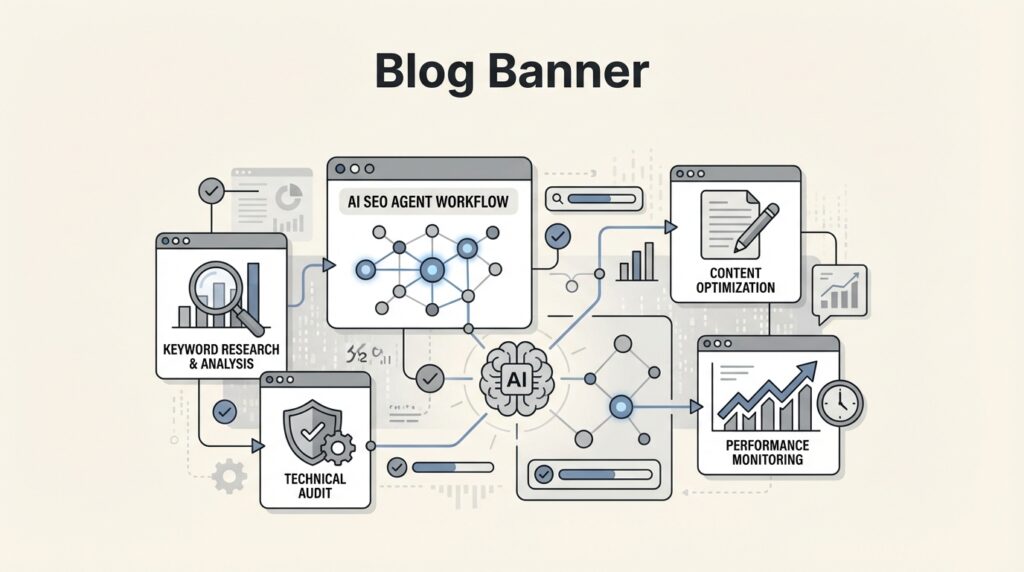
An AI SEO monitoring workflow transforms how digital marketing teams track search performance, identify ranking fluctuations, and respond to algorithm updates. Traditional manual monitoring methods simply cannot keep pace with the speed at which search engine results pages change. By integrating artificial intelligence into your monitoring processes, you gain real-time insights, predictive analytics, and automated reporting that would take a human analyst days to compile. This comprehensive guide breaks down every component of building an effective AI-driven monitoring system, from selecting the right tools to interpreting the data your AI surfaces.
What Is an AI SEO Monitoring Workflow?
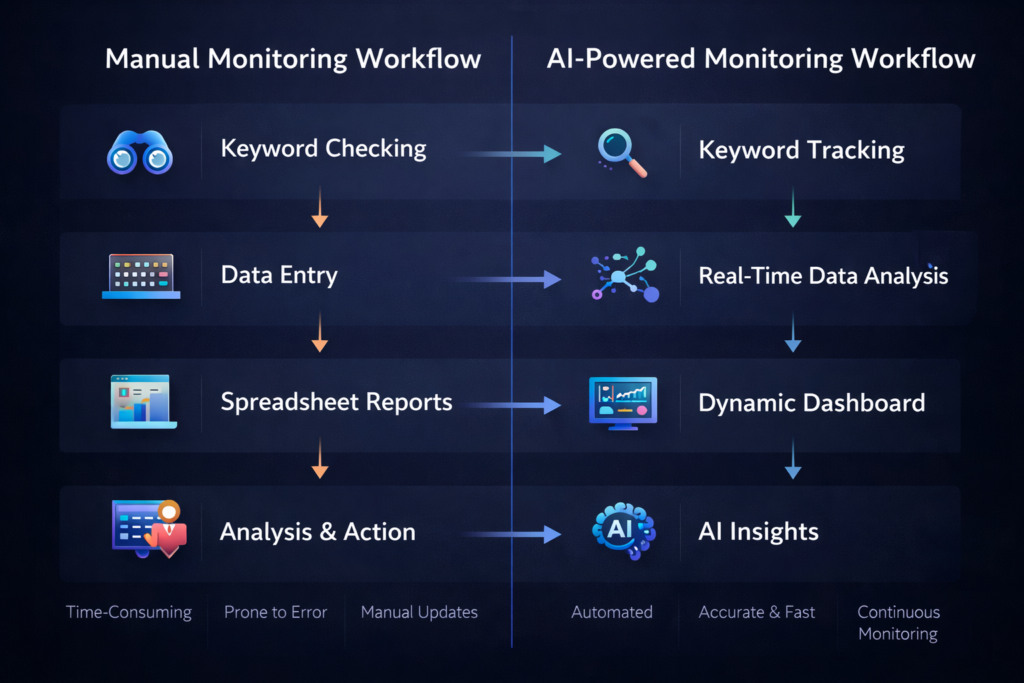
An AI SEO monitoring workflow is a structured, automated process that uses machine learning algorithms to track, analyze, and report on your website’s search engine performance. Unlike traditional monitoring, which relies on periodic manual checks and static spreadsheets, an AI-powered workflow continuously scans search data, detects anomalies, and provides actionable recommendations without human intervention.
The core difference lies in the intelligence layer. Standard rank tracking tools show you where your pages appear in search results. An AI workflow goes further by analyzing patterns across thousands of data points, correlating ranking changes with algorithm updates, competitor actions, and on-page modifications. This allows you to understand not just what happened, but why it happened and what to do next.
Why Traditional SEO Monitoring Falls Short
Manual monitoring approaches have several critical limitations that make them inadequate for modern search environments. Search engines now process billions of queries daily, and results can shift multiple times within a single day. A weekly manual check simply misses the vast majority of these fluctuations.
Traditional methods also suffer from data fragmentation. Marketing teams often juggle separate tools for rank tracking, backlink analysis, site audits, and analytics. Piecing together insights from these disconnected sources creates blind spots and delays response times. When you finally identify a problem, competitors have already capitalized on the opportunity.
Human error compounds these issues. Manual data entry, inconsistent check schedules, and subjective interpretation of results lead to unreliable conclusions. An AI SEO monitoring workflow eliminates these variables by standardizing data collection and applying consistent analytical frameworks across every monitoring cycle.
Core Components of an AI SEO Monitoring Workflow
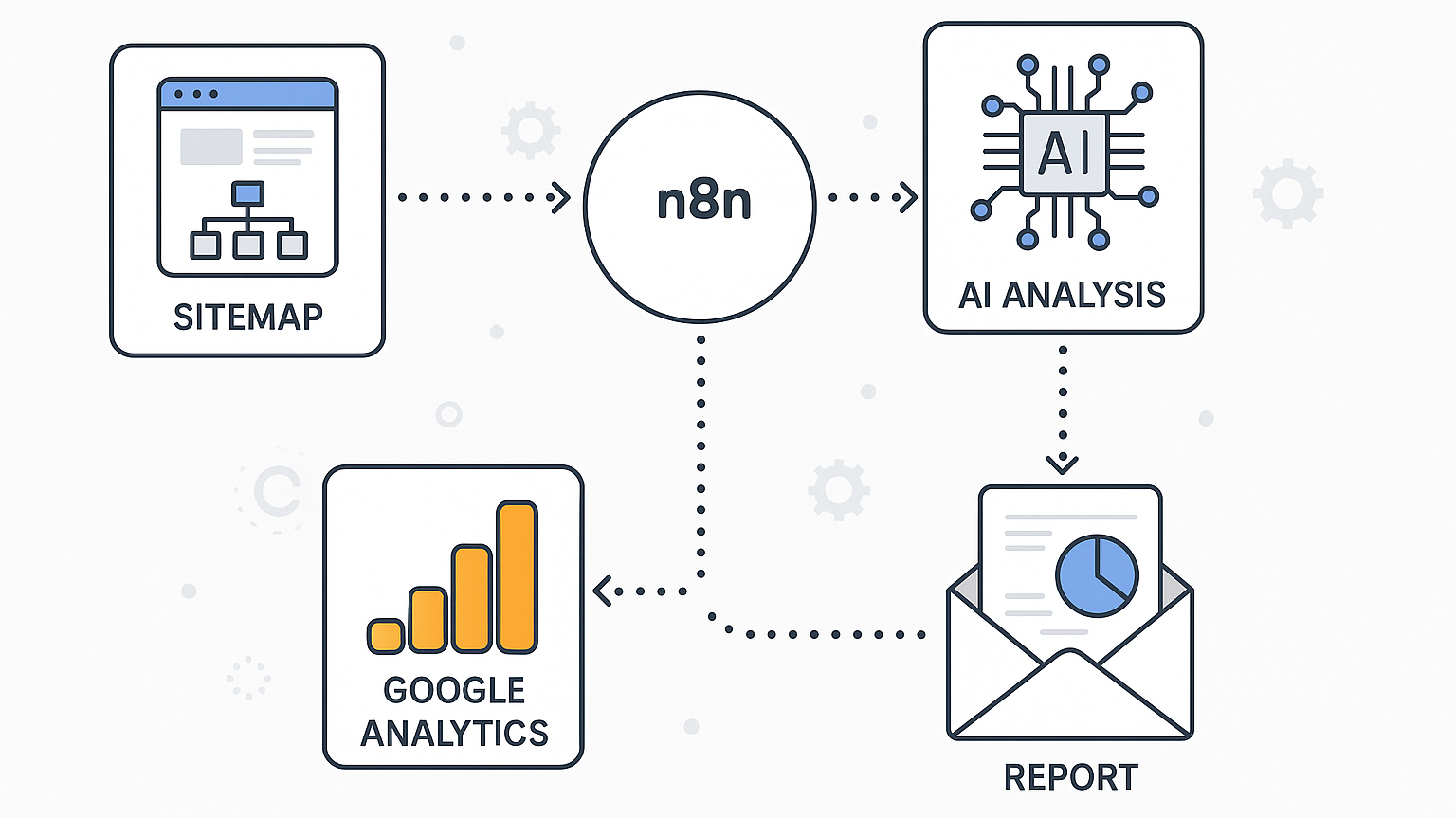
Building an effective AI monitoring system requires understanding its fundamental building blocks. Each component plays a specific role in the overall workflow, and they must work together seamlessly to deliver value.
Automated Data Collection Layer
The foundation of any AI workflow is reliable data acquisition. This layer includes automated crawlers that regularly scan your site, APIs that pull data from Google Search Console and analytics platforms, and rank tracking bots that monitor keyword positions across different search engines and geographic locations.
Modern AI monitoring tools collect data at hourly or even real-time intervals. This frequency allows the system to capture transient ranking patterns that would be invisible to weekly checks. The collected data includes keyword positions, click-through rates, impression volumes, page load speeds, and technical SEO metrics.
Machine Learning Analysis Engine
The analysis engine is where raw data transforms into actionable intelligence. Machine learning algorithms process the collected information to identify trends, detect anomalies, and predict future performance. These algorithms learn from historical data, becoming more accurate at forecasting ranking changes as they process more information.
Pattern recognition is a key function of this component. The AI can identify correlations between specific on-page changes and subsequent ranking improvements, allowing you to replicate successful strategies across other pages. It can also detect early warning signs of algorithmic penalties, giving you time to investigate before rankings collapse.
Alert and Notification System
An effective monitoring workflow must communicate findings promptly. The alert system monitors for predefined triggers, such as sudden drops in rankings, unexpected traffic changes, or technical errors. When these triggers occur, the system sends notifications through email, Slack, or mobile push notifications.
Smart alerting goes beyond simple threshold triggers. The AI learns your normal performance baselines and only alerts you when deviations fall outside expected ranges. This reduces alert fatigue while ensuring you never miss genuinely important changes.
Automated Reporting Dashboard
The reporting layer presents monitoring data in an accessible format. AI-powered dashboards automatically generate visualizations, executive summaries, and detailed breakdowns. These reports update in real-time, providing stakeholders with current performance data without requiring manual compilation.
Advanced dashboards include natural language summaries that explain what changed, why it changed, and recommended actions. This makes complex SEO data understandable to non-technical stakeholders, facilitating faster decision-making across your organization.
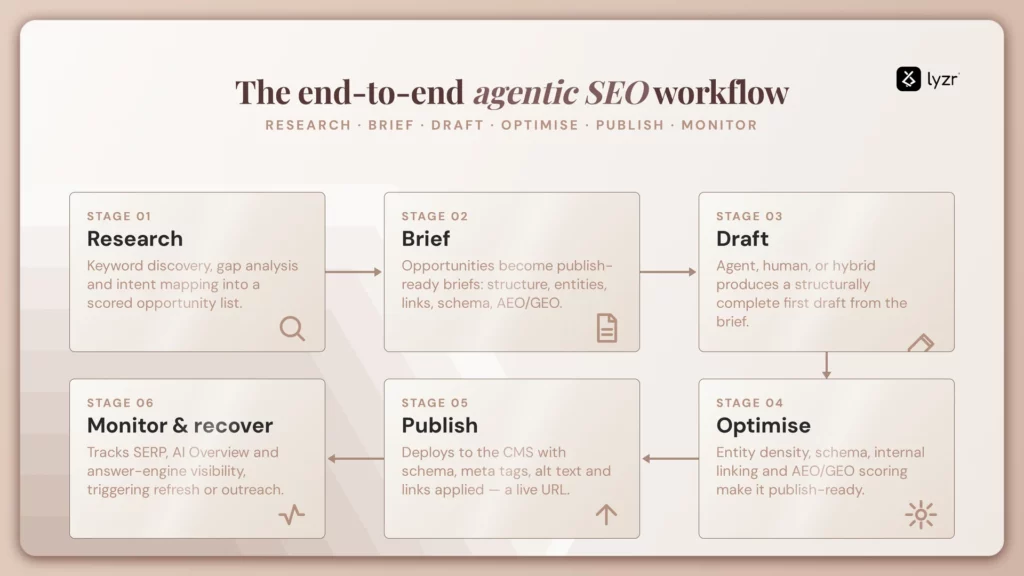
Building Your AI SEO Monitoring Workflow: Step-by-Step Process
Implementing an AI-driven monitoring system requires careful planning and execution. The following process outlines the essential steps for creating a workflow that delivers consistent, reliable results.
Step 1: Define Your Monitoring Objectives
Start by identifying what you need to track. Your objectives should align with broader business goals, whether that means increasing organic traffic, improving conversion rates, or dominating specific keyword clusters. Clear objectives guide your tool selection and alert configuration.
Document your baseline metrics before implementing the AI system. This historical data provides the training ground for your machine learning algorithms, helping them understand what normal performance looks like for your specific website and industry.
Step 2: Select the Right AI Monitoring Tools
The market offers numerous AI-powered SEO monitoring platforms, each with distinct strengths. Evaluate tools based on your specific needs, budget, and technical capabilities. Consider factors such as data refresh frequency, integration options, and the sophistication of the AI analysis engine.
Popular options include platforms that combine rank tracking with predictive analytics, tools that specialize in technical SEO monitoring, and comprehensive suites that cover all aspects of search performance. Many organizations use a combination of tools to achieve complete coverage.
Step 3: Configure Data Sources and Integrations
Connect your monitoring tools to all relevant data sources. This includes Google Search Console, Google Analytics, Bing Webmaster Tools, your CMS, and any other platforms that hold performance data. Proper integration ensures your AI has access to the complete picture.
Set up API connections to automate data flow between systems. Manual data transfers introduce delays and errors that undermine the effectiveness of your AI analysis. Automated integrations keep everything synchronized and current.
Step 4: Establish Alert Thresholds and Protocols
Define what constitutes a significant change for your monitoring purposes. Set specific thresholds for ranking drops, traffic declines, and technical errors. Your AI system will use these thresholds to determine when to notify your team.
Create response protocols for different alert types. Document who gets notified, what investigation steps should follow, and how to escalate critical issues. Having predefined responses speeds up reaction times and ensures consistent handling of monitoring alerts.
Step 5: Train Your AI Models
Machine learning algorithms improve with data. Feed your AI system historical performance data so it can learn your site’s patterns and establish accurate baselines. The more quality data you provide, the more accurate your AI predictions become.
Regularly review and refine your AI models based on their performance. As search algorithms evolve and your website changes, your monitoring AI must adapt. Schedule periodic model retraining to maintain accuracy.
Step 6: Implement Continuous Monitoring
Launch your workflow and let the AI system run continuously. The system should automatically collect data, analyze patterns, and generate reports without requiring manual intervention. Your team focuses on responding to alerts and implementing recommendations rather than gathering data.
Monitor the monitoring system itself. Track the accuracy of AI predictions, the relevance of alerts, and the usefulness of automated reports. Adjust your configuration as needed to improve performance.
Key Metrics to Track in Your AI SEO Monitoring Workflow
Not all metrics carry equal weight in an AI monitoring system. Focus on the following key performance indicators to get the most value from your workflow.
Keyword Position Volatility
This metric measures how much your keyword rankings fluctuate over time. High volatility indicates instability that may require investigation. AI systems can calculate volatility scores for individual keywords and aggregate them across your entire portfolio.
Understanding volatility helps you distinguish between normal ranking movements and significant changes that demand attention. Your AI can establish baseline volatility levels and flag unusual patterns.
Organic Click-Through Rate Trends
Click-through rate reveals how effectively your search listings attract clicks. AI monitoring tracks CTR changes across different queries, pages, and time periods. Declining CTR may indicate issues with title tags, meta descriptions, or search result appearance.
Your AI workflow can correlate CTR changes with specific on-page modifications, helping you understand what drives user engagement with your search listings.
Indexation Status Changes
Monitoring which pages are indexed and how that changes over time is critical. AI systems track indexation rates, identify pages that lose indexation, and flag potential crawlability issues. Sudden drops in indexed pages often signal technical problems.
Automated indexation monitoring catches issues early, before they significantly impact organic visibility. Your AI can also predict which new pages are likely to get indexed based on historical patterns.
Core Web Vitals Performance
User experience signals directly impact search rankings. AI monitoring continuously tracks Core Web Vitals metrics including Largest Contentful Paint, First Input Delay, and Cumulative Layout Shift. The system identifies pages that degrade in performance and correlates these changes with ranking movements.
Automated performance monitoring helps you maintain the technical quality standards that search engines reward. Your AI can prioritize which performance issues to fix first based on their likely impact on rankings.
Benefits of Implementing an AI SEO Monitoring Workflow
Organizations that adopt AI-powered monitoring gain substantial advantages over competitors relying on traditional methods. These benefits extend across efficiency, accuracy, and strategic decision-making.
Significant Time Savings
Automated monitoring eliminates hours of manual data collection and analysis. Tasks that previously required dedicated staff time now happen automatically in the background. Your team redirects this saved time toward strategic initiatives and content development.
Consider the time required to manually check rankings for 500 keywords across multiple search engines. An AI workflow completes this task in minutes while also analyzing patterns and generating insights that would take days to derive manually.
Improved Detection Speed
AI monitoring identifies problems within hours of their occurrence, not days or weeks later. This rapid detection allows you to respond to algorithm updates, technical errors, and competitor actions while they still matter. Quick responses often mean the difference between minor setbacks and significant traffic losses.
Real-time monitoring also helps you capitalize on opportunities. When your AI detects a sudden ranking improvement for a specific keyword, you can immediately create supporting content or strengthen internal links to maximize the gain.
Enhanced Predictive Capabilities
Machine learning algorithms identify patterns that humans miss. Your AI can predict which pages are likely to lose rankings based on historical trends, allowing you to take preventive action. It can also forecast the impact of planned changes before you implement them.
Predictive analytics transform your SEO approach from reactive to proactive. Instead of responding to problems after they occur, you anticipate challenges and address them before they affect your search visibility.
Data-Driven Decision Making
AI monitoring provides objective, data-backed insights that remove guesswork from SEO decisions. Every recommendation comes with supporting evidence, making it easier to justify strategies to stakeholders and secure necessary resources.
Consistent, automated reporting ensures everyone in your organization works from the same data. This alignment reduces conflicts and speeds up the decision-making process.
Limitations and Challenges of AI SEO Monitoring
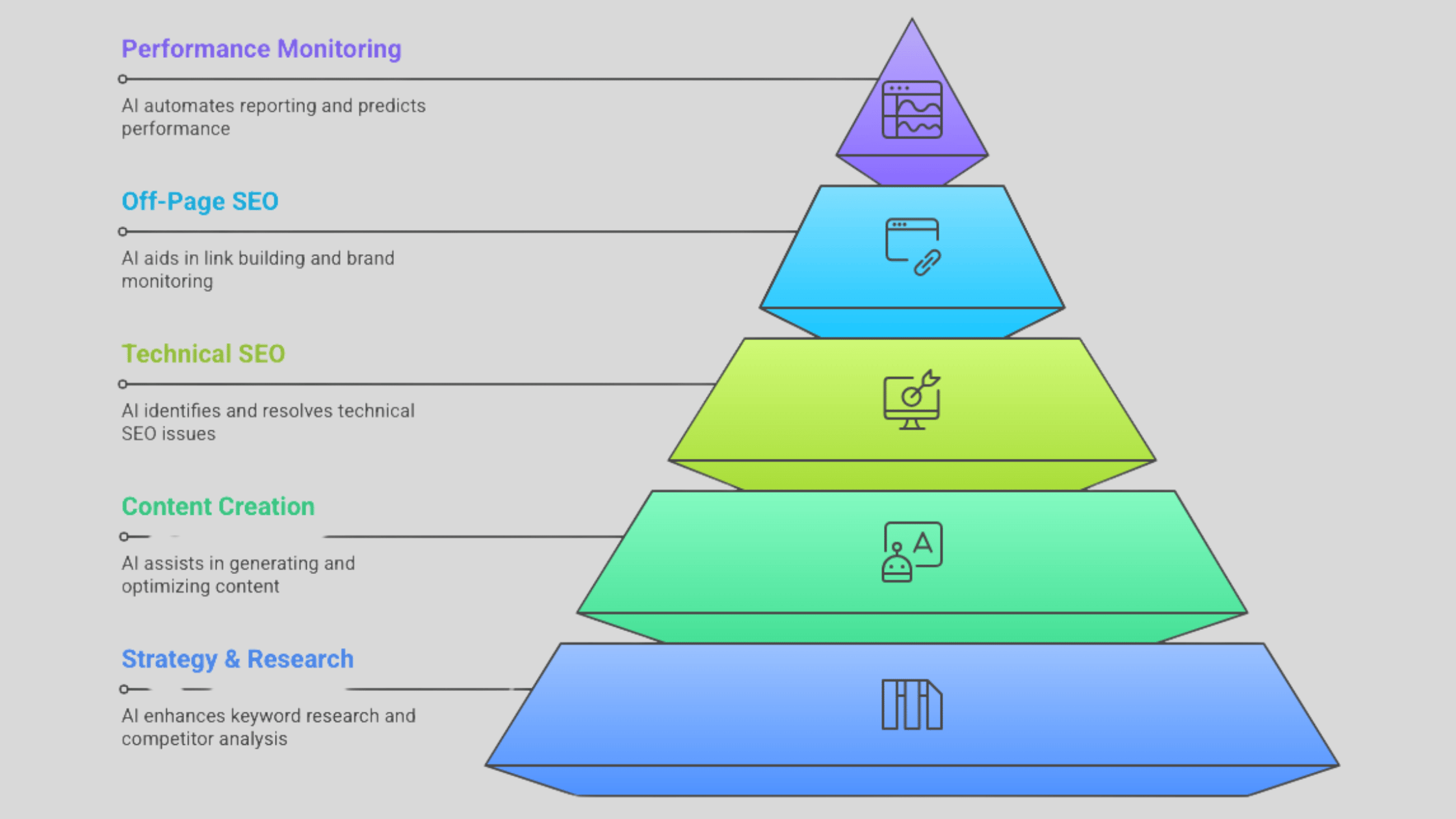
While AI monitoring offers substantial benefits, understanding its limitations helps you set realistic expectations and avoid common pitfalls.
Data Quality Dependence
AI systems are only as good as the data they process. Inaccurate, incomplete, or inconsistent data produces misleading insights. Maintaining clean data sources requires ongoing effort and attention to detail.
Search engine APIs occasionally experience delays or data gaps. Your monitoring workflow must handle these inconsistencies gracefully, avoiding false alerts based on incomplete information.
Cost Considerations
Advanced AI monitoring tools carry significant subscription costs. Enterprise-level platforms with comprehensive features can strain marketing budgets, especially for smaller organizations. Weigh the costs against the potential value of improved monitoring capabilities.
Some tools offer tiered pricing based on keyword volume or data refresh frequency. Start with a plan that matches your current needs and scale up as your monitoring requirements grow.
Algorithm Interpretation Challenges
AI systems identify correlations but may struggle to establish causation. A detected pattern between two variables does not necessarily mean one causes the other. Human expertise remains essential for interpreting AI insights and making final decisions.
Search engine algorithms change frequently, and your AI models must adapt to these changes. Periodically review your monitoring configuration to ensure it remains aligned with current search engine behavior.
AI SEO Monitoring Workflow vs Traditional Monitoring: A Comparison
| Aspect | AI Monitoring Workflow | Traditional Monitoring |
|---|---|---|
| Data Collection Frequency | Real-time or hourly | Weekly or monthly |
| Analysis Capability | Machine learning pattern recognition | Manual spreadsheet analysis |
| Alert Speed | Immediate notifications | Delayed until next check |
| Predictive Insights | Forecasts future trends | Reactive only |
| Resource Requirements | Higher tool costs, lower labor | Lower tool costs, higher labor |
| Scalability | Handles thousands of keywords | Limited by human capacity |
| Error Rate | Minimal human error | Prone to manual mistakes |
| Reporting | Automated, real-time dashboards | Manual report compilation |
Common Mistakes in AI SEO Monitoring Workflow Implementation
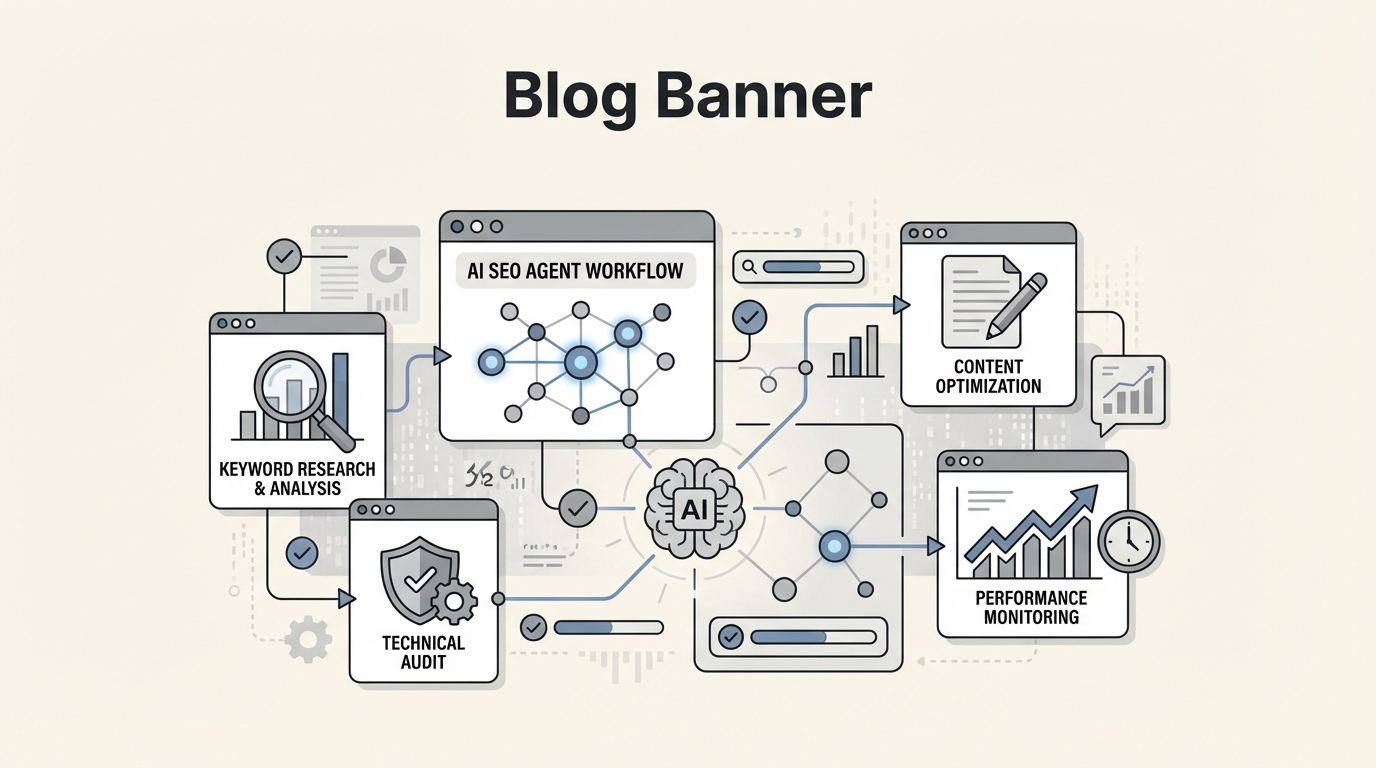
Avoiding these frequent errors ensures your monitoring system delivers maximum value from the start.
Over-Reliance on Automated Alerts
Automated alerts provide valuable notifications, but they cannot replace human judgment. Some ranking fluctuations require contextual understanding that AI lacks. Always investigate alerts before taking action, and consider whether external factors explain the observed changes.
Seasonal patterns, news events, and competitor promotions can all affect rankings in ways that AI may misinterpret. Combine automated monitoring with periodic human review of significant changes.
Neglecting Data Quality Management
Garbage in, garbage out applies directly to AI monitoring. Failing to maintain clean, consistent data sources undermines the entire workflow. Regularly audit your data connections, verify API integrations, and clean up outdated or duplicate data.
Document your data sources and their update frequencies. This documentation helps you identify when data quality issues arise and trace them to their source.
Setting Unrealistic Alert Thresholds
Thresholds that are too sensitive generate constant false alarms, while thresholds that are too loose miss important changes. Finding the right balance requires experimentation and adjustment based on your site’s normal volatility.
Start with conservative thresholds and gradually tighten them as you understand your baseline patterns. Review alert history regularly to identify and correct misconfigured thresholds.
Ignoring the Human Element
AI monitoring enhances human expertise but does not replace it. Teams that rely entirely on automated insights miss the nuanced understanding that comes from experience and context. Maintain a culture where AI provides data and humans provide judgment.
Encourage your SEO team to question AI recommendations and validate them against their own knowledge. The best results come from combining machine efficiency with human insight.
Important Notes for Successful AI SEO Monitoring
Keep these considerations in mind as you develop and refine your monitoring workflow.
Search engine algorithms evolve constantly, and your monitoring system must evolve with them. Schedule quarterly reviews of your workflow configuration, alert thresholds, and AI model training data. Update your approach to reflect changes in search engine behavior and your own business priorities.
Integration with other marketing systems amplifies the value of your monitoring data. Connect your SEO monitoring workflow with content management, advertising, and customer relationship platforms. This integration provides a complete view of how search performance impacts broader business outcomes.
Documentation remains essential even in automated workflows. Maintain clear records of your monitoring configuration, alert protocols, and response procedures. This documentation ensures continuity when team members change and provides a reference for troubleshooting issues.
Privacy and data security considerations apply to monitoring data just as they do to other business information. Ensure your monitoring tools comply with relevant regulations and that access to performance data is restricted to authorized personnel.
Frequently Asked Questions About AI SEO Monitoring Workflow
What is the difference between AI SEO monitoring and regular rank tracking?
Regular rank tracking simply records keyword positions at scheduled intervals. AI SEO monitoring goes beyond position tracking to analyze patterns, detect anomalies, predict future changes, and provide automated recommendations. The AI layer adds intelligence that transforms raw data into actionable insights, making the monitoring process proactive rather than reactive.
How often should AI SEO monitoring run?
Modern AI monitoring systems run continuously, collecting data at hourly or real-time intervals. The frequency depends on your specific needs and tool capabilities. High-competition industries benefit from more frequent monitoring, while stable niches may require less frequent data collection. Your AI system should establish baselines and alert you when significant deviations occur, regardless of the collection frequency.
Can AI SEO monitoring predict Google algorithm updates?
AI monitoring cannot predict Google algorithm updates before they happen, but it can detect the effects of updates much faster than traditional methods. Machine learning algorithms identify unusual ranking patterns that often indicate an algorithm change. This early detection gives you a head start in analyzing the impact and adjusting your strategy accordingly.
What tools are best for building an AI SEO monitoring workflow?
Several platforms offer strong AI monitoring capabilities, including Semrush, Ahrefs, and specialized tools like Positional and SEOmonitor. The best choice depends on your specific requirements, budget, and existing tech stack. Evaluate tools based on their data refresh frequency, AI analysis depth, integration options, and reporting capabilities before making a decision.
How much does an AI SEO monitoring workflow cost?
Costs vary widely based on the tools you select and the scale of your monitoring needs. Entry-level AI monitoring tools start around $100 per month, while comprehensive enterprise solutions can cost several thousand dollars monthly. Factor in the labor savings from automation when calculating the return on investment, as reduced manual effort often offsets higher tool costs.
Do small businesses need AI SEO monitoring?
Small businesses benefit from AI monitoring even with limited budgets. Automated monitoring saves time that small teams can redirect toward content creation and other growth activities. Many tools offer scaled-down plans suitable for smaller keyword portfolios, making AI monitoring accessible to organizations of all sizes.
Conclusion
An AI SEO monitoring workflow represents the evolution of search performance management. The shift from manual, periodic checks to continuous, intelligent monitoring fundamentally changes how organizations understand and respond to search engine dynamics. By automating data collection, applying machine learning analysis, and delivering real-time insights, AI monitoring empowers teams to make faster, more informed decisions.
The implementation process requires thoughtful planning, appropriate tool selection, and ongoing refinement. Organizations that invest the time to build effective AI monitoring systems gain substantial competitive advantages through improved detection speed, predictive capabilities, and operational efficiency. The limitations of AI monitoring, including data quality dependencies and the need for human interpretation, do not diminish its value when properly managed.
Start by defining clear monitoring objectives, selecting tools that match your needs, and establishing solid data foundations. Train your AI models with quality historical data and refine your alert thresholds based on real performance patterns. Combine automated insights with human expertise to create a monitoring workflow that drives sustainable search performance improvements.
The future of SEO monitoring belongs to those who embrace artificial intelligence as a core component of their operational strategy. Building your AI SEO monitoring workflow today positions your organization to navigate the increasingly complex search landscape with confidence and precision.
Xem thêm:
- AI Video SEO: The Ultimate Guide to Ranking AI-Generated Videos in 2025
- AI SEO Topic Modeling: The Complete Guide to Content That Ranks
- AI People Also Ask: The Complete Guide to Optimizing for Google’s AI-Powered Q&A Feature
- AI SEO Orphan Pages: The Hidden Ranking Killer and How to Fix It
- AI SEO Featured Snippet Generator: The Complete Guide to Winning Position Zero
Bài viết cùng chủ đề:

AI SEO SEO Automation with Make: The Complete Workflow Guide

AI SEO SEO Automation with Zapier: The Complete Workflow Guide

AI SEO SEO Automation with n8n: The Complete Workflow Guide
AI SEO SEO Automation with Gemini: The Complete Guide to Scaling Organic Growth

AI SEO SEO Automation with Claude: The Complete Guide to Scaling Content in 2025

AI SEO SEO Automation with ChatGPT: The Complete Playbook for 2025

AI SEO & SEO Automation for Affiliate Sites: The 2025 Playbook for Passive Income Growth
AI SEO & SEO Automation for Bloggers: The Complete Guide to Scaling Your Content

AI SEO & SEO Automation for Agencies: The Complete 2025 Playbook

AI SEO and SEO Automation for Ecommerce: The Complete Playbook for 2025

AI SEO & SEO Automation for WordPress: The Complete Playbook for 2025
AI SEO SEO Automation Strategy: The Complete Playbook for 2025

Mastering the AI SEO SEO Automation Process: A Complete Guide to Scaling Organic Growth
AI SEO SEO Automation System: The Complete Guide to Scaling Organic Growth in 2025
AI SEO SEO Automation Platform: The Complete Guide to Scaling Organic Growth in 2025
AI SEO SEO Automation Software: The Complete Guide to Scaling Organic Growth in 2025















