No products in the cart.
AI SEO PageRank Optimization: The Complete Guide to Modern Link Authority
10
Aug
Aug
The digital landscape has transformed dramatically since Google first introduced PageRank in 1998. Today, AI SEO PageRank optimization represents the convergence of machine learning algorithms and traditional link authority metrics. This comprehensive guide explores how artificial intelligence has revolutionized the way websites build, maintain, and leverage page authority in modern search rankings.
Understanding AI SEO PageRank Optimization
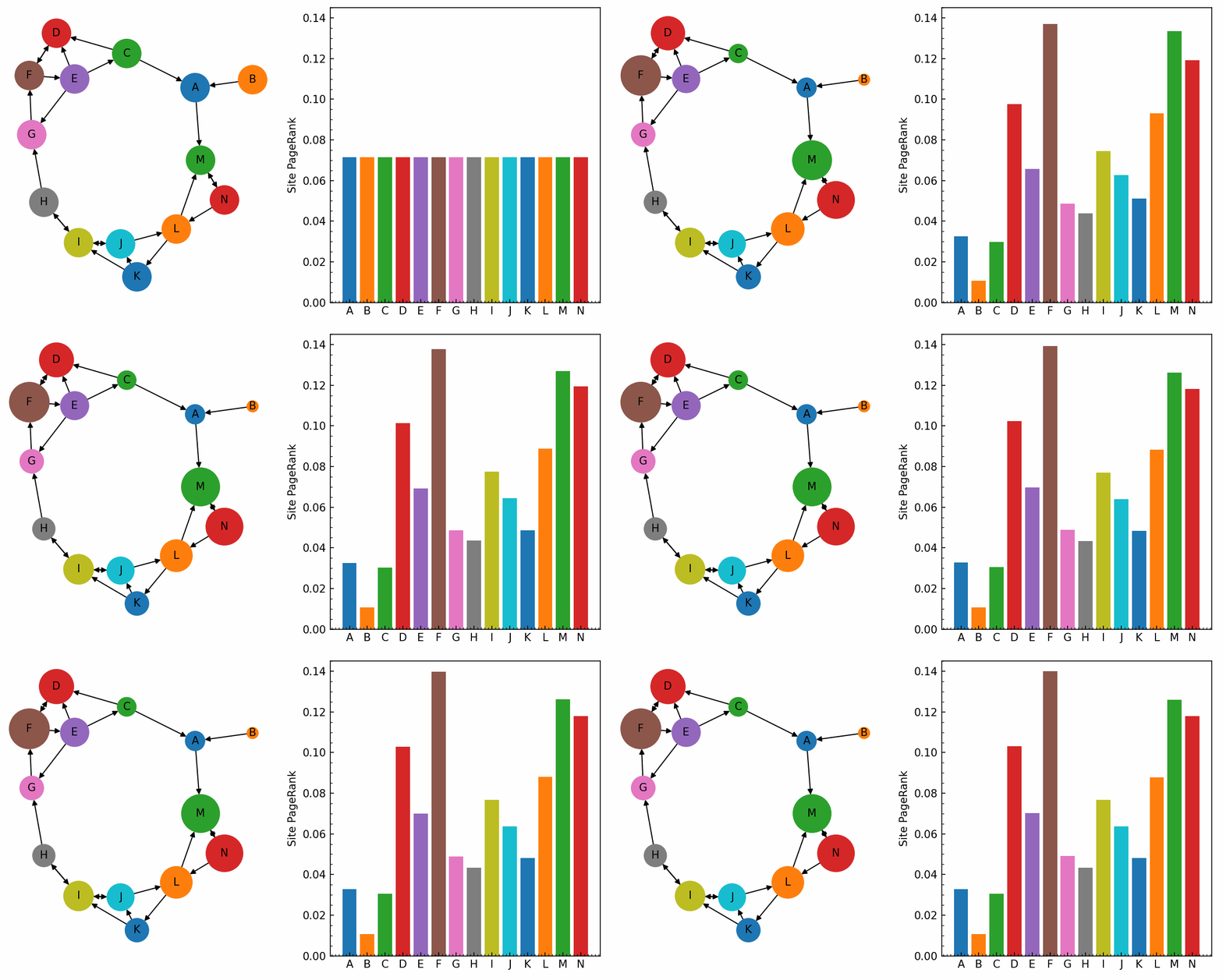
AI SEO PageRank optimization refers to the strategic application of artificial intelligence technologies to improve a website’s authority signals, particularly focusing on link equity distribution and page importance scoring. Unlike traditional PageRank methods that relied solely on backlink quantity, modern AI-driven approaches analyze hundreds of ranking factors simultaneously.
The core principle remains rooted in Google’s original concept: pages with more high-quality inbound links deserve higher visibility. However, AI algorithms now evaluate link quality, contextual relevance, user engagement patterns, and content authority in ways that were previously impossible.
The Evolution from Classic PageRank to AI-Driven Authority
Classic PageRank operated on a simple mathematical formula where each link represented a vote of confidence. The algorithm assigned equal weight to all links, making it vulnerable to manipulation through link farms and directory submissions. Modern AI SEO PageRank optimization has completely transformed this approach.
Machine learning models now assess link value based on dozens of parameters including domain history, content topicality, user behavior signals, and semantic relationships between linking pages. This evolution means that a single authoritative link from a relevant industry publication often carries more weight than hundreds of low-quality directory links.
Core Components of AI-Driven PageRank Systems
Understanding the technical foundations helps digital marketers develop more effective optimization strategies. The modern PageRank ecosystem consists of several interconnected components that AI systems analyze simultaneously.
Neural Network-Based Link Evaluation
Artificial neural networks process link data through multiple layers of analysis. These systems identify patterns in link placement, anchor text distribution, and surrounding content context. The AI evaluates whether links appear naturally within content or follow manipulative patterns.
Deep learning models can detect subtle signals such as the speed at which links are acquired, the diversity of linking domains, and the geographic distribution of referring websites. These factors contribute to a more nuanced understanding of genuine authority versus artificial manipulation.
Semantic Relevance Scoring
Modern AI SEO PageRank optimization places heavy emphasis on semantic relevance. Natural language processing algorithms analyze the relationship between the linking page’s content and the target page’s topic. Links from contextually related pages receive significantly higher authority scores than those from unrelated sources.
The semantic layer extends beyond simple keyword matching. AI systems understand entity relationships, topic clusters, and conceptual connections. A link from a comprehensive guide about digital marketing carries more authority for an SEO tools page than a generic business directory link.
User Engagement Integration
Contemporary PageRank calculations incorporate user interaction data as a quality signal. AI algorithms monitor click-through rates, time spent on page, bounce rates, and return visitor patterns. These behavioral metrics help search engines determine whether a page genuinely satisfies user intent.
The integration of engagement signals creates a feedback loop where high-quality content attracts more engagement, which in turn boosts authority scores, leading to better rankings and even more engagement. This virtuous cycle forms the foundation of sustainable SEO success.
Strategic Implementation of AI SEO PageRank Optimization
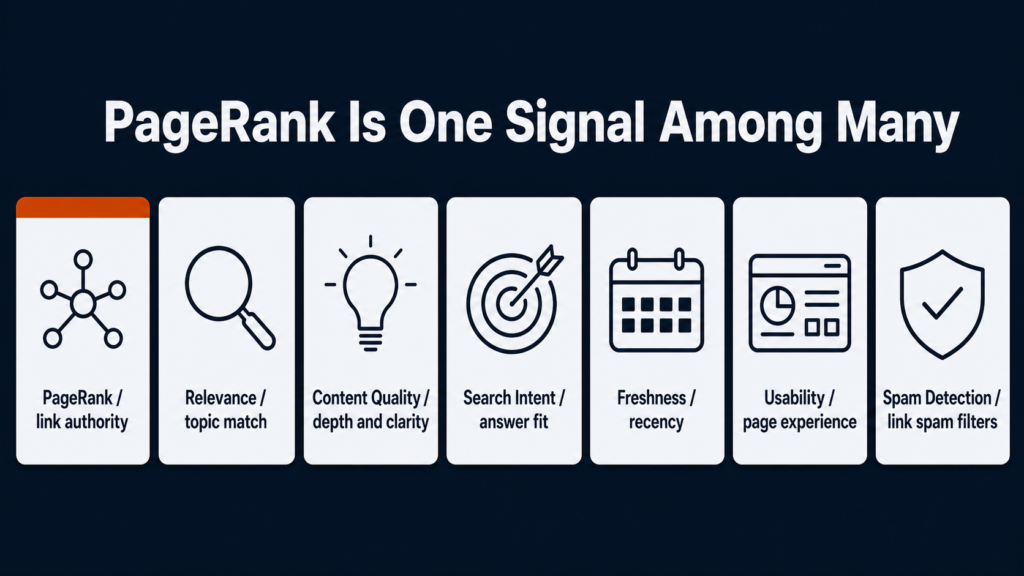
Implementing an effective AI-driven PageRank strategy requires a systematic approach that combines technical SEO practices with content excellence and relationship building. The following framework outlines proven methodologies for improving page authority.
Content Architecture for Authority Maximization
Your website’s internal linking structure plays a crucial role in distributing PageRank equity throughout your domain. AI systems analyze how authority flows from high-authority pages to supporting content. Creating strategic internal links from your strongest pages to newer or less-established content helps distribute authority effectively.
Consider implementing a hub-and-spoke content model where comprehensive pillar pages link to detailed cluster articles. This structure signals topical authority to AI algorithms while providing users with intuitive navigation paths. Each cluster article should link back to the pillar page, reinforcing the topical relationship.
Digital PR and Authority Building
Earning high-quality backlinks remains essential for AI SEO PageRank optimization. However, the approach has shifted from mass link acquisition to targeted digital PR campaigns. Focus on securing links from authoritative publications within your industry niche, educational institutions, and government domains.
Data-driven journalism, original research studies, and expert commentary positions your brand as a valuable resource. When other websites reference your data or insights, they naturally link to your content, creating organic authority signals that AI algorithms recognize as genuine endorsements.
Technical Optimization for Crawl Efficiency
Search engine crawlers must efficiently discover and process your pages for PageRank calculations to function properly. Ensure your XML sitemap is current and accurately reflects your site structure. Implement proper canonical tags to consolidate authority signals and prevent duplicate content dilution.
Page speed optimization directly impacts how effectively crawlers can process your content. Compress images, leverage browser caching, and minimize JavaScript execution to ensure rapid page loading. AI systems may allocate crawl budget based on page performance metrics.
Benefits and Limitations of AI-Driven PageRank Strategies
Understanding both the advantages and constraints of modern PageRank optimization helps set realistic expectations and guides resource allocation decisions.
Key Benefits
- Improved ranking stability through diversified authority signals
- Enhanced protection against algorithm updates and penalties
- Better understanding of user intent through semantic analysis
- More accurate measurement of true content value
- Scalable optimization strategies through automation tools
- Competitive intelligence through AI-powered analysis
- Increased complexity requiring specialized technical knowledge
- Higher content production standards to compete effectively
- Longer timeframes for meaningful authority development
- Dependency on third-party data sources for analysis
- Potential over-optimization risks if algorithms are misunderstood
Recognized Limitations
Comparison: Traditional vs. AI-Powered PageRank Optimization
| Aspect | Traditional PageRank | AI SEO PageRank Optimization |
|---|---|---|
| Link Evaluation | Quantity-focused | Quality and context-focused |
| Algorithm Basis | Mathematical formula | Machine learning models |
| Content Analysis | Keyword matching | Semantic understanding |
| User Signals | Minimal consideration | Primary ranking factor |
| Manipulation Resistance | Vulnerable to link schemes | Highly resistant to spam |
| Update Frequency | Monthly recalculations | Continuous real-time updates |
| Optimization Approach | Link building campaigns | Holistic content and authority strategy |
Practical Implementation Guide for AI SEO PageRank Optimization
Executing a successful AI-driven PageRank strategy requires methodical implementation across multiple dimensions of your digital presence. The following step-by-step approach provides a practical roadmap for improving your site’s authority metrics.
Step 1: Conduct a Comprehensive Authority Audit
Begin by analyzing your current backlink profile using professional SEO tools. Identify your strongest referring domains, assess anchor text distribution, and detect any toxic links that may be harming your authority scores. Document your current domain authority metrics to establish baseline measurements.
Evaluate your internal linking structure to identify pages that receive insufficient authority flow. Use crawl analysis tools to map how PageRank distributes across your site and pinpoint pages that are isolated from your main authority hubs.
Step 2: Develop a Content Authority Strategy
Create comprehensive, data-driven content that naturally attracts backlinks. Original research, industry surveys, and expert analysis pieces consistently earn high-quality links from authoritative sources. Invest in professional data visualization to make your content more shareable and link-worthy.
Update existing cornerstone content regularly to maintain freshness signals. AI algorithms favor regularly updated resources that demonstrate ongoing relevance and accuracy. Add new statistics, case studies, and expert quotes to keep your content current.
Step 3: Implement Strategic Internal Linking
Map your site’s topical clusters and identify opportunities for contextual internal links. Use descriptive, keyword-rich anchor text that provides clear signals about the linked page’s content. Avoid over-optimizing anchor text, as unnatural patterns can trigger algorithmic penalties.
Prioritize linking from high-authority pages to your most important commercial or conversion-focused pages. Ensure every new piece of content receives at least three internal links from relevant existing pages to establish its place in your site’s authority structure.
Step 4: Launch Digital PR Campaigns
Develop relationships with journalists, industry influencers, and content creators who cover your niche. Offer exclusive data, expert commentary, or unique insights that provide value to their audiences. These relationships naturally lead to authoritative backlinks over time.
Monitor brand mentions across the web and request links when your brand is referenced without a hyperlink. Many publications will happily add links when contacted professionally. This approach converts existing brand visibility into measurable authority signals.
Common Mistakes in AI SEO PageRank Optimization
Many website owners inadvertently undermine their authority-building efforts through common errors. Recognizing these pitfalls helps you avoid wasting resources on counterproductive strategies.
Over-Reliance on Exact Match Anchor Text
Using the same keyword-rich anchor text for every backlink creates unnatural patterns that AI algorithms easily detect. Diversify your anchor text using branded terms, natural phrases, URL links, and generic calls-to-action. Aim for a distribution that mirrors organic linking behavior.
Neglecting Internal Link Equity Distribution
Focusing exclusively on external link building while ignoring internal linking leaves authority trapped on your homepage and top-level pages. Implement a systematic internal linking strategy that distributes PageRank throughout your site, ensuring deep pages receive adequate authority to rank.
Purchasing Links or Participating in Link Schemes
Paid links and link exchange networks violate Google’s guidelines and trigger algorithmic penalties. AI systems have become exceptionally skilled at identifying paid link patterns, including the use of sponsored content without proper nofollow attributes. Invest in earned media instead of purchased links.
Ignoring User Experience Signals
PageRank optimization extends beyond links and content. Poor user experience metrics such as high bounce rates, slow loading times, and intrusive ads signal low-quality pages to AI algorithms. Prioritize user experience improvements to support your authority-building efforts.
Important Notes for Sustainable Authority Growth
Building lasting PageRank authority requires patience and consistency. Search engines evaluate authority signals over extended periods, and sudden spikes in link acquisition can trigger manual reviews. Maintain a steady, natural pace of authority development.
Monitor your competitors’ authority strategies to identify gaps and opportunities in your own approach. Tools that track competitor backlinks and content performance provide valuable intelligence for refining your optimization strategy.
Remember that AI SEO PageRank optimization is not a one-time project but an ongoing process. Regularly audit your backlink profile, refresh your content, and adapt your strategy based on performance data and algorithm updates.
Frequently Asked Questions
What is AI SEO PageRank optimization?
AI SEO PageRank optimization is the practice of using artificial intelligence technologies and machine learning insights to improve a website’s authority signals in search engine rankings. It involves optimizing link equity distribution, content relevance, and user engagement metrics to increase page importance scores.
How does AI improve traditional PageRank calculations?
AI enhances traditional PageRank by analyzing hundreds of additional factors beyond simple link counts. Machine learning models evaluate link quality, contextual relevance, user behavior patterns, and semantic relationships to create a more accurate assessment of page authority.
What are the most important factors in AI-driven PageRank?
The most critical factors include the quality and relevance of referring domains, the contextual relationship between linking and target pages, user engagement metrics, content freshness, and the natural distribution of anchor text. Internal linking structure also plays a significant role in authority distribution.
How long does it take to see results from PageRank optimization?
Meaningful improvements typically require three to six months of consistent effort. Building genuine authority through quality content and earned backlinks takes time, and search engines evaluate these signals over extended periods to ensure they reflect genuine popularity rather than manipulation.
Can AI SEO PageRank optimization work for new websites?
New websites can benefit from AI-driven PageRank strategies, but they face inherent challenges due to their lack of established authority. Focus on creating exceptional content, earning initial backlinks through digital PR, and building a strong internal linking structure to accelerate authority development.
Conclusion
AI SEO PageRank optimization represents the current frontier of search engine authority building. The integration of machine learning algorithms has fundamentally changed how search engines evaluate link value and page importance. Success in this environment requires a holistic approach that combines technical excellence, exceptional content, genuine relationship building, and continuous adaptation to algorithmic evolution.
Websites that embrace AI-driven authority strategies position themselves for sustainable long-term visibility in search results. By focusing on genuine value creation rather than manipulative tactics, you build authority that withstands algorithm updates and delivers consistent organic traffic growth. The future of search belongs to those who understand that true authority comes from being genuinely valuable to your audience.
Xem thêm:
- AI SEO SEO Automation with Gemini: The Complete Guide to Scaling Organic Growth
- Mastering AI EEAT Optimization: The Strategic Blueprint for Next-Level Search Authority
- AI SEO Content Quality: The Complete Guide to Publishing Content That Ranks in 2025
- AI SEO Microsoft Copilot SEO: The Complete Guide to Ranking in the New Search Era
- AI SEO for Ecommerce: The Complete Guide to Outranking Competitors in 2025
Bài viết cùng chủ đề:

AI SEO SEO Automation with Make: The Complete Workflow Guide

AI SEO SEO Automation with Zapier: The Complete Workflow Guide

AI SEO SEO Automation with n8n: The Complete Workflow Guide
AI SEO SEO Automation with Gemini: The Complete Guide to Scaling Organic Growth

AI SEO SEO Automation with Claude: The Complete Guide to Scaling Content in 2025

AI SEO SEO Automation with ChatGPT: The Complete Playbook for 2025

AI SEO & SEO Automation for Affiliate Sites: The 2025 Playbook for Passive Income Growth
AI SEO & SEO Automation for Bloggers: The Complete Guide to Scaling Your Content

AI SEO & SEO Automation for Agencies: The Complete 2025 Playbook

AI SEO and SEO Automation for Ecommerce: The Complete Playbook for 2025

AI SEO & SEO Automation for WordPress: The Complete Playbook for 2025
AI SEO SEO Automation Strategy: The Complete Playbook for 2025

Mastering the AI SEO SEO Automation Process: A Complete Guide to Scaling Organic Growth
AI SEO SEO Automation System: The Complete Guide to Scaling Organic Growth in 2025
AI SEO SEO Automation Platform: The Complete Guide to Scaling Organic Growth in 2025
AI SEO SEO Automation Software: The Complete Guide to Scaling Organic Growth in 2025