
No products in the cart.
AI SEO Reputation Management: The Complete Guide to Protecting Your Brand in 2025

31
Jul
Jul
In today’s digital landscape, your brand’s online reputation is not just a reflection of customer sentiment—it is a critical ranking factor that directly influences your bottom line. AI SEO reputation management has emerged as the most powerful strategy for businesses seeking to control their narrative across search engines, review platforms, and social media. By leveraging machine learning algorithms and natural language processing, companies can now monitor, analyze, and respond to online mentions in real time, ensuring that positive content dominates search results while negative narratives are systematically addressed. This comprehensive guide explores how artificial intelligence is transforming the way brands protect and enhance their digital footprint.
Understanding AI SEO Reputation Management
AI SEO reputation management combines two distinct disciplines: search engine optimization and online reputation management, powered by artificial intelligence. Traditional reputation management relied on manual monitoring and reactive responses. AI-driven systems, however, use predictive analytics, sentiment analysis, and automated content generation to proactively shape how your brand appears in search results.
The core objective is to ensure that when someone searches for your brand name, products, or key executives, they encounter accurate, positive, and relevant information. AI systems continuously crawl search engine results pages (SERPs), review sites, news articles, and social media channels to identify potential threats to your reputation before they escalate.
The Role of Machine Learning in Sentiment Analysis
Machine learning models are trained on vast datasets to understand human language nuances, including sarcasm, context, and cultural references. These models can classify online mentions as positive, negative, or neutral with remarkable accuracy. For instance, a review stating “the service was surprisingly fast” is clearly positive, while “the service was fast, but the quality suffered” requires deeper contextual analysis that AI handles effortlessly.
Modern sentiment analysis tools go beyond simple keyword matching. They analyze tone, emotion, and intent, allowing brands to identify emerging issues before they go viral. This predictive capability is invaluable for crisis management, as it provides early warning signals that enable swift, strategic responses.
Why Traditional Reputation Management Fails Without AI
Manual reputation monitoring is no longer viable in an era where millions of new pieces of content are published every minute. A single negative review can rank on the first page of Google within hours, potentially costing a business thousands of dollars in lost revenue. Traditional methods cannot keep pace with the volume, velocity, and variety of online conversations.
Moreover, search algorithms have evolved to prioritize user experience and trust signals. Google’s E-E-A-T (Experience, Expertise, Authoritativeness, Trustworthiness) framework means that your reputation directly impacts your search rankings. Negative content that appears credible can suppress your legitimate website, pushing it below damaging articles or reviews.
The Cost of Ignoring Online Reputation
Statistics reveal that 93% of consumers read online reviews before making a purchase decision, and 84% trust online reviews as much as personal recommendations. A single negative review can cost a business approximately 30 customers. For B2B companies, a poor reputation can extend sales cycles by 50% or more. These numbers underscore why proactive reputation management is not optional—it is essential for survival.
Core Components of AI SEO Reputation Management
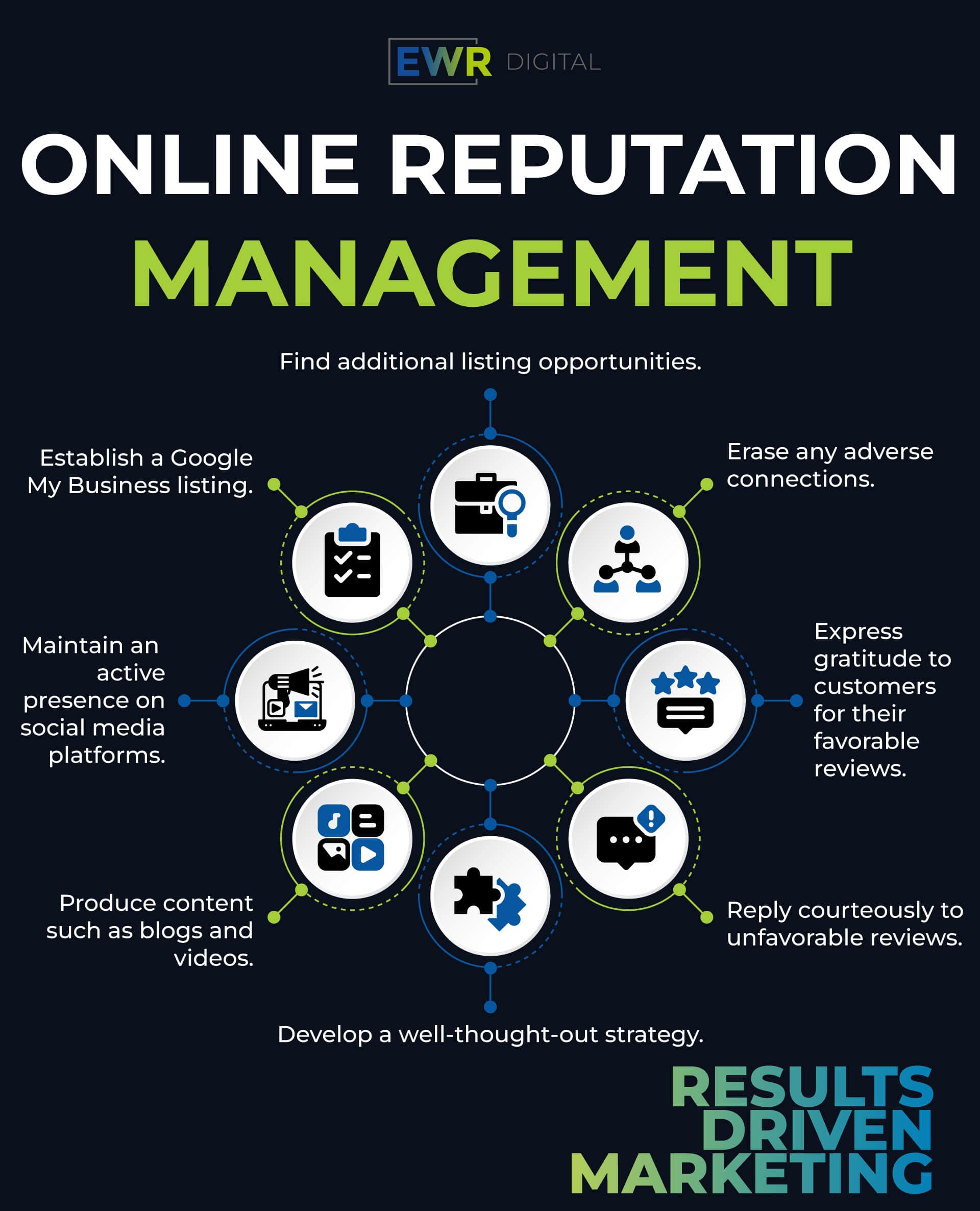
An effective AI-driven reputation management strategy comprises several interconnected components that work together to protect and enhance your digital presence.
Real-Time Monitoring and Alerting
AI systems continuously scan the web for brand mentions across all relevant platforms. This includes Google, Bing, Yelp, Trustpilot, Glassdoor, Reddit, Twitter, Facebook, and industry-specific forums. Advanced tools use web scraping and API integrations to collect data in real time, alerting your team immediately when a new mention appears, especially if it contains negative sentiment.
Monitoring extends beyond your brand name to include variations, misspellings, product names, and key personnel. This comprehensive coverage ensures that no damaging content slips through the cracks.
Sentiment Analysis and Trend Detection
Once data is collected, AI algorithms analyze the sentiment behind each mention. This analysis goes beyond simple positive/negative classification to identify specific themes, such as product quality issues, customer service complaints, or pricing concerns. Trend detection algorithms can identify whether negative sentiment is increasing or decreasing over time, providing valuable insights into the effectiveness of your reputation management efforts.
Automated Response Generation
AI-powered tools can draft responses to reviews and comments, ensuring that your brand acknowledges feedback promptly. While human oversight is still necessary for complex or sensitive situations, AI can handle routine responses, such as thanking customers for positive reviews or apologizing for minor service issues. This automation ensures that no customer feels ignored, which is crucial for maintaining a positive reputation.
Content Suppression and Promotion
One of the most powerful applications of AI in reputation management is the strategic creation and optimization of content designed to rank for your brand name. By publishing high-quality, positive content on your website, blog, and social media profiles, you can push negative results further down the search engine results page. AI tools can identify which types of content are most effective at ranking for specific keywords and automate the optimization process.
How AI Transforms the Reputation Management Process
The traditional reputation management process was reactive: monitor, identify a problem, and respond. AI transforms this into a proactive, predictive, and automated system.
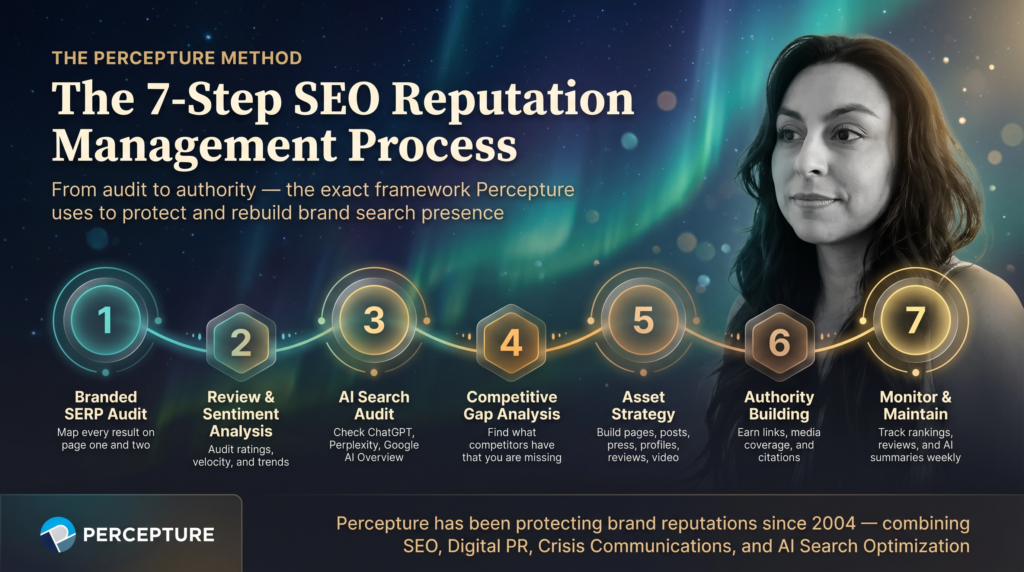
Step 1: Comprehensive Audit
The process begins with an AI-powered audit of your current online reputation. This involves analyzing the first five pages of search results for your brand name, assessing the sentiment of all mentions, and identifying any content that could be harmful. The audit provides a baseline score that you can use to measure progress.
Step 2: Strategy Development
Based on the audit findings, AI algorithms recommend a tailored strategy. This may include content creation to suppress negative results, outreach to review platforms to address complaints, or optimization of your existing web properties to improve their rankings.
Step 3: Implementation and Automation
AI tools automate many aspects of implementation. Content calendars are generated based on keyword analysis, social media posts are scheduled at optimal times, and review responses are drafted automatically. This frees up your team to focus on strategic decisions rather than repetitive tasks.
Step 4: Continuous Optimization
Reputation management is not a one-time project. AI systems continuously analyze the performance of your content and adjust strategies accordingly. If a particular blog post is ranking well for your brand name, the system may suggest creating similar content. If a negative review is gaining traction, the system will prioritize efforts to address it.
Benefits of AI SEO Reputation Management

The advantages of integrating AI into your reputation management strategy are substantial and measurable.
- Speed and Efficiency: AI systems process millions of data points in seconds, providing real-time insights that would take human teams days to compile.
- Predictive Capabilities: Machine learning algorithms can forecast potential reputation crises before they occur, allowing for proactive mitigation.
- Scalability: AI tools can monitor an unlimited number of mentions across all platforms without additional human resources.
- Consistency: Automated responses ensure that every customer receives a timely acknowledgment, regardless of when they post.
- Data-Driven Decisions: AI provides actionable insights based on comprehensive data analysis, eliminating guesswork from your strategy.
- Cost-Effectiveness: While t
- Over-Reliance on Automation: While AI is powerful, it cannot replace human judgment. Failing to review automated responses can lead to insensitive or inappropriate replies that worsen the situation.
- Ignoring Positive Mentions: Reputation management is not just about damage control. Failing to amplify positive mentions is a missed opportunity to build brand loyalty and attract new customers.
- Deleting Negative Reviews: Attempting to remove negative reviews is often counterproductive. Consumers view this as censorship, and it can damage trust. Instead, address the issue publicly and professionally.
- Neglecting Local SEO: For businesses with physical locations, local reviews on Google Maps and Yelp are critical. AI tools must include local monitoring in their scope.
- Lack of a Crisis Plan: Even with predictive AI, crises can still occur. Having a predefined crisis communication plan ensures you can respond quickly and effectively when needed.
Limitations and Challenges to Consider
Despite its power, AI reputation management is not without limitations. Understanding these challenges is crucial for setting realistic expectations.
AI systems are only as good as the data they are trained on. If the training data contains biases, the sentiment analysis may be inaccurate. Additionally, AI cannot fully understand the nuances of human emotion and context, particularly in cases involving humor, irony, or cultural references. A human review is still necessary for complex situations.
Privacy concerns also arise when monitoring online conversations. Brands must ensure they comply with data protection regulations, such as GDPR and CCPA, when collecting and analyzing user data. Finally, AI cannot replace the human touch in building genuine relationships with customers. Automated responses should be supplemented with personalized interactions when appropriate.
AI SEO Reputation Management vs. Traditional Methods
| Aspect | Traditional Reputation Management | AI-Powered Reputation Management |
|---|---|---|
| Monitoring Speed | Manual checks, often daily or weekly | Real-time, continuous scanning |
| Data Volume | Limited to what a human can review | Millions of mentions processed daily |
| Response Time | Hours to days | Minutes or even seconds |
| Sentiment Accuracy | Subjective, prone to error | Data-driven, consistent, and nuanced |
| Content Strategy | Manual keyword research and writing | Automated content optimization and generation |
| Crisis Prediction | Reactive, after the fact | Predictive, with early warning alerts |
| Cost | High labor costs for monitoring | Lower long-term costs, higher initial investment |
Practical Application: Building Your AI Reputation Management Strategy
Implementing an effective AI-driven reputation management system requires a structured approach.
Selecting the Right AI Tools
The market offers a variety of AI-powered reputation management platforms. When evaluating options, consider the following features: comprehensive monitoring across multiple channels, advanced sentiment analysis, automated response capabilities, content optimization tools, and detailed reporting dashboards. Leading platforms include Brand24, Mention, and Reputation.com, each offering unique strengths.
Integrating with Your SEO Strategy
Reputation management and SEO are deeply interconnected. Your reputation management efforts should inform your SEO strategy and vice versa. For example, if sentiment analysis reveals that customers frequently complain about a specific product feature, you can create content that addresses this concern, improving both your reputation and your search rankings for related keywords.
Establishing a Response Protocol
Develop a clear protocol for responding to different types of mentions. Positive reviews should be acknowledged with gratitude. Negative reviews require a more thoughtful approach, acknowledging the issue, apologizing if appropriate, and offering a solution. AI can draft these responses, but a human should review them before publishing, especially for sensitive situations.
Measuring Success
Define key performance indicators (KPIs) to track the effectiveness of your strategy. These may include the percentage of positive sentiment, the average rating across review platforms, the position of negative content in search results, and the response time to customer feedback. Regularly review these metrics and adjust your strategy accordingly.
Common Mistakes in AI Reputation Management

Many businesses make avoidable errors when implementing AI-driven reputation management. Being aware of these pitfalls can save you time, money, and reputational damage.
Important Notes on Ethics and Transparency
Using AI for reputation management raises ethical considerations that must be addressed. Transparency is paramount. Do not use AI to create fake positive reviews or to manipulate search results in deceptive ways. Such practices violate search engine guidelines and can result in severe penalties, including removal from search results entirely.
Additionally, respect user privacy. Ensure that your monitoring practices comply with all applicable laws and regulations. Be transparent with your customers about how you collect and use data. Building a reputation on a foundation of honesty and integrity is the only sustainable approach.
Frequently Asked Questions
What is AI SEO reputation management?
AI SEO reputation management is the use of artificial intelligence technologies, including machine learning and natural language processing, to monitor, analyze, and influence how a brand appears in search engine results and across online platforms. It combines traditional SEO techniques with automated sentiment analysis and content optimization to protect and enhance a brand’s digital reputation.
How does AI improve online reputation monitoring?
AI improves monitoring by processing vast amounts of data in real time, identifying sentiment with high accuracy, and detecting emerging trends or potential crises early. Unlike manual monitoring, AI systems can scan millions of mentions across multiple platforms simultaneously, providing comprehensive and timely insights.
Can AI remove negative reviews from Google?
AI cannot directly remove negative reviews. However, it can help you respond to reviews effectively, identify patterns in complaints, and create positive content that pushes negative results lower in search rankings. The only way to remove a review is through the platform’s official reporting process, which AI can help you navigate by gathering evidence of policy violations.
Is AI reputation management suitable for small businesses?
Yes, AI reputation management is scalable and can be tailored to businesses of all sizes. Many tools offer tiered pricing based on the volume of mentions and features required. For small businesses, even basic AI-powered monitoring and response automation can provide significant value by saving time and ensuring consistent customer engagement.
What is the cost of AI reputation management tools?
Costs vary widely depending on the features and scale. Basic monitoring tools start at around $50 per month, while comprehensive enterprise platforms can cost several thousand dollars per month. Most providers offer free trials, allowing you to test the tool before committing.
How long does it take to see results from AI reputation management?
Results depend on the current state of your reputation and the severity of any negative content. In many cases, improvements in sentiment and response times are visible within weeks. However, pushing negative content out of the top search results can take several months, as it requires creating and optimizing new content that outranks the damaging pages.
Conclusion
AI SEO reputation management represents a fundamental shift in how businesses protect their most valuable asset—their reputation. By leveraging the power of machine learning, sentiment analysis, and automated content optimization, brands can move from a reactive stance to a proactive, predictive approach. The benefits are clear: faster response times, more accurate insights, scalable monitoring, and a stronger, more resilient online presence.
However, technology is only a tool. The most successful reputation management strategies combine AI efficiency with human empathy and judgment. Automated responses must be reviewed, ethical boundaries must be respected, and genuine relationships with customers must be cultivated. When these elements come together, AI SEO reputation management becomes an indispensable competitive advantage, ensuring that your brand is always presented in the best possible light across the digital landscape.
As search algorithms continue to evolve and online conversations grow in volume and complexity, the importance of AI in reputation management will only increase. Businesses that embrace this technology today will be well-positioned to thrive in the increasingly competitive digital economy of tomorrow.
Xem thêm:
- Search Generative Experience SEO: How to Optimize for AI-Powered Search and Protect Your Rankings
- WP Trove AI Plugin: The Complete Guide to Automating Your WordPress Content Workflow
- AI SEO JavaScript SEO: The Complete Guide to Modern Search Optimization
- AI SEO for Niche Sites: The 2025 Playbook for Dominating Small Markets
- AI SEO Article Outline Generator: The Complete Guide to Smarter Content Planning
Bài viết cùng chủ đề:

AI SEO SEO Automation with Make: The Complete Workflow Guide

AI SEO SEO Automation with Zapier: The Complete Workflow Guide

AI SEO SEO Automation with n8n: The Complete Workflow Guide
AI SEO SEO Automation with Gemini: The Complete Guide to Scaling Organic Growth

AI SEO SEO Automation with Claude: The Complete Guide to Scaling Content in 2025

AI SEO SEO Automation with ChatGPT: The Complete Playbook for 2025

AI SEO & SEO Automation for Affiliate Sites: The 2025 Playbook for Passive Income Growth
AI SEO & SEO Automation for Bloggers: The Complete Guide to Scaling Your Content

AI SEO & SEO Automation for Agencies: The Complete 2025 Playbook

AI SEO and SEO Automation for Ecommerce: The Complete Playbook for 2025

AI SEO & SEO Automation for WordPress: The Complete Playbook for 2025
AI SEO SEO Automation Strategy: The Complete Playbook for 2025

Mastering the AI SEO SEO Automation Process: A Complete Guide to Scaling Organic Growth
AI SEO SEO Automation System: The Complete Guide to Scaling Organic Growth in 2025
AI SEO SEO Automation Platform: The Complete Guide to Scaling Organic Growth in 2025
AI SEO SEO Automation Software: The Complete Guide to Scaling Organic Growth in 2025















