
No products in the cart.
Search Generative Experience SEO: How to Optimize for AI-Powered Search and Protect Your Rankings
29
Jul
Jul
The way users find information is undergoing its most radical shift since the rise of mobile search. Google’s Search Generative Experience (SGE) is no longer a lab experiment — it is actively reshaping the search engine results page (SERP) for millions of queries. For anyone responsible for organic visibility, mastering Search Generative Experience SEO is no longer optional. The AI-generated snapshot that now appears above traditional blue links can answer complex questions, synthesize multiple sources, and keep users on Google’s own surface, dramatically altering the click-through landscape. Understanding how to appear in these AI overviews, how to protect traffic, and how to rethink content around entity-driven reasoning is the new frontier of search optimization.
What Is Search Generative Experience (SGE) and Why It Matters for SEO
Search Generative Experience is Google’s integration of generative AI directly into the SERP. When a user types a query that requires synthesis — such as comparisons, multi-step instructions, or nuanced explanations — SGE produces a concise, AI-crafted answer at the top of the page, complete with source carousels, follow-up prompts, and sometimes visual elements. This snapshot is not a featured snippet extracted verbatim from a single page; it is a generated summary built from multiple high-authority sources across the web.
From an SEO perspective, the existence of SGE changes three fundamental dynamics. First, the traditional “ten blue links” model becomes secondary for many informational queries. Second, the click-through rate (CTR) for organic results can decline sharply when the answer is fully satisfied within the generative panel. Third, the way Google evaluates and selects sources for the AI snapshot introduces new ranking signals focused on entity completeness, consensus authority, and semantic relevance. This means that search generative experience SEO demands a shift from keyword-centric optimization to holistic topical authority and structured data excellence.
How SGE Works: The Mechanics Behind AI-Generated Search Results
At its core, SGE uses a large language model (LLM) combined with Google’s Knowledge Graph and real-time web indexing. Unlike a traditional search that retrieves and ranks pages, the generative engine first interprets the user’s intent, then retrieves a set of relevant documents, extracts verified claims and data points, and finally composes a response in natural language. The output includes hoverable source icons that reveal the originating pages — a critical opportunity for sites that earn inclusion.
The process can be broken down into four stages:
- Query interpretation and intent decomposition: The model breaks a complex question into sub-intents and identifies the type of information needed (factual, procedural, comparative).
- Corpus retrieval and passage ranking: Google’s index supplies candidate passages. The system favors content that demonstrates experience, expertise, authoritativeness, and trustworthiness (E-E-A-T) while being semantically dense with relevant entities.
- Consensus modeling and fact verification: The AI cross-references information across multiple trusted sources. Pages that align with the consensus while adding unique verified details are more likely to be surfaced.
- Response generation and source attribution: The final snapshot is assembled, with inline links or carousel citations pointing back to validated sources.
- Ignoring SGE and optimizing only for classic organic results: This leaves you invisible on queries where the AI snapshot dominates the above-the-fold space. Start auditing your most valuable informational keywords for SGE presence and expand your strategy accordingly.
- Thin content with no unique data or experience: The model favors pages that contribute something beyond what twenty other sites already say. Replicating top-ranking content without adding original insights makes your page unlikely to be chosen as a source.
- Neglecting structured data and entity markup: Without schema, your carefully researched content is just words to a language model — not connected, verifiable facts. Implement FAQ, HowTo, Article, and Organization schemas as a baseline, and expand from there.
- Optimizing for a single keyword rather than an intent domain: SGE handles broad, multi-intent queries. A page that answers “how much does a bathroom remodel cost” should also cover cost factors, regional variation, and material-specific estimates to become a comprehensive extractable source.
- Overlooking the importance of consensus: Making bold claims without corroborating evidence or contradicting widely accepted data will get you filtered out. Align your content with verified facts and, when presenting a new angle, back it up with transparent methodology and expert input.
- Measuring success solely by organic traffic: As zero-click searches grow, a page that never gets a click from SGE can still build brand authority that leads to direct visits or conversions later. Expand reporting to include SGE citation monitoring, branded search volume lift, and assist metrics.
For SEOs, understanding this flow reveals a crucial truth: your page does not need to rank number one in organic listings to be featured in the AI snapshot. Instead, it needs to serve as a highly credible, well-structured knowledge resource that the model can reliably extract from. This redefines the goal of search generative experience SEO as being the “source of truth” rather than simply the top-ranked URL for a keyword.
How Search Generative Experience Is Reshaping SEO

The introduction of generative AI into search doesn’t make traditional SEO obsolete — it forces it to evolve. Several key shifts are already visible across industries and query types.
1. The Rise of Zero-Click and Low-Click Searches
When SGE provides a complete answer — such as a product pros-and-cons list, a step-by-step recipe, or a quick fact check — users often get what they need without clicking through. Early data from monitoring platforms indicates informational queries see a significant drop in organic CTR when an AI overview is present. Search generative experience SEO must now account for visibility that doesn’t always translate into traffic, shifting KPIs toward impression-based authority metrics and brand reinforcement within the snapshot.
2. Entity-Rich Content Becomes the Primary Ranking Currency
Traditional SEO relied heavily on keywords and backlinks. SGE’s language model thinks in entities — people, places, concepts, attributes — and the relationships between them. Content that clearly defines entities, attributes, and connections using structured data (Schema.org markup) and natural language context becomes far more extractable. Optimizing for the Knowledge Graph and creating dense entity maps on your pages is now a cornerstone of search generative experience SEO.
3. Authority and Consensus Over Uniqueness
While unique angles still matter for user engagement, the generative model heavily weighs agreement among authoritative sources. If your content contradicts well-established expert consensus without clear, verifiable evidence, it is unlikely to be sourced. E-E-A-T signals — author bios, cited research, external references, and transparent editorial processes — become non-negotiable for inclusion in AI overviews.
4. Longer, Multi-Intent Queries Gain Prominence
SGE excels at answering long-tail, conversational queries that combine multiple intents. Content designed to answer a single keyword is often too narrow. A page that thoroughly addresses a topic cluster — anticipating related questions, variations, and deeper context — has a much better chance of being pulled into the generative answer for a range of related searches.
Practical Strategies for Search Generative Experience SEO
Implementing a future-proof optimization plan requires a blend of technical precision, content depth, and authority building. The following tactics are designed specifically for earning visibility within AI-powered search environments.
Structure Content Around Complete Topic Clusters
Instead of publishing isolated blog posts targeting single keywords, build pillar pages supported by detailed cluster content. A pillar page should comprehensively cover a broad subject, with clearly defined sections that address sub-topics, frequently asked questions, and entity definitions. Use descriptive headings that mirror the way users ask questions (e.g., “How does SGE impact local business listings?” rather than “SGE Local Impact”). This structure helps the AI model identify extractable passages and see your site as a definitive resource on the topic.
Implement and Refine Schema Markup Aggressively
Structured data is the direct language search engines use to understand your content’s meaning. For search generative experience SEO, priority should go to article, FAQ, HowTo, Q&A, and Organization schemas. Mark up your authors with Person schema, include detailed affiliations and credentials. Use sameAs properties to link to authoritative external profiles. The more you help Google connect your content to its Knowledge Graph entities, the more likely the generative model will trust and extract your information.
Demonstrate E-E-A-T Beyond Generic Claims
Trust signals for AI are not just user reviews and HTTPS; they include first-hand experience, transparent sourcing, and authoritativeness. Add unique case studies, original data, or process photos where relevant. Clearly publish author credentials and link to their professional references. For YMYL (Your Money or Your Life) topics, citing peer-reviewed studies, official guidelines, and expert interviews is essential. The AI snapshot is programmed to prioritize information that can be independently verified, so your content must show its work.
Optimize for Snapshot Inclusion with “Source-Friendly” Formatting
Because the AI model extracts passages, formatting matters. Use clear bullet points for lists, concise definition paragraphs, and tables for comparisons. A highly scannable structure makes it easier for the model to pull clean, standalone facts. For example, if targeting a product comparison, a table with verifiable specs, prices, and expert notes is far more extractable than a narrative paragraph. The same applies to step-by-step instructions — short, numbered steps with clear headers increase the chance of being surfaced in a generative how-to panel.
Build Citation-Worthy Backlinks and Brand Mentions
SGE’s reliance on consensus means that being cited and referenced across the web is a powerful signal. Earn links and unlinked brand mentions from sources already appearing in AI overviews. A digital PR strategy that places your data or expert commentary in established industry publications feeds directly into the model’s perception of your authority. Moreover, monitoring when your brand is mentioned without a link and requesting proper citation can boost your source potential.
Monitor SGE Presence Like a Traditional SERP Feature
Just as you track featured snippets or People Also Ask boxes, you need to monitor whether your content appears in the AI snapshot for target queries. Manual spot-checking and emerging rank-tracking tools that detect SGE inclusions are valuable. When you find competitors consistently sourced where you are not, analyze their structural differences: Do they use more explicit entity language? Better data formatting? Stronger consensus alignment? Reverse engineering their approach refines your search generative experience SEO strategy.
Benefits and Limitations of SGE for SEO
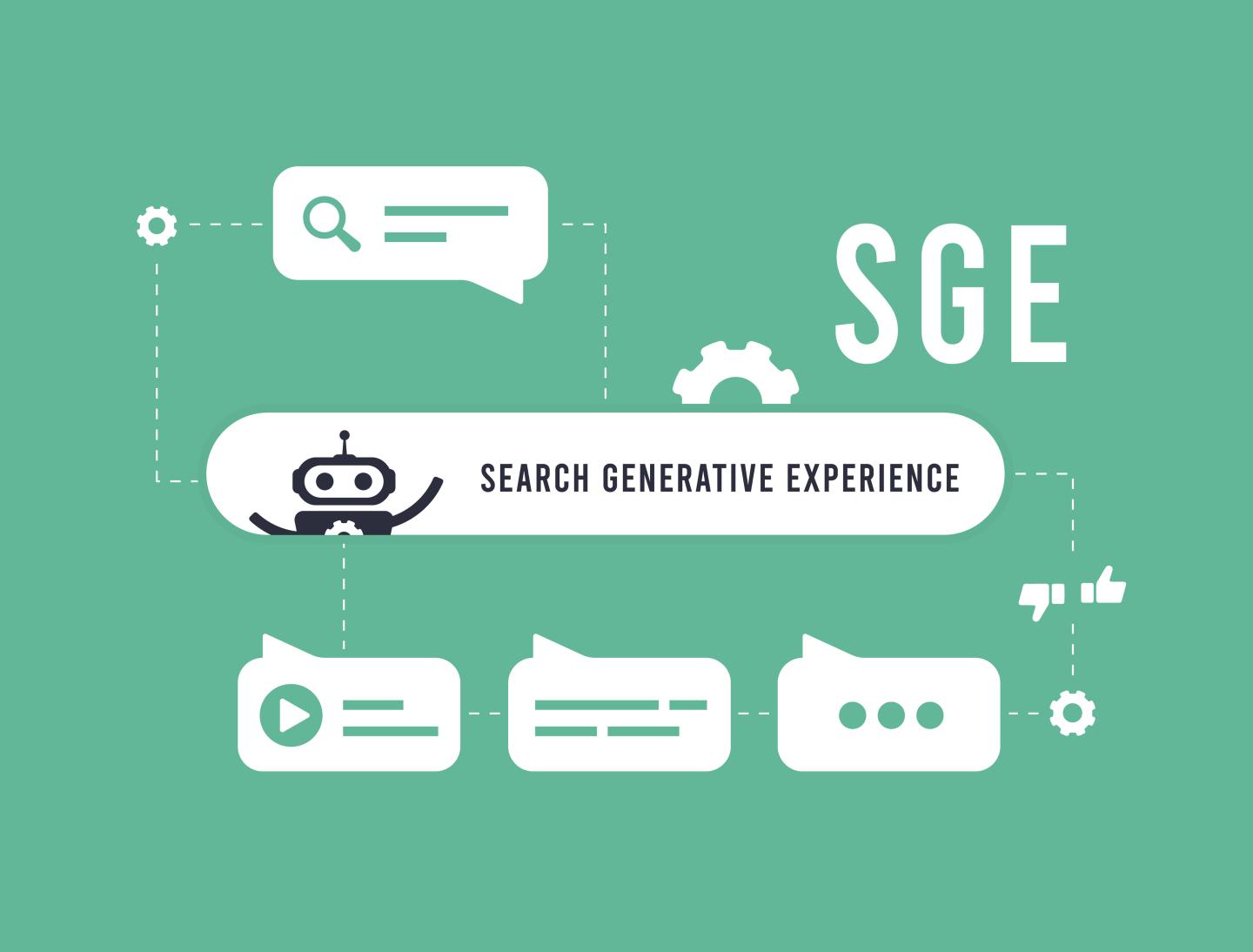
Integrating AI overviews into the search landscape brings both opportunities and challenges that every SEO professional must weigh carefully.
| Aspect | Benefits | Limitations |
|---|---|---|
| Visibility | Potential to appear above organic results in a high-trust snapshot, even without a top 3 ranking. | Visibility does not guarantee clicks; many users will read the snapshot and leave. |
| User Intent | Rewards content that genuinely satisfies complex, multi-layered queries with comprehensive answers. | Short transactional queries may push all organic results further down, reducing immediate conversion traffic. |
| Authority Building | Being cited in SGE reinforces brand credibility and can lead to downstream search volume and loyalty. | Earning inclusion requires substantial investment in entity optimization and authority signals, which can be resource-intensive. |
| Measurement | New opportunities to measure impression influence and branded search lift. | Traditional CTR and conversion tracking become less reliable indicators of performance for informational queries. |
Comparison: Traditional SEO vs. Search Generative Experience SEO
The shift to AI-driven search does not negate the fundamentals but expands the playbook significantly. Understanding the key differences helps practitioners allocate resources effectively.
| Element | Traditional SEO | Search Generative Experience SEO |
|---|---|---|
| Primary Goal | Rank in top 3 organic positions to capture maximum traffic. | Become a cited source within AI snapshots while maintaining organic ranking. |
| Content Focus | Keyword-targeted articles, backlink-driven authority. | Entity-rich topic clusters, consensus-aligned authority, extractable formatting. |
| Success Metric | Organic CTR, traffic volume, keyword rankings. | SGE inclusion rate, brand mention authority, assisted conversions, impression share. |
| Technical Foundation | Page speed, mobile-friendliness, basic schema. | Deep structured data layers, entity linking, clear content hierarchy, robust E-E-A-T signals. |
| Link Strategy | Volume-based link building, anchor text optimization. | Citation-worthy digital PR, earning references from consensus authority sources. |
Common Mistakes in Search Generative Experience SEO and How to Avoid Them
Even experienced SEOs can stumble when applying traditional tactics to an AI-first search environment. Being aware of these pitfalls prevents wasted effort and ranking losses.
Important Notes for SEOs Navigating the AI Shift
Search generative experience SEO is not a separate discipline; it is an evolution of everything you already know about building valuable, trustworthy, and well-structured content. The difference lies in the delivery mechanism and the precision required. A few final considerations will keep your strategy resilient.
Quality over quantity has never been more true. The generative model actively filters low-value content. A small number of deeply authoritative, entity-rich pages will outperform a large library of surface-level posts. Audit your existing content and consolidate where appropriate.
User experience signals still matter indirectly. While the AI snapshot may reduce clicks, Google’s broader ranking systems still respond to engagement metrics on the pages that do receive traffic. Pages that load fast, provide clear information, and satisfy user intent retain their organic positions, which in turn supports source inclusion.
Adaptive monitoring is essential. SGE is being rolled out gradually and will evolve. Regularly test queries across devices and geographies (where available) to spot changes in snapshot layout, source selection, and follow-up prompt structure. Tools that track AI overviews are emerging; integrate them into your monthly reporting.
First-party data and audience relationships become a moat. As direct search traffic from informational queries may decline, investing in email lists, community platforms, and repeat direct visits ensures you build resilience beyond Google’s shifting SERP.
Frequently Asked Questions
What exactly is Search Generative Experience SEO?
Search Generative Experience SEO is the practice of optimizing web content to appear as a cited source within Google’s AI-generated search snapshots. It extends traditional SEO by focusing on entity-rich content, structured data, consensus authority, and extractable formatting that helps large language models accurately surface and credit your pages.
How does SGE affect organic traffic?
For many informational queries, SGE provides a comprehensive answer directly on the SERP, which can reduce click-through rates to organic listings. However, pages that are sourced within the AI snapshot may still gain brand visibility, citations, and follow-up traffic. The impact varies by query type, with simple factual lookups seeing the greatest decline in direct clicks.
Can small websites still compete in an SGE-driven search world?
Yes. The generative model values expertise and unique, verifiable information over domain authority alone. A small site with deep, authoritative content on a niche topic, strong E-E-A-T signals, and clear entity markup can be sourced ahead of larger, generic publishers. The key is to consistently publish content that adds original insight and aligns with expert consensus.
What types of content are most likely to be featured in SGE snapshots?
Content that compares products, explains processes, lists steps, or answers multi-layered questions performs well. Specific formats include well-structured comparison tables, concise definition boxes, detailed how-to guides with clear steps, and heavily sourced research pages. Pages that use FAQ schema and contain standalone, factual paragraphs are also prime extraction targets.
Is traditional keyword research still useful for search generative experience SEO?
Keyword research remains valuable as a way to understand user intent and topic demand, but it should be used to build comprehensive topic clusters rather than one-page-one-keyword content. Focus on the broader question space and entity associations surrounding a query, and create content that thoroughly addresses the entire intent domain.
How can I measure success if clicks from SGE are low?
Shift your measurement to include SGE citation tracking, branded search volume after AI overview appearance, direct traffic to cited pages, and organic rankings for related long-tail queries. Also monitor competitor presence in snapshots and use attribution models that account for assisted conversions where SGE visibility played a role in later brand interactions.
Conclusion
Search generative experience SEO is not a fleeting trend — it is the foundation of how authority, relevance, and content structure will be rewarded in the era of AI-powered search. The shift demands that professionals move beyond ranking for keywords and toward becoming trusted, extractable knowledge sources that generative models consistently reference. By building entity-rich topic clusters, implementing thorough structured data, demonstrating undeniable E-E-A-T, and monitoring AI snapshot inclusion as a core KPI, you safeguard your organic presence and turn generative search into an asset rather than a threat. The SERP is being rewritten; adapt now to write your own pages into the AI narrative.
Xem thêm:
- WP Trove AI SEO: The Complete Guide to Automating WordPress Search Rankings
- AI SEO Semantic Keywords: The Complete Guide to Smarter Content Optimization
- AI SEO SEO Title Generator: The Complete Guide to Higher Click-Through Rates
- The Ultimate AI SEO Workflow for Freelancers: Boost Efficiency and Rankings
- AI SEO Seasonal Content: The Complete Playbook for Year-Round Organic Growth
Bài viết cùng chủ đề:

AI SEO SEO Automation with Make: The Complete Workflow Guide

AI SEO SEO Automation with Zapier: The Complete Workflow Guide

AI SEO SEO Automation with n8n: The Complete Workflow Guide
AI SEO SEO Automation with Gemini: The Complete Guide to Scaling Organic Growth

AI SEO SEO Automation with Claude: The Complete Guide to Scaling Content in 2025

AI SEO SEO Automation with ChatGPT: The Complete Playbook for 2025

AI SEO & SEO Automation for Affiliate Sites: The 2025 Playbook for Passive Income Growth
AI SEO & SEO Automation for Bloggers: The Complete Guide to Scaling Your Content

AI SEO & SEO Automation for Agencies: The Complete 2025 Playbook

AI SEO and SEO Automation for Ecommerce: The Complete Playbook for 2025

AI SEO & SEO Automation for WordPress: The Complete Playbook for 2025
AI SEO SEO Automation Strategy: The Complete Playbook for 2025

Mastering the AI SEO SEO Automation Process: A Complete Guide to Scaling Organic Growth
AI SEO SEO Automation System: The Complete Guide to Scaling Organic Growth in 2025
AI SEO SEO Automation Platform: The Complete Guide to Scaling Organic Growth in 2025
AI SEO SEO Automation Software: The Complete Guide to Scaling Organic Growth in 2025















