
No products in the cart.
AI SEO Search Behavior: The Complete Guide to Optimizing for AI-Driven Discovery
10
Aug
Aug
The way people find information online has fundamentally shifted. Traditional search relied on typing a few keywords into a box and scanning blue links. Today, AI SEO Search Behavior represents a new reality where users interact with generative engines, conversational assistants, and predictive answer systems. Understanding this behavior is no longer optional for digital marketers. It is the core of modern visibility. This guide breaks down what AI SEO Search Behavior means, how it works, and exactly how to adapt your strategy to win in this new landscape.
Defining AI SEO Search Behavior in the Modern Digital Landscape
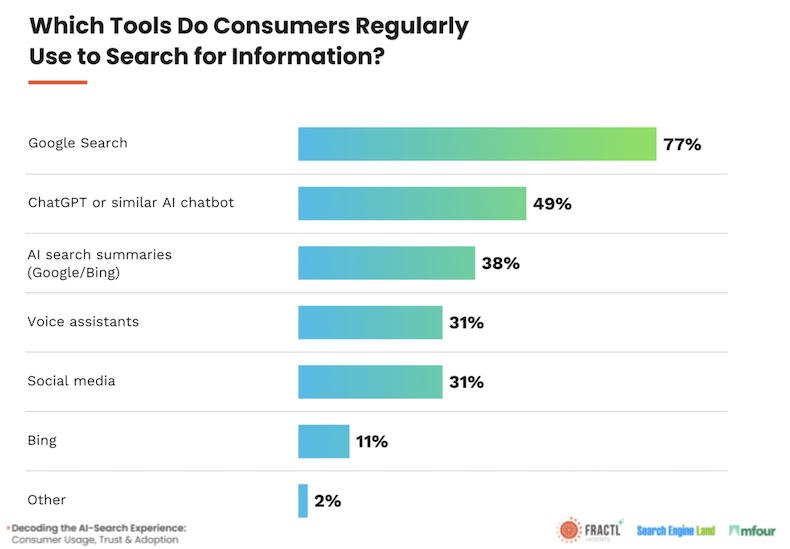
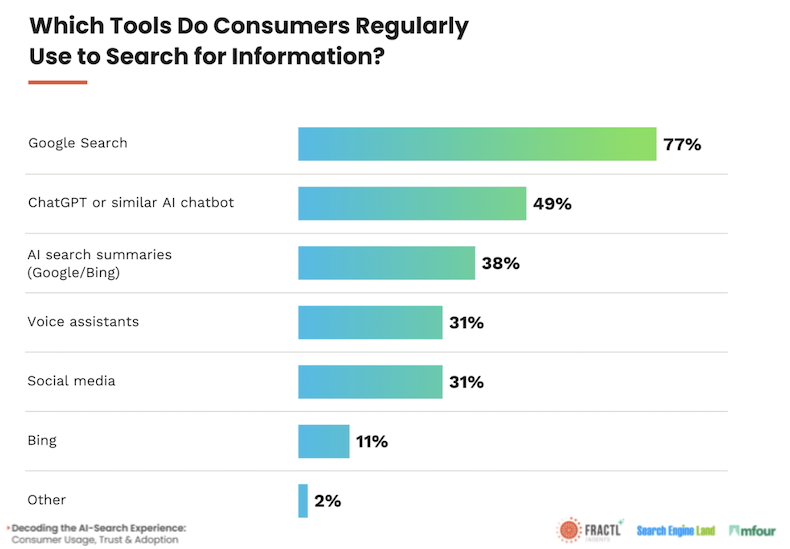
AI SEO Search Behavior refers to the patterns, actions, and intent signals users exhibit when searching through AI-powered platforms. These platforms include ChatGPT, Google’s AI Overviews, Perplexity, Bing Chat, and other large language model interfaces. Unlike traditional search engine result pages, AI search delivers synthesized answers, summaries, and recommendations directly in the response. The user does not click through to ten different websites. They read one cohesive answer.
This shift changes everything about how content is consumed. In traditional SEO, you optimized for a crawler to rank your page. In AI-driven search, you optimize for a language model to understand, trust, and cite your content. The user’s behavior is more exploratory, conversational, and intent-driven. They ask full questions, expect nuanced answers, and often follow up with clarifying queries. This behavior demands content that is structured, authoritative, and comprehensive enough to be considered a reliable source by the AI itself.
The Core Difference Between Traditional Search and AI Search Behavior
Traditional search behavior involves a query, a list of results, and a click. The user scans titles and meta descriptions. They decide which link looks most relevant. AI search behavior is different. The user asks a question and receives a single, synthesized response. The behavior is passive consumption of an answer, not active selection of a source.
This means the AI acts as a filter. It decides which sources to include in its answer. Your content must pass the AI’s evaluation criteria before it ever reaches the user. The user’s behavior is then based on trust in the AI’s response, not on their own evaluation of your website’s snippet. This is a critical distinction that requires a complete rethinking of content strategy.
How AI Engines Process Queries and Influence User Behavior
AI search engines do not operate like traditional crawlers. They use natural language processing, semantic analysis, and machine learning to understand the intent behind a query. When a user types a question, the AI breaks it down into entities, concepts, and relationships. It then searches its training data and the live web to find the most relevant information.
This process influences user behavior in several ways. Users learn to ask longer, more specific questions. They expect the AI to understand context and nuance. They are more likely to ask follow-up questions to refine the answer. This creates a dynamic, multi-turn conversation rather than a single search event. For SEO professionals, this means content must be written to answer not just one question, but a series of related questions on the same topic.
The Role of Natural Language Processing in Shaping Search Queries
Natural language processing allows AI to understand the intent behind a query, not just the keywords. For example, a user searching “best running shoes” might mean “best for marathons” or “best for wide feet.” The AI uses context to infer this. This leads to a change in user behavior. Users no longer need to add modifiers to their search terms. They simply ask a full question.
This behavior shift means your content needs to cover a topic in depth, addressing multiple sub-intents within a single piece. A blog post about running shoes should include sections on marathon training, wide feet, trail running, and budget options. This allows the AI to pull relevant information from your page for a variety of related queries.
Key Factors That Drive AI SEO Search Behavior

Several factors determine how users interact with AI search and what they expect from the results. Understanding these factors helps you create content that aligns with user expectations and AI algorithms.
- Query Complexity: Users ask longer, more conversational questions. They expect detailed, multi-faceted answers.
- Source Trust: Users trust the AI to provide accurate information. They rarely verify the source unless the answer seems off.
- Answer Format: Users prefer structured answers with bullet points, tables, and clear summaries. They do not want to read walls of text.
- Follow-up Behavior: Users often ask clarifying questions. This creates a session of multiple queries on the same topic.
- Zero-Click Intent: Users are satisfied with the answer provided directly in the AI response. They do not click through to websites.
- Conduct AI-Specific Keyword Research: Use tools that analyze AI search queries. Look for long-tail, conversational phrases. Use platforms like “AnswerThePublic” or “AlsoAsked” to find question-based queries.
- Rewrite Content for Readability: Break up long paragraphs. Use short sentences. Aim for a Flesch reading ease score of 60 or higher. AI models prefer clear, concise text.
- Add Structured Data: Implement schema markup for FAQs, How-To, and Articles. This helps AI engines understand the structure and purpose of your content.
- Update Content Regularly: AI models prioritize fresh information. Review and update your cornerstone content every 3-6 months to ensure accuracy.
- Monitor AI Search Performance: Use tools like Google Search Console to track impressions from AI Overviews. Use platforms like “ChatGPT” to manually test how your content is cited.
- E-E-A-T is Non-Negotiable: Experience, Expertise, Authoritativeness, and Trustworthiness are the pillars of AI trust. Showcase your credentials, cite your sources, and provide first-hand experience.
- Multimodal Content Matters: AI models are increasingly processing images, videos, and audio. Include visual aids, infographics, and video transcripts in your content.
- Brand Mentions Build Authority: The more your brand is mentioned across the web, the more trustworthy you appear to AI models. Invest in digital PR and thought leadership.
- User Experience is a Ranking Factor: AI models consider user engagement signals. Ensure your website is fast, mobile-friendly, and easy to navigate.
These factors indicate a shift from link-based discovery to answer-based discovery. Your content must be the answer, not just a link to an answer.
How User Intent Signals Have Evolved with AI
In traditional SEO, intent was categorized as informational, navigational, or transactional. AI search has blurred these lines. A user might ask “What is the best CRM for a small business?” This is informational, but it has strong transactional undertones. The A The user may then ask a follow-up question about implementation.
This evolution means your content must cover the full spectrum of intent. A single page should inform, compare, and guide the user toward a decision. This comprehensive approach signals to the AI that your content is a valuable resource for the entire user journey.
Optimizing Content for AI SEO Search Behavior
Optimizing for AI search requires a different approach than traditional SEO. You are no longer targeting a crawler with keywords. You are targeting a language model with context, structure, and authority. Here are the core strategies for success.
Structuring Content for Direct Answer Extraction
AI engines love structured content. They extract information from headings, lists, and tables to generate their answers. Your content should be organized with clear H2 and H3 headings that contain relevant keywords. Use bullet points for key features and benefits. Use tables for comparisons. This structure makes it easy for the AI to parse your content and identify the most relevant sections.
For example, if you are writing about “AI SEO Search Behavior,” you should have a section that directly defines the term. Another section should list the key factors. A third section should provide a step-by-step guide. This modular approach allows the AI to pull specific chunks of information for different queries.
Building Topical Authority and Entity Clarity
AI models rely on entities and relationships. They need to understand that your content is about a specific topic and that you are a credible source on that topic. This requires building topical authority. Write extensively on your niche. Cover related subtopics in detail. Link between your own articles to create a semantic network.
Entity clarity is also crucial. Use consistent terminology throughout your content. Define acronyms and technical terms. This helps the AI map your content to the correct entities in its knowledge graph. The more clearly you define your topic, the more likely the AI is to cite you as a source.
Creating Conversational Content That Matches Query Patterns
Since users ask conversational questions, your content should match that tone. Write in a natural, human style. Use full sentences and avoid jargon. Address the reader directly. Include a FAQ section that answers common questions in a concise, direct manner. This not only helps users but also provides the AI with ready-made answers to pull from.
Consider the follow-up questions a user might ask. If your main topic is “AI SEO Search Behavior,” a follow-up might be “How does AI search affect keyword research?” or “What tools measure AI search performance?” Include sections that answer these related questions. This increases the chances of your content being used in a multi-turn AI conversation.
Practical Applications: How to Adapt Your SEO Strategy
Adapting to AI SEO Search Behavior requires concrete changes to your workflow.
Measuring Success in an AI-Driven Search Environment
Traditional metrics like click-through rate and bounce rate are less relevant in AI search. Users may not click through at all. Instead, focus on brand mentions, citation frequency, and visibility in AI responses. Use tools that track where your brand appears in AI-generated answers. Track the number of impressions your content receives in AI Overviews.
Another key metric is engagement on your own site. If users do click through from an AI response, they are highly motivated. They are looking for specific details. Ensure your content delivers on that promise. Track time on page and scroll depth for users coming from AI platforms.
Benefits and Limitations of AI SEO Search Behavior
Understanding the benefits and limitations helps you set realistic expectations for your AI SEO strategy.
| Aspect | Benefits | Limitations |
|---|---|---|
| User Experience | Faster answers, less scrolling, personalized responses | Less control over which sources are shown, potential for misinformation |
| Content Strategy | Rewards in-depth, authoritative content | Requires more effort to cover topics comprehensively |
| Traffic | Potential for high-quality referral traffic from AI citations | Zero-click searches reduce overall site visits |
| Data | New insights into user intent and query patterns | Limited analytics tools for AI search visibility |
| Competition | Smaller players can win with niche expertise | Large brands dominate with broad authority |
The benefits clearly outweigh the limitations for brands willing to adapt. The key is to focus on creating content that is so valuable that the AI has no choice but to cite it.
Common Mistakes and How to Avoid Them

Many SEO professionals are making critical errors when trying to optimize for AI search. Here are the most common mistakes and how to avoid them.
Mistake 1: Focusing on Keywords Instead of Topics
Keyword stuffing is dead. AI models penalize content that is repetitive and lacks depth. Instead of targeting a single keyword, target a topic cluster. Write a comprehensive guide that covers all related subtopics. This signals to the AI that you are an authority on the subject.
How to Avoid: Create pillar pages that link to cluster content. Each cluster article should cover a specific subtopic in detail. This creates a semantic web that AI models can easily navigate.
Mistake 2: Ignoring User Intent
Writing content that does not match what the user actually wants to know is a waste of time. AI models are excellent at detecting intent mismatch. If a user asks “how to bake a cake” and your content is about “cake history,” the A
How to Avoid: Analyze the search intent behind every query. Ask yourself what the user wants to achieve. Create content that directly fulfills that need. Use the “People Also Ask” feature to understand related intents.
Mistake 3: Neglecting Content Freshness
AI models rely on up-to-date information. If your content is outdated, it will be ignored. This is especially true for topics like technology, health, and finance.
How to Avoid: Set a regular content review schedule. Update statistics, examples, and product recommendations. Add a “Last Updated” date to your articles. This signals freshness to both users and AI models.
Important Notes for Long-Term Success
AI SEO Search Behavior is not a passing trend. It is the future of search. To succeed long-term, you must embrace the following principles.
These principles form the foundation of a resilient SEO strategy that will perform well regardless of how AI search evolves.
Frequently Asked Questions
What is AI SEO Search Behavior?
AI SEO Search Behavior is the pattern of how users interact with AI-powered search engines. It involves conversational queries, zero-click answers, and a reliance on synthesized responses rather than traditional link lists. Optimizing for this behavior requires creating structured, authoritative content that AI models can easily parse and cite.
How does AI search affect traditional SEO?
AI search reduces the importance of click-through rates and meta description optimization. It increases the importance of content depth, entity clarity, and topical authority. Traditional SEO focuses on ranking in a list. AI SEO focuses on being the source of the answer itself.
What are the best tools for tracking AI search performance?
Google Search Console provides data on AI Overview impressions. Tools like Semrush and Ahrefs are adding AI visibility features. Manual testing with ChatGPT, Perplexity, and Bing Chat is also essential. Ask these tools questions related to your niche and see if your content is cited.
How long should content be for AI search optimization?
T The focus should be on comprehensiveness. A 500-word article can rank if it fully answers a specific question. A 3000-word guide is better for broad topics. The key is to cover the topic thoroughly without fluff. Ensure every section adds value and answers a potential follow-up question.
Is AI search behavior the same across all platforms?
No. ChatGPT behaves differently from Google AI Overviews. Perplexity focuses on citations. Bing Chat integrates with Microsoft services. Each platform has its own algorithms and user expectations. However, the core principles of clear structure, authoritative content, and conversational tone apply across all platforms.
Conclusion: Embracing the Shift in Search Behavior
AI SEO Search Behavior represents a fundamental change in how users discover and consume information. The era of optimizing for crawlers is fading. The era of optimizing for language models is here. This shift demands a focus on depth, clarity, and authority. It demands content that answers questions directly and comprehensively.
By understanding the factors that drive AI search behavior, structuring your content for easy extraction, and building topical authority, you position your brand for success in this new landscape. The strategies outlined in this guide provide a clear roadmap. The time to adapt is now. Brands that embrace AI SEO Search Behavior will thrive. Those that ignore it will become invisible in the AI-driven future of search.
Xem thêm:
- AI SEO AI Referral Traffic: The Complete Guide to Winning Algorithmic Referrals in 2025
- AI SEO Data Visualization: Turning Complex Rankings into Actionable Insights
- AI SEO Web Scraping: The Complete Guide to Automating Search Insights in 2025
- AI SEO Schema Markup Optimization: The Complete Guide to Structured Data in 2025
- How AI Affects SEO: The New Era of Search Intelligence
Bài viết cùng chủ đề:

AI SEO SEO Automation with Make: The Complete Workflow Guide

AI SEO SEO Automation with Zapier: The Complete Workflow Guide

AI SEO SEO Automation with n8n: The Complete Workflow Guide
AI SEO SEO Automation with Gemini: The Complete Guide to Scaling Organic Growth

AI SEO SEO Automation with Claude: The Complete Guide to Scaling Content in 2025

AI SEO SEO Automation with ChatGPT: The Complete Playbook for 2025

AI SEO & SEO Automation for Affiliate Sites: The 2025 Playbook for Passive Income Growth
AI SEO & SEO Automation for Bloggers: The Complete Guide to Scaling Your Content

AI SEO & SEO Automation for Agencies: The Complete 2025 Playbook

AI SEO and SEO Automation for Ecommerce: The Complete Playbook for 2025

AI SEO & SEO Automation for WordPress: The Complete Playbook for 2025
AI SEO SEO Automation Strategy: The Complete Playbook for 2025

Mastering the AI SEO SEO Automation Process: A Complete Guide to Scaling Organic Growth
AI SEO SEO Automation System: The Complete Guide to Scaling Organic Growth in 2025
AI SEO SEO Automation Platform: The Complete Guide to Scaling Organic Growth in 2025
AI SEO SEO Automation Software: The Complete Guide to Scaling Organic Growth in 2025















