
No products in the cart.
AI SEO AI Referral Traffic: The Complete Guide to Winning Algorithmic Referrals in 2025
10
Aug
Aug
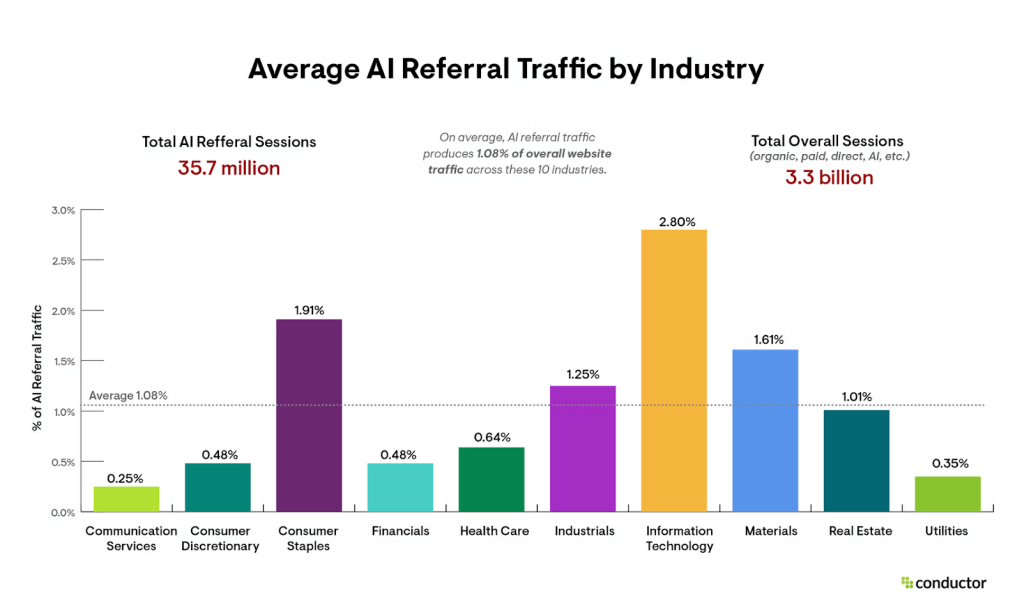
The digital marketing landscape is shifting beneath our feet. Traditional SEO focused on rankings, clicks, and sessions. The new frontier is about visibility within AI-generated answers, chatbots, and generative engine results. This is where AI SEO AI Referral Traffic becomes the most critical metric for sustainable growth. This guide breaks down exactly what this traffic is, how to capture it, and how to measure success in an era where machines decide who gets seen.
Understanding AI Referral Traffic in the Context of SEO
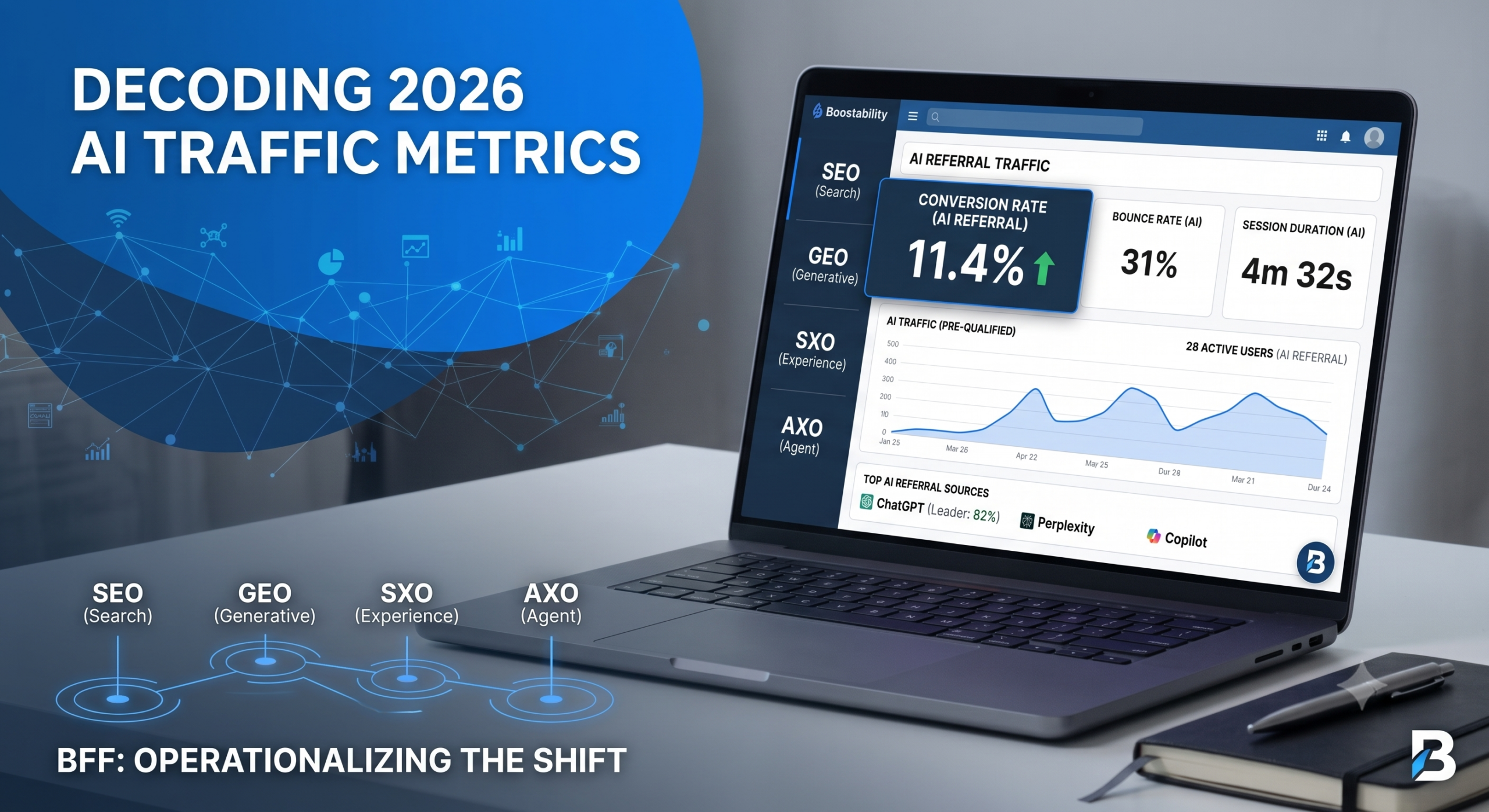
AI referral traffic refers to visits that arrive at your website from artificial intelligence platforms. This includes clicks from ChatGPT responses, Perplexity AI citations, Google AI Overviews, Bing Copilot, and other large language model interfaces. Unlike traditional referral traffic from social media or backlinks, this traffic originates from a conversational or summarized answer that points users to your content for further reading.
In the context of AI SEO AI Referral Traffic, the goal is to become the cited source within these AI-generated responses. When a user asks a complex question, the AI synthesizes an answer and often links to sources. If your content is structured and authoritative enough, you become that source. This is not about ranking in a list of blue links; it is about being the single most trusted reference for a specific query.
The Shift from Page Views to Answer Engines
Search engines are evolving into answer engines. Users no longer want to click through ten results; they want a direct, synthesized answer. This shift means that your content must be optimized not just for crawlers, but for the extraction algorithms that pull key facts, statistics, and quotes to form an AI response. The traffic that results from this extraction is highly qualified because the user has already received the core answer and is visiting for depth, verification, or additional context.
How AI Engines Select Referral Sources
To master AI SEO AI Referral Traffic, you must understand the selection criteria. AI models do not randomly choose sources. They rely on a combination of authority signals, content structure, and semantic relevance. The algorithms prioritize content that is easy to parse, factually dense, and consistently updated.
Authority and Entity Recognition
AI systems use knowledge graphs to identify entities. If your brand is recognized as an authority on a specific topic, you are more likely to be referenced. This requires consistent NAP (Name, Address, Phone) data, strong backlink profiles, and clear authorship signals. The AI needs to trust that you know what you are talking about.
Content Structure and Extractability
AI algorithms prefer content that is clearly structured. This means using proper heading hierarchy, bullet points for lists, and tables for comparative data. If your content is buried in dense paragraphs without clear markers, the AI cannot easily extract the relevant snippet. The easier it is for the machine to read, the higher the chance of a referral.
Freshness and Recency Signals
AI models often prioritize recent information, especially for news, technology, and health topics. Content that is regularly updated with new statistics and current examples is more likely to be cited than a static page from 2019. The freshness signal tells the AI that the information is still relevant and accurate.
Key Differences Between Traditional SEO and AI SEO
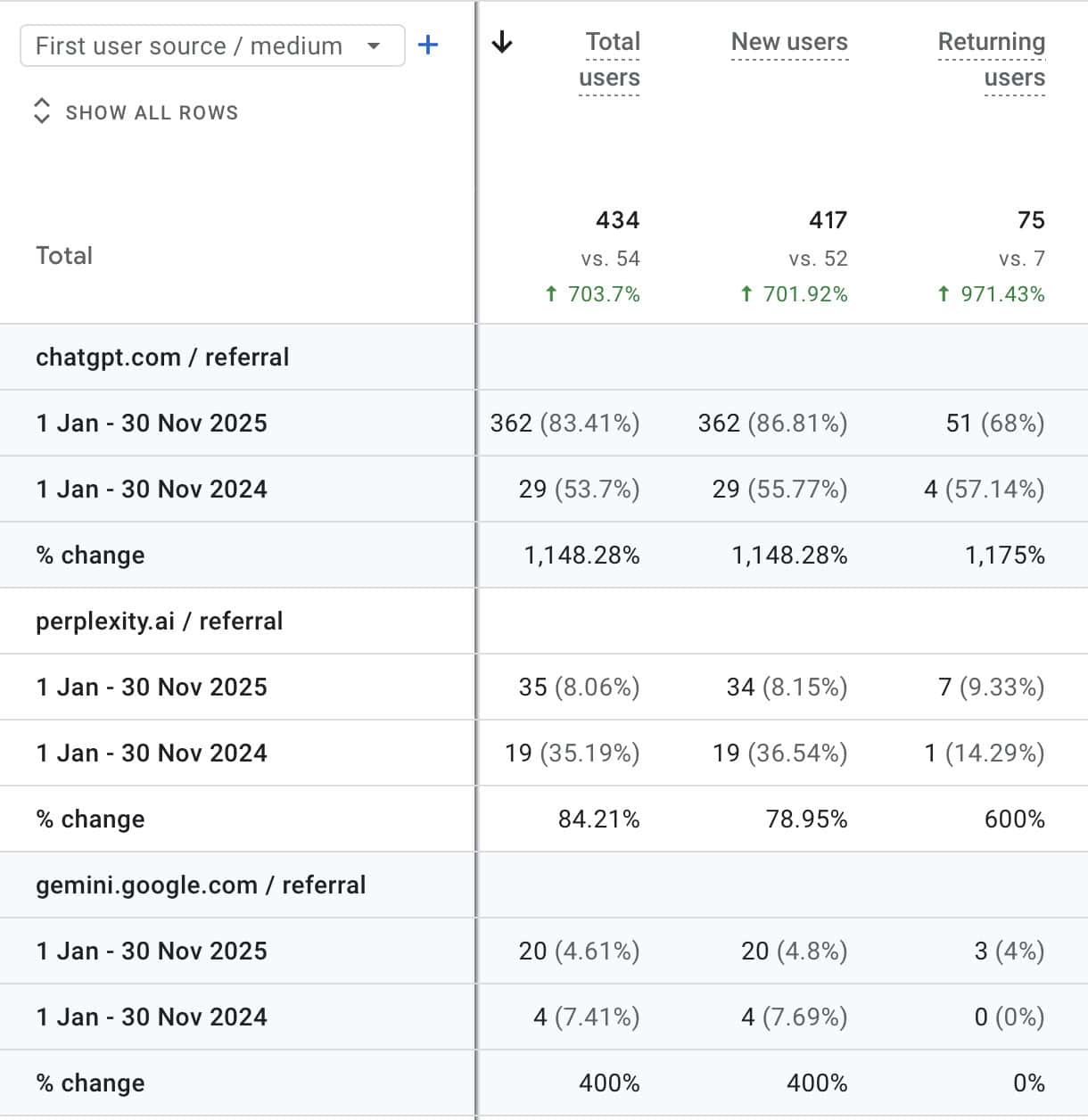
Understanding the distinction is vital for allocating resources. Traditional SEO focuses on keyword density and backlinks. AI SEO focuses on context, entity clarity, and answer relevance. The table below highlights the core differences in strategy.
| Aspect | Traditional SEO | AI SEO |
|---|---|---|
| Primary Goal | Rank #1 in organic search results | Be cited as a source in AI answers |
| Content Format | Long-form, keyword-optimized articles | Structured, extractable, fact-dense blocks |
| User Intent | Click-through to website | Answer satisfaction, optional click |
| Measurement | Impressions, CTR, Keyword Rank | AI Mentions, Referral Sessions, Brand Lift |
| Optimization Focus | Meta tags, backlinks, internal links | Schema markup, entity clarity, quote-worthy text |
The shift from the left column to the right column is the essence of AI SEO AI Referral Traffic. You are no longer competing for a position on a page; you are competing for a position in a generated narrative.
Strategies to Generate AI Referral Traffic
Generating this traffic requires a proactive approach. You cannot simply wait for the AI to find you. You must engineer your content to be the obvious choice for citation. Here are the proven strategies that work in the current landscape.
1. Create Definitive “Answer Hubs”
Create pages that directly answer specific, high-value questions. These pages should be structured as a direct Q&A. Start with a clear, concise answer in the first paragraph. Then, expand with supporting evidence, examples, and data. This format allows the AI to extract the exact answer without needing to interpret your intent.
2. Implement Structured Data and Schema Markup
Schema markup is the language that machines understand. Use FAQPage, HowTo, and Article schema to explicitly tell the AI what your content means. This reduces ambiguity and increases the likelihood of being selected for a featured snippet or AI citation. The more explicit you are, the easier it is for the algorithm to trust your content.
3. Optimize for Conversational Queries
AI queries are often phrased as full questions. Optimize your content for long-tail, conversational keywords. Use natural language in your headings. Instead of “Best CRM,” use “What is the best CRM for small businesses in 2025?” This matches the way users interact with AI chatbots and increases semantic relevance.
4. Build a Strong Digital PR and Backlink Profile
AI models still rely heavily on the web’s link graph to determine authority. Earning high-quality backlinks from reputable domains signals to the AI that your content is trustworthy. Digital PR, guest posting, and data-driven journalism are effective ways to build this authority. A strong backlink profile is the bedrock of AI SEO AI Referral Traffic.
5. Publish Original Research and Data
AI engines love unique data. If you conduct a survey, analyze a dataset, or create a unique industry report, you become a primary source. AI models are more likely to cite original research than to cite a summary of someone else’s research. This is the highest-value content for AI referrals.
Measuring and Tracking AI Referral Traffic
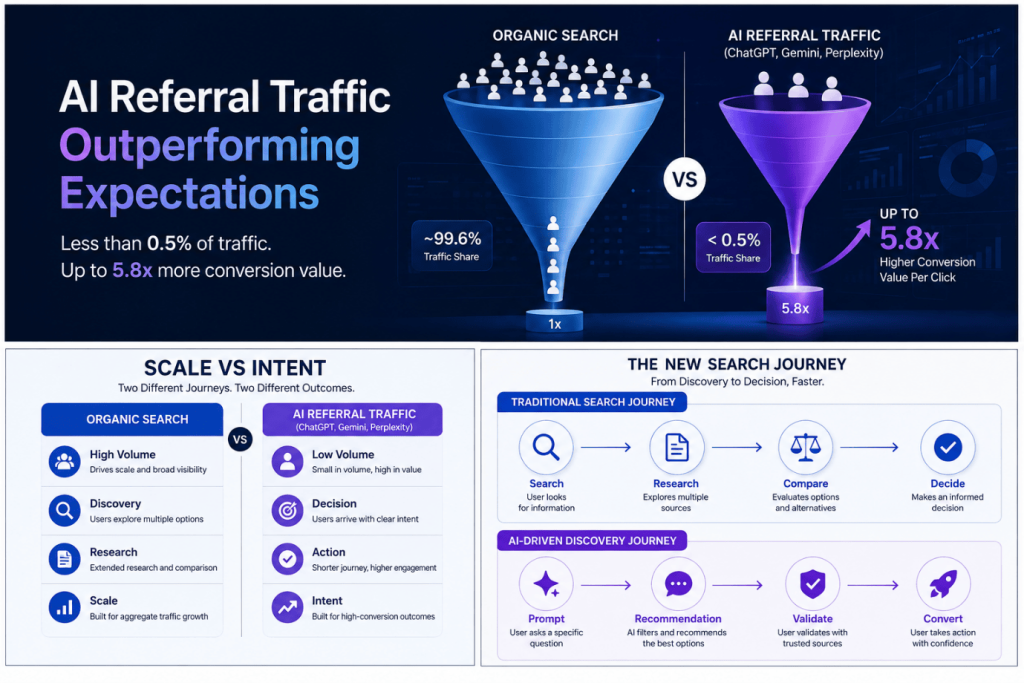
You cannot improve what you cannot measure. Tracking AI SEO AI Referral Traffic requires a different approach than standard analytics. You need to identify which AI platforms are sending you visitors and what they are engaging with.
Setting Up Analytics for AI Sources
In Google Analytics 4, you can create a channel grouping for “AI Referral.” You will need to identify the specific domains that act as referrers. Common sources include chat.openai.com, perplexity.ai, copilot.microsoft.com, and gemini.google.com. Create a segment that filters for these domains to see your baseline traffic.
Using AI Mention Tracking Tools
Analytics only shows you the traffic that actually clicked. To see the full picture, you need to track mentions where users did not click. Tools like Brand24, Mention, or custom Google Alerts can help you monitor when your brand or content is cited in AI responses. This gives you a view of your “share of voice” in the AI ecosystem.
Key Metrics to Monitor
- Referral Sessions: The number of visits from AI platforms.
- Engagement Rate: Time on page and pages per session from AI visitors.
- Conversion Rate: How often AI traffic converts into leads or sales.
- Citation Velocity: The rate at which new AI citations are appearing.
- Consistency is Key: Publish high-quality, structured content on a regular basis. The AI needs to see you as an active, reliable source.
- Monitor Your Brand Mentions: Set up alerts for your brand name plus terms like “ChatGPT,” “Perplexity,” and “AI Overview.” This helps you track your visibility.
- Optimize for Voice Search: Voice search queries are conversational and align closely with AI queries. Ensure your content answers questions directly.
- Prioritize User Experience: If a user clicks through from an AI answer and has a poor experience, they will not return. Ensure your site is fast, clean, and easy to navigate.
- Diversify Your AI Sources: Do not focus solely on ChatGPT. Optimize for Perplexity, Google Gemini, and other emerging platforms to spread your risk.
- Audit Your Current Content: Identify your top 20 performing pages. Check if they are structured with clear headings, bullet points, and direct answers.
- Add FAQ Sections: Add a detailed FAQ section to your high-value pages using FAQPage schema. This is the quickest way to become eligible for AI citations.
- Create a “Definition” Page: Create a page that defines your core product or service in simple terms. This acts as a reference point for AI models.
- Update Old Content: Refresh your top posts with new statistics, examples, and current data. Mark the update date clearly.
- Build a Data Asset: Conduct a simple survey or analyze your internal data to create a unique statistic. Publish this as a press release or blog post to attract backlinks.
- Test with AI Tools: Use ChatGPT or Perplexity to ask questions about your industry. See if your site is cited. If not, adjust your content to better match the AI’s preferred format.
These metrics provide a clear picture of your performance. If you see high citations but low clicks, your content may be answering the query too completely, leaving no need for the user to visit. In that case, you should adjust your content to hint at additional value that requires a visit.
Benefits of AI Referral Traffic for Your Business
The benefits of this traffic type extend beyond simple vanity metrics. It represents a fundamental shift in how users trust and consume information. The traffic is often more valuable than traditional organic traffic.
Higher Intent and Trust
Users who click through from an AI answer are highly motivated. They have already received a summary and are seeking deeper information. This indicates a high level of purchase intent or research intent. Furthermore, because the AI “recommended” your site, the user arrives with a pre-established level of trust.
Brand Authority and Positioning
Being cited by AI positions your brand as a thought leader. When a user sees your brand consistently appearing in AI answers, it reinforces your authority. This is a compounding effect; the more you are cited, the more the AI trusts you, leading to more citations.
Future-Proofing Your Organic Strategy
As AI becomes the primary interface for search, the traffic from these platforms will only grow. Investing in AI SEO AI Referral Traffic now ensures you are not left behind when the shift is complete. It is a hedge against the decline of traditional click-through rates.
Limitations and Challenges of AI Referral Traffic
While the benefits are substantial, there are significant challenges that marketers must navigate. Understanding these limitations is crucial for setting realistic expectations.
Lack of Granular Keyword Data
AI platforms do not pass the original query data to your analytics. You know the user came from ChatGPT, but you do not know the exact prompt they used. This makes it difficult to optimize for specific queries. You must rely on broader topical analysis rather than specific keyword data.
Zero-Click Dominance
Many AI answers are comprehensive enough that the user does not need to click through. This means you can have high brand visibility without any corresponding traffic. You must balance the goal of being cited with the goal of driving clicks. Sometimes, you need to leave a “curiosity gap” in your content.
Volatility of AI Algorithms
AI models are updated frequently. A source that is cited today may be ignored tomorrow due to an algorithm change. This volatility requires constant monitoring and adaptation. What works for one model (e.g., GPT-4) may not work for another (e.g., Claude).
Common Mistakes in AI SEO and How to Avoid Them
Many marketers are making critical errors when trying to capture this traffic. Avoiding these mistakes will give you a significant competitive advantage.
Mistake 1: Keyword Stuffing for AI
Some marketers try to stuff their content with phrases like “AI SEO AI Referral Traffic” in an attempt to game the system. This is counterproductive. AI models prioritize natural language and semantic clarity. Focus on writing clearly and comprehensively, not on repeating keywords.
Mistake 2: Ignoring Entity Optimization
Failing to clearly define who you are and what you do is a major error. Ensure your “About Us” page, author bios, and company information are clear and consistent across the web. The AI needs to understand your entity to trust your content.
Mistake 3: Neglecting Technical SEO
AI crawlers still need to access your site. If your site has broken links, slow load times, or poor mobile responsiveness, the A Technical SEO remains a prerequisite for AI SEO AI Referral Traffic. You cannot skip the basics.
Mistake 4: Focusing Only on High-Volume Keywords
High-volume keywords are often too broad for AI citations. AI engines prefer specific, niche answers. Focus on long-tail, specific queries where you can provide the definitive answer. This is where you will win the citation battle.
Important Notes for a Sustainable AI SEO Strategy
To maintain long-term success, you must adopt a holistic approach. This is not a one-time fix but a continuous process of refinement and adaptation.
Practical Guide: A Step-by-Step Action Plan
Frequently Asked Questions (FAQ)
What is the difference between AI referral traffic and organic traffic?
Organic traffic comes from users clicking on traditional search engine results pages (SERPs). AI referral traffic comes from users clicking on links within AI-generated responses from platforms like ChatGPT, Perplexity, or Google AI Overviews. The intent is often higher for AI traffic because the user has already received a synthesized answer and is seeking deeper information.
How do I track AI referral traffic in Google Analytics?
You can track AI referral traffic by creating a custom channel grouping in Google Analytics 4. Filter for sessions where the source/medium matches specific AI domains such as chat.openai.com, perplexity.ai, or copilot.microsoft.com. You can also use UTM parameters on links you share, though you cannot control how AI platforms link to you.
Is AI referral traffic worth focusing on?
Yes, it is increasingly important. As AI platforms become the primary entry point for information discovery, the volume of this traffic will grow. It also tends to be high-quality traffic with strong engagement metrics. Ignoring it means losing visibility to competitors who are optimizing for this new channel.
What type of content gets cited by AI the most?
Content that is factual, well-structured, and unique gets cited the most. This includes original research, statistical analyses, definitive how-to guides, and clear definitions. Content that uses lists, tables, and direct answers is easier for AI to parse and cite than long, narrative-style prose.
How long does it take to see results from AI SEO?
Results can vary. Some websites see citations within days of publishing structured content. However, building the authority required for consistent citations can take several months. It depends on your niche, your existing domain authority, and the frequency of your content updates. Consistency is more important than speed.
Conclusion
The era of AI SEO AI Referral Traffic is not coming; it is already here. The brands that adapt to this new reality will capture a significant share of the market, while those that cling to outdated SEO tactics will see their visibility erode. The key is to shift your mindset from ranking to being referenced. Focus on creating clear, authoritative, and structured content that answers questions definitively. Build your entity authority through digital PR and consistent branding. Track your mentions and clicks meticulously. By doing so, you position your brand at the forefront of the AI revolution, ensuring that when the machines speak, they speak about you.
Xem thêm:
- AI SEO HARO Alternatives: 10 Powerful Platforms to Secure High-Authority Backlinks in 2025
- AI SEO Topical Depth: The Complete Guide to Dominating Search Rankings
- AI Proofreading: The Complete Guide to Flawless, Professional Writing at Scale
- AI SEO Keyword Trends: The Complete Guide to Future-Proof Search Strategy
- AI SEO Generative Search Ranking: The Complete Playbook for 2025
Bài viết cùng chủ đề:

AI SEO SEO Automation with Make: The Complete Workflow Guide

AI SEO SEO Automation with Zapier: The Complete Workflow Guide

AI SEO SEO Automation with n8n: The Complete Workflow Guide
AI SEO SEO Automation with Gemini: The Complete Guide to Scaling Organic Growth

AI SEO SEO Automation with Claude: The Complete Guide to Scaling Content in 2025

AI SEO SEO Automation with ChatGPT: The Complete Playbook for 2025

AI SEO & SEO Automation for Affiliate Sites: The 2025 Playbook for Passive Income Growth
AI SEO & SEO Automation for Bloggers: The Complete Guide to Scaling Your Content

AI SEO & SEO Automation for Agencies: The Complete 2025 Playbook

AI SEO and SEO Automation for Ecommerce: The Complete Playbook for 2025

AI SEO & SEO Automation for WordPress: The Complete Playbook for 2025
AI SEO SEO Automation Strategy: The Complete Playbook for 2025

Mastering the AI SEO SEO Automation Process: A Complete Guide to Scaling Organic Growth
AI SEO SEO Automation System: The Complete Guide to Scaling Organic Growth in 2025
AI SEO SEO Automation Platform: The Complete Guide to Scaling Organic Growth in 2025
AI SEO SEO Automation Software: The Complete Guide to Scaling Organic Growth in 2025















