
No products in the cart.
AI SEO Entity Relationships: The Complete Guide to Semantic Search Dominance
10
Aug
Aug
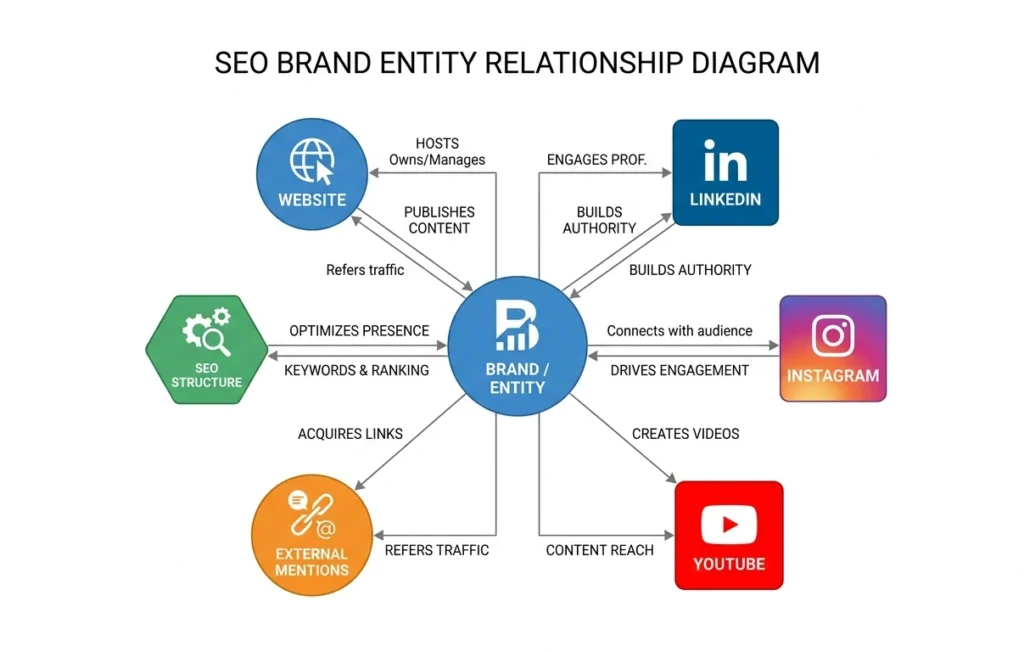
The digital landscape has shifted dramatically. Search engines no longer rely solely on keywords; they understand concepts, context, and connections. This is where AI SEO Entity Relationships come into play. Mastering this concept allows brands to build topical authority, improve visibility in AI-driven search results, and secure a competitive edge in organic rankings. This guide breaks down the mechanics of entity-based optimization, offering a clear roadmap for implementation.
What Are AI SEO Entity Relationships?
An entity is a distinct, well-defined object or concept. It can be a person (Elon Musk), a place (Paris), a product (iPhone 15), or an abstract idea (Climate Change). In the context of search, entities are the “things” that matter, separate from the strings of text used to describe them.
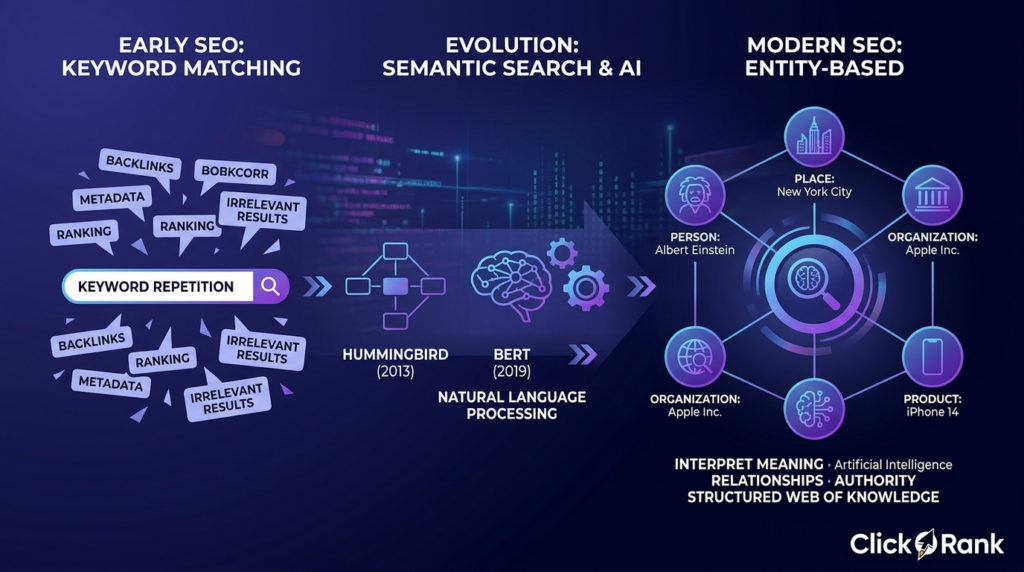
AI SEO Entity Relationships refer to the semantic connections between these entities. Search engines use machine learning models (like Google’s Knowledge Graph) to map how entities relate to one another. For example, the relationship between “Steve Jobs” and “Apple Inc.” is “founder of.” The relationship between “iPhone” and “iOS” is “runs on.”
When you optimize for these relationships, you are not just telling Google that your page contains the word “coffee.” You are telling Google that your page is about the entity “coffee,” its relationship to “caffeine,” its relationship to “brewing methods,” and its relationship to “Brazilian agriculture.” This semantic depth is what separates high-ranking content from generic keyword-stuffed pages.
Why Entity Relationships Matter in Modern SEO
The shift from keywords to entities is driven by the need for accuracy. Early search algorithms matched exact phrases. If a user searched “best laptop for video editing,” a page with that exact phrase ranked well. Modern AI algorithms understand that the user actually wants a device with a powerful GPU, high RAM, and a color-accurate screen. They do not care if the page says “laptop” or “notebook.”
- Enhanced Knowledge Graph Integration: Pages that clearly define entities and their connections are more likely to appear in rich results, knowledge panels, and AI overviews.
- Resilience to Algorithm Updates: Entity-based content focuses on depth and accuracy, which are core components of Google’s E-E-A-T guidelines. This makes your rankings more stable.
- Preparation for AI Search: Tools like Google’s Search Generative Experience (SGE) and ChatGPT rely heavily on entity graphs to generate answers. If your content is not mapped correctly, AI tools will not cite you.
The Core Components of Entity SEO
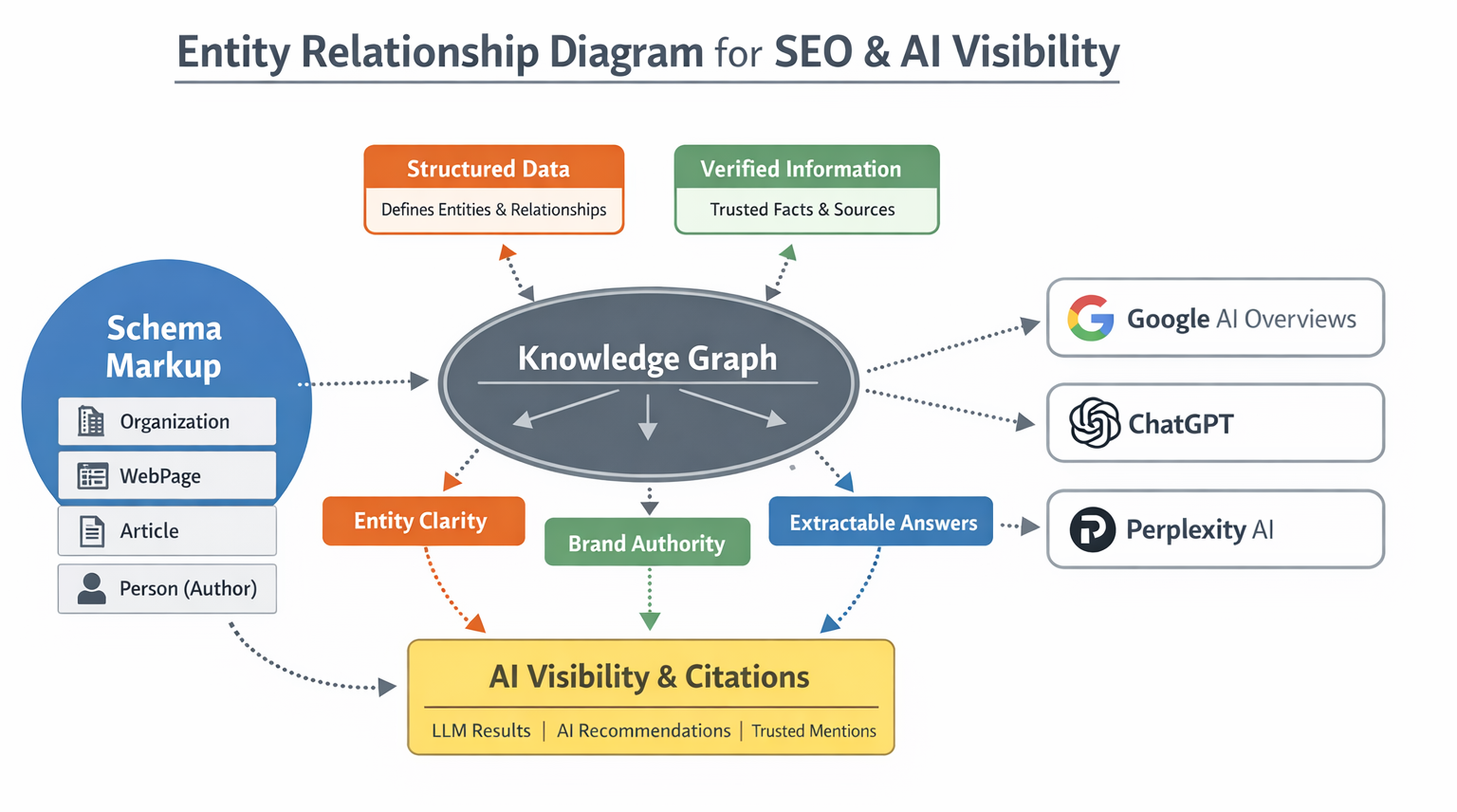
To effectively implement AI SEO Entity Relationships, you must understand the building blocks. These components work together to create a semantic profile for your website.
1. The Entity Itself
This is your primary subject. It could be your brand, your product, or your service. You must define this clearly. What is it? What is it not? For example, if you sell “ergonomic office chairs,” your primary entity is that specific product category, not just “furniture.”
2. The Attributes
Attributes are the characteristics of an entity. For a chair, attributes include “material,” “weight capacity,” “adjustability,” and “warranty.” For a person, attributes include “birth date,” “occupation,” and “nationality.” Listing attributes helps search engines build a complete profile of your entity.
3. The Relationships
This is the “glue” that connects entities. Relationships are typically defined by verbs or prepositions. Examples include “is a type of,” “is used for,” “is located in,” and “is manufactured by.” These connections form the edges of the knowledge graph.
4. The Context
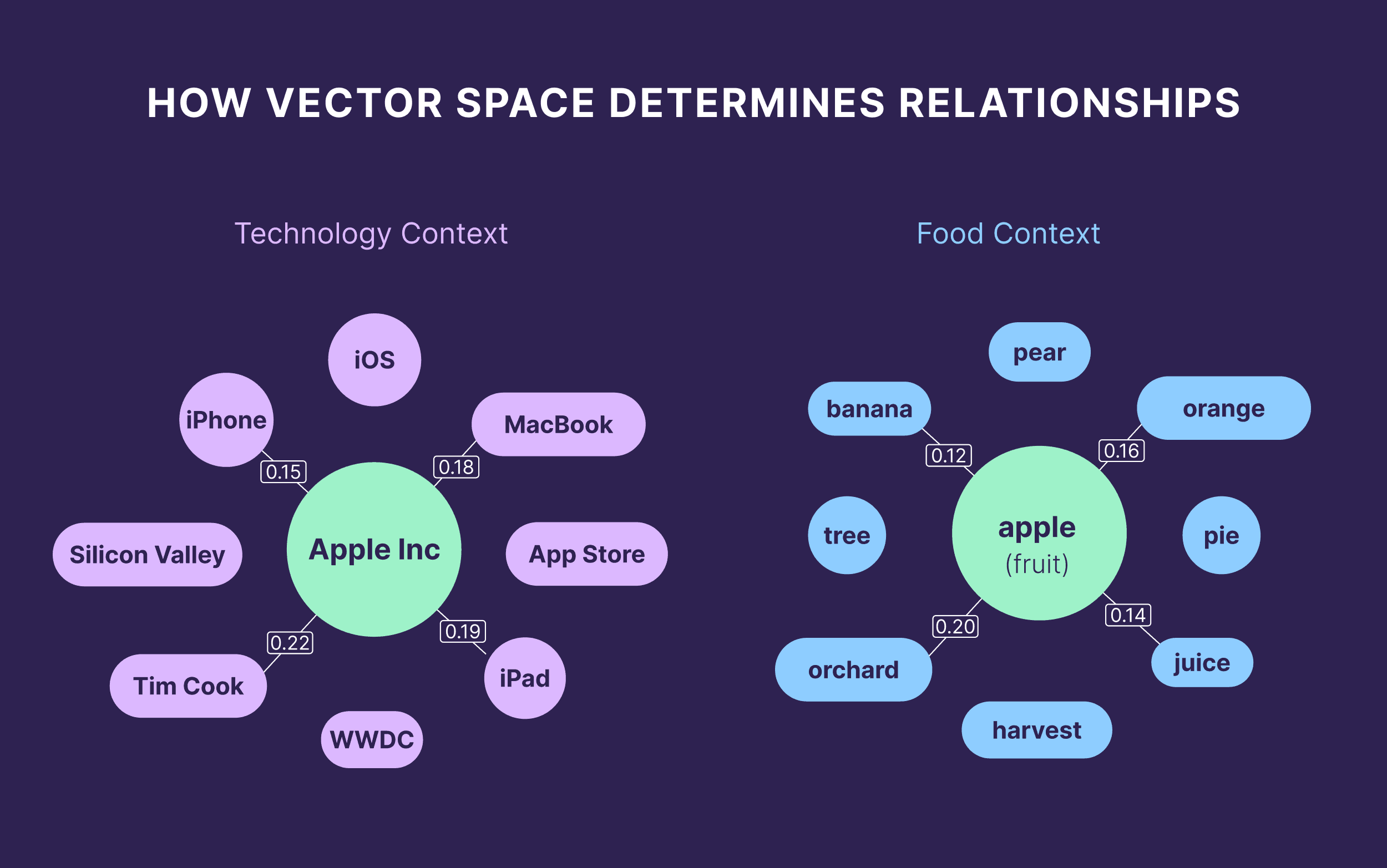
Context determines which relationships are relevant. The entity “Apple” has different relationships depending on whether the context is “fruit” or “technology.” Your content must provide clear contextual signals to guide search engines toward the correct interpretation.
How Search Engines Use Entity Graphs
Search engines construct massive databases called knowledge graphs. These graphs store entities as nodes and relationships as edges. When a user performs a search, the AI algorithm doesn’t just look at the query string; it looks at the entities within the query and their known relationships.
Consider the query: “Best restaurants in Tokyo near Shibuya Station.” The AI identifies the entities: “Restaurants,” “Tokyo,” “Shibuya Station.” It then looks for relationships: “located in” (Restaurant -> Tokyo), “near” (Restaurant -> Shibuya Station). The search results are then filtered based on these semantic connections, not just keyword density.
For your website, this means your content must explicitly state these relationships. If you write a review of a restaurant, you must mention the specific neighborhood, the type of cuisine, and the chef’s name. This allows the AI to place your content within the correct part of the graph.
Practical Guide: How to Optimize for AI SEO Entity Relationships
Optimizing for entities requires a shift in content creation.
Step 1: Build Your Entity Map
Before writing, create a visual map of your topic. Place your primary entity in the center. Then, branch out to related entities. For a page about “Digital Marketing,” your map might include:
- SEO (relationship: is a subset of)
- Content Marketing (relationship: is a subset of)
- Social Media (relationship: is a channel for)
- Analytics (relationship: is used to measure)
This map serves as your content outline. Every branch should be addressed in your article.
Step 2: Use Consistent Naming Conventions
Consistency is critical for entity recognition. If you refer to your product as “Project Management Software” in one paragraph and “PM Tools” in another, the AI might treat them as two separate entities. Use the full, official name first, then use synonyms sparingly and clearly.
Step 3: Leverage Schema Markup
Schema markup (structured data) is the most direct way to tell search engines about your entities. Use the following types:
- Organization: Defines your company, logo, and contact info.
- Product: Defines your product, price, and availability.
- Article: Defines the author and publisher.
- BreadcrumbList: Defines the hierarchy of your site.
Schema acts as a cheat sheet for AI, ensuring it interprets your content correctly.
Step 4: Write Descriptive, Relationship-Rich Copy
Your prose should naturally include relationship verbs. Instead of writing “We sell shoes,” write “Our running shoes are designed by athletes and manufactured in Italy.” This explicitly states the relationship between the shoes, the designers, and the location.
Step 5: Create Topic Clusters
Entity relationships extend beyond a single page. You need a hub-and-spoke model. Your “pillar” page covers the broad entity (e.g., “Digital Marketing”). Your “cluster” pages cover specific sub-entities (e.g., “Email Marketing,” “Influencer Marketing”). Each cluster page links back to the pillar, reinforcing the relationship.
Benefits of a Strong Entity Relationship Strategy
Investing in this approach yields tangible results that go beyond simple rankings.
| Benefit | Impact on SEO |
|---|---|
| Higher Click-Through Rates (CTR) | Rich snippets and knowledge panels make your listing stand out. |
| Improved Voice Search Performance | Voice queries are conversational and entity-based. Your content will answer them directly. |
| Better International SEO | Entities are language-agnostic. A well-defined entity translates across borders without losing meaning. |
| Increased Brand Authority | Being recognized as a definitive source on an entity establishes trust. |
Limitations and Challenges
While powerful, this strategy is not without its hurdles. Being aware of these challenges helps you avoid common pitfalls.
- Time-Consuming: Building a comprehensive entity map requires research and strategic planning.
- Technical Complexity: Implementing schema markup correctly requires technical knowledge or developer support.
- Measurement Difficulty: It is hard to directly measure “entity authority” in standard analytics dashboards.
- Content Saturation: For broad entities like “Marketing,” the graph is crowded. You need a specific angle to stand out.
Common Mistakes to Avoid
Many SEO professionals fail to see results because they make critical errors. Here are the most frequent mistakes and how to fix them.
Mistake 1: Keyword Stuffing Instead of Entity Building
Repeating “AI SEO Entity Relationships” ten times in a paragraph does not help. It hurts readability and provides no semantic value. Focus on covering the topic comprehensively instead.
Mistake 2: Ignoring Internal Linking
Internal links are the primary way you tell search engines about relationships between your own pages. If you do not link related articles, you are leaving the graph incomplete.
Mistake 3: Inconsistent NAP (Name, Address, Phone)
For local SEO, if your business name appears differently on different platforms, the AI cannot confirm it is the same entity. Standardize your citations.
Mistake 4: Neglecting Off-Page Entities
Your entity does not exist in a vacuum. Mentions of your brand on other websites (even without links) help build your entity profile. Monitor unlinked mentions and claim them.
Important Notes for Implementation
As you integrate this strategy, keep these critical points in mind to ensure long-term success.
Focus on User Intent First: The AI is smart, but it still prioritizes user satisfaction. If your content is confusing, no amount of entity mapping will save it. Write for humans first, then optimize for machines.
Monitor Your Knowledge Panel: Search for your brand name and see what information Google displays. If the panel is wrong or missing, use the “Suggest an edit” feature to correct it. This directly influences your entity profile.
Stay Updated on AI Trends: The algorithms for entity resolution are constantly evolving. Follow reputable SEO news sources to stay ahead of changes in how Google processes semantic data.
Use Entity-Rich Media: Images and videos also contain entities. Use descriptive file names and alt text that include the entity name and its context.
Frequently Asked Questions (FAQ)
What is the difference between a keyword and an entity in SEO?
A keyword is a literal string of text. An entity is a concept or object. Keywords are ambiguous (e.g., “Java” could be a language or an island). Entities are unambiguous because they are defined by their relationships and attributes. SEO now focuses on optimizing for the entity, using keywords as one of many signals.
How do I find the entities related to my topic?
Use Google’s “People Also Ask” and “Related Searches” features. Analyze the top-ranking pages for your target keyword and identify the common nouns, proper nouns, and concepts they mention. Tools like Google’s Natural Language API can also extract entities from your content automatically.
Does schema markup guarantee better rankings?
No. Schema markup does not directly influence rankings. However, it helps search engines understand your content, which can lead to rich results and better visibility. It is a necessary component of entity SEO, but it is not a magic bullet.
How long does it take to see results from entity-based SEO?
It depends on the competitiveness of your niche and the current state of your domain authority. Generally, you can expect to see shifts in rankings within 3 to 6 months. Building a strong entity profile is a long-term investment that compounds over time.
Can small websites compete with big brands using entity SEO?
Yes. While big brands have an advantage in brand recognition, small websites can win by focusing on niche entities. A small blog can become the definitive authority on “vintage bicycle restoration in Oregon” much faster than a large corporation can. Specificity is your friend.
Conclusion
AI SEO Entity Relationships represent the evolution of search. The days of simple keyword matching are over. To succeed in the current landscape, you must build a semantic web of information that clearly defines your subject matter and its connections to the wider world. By mapping your entities, using structured data, and writing relationship-rich content, you align your website with the way modern AI algorithms think. This approach not only improves your rankings but also future-proofs your digital presence against the rapid advancement of artificial intelligence in search. Start building your entity map today to secure your place in the knowledge graph of tomorrow.
Xem thêm:
- AI SEO SERP Tracking: The Complete Guide to Smarter Rank Monitoring in 2025
- AI SEO Review Content: The Complete Guide to Automated Reviews That Rank
- AI SEO HowTo Schema: The Complete Guide to Structured Data for AI Search
- AI SEO Content Ideation: The Complete Guide to Smarter Topic Discovery
- AI SEO List Generator: The Complete Guide to Automating Content Creation
Bài viết cùng chủ đề:

AI SEO SEO Automation with Make: The Complete Workflow Guide

AI SEO SEO Automation with Zapier: The Complete Workflow Guide

AI SEO SEO Automation with n8n: The Complete Workflow Guide
AI SEO SEO Automation with Gemini: The Complete Guide to Scaling Organic Growth

AI SEO SEO Automation with Claude: The Complete Guide to Scaling Content in 2025

AI SEO SEO Automation with ChatGPT: The Complete Playbook for 2025

AI SEO & SEO Automation for Affiliate Sites: The 2025 Playbook for Passive Income Growth
AI SEO & SEO Automation for Bloggers: The Complete Guide to Scaling Your Content

AI SEO & SEO Automation for Agencies: The Complete 2025 Playbook

AI SEO and SEO Automation for Ecommerce: The Complete Playbook for 2025

AI SEO & SEO Automation for WordPress: The Complete Playbook for 2025
AI SEO SEO Automation Strategy: The Complete Playbook for 2025

Mastering the AI SEO SEO Automation Process: A Complete Guide to Scaling Organic Growth
AI SEO SEO Automation System: The Complete Guide to Scaling Organic Growth in 2025
AI SEO SEO Automation Platform: The Complete Guide to Scaling Organic Growth in 2025
AI SEO SEO Automation Software: The Complete Guide to Scaling Organic Growth in 2025















