
No products in the cart.
AI Paragraph Generator: The Complete Guide to Writing Faster, Smarter, and Better in 2025
29
Jul
Jul
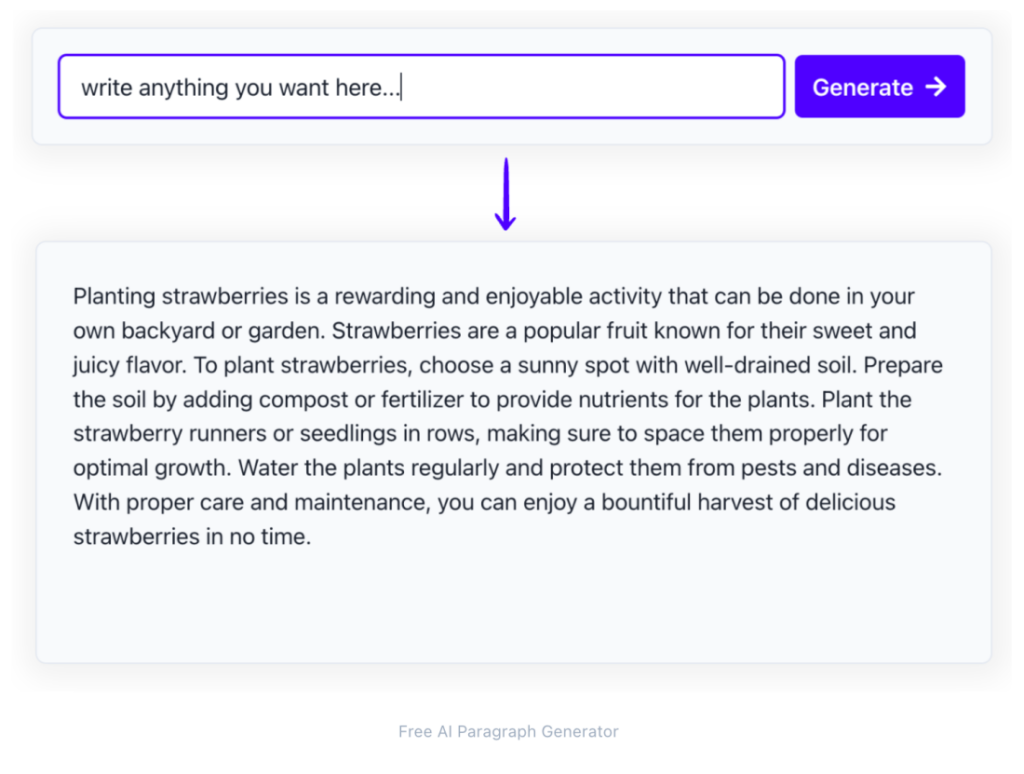
An AI paragraph generator is a specialized writing tool that uses advanced language models to produce coherent, contextually relevant paragraphs from simple prompts. Whether you’re drafting blog posts, emails, product descriptions, or academic summaries, this technology can transform a few keywords into polished text in seconds. Instead of staring at a blank screen, content creators now leverage these generators to overcome writer’s block, maintain consistent quality, and scale output dramatically. Understanding how these systems work, their real-world capabilities, and the best practices for using them ethically can fundamentally reshape your writing workflow.
What Exactly Is an AI Paragraph Generator?
At its core, an AI paragraph generator is a software application built on large language models (LLMs) like GPT-4, Claude, or Gemini. These models have been trained on vast corpora of text from books, articles, and websites, enabling them to predict and generate language patterns that mimic human writing. Unlike simple autocomplete tools that suggest the next few words, a dedicated paragraph generator constructs entire blocks of text with logical flow, topic sentences, and supporting details. The user provides a prompt—a short description, a topic, or a set of instructions—and the AI returns a fully formed paragraph that can be refined further.
The technology doesn’t “think” creatively in a human sense. It analyzes the prompt, retrieves relevant patterns from its training data, and assembles sentences that match the requested tone, style, and length. Parameters like temperature (which controls randomness) and top-p sampling allow users to dial in creativity versus factual precision. This makes the AI paragraph generator a versatile assistant for everything from marketing copy to technical explanations.
How AI Paragraph Generators Actually Work
Modern generators rely on transformer architecture, a neural network design that processes words in relation to all other words in a sequence. When you type “Write a paragraph about sustainable fashion,” the model tokenizes the input, encodes its meaning, and then decodes a response token by token. Each generated token is influenced by the probability distribution learned during training, ensuring grammatical correctness and thematic consistency. The process may seem instantaneous, but behind the scenes, billions of parameters are activated to produce that one paragraph.
Many tools now offer fine-tuned controls: you can specify the desired word count, reading level, or emotional tone. Some integrate with real-time data sources to improve factual accuracy, though hallucination—where the AI invents plausible-sounding but false information—remains a challenge. The most effective platforms combine the raw generation capability with editing interfaces, plagiarism checkers, and SEO scoring to deliver ready-to-publish content.
Key Features of a High-Quality AI Paragraph Generator
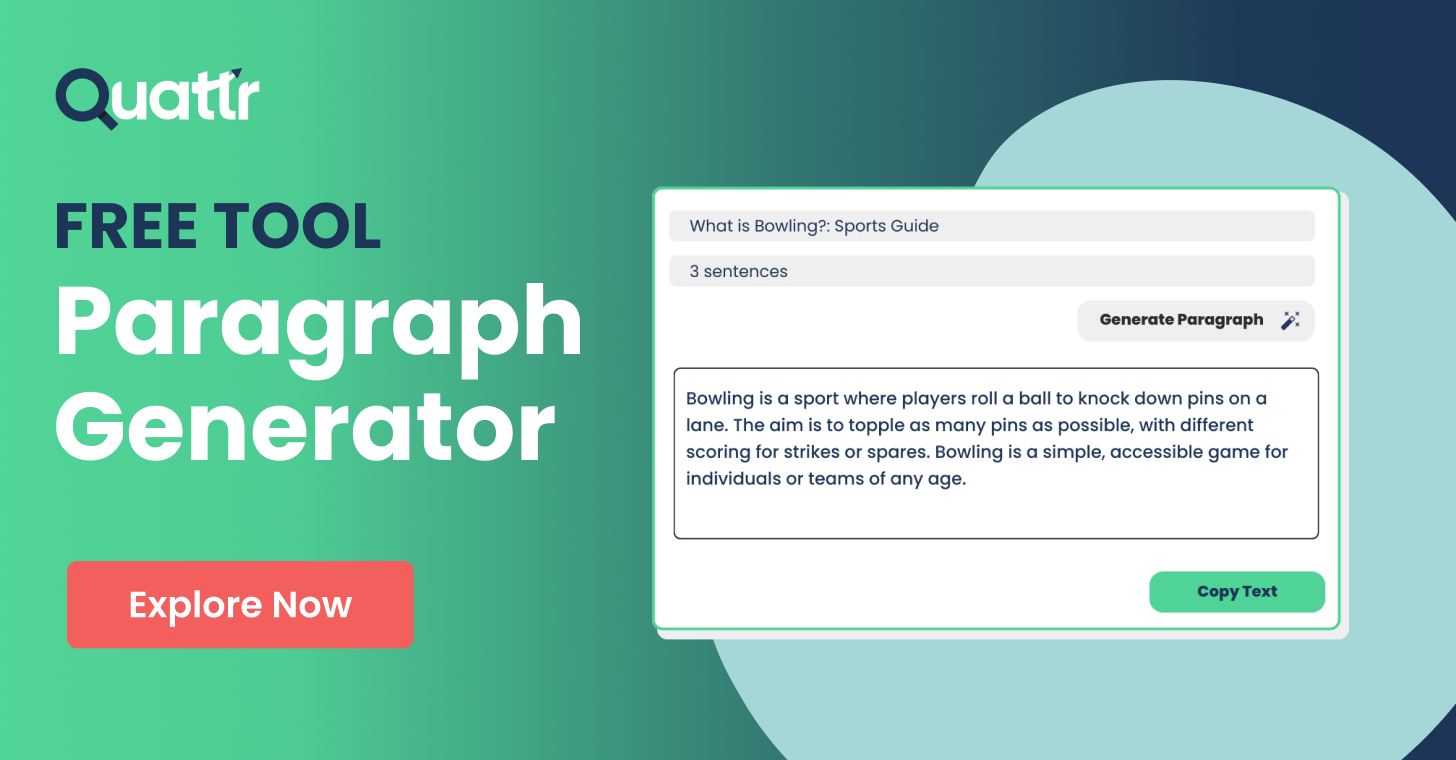
Not all writing tools are created equal. When evaluating an AI paragraph generator, look for these essential capabilities:
- Tone and style adaptation: Ability to shift from professional to casual, persuasive to informative, with just a setting change.
- Context retention: The generator should remember previous paragraphs to maintain narrative consistency in long-form content.
- Multilingual support: High-quality output in multiple languages, not just translated text.
- Customizable length: Precise control over paragraph length rather than a one-size-fits-all output.
- Plagiarism-free assurance: Built-in checks to ensure originality, as generative models can inadvertently reproduce training data snippets.
- SEO integration: Keyword density suggestions, heading recommendations, and readability analysis.
- General-purpose generators: Broad tools like ChatGPT or Jasper that handle a wide variety of paragraph types but may lack deep specialization.
- SEO-focused generators: Platforms like Writesonic or Scalenut that tightly integrate keyword research and content briefs into the paragraph creation process.
- Academic and research generators: Tools designed for summarizing papers, generating citations, and maintaining formal academic tone (used with caution).
- Creative writing generators: Specialized in narrative, dialogue, or descriptive passages with adjustable creativity sliders.
- Business communication generators: Focused on emails, reports, and professional memos with built-in templates.
- Overcoming writer’s block: A prompt like “explain machine learning in simple terms for a 12-year-old” yields a solid first draft that can be refined, breaking the paralysis of the empty page.
- Consistent quality at scale: Whether you need ten paragraphs or ten thousand, the AI maintains grammatical accuracy and structural integrity, something human writers struggle with under fatigue.
- Multilingual content creation: Many generators produce native-level paragraphs in dozens of languages, opening global markets without the need for translators.
- Cost efficiency: For startups and small businesses, the monthly subscription to an AI writing tool is a fraction of hiring full-time content writers.
- SEO optimization built in: Advanced generators analyze top-ranking content for a given keyword and suggest paragraph structures, related terms, and even optimal paragraph length to improve rankings.
- Rapid A/B testing: Marketers can generate multiple versions of a landing page paragraph and test them instantly to see which resonates best with audiences.
- Factual inaccuracies (hallucination): The AI may confidently state incorrect statistics, historical dates, or scientific claims. Always verify numbers and claims with primary sources.
- Lack of true creativity and empathy: Generated paragraphs can feel formulaic, missing the nuanced storytelling or emotional depth a skilled human writer brings.
- Potential for generic output: Without careful prompting, paragraphs can read like a wikipedia summary, lacking unique insights or personal experience.
- Over-reliance and skill erosion: Writers who lean too heavily on AI may find their own ability to structure ideas and craft compelling narratives diminishes over time.
- Ethical and copyright concerns: The training data contains copyrighted material, and although outputs are typically transformative, the legal landscape is still evolving.
- Specify the audience: “Explain to a non-technical business owner.”
- State the desired outcome: “Write a persuasive paragraph that encourages the reader to sign up for a demo.”
- Include key points: “Cover the following points: cost savings, integration ease, 24/7 support.”
- Set length and format: “4–5 sentences, professional tone, no jargon.”
- Provide examples (few-shot): Paste a sample of the style you want to mimic, and ask the AI to match it.
- Ignoring the need for editing: AI output is a first draft, not a final product. Always refine for voice, flow, and accuracy.
- Using the same prompt repeatedly: This leads to repetitive sentence structures. Vary your instructions and experiment with temperature settings.
- Neglecting SEO keyword placement: Let the AI know which keywords to include naturally. Without guidance, it may completely miss your target phrases.
- Trusting statistics and quotes: Every numerical claim and attribution should be verified. Many generated “expert quotes” are fictional.
- Overlooking plagiarism checks: Run the final text through a detector. The odd phrasing from a training source can slip through.
Types of AI Paragraph Generators
The landscape can be divided into several categories based on their primary use case:
Use Cases for AI Paragraph Generators Across Industries
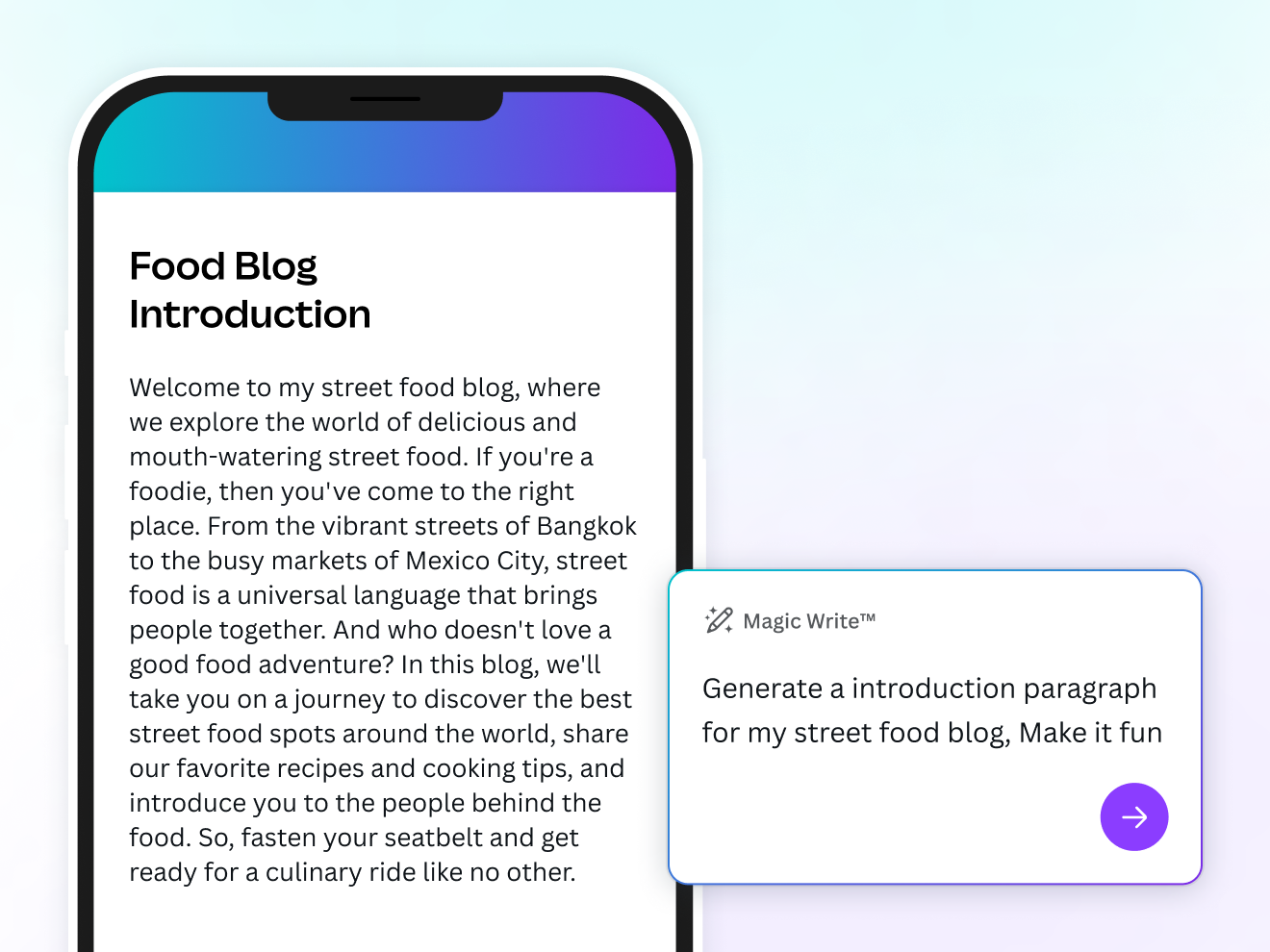
The AI paragraph generator has found applications far beyond content mills. Here are concrete examples of how different sectors harness this technology:
Content Marketing and Blogging
Marketers use paragraph generators to draft introductions, expand bullet points into full sections, and repurpose existing content into new formats. A social media manager can input a product feature list and receive a compelling LinkedIn post paragraph in seconds. This drastically reduces the time from idea to publication while maintaining a consistent brand voice across channels.
E-Commerce Product Descriptions
Online stores with thousands of SKUs generate unique, benefit-driven product paragraphs at scale. By feeding the AI specifications like material, dimensions, and target audience, merchants create SEO-friendly descriptions that convert, without hiring armies of copywriters.
Academic and Research Support
Students and researchers use paragraph generators to summarize complex journal articles, create literature review drafts, or paraphrase concepts while avoiding plagiarism. Ethical use means the AI assists with structuring ideas, not writing entire papers. Many educational institutions now have guidelines specifically addressing AI writing tools.
Customer Service and Support
Support teams generate empathetic, solution-oriented response paragraphs that can be personalized with customer details. This ensures faster resolution times and a consistent tone across all agents.
Technical Documentation
Engineers and product managers turn bullet-pointed specs into clear, user-friendly paragraphs for manuals and help centers. The AI helps eliminate jargon and standardize explanations for diverse audiences.
Benefits of Using an AI Paragraph Generator
The adoption of these tools isn’t just about speed; it’s about fundamentally upgrading the writing process. Consider these tangible advantages:
Limitations and Risks You Must Know
While powerful, an AI paragraph generator is not a replacement for human judgment. Critical limitations include:
AI Paragraph Generator vs. Human Writer: A Comparison
| Criterion | AI Paragraph Generator | Human Writer |
|---|---|---|
| Speed | Generates a paragraph in under 3 seconds | 30 minutes to several hours per well-researched paragraph |
| Scalability | Unlimited output with no fatigue | Limited by working hours and energy |
| Originality | Recombines existing patterns, occasionally derivative | Can produce truly novel ideas and voice |
| Fact-checking | Prone to errors, needs human oversight | Can source and verify facts in real time |
| Emotional nuance | Mimics emotion based on patterns | Draws from genuine experience and empathy |
| Cost | $10–$100/month for unlimited use | $50–$500+ per piece depending on expertise |
How to Write Effective Prompts for an AI Paragraph Generator
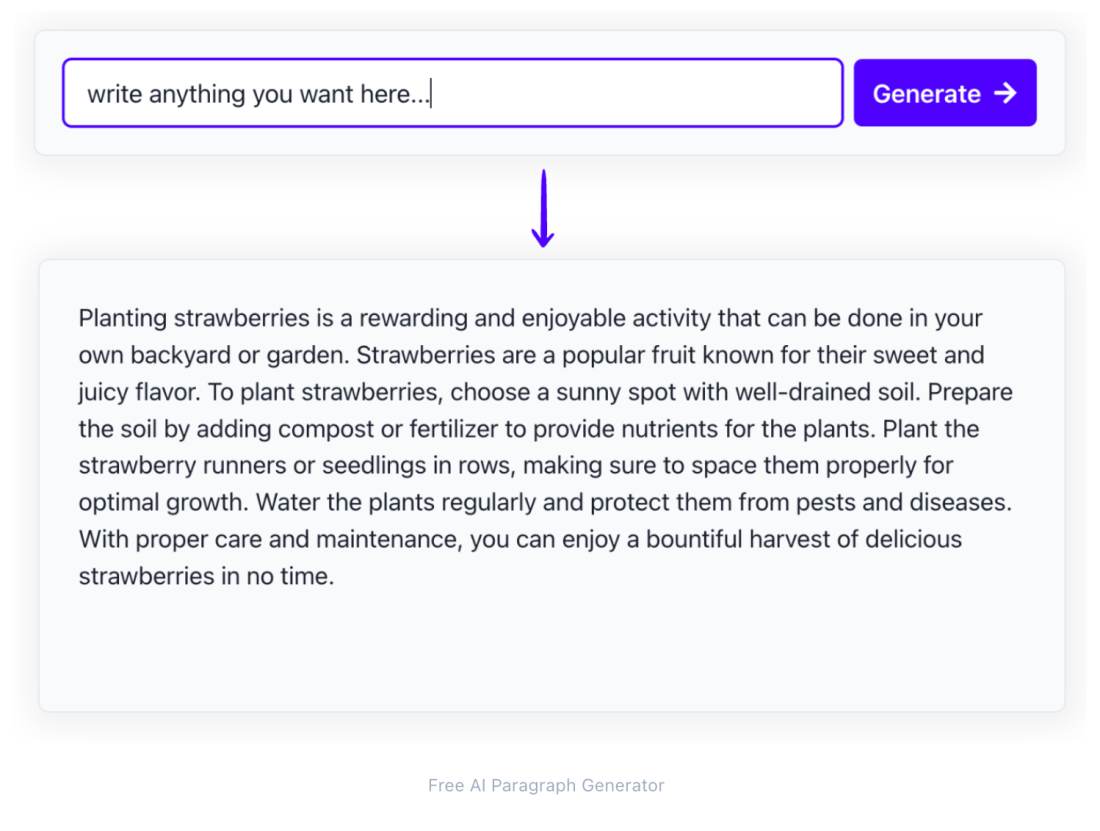
The difference between a dull, generic paragraph and a sharp, publication-ready one often lies in the prompt. ..”. For example, “Act as a seasoned technology journalist.”
With practice, you can create complex prompts that extract exactly the paragraph you need, saving hours of editing.
Common Mistakes When Using AI Paragraph Generators (and How to Avoid Them)
Even experienced users fall into traps that undermine the quality of AI-generated content. Avoid these pitfalls:
Important Notes for Ethical and Responsible Use
Using an AI paragraph generator ethically means being transparent when appropriate and maintaining accountability for the content you publish. If you’re a student, follow your institution’s academic integrity policy. For businesses, don’t mislead customers into thinking a human wrote a testimonial or review if it was AI-generated. Always inject personal anecdotes, expert interviews, and original data where possible to add the human touch that AI cannot replicate. Remember, search engines like Google value firsthand experience and expertise (E-E-A-T), so purely AI-generated pages without human insight may struggle to rank well over time.
Frequently Asked Questions
Can an AI paragraph generator create 100% unique content?
Most modern generators produce text that is structurally unique and will pass plagiarism checks when used correctly. However, because the models are trained on existing content, t Always use a plagiarism checker and edit the output to add original analysis or perspective.
Is it legal to use AI-generated paragraphs for commercial websites?
Yes, it is legal in most jurisdictions, provided you hold the appropriate license for the AI tool and the generated text does not infringe on existing copyrights. The US Copyright Office has indicated that purely AI-generated content cannot be copyrighted, but human-authored modifications can be. Always review the terms of service of your chosen tool.
How do I make AI paragraphs sound less robotic?
To humanize AI text, vary sentence length, add colloquial expressions where appropriate, introduce rhetorical devices, and insert specific examples from real life. Editing in small batches and reading aloud helps catch unnatural phrasing. Some tools offer a “humanize” or “bypass AI detection” feature, but manual editing remains the most reliable method.
Will Google penalize my site for using AI paragraph generators?
Google’s guidelines focus on content quality, not how it was produced. If the AI-generated paragraphs are helpful, accurate, and demonstrate expertise, they can rank well. However, spammy, low-value auto-generated content violates Google’s policies and can lead to penalties. The key is to use AI as an assistant, not a replacement for human editorial oversight.
Can these generators write about technical or niche topics accurately?
Yes, if you provide the generator with the right context and data. For highly specialized fields like medicine or law, it is safer to use tools that allow you to input custom knowledge bases or to treat the output as a suggestion that must be reviewed by a subject matter expert.
The Future of AI Paragraph Generation
The next generation of AI paragraph generators will integrate deeper context understanding and factual grounding. We’re already seeing models that can access the internet in real time, cite sources, and even adjust paragraph structure based on user engagement metrics from previous articles. Voice-to-paragraph and vision-to-paragraph capabilities are emerging, allowing users to speak an idea or upload an image and receive a descriptive, publish-ready paragraph. The focus will shift from simple generation to collaborative workflows where AI suggests paragraphs, and the human curates, enhances, and verifies. Those who learn to partner with these tools now will be best positioned for the content landscape of tomorrow.
Embracing an AI paragraph generator doesn’t mean replacing creativity; it means amplifying it. By offloading the mechanical aspects of writing, you free mental energy for strategy, storytelling, and connection—the very elements that make content truly valuable.
Xem thêm:
- AI SEO Newsletters: The Ultimate Guide to Staying Ahead in Search with AI-Powered Insights
- AI SEO URL Generator: The Complete Guide to Automated Link Optimization
- AI Search Intent Analysis: The Definitive Guide to Understanding What Users Really Want
- AI SEO Ecommerce Internal Linking: The Complete Strategy Guide for 2025
- AI SEO MarketMuse: The Complete Guide to Content Intelligence in 2025
Bài viết cùng chủ đề:

AI SEO SEO Automation with Make: The Complete Workflow Guide

AI SEO SEO Automation with Zapier: The Complete Workflow Guide

AI SEO SEO Automation with n8n: The Complete Workflow Guide
AI SEO SEO Automation with Gemini: The Complete Guide to Scaling Organic Growth

AI SEO SEO Automation with Claude: The Complete Guide to Scaling Content in 2025

AI SEO SEO Automation with ChatGPT: The Complete Playbook for 2025

AI SEO & SEO Automation for Affiliate Sites: The 2025 Playbook for Passive Income Growth
AI SEO & SEO Automation for Bloggers: The Complete Guide to Scaling Your Content

AI SEO & SEO Automation for Agencies: The Complete 2025 Playbook

AI SEO and SEO Automation for Ecommerce: The Complete Playbook for 2025

AI SEO & SEO Automation for WordPress: The Complete Playbook for 2025
AI SEO SEO Automation Strategy: The Complete Playbook for 2025

Mastering the AI SEO SEO Automation Process: A Complete Guide to Scaling Organic Growth
AI SEO SEO Automation System: The Complete Guide to Scaling Organic Growth in 2025
AI SEO SEO Automation Platform: The Complete Guide to Scaling Organic Growth in 2025
AI SEO SEO Automation Software: The Complete Guide to Scaling Organic Growth in 2025















