
No products in the cart.
AI SEO SERP Tracking: The Complete Guide to Smarter Rank Monitoring in 2025
10
Aug
Aug
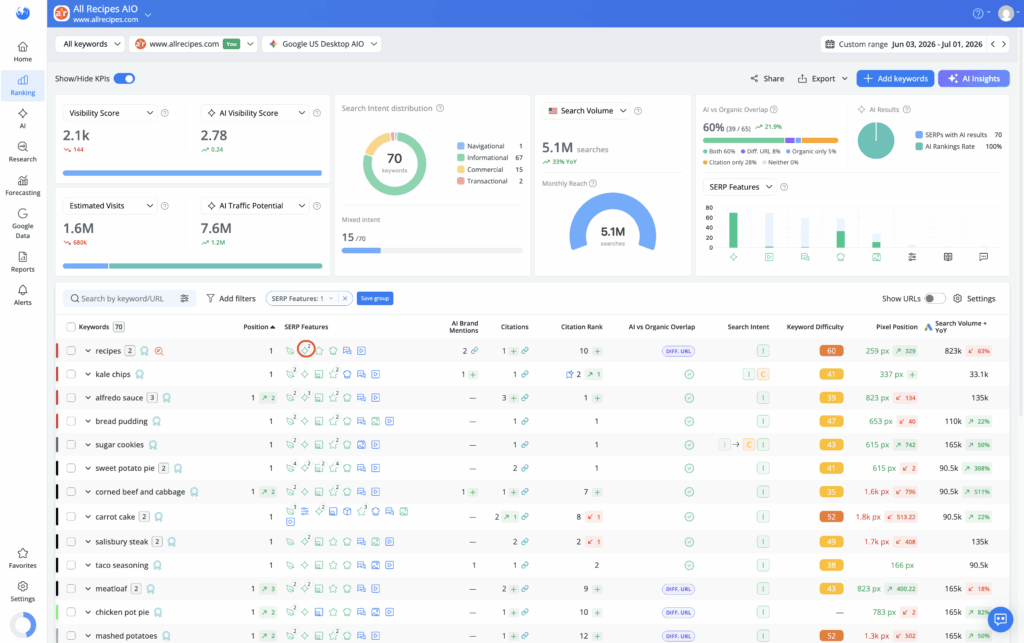
AI SEO SERP tracking has fundamentally changed how businesses monitor their search engine rankings. Traditional rank checking tools simply told you where your page appeared for a keyword. Modern AI-powered systems analyze search engine results pages with machine learning, natural language processing, and predictive analytics. This shift matters because Google’s search results are no longer just ten blue links. They include featured snippets, knowledge panels, local packs, video carousels, and AI-generated overviews. Understanding AI SEO SERP tracking means understanding how to measure visibility across all these elements, predict ranking fluctuations, and adapt your strategy in real time. This guide explains everything you need to know about implementing and benefiting from AI-driven rank tracking.
What Is AI SEO SERP Tracking?
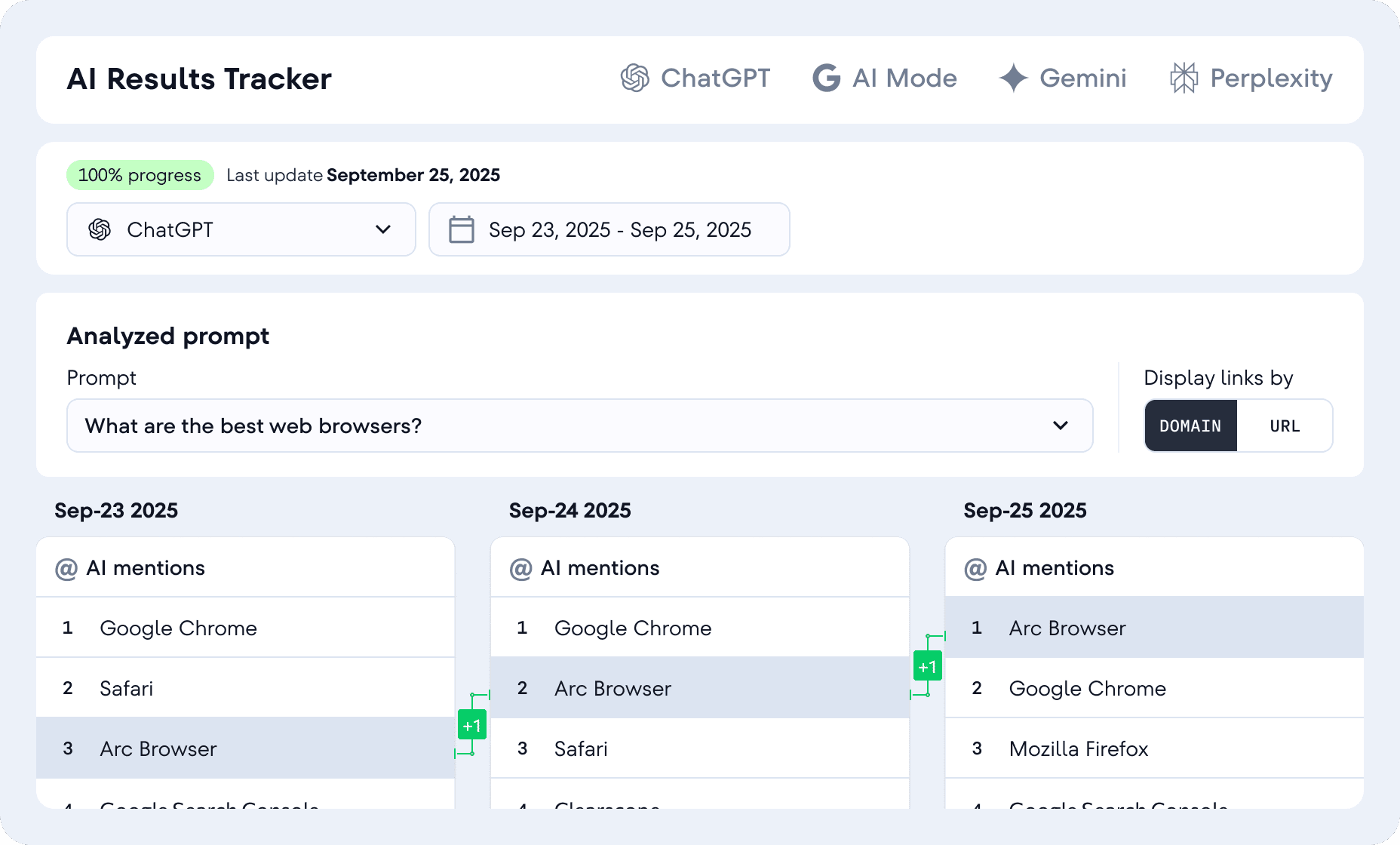
AI SEO SERP tracking refers to the use of artificial intelligence algorithms to monitor, analyze, and interpret search engine results pages. Unlike conventional rank checkers that log keyword positions at specific intervals, AI-powered systems process vast amounts of SERP data to identify patterns, detect anomalies, and forecast future movements.
The core difference lies in the analytical layer. A standard tool might report that your keyword dropped from position 3 to position 8. An AI system examines the SERP features present, analyzes competitor changes, considers user behavior signals, and correlates the drop with algorithm updates or content modifications. This deeper analysis transforms raw data into actionable intelligence.
How AI Enhances Traditional Rank Tracking
Traditional SERP tracking operates on a simple principle: query a search engine, record the position of your URL, and repeat. This approach has several blind spots. It misses personalized results, ignores local variations, and fails to account for SERP feature changes. AI SEO SERP tracking addresses these limitations through several mechanisms.
Machine learning models can process millions of SERP snapshots to understand what factors correlate with ranking stability. Natural language processing helps interpret the meaning behind queries and content, rather than just matching keywords. Predictive analytics use historical data to forecast when a page might lose or gain rankings, allowing proactive optimization.
Why Traditional SERP Tracking Falls Short
To appreciate the value of AI SEO SERP tracking, you must first understand the limitations of legacy tools. Many businesses still rely on weekly or monthly rank reports from basic software. These reports often provide misleading information because they ignore the dynamic nature of search results.
Google personalizes results based on location, search history, device type, and even time of day. A keyword that ranks first for one user in New York might rank fifth for another in London. Traditional tools typically use a single data center and a clean browser profile, which does not reflect real user experiences. AI systems aggregate data from multiple locations and simulate various user contexts to provide a more accurate picture of true visibility.
Another critical failure of traditional tracking is the inability to handle SERP feature volatility. A page might rank in the top three organic results but lose visibility because a featured snippet or a shopping carousel pushes it below the fold. AI SEO SERP tracking measures not just the position but the actual screen real estate your listing occupies, which is a far better indicator of click-through potential.
Core Components of AI SEO SERP Tracking Systems
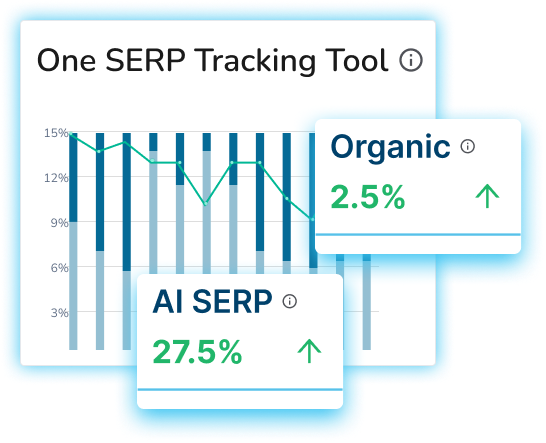
Modern AI-powered rank tracking platforms share several key components that distinguish them from their predecessors. Understanding these elements helps you evaluate different tools and choose the right one for your needs.
Automated SERP Feature Detection
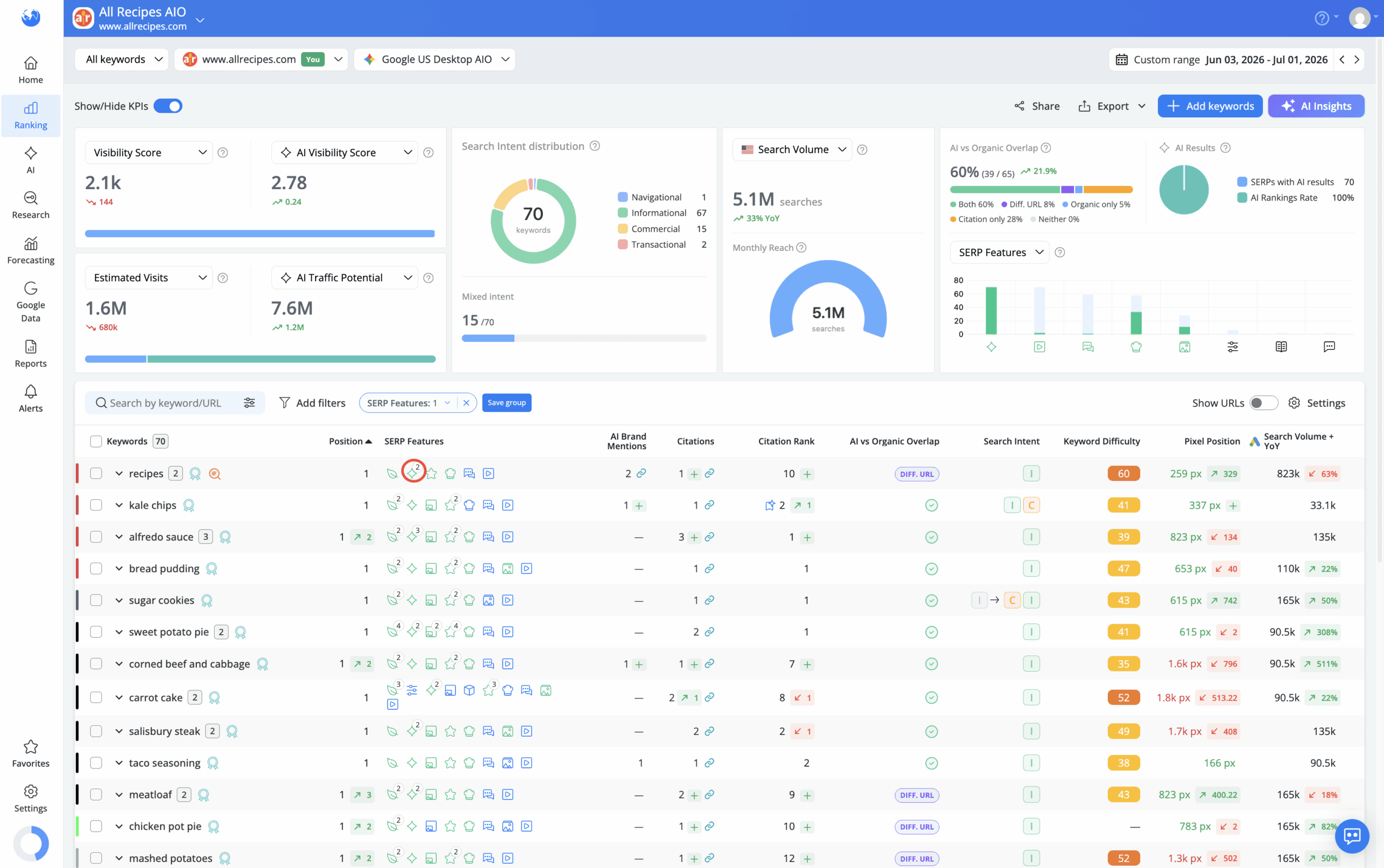
AI systems automatically identify and categorize every element on a search results page. This includes featured snippets, people also ask boxes, image packs, video results, news carousels, and local map packs. The system tracks your presence in each of these features separately, giving you a complete view of your search visibility.
For example, you might rank fifth for a commercial keyword but also appear in the featured snippet at the top of the page. The AI tool recognizes that your actual visibility is higher than the organic position suggests. Conversely, you might rank first but lose the snippet to a competitor, reducing your effective click share.
Predictive Rank Forecasting
Machine learning algorithms analyze historical ranking data alongside external factors like algorithm updates, competitor activity, and seasonal trends. This analysis enables the system to predict future ranking movements with reasonable accuracy. You receive alerts about potential drops before they happen, giving you time to adjust your content or link building strategy.
Predictive forecasting also helps with resource allocation. If the AI predicts that a page will lose rankings in two weeks due to a competitor’s new content, you can prioritize updating that page rather than working on pages that are stable.
Competitor Intelligence Integration
AI SEO SERP tracking goes beyond your own rankings. The system continuously monitors competitor pages, tracking their position changes, content updates, and new backlinks. This competitive intelligence is processed and presented in a way that highlights threats and opportunities.
You can see which competitors are gaining ground for your target keywords, what changes they made to achieve those gains, and which of their pages are most successful. This information guides your content strategy and helps you identify gaps in your own approach.
Natural Language Processing for Query Understanding
NLP allows AI tracking systems to understand the intent behind search queries, not just the literal keywords. This understanding helps you identify semantic variations of your target keywords that you might not have considered. The system groups related queries together and shows you which ones drive the most traffic.
For example, if you track the keyword “best running shoes,” the AI might identify related queries like “best running shoes for flat feet” or “best running shoes 2025.” This insight helps you create content that addresses multiple search intents under one topical umbrella.
Key Benefits of Implementing AI SEO SERP Tracking
Adopting AI-powered rank tracking delivers measurable advantages across your entire SEO operation. These benefits extend beyond simple position monitoring and impact strategy, reporting, and resource management.
Real-Time Visibility Monitoring
AI systems provide continuous monitoring rather than daily or weekly snapshots. You see ranking changes as they happen, allowing immediate response to algorithm updates or competitor actions. This real-time data is crucial in competitive industries where rankings can shift dramatically within hours.
Real-time monitoring also helps correlate ranking changes with your own actions. If you publish a new blog post or acquire a high-quality backlink, you can see the impact on rankings almost immediately. This feedback loop accelerates learning and optimization.
Accurate ROI Measurement
Traditional rank tracking often fails to connect rankings with revenue. AI SEO SERP tracking integrates with analytics platforms to show you the actual traffic and conversions generated from each keyword position. You can calculate the true return on investment for your SEO efforts and justify budgets to stakeholders.
This integration also helps you prioritize keywords based on business value rather than just search volume. A keyword that ranks lower but drives high-converting traffic is more valuable than a high-ranking keyword that generates no sales.
Automated Reporting and Alerts
AI systems generate comprehensive reports automatically, saving hours of manual work. These reports are customized for different audiences, from executive summaries for management to detailed technical breakdowns for SEO specialists. Automated alerts notify you of significant changes, such as a sudden drop in rankings or a competitor entering your top positions.
Automated reporting also ensures consistency. Every report follows the same structure and includes the same metrics, making it easier to track progress over time and compare performance across different periods.
Improved Content Optimization
AI SEO SERP tracking provides data that directly informs content creation and optimization. You see which pages are losing rankings and can analyze the SERP features that are pushing them down. This analysis reveals whether you need to add more comprehensive content, improve your meta tags, or target different keywords.
The system also identifies content gaps by analyzing what your competitors rank for that you do not. This gap analysis helps you prioritize new content creation and ensures you are covering all relevant topics in your niche.
Limitations and Challenges of AI SERP Tracking

While AI SEO SERP tracking offers significant advantages, it is not without limitations. Understanding these challenges helps you set realistic expectations and use the tools effectively.
Data Accuracy Issues
Search engines actively work to prevent automated tracking. Google uses various techniques to detect and block bots, which can lead to incomplete or inaccurate data. AI systems must constantly adapt their methods to avoid detection, and even the best tools occasionally miss data points.
Personalization also affects accuracy. Since search results vary by user, any tracking system provides an approximation rather than an absolute truth. AI systems mitigate this by sampling multiple data points, but the results are still estimates.
Cost Considerations
Advanced AI SEO SERP tracking tools are significantly more expensive than basic rank checkers. The cost increases with the number of keywords tracked, the frequency of checks, and the depth of analysis. Small businesses with limited budgets may find these tools prohibitive.
However, the cost must be weighed against the potential losses from poor ranking visibility. A single keyword drop can cost thousands of dollars in lost revenue, making the investment in accurate tracking worthwhile for many businesses.
Complexity and Learning Curve
AI-powered tools generate vast amounts of data, which can be overwhelming for users without technical expertise. Understanding the metrics, interpreting the predictions, and acting on the insights requires training and experience. Many businesses invest in tools but fail to use them effectively due to this complexity.
To address this, many platforms offer training resources, onboarding support, and simplified dashboards. Choosing a tool with a user-friendly interface and good customer support is essential for maximizing value.
AI SEO SERP Tracking vs. Traditional Rank Tracking
Comparing the two approaches highlights the transformative impact of AI on this aspect of SEO. The table below summarizes the key differences.
| Feature | Traditional Rank Tracking | AI SEO SERP Tracking |
|---|---|---|
| Data Collection Frequency | Daily or weekly snapshots | Continuous real-time monitoring |
| SERP Feature Analysis | Limited or manual | Automated detection of all features |
| Personalization Handling | Single data point | Multiple locations and user contexts |
| Predictive Capabilities | None | Forecasts future ranking movements |
| Competitor Analysis | Basic position comparison | Deep intelligence on competitor changes |
| Reporting | Manual report generation | Automated, customizable reports |
| Cost | Low to moderate | Higher, but more comprehensive |
The table clearly shows that AI SEO SERP tracking provides a more complete and actionable picture of search performance. The higher cost is justified by the additional insights and the potential for better decision-making.
How to Implement AI SEO SERP Tracking in Your Workflow

Implementing AI-powered rank tracking requires a structured approach. Follow these steps to integrate the technology into your SEO operations effectively.
Step 1: Define Your Tracking Objectives
Before selecting a tool, clarify what you want to achieve. Are you focused on tracking core commercial keywords, monitoring brand visibility, or analyzing competitor strategies? Your objectives determine the features you need and the keywords you track.
Set specific, measurable goals. For example, you might aim to increase visibility for 50 priority keywords by 20% within six months. Clear goals help you evaluate the effectiveness of your tracking system and make adjustments as needed.
Step 2: Select the Right Tool
Evaluate different AI SEO SERP tracking platforms based on your needs, budget, and technical capabilities. Consider factors such as the number of keywords supported, the frequency of data updates, the quality of predictive analytics, and the ease of integration with your existing tools.
Request demos and take advantage of free trials to test the platforms. Pay attention to the user interface and the clarity of the reports. A powerful tool that is difficult to use will not deliver value.
Step 3: Set Up Keyword Tracking
Organize your keywords into logical groups based on topic, intent, or business priority. Configure the tracking parameters, including geographic locations, devices, and languages. Set up alerts for significant changes so you are notified immediately when rankings shift.
Start with a manageable number of keywords and expand as you become comfortable with the tool. Tracking too many keywords initially can lead to data overload and confusion.
Step 4: Integrate with Analytics and Other Tools
Connect your AI SERP tracking tool with Google Analytics, Search Console, and your CRM system. This integration provides a complete view of the customer journey, from search query to conversion. You can see which rankings drive actual business results and adjust your strategy accordingly.
Integration also enables more sophisticated analysis, such as correlating ranking changes with on-site behavior and conversion rates. This holistic view is essential for demonstrating SEO ROI.
Step 5: Establish a Review Cadence
Schedule regular reviews of your tracking data. Daily reviews are appropriate for competitive industries or during algorithm update periods. Weekly reviews are sufficient for most businesses. Monthly deep dives should analyze trends, evaluate the effectiveness of optimizations, and plan future actions.
During these reviews, focus on actionable insights rather than just looking at numbers. Ask what the data means for your strategy and what actions you should take in response.
Common Mistakes in AI SERP Tracking and How to Avoid Them
Even with advanced tools, businesses make mistakes that undermine the value of their tracking efforts. Being aware of these pitfalls helps you avoid them.
Mistake 1: Tracking Too Many Keywords
Some businesses track thousands of keywords, most of which have little relevance to their business. This approach wastes resources and makes it difficult to identify meaningful trends. Focus on keywords that align with your business goals and have realistic potential to drive traffic and conversions.
Regularly audit your keyword list and remove terms that are no longer relevant. Quality over quantity is the key principle.
Mistake 2: Ignoring SERP Features
Focusing only on organic position while ignoring featured snippets, knowledge panels, and other features provides an incomplete picture. A page that ranks third but holds the featured snippet may outperform a page that ranks first without any features. Always analyze your presence across all SERP elements.
Use the AI tool’s feature detection capabilities to monitor your visibility in each type of result. Optimize your content specifically to win featured snippets and other rich results.
Mistake 3: Overreacting to Short-Term Fluctuations
Rankings naturally fluctuate due to personalization, testing, and minor algorithm changes. Overreacting to daily movements leads to unnecessary changes and wasted effort. Use the AI tool’s predictive analytics to distinguish between normal fluctuations and significant trends.
Look at 7-day and 30-day averages rather than daily positions. Only take action when the data shows a consistent downward trend over a meaningful period.
Mistake 4: Failing to Act on Data
Collecting data without acting on it is pointless. Many businesses invest in AI tracking tools but fail to translate insights into action. Establish clear processes for responding to ranking changes, such as content updates, link building, or technical fixes.
Assign responsibility for monitoring and action to specific team members. Create a workflow that ensures insights are reviewed and acted upon in a timely manner.
Important Notes for Maximizing AI SERP Tracking Value
Several considerations can enhance the effectiveness of your AI-powered rank tracking efforts.
First, understand that AI predictions are probabilistic, not certain. Use them as guidance for prioritization, but always validate with your own analysis. The algorithms are sophisticated, but they cannot account for every variable that influences search rankings.
Second, combine AI tracking with qualitative analysis. Read the search results manually for your most important keywords to understand the context and user experience. AI provides the data, but human judgment is still needed for interpretation.
Third, keep your tracking configuration updated. As your business evolves, your target keywords and markets may change. Regularly review and update your tracking settings to ensure they reflect your current priorities.
Fourth, use the data to foster collaboration between SEO, content, and development teams. Share insights across departments to ensure everyone understands how their work impacts search visibility.
Frequently Asked Questions
What is the difference between AI SEO SERP tracking and regular rank checking?
Regular rank checking simply records the position of a URL for a specific keyword at a specific time. AI SEO SERP tracking uses machine learning and natural language processing to analyze SERP features, predict future ranking movements, understand search intent, and provide competitive intelligence. It offers a deeper, more actionable view of search visibility.
How often should I check my SERP rankings with AI tools?
The frequency depends on your industry, competition level, and business goals. For highly competitive industries or during algorithm updates, daily monitoring is recommended. For most businesses, weekly checks provide sufficient data. The key is to look at trends over time rather than reacting to daily fluctuations.
Can AI SEO SERP tracking predict Google algorithm updates?
AI tools cannot predict specific algorithm updates, but they can detect patterns in ranking data that may indicate an algorithm change is underway. By analyzing historical data, the AI can identify anomalies and alert you to potential issues. This early warning gives you time to investigate and respond.
Is AI SERP tracking worth the cost for small businesses?
For small businesses with limited keyword portfolios and local focus, a basic rank tracking tool may be sufficient. However, if you compete in a competitive niche or rely heavily on organic traffic, the insights from AI tracking can pay for themselves by preventing revenue loss from ranking drops and identifying growth opportunities.
How does AI handle personalized search results in SERP tracking?
AI systems simulate multiple user contexts by tracking from different locations, devices, and browsing histories. They aggregate this data to provide an average position that approximates the typical user experience. This approach is far more accurate than the single data point used by traditional tools.
What metrics should I focus on in AI SERP tracking reports?
Focus on visibility share, which measures your presence across all SERP features, not just organic positions. Also track featured snippet ownership, average position trends, and the correlation between rankings and actual traffic or conversions. These metrics provide a more complete picture of performance than raw position numbers.
Conclusion
AI SEO SERP tracking represents a significant advancement over traditional rank monitoring methods. By leveraging machine learning, natural language processing, and predictive analytics, these systems provide a comprehensive view of search visibility that accounts for SERP features, personalization, and competitor activity. The benefits include real-time monitoring, accurate ROI measurement, automated reporting, and improved content optimization.
While challenges exist, including cost and complexity, the value of actionable intelligence far outweighs these drawbacks for most businesses. Implementing AI-powered tracking requires clear objectives, the right tool selection, and a commitment to acting on the data. Avoiding common mistakes like tracking too many keywords or overreacting to fluctuations ensures you maximize the value of your investment.
As search engines continue to evolve with more AI-generated results and increasingly personalized experiences, the importance of sophisticated tracking will only grow. Businesses that adopt AI SEO SERP tracking now will be better positioned to navigate the complexities of modern search and maintain a competitive edge. The data-driven insights provided by these systems are no longer a luxury but a necessity for serious SEO practitioners.
Xem thêm:
- AI Translation SEO: Mastering Multilingual Content for Global Search Dominance
- AI SEO Site Health: The Complete Guide to Automated Technical Audits in 2025
- AI SEO Zapier Automation: The Complete Guide to Scaling Your Organic Growth in 2025
- The Best AI SEO Tools for 2025: A Comprehensive Guide to Smarter Content & Rankings
- AI Structured Data: The Complete Guide to Automating Schema Markup for Smarter Search
Bài viết cùng chủ đề:

AI SEO SEO Automation with Make: The Complete Workflow Guide

AI SEO SEO Automation with Zapier: The Complete Workflow Guide

AI SEO SEO Automation with n8n: The Complete Workflow Guide
AI SEO SEO Automation with Gemini: The Complete Guide to Scaling Organic Growth

AI SEO SEO Automation with Claude: The Complete Guide to Scaling Content in 2025

AI SEO SEO Automation with ChatGPT: The Complete Playbook for 2025

AI SEO & SEO Automation for Affiliate Sites: The 2025 Playbook for Passive Income Growth
AI SEO & SEO Automation for Bloggers: The Complete Guide to Scaling Your Content

AI SEO & SEO Automation for Agencies: The Complete 2025 Playbook

AI SEO and SEO Automation for Ecommerce: The Complete Playbook for 2025

AI SEO & SEO Automation for WordPress: The Complete Playbook for 2025
AI SEO SEO Automation Strategy: The Complete Playbook for 2025

Mastering the AI SEO SEO Automation Process: A Complete Guide to Scaling Organic Growth
AI SEO SEO Automation System: The Complete Guide to Scaling Organic Growth in 2025
AI SEO SEO Automation Platform: The Complete Guide to Scaling Organic Growth in 2025
AI SEO SEO Automation Software: The Complete Guide to Scaling Organic Growth in 2025















