
No products in the cart.
AI SEO Topic Clustering: The Complete Guide to Building Topical Authority in 2025
10
Aug
Aug
AI SEO Topic Clustering has fundamentally changed how search engines interpret website structure and content relevance. This strategy moves beyond the outdated model of targeting single keywords with individual pages. Instead, it leverages artificial intelligence to map out entire subject areas, creating interconnected content hubs that signal deep expertise to Google and other search engines. For digital marketers and content teams, mastering this approach is no longer optional; it is the cornerstone of sustainable organic growth in an increasingly competitive landscape.
What is AI SEO Topic Clustering?
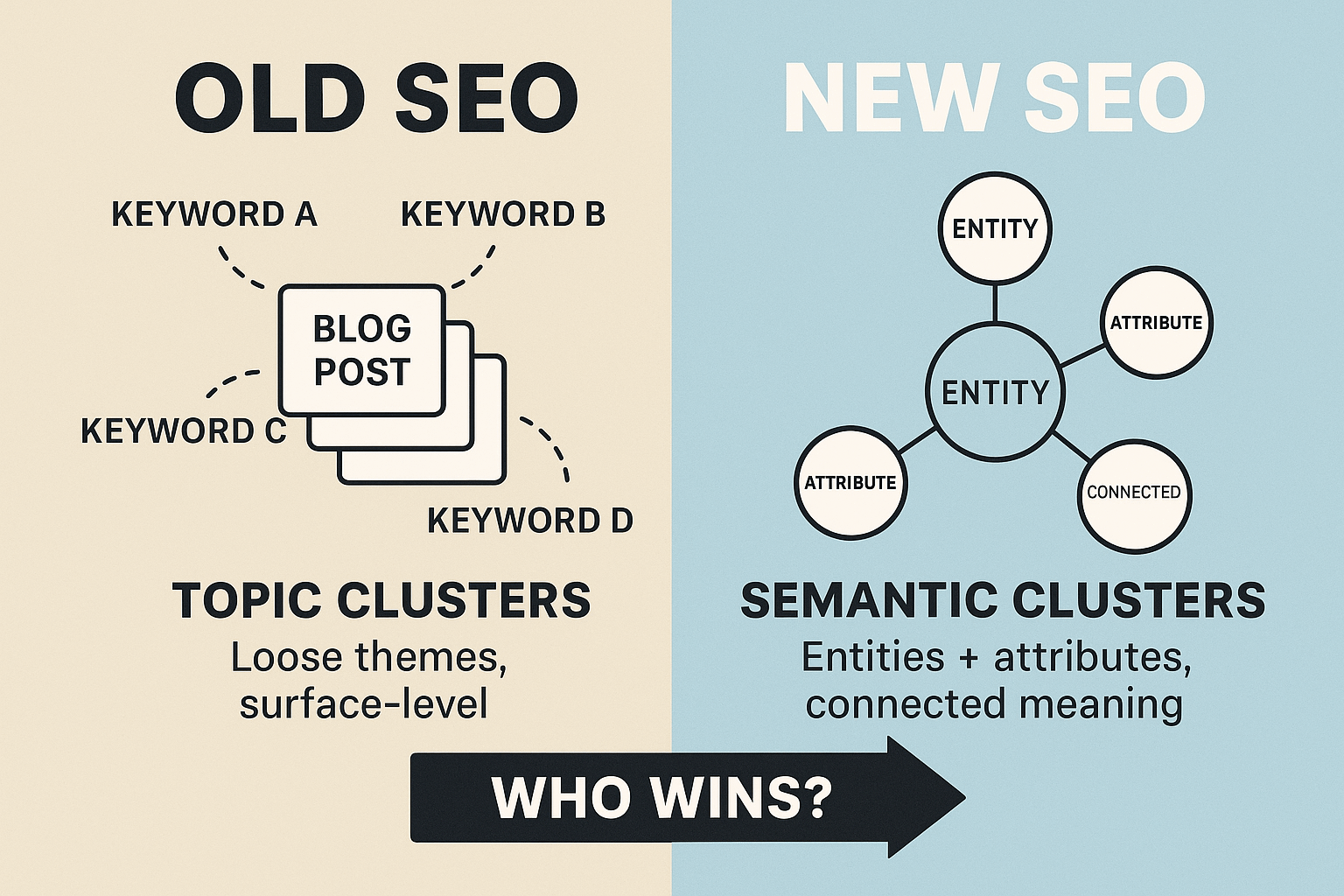
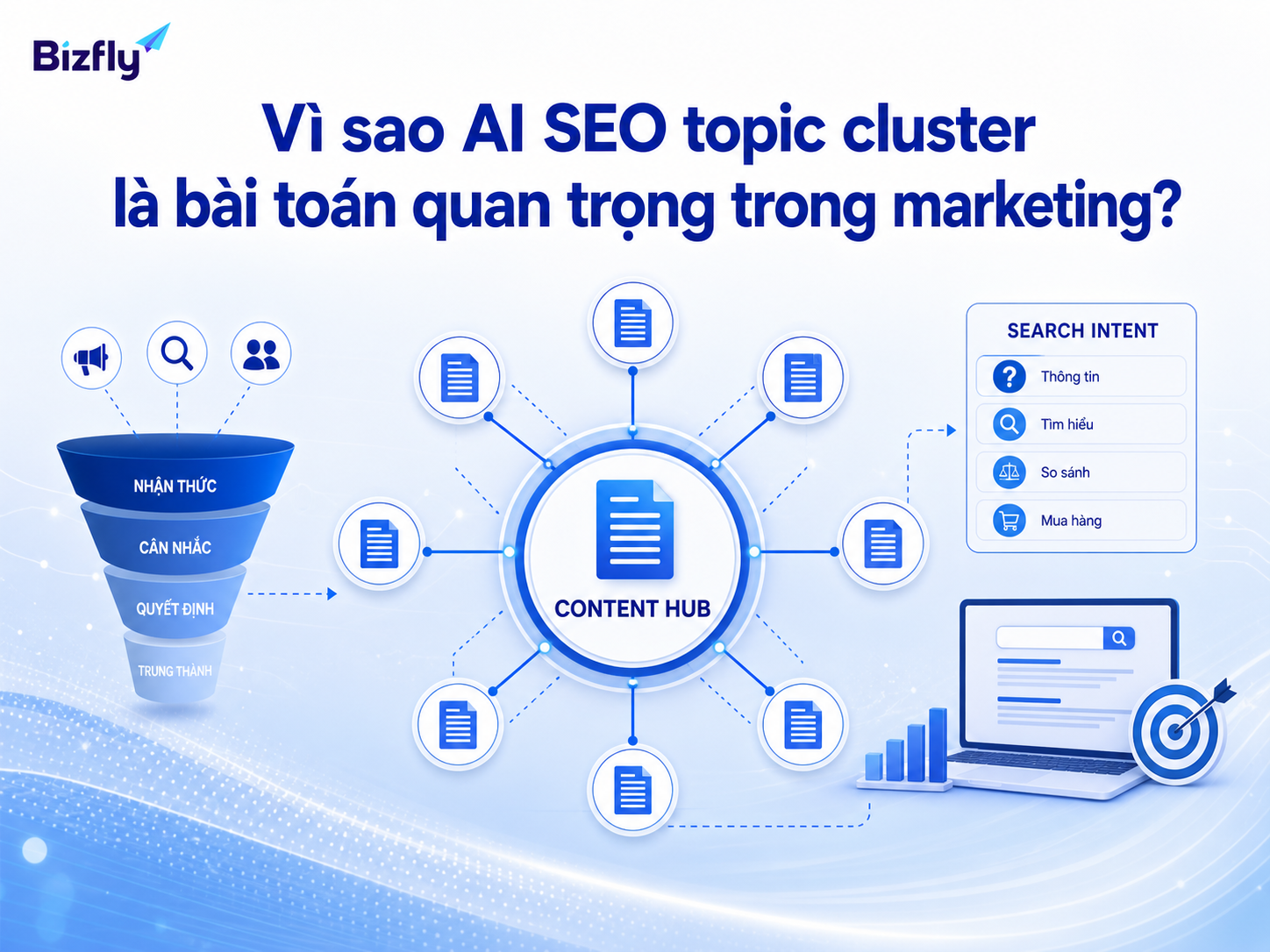
AI SEO Topic Clustering is a strategic content methodology that uses machine learning algorithms to identify, organize, and link related subtopics around a central “pillar” page. The AI analyzes vast datasets from search engine result pages (SERPs), user behavior, and semantic databases to understand how different queries relate to one another. This data-driven process replaces manual guesswork, allowing marketers to build content architectures that mirror the way search engines now understand entities and concepts.
At its core, this approach involves creating a comprehensive pillar page that covers a broad topic in depth. Around this pillar, you create multiple cluster pages, each targeting a specific long-tail keyword or subtopic. Every cluster page links back to the pillar page, and the pillar page links out to all cluster pages. This internal linking structure creates a web of contextually relevant signals, telling search engines that your site is a definitive resource on that entire subject.
The Evolution from Keyword Stuffing to Semantic Search
Ten years ago, SEO relied heavily on exact-match domains and keyword density. Search engines were relatively simplistic, matching strings of text without understanding the underlying intent. The introduction of RankBrain and later BERT (Bidirectional Encoder Representations from Transformers) shifted the paradigm. These AI-driven algorithms analyze the relationships between words and the context of a query, not just the literal terms.
AI SEO Topic Clustering aligns perfectly with this semantic shift. Instead of creating ten separate articles about “best running shoes,” “trail running shoes,” and “marathon shoes,” you build a central guide on “Running Shoes” and create clusters for each specific type, use case, and review. The AI helps identify which subtopics are actually searched for and how they should be prioritized, ensuring that your content architecture reflects real-world user needs.
How AI Transforms Traditional Topic Clustering
Traditional topic clustering relied on manual keyword research tools and human intuition. While effective, this process was time-consuming and often missed subtle semantic connections. AI enhances this process in several critical ways:
- Automated Entity Extraction: AI can scan millions of top-ranking pages to extract the key entities, concepts, and questions that are consistently associated with your target topic. This ensures you do not miss critical subtopics.
- Search Intent Prediction: Machine learning models can classify whether a query is informational, transactional, or navigational with high accuracy. This allows you to tailor cluster content to match the specific stage of the user journey.
- Content Gap Analysis: AI tools analyze your existing content against competitor content and SERP features. They identify gaps in coverage, highlighting subtopics that your competitors rank for but you have not yet addressed.
- Dynamic Internal Linking Suggestions: Instead of manually deciding where to place links, AI algorithms analyze the semantic similarity between pages and suggest optimal anchor text and link placement to maximize relevance flow.
- Predictive Performance Modeling: Advanced AI platforms can predict the potential traffic and ranking difficulty of a specific cluster, allowing you to prioritize content creation based on ROI potential.
- MarketMuse: Excellent for content optimization and identifying content gaps. It scores your content against thousands of competing pages.
- Clearscope: Focuses heavily on keyword relevance and content brief generation. It integrates well with Google Docs and WordPress.
- Frase: Great for generating content briefs and outlines based on SERP analysis. It also has an AI writing assistant for drafting sections.
- Surfer SEO: Provides real-time content optimization scores based on on-page elements and structure.
- Custom GPTs: Using OpenAI’s API, teams can build custom models trained on their specific niche to generate cluster ideas and outline structures.
Core Components of an AI-Driven Topic Cluster
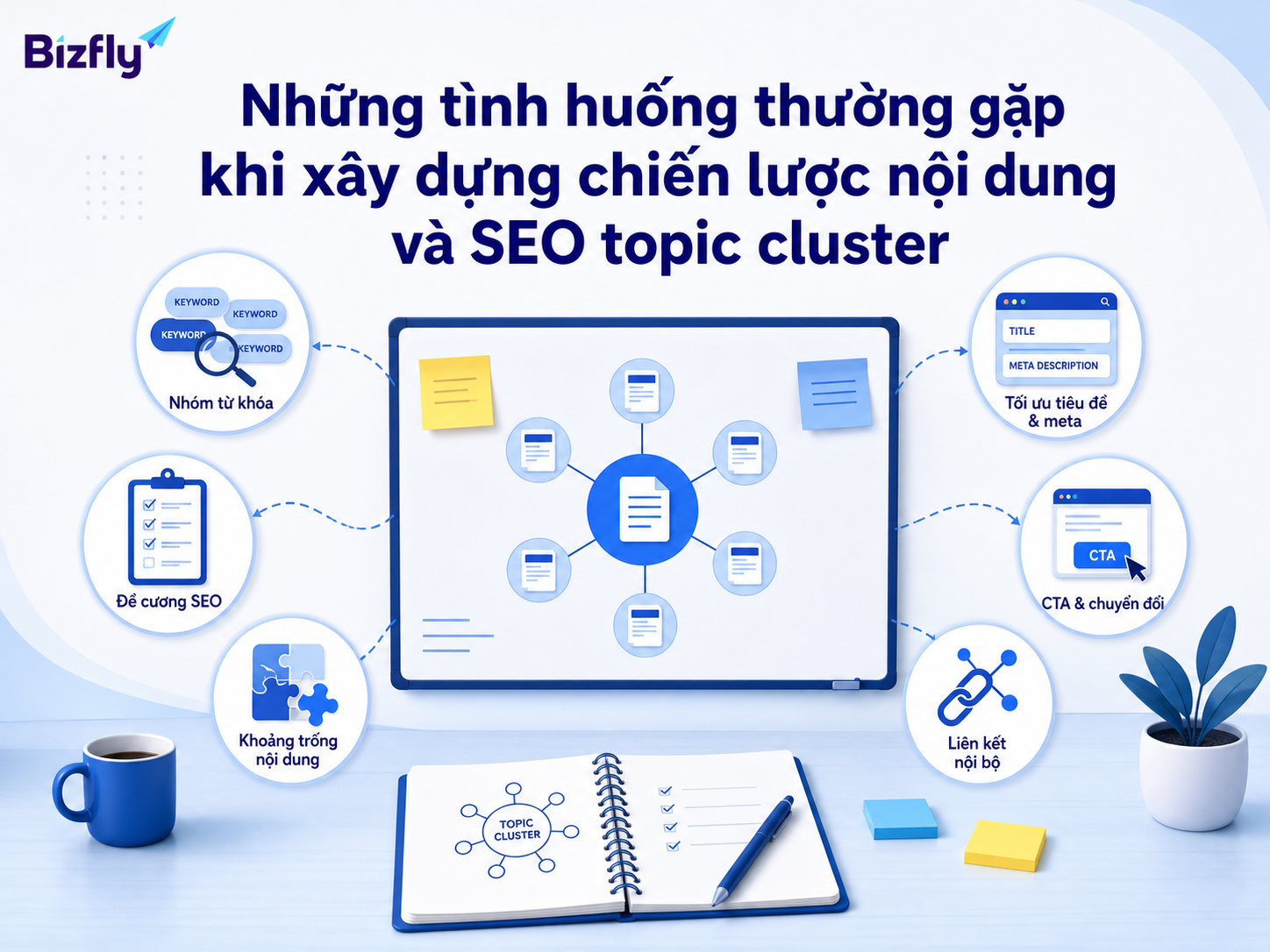
To successfully implement AI SEO Topic Clustering, you must understand the distinct components that make up the architecture. Each element serves a specific function in the eyes of both the user and the search engine crawler.
The Pillar Page (The Hub)
The pillar page is the comprehensive, long-form guide that serves as the foundation of the cluster. It should be broad enough to cover the main topic but structured in a way that allows users to navigate to specific subtopics. Typically, a pillar page is over 3,000 words and includes a table of contents, embedded videos, and extensive internal links to all cluster pages. This page is designed to rank for the primary head term and establish the baseline authority for the entire cluster.
Cluster Content (The Spokes)
Cluster pages are detailed articles that focus on one specific subtopic or long-tail keyword. These pages are narrower in scope but often rank faster because they face less competition. Each cluster page should provide exhaustive value on its specific query, answer related questions, and include a contextual link back to the pillar page. The relationship is symbiotic: the pillar gives context to the cluster, and the cluster gives depth to the pillar.
The Internal Linking Matrix
The linking structure is the “glue” that holds the cluster together. A flat hierarchy is essential. Every cluster page should link to the pillar page, and the pillar page should link to every cluster page. Additionally, where relevant, cluster pages can link to other cluster pages if they share a logical relationship. This matrix ensures that link equity is distributed throughout the cluster and that crawlers can easily discover all content.
Schema Markup Integration
To help AI search engines understand the relationship between your pillar and cluster pages, you should implement structured data. Using ItemList or Article schema, you can explicitly tell Google that these pages belong to the same entity. This technical enhancement increases the chances of your content being featured in rich results and knowledge panels.
Step-by-Step Guide to Building an AI SEO Topic Cluster
Implementing this strategy requires a systematic approach.
Step 1: Define Your Core Topic and Audience
Start with a broad topic that is central to your business. For example, if you sell project management software, your core topic might be “Project Management Methodologies.” Define the user persona and the primary intent behind this search. Are they looking for comparisons, definitions, or implementation guides? This initial definition guides the AI prompts you will use later.
Step 2: Use AI for Keyword and Sub-topic Discovery
Utilize AI-powered SEO tools like Clearscope, MarketMuse, or Frase. Input your core topic and let the AI generate a list of related questions, entities, and keywords. Look beyond the obvious. The A waterfall for software teams” or “critical path method examples.” Compile a list of 20-30 potential cluster topics. Filter these based on search volume, relevance, and business value.
Step 3: Map the Cluster Architecture
Create a visual map or spreadsheet. Place the pillar page at the center. Arrange the cluster topics in order of priority. Identify which clusters are “supporting” others. For instance, a cluster on “Scrum Ceremonies” might support a broader cluster on “Agile Frameworks.” This hierarchy helps you plan the internal linking structure before you even write a single word.
Step 4: Generate Content Briefs with AI
For each cluster topic, use AI to generate a detailed content brief. The brief should include the target keyword, secondary keywords, suggested headings (H2/H3), and specific questions that need to be answered. Include the AI-generated search intent analysis to guide the writer. This ensures that every piece of content is optimized for the specific query it targets, not just stuffed with keywords.
Step 5: Write and Optimize the Content
Write the pillar page first, as it sets the tone and structure for the cluster. Then, write the cluster pages. Ensure that each cluster page is comprehensive (at least 1,500 words) and provides unique value that is not duplicated on the pillar page. Use the AI-suggested internal links naturally within the body text. Avoid generic anchor text like “click here”; use descriptive phrases like “learn more about agile ceremonies.”
Step 6: Publish, Monitor, and Iterate
Publish the entire cluster within a short timeframe to signal a coordinated content launch. Monitor performance using Google Search Console and analytics tools. Pay attention to which cluster pages gain traction. Use AI analytics to identify new questions that users are asking about the topic and create additional cluster pages to fill those gaps. Topic clustering is not a one-time project; it is an ongoing process of expansion and refinement.
Benefits of AI SEO Topic Clustering
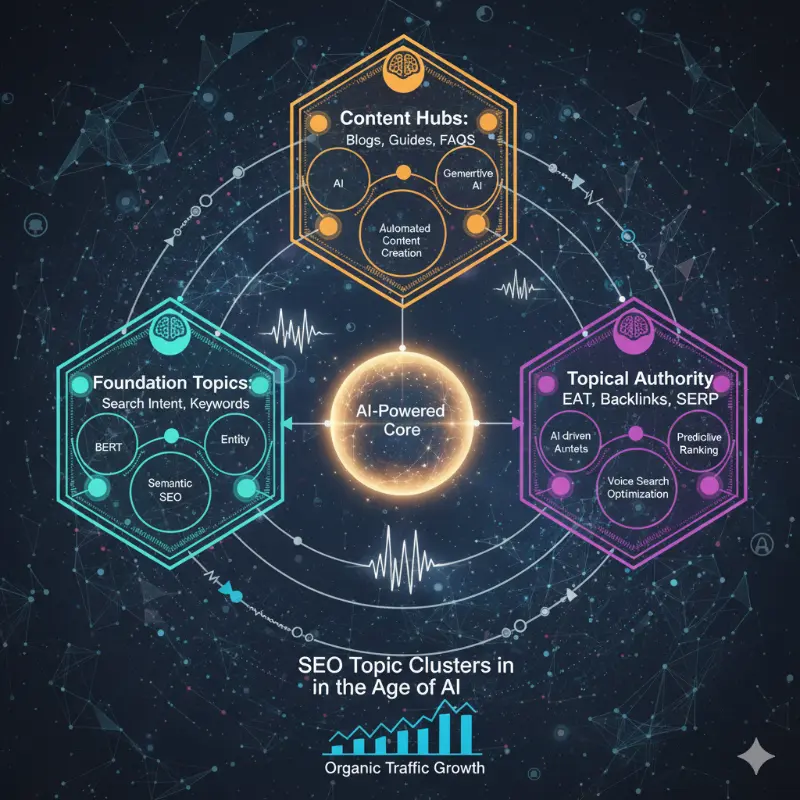
The advantages of this approach extend far beyond simple rankings. When executed correctly, AI SEO Topic Clustering transforms your website’s overall authority and user experience.
| Benefit | Impact on SEO | Impact on User Experience |
|---|---|---|
| Topical Authority | Signals expertise to Google, improving rankings across all cluster pages. | Positions your brand as a trusted resource. |
| Improved Crawl Efficiency | Internal links guide crawlers to all important pages, reducing orphan pages. | Users can easily navigate related content. |
| Higher Click-Through Rates | Pillar pages often earn featured snippets and sit at position zero. | Comprehensive content answers queries immediately. |
| Reduced Keyword Cannibalization | Each page targets a distinct subtopic, preventing pages from competing. | Users find the exact page they need without confusion. |
| Scalable Content Strategy | AI identifies gaps, providing a clear roadmap for future content. | Content library becomes organized and logical. |
Common Mistakes and How to Avoid Them
Even with AI assistance, many teams fail to maximize the potential of topic clustering. Understanding these pitfalls is crucial for success.
Mistake 1: Creating Thin Cluster Pages
One of the most frequent errors is treating cluster pages as short blog posts. If a cluster page is only 300 words, it does not provide enough value to rank. Solution: Ensure every cluster page is a deep dive. If you cannot write 1,000+ words on a subtopic, it is likely too narrow to be a cluster; consider merging it into another page.
Mistake 2: Ignoring the “AI” in the Process
Some marketers use AI only for keyword generation and then revert to manual writing. This misses the point. Solution: Use AI to analyze the SERP features for each cluster keyword. If the SERP shows a “People Also Ask” box, ensure your content directly answers those questions in a format that can be extracted.
Mistake 3: Broken or Irrelevant Internal Links
Linking to the pillar page with the exact same anchor text on every cluster page looks unnatural. Solution: Vary the anchor text based on the context of the sentence. Link to other cluster pages when it adds value, creating a web of relevance rather than a simple spoke-and-hub model.
Mistake 4: Neglecting Content Refreshing
AI algorithms update constantly. A cluster that was authoritative six months ago may now be outdated. Solution: Schedule quarterly audits of your clusters. Use AI tools to compare your content against current top-ranking pages and update statistics, examples, and product mentions.
Important Notes on AI and Search Engine Guidelines
While AI is a powerful tool, it is essential to adhere to Google’s guidelines regarding AI-generated content. Google does not penalize AI content per se, but it penalizes content that is created solely for search engines without adding value. The “Helpful Content Update” emphasizes experience, expertise, authoritativeness, and trustworthiness (E-E-A-T).
AI SEO Topic Clustering should be used to organize and research, not to replace human expertise. The final content must include personal experience, original data, or unique insights that AI cannot generate. Always review and edit AI-generated briefs and drafts to ensure factual accuracy and to inject a human perspective. The structure may be AI-driven, but the voice must be authentically human.
Tools and Technologies for AI Topic Clustering
Several platforms specialize in this exact workflow. Choosing the right one depends on your budget and team size.
Measuring the Success of Your Clusters
Tracking the right metrics is vital to prove ROI and guide future strategy. Look beyond just keyword rankings.
Monitor the aggregate traffic of the entire cluster, not just the pillar page. A successful cluster will show a “halo effect,” where traffic increases across all pages even if the pillar page does not rank #1 for the head term. Track the number of indexed pages, the average position for all cluster keywords, and the conversion rate from organic traffic. If a specific cluster page is driving conversions, consider expanding that subtopic into its own mini-cluster.
Frequently Asked Questions (FAQ)
How many pages should be in an AI SEO Topic Cluster?
T The exact number depends on the breadth of the topic. A niche topic might only support 5 clusters, while a broad topic like “Digital Marketing” could support 50 or more. The key is to cover the topic exhaustively without creating redundant content.
Is AI SEO Topic Clustering suitable for small websites?
Yes, but it requires focus. Small websites should not attempt to create clusters for multiple broad topics simultaneously. Instead, choose one core topic where you can realistically become an authority. Create a small cluster of 5-10 high-quality pages. This focused approach often yields better results than spreading thin across many topics.
How long does it take to see results from topic clustering?
Typically, it takes 3 to 6 months to see significant movement in rankings for new clusters. This timeline depends on the domain authority of your site and the competitiveness of the niche. Existing sites with established authority may see results faster. Consistency is key; updating and expanding the cluster over time accelerates the process.
Can I use AI to write the entire cluster content automatically?
Technically, yes, but it is not recommended. AI-generated text often lacks the nuance, personal experience, and factual accuracy required to pass Google’s helpful content guidelines. Use AI to generate outlines, briefs, and first drafts, but always have a human expert review, edit, and expand the content before publishing.
What is the difference between a topic cluster and a content silo?
Content silos are a more rigid, hierarchical structure often based on product categories or service lines. Topic clusters are more fluid and based on user intent and semantic relationships. Clusters are generally considered more modern and aligned with AI-driven search algorithms because they reflect natural language connections rather than strict corporate taxonomy.
Conclusion
AI SEO Topic Clustering represents the most effective method for building topical authority in the current search landscape. By leveraging machine learning to understand semantic relationships and user intent, you can create a content architecture that is logical, comprehensive, and highly favored by search engines. The shift from isolated keywords to interconnected content hubs is not just a trend; it is the new standard for SEO success.
Implementing this strategy requires a commitment to quality, a willingness to adopt AI tools, and a focus on user experience. The process involves continuous research, creation, and optimization. However, the payoff is substantial: higher rankings, increased organic traffic, and a website that truly serves as a definitive resource in your industry. Start by mapping out one core topic, use AI to identify your clusters, and build your authority one interconnected page at a time.
Xem thêm:
- The AI SEO Workflow for Agencies: A Complete Guide to Scaling Results With Smart Automation
- AI SEO Answer Generator: The Complete Guide to Automated Content Intelligence
- ChatGPT SEO: The Ultimate Guide to AI-Powered Search Engine Optimization
- AI SEO Content: The Complete Blueprint for Higher Rankings and Organic Traffic
- AI SEO GPT Tools: The Complete Guide to Automating Your Search Rankings in 2025
Bài viết cùng chủ đề:

AI SEO SEO Automation with Make: The Complete Workflow Guide

AI SEO SEO Automation with Zapier: The Complete Workflow Guide

AI SEO SEO Automation with n8n: The Complete Workflow Guide
AI SEO SEO Automation with Gemini: The Complete Guide to Scaling Organic Growth

AI SEO SEO Automation with Claude: The Complete Guide to Scaling Content in 2025

AI SEO SEO Automation with ChatGPT: The Complete Playbook for 2025

AI SEO & SEO Automation for Affiliate Sites: The 2025 Playbook for Passive Income Growth
AI SEO & SEO Automation for Bloggers: The Complete Guide to Scaling Your Content

AI SEO & SEO Automation for Agencies: The Complete 2025 Playbook

AI SEO and SEO Automation for Ecommerce: The Complete Playbook for 2025

AI SEO & SEO Automation for WordPress: The Complete Playbook for 2025
AI SEO SEO Automation Strategy: The Complete Playbook for 2025

Mastering the AI SEO SEO Automation Process: A Complete Guide to Scaling Organic Growth
AI SEO SEO Automation System: The Complete Guide to Scaling Organic Growth in 2025
AI SEO SEO Automation Platform: The Complete Guide to Scaling Organic Growth in 2025
AI SEO SEO Automation Software: The Complete Guide to Scaling Organic Growth in 2025















