No products in the cart.
AI SEO Tutorial: How to Master Search Rankings with Artificial Intelligence

29
Jul
Jul
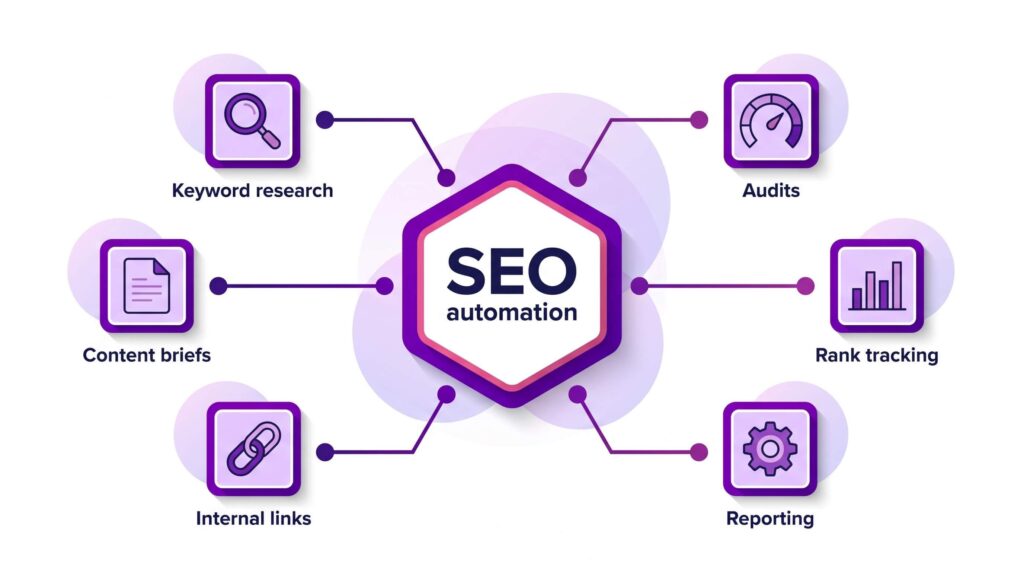
The landscape of search engine optimization is shifting faster than ever. Traditional manual workflows can no longer keep pace with the velocity of algorithm updates and content demands. An AI SEO tutorial is no longer a futuristic concept—it is a practical necessity for marketers who want to maintain visibility without burning out. This guide provides a comprehensive, step-by-step roadmap for integrating artificial intelligence into every layer of your SEO strategy, from keyword discovery to technical audits and content scaling.
What Is AI SEO? Understanding the Core Concept
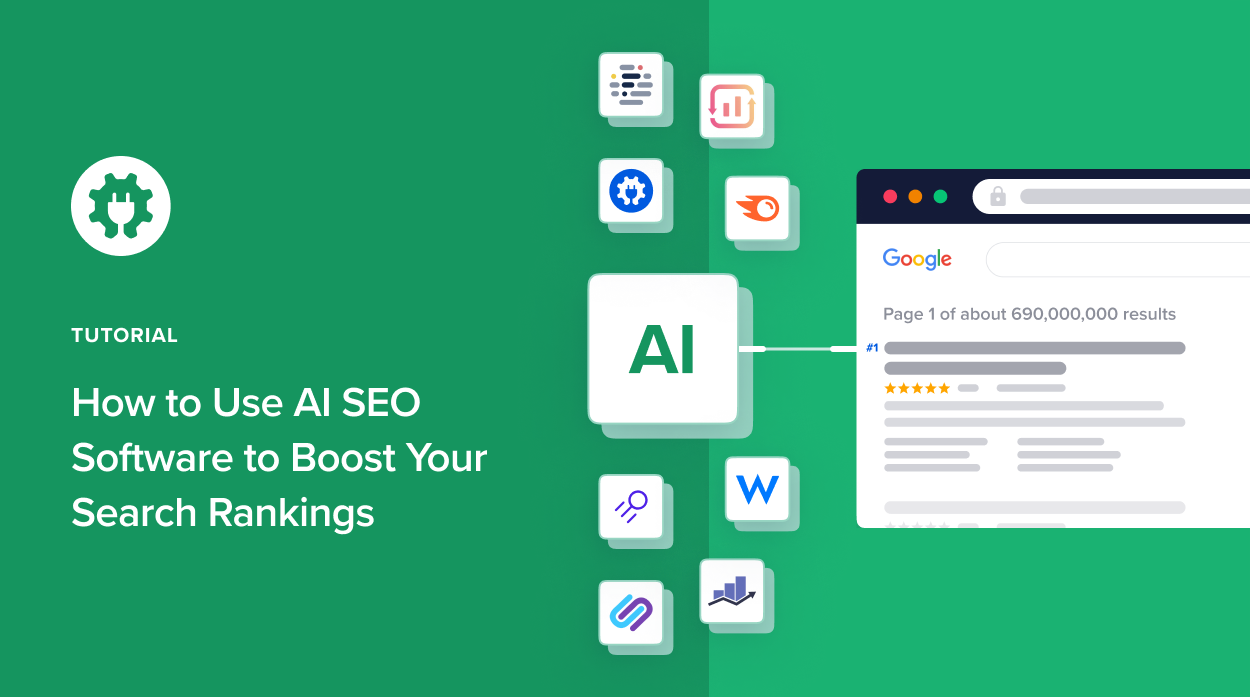
AI SEO refers to the application of machine learning, natural language processing (NLP), and generative algorithms to improve organic search performance. Instead of manually sifting through spreadsheets or guessing search intent, professionals use intelligent tools to analyze massive data sets, identify patterns, and execute optimization tasks with precision. The core principle remains the same—matching user intent with high-quality content—but the execution becomes exponentially faster and more predictive.
Modern search engines themselves are AI-driven. Google’s RankBrain, BERT, and the Multitask Unified Model (MUM) all rely on deep learning to interpret queries. An effective AI SEO approach aligns with these systems by creating content that machines can understand while simultaneously satisfying human readers. This dual-layer optimization is what separates surface-level automation from genuine ranking success.
How AI Is Reshaping Every Pillar of SEO
Artificial intelligence does not replace the strategic mind of an SEO expert. It amplifies it. Below are the fundamental pillars where AI is creating immediate impact.
Intelligent Keyword Research and Topic Clustering
Traditional keyword tools spit out lists of terms based on volume and difficulty. AI-powered platforms go deeper. They analyze SERP features, user click behavior, and semantic relationships to map entire topic clusters. Instead of targeting a single head term, you can visualize a content ecosystem that demonstrates topical authority. Large language models help identify question-based queries, long-tail variants, and emerging trends weeks before they appear in conventional databases.
Content Generation and Optimization at Scale
Content creation is the most visible application of AI. Generative models draft articles, meta descriptions, and social snippets in seconds. However, raw AI output rarely meets the threshold for E-E-A-T (Experience, Expertise, Authoritativeness, Trustworthiness). The real art lies in using AI as a first-draft engine, then layering in human insight, original data, and authentic case studies. AI can also optimize existing content by suggesting semantic keywords, improving readability, and updating stale statistics.
Technical SEO Audits and Log File Analysis
Site crawls generate thousands of data points. Machine learning algorithms can prioritize fixes by estimating the revenue impact of each issue. AI examines server logs to understand exactly how Googlebot crawls a site, identifying wasted crawl budget and orphan pages. Predictive analytics can even forecast the effect of a technical change before deployment, reducing the risk of traffic drops.
Link Building and Digital PR
Finding link prospects used to involve hours of manual prospecting. Natural language processing can now evaluate the contextual relevance of a potential linking page, gauge the authority of a domain, and even draft personalized outreach emails that sound genuinely human. AI tools analyze backlink profiles at scale to detect toxic links and uncover patterns that lead to competitor domain growth.
Core AI SEO Tools and Technologies You Need to Know
The tool ecosystem evolves weekly, but several categories have matured enough for reliable daily use. Understanding where each fits into your workflow is the foundation of any practical AI SEO tutorial.
- Generative AI Writers: Platforms like ChatGPT, Claude, and Jasper assist with drafting content, outlines, and meta tags. They require careful prompt engineering to produce unique, non-generic text.
- SEO-Specific AI Platforms: Tools such as SurferSEO and Frase combine NLP analysis of top-ranking pages with an AI editor, suggesting optimal word counts, relevant terms, and content structure in real time.
- AI Keyword and Topic Research: Semrush’s Keyword Magic Tool with intent filters and Ahrefs’ AI-driven content gap analysis help uncover patterns a human would miss.
- Automated Technical Auditing: Deepcrawl and Botify use machine learning to surface critical crawl budget issues and indexation anomalies from log files and site structures.
- Predictive Analytics: BrightEdge and MarketMuse offer AI-driven content scoring that correlates with ranking probability, guiding where to invest effort next.
- Publishing Unreviewed AI Drafts: The most damaging error. Machine text often contains factual inaccuracies, outdated references, or repetitive phrasing that triggers quality algorithms. Every piece must pass a subject matter expert review.
- Ignoring Brand Voice and E-E-A-T: An AI tool does not know your brand’s unique tone or the credentials of your contributors. Content lacking author bios, original research, and a clear voice will struggle to rank in competitive YMYL (Your Money or Your Life) niches.
- Keyword Stuffing Through Automation: When AI is told to “include these 30 terms,” it often weaves them unnaturally. Use NLP tools to check for density and flow, and prioritize semantic relevance over mechanical insertion.
- Neglecting Technical Dependencies: Generating a thousand SEO pages won’t help if your site’s internal linking structure is flat or the JavaScript rendering is broken. AI content needs an optimized technical infrastructure to be discoverable.
- Setting and Forgetting Automated Workflows: Algorithms change. A prompt that worked perfectly in March may produce outdated content in June. Constantly audit AI output and update your training data and instructions.
Step-by-Step AI SEO Tutorial: From Theory to Execution
Implementing artificial intelligence requires a structured process. Follow this methodology to avoid the chaos of disconnected automation and to build a cohesive, scalable strategy.
Step 1: Build Your AI-Powered Keyword Foundation
Start by identifying a seed topic relevant to your business. Use an AI-driven research tool to expand it into a comprehensive topic cluster. Look beyond volume—analyze the intent distribution. An AI engine can classify keywords as informational, commercial, transactional, or navigational far more accurately than a human scanning a page. For example, if your seed keyword is “running shoes,” A This clarity prevents cannibalization and ensures each page has a distinct purpose.
Step 2: Generate Content Briefs That Google Loves
Feed the primary keyword into an AI content optimizer. The tool will scrape the current top 20 results, analyze their headings, common NLP entities, and average content depth. It then produces a detailed brief: recommended H2s, questions to answer, and an ideal content score. Do not take the brief as gospel—use it as a structural skeleton. Your expertise fills in the unique insights. The AI might suggest you cover “sustainable materials in running shoes,” but only your brand experience can provide original data or a proprietary study.
Step 3: Draft, Refine, and Humanize the Content
Using the brief, direct a language model to generate the first draft. Craft a prompt that specifies tone, audience, and word count. Immediately, treat the output as raw clay. Strip out fluff, inject personal anecdotes, add recent statistics from primary sources, and verify every claim. A common AI SEO tutorial mistake is publishing unedited machine text. Google’s helpful content system penalizes content created primarily for search engines without regard for human value. Integrate unique visuals, expert quotes, and first-hand experience to signal genuine authority.
Step 4: Automate On-Page Optimization with Precision
AI can dynamically generate meta titles and descriptions that balance keyword inclusion with click-through appeal. Use NLP to ensure the header hierarchy reflects natural language patterns. Internal link suggestions can be automated: tools analyze existing site content and recommend anchor text and destination URLs that distribute PageRank effectively. Schema markup generation is another area where AI reduces manual coding errors—you describe the content type, and a script outputs valid JSON-LD structured data.
Step 5: Deploy AI for Continuous Technical Health
Set up an AI-driven crawler to run weekly. Configure it to flag not just 404s or missing tags, but performance patterns—like a sudden increase in low-value page rendering time. The system learns baseline metrics and alerts you only to statistically significant deviations. Integrate log file data to visualize how Google is responding after a core update. If the crawler sees a spike in time spent downloading irrelevant JavaScript, the AI can recommend resource prioritization to free up crawl budget instantly.
Step 6: Scale Link Acquisition with Intelligent Outreach
An AI SEO workflow should include link opportunity discovery. Parse competitor backlink profiles through a machine learning filter that identifies domains with high traffic and topical relevance. For outreach, feed the prospect’s article into a summarization model to craft a personalized, value-first email. This isn’t about mass spam; it’s about analyzing what the editor cares about at scale. The response rate improves because the message references a specific data point or argument from their work, a level of personalization impossible to maintain manually.
Benefits and Limitations of AI in Search Engine Optimization

Understanding both sides of the coin prevents unrealistic expectations and misuse. The table below summarizes the core trade-offs.
| Aspect | Benefits | Limitations |
|---|---|---|
| Speed and Scale | An entire content cluster can be briefed and drafted in hours, not weeks. Technical audits run in real time. | High velocity can lead to low-quality content saturation if human review is skipped. Search engines penalize shallow mass production. |
| Data Analysis | AI uncovers hidden correlation patterns between ranking factors across millions of pages. | Algorithms reflect biases in training data. They may overvalue certain metrics (like word count) that are not direct ranking factors. |
| Creativity | Breaks writer’s block by generating multiple angles and outlines in seconds. | Cannot replicate genuine human emotion, breaking news reactions, or lived experience. Content may sound formulaic without careful editing. |
| Cost Efficiency | Reduces the need for large content teams for repetitive tasks; one strategist can oversee multiple AI-assisted workflows. | High-end AI tools require significant subscription costs. Cheap, unmanaged AI output can damage brand reputation. |
| Google Compliance | When used correctly, AI helps satisfy user intent better by producing comprehensive resources. | Google’s spam policies explicitly target scaled content abuse and automation used to manipulate rankings without adding originality. |
Common Mistakes When Following an AI SEO Tutorial
Even seasoned practitioners fall into these traps. Recognizing them early saves months of recovery.
Important Notes for Long-Term AI SEO Success
This AI SEO tutorial prioritizes sustainable growth, not quick tricks. Google’s guidelines are explicit: using AI alone is not a violation; using AI to produce content aimed purely at manipulating rankings is. The distinction lies in the value added. A medical article drafted by AI and reviewed by a certified doctor with added case studies is valuable. The same article published without medical review is dangerous and will be demoted.
Always disclose AI involvement where transparency builds trust. Create robust editorial guidelines that dictate how AI can be used—perhaps for outlining and optimization but not for final publishable prose in sensitive categories. Invest in first-party data, proprietary surveys, and original images that an AI cannot fabricate. These assets form an unassailable moat around your content.
Finally, treat AI as a junior team member. It executes instructions brilliantly but needs clear direction and constant oversight. The most successful SEO programs in the coming years will blend computational power with distinctive human judgment.
Frequently Asked Questions About AI SEO
Can AI completely replace human SEO specialists?
No. While AI excels at data processing, pattern recognition, and drafting, it cannot formulate high-level strategy, interpret nuance in business goals, or build genuine relationships for link building. Human oversight is essential for quality control, creative storytelling, and ethical decision-making. The role of the SEO shifts from doer to strategic director of AI tools.
Is AI-generated content automatically penalized by Google?
Not automatically. Google’s systems target low-quality, unoriginal content that fails to meet user needs, regardless of how it was created. If machine-generated text is carefully reviewed, enriched with expertise, and provides unique value, it can rank well. The key is to use AI responsibly and focus on helpful, people-first content rather than search-engine-first automation.
How can a beginner start with an AI SEO tutorial?
Begin with a focused, free tool like Google Bard or the basic version of ChatGPT to generate keyword ideas and content outlines for a single page. Learn how to craft effective prompts with specific instructions on tone and structure. Then, move to a dedicated AI SEO platform like SurferSEO or Frase to understand the optimization layer. Always manually edit and fact-check the output before publishing.
What type of content benefits most from AI assistance?
AI shines in informational and data-driven content. Product descriptions, FAQ pages, listicles, basic how-to guides, and meta data generation are ideal use cases. Highly sensitive YMYL content (finance, health) and deeply opinionated thought leadership articles still require significant human-led creation, with AI playing a minor supportive role at most.
Do I need to know coding to use AI for SEO?
Not at all. Most modern AI SEO tools feature user-friendly visual interfaces and plain-language prompting. Technical SEO AI tools may surface code-level issues, but they explain them in readable terms. Knowing basic HTML and Python can help you build custom automations, but it is not a prerequisite to benefiting from an AI SEO tutorial and its practical applications.
How do I measure the ROI of AI-powered SEO?
Track the same core metrics—organic traffic, keyword rankings, conversion rate—but add efficiency metrics. Measure time saved per content piece, increase in publishing velocity, and reduction in technical debt resolution time. Compare the cost of AI tools against the equivalent human hours saved. The ROI becomes tangible when you see sustained ranking improvements without a proportional increase in labor cost.
Conclusion
Mastering an AI SEO tutorial is not about adopting a single tool or following a rigid script. It is about weaving computational intelligence into a human-centric strategy that respects both search engine algorithms and the people behind the queries. The marketers who thrive in this new era will be those who delegate the heavy lifting of data analysis and first-draft creation to machines while reserving their own time for judgment, creativity, and ethical nuance. Start small, maintain rigorous editorial control, and let AI accelerate what already works—rather than expecting it to invent a new SEO reality from scratch.
Xem thêm:
- AI SEO Books: The Essential Guide to Mastering Search Engine Optimization in the Age of Artificial Intelligence
- AI SEO AI Search Visibility: The Complete Guide to Ranking in the Age of Generative Engines
- AI SEO User Experience: The Complete Guide to Merging Search Optimization with Human-Centered Design
- AI SEO Web Scraping: The Complete Guide to Automating Search Insights in 2025
- AI Writing Assistants: The Complete 2025 Guide to Smarter, Faster Content Creation
Bài viết cùng chủ đề:

AI SEO SEO Automation with Make: The Complete Workflow Guide

AI SEO SEO Automation with Zapier: The Complete Workflow Guide

AI SEO SEO Automation with n8n: The Complete Workflow Guide
AI SEO SEO Automation with Gemini: The Complete Guide to Scaling Organic Growth

AI SEO SEO Automation with Claude: The Complete Guide to Scaling Content in 2025

AI SEO SEO Automation with ChatGPT: The Complete Playbook for 2025

AI SEO & SEO Automation for Affiliate Sites: The 2025 Playbook for Passive Income Growth
AI SEO & SEO Automation for Bloggers: The Complete Guide to Scaling Your Content

AI SEO & SEO Automation for Agencies: The Complete 2025 Playbook

AI SEO and SEO Automation for Ecommerce: The Complete Playbook for 2025

AI SEO & SEO Automation for WordPress: The Complete Playbook for 2025
AI SEO SEO Automation Strategy: The Complete Playbook for 2025

Mastering the AI SEO SEO Automation Process: A Complete Guide to Scaling Organic Growth
AI SEO SEO Automation System: The Complete Guide to Scaling Organic Growth in 2025
AI SEO SEO Automation Platform: The Complete Guide to Scaling Organic Growth in 2025
AI SEO SEO Automation Software: The Complete Guide to Scaling Organic Growth in 2025