
No products in the cart.
AI SEO AI Search Visibility: The Complete Guide to Ranking in the Age of Generative Engines
10
Aug
Aug
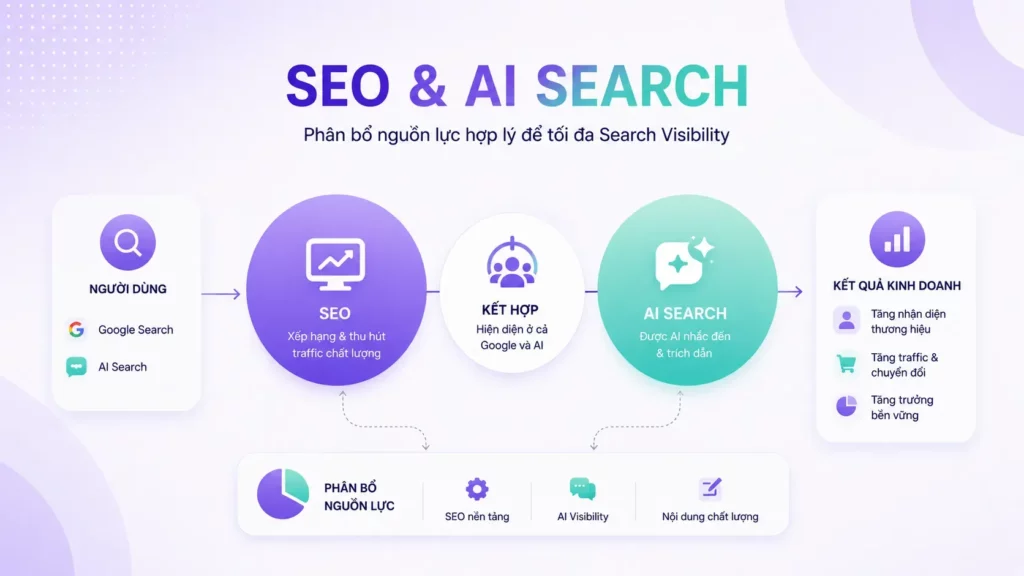
The digital landscape has shifted beneath the feet of marketers. Traditional search engine optimization focused on crawling, indexing, and link building. Today, the rise of generative AI and large language models has introduced a new battleground: AI Search Visibility. This concept refers to the ability of a brand or website to appear within AI-generated answers, chatbot responses, and zero-click search results. As platforms like Google’s AI Overviews, ChatGPT, Perplexity, and Bing Chat become primary information gateways, optimizing for these systems is no longer optional. This guide breaks down the mechanics of AI SEO AI Search Visibility, offering a practical roadmap to ensure your content remains the preferred source for intelligent algorithms.
Understanding AI Search Visibility and Its Core Mechanics

AI Search Visibility is not about ranking in a list of blue links. It is about being the cited source within a synthesized answer. When a user asks a conversational query, the AI model scans vast datasets to generate a response. If your content is used to formulate that answer, you have achieved visibility. This process relies on semantic understanding, entity recognition, and contextual relevance rather than simple keyword matching.
The shift from retrieval to generation changes the rules of engagement. Search engines now parse the meaning behind queries, looking for authoritative, structured, and unambiguous information. To win in this environment, your content must be the most logical and factual source for a specific topic. This requires a deep focus on clarity, data accuracy, and topical authority.
The Difference Between Traditional SEO and AI-Driven Discovery
Traditional SEO focuses on technical crawlers and backlink profiles. AI-driven discovery focuses on machine reading comprehension and data extraction. While backlinks still matter for authority, the AI model prioritizes the coherence of the information. A page with a clear thesis, supporting data, and direct answers will outperform a page with high domain authority but convoluted writing.
Furthermore, AI systems often rely on “retrieval-augmented generation” (RAG). This means they fetch relevant documents and then generate an answer based on that fetched content. Your goal is to make your content the most fetchable and relevant document for a given query. This involves optimizing for the specific way AI models chunk and process text.
Why AI Search Visibility Matters for Modern Brands
The user behavior shift is undeniable. People are moving from typing “best running shoes” to asking “what are the best running shoes for flat feet with arch support?” The latter query demands a synthesized, comparative answer. If your brand is not part of that synthesis, you are invisible to the user, even if you rank on page two of traditional results.
This matters because AI answers often eliminate the need to click through to a website. This is the “zero-click” phenomenon. To capture traffic, you must be the source that the AI trusts. This trust is built through consistent, verifiable, and well-structured information across your digital footprint.
The Role of Entities and Knowledge Graphs
AI models build knowledge graphs to understand relationships between entities (people, places, products, concepts). To improve your AI Search Visibility, you must clearly define your entities. This means using consistent naming conventions, providing clear definitions, and linking your content to established concepts. For example, if you sell “artisanal coffee,” you must consistently define what makes it artisanal, where it is sourced, and how it differs from commercial coffee.
Structured data (Schema.org) is critical here. It helps the AI model map your content to the knowledge graph. However, the natural language on the page must also reflect this structure. The AI reads the text, not just the code.
Core Strategies to Boost AI Search Visibility
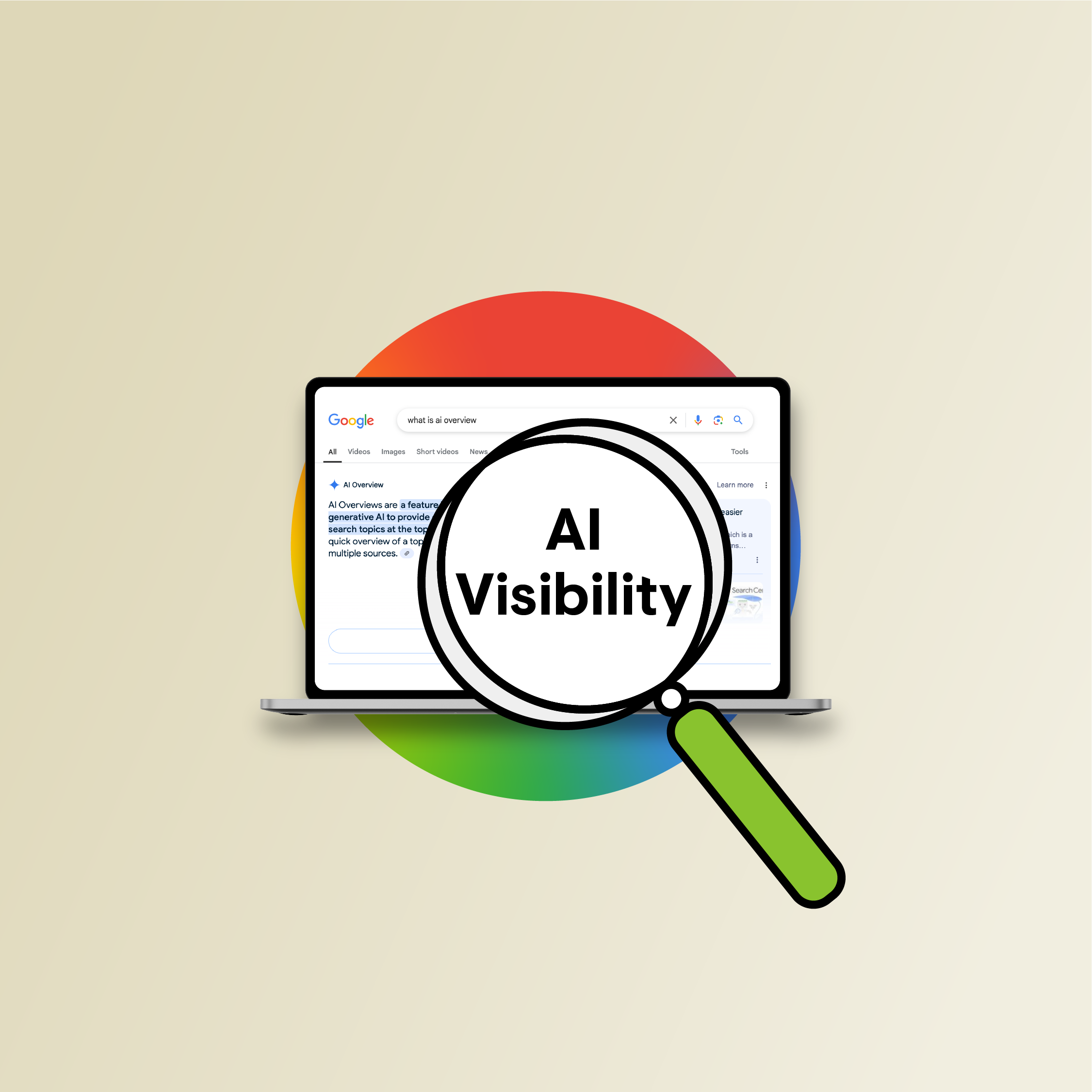
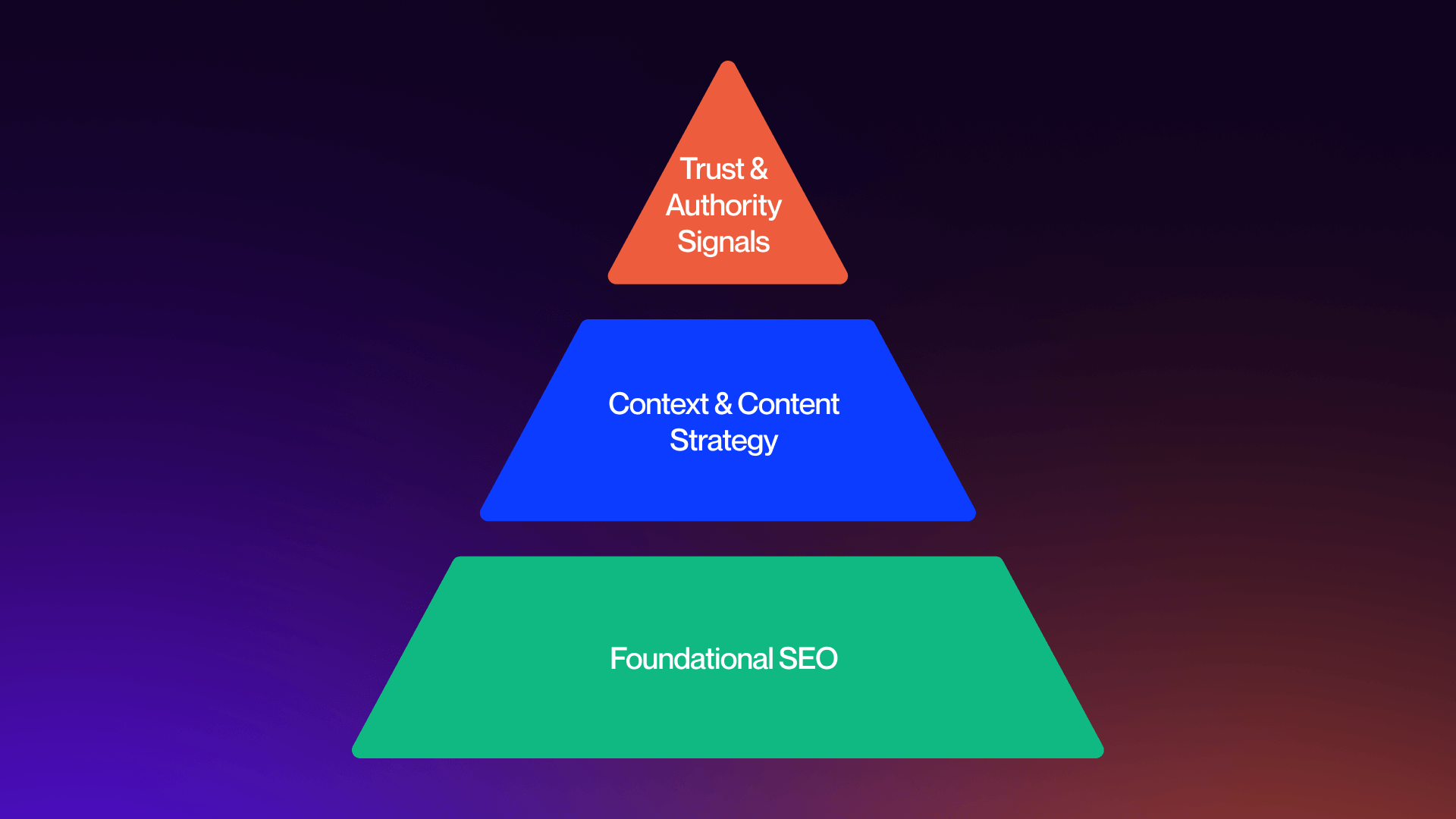
Optimizing for AI requires a multi-faceted approach that combines technical precision with editorial excellence. The following strategies form the foundation of a robust AI SEO campaign.
1. Optimize for Conversational and Long-Tail Queries
AI queries are conversational. They are full sentences, often with qualifiers and specific context. Your content must directly answer these questions. Create dedicated FAQ sections that address the “why,” “how,” and “what if” aspects of your topic. Use natural language in your headings and body copy that mirrors how people actually speak to voice assistants and chatbots.
For instance, instead of a heading like “Coffee Roasting,” use “How Does the Roasting Process Affect Coffee Flavor?” This matches the query pattern and provides a clear semantic signal to the AI.
2. Build Topical Authority with Pillar Pages
AI models favor sources that demonstrate comprehensive knowledge of a subject. A single blog post is rarely enough. You need a pillar page that covers a broad topic in depth, supported by cluster content that addresses specific subtopics. This creates a web of interconnected information that the AI can crawl to understand your expertise.
This structure helps the AI model see you as a “hub” of information. When it needs to answer a question about a specific subtopic, it will look to your cluster pages. When it needs a general overview, it will look to your pillar page. This interlinking is a direct signal of topical authority.
3. Prioritize Data, Statistics, and Unique Research
AI models are trained on data. If you have proprietary data, surveys, or unique research, you have a massive advantage. Original data is considered high-value information. When the AI generates an answer, it prefers to cite specific numbers and studies rather than generic opinions. Include tables, charts, and clear statistical summaries in your content.
Ensure that your data is presented in a machine-readable format. Use clear labels and context around the numbers. For example, “According to our 2024 survey of 1,000 users, 78% reported…” is much more valuable to an AI than “Most users reported satisfaction.”
4. Implement Advanced Schema Markup
While basic schema is good, advanced schema is better for AI visibility. Use FAQPage, HowTo, Article, and Product schema where applicable. More importantly, use Speakable schema if you have audio content. This tells the AI which parts of your page are best suited for voice assistants.
Also, consider using Dataset schema for your research and Organization schema to clearly define your brand entity. The goal is to leave no ambiguity about who you are and what you know.
Content Formatting for AI Crawlers
The way you format text matters more than ever. AI models use natural language processing to understand the hierarchy and importance of information. Clear formatting helps the model parse your content correctly.
Use Direct Answer Paragraphs
Start your content with a direct, concise answer to the main query. This is often called the “direct answer” or “definition” paragraph. For example, if your article is about “AI SEO AI Search Visibility,” the first paragraph should define it clearly. This gives the AI a clear snippet to pull from for featured snippets and AI overviews.
Place the most critical information in the first 50-100 words of the page. This is the “prime real estate” for AI extraction. If the AI has to dig through fluff to find the answer, it will likely choose a different source.
Leverage Lists and Tables
AI models love structured lists and tables. They are easy to parse and extract. Use bullet points for key features, steps, and benefits. Use tables for comparisons, pricing, and specifications. This reduces the cognitive load on the AI and increases the likelihood of your content being used in a synthesized answer.
When using lists, ensure each item is a complete thought. Do not split a sentence across multiple bullet points. Each bullet should be a self-contained unit of information that can be extracted independently.
Measuring and Monitoring AI Search Visibility
Tracking your performance in AI search is different from tracking traditional rankings. You cannot simply check a SERP. You must monitor how AI models respond to queries related to your brand.
Manual Audits and Brand Monitoring
Regularly query major AI platforms (ChatGPT, Perplexity, Google AI Overviews) with your target keywords. Analyze the responses. Are you cited? Is the information accurate? This manual audit provides qualitative data on your visibility. Set up alerts for your brand name to see when you are mentioned in AI-generated content.
This process is time-consuming but essential. It reveals gaps in your content strategy. If the AI is citing a competitor, analyze that competitor’s content structure. What are they doing differently? What data do they have that you lack?
Analyze Referral Traffic from AI Platforms
Use your analytics tools to track traffic coming from AI platforms. While many AI answers are zero-click, some do include citations that users can click. Monitor your referral paths to see which AI platforms are sending you traffic. This data helps you understand which platforms are most valuable for your niche.
Look for patterns in the queries that drive this traffic. This will inform your future content creation. If you are getting traffic from a specific type of question, create more content that addresses that specific angle.
Common Mistakes That Hurt AI Search Visibility
Many marketers are making critical errors that prevent their content from being used by AI models. Avoiding these mistakes is just as important as implementing the right strategies.
Over-Optimization and Keyword Stuffing
AI models are sophisticated. They can detect unnatural language patterns. Keyword stuffing and forced semantic variations will hurt your credibility. Write for humans first. The A Focus on the intent behind the query, not the exact phrase.
Using too many variations of a keyword in an unnatural way signals low-quality content to the AI. This can lead to your content being filtered out entirely.
Ignoring the “Why” Behind the Query
AI queries often have a deeper intent. If someone asks “What is AI SEO AI Search Visibility,” they might actually want to know “How do I implement it?” or “What tools do I need?” If your content only defines the term without providing actionable steps, it fails to meet the user’s true need. The A
Always consider the “next question” the user might ask. Address that in your content to create a comprehensive resource.
Neglecting Content Freshness
AI models are trained on data up to a certain point, but they also retrieve live information. If your content is outdated, the A Regularly update your statistics, examples, and industry references. Add a “Last Updated” date to your pages. This signals to the AI that your information is current and reliable.
Stale content is a major liability. A page that was authoritative in 2022 may be ignored in 2025 if the data is no longer relevant.
Practical Guide: Steps to Improve Your AI Search Visibility Today
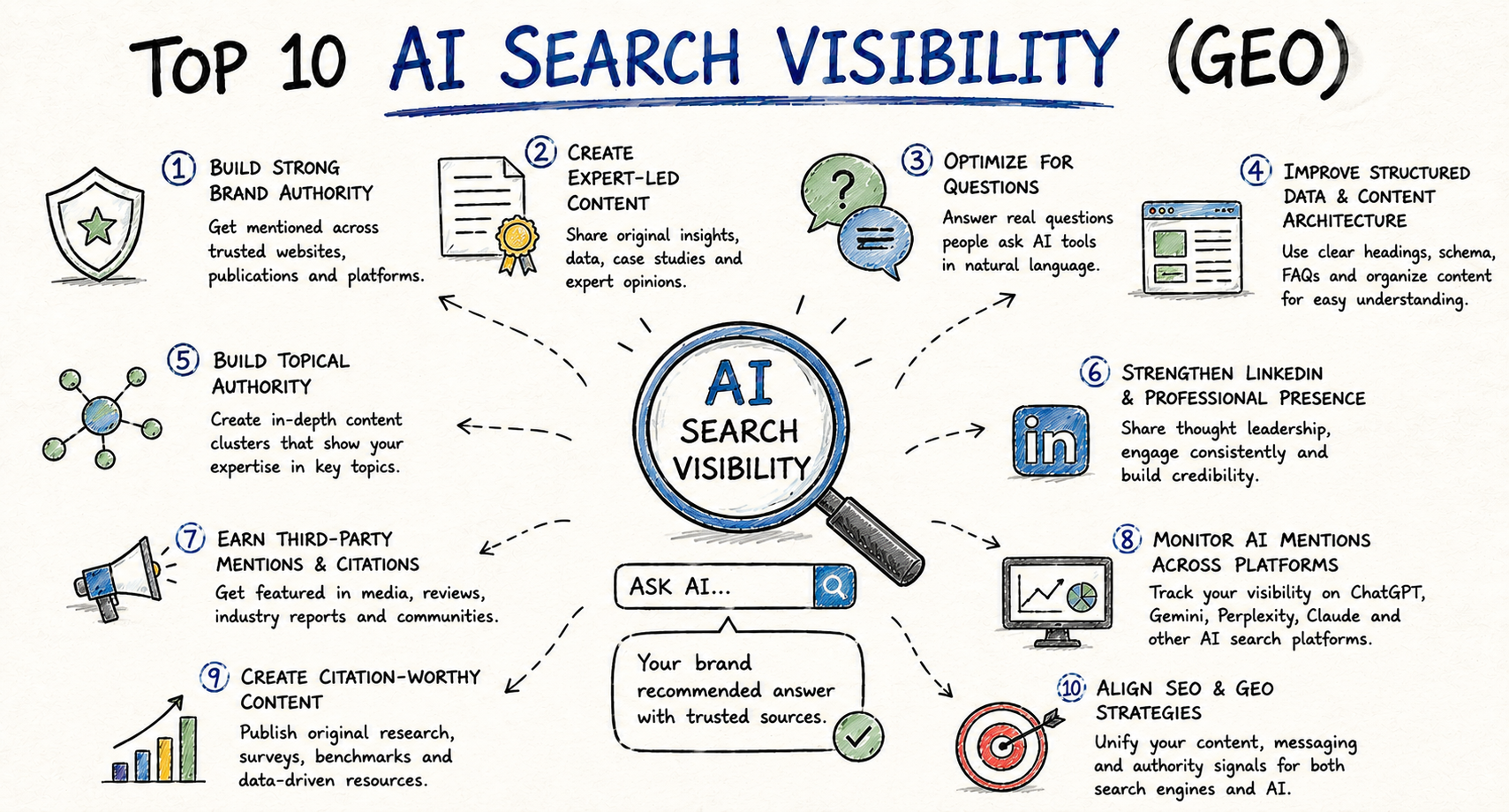
Implementing an AI SEO strategy does not require a complete overhaul of your current process. It requires a shift in focus. Follow these steps to start improving your visibility immediately.
- Audit Your Current Content: Identify your top 20 pages. Check if they have a clear, direct answer in the first paragraph. Ensure they are structured with proper H2/H3 tags and contain lists or tables where appropriate.
- Create an FAQ Section: Add a robust FAQ section to every pillar page. Answer the questions in a conversational tone. Use the exact phrasing that a user would type into a chatbot.
- Implement Schema Markup: Use a schema generator to add FAQPage and Article schema to your key pages. Test the markup using Google’s Rich Results Test to ensure it is valid.
- Develop Original Data: Conduct a survey or analyze your internal data to create a unique statistic. Publish this data in a clear, visual format. This becomes your “citation magnet.”
- Build Entity Clarity: Ensure your “About Us” page clearly defines your brand, your mission, and your key products. Use consistent naming across all platforms.
- Monitor AI Responses: Set a weekly reminder to query three AI platforms with your main keywords. Track whether you are cited and note any changes in the responses.
Comparison: Traditional SEO vs. AI SEO
Understanding the differences helps allocate resources effectively. The following table highlights the key contrasts between the two disciplines.
| Aspect | Traditional SEO | AI SEO |
|---|---|---|
| Primary Goal | Rank #1 in organic search results | Be cited as a source in AI-generated answers |
| User Intent | Click-through to website | Zero-click satisfaction or citation click |
| Content Style | Optimized for keywords and readability | Optimized for semantic extraction and data clarity |
| Key Metrics | Page views, bounce rate, CTR | Citation frequency, brand mentions in AI outputs |
| Technical Focus | Crawlability, site speed, backlinks | Schema markup, entity consistency, structured data |
| Content Length | Varies, often 1,500-2,000 words | Comprehensive, often 2,000+ words with data |
While traditional SEO is not dead, it is becoming a subset of the larger AI visibility ecosystem. The ranking factors of tomorrow will be heavily influenced by how well AI models can understand and trust your content.
Important Notes on AI Search Visibility
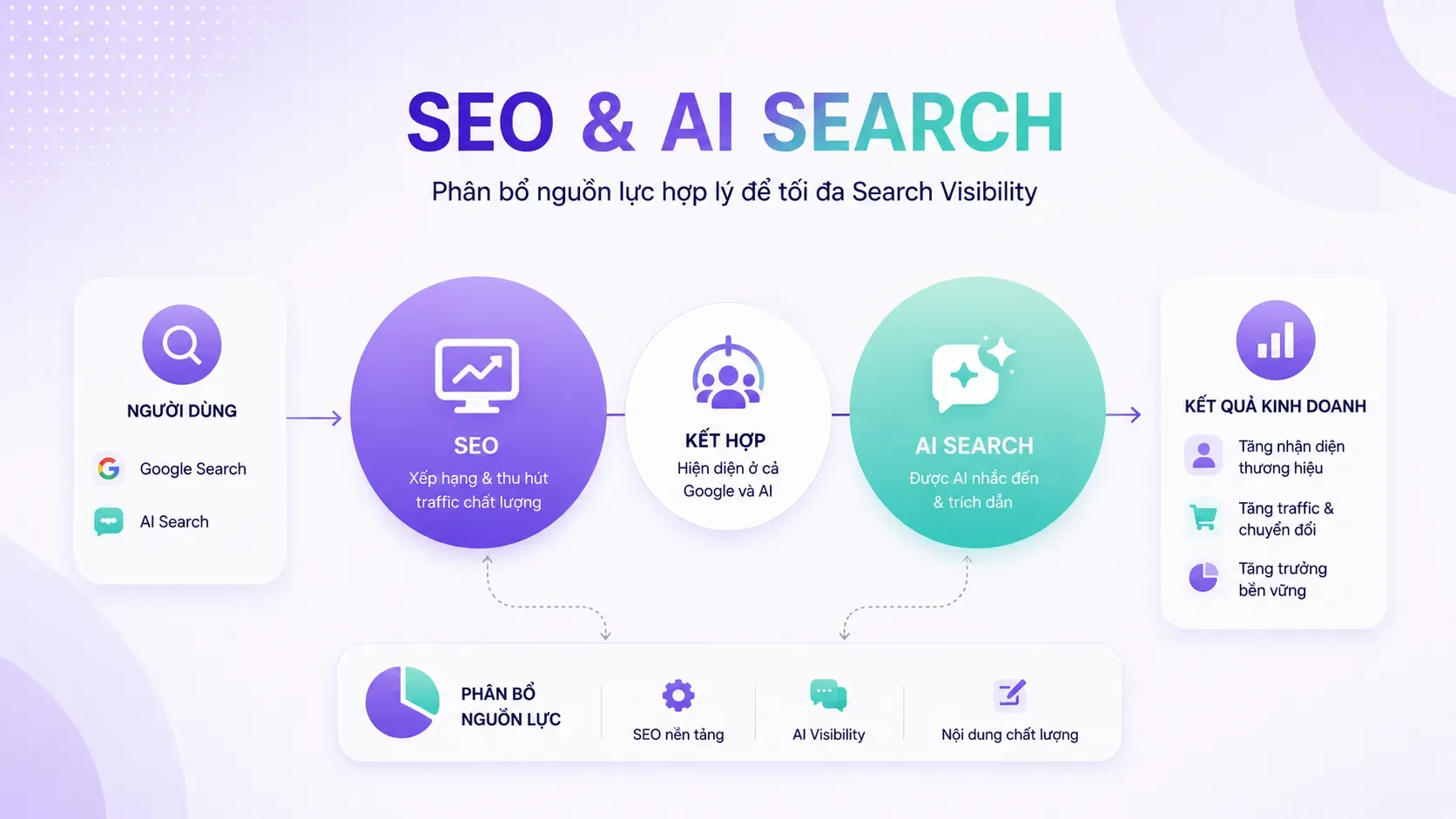
There are several nuances to keep in mind as you navigate this new terrain. First, AI models are not static. They are constantly updated. A strategy that works today may not work next month. Agility is key. Second, the concept of “brand” becomes more important. AI models often default to well-known, trusted brands. Building a strong brand reputation offline and online contributes to your AI visibility.
Third, do not neglect traditional search. Many AI systems still rely on indexing data from traditional search engines. A strong foundation in classic SEO supports your AI efforts. Finally, focus on user experience. If a user clicks through from an AI citation and has a poor experience on your site, it signals to the AI that your content is not valuable. Ensure your pages are fast, mobile-friendly, and easy to navigate.
Frequently Asked Questions (FAQ)
What is the difference between AI Search Visibility and traditional rankings?
Traditional rankings refer to the position of a webpage in a list of search results. AI Search Visibility refers to whether a brand or webpage is used as a source within an AI-generated answer. Traditional rankings drive clicks to a page, while AI visibility often satisfies the user directly within the AI interface, without requiring a click.
How do I check my AI Search Visibility?
You can check your AI Search Visibility by manually querying AI platforms like ChatGPT, Perplexity, and Google’s AI Overviews with your target keywords. Analyze the responses to see if your brand is mentioned or cited. You can also monitor your referral traffic in analytics tools to see if users are clicking through from AI platforms.
Does schema markup help with AI Search Visibility?
Yes, schema markup is crucial. It provides explicit signals to AI models about the meaning and structure of your content. Using FAQPage, Article, and Organization schema helps the AI map your content to its knowledge graph, increasing the likelihood of your content being used in a synthesized answer.
Is traditional SEO dead because of AI?
No, traditional SEO is not dead, but it is evolving. The principles of technical optimization, content quality, and user experience remain important. However, the focus is shifting from ranking for keywords to being the authoritative source for entities and concepts. AI models rely on the underlying web infrastructure that traditional SEO helps build.
What type of content performs best for AI search?
Content that is direct, data-driven, and well-structured performs best. This includes original research, comprehensive guides with clear headings, FAQ sections, and content that uses lists and tables to present information. The content must be unambiguous and provide a clear, definitive answer to the user’s query.
Conclusion
AI SEO AI Search Visibility is the new frontier of digital marketing. The transition from link-based rankings to generative answer engines requires a fundamental shift in how we create and structure content. By focusing on semantic clarity, entity authority, and data-rich formatting, brands can position themselves as the primary sources for AI models. The strategies outlined in this guide—from conversational optimization to advanced schema markup—provide a clear path forward. The brands that adapt to this new paradigm will not only survive the shift but will thrive as the trusted voices in an AI-driven world. The time to optimize is now, as the algorithms that shape our digital future are being trained on the content we publish today.
Xem thêm:
- AI SEO H1 Optimization: The Complete Guide to Dominating Search Rankings in 2025
- AI SEO AI Brand Monitoring: The Complete Guide to Protecting Your Digital Reputation
- AI SEO Mobile SEO: The Complete Guide to Dominating Search in 2025
- AI SEO CRO Strategy: The Complete Guide to Converting Search Traffic
- WP Trove Keyword Research: The Complete Guide to Finding High-Value WordPress Niche Keywords
Bài viết cùng chủ đề:

AI SEO SEO Automation with Make: The Complete Workflow Guide

AI SEO SEO Automation with Zapier: The Complete Workflow Guide

AI SEO SEO Automation with n8n: The Complete Workflow Guide
AI SEO SEO Automation with Gemini: The Complete Guide to Scaling Organic Growth

AI SEO SEO Automation with Claude: The Complete Guide to Scaling Content in 2025

AI SEO SEO Automation with ChatGPT: The Complete Playbook for 2025

AI SEO & SEO Automation for Affiliate Sites: The 2025 Playbook for Passive Income Growth
AI SEO & SEO Automation for Bloggers: The Complete Guide to Scaling Your Content

AI SEO & SEO Automation for Agencies: The Complete 2025 Playbook

AI SEO and SEO Automation for Ecommerce: The Complete Playbook for 2025

AI SEO & SEO Automation for WordPress: The Complete Playbook for 2025
AI SEO SEO Automation Strategy: The Complete Playbook for 2025

Mastering the AI SEO SEO Automation Process: A Complete Guide to Scaling Organic Growth
AI SEO SEO Automation System: The Complete Guide to Scaling Organic Growth in 2025
AI SEO SEO Automation Platform: The Complete Guide to Scaling Organic Growth in 2025
AI SEO SEO Automation Software: The Complete Guide to Scaling Organic Growth in 2025















