
No products in the cart.
AI SEO User Experience: The Complete Guide to Merging Search Optimization with Human-Centered Design
31
Jul
Jul
The digital landscape has shifted dramatically. Search engines no longer just crawl keywords; they interpret intent, context, and behavioral signals. This transformation has birthed a critical discipline: AI SEO User Experience. This approach combines artificial intelligence-driven search optimization with the principles of human-centered design to create websites that rank higher and convert better. In this comprehensive guide, you will learn how to leverage machine learning algorithms, semantic search, and user behavior analytics to build a digital presence that satisfies both Google’s ranking systems and your audience’s deepest needs.
Understanding the Core of AI SEO User Experience

AI SEO User Experience is the strategic integration of artificial intelligence tools and algorithms into the process of optimizing a website for search engines, with a primary focus on enhancing how users interact with the site. It moves beyond traditional keyword stuffing and link building. Instead, it uses data-driven insights to predict what users want before they even finish typing a query. The goal is to create a seamless journey from the search engine results page (SERP) to the final conversion point.
This concept is not just about making a site “look nice.” It involves analyzing vast datasets to understand user intent, personalizing content in real-time, and structuring information architecture in a way that mirrors human thought processes. When executed correctly, AI SEO User Experience reduces bounce rates, increases dwell time, and signals to search engines that your site is a high-quality, authoritative resource.
The Evolution from Traditional SEO to AI-Driven UX
Traditional SEO focused on static elements: meta tags, exact-match keywords, and backlink quantity. The problem was that these tactics often ignored the human on the other side of the screen. Users would click a link, find irrelevant content, and leave immediately. Search engines noticed this behavior and adapted. Modern algorithms, like Google’s RankBrain and BERT, use neural networks to understand the relationship between words and concepts.
Today, AI SEO User Experience uses these same neural networks to reverse-engineer the search process. Marketers can use AI to analyze which content formats (videos, infographics, long-form text) generate the most engagement for specific queries. They can also use predictive analytics to forecast which topics will become trending. This proactive approach ensures that the user experience is not an afterthought but the primary driver of all optimization efforts.
Why AI SEO User Experience Matters for Your Rankings
Google’s algorithms are designed to answer questions quickly and accurately. The core metric they use to measure success is user satisfaction. If a user lands on your page and immediately clicks back to the search results, Google interprets this as a signal that your content did not match the query. This is where AI SEO User Experience becomes indispensable. By optimizing for user engagement, you directly influence the ranking factors that matter most in the current landscape.
Consider the concept of “search intent.” An AI-powered tool can analyze thousands of queries containing your target keywords and categorize them into informational, navigational, transactional, or commercial investigation. A traditional SEO strategy might treat all these queries the same. An AI-driven UX strategy, however, creates different landing pages for each intent type, ensuring that the user finds exactly what they are looking for on the first click.
Core Web Vitals and AI-Driven Design
Core Web Vitals are a set of specific factors that Google considers important in a webpage’s overall user experience. These include loading performance, interactivity, and visual stability. AI SEO User Experience directly addresses these metrics. For instance, AI can automatically compress images, preload critical resources, and defer non-essential JavaScript based on the user’s device and network speed. This dynamic optimization ensures that a user on a 4G connection in a rural area has a similar experience to someone on a fiber-optic connection in a city.
Furthermore, AI can predict layout shifts. By analyzing the HTML structure and CSS, machine learning models can identify elements that are likely to move during loading and suggest fixes. This proactive approach to technical SEO ensures that your site not only ranks well but also provides a stable, frustration-free environment for the user.
Key Components of an AI SEO User Experience Strategy
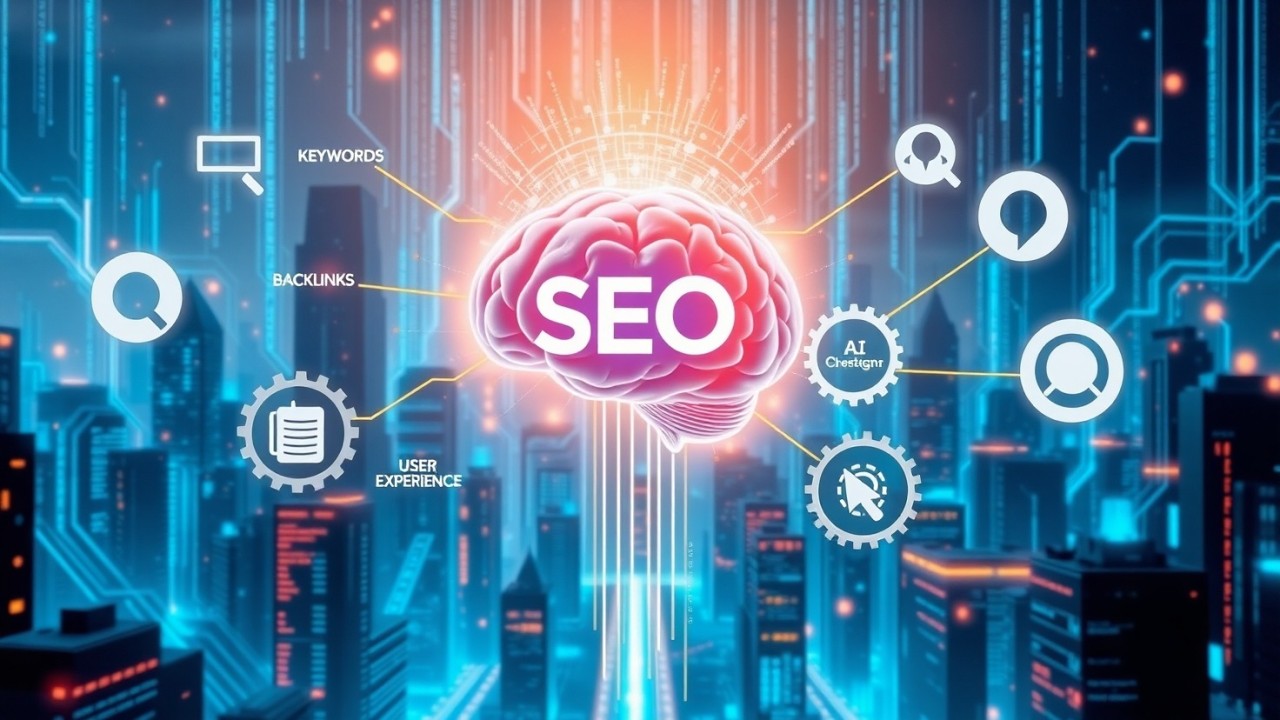
Implementing this strategy requires a multi-faceted approach. It is not a single tool or a one-time fix. It is a continuous cycle of analysis, implementation, and measurement. Below are the critical components that form the backbone of a successful AI SEO User Experience framework.
Semantic Search and Natural Language Processing (NLP)
Search engines use NLP to understand the context of words. For example, the word “apple” could mean a fruit or a technology company. AI SEO User Experience leverages NLP to ensure your content covers all relevant semantic variations of your primary topic. Instead of just targeting “best running shoes,” you need to cover related concepts like “heel drop,” “pronation support,” “trail running,” and “marathon training.” This creates a topical authority that search engines trust.
To implement this, you can use AI-powered content analysis tools that compare your text against the top-ranking pages for your target keyword. These tools highlight missing subtopics and suggest related questions that users are asking. By expanding your content to cover these areas, you create a comprehensive resource that satisfies both the algorithm and the reader.
Personalization and Dynamic Content Delivery
One of the most powerful aspects of AI is its ability to personalize experiences at scale. AI SEO User Experience uses cookies, browsing history, and geolocation data to alter the content a user sees. For example, a returning visitor who previously looked at pricing pages might be shown a homepage with a prominent “View Plans” button. A new visitor might see an educational blog post instead. This dynamic content delivery increases relevance, which in turn boosts engagement metrics that influence rankings.
Personalization also extends to search results themselves. Google personalizes results based on the user’s location and search history. Your site needs to be structured to cater to these variations. Using schema markup to provide clear signals about your business hours, location, and product availability helps AI systems match your site to the right users at the right time.
Predictive Analytics for Content Strategy
Waiting for a topic to trend is a reactive strategy. AI SEO User Experience allows you to be proactive. Predictive analytics tools analyze search volume data, social media mentions, and news cycles to forecast which topics will gain traction in the coming weeks or months. By creating content ahead of the curve, you position your site as the go-to resource when the search volume spikes.
This component also involves analyzing the performance of your existing content. AI can identify which of your articles are losing traffic and suggest updates to keep them fresh. It can also identify “content gaps”—questions your competitors are answering that you are not. Filling these gaps with high-quality, user-focused content is a direct application of AI SEO User Experience principles.
Practical Applications: How to Implement AI SEO User Experience
Understanding the theory is one thing; applying it is another. These actions are actionable and can be implemented with a variety of tools, from enterprise-level suites to budget-friendly SaaS options.
Step 1: Conduct AI-Powered Keyword and Intent Research
Start by moving away from simple keyword volume metrics. Use AI tools that cluster keywords by intent. For example, a tool might group “how to fix a leaky faucet” (informational) separately from “plumber near me” (navigational) and “cost of faucet repair” (commercial). For each cluster, you should design a different user journey. The informational query should lead to a detailed guide with diagrams. The commercial query should lead to a service page with pricing and testimonials. This alignment between search intent and page content is the foundation of AI SEO User Experience.
Step 2: Optimize for Voice Search and Conversational Queries
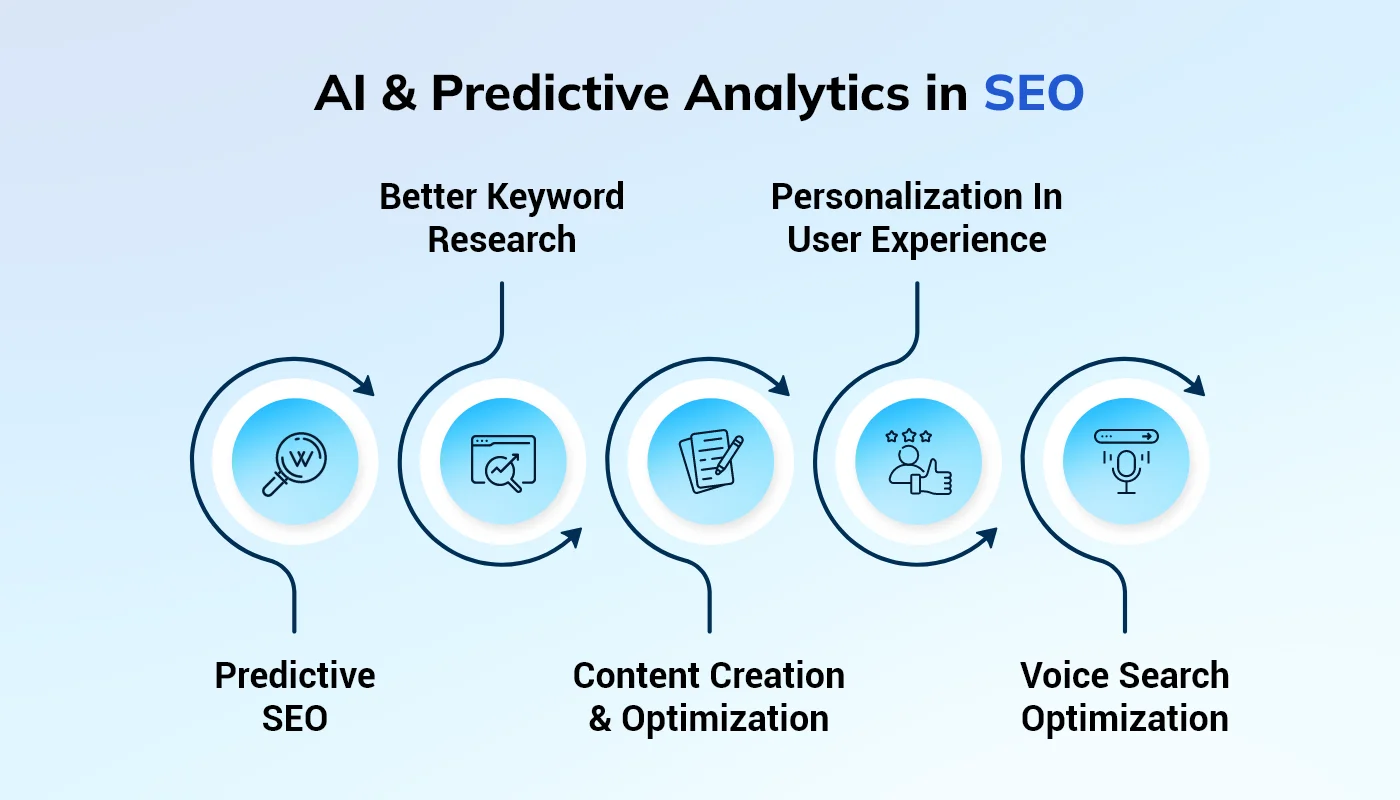
With the rise of smart speakers and mobile assistants, voice search has become a significant traffic source. Voice queries are longer and more conversational. They often take the form of full questions. AI SEO User Experience dictates that you structure your content to answer these questions directly. Use FAQ schema markup and include a clear, concise answer in the first paragraph of your content. This increases your chances of appearing in a featured snippet, which is the ultimate prize for voice search optimization.
Step 3: Use AI for On-Page Optimization and Testing
AI tools can generate multiple variations of your title tags, meta descriptions, and header tags. They can then run A/B tests to see which versions generate the highest click-through rate (CTR) from the SERPs. This is a direct application of AI SEO User Experience because it focuses on the user’s decision-making process before they even click. A compelling title that accurately reflects the content reduces the likelihood of a bounce.
Furthermore, AI can analyze the readability of your content. It can suggest shorter sentences, simpler words, or more engaging subheadings. The goal is to make complex topics accessible to a wider audience, thereby improving the overall user experience and increasing the time spent on the page.
Step 4: Enhance Internal Linking with Machine Learning
Internal linking is crucial for distributing page authority and guiding users through your site. AI can analyze your entire site structure and identify the most relevant links to add within your content. It considers factors like topical relevance, user journey stage, and click-depth. This automated approach ensures that users are always presented with a logical “next step,” reducing friction and increasing page views per session.
Benefits and Limitations of AI SEO User Experience
Like any strategy, this approach has its strengths and weaknesses. Understanding both sides allows you to set realistic expectations and mitigate risks.
| Aspect | Benefits | Limitations |
|---|---|---|
| Efficiency | Automates repetitive tasks like data analysis and reporting, saving hundreds of hours. | Requires a significant upfront investment in software and training. |
| Accuracy | Provides data-driven insights that reduce guesswork and subjective bias. | AI models can be “black boxes,” making it hard to understand why a specific decision was made. |
| Scalability | Can analyze and optimize thousands of pages simultaneously, far beyond human capacity. | May produce generic content if not carefully guided by human creativity and brand voice. |
| User Insight | Reveals deep behavioral patterns that are invisible to the naked eye. | Privacy regulations (GDPR, CCPA) limit the amount of personal data that can be collected. |
The primary limitation is the risk of over-reliance on automation. AI SEO User Experience should be a partnership between human intuition and machine intelligence. The AI can tell you that a page has a high exit rate, but it takes a human to understand that the page is missing a customer testimonial that builds trust. The best results come from using AI to surface problems and humans to solve them creatively.
Common Mistakes and How to Avoid Them
Many businesses fail to see results from their AI initiatives because they fall into predictable traps. Here are the most common mistakes in AI SEO User Experience and the strategies to avoid them.
Mistake 1: Ignoring the “Human” in User Experience
Some marketers become so focused on optimizing for the algorithm that they forget the actual person reading the page. They might use AI to generate content that is grammatically perfect but lacks empathy, storytelling, or a unique point of view. This results in high rankings but low conversions. To avoid this, always review AI-generated content with a human editor. Ask yourself: “Does this sound like a person who genuinely cares about helping me?” If not, rewrite it.
Mistake 2: Chasing Metrics Instead of Outcomes
It is easy to obsess over metrics like dwell time and pages per session. However, these are just proxies for the real goal: user satisfaction. A user might spend a long time on a page because they are confused, not because they are engaged. Instead of blindly optimizing for time-on-page, focus on task completion. Are users finding the answer they need? Are they signing up for the newsletter? Are they making a purchase? AI SEO User Experience should be tied to business outcomes, not just engagement vanity metrics.
Mistake 3: Failing to Update AI Models
Search algorithms change constantly. An AI model trained on last year’s data may be giving you outdated advice. It is crucial to continuously retrain your models with fresh data. This means regularly exporting your search console data, analyzing new competitor content, and feeding this information back into your AI tools. A static AI strategy is a failing AI strategy.
Important Notes for Long-Term Success
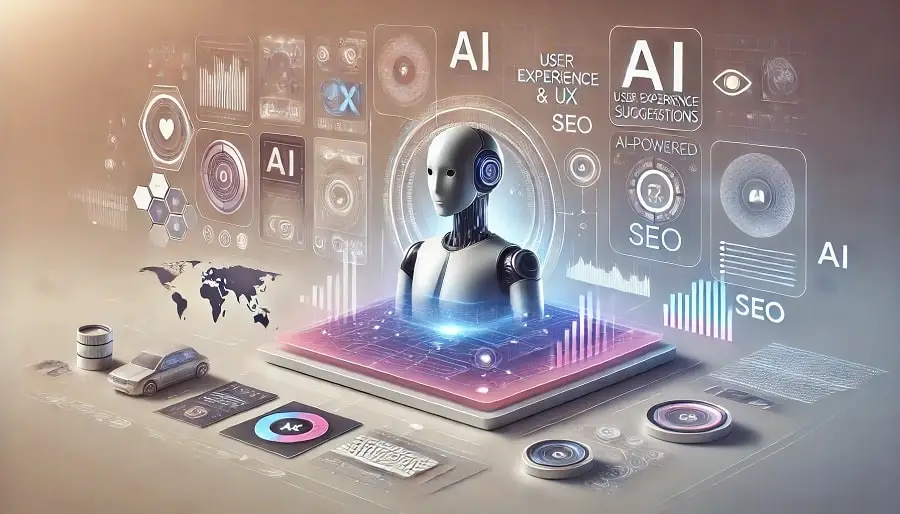
To sustain success with AI SEO User Experience, you must adopt a mindset of continuous learning and adaptation. The technology is evolving rapidly, and what works today may not work tomorrow. Stay updated with official Google announcements and industry-leading blogs. Attend webinars and conferences focused on AI in marketing.
Also, remember that trust is a major ranking factor. AI can help you identify opportunities to build trust, such as adding author bios, citing credible sources, and displaying security badges. However, the actual trust-building happens through consistent, high-quality interactions with your brand. Ensure that your AI-driven personalization does not come across as creepy or invasive. Always prioritize user privacy and transparency.
Frequently Asked Questions
What is the difference between traditional SEO and AI SEO User Experience?
Traditional SEO focuses on optimizing for search engine crawlers using keywords and backlinks. AI SEO User Experience focuses on optimizing for the user’s behavior and intent, using machine learning to predict what users want and deliver it in the most accessible format. It is a holistic approach that considers technical performance, content relevance, and emotional engagement.
How does AI improve user experience on a website?
AI improves user experience by personalizing content in real-time, optimizing site speed based on device capabilities, providing intelligent search functions that understand typos and synonyms, and creating chatbots that offer instant support. It also helps in structuring information architecture so that users can find what they need with fewer clicks.
Can small businesses use AI for SEO and UX?
Yes. There are many affordable AI-powered tools designed for small businesses. These include content optimization platforms, chatbot builders, and analytics tools that provide actionable insights without requiring a data science team. The key is to start small, focus on one area (like content optimization), and gradually expand your use of AI as you see results.
What are the best metrics to track for AI SEO User Experience?
You should track a combination of engagement and conversion metrics. These include organic click-through rate (CTR), bounce rate, average session duration, pages per session, conversion rate, and customer lifetime value (LTV). Additionally, monitor Core Web Vitals scores (LCP, FID, CLS) to ensure technical health.
Will AI replace human SEO experts?
No. A AI SEO User Experience requires humans to define the brand voice, set the strategy, interpret the data, and make final decisions. The role of the SEO expert is shifting from executor to strategist and interpreter.
Conclusion
AI SEO User Experience represents the convergence of technology and human psychology. It is no longer enough to simply stuff keywords into a page and hope for the best. The modern search landscape demands that you understand the user’s journey on a granular level. By leveraging artificial intelligence to analyze behavior, predict intent, and personalize content, you can create a website that not only ranks at the top of the SERPs but also delights every visitor who clicks through.
The future of search is intelligent, and the winners will be those who embrace this synergy. Start by auditing your current site through the lens of AI SEO User Experience. Identify where the friction points are, use AI tools to gather data, and then apply human creativity to solve the problems. This balanced approach will ensure that your digital presence is resilient, relevant, and rewarding for both your business and your users.
Xem thêm:
- AI SEO Automation: The Complete Guide to Ranking Smarter, Not Harder
- AI SEO Dashboards: The Complete Guide to Data-Driven Search Optimization in 2025
- AI SEO Personalization: The Complete Guide to Hyper-Relevant Search Rankings in 2025
- AI SEO for Lawyers: The Complete Guide to Dominating Legal Search in 2025
- AI SEO SEO Title Generator: The Complete Guide to Higher Click-Through Rates
Bài viết cùng chủ đề:

AI SEO SEO Automation with Make: The Complete Workflow Guide

AI SEO SEO Automation with Zapier: The Complete Workflow Guide

AI SEO SEO Automation with n8n: The Complete Workflow Guide
AI SEO SEO Automation with Gemini: The Complete Guide to Scaling Organic Growth

AI SEO SEO Automation with Claude: The Complete Guide to Scaling Content in 2025

AI SEO SEO Automation with ChatGPT: The Complete Playbook for 2025

AI SEO & SEO Automation for Affiliate Sites: The 2025 Playbook for Passive Income Growth
AI SEO & SEO Automation for Bloggers: The Complete Guide to Scaling Your Content

AI SEO & SEO Automation for Agencies: The Complete 2025 Playbook

AI SEO and SEO Automation for Ecommerce: The Complete Playbook for 2025

AI SEO & SEO Automation for WordPress: The Complete Playbook for 2025
AI SEO SEO Automation Strategy: The Complete Playbook for 2025

Mastering the AI SEO SEO Automation Process: A Complete Guide to Scaling Organic Growth
AI SEO SEO Automation System: The Complete Guide to Scaling Organic Growth in 2025
AI SEO SEO Automation Platform: The Complete Guide to Scaling Organic Growth in 2025
AI SEO SEO Automation Software: The Complete Guide to Scaling Organic Growth in 2025















