
No products in the cart.
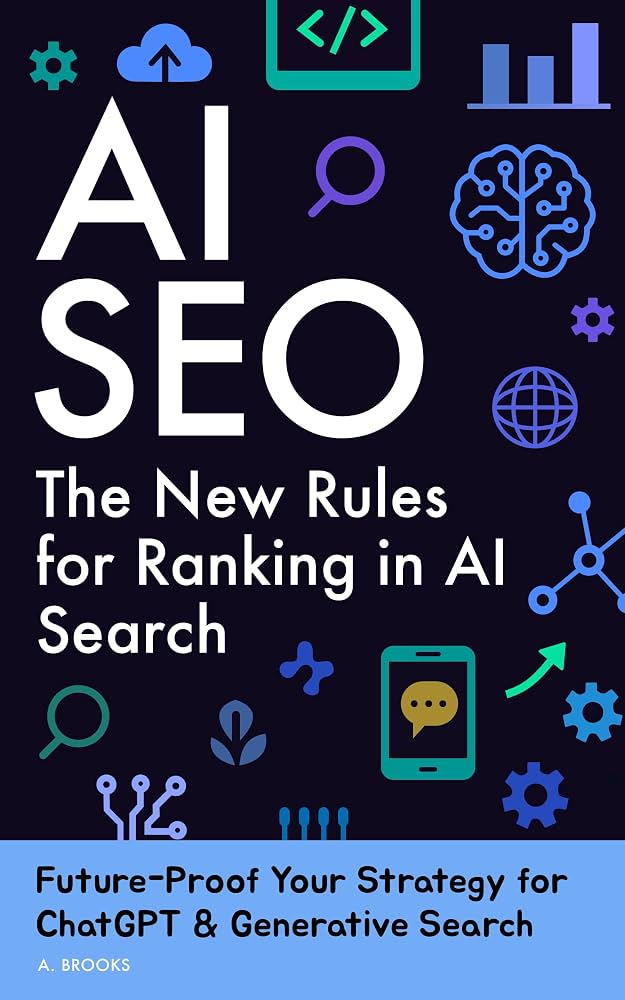
AI SEO Books: The Essential Guide to Mastering Search Engine Optimization in the Age of Artificial Intelligence
29
Jul
Jul
Artificial intelligence has rewritten the rules of search engine optimization faster than any other development in the past two decades. Marketers who once relied solely on keyword density and backlink volume now grapple with neural matching, natural language generation, and predictive user intent models. Amid this transformation, AI SEO books have become indispensable resources, distilling complex algorithms into actionable strategies. The right book bridges the gap between raw AI theory and daily SEO execution, empowering professionals to create content that resonates with both machine learning systems and human readers.
This comprehensive guide unpacks everything you need to know about AI SEO books—what they cover, how to choose the best ones, and how to apply their lessons in a hyper-competitive digital landscape. Instead of chasing fleeting trends, you will build a robust foundation grounded in the very technologies driving today’s search engines.
What Are AI SEO Books?
AI SEO books are publications that focus specifically on the intersection of artificial intelligence and search engine optimization. They move beyond traditional SEO tactics to examine how machine learning, deep learning, natural language processing, and automation reshape keyword research, content creation, technical audits, and ranking analysis. These books demystify Google’s AI-driven systems—RankBrain, BERT, MUM—and explain how SEO practitioners can align their work with these models to achieve sustainable visibility.
A quality AI SEO book will walk you through the conceptual shift from optimizing for strings (keywords) to optimizing for things (entities and context). It will also provide hands-on guidance for using generative AI tools such as ChatGPT, Claude, and Gemini to enhance every stage of an SEO campaign. Far from being dry technical manuals, the best examples blend strategic thinking with practical frameworks, often drawing on real case studies and data from the evolving search ecosystem.
The Evolution of SEO and the AI Revolution
Understanding why AI SEO books are so critical requires a brief look at how search itself has evolved. In the early 2010s, ranking was largely a mathematical game of matching queries to exact on-page keywords. Today, Google processes over 8.5 billion searches per day, but more importantly, it interprets them conceptually. The launch of the Hummingbird update in 2013 marked the beginning of semantic search, where the engine started looking at meaning instead of individual words.
RankBrain, introduced in 2015, was Google’s first widely acknowledged AI system. It uses machine learning to interpret never-before-seen queries and connect them to known concepts, effectively understanding intent. BERT (Bidirectional Encoder Representations from Transformers) followed, enabling Google to grasp the full context of a word by looking at the words before and after it. Most recently, MUM (Multitask Unified Model) represents a thousand times more powerful leap, capable of analyzing information across text, images, and video simultaneously. AI SEO books translate these dense technical milestones into practical optimization frameworks.
Core Topics Covered in AI SEO Books
Not all AI SEO books are created equal, but the most valuable ones systematically address several critical domains. They bridge the gap between machine learning research and daily SEO tasks, ensuring that even non-technical marketers can leverage AI insights. Below are the central pillars you should expect from a comprehensive title.
Understanding Search Engine AI Algorithms
An effective AI SEO book dedicates ample space to explaining how modern algorithms work. It breaks down concepts like vector space models, entity recognition, and knowledge graph integration. Readers learn how Google’s systems parse queries into vectors, match them against billions of documents, and re-rank results based on relevance signals refined by user interaction data. This deep understanding prevents marketers from making superficial optimizations and instead fosters strategies aligned with how machines “think.”
AI-Powered Keyword Research and Content Strategy
Gone are the days of simple keyword lists. AI SEO books explore how to use clustering algorithms, topic modeling, and semantic analysis tools to uncover topic clusters and user journeys. They teach how to leverage AI for discovering content gaps, predicting seasonal trends, and identifying long-tail queries with high conversion potential. Platforms like Clearscope, MarketMuse, and SurferSEO rely on these principles, and a solid book explains the “why” behind the tool, not just the “how.”
Generative AI for Content Creation
The rise of large language models has made content generation a hot-button topic. The best AI SEO books address this head-on, providing frameworks for prompt engineering, ethical use, and human-AI collaboration. They demonstrate how to craft content briefs that guide AI toward high-quality, original output that satisfies E-E-A-T (Experience, Expertise, Authoritativeness, Trustworthiness) standards. Crucially, they warn against the pitfalls of unedited AI content and show how to inject genuine subject-matter expertise into machine-generated drafts.
Technical SEO and AI Automation
Technical audits have become more intelligent. Books on AI SEO illuminate how machine learning can detect patterns in crawl data, log files, and rendering issues at scale. They cover automated schema markup generation, predictive site speed optimization, and anomaly detection in server responses. For developers and advanced SEOs, some titles even delve into building custom Python scripts that interface with Google’s APIs to monitor AI-driven ranking changes.
Data Analytics and Machine Learning for SEO
AI SEO books often cross into data science territory, explaining how to apply regression analysis, decision trees, and neural networks to SEO data. They guide readers through the process of training simple models to forecast traffic changes after algorithm updates or to segment users by intent based on search console data. While not all SEO professionals need to build models from scratch, understanding these fundamentals allows for more insightful conversations with data teams and more accurate performance diagnostics.
Types of AI SEO Books for Different Skill Levels
The landscape of AI SEO books is broad, and selecting the wrong level can lead to frustration or stagnation. To help you navigate, the table below categorizes books by reader profiles and focus areas. Keep in mind that many titles span multiple categories, but the main emphasis usually dictates the best fit.
| Type of Book | Target Audience | Core Focus | Example Concept You Will Learn |
|---|---|---|---|
| Beginner Introductions | Newcomers, small business owners, content writers | Explaining AI fundamentals in SEO without technical jargon; basic tool usage | How RankBrain interprets user intent differently from classic keyword matching |
| Practical Handbooks | Intermediate SEOs, freelancers, agency staff | Step-by-step tutorials for integrating AI tools daily; prompt databases and workflows | Crafting a prompt chain to produce a 2,000-word article optimized for topical authority |
| Technical Deep Dives | Advanced SEOs, developers, data analysts | Machine learning model application, NLP pipeline construction, algorithm inversions | Using BERT embeddings to cluster search queries and uncover hidden topic clusters |
| Strategic Guides | Marketing directors, CMOs, business strategists | Building AI-adopted SEO departments; change management; ROI forecasting | Designing an AI-powered content supply chain that reduces production cost by 40% |
Top AI SEO Books Worth Your Time
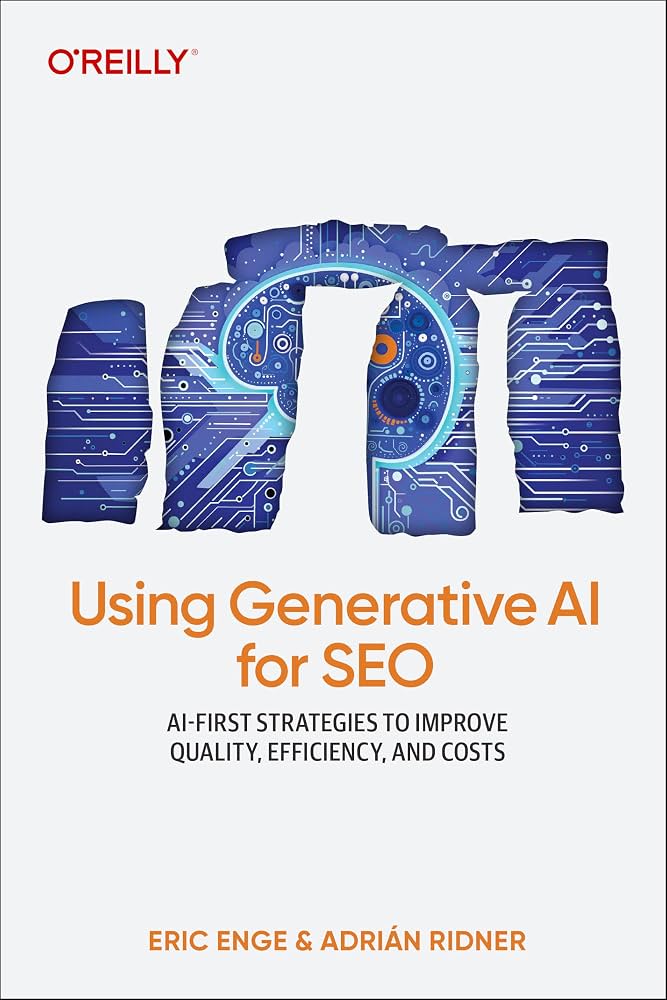
While new titles appear frequently, several books have already proven their value by anticipating the AI trend and explaining it clearly. These books do not just list tactics; they provide mental models that stay relevant even as specific tools change. Here are a few standout examples that remain frequently cited by professionals.
Google Semantic Search by David Amerland is widely regarded as the seminal text on semantic web and how AI processes language. It dives deep into concepts of co-occurrence, entities, and the shift from information retrieval to answer engine strategies. Readers come away understanding why structured data and contextual relevance have replaced old-school link metrics as the foundation of high-ranking content.
For a more hands-on, updated perspective, SEO 2024 by Adam Clarke dedicates entire sections to AI content writing tools, including practical prompts you can plug into ChatGPT and Claude. Clarke addresses the ethical concerns of AI-generated text and offers a framework for blending AI efficiency with human editorial oversight. It also contains case studies where AI-augmented SEO campaigns achieved measurable traffic gains in competitive niches.
The fourth edition of The Art of SEO by Eric Enge, Stephan Spencer, and Jessie Stricchiola remains a heavyweight for those wanting a comprehensive view. The chapter on machine learning and SEO explains how Google’s engineering team uses deep learning to evaluate page quality beyond surface-level signals. The book covers neural matching, AI-driven personalization, and the increasing importance of user experience signals trained on behavioral data.
How to Select the Right AI SEO Book for Your Goals
With dozens of options flooding the market, a methodical selection process saves time and ensures you invest in knowledge that actually moves the needle. Before purchasing, evaluate each candidate against these criteria.
- Assess your current knowledge level. If you are new to both AI and SEO, a beginner-friendly book that defines basic terms and starts with first principles is essential. Skipping to an advanced machine learning manual will lead to confusion and wasted effort.
- Check the publication date. Artificial intelligence in search moves incredibly fast. Prefer books published or updated within the last 12-18 months. Even a well-written book from 2019 will not cover BERT or the implications of Google’s Search Generative Experience.
- Look for practical exercises. The best AI SEO books include worksheets, sample prompts, or companion resources that let you apply concepts immediately. Books that remain purely theoretical rarely translate into real campaign improvements.
- Examine the author’s background. Trust authors who have demonstrable hands-on experience—whether as agency owners, in-house SEO directors, or recognized industry speakers with verifiable case studies. Thought leaders who actively test AI tools provide the most current insights.
- Read independent reviews. Seek opinions from communities like the r/SEO subreddit, Search Engine Journal’s comment sections, or private Slack groups. Real practitioners quickly identify books that are padded with generic content versus those that deliver unique frameworks.
- Reading passively without applying concepts. AI SEO is not a spectator sport. After each chapter, implement at least one technique—whether that means running a new prompt, auditing your site’s entity structure, or modifying your content brief template.
- Treating a single book as the final authority. Search algorithms are multi-layered and frequently updated. Use books as foundations, then supplement them with Google’s official documentation, SEO experiment blogs, and ongoing community discussions.
- Ignoring the fundamentals. Some readers jump straight to advanced AI applications without mastering classic SEO principles like crawling, indexing, and on-page optimization. AI tools amplify poor strategies just as effectively as good ones—garbage in, garbage out.
- Over-focusing on tools rather than strategy. Many AI SEO books contain detailed tool recommendations. The error is to become reliant on a specific platform instead of understanding the underlying method. When the tool changes its interface or pricing, the strategic knowledge endures.
- Neglecting the human element. AI can help with research and drafting, but authentic subject matter expertise, unique data, and genuine connection with your audience cannot be automated. The most successful practitioners use AI to scale their expertise, not to replace it.
- Cross-reference book claims with live search results. When a book predicts an algorithm trend, search for recent case studies or official confirmation. This critical thinking deepens understanding and prevents reliance on outdated information.
- Build a personal knowledge base. As you read, extract key concepts, prompt templates, and diagrams into a note-taking app. Over time, this becomes a custom playbook that evolves with your experience.
- Pair book learning with a sandbox website. Running experiments on a low-stakes domain lets you observe how AI-driven optimizations actually influence rankings, giving you confidence before applying tactics to client or business sites.
- Join a mastermind or discussion group. Explaining AI SEO concepts to peers solidifies your own knowledge and exposes blind spots. Many readers create informal book clubs where they test prompts and share results.
Common Mistakes When Using AI SEO Books
Even the best resource will not yield results if approached with the wrong mindset. Avoid these frequent pitfalls to accelerate your learning curve.
Important Notes for Getting the Most Out of AI SEO Books
Beyond the initial reading, a few deliberate habits will multiply the long-term return on your investment in AI SEO education.
Practical Application: Turning Book Theory into Action
Knowledge from AI SEO books gains value only when translated into real campaigns. A structured approach moves you from passive reader to active implementer.
Start by auditing your current SEO workflow. Identify one area—keyword research, content optimization, or technical diagnostics—where AI can bring the most immediate impact. Based on your chosen book’s guidance, select a specific technique. For example, if the book recommends using semantic clustering to find topic gaps, pick a pillar page and map 10 related subtopics using an embedding tool. Document the process, measure the before-and-after organic traffic, and iterate.
Next, integrate AI content generation cautiously. Follow the book’s framework for prompt design and editorial review. Create a sample post using a large language model, then heavily edit it yourself, adding proprietary data, expert quotes, and unique insights. Compare its performance against purely human-written content after 90 days. The discipline of testing one variable at a time reveals what actually moves the needle in your niche.
The Future of AI SEO and What Books Should Cover Next
Artificial intelligence will not slow down, and AI SEO books must evolve quickly to remain relevant. The next generation of titles will need to address emerging challenges that are already reshaping the industry.
Multimodal search is on the horizon, where users query with images, voice, and text interchangeably. Books will need to explain how to optimize for AI that understands context across modalities—imagine Google analyzing a photo of a dish you snapped and returning the recipe along with local restaurant recommendations. Generative AI within search results, as seen in Google’s SGE (Search Generative Experience), already pushes traditional blue links further down. Future books will have to deconstruct strategies for appearing inside AI-generated snapshots while maintaining click-through traffic.
Personalization based on AI-driven user models will demand a shift from mass-market SEO to adaptive content that changes based on individual behavior patterns. Expect to see chapters on dynamic content assembly, AI-driven internal linking, and real-time ranking signal interpretation. The most forward-looking books may even explore optimization for AI agents that act on behalf of users, not just human searchers.
Frequently Asked Questions About AI SEO Books
What are the best AI SEO books for beginners?
Beginners should look for titles that introduce core AI concepts without heavy programming language. Books like SEO 2024 by Adam Clarke and introductory guides that explain RankBrain and BERT in plain language are ideal starting points. They typically include step-by-step instructions for using AI tools and avoid overwhelming the reader with code or complex math.
Can I learn AI SEO without reading a physical book?
Absolutely. Many professionals learn through online courses, official Google documentation, YouTube channels, and hands-on experimentation. However, a well-structured AI SEO book provides a curated, linear learning path free from algorithm-driven distractions, making it easier to build deep foundational knowledge that scattered online resources often miss.
Are there any free AI SEO ebooks available?
Yes, several industry experts release free ebooks as lead magnets for their tools or consultations. These cover narrow topics like prompt engineering for SEO or entity optimization. While useful as quick references, free ebooks rarely match the depth and editorial rigor of professionally published titles, so treat them as supplements rather than primary learning resources.
How often should I update my SEO book collection?
Plan to add a new, recently published title every 12 to 18 months to stay aligned with major algorithm shifts. Revisit older books for timeless principles on information architecture and user psychology, but rely on current publications for tactical AI guidance. A hybrid library combining classic SEO texts with the latest AI SEO books offers the best competitive advantage.
Do AI SEO books cover ChatGPT and other large language models?
Most recent titles (published in 2023 and beyond) dedicate significant content to generative AI models. They teach prompt design, fact-checking strategies, and ethical usage guidelines. The most practical books include extensive prompt libraries and real-world case studies showing exactly how to blend AI-generated content with human expertise to meet Google’s quality standards.
Conclusion
AI SEO books are more than just reading material—they are strategic toolkits for navigating one of the most profound technological shifts in marketing history. By carefully selecting titles aligned with your skill level, actively applying their lessons, and staying curious about emerging developments, you position yourself miles ahead of competitors who still rely on outdated playbooks.
The intersection of artificial intelligence and search will only deepen. Those who invest in understanding it through curated, authoritative books today will shape tomorrow’s search landscape rather than reacting to it. Make reading a habit, pair it with relentless experimentation, and treat every algorithm update as an opportunity to deepen your mastery.
Xem thêm:
- AI SEO Content Editing: The Complete Guide to Smarter, Faster Optimization
- AI SEO Clearscope: The Definitive Guide to Data-Driven Content Optimization
- WP Trove AI Prompts: The Complete Guide to Unlocking WordPress Automation
- AI SEO Search Visibility: The Complete Playbook for Ranking in the Age of Machine Learning
- AI Product Description Generator: Create Compelling Listings That Sell in Seconds
Bài viết cùng chủ đề:

AI SEO SEO Automation with Make: The Complete Workflow Guide

AI SEO SEO Automation with Zapier: The Complete Workflow Guide

AI SEO SEO Automation with n8n: The Complete Workflow Guide
AI SEO SEO Automation with Gemini: The Complete Guide to Scaling Organic Growth

AI SEO SEO Automation with Claude: The Complete Guide to Scaling Content in 2025

AI SEO SEO Automation with ChatGPT: The Complete Playbook for 2025

AI SEO & SEO Automation for Affiliate Sites: The 2025 Playbook for Passive Income Growth
AI SEO & SEO Automation for Bloggers: The Complete Guide to Scaling Your Content

AI SEO & SEO Automation for Agencies: The Complete 2025 Playbook

AI SEO and SEO Automation for Ecommerce: The Complete Playbook for 2025

AI SEO & SEO Automation for WordPress: The Complete Playbook for 2025
AI SEO SEO Automation Strategy: The Complete Playbook for 2025

Mastering the AI SEO SEO Automation Process: A Complete Guide to Scaling Organic Growth
AI SEO SEO Automation System: The Complete Guide to Scaling Organic Growth in 2025
AI SEO SEO Automation Platform: The Complete Guide to Scaling Organic Growth in 2025
AI SEO SEO Automation Software: The Complete Guide to Scaling Organic Growth in 2025















