
No products in the cart.
AI SEO URL Structure: The Complete Guide to Optimizing for Machine Learning Search Engines
31
Jul
Jul
The way search engines interpret URLs has changed dramatically with the rise of artificial intelligence. An AI SEO URL structure is no longer just about keywords and hyphens—it is about creating a clear, semantic pathway that machine learning algorithms can understand, categorize, and rank with precision. As Google’s RankBrain, BERT, and the more recent MUM and Search Generative Experience (SGE) systems process billions of pages, the URL remains a foundational signal that connects content to user intent. This guide explores how to build a URL architecture that satisfies both human users and AI-driven crawlers, ensuring your pages gain maximum visibility in an increasingly intelligent search landscape.
What Is an AI SEO URL Structure?
An AI SEO URL structure refers to the systematic organization of your website’s web addresses in a way that is optimized for artificial intelligence algorithms used by search engines. Unlike traditional SEO URL practices that focused primarily on exact-match keywords, an AI-optimized structure prioritizes semantic clarity, logical hierarchy, and machine-readable patterns. AI systems like Google’s neural networks analyze URLs to understand the relationship between pages, the topical focus of a site, and the context of the content behind each link. The core difference lies in how AI processes information. Traditional crawlers followed links and indexed text, but modern AI models use natural language processing (NLP) to extract meaning from URL slugs, folder names, and domain structure. A well-designed AI SEO URL structure helps these models quickly determine what a page is about, how it relates to other pages, and whether it deserves to rank for a given query. This means moving away from cryptic strings of numbers and toward descriptive, hierarchical, and consistent URL patterns.
Why AI Search Engines Care About URL Structure
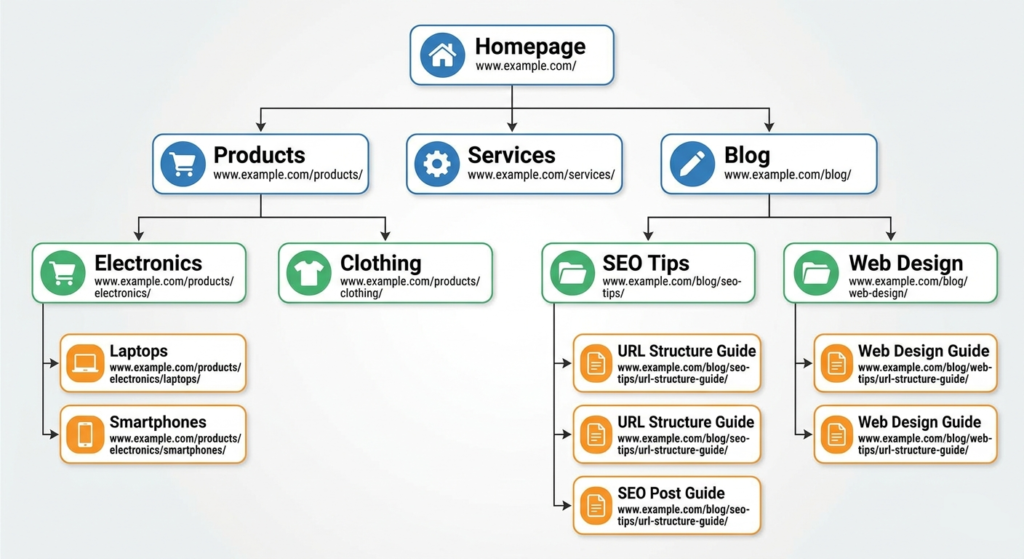
Search engines have always used URLs as a relevance signal, but AI has amplified their importance. Machine learning models are trained on massive datasets that include URL patterns. When these models encounter a clean, logical URL, they can infer the page’s topic with higher confidence. Conversely, a messy URL with random parameters or excessive depth confuses the algorithm, leading to lower crawl priority and reduced ranking potential. AI also uses URLs to establish entity relationships. For example, a URL like example.com/blog/ai-seo/url-structure tells the algorithm that the page is part of a blog section, focused on AI SEO, and specifically about URL structure. This hierarchical signal helps the AI build a knowledge graph of your site, which is crucial for appearing in rich results, featured snippets, and AI-generated answers. The clearer the URL, the easier it is for the machine to map your content to the right search queries.
Core Components of an AI-Friendly URL
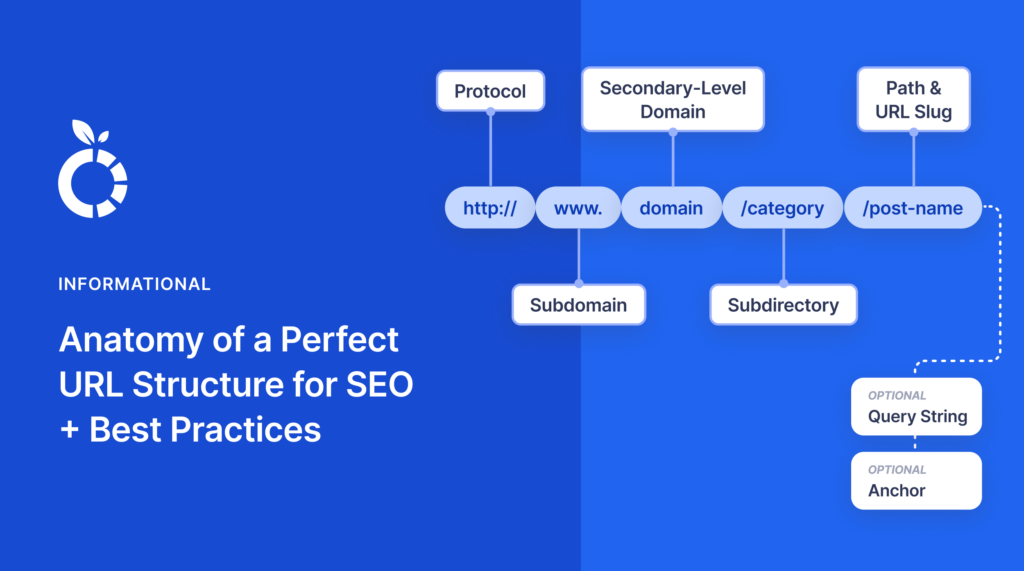
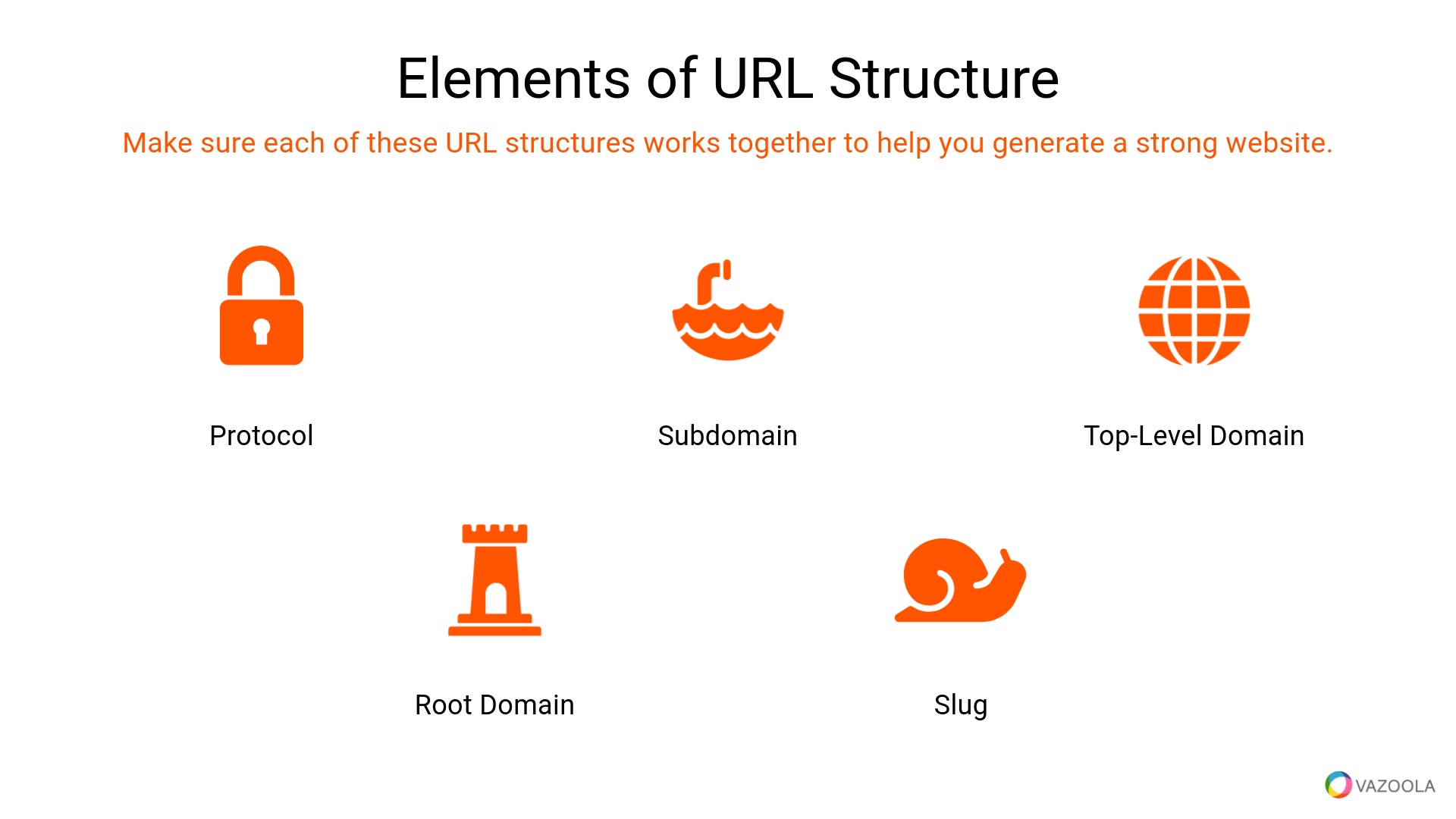
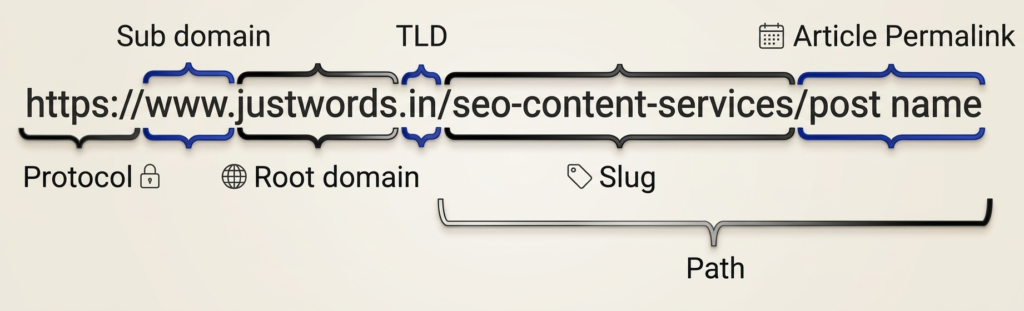
Building an AI SEO URL structure requires attention to several key components that work together to create a coherent signal. Each element plays a distinct role in helping machine learning algorithms parse and rank your pages.
Protocol and Domain
The protocol (HTTPS) and domain name are the foundation. AI algorithms treat HTTPS as a trust signal, and a clean, brandable domain helps establish authority. While the domain itself is not a ranking factor in the traditional sense, the way AI associates your domain with a specific niche or entity matters. A domain that clearly reflects your brand or core topic gives the algorithm a starting point for categorization.
Subdirectories and Folders
Subdirectories create the structural hierarchy that AI uses to understand site organization. A flat structure where every page sits at the root level provides less context than a nested structure that groups related content. For instance, example.com/products/software/ is more informative than example.com/page123. AI models use these folder names as semantic anchors, so choosing clear, descriptive category names is essential.
URL Slugs
The slug is the final part of the URL that identifies the specific page. In an AI SEO URL structure, the slug should be a concise, human-readable phrase that accurately describes the content. Stop words like “and,” “the,” or “of” are often removed, but AI can handle them fine. The key is to avoid keyword stuffing and instead focus on natural language that mirrors how users and AI models think about the topic.
Parameters and Query Strings
Dynamic parameters such as ?id=123&ref=abc are the enemy of AI SEO. They create duplicate content issues, waste crawl budget, and provide no semantic value. AI algorithms struggle to differentiate between pages that differ only by tracking parameters. If you must use parameters, ensure they are handled with canonical tags or server-side redirects to consolidate signals.
Best Practices for Structuring URLs for AI Crawlers
Implementing an AI SEO URL structure involves following a set of proven practices that align with how machine learning models process information. These practices go beyond basic keyword placement and address the deeper mechanics of AI interpretation.
Maintain a Logical Hierarchy
Your URL structure should mirror your site’s information architecture. A typical hierarchy looks like: domain → category → subcategory → page. For example, example.com/guides/seo/technical/url-structure. This tells the AI that “url-structure” is a technical SEO topic within the broader guides section. The depth should be limited to three or four levels to ensure that important pages are not buried too deep, as AI gives more weight to pages that are easier to reach from the homepage.
Use Hyphens as Word Separators
Hyphens are the universally accepted word separators in URLs. Underscores are not recognized as separators by most search engines, causing words to be joined together. AI models trained on URL data expect hyphens, so using them consistently improves readability and parsing. Avoid using spaces, plus signs, or encoded characters.
Keep URLs Short and Descriptive
While AI can process long URLs, shorter URLs are easier to understand and share. A URL should contain the primary keyword or topic phrase, but not every keyword you are targeting. For example, example.com/ai-seo-tools is better than example.com/best-ai-seo-tools-for-2025-free-and-paid-options. The shorter version conveys the core topic without diluting the signal with unnecessary modifiers.
Use Lowercase Letters
Consistency in casing is critical. AI algorithms are case-sensitive, and mixing uppercase and lowercase can create duplicate pages. Always use lowercase letters in your URL slugs and folder names. This prevents confusion and ensures that the AI treats Example.com/SEO and example.com/seo as the same resource.
Avoid Stop Words Where Possible
Stop words like “a,” “an,” “the,” “and,” “of,” and “for” add little semantic value to a URL. Removing them shortens the URL and focuses the AI’s attention on the meaningful terms. However, there are exceptions where a stop word changes the meaning, such as “how-to” versus “how.” Use your judgment, but err on the side of brevity.
Implement Canonical Tags for Duplicate Content
AI systems penalize duplicate content, and URL variations are a common cause. If you have multiple URLs pointing to the same content, use canonical tags to tell the AI which version is the preferred one. This consolidates ranking signals and prevents the algorithm from splitting authority across duplicate pages.
How AI Models Interpret URL Semantics
Understanding how AI models like Google’s BERT and MUM process URLs can help you optimize more effectively. These models use transformer-based architectures that analyze the relationship between words in a sequence. When they read a URL, they break it down into tokens and compare those tokens against the content of the page and the query. For instance, if a URL contains “ai-seo-url-structure,” the AI tokenizes it into “ai,” “seo,” “url,” and “structure.” It then checks whether these tokens appear in the page title, headings, and body text. If they do, the AI gains confidence that the URL is an accurate descriptor. If the URL says “page-42” but the content is about AI SEO, the AI must rely solely on the content, which is a weaker signal. AI also uses URLs to understand site structure for crawl efficiency. A well-organized URL structure allows the AI to predict where new content will appear, making crawling more efficient. This is particularly important for large sites where crawl budget is a concern. By following a consistent pattern, you help the AI allocate resources to your most important pages.
Common Mistakes in AI SEO URL Structure
Even experienced SEO professionals make mistakes when it comes to URL optimization for AI. Recognizing these pitfalls can save you from losing rankings and wasting crawl budget.
Using Dynamic Parameters for Content Pages
Many content management systems generate URLs like example.com/index.php?id=123. This is the worst-case scenario for AI. The algorithm sees no semantic information, only a database reference. If your site uses this pattern, you need to implement URL rewriting to create static, descriptive paths.
Over-Nesting Content
Creating too many subdirectories, such as example.com/category/subcategory/sub-subcategory/page, dilutes the authority of each page. AI models may interpret deep pages as less important because they are harder to reach. Keep your hierarchy shallow and ensure that every page is within three clicks of the homepage.
Keyword Stuffing in Slugs
Trying to cram multiple keywords into a URL slug backfires. For example, example.com/best-ai-seo-tools-for-small-businesses-2025 looks spammy to AI. The algorithm recognizes this as an attempt to manipulate rankings and may discount the URL’s value. A cleaner version like example.com/ai-seo-tools is more effective.
Changing URLs Without Redirects
If you restructure your URLs, you must implement 301 redirects from the old URLs to the new ones. Failing to do so breaks the AI’s understanding of your site’s history and causes a loss of ranking equity. AI models learn from historical data, and a sudden change without redirects confuses the algorithm.
Ignoring Internationalization
For multilingual sites, using the wrong URL structure can confuse AI. Using subdirectories with language codes like example.com/es/ is clearer than using parameters like example.com?lang=es. AI models use the URL to determine language and regional targeting, so a clear pattern is essential.
Practical Guide to Implementing an AI-Optimized URL Structure
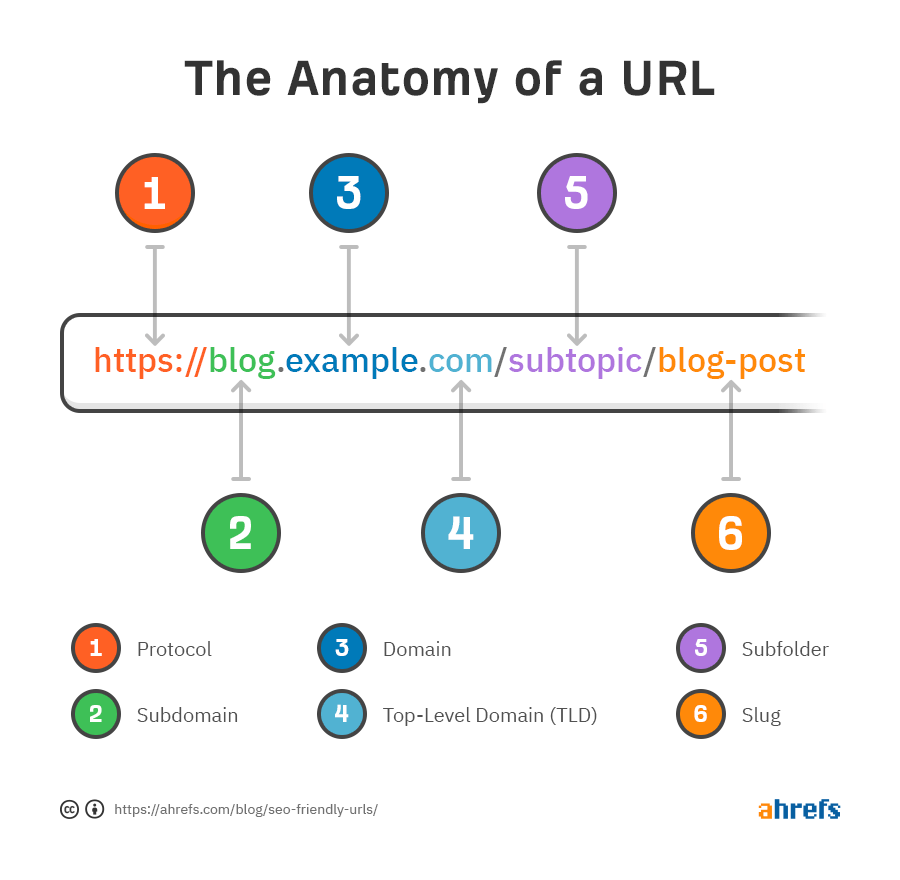
Implementing an AI SEO URL structure requires a systematic approach. Follow these steps to transform your existing URLs or build a new site with AI in mind.
Step 1: Audit Your Current URL Structure
Start by exporting a list of all your URLs using tools like Screaming Frog or Google Search Console. Look for patterns that are not AI-friendly: long query strings, uppercase letters, underscores, or excessive depth. Categorize these URLs by their importance and traffic to prioritize your efforts.
Step 2: Define Your Site Hierarchy
Map out your site’s content into logical categories and subcategories. Think about how an AI model would categorize your content. For a blog, you might use /blog/ as the root, then /blog/ai-seo/ for a specific topic cluster. For an e-commerce site, use /products/ and /products/category/. The goal is to create a predictable pattern.
Step 3: Rewrite Slugs for Clarity
For each page, rewrite the slug to be a concise, descriptive phrase. Remove stop words, use hyphens, and keep it under 60 characters if possible. Ensure the slug matches the page title or H1 heading closely. This reinforces the semantic signal for AI.
Step 4: Implement Redirects
If you are changing existing URLs, set up 301 redirects from the old URLs to the new ones. Update internal links throughout your site to point to the new URLs. Submit an updated sitemap to Google Search Console to speed up the recrawl process.
Step 5: Use Canonical Tags Wisely
For any pages that are accessible via multiple URLs, add a canonical tag pointing to the preferred version. This is especially important for e-commerce sites with faceted navigation that generates many parameter-based URLs.
Step 6: Monitor and Adjust
After implementation, monitor your rankings and crawl stats in Google Search Console. Look for any spikes in crawl errors or drops in indexed pages. Use the URL inspection tool to see how Googlebot views your new URLs. Adjust your structure if you notice any issues.
Comparison: Traditional URL Structure vs. AI SEO URL Structure
Understanding the differences between traditional and AI-optimized URL structures can clarify why the shift matters.
| Aspect | Traditional URL Structure | AI SEO URL Structure |
|---|---|---|
| Primary Focus | Exact-match keywords | Semantic clarity and context |
| Hierarchy | Often flat or arbitrary | Logical, topic-based folders |
| Parameters | Commonly used for tracking | Avoided or canonicalized |
| Slug Length | Can be long and keyword-stuffed | Short, descriptive, natural |
| Case Sensitivity | Inconsistent | Always lowercase |
| AI Interpretation | Low semantic value | High semantic value, easy to parse |
| Crawl Efficiency | Wastes crawl budget | Optimizes crawl allocation |
The table highlights that AI SEO URL structure is not just about aesthetics; it is about creating a machine-readable map of your content that aligns with how neural networks process language.
Benefits of an AI-Optimized URL Structure
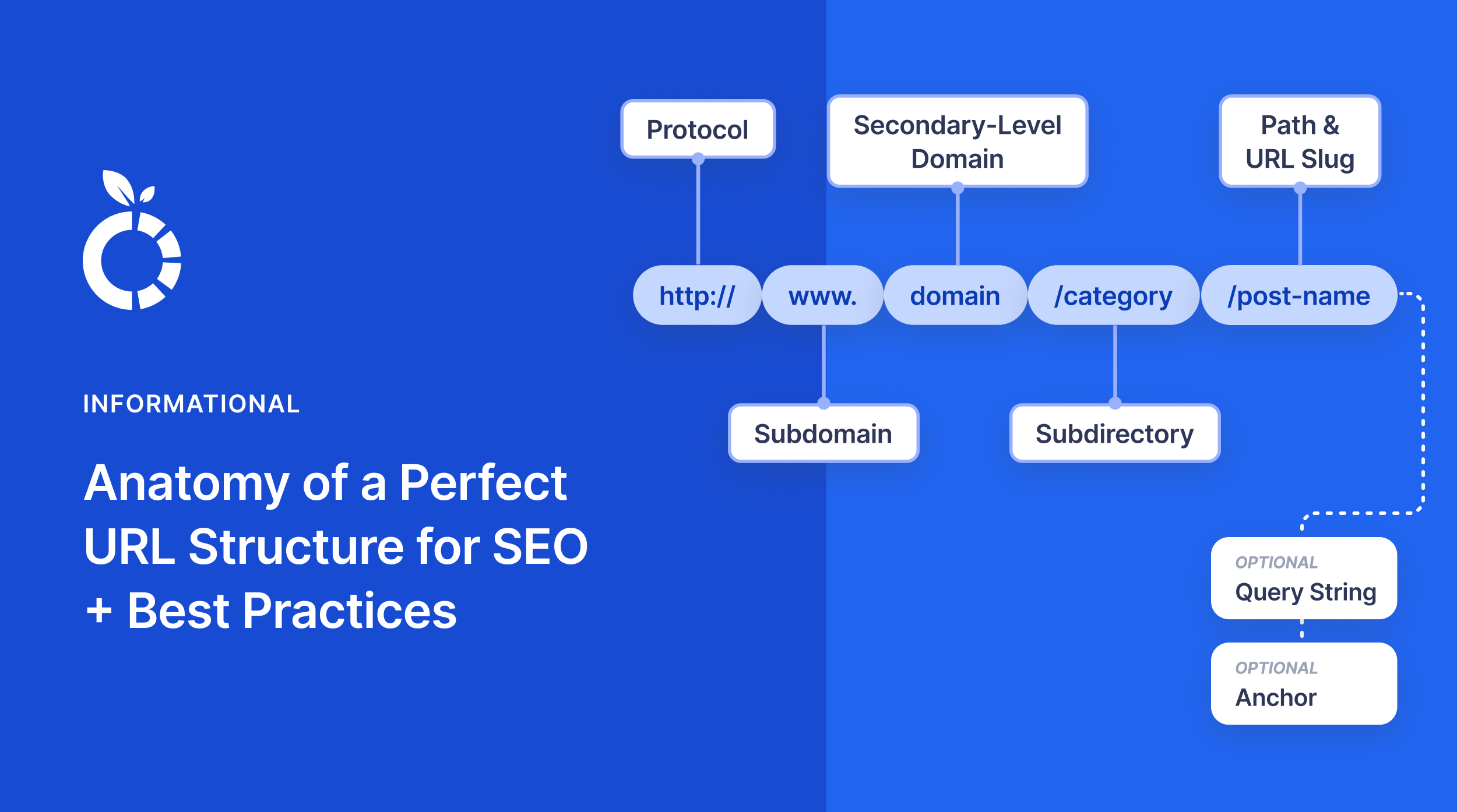
Adopting an AI SEO URL structure yields tangible benefits that extend beyond simple rankings.
Improved Crawl Efficiency
AI algorithms allocate crawl budget based on perceived importance. A clean URL structure signals that your site is well-maintained and that pages are logically organized. This leads to more frequent and thorough crawling of your key pages.
Enhanced Semantic Relevance
When your URL contains descriptive words that match your content and target queries, AI models can rank your page for a broader set of related terms. This is particularly useful for capturing long-tail keywords and voice search queries, which often use natural language.
Better User Experience
Users are more likely to click on a URL that clearly indicates what the page is about. A descriptive URL also makes it easier for users to share links and understand where they are on your site. This indirect signal of user satisfaction is factored into AI ranking models.
Increased Click-Through Rate
Search results display URLs prominently. A clean, readable URL stands out and builds trust. Higher click-through rates signal to AI that your page is relevant, which can boost your rankings further.
Future-Proofing for AI Search
As AI-generated search results become more common, the way your URLs are structured will influence whether your content is cited in AI summaries. AI systems that generate answers often pull from URLs that are easy to parse and understand. A clear structure increases your chances of being referenced.
Limitations and Challenges
While the benefits are clear, there are challenges to implementing an AI SEO URL structure.
Legacy URL Changes
If you have an established site with thousands of URLs, changing them is risky. Even with redirects, t This requires careful planning and patience.
Platform Constraints
Some content management systems and e-commerce platforms generate URLs automatically and offer limited control. You may need to use plugins or custom code to achieve the desired structure. This can be technically challenging for non-developers.
Balancing Keywords and Brevity
Finding the sweet spot between a descriptive URL and a short one is not always easy. Some topics require more words to be clear. You must prioritize clarity over brevity, but avoid unnecessary length.
Important Notes for AI SEO URL Structure
Several nuances are often overlooked when optimizing URLs for AI.
URL Structure and Site Speed
While URL structure itself does not affect page speed, the way you handle redirects and parameters can. Too many redirects slow down the crawl process. Ensure that your URL structure does not introduce unnecessary redirect chains.
Subdomains vs. Subdirectories
AI treats subdomains as separate entities. For example, blog.example.com is seen as distinct from example.com. If you want to consolidate authority, use subdirectories instead of subdomains. This is a critical decision for AI SEO.
URL Structure for Featured Snippets
Pages that appear in featured snippets often have clear, descriptive URLs. AI selects these pages because they are easy to understand. Optimizing your URL structure increases your chances of being chosen for position zero.
Mobile-First Indexing
Google uses mobile-first indexing, meaning it crawls the mobile version of your site. Ensure that your URL structure is consistent across desktop and mobile versions. Avoid using separate mobile URLs like m.example.com.
Frequently Asked Questions
Does the exact match keyword in a URL still matter for AI SEO?
Exact match keywords in URLs still carry some weight, but their importance has diminished. AI models focus more on the overall semantic context of the URL and its alignment with the page content. A URL that contains a partial match or a related term can perform just as well as an exact match, provided the content is relevant.
How many levels deep should my URL structure be?
Ideally, your URL structure should not exceed three or four levels from the homepage. For example, example.com/category/subcategory/page is acceptable. Deeper structures dilute authority and make it harder for AI to crawl and understand your site.
Should I use hyphens or underscores in URLs?
Always use hyphens. Search engines and AI models treat hyphens as word separators, while underscores are not recognized. Using hyphens ensures that each word in your URL is parsed correctly.
What is the ideal length for a URL slug?
T Shorter slugs are easier to read, share, and remember. Focus on including the primary topic phrase and removing unnecessary words.
Can I change my URL structure without losing rankings?
Yes, but you must implement 301 redirects from the old URLs to the new ones. This passes the majority of ranking equity to the new URLs. Expect a temporary fluctuation in rankings during the transition, but your rankings should recover and potentially improve over time.
How does AI handle URLs with tracking parameters?
AI generally ignores tracking parameters if they are properly handled with canonical tags. However, excessive parameters can waste crawl budget and create duplicate content issues. Use parameter handling tools in Google Search Console to tell the AI which parameters to ignore.
Is it better to use subdomains or subdirectories for AI SEO?
Subdirectories are generally better for AI SEO because they consolidate authority under a single domain. Subdomains are treated as separate sites, which can fragment your ranking signals. Use subdirectories unless you have a strong reason to use subdomains, such as a separate blog platform.
Conclusion
An AI SEO URL structure is a critical component of modern search optimization. As artificial intelligence continues to shape how search engines understand and rank content, the URLs you create serve as a direct communication channel with these algorithms. By focusing on semantic clarity, logical hierarchy, and machine-readable patterns, you can ensure that your pages are easily understood, efficiently crawled, and accurately ranked. The shift from keyword-stuffed URLs to clean, descriptive structures is not just a trend—it is a fundamental change in how search engines process information. Implementing the best practices outlined in this guide will position your website for success in both traditional search results and the emerging landscape of AI-generated answers. Regularly audit your URLs, stay consistent with your structure, and always prioritize the user and the machine equally. The result is a website that is not only optimized for today’s algorithms but also prepared for the intelligent search systems of tomorrow.
Xem thêm:
- AI SEO Ranking Analysis: The Complete Guide to Data-Driven Search Optimization
- AI SEO Rendering: The Complete Guide to Modern Search Visibility
- AI SEO Ecommerce Keyword Research: The Complete Playbook for 2025
- AI SEO Ahrefs: The Complete Guide to Smarter Search Optimization
- AI SEO AI Content Audit Tool: The Complete Guide to Automated Content Optimization
Bài viết cùng chủ đề:

AI SEO SEO Automation with Make: The Complete Workflow Guide

AI SEO SEO Automation with Zapier: The Complete Workflow Guide

AI SEO SEO Automation with n8n: The Complete Workflow Guide
AI SEO SEO Automation with Gemini: The Complete Guide to Scaling Organic Growth

AI SEO SEO Automation with Claude: The Complete Guide to Scaling Content in 2025

AI SEO SEO Automation with ChatGPT: The Complete Playbook for 2025

AI SEO & SEO Automation for Affiliate Sites: The 2025 Playbook for Passive Income Growth
AI SEO & SEO Automation for Bloggers: The Complete Guide to Scaling Your Content

AI SEO & SEO Automation for Agencies: The Complete 2025 Playbook

AI SEO and SEO Automation for Ecommerce: The Complete Playbook for 2025

AI SEO & SEO Automation for WordPress: The Complete Playbook for 2025
AI SEO SEO Automation Strategy: The Complete Playbook for 2025

Mastering the AI SEO SEO Automation Process: A Complete Guide to Scaling Organic Growth
AI SEO SEO Automation System: The Complete Guide to Scaling Organic Growth in 2025
AI SEO SEO Automation Platform: The Complete Guide to Scaling Organic Growth in 2025
AI SEO SEO Automation Software: The Complete Guide to Scaling Organic Growth in 2025















