
No products in the cart.
AI SEO UX Optimization: The Complete Guide to Merging Search Engines and User Experience
31
Jul
Jul
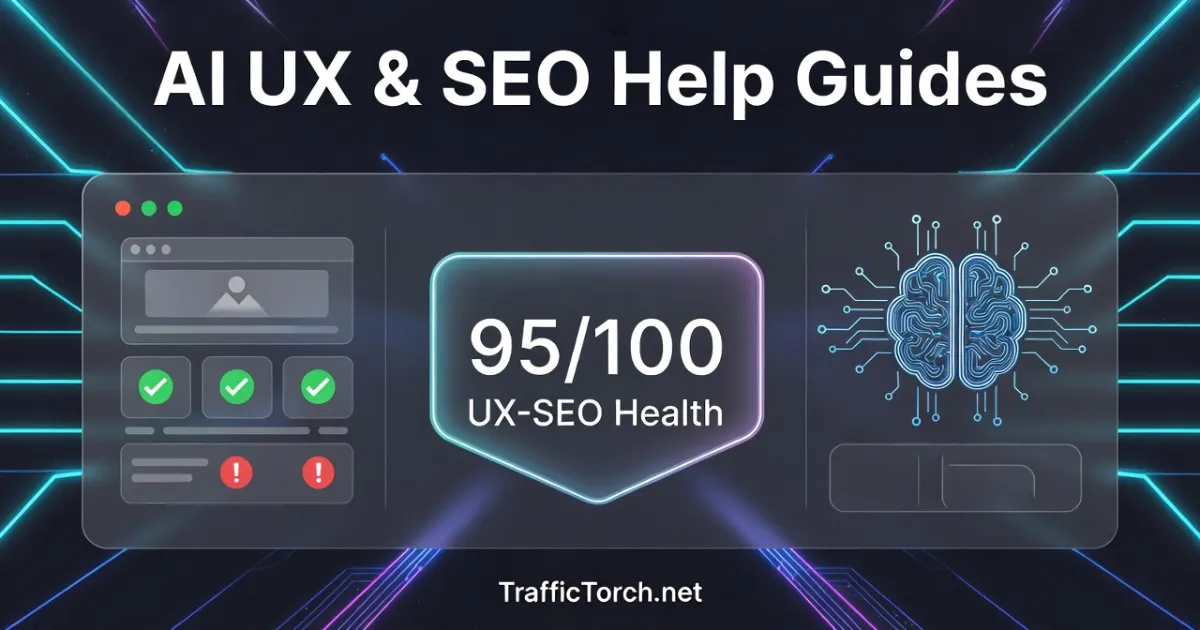
The digital landscape has shifted dramatically. Gone are the days when stuffing keywords into meta tags guaranteed top rankings. Today, Google’s algorithms are sophisticated enough to understand human behavior, intent, and satisfaction. This is where AI SEO UX Optimization comes into play. It represents the convergence of artificial intelligence, search engine optimization, and user experience design. By leveraging machine learning to analyze user interactions, businesses can now create websites that not only rank higher but also convert better. This guide explores how AI transforms the way we approach SEO, moving beyond simple metrics to a holistic view of user satisfaction.
Understanding the Core of AI SEO UX Optimization
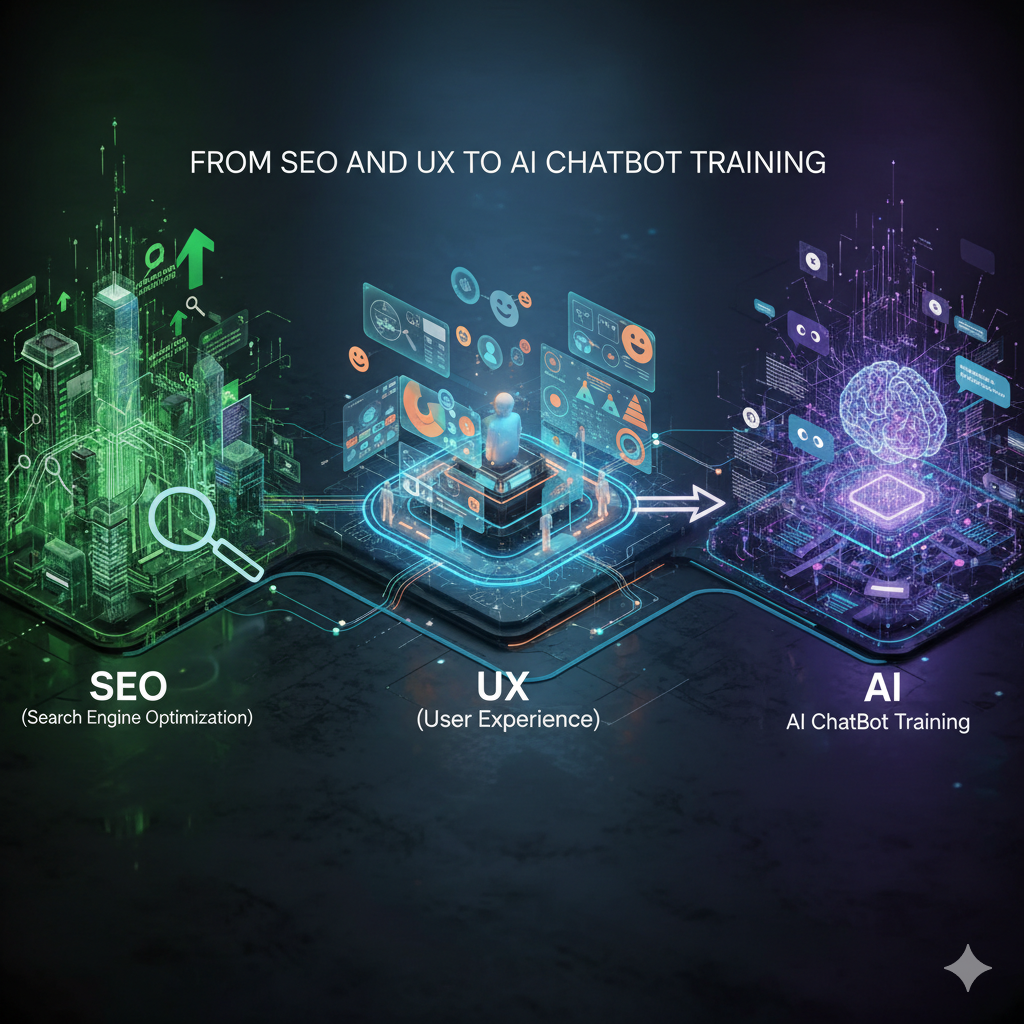
AI SEO UX Optimization is the practice of using artificial intelligence tools to analyze, predict, and improve the user experience signals that search engines use to rank pages. It is not just about making a site look pretty; it is about creating a seamless journey that answers queries instantly and keeps users engaged. The concept merges three distinct disciplines. SEO focuses on visibility, UX focuses on usability, and AI provides the data-driven intelligence to bridge the gap. Traditional SEO relied on backlinks and exact-match keywords. Modern SEO relies on dwell time, click-through rates, and bounce rates. AI helps decode these behavioral signals, identifying patterns that human analysts might miss.
Why User Experience Signals Matter More Than Ever
Search engines have evolved from simple keyword matchers to intent predictors. Google’s RankBrain and BERT algorithms use machine learning to understand the context behind a search query. They evaluate how users interact with search results. If a user clicks a result and immediately bounces back to the search engine results page (SERP), Google interprets that as a signal that the page did not satisfy the query. This shift means that UX is now a ranking factor. Core Web Vitals, which measure loading speed, interactivity, and visual stability, are direct UX metrics. AI SEO UX Optimization takes these metrics further by analyzing heatmaps, session recordings, and scroll depth to understand why users stay or leave.
The Role of Artificial Intelligence in SEO Analysis
AI excels at processing vast amounts of data at incredible speed. In the context of SEO, this capability allows for real-time analysis of user behavior across thousands of pages. Tools like Clearscope, Surfer SEO, and MarketMuse use natural language processing (NLP) to analyze top-ranking content and suggest semantic keywords. However, the true power of AI lies in predictive analytics. Machine learning models can forecast which content updates will improve rankings based on historical data. They can identify UX bottlenecks before they become major issues. For instance, AI can predict that a page with a high bounce rate and low scroll depth will lose rankings, prompting immediate intervention.
Key Components of an AI-Driven UX Strategy
To implement AI SEO UX Optimization effectively, you must focus on several interconnected components. Each element feeds data into the AI system, creating a feedback loop that continuously improves performance.
1. Intent Mapping and Content Structuring
AI tools analyze search queries to determine the underlying intent: informational, navigational, transactional, or commercial. Once intent is identified, the content structure must align. For informational queries, users expect detailed guides with clear headings. For transactional queries, they expect product comparisons and pricing tables. AI can suggest optimal content length, heading hierarchy, and internal linking structures based on what is currently ranking for the target keywords. This ensures that the content matches the format users prefer, reducing bounce rates.
2. Personalized User Journeys
Machine learning algorithms can segment users based on their behavior, location, device, and past interactions. This allows for dynamic content personalization. A returning visitor might see a different homepage layout than a new visitor. AI SEO UX Optimization uses these personalized experiences to increase engagement metrics, which in turn signals relevance to search engines.
3. Predictive Search and Navigation Optimization
AI-powered site search functions can predict what users are looking for as they type. By analyzing search queries within the site, AI can identify gaps in content and navigation. If many users search for “shipping policy” but cannot find it easily, the AI flags this as a UX issue. Fixing this improves the user journey and reduces frustration, leading to longer sessions.
Practical Benefits of Integrating AI with UX and SEO
The benefits of this integration extend beyond higher rankings. Businesses that adopt AI SEO UX Optimization see improvements across the entire digital funnel. – Higher Conversion Rates: A site that is easy to navigate and loads quickly naturally converts better. AI helps identify friction points in the checkout process or lead capture forms.
- Reduced Acquisition Costs: By targeting the right keywords with the right content format, you attract more qualified traffic. This reduces the cost per click in paid campaigns and improves organic ROI.
- Improved Content ROI: AI identifies which pieces of content are underperforming and suggests specific updates, saving time and resources.
- Competitive Advantage: Most websites still rely on static SEO practices. Using AI to optimize UX gives you a data-driven edge that is difficult for competitors to replicate.
Limitations and Challenges of AI-Driven Optimization
While the potential is immense, there are limitations to consider. AI models are only as good as the data they are trained on. If your website has low traffic, the AI may not have enough data to make accurate predictions. In such cases, you must rely on industry benchmarks and heuristic analysis. Another challenge is the “black box” nature of some AI algorithms. It can be difficult to understand why the AI made a specific recommendation. This lack of transparency can make it hard to trust the system, especially for small business owners. Furthermore, over-optimization for AI-detected patterns can lead to a homogenized web, where every site looks and feels the same.
AI SEO UX Optimization vs. Traditional SEO: A Comparison
Understanding the difference between these approaches is crucial for strategic planning. The table below highlights the key distinctions. | Aspect | Traditional SEO | AI SEO UX Optimization |
- Over-Reliance on Automation: AI should assist, not replace, human judgment. A human must review AI suggestions for brand voice and ethical considerations.
- Focusing on Metrics Over Meaning: Do not obsess over a single metric like bounce rate. A high bounce rate might be normal for a blog post that answers a quick question. Look at the whole picture.
- Neglecting Search Intent Updates: User intent changes over time. An article that was informational last year might need to be transactional now. Regularly review your content with AI tools to ensure alignment.
- Chasing Algorithm Updates: Google updates its algorithm hundreds of times a year. Do not change your UX strategy every time t Stick to the principles of good UX.
Important Notes on Data Privacy and Ethics
When using AI to track user behavior, you must be transparent about data collection. Regulations like GDPR and CCPA require explicit consent for tracking cookies. Ensure your AI tools are compliant. Anonymize user data where possible. Using AI to manipulate user behavior in a deceptive way, such as creating fake urgency or dark patterns, will harm your brand in the long run. Trust is a critical component of E-E-A-T (Experience, Expertise, Authoritativeness, Trustworthiness).
Frequently Asked Questions
What is the difference between UX and SEO?
|:— |:— |:— |
| Primary Focus | Keywords and backlinks | User behavior and satisfaction |
| Data Source | Search console, analytics | Heatmaps, session recordings, AI predictions |
| Content Creation | Manual research and writing | AI-assisted topic clustering and drafting |
| Optimization Cycle | Monthly or quarterly audits | Real-time adjustments |
| Success Metrics | Rankings, organic traffic | Dwell time, conversion rate, engagement |
| Personalization | Limited to geo-targeting | Dynamic, behavior-based personalization |
| Scalability | Difficult to scale manually | Highly scalable with automation |
Step-by-Step Guide to Implementing AI SEO UX Optimization
Implementing this strategy requires a systematic approach.
Step 1: Audit Your Current UX Signals
Begin by collecting data from Google Search Console and Google Analytics. Look at your top 20 pages. Analyze the bounce rate, average session duration, and pages per session. Identify pages with high impressions but low click-through rates. These are your primary candidates for optimization.
Step 2: Deploy AI-Powered Analytics Tools
Invest in tools that provide AI-driven insights. Microsoft Clarity is a free tool that offers heatmaps and session replays. For more advanced analysis, consider tools like Hotjar or FullStory. These platforms use AI to highlight “rage clicks” (where users click rapidly in frustration) and “dead zones” (areas of the page that are ignored).
Step 3: Analyze Search Intent with NLP Tools
Use tools like Surfer SEO or Frase to analyze the top 10 results for your target keywords. These tools use NLP to identify common subtopics, questions, and semantic terms. Create a content brief that includes these elements. Ensure your content answers the “People Also Ask” questions that appear in the SERP.
Step 4: Optimize for Core Web Vitals
AI cannot fix a slow server, but it can help you prioritize fixes. Use Google’s PageSpeed Insights to identify specific issues. AI tools can suggest image compression techniques or code minification strategies. Prioritize Largest Contentful Paint (LCP) under 2.5 seconds and Cumulative Layout Shift (CLS) under 0.1.
Step 5: Implement Dynamic Internal Linking
Use AI to automate internal linking. Tools like Link Whisper analyze your content and suggest relevant internal links. This improves crawlability and distributes page authority. More importantly, it keeps users on your site longer by guiding them to related content.
Step 6: Run A/B Tests on UX Elements
AI can accelerate A/B testing by predicting which variant will win. Test different headlines, call-to-action buttons, and page layouts. Use the AI’s predictive power to stop losing tests early and allocate resources to winning variations.
Common Mistakes to Avoid in AI SEO UX Optimization
Even with the best tools, mistakes happen. Being aware of these pitfalls will save you time and frustration. – Ignoring Mobile Users: AI insights are useless if your mobile experience is poor. Always segment your data by device. Mobile users have different intent and patience levels.
UX (User Experience) focuses on how a user interacts with a website, including usability, accessibility, and satisfaction. SEO (Search Engine Optimization) focuses on improving a site’s visibility in search engine results. AI SEO UX Optimization combines both by using data to ensure that a site is both easy to find and enjoyable to use.
How does AI improve SEO rankings?
AI improves rankings by analyzing user behavior patterns to identify what content satisfies search intent. It can automate keyword research, optimize content structure, predict performance, and personalize user experiences, all of which lead to better engagement signals that search engines reward.
What are Core Web Vitals and why are they important?
Core Web Vitals are a set of specific factors that Google considers important for user experience. They include Loading (LCP), Interactivity (INP), and Visual Stability (CLS). They are important because they are direct ranking signals. AI helps optimize these by identifying performance bottlenecks.
Can small businesses use AI for SEO UX?
Yes. Many AI tools offer free tiers or affordable pricing. Google Search Console is free and provides valuable data. Microsoft Clarity is free for heatmaps. Small businesses can start with these tools to gain insights without a large budget.
How long does it take to see results from AI SEO UX Optimization?
Results vary depending on the current state of your website and the competitiveness of your niche. Some improvements, like fixing a slow-loading page, can show results in a few weeks. Comprehensive content restructuring might take two to three months to reflect in rankings.
Conclusion: The Future of Search is User-Centric
AI SEO UX Optimization is not a passing trend; it is the fundamental evolution of digital marketing. As search engines become more intelligent, they will continue to prioritize sites that deliver exceptional user experiences. The brands that succeed will be those that embrace AI not as a shortcut, but as a powerful lens to understand their audience better. The synergy between AI, SEO, and UX creates a virtuous cycle. Better UX leads to better engagement metrics. Better metrics lead to higher rankings. Higher rankings lead to more traffic, which provides more data for the AI to learn from. By adopting this approach, you are not just optimizing for a search engine algorithm; you are optimizing for the most important entity in the digital world: the human user. Start small, analyze your data, and let AI guide your decisions. The results will speak for themselves.
Xem thêm:
- How AI Affects SEO: The New Era of Search Intelligence
- AI SEO Ranking Improvements: The Complete Guide to Future-Proofing Your Search Strategy
- AI SEO PageRank Optimization: The Complete Guide to Modern Link Authority
- AI SEO Data Visualization: Turning Complex Rankings into Actionable Insights
- AI SEO Internal Link Generator: The Complete Guide to Automating Your Link Strategy
Bài viết cùng chủ đề:

AI SEO SEO Automation with Make: The Complete Workflow Guide

AI SEO SEO Automation with Zapier: The Complete Workflow Guide

AI SEO SEO Automation with n8n: The Complete Workflow Guide
AI SEO SEO Automation with Gemini: The Complete Guide to Scaling Organic Growth

AI SEO SEO Automation with Claude: The Complete Guide to Scaling Content in 2025

AI SEO SEO Automation with ChatGPT: The Complete Playbook for 2025

AI SEO & SEO Automation for Affiliate Sites: The 2025 Playbook for Passive Income Growth
AI SEO & SEO Automation for Bloggers: The Complete Guide to Scaling Your Content

AI SEO & SEO Automation for Agencies: The Complete 2025 Playbook

AI SEO and SEO Automation for Ecommerce: The Complete Playbook for 2025

AI SEO & SEO Automation for WordPress: The Complete Playbook for 2025
AI SEO SEO Automation Strategy: The Complete Playbook for 2025

Mastering the AI SEO SEO Automation Process: A Complete Guide to Scaling Organic Growth
AI SEO SEO Automation System: The Complete Guide to Scaling Organic Growth in 2025
AI SEO SEO Automation Platform: The Complete Guide to Scaling Organic Growth in 2025
AI SEO SEO Automation Software: The Complete Guide to Scaling Organic Growth in 2025















