
No products in the cart.
Next-Generation AI SEO Workflow for Enterprises: A Blueprint for Scalable Organic Growth
29
Jul
Jul
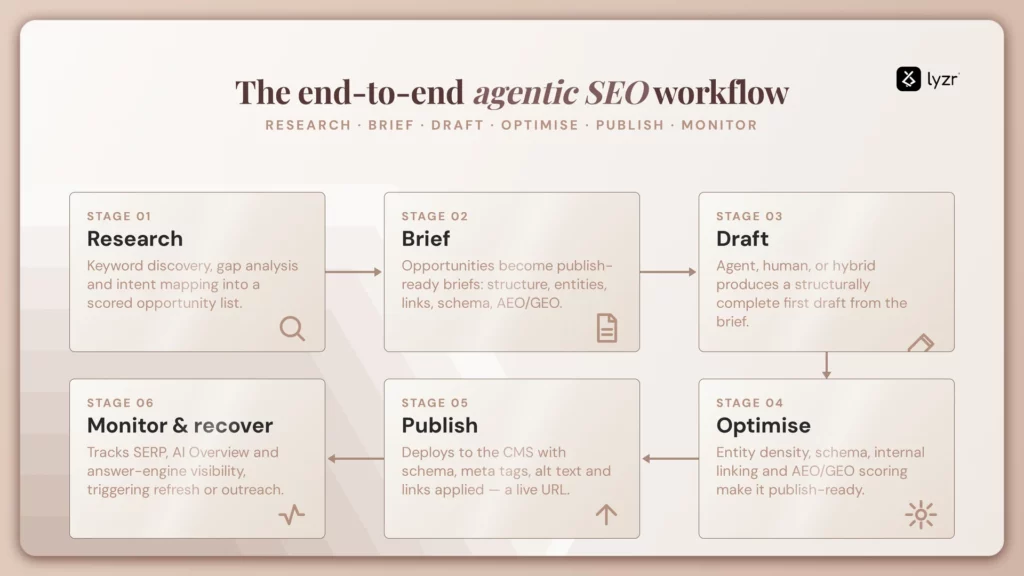
An AI SEO workflow for enterprises is no longer a futuristic concept—it is the operational backbone for dominating competitive search landscapes while managing thousands of pages, multiple brands, and global markets. By weaving artificial intelligence into every stage of search optimization, enterprises move from reactive, manual tactics to predictive, automated systems that drive sustained revenue. This article maps out the exact architecture, tools, and strategic shifts required to build a production-grade AI SEO workflow that aligns with corporate governance, compliance, and aggressive growth targets.
What an AI SEO Workflow for Enterprises Actually Means
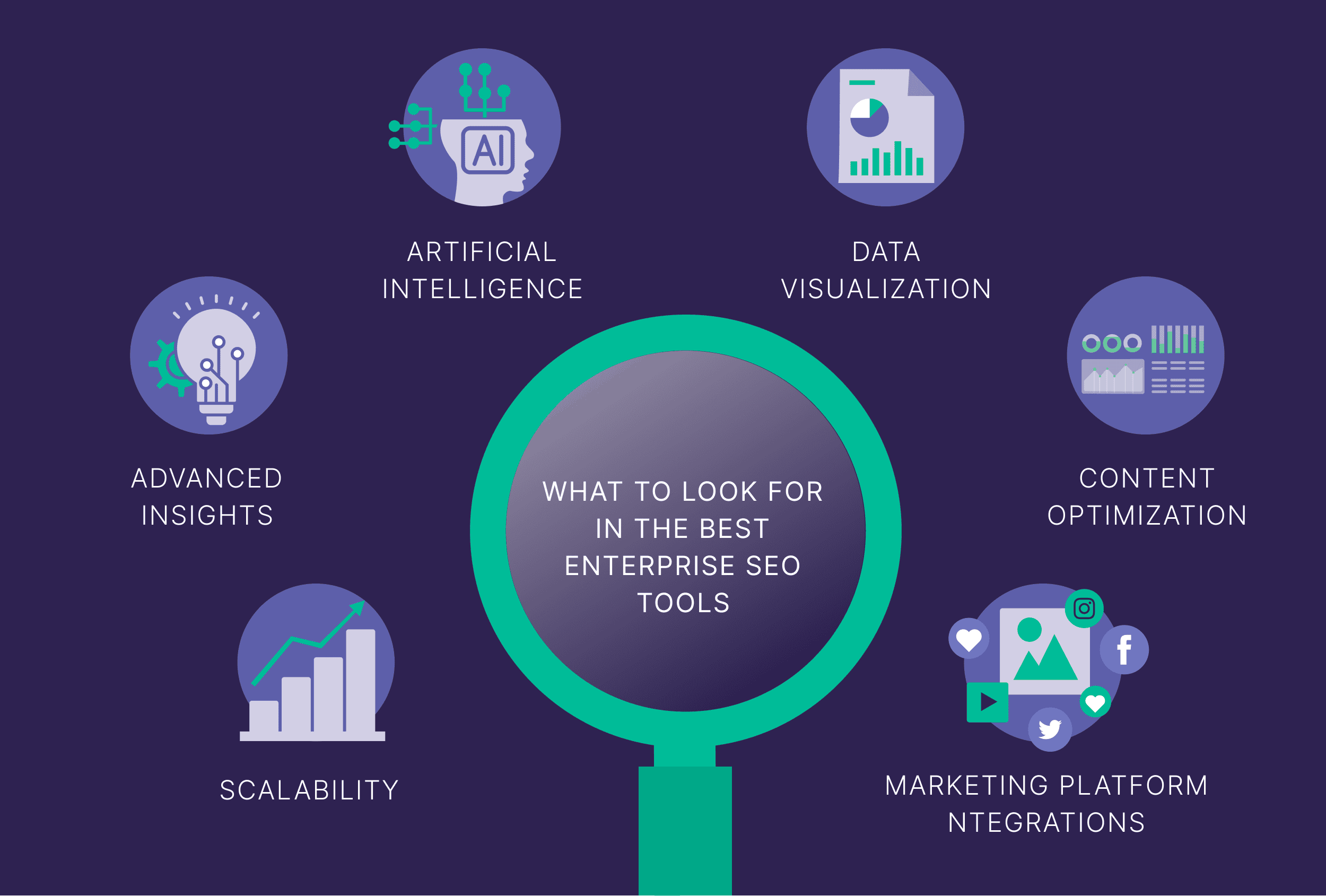
An AI SEO workflow for enterprises refers to the systematic integration of machine learning, natural language processing, and large language models into the end-to-end processes of search engine optimization at scale. Unlike a single-website toolkit, enterprise AI SEO connects data lakes, content management systems, analytics platforms, and competitive intelligence into a unified automation layer. The goal is to make every SEO decision—from keyword prioritization to content refresh cadence—data-driven, instantly executable, and measurable across thousands of URLs.
This workflow typically rests on four pillars: continuous data ingestion from search consoles, web analytics, rank trackers, and CRM systems; predictive modeling for trend forecasting and opportunity scoring; generative AI for content drafting and optimization; and automated orchestration that triggers tasks like meta tag updates, internal linking adjustments, or technical fixes without manual intervention. When properly implemented, the AI SEO workflow becomes a self-improving engine that refines its own rules based on performance outcomes.
Core Components of an Enterprise AI SEO Workflow
Building a robust AI SEO workflow for enterprises requires stitching together multiple specialized modules. Each component addresses a distinct phase of the SEO lifecycle, yet they all share a common data fabric to avoid silos.
1. Intelligent Keyword Discovery and Intent Clustering
Traditional keyword research buckles under enterprise demands, where a single product line can spawn hundreds of thousands of keyword variations. AI models now ingest search console data, competitor sitemaps, and industry databases to generate keyword clusters mapped to user intent. Semantic embeddings group queries like “enterprise cloud security pricing” and “cloud security cost comparison” into a single intent cluster, enabling content strategies that serve the entire buyer journey.
Advanced systems also assign predictive value scores by blending historical conversion data, seasonality, and SERP feature occupancy. This moves teams away from chasing volume alone and toward keywords that truly impact pipeline.
2. AI-Powered Content Strategy and Production
Generative AI rewrites the content production cycle for enterprises. Rather than starting with a blank page, content teams receive AI-generated briefs that include target entities, questions to answer, and optimal structure based on top-ranking pages. The workflow then produces initial drafts that blend brand tone, product specifics, and compliance checks—safeguarded by retrieval-augmented generation (RAG) to prevent hallucinations. Human editors refine and approve, while the AI continues to optimize existing content by flagging pages with declining CTR or outdated statistics and suggesting refreshes.
3. Automated Technical Auditing and Remediation
Enterprise sites routinely span millions of pages, making manual crawling impractical. AI-driven crawlers detect not only broken links and missing alt text but also deeper architectural issues like orphan pages, crawl budget waste, and duplicate content patterns that dilute authority. The workflow then integrates with a task queue or directly with the CMS via APIs to auto-heal low-risk issues—such as updating canonical tags or redirect chains—while flagging complex problems for engineering review.
4. AI-Driven Link Acquisition and Authority Building
Earning links at enterprise scale demands relationship intelligence. AI workflows mine news, social signals, and inbound link profiles to identify unlinked brand mentions, broken link reclamation opportunities, and prospects most likely to link based on topical relevance and domain authority trajectory. Natural language generation can even draft personalized outreach emails, but the workflow strictly enforces a human-approval gate to maintain authenticity and avoid spam traps.
5. Predictive Rank Tracking and Anomaly Detection
Instead of passive rank monitoring, enterprise AI SEO workflows deploy predictive models that correlate ranking fluctuations with internal changes (site updates, content rollouts) and external events (algorithm updates, competitor moves). When an anomaly is detected—say an unexpected drop for a high-value keyword cluster—the system automatically diagnoses probable causes and suggests corrective actions, cutting mean time to recovery from weeks to hours.
Building the Enterprise AI SEO Technology Stack
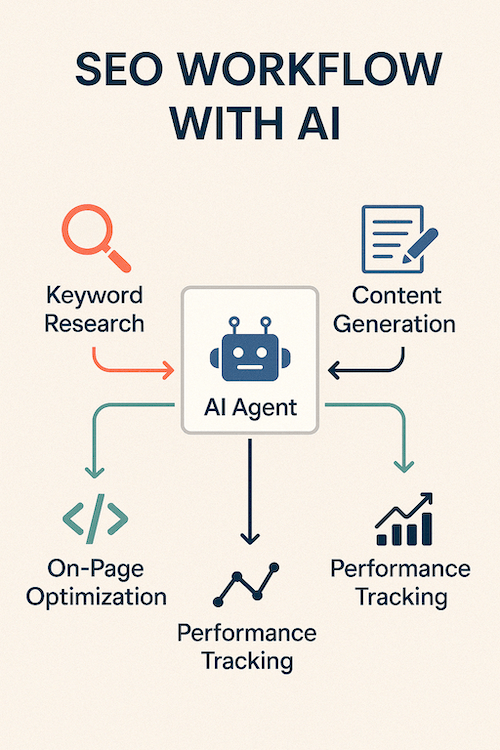
An effective AI SEO workflow for enterprises relies on a composable architecture that avoids vendor lock-in while enabling rapid iteration. The stack typically layers on top of the existing martech ecosystem.
| Capability | AI-Enhanced Tools and Platforms | Key Output |
|---|---|---|
| Data Unification | Data warehouses (Snowflake, BigQuery) with custom ETL pipelines, APIs from Search Console, Adobe Analytics, Salesforce | Single source of truth connecting SEO activity to revenue |
| Keyword & Topic Modeling | BERT-based models, custom embeddings, platforms like MarketMuse, Clearscope (augmented with proprietary models) | Intent clusters and content scoring |
| Content Generation & Optimization | Enterprise-grade LLMs (Claude, GPT-4) with guardrails, integrated via APIs; Writer, Jasper for enterprises | Briefs, drafts, and refresh recommendations |
| Technical SEO Automation | Deepcrawl, Botify, Lumar combined with custom scripts using Playwright or Puppeteer for JavaScript auditing | Automated fix queues and health dashboards |
| Link Intelligence | Pitchbox, BuzzStream with AI prioritization; Ahrefs/Majestic API for backlink analytics | Prospect scoring and personalized outreach |
| Decision Engine & Orchestration | Custom middleware (Node.js, Python) with workflow management (Airflow, Prefect) that connects all modules | Self-correcting loop between insight and action |
Enterprises should avoid black-box SaaS solutions that cannot share data back into their central data lake. The AI SEO workflow only becomes a strategic asset when it enriches the broader customer intelligence graph.
Step-by-Step Implementation Guide for Large Organizations
Rolling out an AI SEO workflow for enterprises without a phased plan invites chaos. The following pathway respects organizational complexity while building momentum.
Phase 1: Data Foundation and Governance
Aggregate all SEO-relevant data streams into a central, governed environment. Establish clear ownership for each data source, define schema standards, and implement role-based access controls. Ensure compliance teams review how A This phase alone often takes 6–8 weeks in a typical Fortune 500 environment but prevents downstream nightmares.
Phase 2: Pilot with High-Impact Use Cases
Select one domain or product line where SEO results directly tie to revenue. Deploy two AI-powered capabilities first: automated content brief generation and intelligent technical auditing. Measure time savings, content throughput, and organic traffic impact over a 90-day period. This creates a demonstrable ROI case for broader funding.
Phase 3: Integrate Predictive and Generative Capabilities
With a proven data pipeline, introduce predictive ranking tools and generative content production. Establish a human-in-the-loop review process for all AI-generated content. Define clear escalation paths for algorithm anomaly alerts. At this stage, begin cross-training SEO specialists in AI ops so they can interpret model outputs and refine prompts.
Phase 4: Full Orchestration and Continuous Learning
Connect all modules into a closed-loop system. The workflow now automatically adjusts content refresh priorities based on rank fluctuations, sends fix tickets to engineering when crawl health deviates, and updates keyword value scores as market conditions change. Embed regular model retraining cycles and bias audits. The SEO team transforms from task executors to AI strategists monitoring exception dashboards.
Measurable Benefits and Critical Limitations
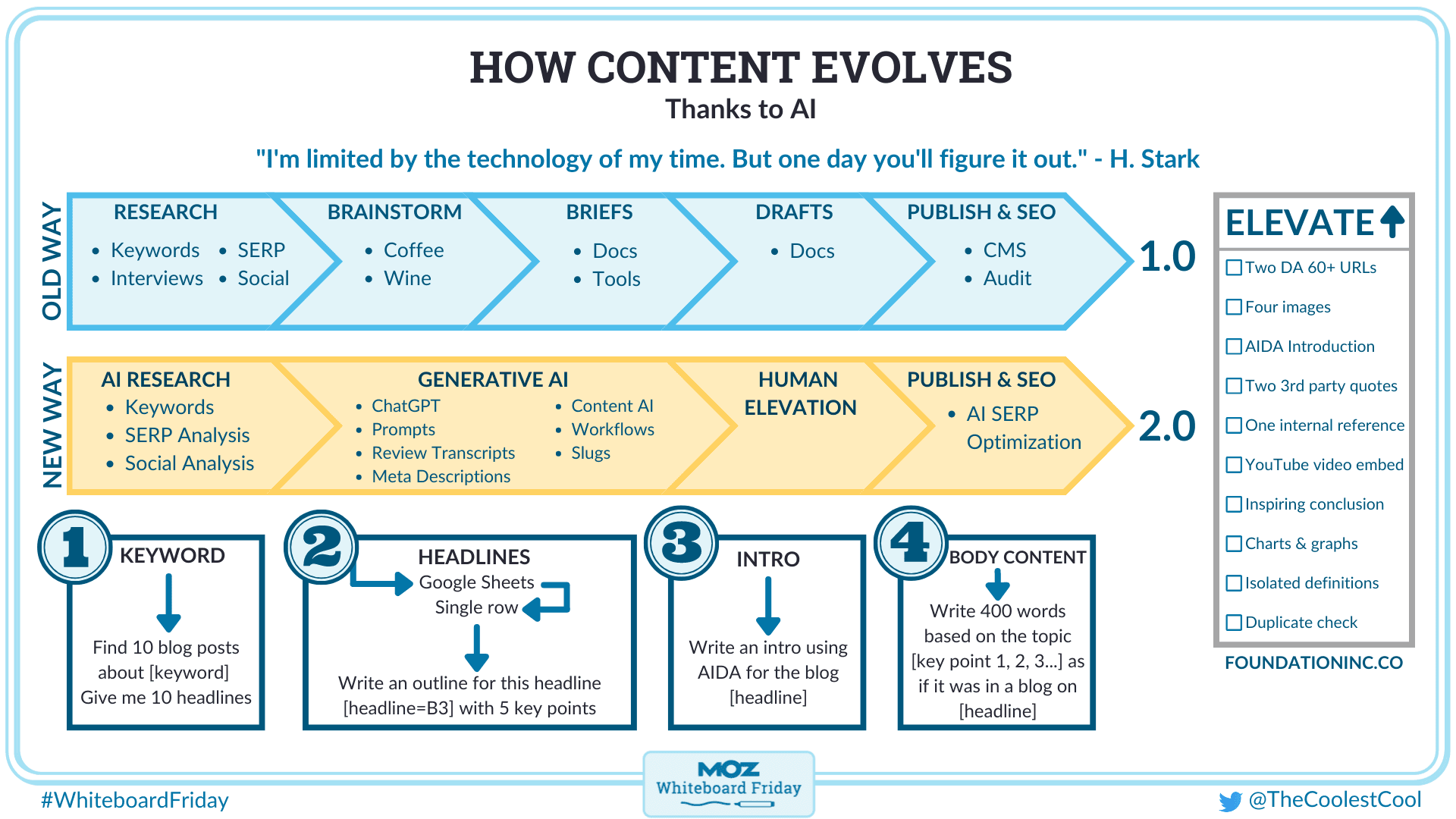
An AI SEO workflow for enterprises delivers transformative gains, but leaders must understand its boundaries to avoid unrealistic expectations.
| Benefits | Limitations |
|---|---|
| Scaled Efficiency: Enterprises achieve 3–5x faster content production and 80% reduction in manual auditing hours. | Model Hallucination Risk: Generative outputs can fabricate facts, requiring robust guardrails and human verification layers. |
| Revenue Attribution: Predictive models link SEO activities to pipeline and closed-won revenue, elevating SEO’s strategic profile. | Data Quality Dependency: Garbage in, garbage out—inconsistent tagging or siloed analytics corrupt the entire AI pipeline. |
| Proactive Strategy: Anomaly detection catches negative trends before they impact quarterly numbers. | Compliance Overhead: Highly regulated industries (finance, pharma) must map AI decisions to audit trails, slowing iteration. |
| Competitive Agility: Real-time SERP analysis surfaces competitor content gaps within minutes. | Loss of Tactical Intuition: Over-automation can atrophy the team’s ability to sense-check AI recommendations, leading to blind spots during algorithm shifts. |
Traditional SEO vs. AI SEO Workflow for Enterprises
The leap from legacy enterprise SEO to an AI-powered workflow is not incremental—it redefines roles, speed, and outcomes.
| Dimension | Traditional Enterprise SEO | AI SEO Workflow for Enterprises |
|---|---|---|
| Decision Making | Reactive, based on quarterly audits and manual analysis | Continuous, driven by predictive models and real-time data |
| Content Production | Linear: brief → draft → approval (weeks per piece) | AI drafts in hours; human-in-the-loop for refinement and compliance |
| Technical Health | Periodic crawls, manual fix tickets | Always-on monitoring with auto-remediation for common issues |
| Keyword Research | Spreadsheet-based, volume-first | Intent clusters with dynamic value scoring tied to business outcomes |
| Team Focus | Execution of repetitive tasks | Strategy, exception handling, and AI model improvement |
| Scalability | Linear headcount growth required | Sub-linear; one strategist can manage 10x the pages |
Practical Applications Across the Enterprise SEO Lifecycle

Forward-looking organizations deploy AI SEO workflows to solve very specific, high-stakes problems that manual processes cannot handle at scale.
- Global Site Migrations: AI maps URL redirects across millions of pages while preserving equity, and predictive models simulate traffic impact before cutover.
- Mergers & Acquisitions Content Integration: When two enterprises combine, AI workflows identify content overlap, recommend consolidation, and generate unified meta data across both domains within weeks.
- Dynamic Local SEO at Scale: For enterprises with thousands of locations, AI generates location-specific pages, optimizes Google Business Profiles, and monitors local ranking shifts by modeling proximity and review velocity.
- E-commerce Category Optimization: AI continuously tests title tag variations, product descriptions, and internal link placement across massive catalogs, using multivariate experimentation to lift category-level organic revenue.
- Algorithm Update Resilience: Workflows trained on historical algorithm impact data create early-warning dashboards that help SEO leads brief executives before the market reacts.
- Treating AI as a Full Replacement for SEO Talent: AI augments, not replaces. The most effective workflows pair AI speed with human editorial judgment, strategic contextualization, and creative ideation. Teams that slash headcount prematurely see content quality nosedive and algorithm penalties accumulate.
- Ignoring Legacy Technical Debt: AI automation laid on top of a messy CMS architecture simply accelerates chaos. Enterprises must first standardize URL structures, template logic, and metadata schemas before the workflow can operate reliably.
- Allowing Black-Box Optimization: Relying on an AI tool that auto-optimizes without transparent decision logs is a compliance and brand risk. Every automated change must be traceable to a rule, a model version, and an approval chain—especially in public companies.
- Neglecting Cross-Functional Data Governance: SEO workflows need data from product, sales, and support systems. Without a unified data governance council, those teams will throttle access, compromising model accuracy. Enterprise SEO leaders must become data diplomats.
- Over-Automating Before Proving Value: Launching a full orchestration layer on day one is a recipe for stakeholder skepticism. Successful programs stack capabilities incrementally, proving ROI at each step and giving the organization time to adapt.
Common Mistakes When Implementing Enterprise AI SEO Workflows
Even well-funded enterprises stumble due to misconceptions about what AI can and should handle. Avoiding these pitfalls separates successful transformations from expensive boondoggles.
Critical Success Factors and Operational Notes
For an AI SEO workflow for enterprises to deliver sustained competitive advantage, several operational principles must be embedded from the outset.
Human-in-the-Loop Design Is Non-Negotiable: Every content output, link pitch, and technical change must route through a review stage that records decisions. This not only catches errors but creates a training feedback loop that improves the AI models over time. Enterprises that skip this step risk brand damage and search engine penalties.
Model Transparency and Bias Audits Are Mandatory: Regularly audit AI models for bias that could over-optimize for certain geographies or demographics, violating corporate values or regulations. This is particularly acute in content generation, where gendered or culturally biased language can slip through. Assign a responsible AI lead to the SEO program.
Agile Integration Beats Monolithic Platforms: Instead of buying an all-in-one AI SEO suite, build an orchestration layer that connects best-of-breed tools via APIs. This modular approach allows the enterprise to swap components as technology evolves without ripping out the entire workflow.
Embed SEO Data into the Corporate Data Mesh: Treat SEO performance data as a first-class citizen in the enterprise data strategy. Connecting organic traffic and revenue to CRM and ERP systems enables multi-touch attribution that proves SEO’s contribution to the bottom line far more convincingly than last-click models.
Continuous Upskilling Prevents Workflow Stagnation: The AI SEO workflow will evolve. SEO managers must learn prompt engineering, basic data science, and process automation. Invest in formal learning paths so the team grows alongside the technology, rather than fearing it.
Frequently Asked Questions
What exactly is an AI SEO workflow for enterprises?
An AI SEO workflow for enterprises is a systematically designed sequence of processes where artificial intelligence performs, augments, or orchestrates SEO tasks at scale—ranging from keyword discovery and content generation to technical auditing and link building—across thousands of pages and multiple markets. It replaces ad-hoc tools with an integrated data-driven engine that learns from outcomes and adjusts strategies autonomously, always with human oversight governing high-risk actions.
How does AI improve the efficiency of enterprise SEO teams?
AI reduces manual labor by automating repetitive tasks like rank tracking aggregation, technical health checks, and content brief creation. More importantly, it surfaces prioritization signals—such as which URL refresh will deliver the highest ROI this week—so senior strategists focus on high-value decisions instead of spreadsheets. Teams see throughput increases of 200–400% while reducing the human error rate in large-scale operations.
Can AI replace an enterprise SEO team entirely?
No. AI handles pattern recognition and mass execution, but it cannot replace strategic judgment, brand stewardship, or the nuanced understanding of audience psychology. An effective enterprise AI SEO workflow positions AI as a force multiplier, not a replacement. The team’s role shifts toward defining strategy, training models, conducting exception audits, and building cross-functional relationships that drive organic growth beyond search alone.
What are the best AI tools for building an enterprise SEO workflow?
T Enterprises typically combine data warehouses (Snowflake, BigQuery), content intelligence platforms (MarketMuse, Clearscope), generative AI APIs (Anthropic, OpenAI) with custom middleware, technical crawlers (Botify, Deepcrawl), and orchestration frameworks (Airflow, Prefect). The key is using tools that expose APIs and support integration into the central data lake, avoiding silos.
How do you ensure AI-generated content passes Google’s quality guidelines?
Google’s guidelines focus on helpful, people-first content regardless of production method. Enterprises should implement a robust review workflow where AI drafts are fact-checked, reviewed for originality, and enhanced with unique data or expert perspective by human editors. Additionally, maintain strict content policies within the AI layer to avoid thin or duplicative output. Regularly audit published AI-assisted content against E-E-A-T criteria.
What are the biggest risks of an AI SEO workflow in a regulated industry?
The primary risks include accidental disclosure of sensitive data through generative AI prompts, non-compliant content that violates financial or health regulations, and the inability to produce an audit trail for automated decisions. Mitigating these requires deploying AI models within private cloud environments, applying real-time compliance scanning to all outputs, and logging every AI-driven change with the responsible human approver.
How long does it take to deploy an AI SEO workflow across a global enterprise?
A phased deployment typically spans 6 to 12 months. The initial 3–4 months focus on data integration and governance. A pilot for one domain follows, running for another 3 months to demonstrate ROI. Full orchestration across all brands and markets often requires an additional 4–6 months of scaling and model refinement. The timeline compresses significantly if the organization already has a modern data infrastructure and API-first CMS.
Charting the Path to an Intelligent SEO Future
An AI SEO workflow for enterprises is rapidly becoming the dividing line between organizations that treat organic search as a predictable growth engine and those still reacting to algorithm changes in panic. The technology exists today to connect data, automate execution, and empower strategists with predictive insights—but the real challenge lies not in tools, but in organizational readiness. Enterprises that invest in data foundations, human-in-the-loop governance, and continuous learning will build SEO machines that not only scale effortlessly but also compound competitive advantage over time. The workflow you design this quarter will determine your organic visibility for years to come.
Xem thêm:
- AI SEO SEO Automation System: The Complete Guide to Scaling Organic Growth in 2025
- AI SEO Broken Link Opportunities: The Complete Guide to Automated Link Recovery
- WP Trove AI Tutorials: The Complete Guide to Mastering AI-Powered WordPress Workflows
- WP Trove AI WordPress: The Complete Guide to AI-Powered Site Management
- AI SEO Scaling Strategy: The Complete Playbook for 2025 and Beyond
Bài viết cùng chủ đề:

AI SEO SEO Automation with Make: The Complete Workflow Guide

AI SEO SEO Automation with Zapier: The Complete Workflow Guide

AI SEO SEO Automation with n8n: The Complete Workflow Guide
AI SEO SEO Automation with Gemini: The Complete Guide to Scaling Organic Growth

AI SEO SEO Automation with Claude: The Complete Guide to Scaling Content in 2025

AI SEO SEO Automation with ChatGPT: The Complete Playbook for 2025

AI SEO & SEO Automation for Affiliate Sites: The 2025 Playbook for Passive Income Growth
AI SEO & SEO Automation for Bloggers: The Complete Guide to Scaling Your Content

AI SEO & SEO Automation for Agencies: The Complete 2025 Playbook

AI SEO and SEO Automation for Ecommerce: The Complete Playbook for 2025

AI SEO & SEO Automation for WordPress: The Complete Playbook for 2025
AI SEO SEO Automation Strategy: The Complete Playbook for 2025

Mastering the AI SEO SEO Automation Process: A Complete Guide to Scaling Organic Growth
AI SEO SEO Automation System: The Complete Guide to Scaling Organic Growth in 2025
AI SEO SEO Automation Platform: The Complete Guide to Scaling Organic Growth in 2025
AI SEO SEO Automation Software: The Complete Guide to Scaling Organic Growth in 2025















