
No products in the cart.
AI SEO Scaling Strategy: The Complete Playbook for 2025 and Beyond
31
Jul
Jul
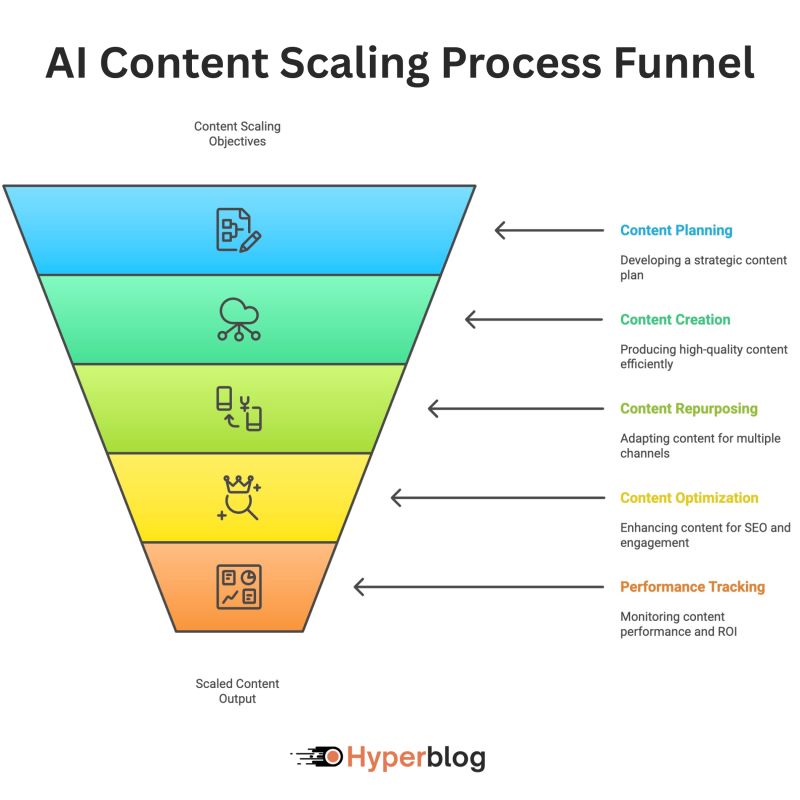
Scaling organic traffic used to mean hiring more writers, building more links, and waiting months for results. That era is over. The modern approach relies on an AI SEO scaling strategy that leverages machine learning, natural language processing, and automation to multiply output without multiplying headcount. This guide breaks down exactly how to build, implement, and refine a system that turns AI from a novelty into your most reliable growth engine.
What Is an AI SEO Scaling Strategy?
An AI SEO scaling strategy is a systematic framework that uses artificial intelligence tools to automate, optimize, and accelerate every stage of the search engine optimization process. This includes keyword research, content creation, technical audits, internal linking, and performance analysis. The goal is not to replace human judgment but to amplify it, allowing small teams to operate with the efficiency of much larger organizations.
Unlike traditional SEO, which relies heavily on manual processes and historical data, an AI-driven approach uses predictive analytics and real-time data processing. It can identify emerging trends, analyze search intent at scale, and generate content variations that target thousands of long-tail keywords simultaneously. This shift is fundamental. It changes the question from “how many articles can we produce” to “how intelligently can we allocate our resources.”
Why Traditional SEO Scaling Fails
Most companies hit a growth ceiling because they try to scale manually. Hiring more content writers leads to inconsistent quality. Outsourcing to cheap agencies results in generic, thin content that Google’s helpful content update penalizes. Link building becomes a bottleneck because it requires relationship building and outreach, which cannot be fully automated.
Furthermore, traditional scaling often ignores the nuance of search intent. A team might produce 500 articles, but if those articles do not match what users actually want, they will not rank. The cost per article, combined with the low probability of ranking for competitive terms, makes this approach financially unsustainable. An AI SEO scaling strategy solves this by focusing on efficiency and precision, not just volume.
Core Components of a Successful AI SEO Scaling Strategy

Building a robust system requires integrating several distinct components. Each one plays a critical role in the overall workflow, and neglecting any of them will limit your results.
1. Automated Keyword Clustering and Intent Mapping
AI tools like Surfer SEO, Ahrefs, and Semrush now offer clustering features that group thousands of keywords by topic and search intent. Instead of manually sorting spreadsheets, the AI analyzes search engine results pages (SERPs) to determine whether a keyword is informational, transactional, or navigational. This allows you to build content silos that establish topical authority.
For example, if you run an e-commerce store selling hiking gear, the A” The first requires a comparison article, while the second needs a product category page. This level of granularity ensures that every piece of content has a clear purpose and a realistic chance of ranking.
2. AI-Powered Content Generation and Optimization
Generative AI tools such as GPT-4, Claude, and Jasper can produce draft articles in minutes. However, the key to a successful AI SEO scaling strategy is not just generating text; it is generating text that is optimized for both search engines and humans. This involves using AI to analyze top-ranking pages, extract common subtopics, and generate an outline that covers all relevant angles.
The workflow typically looks like this:
- Input the target keyword and secondary keywords.
- AI generates a detailed outline with H2 and H3 headings.
- AI writes a first draft, incorporating semantic keywords naturally.
- Human editor reviews, adds personal experience, and fact-checks.
- AI optimizes the final draft for readability and on-page SEO.
- Keyword Research: Ahrefs or Semrush
- Content Generation: GPT-4 or Claude via API
- On-Page Optimization: Surfer SEO or Clearscope
- Internal Linking: Link Whisper or custom scripts
- Analytics: Google Analytics 4 and Search Console
- Fact-checking statistics and claims
- Adding personal insights or case studies
- Ensuring the content aligns with your brand voice
- Checking for factual accuracy and relevance
This hybrid approach reduces production time by up to 70% while maintaining a level of quality that passes Google’s E-E-A-T guidelines.
3. Dynamic Internal Linking
Internal links are the backbone of a scalable SEO strategy. They distribute page authority and help search engines understand the relationship between your pages. Manually adding internal links to hundreds of articles is tedious and error-prone. AI tools can automate this process by analyzing your entire site structure and suggesting relevant anchor text.
Advanced systems use natural language processing to understand the context of each page. When you publish a new article, the AI automatically scans existing content for semantically related paragraphs and inserts contextual links. This not only saves time but also improves the user experience by guiding visitors to relevant resources.
4. Predictive Performance Analytics
An AI SEO scaling strategy is not a set-and-forget system. It requires continuous monitoring and iteration. AI-powered analytics platforms can predict which pages are likely to rank based on current trends, backlink profiles, and on-page signals. They can also identify pages that are losing traffic and suggest specific updates to reverse the decline.
For instance, Google Analytics 4 now includes predictive metrics that estimate the probability of a user converting. By integrating this data with your SEO toolset, you can prioritize updates on pages that have the highest revenue potential, rather than wasting time on low-value content.
Benefits of Implementing an AI SEO Scaling Strategy
The advantages of this approach extend far beyond simple time savings. Here are the most significant benefits observed by companies that have successfully implemented it.
Cost Efficiency
Producing a high-quality article manually can cost between $500 and $2,000 when factoring in research, writing, and editing. AI reduces this cost to under $100 per article, even when human oversight is included. For a company producing 100 articles per month, this represents a savings of $50,000 to $190,000 monthly.
Speed to Market
Trending topics have a short window of opportunity. An AI system can monitor news feeds, social media, and search queries to identify emerging trends in real-time. It can then generate a comprehensive article within minutes, allowing you to publish while the topic is still hot. This speed is impossible to achieve with a manual workflow.
Consistency at Scale
Human writers have off days. They get tired, they run out of creative energy, and their writing style varies. AI maintains a consistent tone and quality across every piece of content. This consistency builds trust with your audience and signals reliability to search engines.
Enhanced Topic Coverage
Using AI to analyze your competitors’ content gaps allows you to identify subtopics that they have missed. You can then generate content that covers these gaps, positioning your site as the most comprehensive resource in your niche. This is a powerful way to win featured snippets and voice search queries.
Limitations and Risks to Consider
While the benefits are compelling, it is equally important to understand the limitations. Ignoring these risks can lead to penalties and wasted effort.
Quality Control Issues
AI can produce grammatically correct text, but it can also generate factual errors, outdated information, and generic advice. Without human oversight, your site could become a repository of low-value content that fails to engage users. Google’s algorithms are increasingly sophisticated at detecting this type of content, and it will not rank well.
Lack of Original Experience
Google’s E-E-A-T guidelines prioritize content that demonstrates first-hand experience. An AI cannot test a product, visit a location, or share a personal anecdote. For YMYL (Your Money or Your Life) topics like health, finance, and legal advice, this is a critical flaw. You must have subject matter experts review and augment AI-generated content.
Dependency on Tool Accuracy
AI tools are only as good as their training data. If a tool is not updated regularly, it may provide outdated keyword data or suggest strategies that no longer work. Relying on a single tool is risky. A robust strategy uses multiple data sources to cross-verify information.
AI SEO Scaling Strategy vs. Traditional SEO: A Comparison
| Aspect | Traditional SEO | AI SEO Scaling Strategy |
|---|---|---|
| Content Production Speed | 5-10 articles per week | 50-100 articles per week |
| Cost per Article | $500 – $2,000 | $50 – $200 |
| Keyword Research | Manual, time-consuming | Automated, real-time |
| Personalization | High, but inconsistent | Consistent, but requires human input |
| Scalability | Limited by headcount | Limited by infrastructure |
| Risk of Penalty | Low if done correctly | High if not monitored |
This comparison highlights that the AI approach is not inherently better in every scenario. For a niche blog with a small audience, traditional methods may be sufficient. However, for e-commerce sites, SaaS companies, and news publishers that need to cover vast topic landscapes, the AI approach is the only viable path to significant growth.
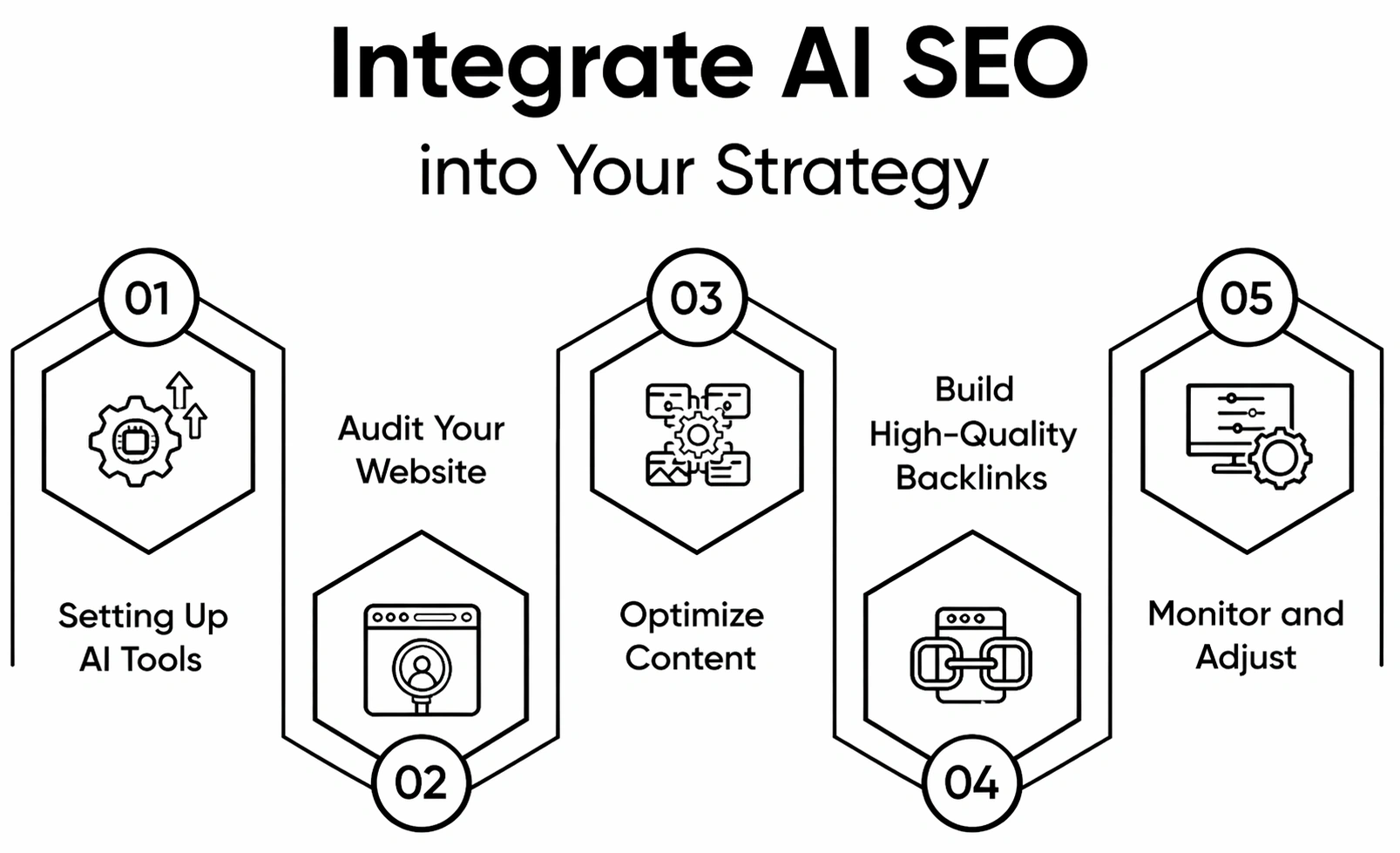
Step-by-Step Guide to Implementing Your AI SEO Scaling Strategy
Transitioning to an AI-driven workflow requires careful planning.
Step 1: Audit Your Current Content Inventory
Before you generate new content, you need to know what you already have. Use an AI-powered crawler like Screaming Frog or Sitebulb to analyze your existing pages. Identify pages with low traffic, high bounce rates, or thin content. These are your first candidates for optimization or consolidation.
Step 2: Define Your Content Pillars and Clusters
Select 5-10 core topics that are central to your business. These are your content pillars. For each pillar, use AI clustering tools to find 50-100 related long-tail keywords. This creates a map of your content universe, ensuring that you cover every relevant angle.
Step 3: Set Up an AI Content Workflow
Choose your AI tools. A typical stack includes:
Integrate these tools using APIs or automation platforms like Zapier. The goal is to create a pipeline where keyword data flows directly into content generation, and performance data flows back into the keyword research tool.
Step 4: Implement a Human Review Process
Every AI-generated article must pass through a human editor. This editor is responsible for:
This step is non-negotiable. It is the difference between content that ranks and content that gets flagged as spam.
Step 5: Automate Publishing and Indexation
Once your content is approved, use your CMS’s API to publish it automatically. Submit new URLs to Google Search Console via the Indexing API to speed up crawling. This ensures that your new content is discovered and indexed within hours, not weeks.
Step 6: Monitor, Analyze, and Iterate
Set up weekly reports that track keyword rankings, organic traffic, and conversion rates. Use AI to analyze which content pieces are underperforming and why. The AI can suggest specific changes, such as adding a new section, updating statistics, or improving the meta description. Implement these changes on a rolling basis.
Common Mistakes in AI SEO Scaling and How to Avoid Them
Many companies fail to see results because they make predictable errors. Here are the most common pitfalls and the strategies to avoid them.
Mistake 1: Publishing Unedited AI Content
The fastest way to destroy your site’s reputation is to publish raw AI output. Google’s spam policies explicitly target scaled content abuse. Even if the content is not detected immediately, users will notice the lack of depth and leave, increasing your bounce rate and signaling poor quality to search engines.
Solution: Always have a human editor review and enhance the content. Add original data, screenshots, or expert quotes to make it unique.
Mistake 2: Targeting Keywords Without Commercial Intent
Generating 1,000 articles about informational topics might drive traffic, but it will not drive revenue if your site sells a product. An AI SEO scaling strategy must align with business goals. Focus on keywords that indicate a user is ready to buy or at least compare options.
Solution: Use AI to filter keywords by commercial intent. Prioritize terms like “best,” “review,” “alternative,” and “pricing.”
Mistake 3: Ignoring Technical SEO
Publishing thousands of pages creates technical challenges. Slow page speed, duplicate content, and crawl budget waste can negate all your content efforts. AI can help identify these issues, but you must act on them.
Solution: Run a monthly technical audit using AI tools. Fix broken links, optimize images, and ensure your site architecture supports deep crawling.
Mistake 4: Lack of a Clear Content Hierarchy
If all your pages are treated equally, search engines will struggle to understand which pages are most important. This dilutes your authority and prevents any single page from ranking well.
Solution: Use a hub-and-spoke model. Your pillar page should be the most comprehensive, and cluster pages should link up to it. Use AI to ensure that internal links are correctly distributed.
Important Notes for Long-Term Success
An AI SEO scaling strategy is not a one-time project. It is an ongoing process that requires continuous refinement. Here are some critical notes to keep in mind.
Algorithm Updates: Google updates its algorithms hundreds of times per year. An AI strategy that works today may not work tomorrow. Stay informed about core updates and adjust your content production accordingly. AI tools that monitor SERP volatility can alert you to significant changes.
Brand Building: AI-generated content can help you rank, but it cannot build a brand. Invest in original research, unique data, and community engagement. These elements create a moat that competitors using the same AI tools cannot easily replicate.
Data Privacy: When using AI tools, ensure that you are not feeding proprietary or sensitive information into public models. Use enterprise-grade tools that offer data privacy guarantees.
Frequently Asked Questions
What is the best AI tool for SEO content creation?
T The optimal choice depends on your budget, technical skills, and content volume. For high-volume production, using the GPT-4 API with a custom interface offers the most flexibility. For beginners, Jasper or Copy.ai provide user-friendly interfaces. For optimization, Surfer SEO integrates well with content generation tools to ensure on-page factors are covered.
How long does it take to see results from an AI SEO scaling strategy?
Typically, it takes 3 to 6 months to see significant movement in organic traffic. This timeline depends on the domain authority of your site, the competitiveness of your niche, and the quality of your content. New domains may take longer because they need to build trust and acquire backlinks. Consistency is more important than speed.
Can AI replace human SEO experts?
No. AI can automate repetitive tasks and analyze data at scale, but it cannot make strategic decisions, understand brand nuance, or build relationships. The most effective approach is a collaboration where AI handles the heavy lifting and humans provide oversight, creativity, and strategic direction.
Will Google penalize my site for using AI-generated content?
Google does not penalize AI content per se. It penalizes content that is created primarily to manipulate search rankings and provides little value to users. If your AI content is thoroughly edited, fact-checked, and enhanced with original insights, it is treated the same as human-written content. The key is to focus on quality, not the method of production.
How do I measure the ROI of my AI SEO scaling strategy?
Track the following metrics: organic traffic growth, keyword rankings for target terms, conversion rate from organic traffic, and cost per acquisition. Compare these metrics against your baseline before implementing the AI strategy. A successful strategy should show a decrease in cost per acquisition and an increase in revenue per organic visitor.
Conclusion
An AI SEO scaling strategy is the most effective way to grow organic traffic in a competitive digital landscape. It allows you to produce more content, target more keywords, and analyze performance faster than any manual process. However, it is not a magic bullet. Success requires a balanced approach that combines the speed of AI with the judgment of experienced human editors.
Start small. Pick one content cluster, implement the workflow, and measure the results. Once you see the data proving the concept, expand to other areas. The companies that master this balance will dominate their niches, while those that ignore it will struggle to keep up. The time to build your system is now, because the competitive advantage of early adoption is significant and growing every day.
Xem thêm:
- AI Readability Optimization: How Smart Algorithms Transform Content for Human Readers and Search Engines
- AI SEO LLM Optimization: The Complete Guide to Ranking in Generative Search
- AI SEO AI Citation Tracking: The Complete Guide to Mastering Digital Visibility in 2025
- Mastering AI Pillar Pages: The Future of Topic Cluster Architecture in SEO
- AI SEO AI Search Visibility: The Complete Guide to Ranking in the Age of Generative Engines
Bài viết cùng chủ đề:

AI SEO SEO Automation with Make: The Complete Workflow Guide

AI SEO SEO Automation with Zapier: The Complete Workflow Guide

AI SEO SEO Automation with n8n: The Complete Workflow Guide
AI SEO SEO Automation with Gemini: The Complete Guide to Scaling Organic Growth

AI SEO SEO Automation with Claude: The Complete Guide to Scaling Content in 2025

AI SEO SEO Automation with ChatGPT: The Complete Playbook for 2025

AI SEO & SEO Automation for Affiliate Sites: The 2025 Playbook for Passive Income Growth
AI SEO & SEO Automation for Bloggers: The Complete Guide to Scaling Your Content

AI SEO & SEO Automation for Agencies: The Complete 2025 Playbook

AI SEO and SEO Automation for Ecommerce: The Complete Playbook for 2025

AI SEO & SEO Automation for WordPress: The Complete Playbook for 2025
AI SEO SEO Automation Strategy: The Complete Playbook for 2025

Mastering the AI SEO SEO Automation Process: A Complete Guide to Scaling Organic Growth
AI SEO SEO Automation System: The Complete Guide to Scaling Organic Growth in 2025
AI SEO SEO Automation Platform: The Complete Guide to Scaling Organic Growth in 2025
AI SEO SEO Automation Software: The Complete Guide to Scaling Organic Growth in 2025















