
No products in the cart.
AI Title Generator: Craft Click-Worthy Headlines That Drive Traffic and Engagement

29
Jul
Jul
Every piece of content, whether a blog post, video, or social media update, lives or dies by its title. The digital landscape is saturated, and the average reader will glance at a headline for less than two seconds before deciding to click or scroll past. An AI title generator uses machine learning and natural language processing to instantly produce dozens of compelling, optimized headline options, saving hours of brainstorming and significantly increasing the odds of capturing attention. For content creators, marketers, and business owners, these tools transform a often agonizing creative task into a data-driven, efficient process that aligns with both human psychology and search engine algorithms.
The evolution of these generators has moved far beyond simple template filling. Modern systems analyze millions of high-performing headlines, understand emotional triggers, incorporate power words, and adapt to specific platforms. They can generate variations for SEO, clickbait, professional reports, or email subject lines, all while maintaining brand voice. This article explores every facet of the AI title generator, from its underlying technology to practical workflows, common pitfalls, and the strategic advantage it provides in a content-first world.
What Exactly Is an AI Title Generator?
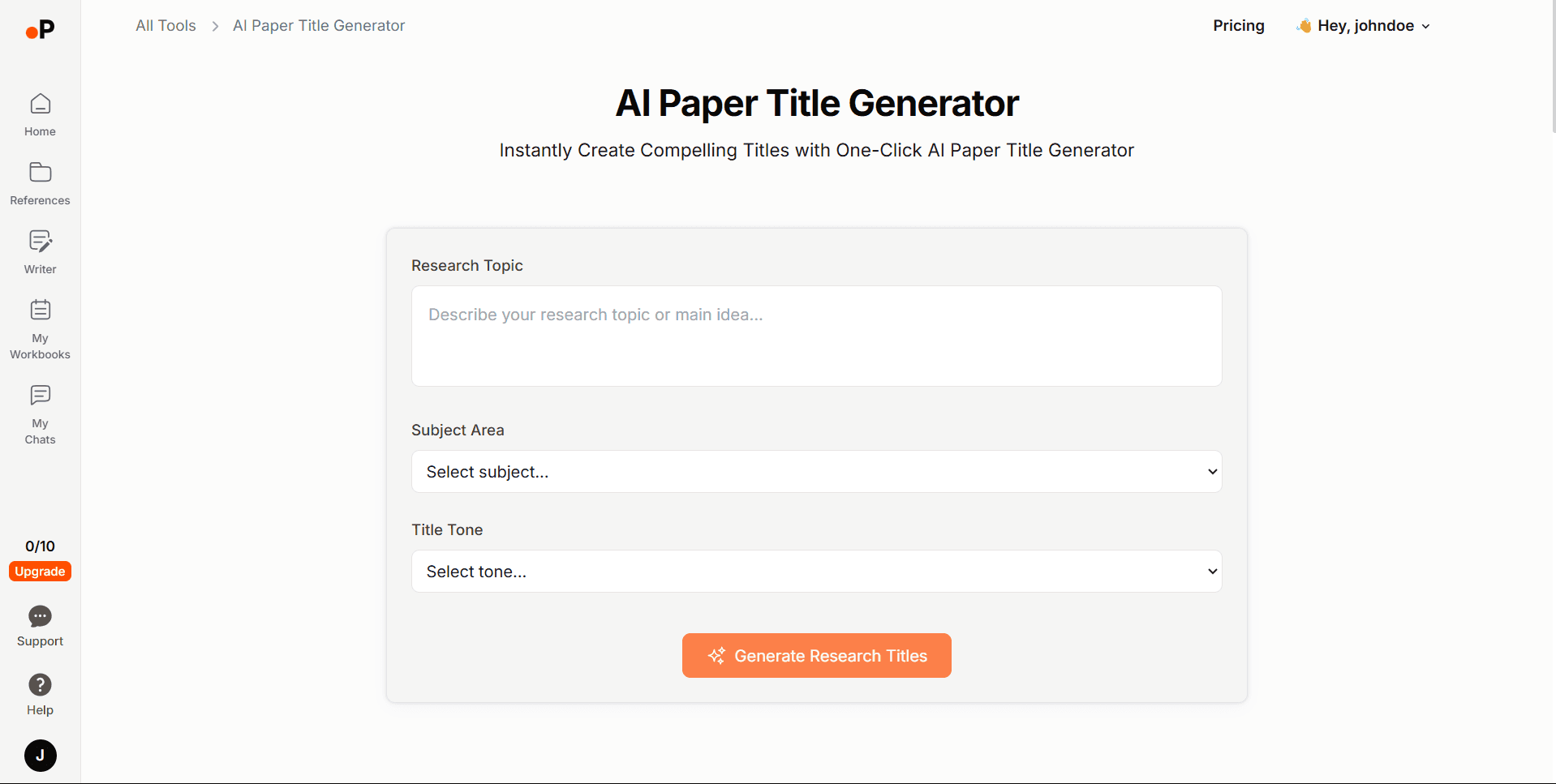
An AI title generator is a software application that leverages artificial intelligence to automatically create headline suggestions based on a given topic, keyword, or brief description. Unlike basic randomizers, these systems are trained on vast corpora of text—articles, ads, social posts, and academic papers—to understand structure, sentiment, and what makes a title perform. They use algorithms such as GPT (Generative Pre-trained Transformer), BERT, or other large language models to predict sequences of words that are both grammatically correct and contextually relevant.
The core function is to overcome creative blocks and inject data-backed optimization into the titling process. A user might input “sustainable gardening tips,” and the generator will output variations like “10 Sustainable Gardening Tips That Will Transform Your Backyard” or “The Ultimate Guide to Eco-Friendly Gardening for Beginners.” The best tools go further by analyzing emotional value, character count, keyword placement, and even the likelihood of earning a click on specific channels like LinkedIn versus Pinterest.
This technology is not limited to articles. It can produce YouTube video titles, podcast episode names, product headlines for e-commerce, research paper titles, and email subject lines. By using natural language understanding, the AI grasps nuance: a title for a technical white paper will differ drastically from one for a BuzzFeed-style listicle, and the generator adapts accordingly.
The Technology Behind AI-Powered Headline Creation
Understanding how an AI title generator works demystifies its effectiveness and helps users craft better inputs. At its heart, the system relies on a combination of transformer-based neural networks, sentiment analysis, and reinforcement learning from human preferences.
Transformer Models and Language Prediction
Most modern generators are built on transformer architectures that process words in relation to all other words in a sentence simultaneously. This parallel processing allows the AI to capture context far better than older sequential models. The model calculates probabilities for the next word in a sequence, constrained by the input topic and any stylistic prompts. For example, after the phrase “How to,” the model assigns high probability to action verbs, creating coherent imperatives.
Sentiment Analysis and Emotional Weight
Not all words trigger equal emotional responses. Advanced generators incorporate sentiment lexicons to score headlines on dimensions like urgency, curiosity, amazement, or fear. A headline containing “surprising,” “essential,” and “secret” will often rank higher on click-through potential. The AI balances these power words to avoid over-hyping while still maximizing impact. Some tools display emotional scores, allowing creators to fine-tune the tone.
Reinforcement Learning from Human Feedback
Leading AI models are refined through RLHF (Reinforcement Learning from Human Feedback), where human evaluators rank various outputs. Over time, the model learns which headline structures, lengths, and phrasings are most preferred. This is why an AI title generator today produces far more nuanced results than rule-based tools from five years ago. It captures the intangible “feel” of a good headline—rhythm, clarity, memorability—that pure optimization misses.
Key Categories of AI Title Generators
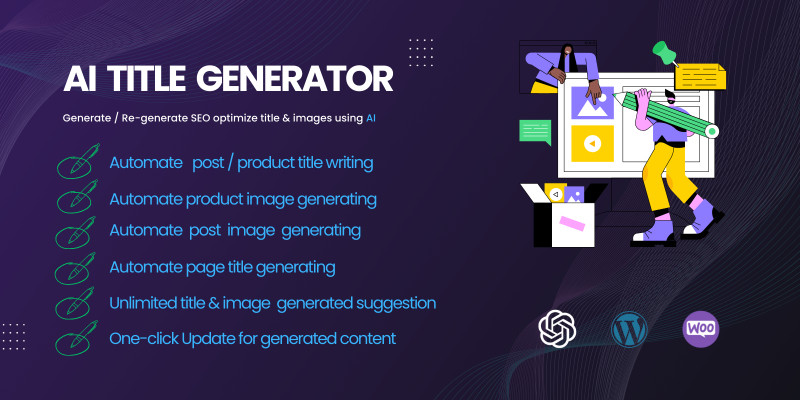
Not all generators are created equal, and choosing the right type depends on the use case. Broadly, they fall into four categories, each with distinct strengths.
| Type | Primary Use | Example Output Style | Best For |
|---|---|---|---|
| General-Purpose NLP Models | Blog posts, articles, essays | “How to Start a Podcast: A Step-by-Step Guide for Beginners” | Content marketers, bloggers |
| SEO-Focused Generators | Search-optimized web content | “Best Running Shoes 2025: Top Picks for Every Terrain” | SEO specialists, affiliate sites |
| Social Media & Ad Headline Tools | Facebook ads, tweets, Instagram captions | “This One Hack Changed My Morning Routine (You’ll Love #7)” | Social media managers, advertisers |
| Email Subject Line Generators | Newsletter, promotional emails | “Your 20% off ends tonight, [Name]” (personalized) | Email marketers, e-commerce |
Many all-in-one platforms now bundle title generation with full content creation. The specialization matters because an SEO-optimized title might fall flat on Twitter, where conversational intrigue wins. Savvy creators keep two or three generators in their toolkit to match the distribution channel.
Benefits of Using an AI Title Generator
The shift from manual brainstorming to AI-assisted titling offers tangible advantages that cascade through the entire content pipeline. It is not about replacing creativity but augmenting it with speed and data.
- Time efficiency at scale: A marketer managing a 50-article content calendar can generate 10 title options per piece in under a minute, freeing hours for strategy and editing.
- Data-driven optimization: Tools often incorporate click-through rate (CTR) predictions or score headlines based on historical performance of similar structures, taking guesswork out of the equation.
- Elimination of writer’s block: The blank page is the enemy. Seeing even an imperfect list of titles sparks new angles and word combinations that the human brain might dismiss.
- Consistent brand voice: By fine-tuning with custom prompts, teams can ensure titles maintain the same level of formality, humor, or authority across all content.
- Multilingual capabilities: Many generators can produce titles in over 20 languages, enabling global content strategies without hiring native speakers for headline creation.
- A/B testing readiness: With one click, you can get enough variations to run statistically significant tests on email subjects or landing page headers.
- Semantic drift and vagueness: Without a clear, specific input, the AI may produce generic titles like “The Best Ways to Improve Your Life,” which lack differentiation and fail to attract qualified readers.
- Over-optimization and clickbait: The pursuit of high emotional scores can lead to cringe-worthy sensationalism that damages trust when the content does not deliver on the promise.
- Bias in training data: Models trained primarily on Western click-driven media may underperform for academic, B2B, or culturally nuanced topics unless carefully steered.
- Lack of deep topic understanding: An AI might suggest a title with a statistic or claim that is factually wrong because it has no real-world verification module. Human review is non-negotiable.
- Originality concerns: Because many users share the same tool, similar titles can surface across the web. Unique customization and blending outputs with original insight is essential.
- Vague or one-word inputs: Typing “fitness” yields generic, valueless titles. Solution: Always include context, audience, and format. “Busy professionals, 15-minute home workout, no equipment” leads to “15-Minute No-Equipment Workouts for Busy Professionals: Get Fit in Your Living Room.”
- Ignoring platform constraints: An email subject line over 50 characters gets cut off on mobile. A YouTube title over 60 characters may truncate in suggested videos. Always check character counts and adjust prompts to enforce limits.
- Using the first suggestion: The initial output is rarely the best. Browsing the full list and then regenerating with slight tweaks often uncovers a phrasing that perfectly encapsulates the piece.
- Neglecting keyword intent matching: For SEO, a title optimized for “how to train a puppy” must actually serve informational intent, not transactional. The AI might generate “Buy the Best Puppy Training Collars,” which would mismatch and hurt rankings. Always align the title type with the content’s goal.
- Failing to infuse brand personality: If your brand is witty and casual, a straight-laced AI title like “An Examination of Modern Parenting Techniques” will feel off. Edit output to include colloquial phrasing or humor where appropriate.
Beyond these immediate gains, the long-term benefit is cultural. Content teams develop a sharper sense for what works, internalizing patterns demonstrated by the AI, which leads to improved human-written headlines over time.
Limitations and Common Pitfalls
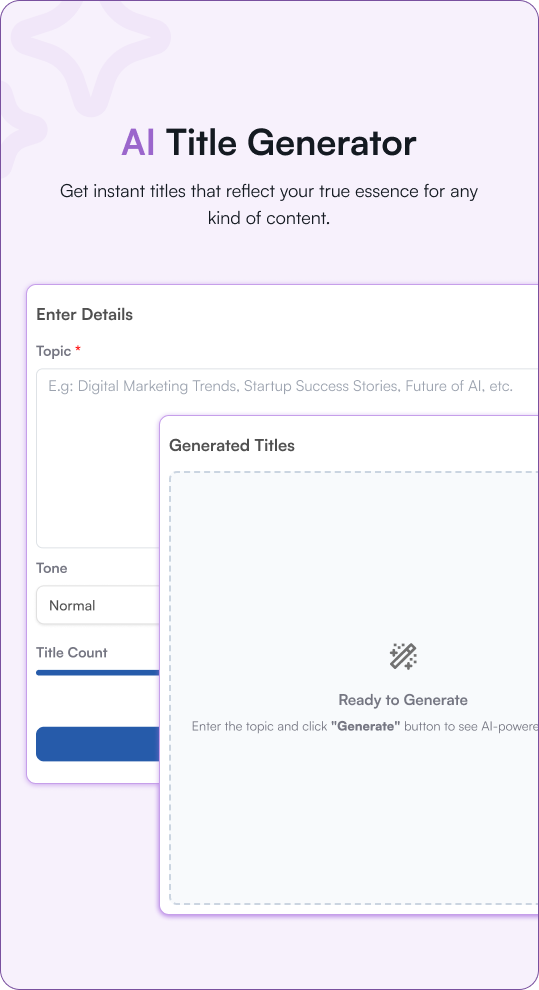
Despite impressive capabilities, an AI title generator is not a magic wand. Understanding its blind spots prevents costly missteps and maintains editorial integrity.
The most effective approach treats the generator as a brainstorming partner, not the final decision-maker. The best results emerge when a skilled editor selects, tweaks, and polishes from the AI’s suggestions, merging algorithmic cleverness with authentic human judgment.
How to Use an AI Title Generator: A Step-by-Step Guide
Getting stellar titles every time requires a deliberate workflow. The difference between mediocre and magnetic headlines often lies in the quality of the prompt and the refinement process.
Step 1: Define Your Core Topic and Angle
Start with a clear, one-sentence description of the content. Instead of “keto diet,” write “a beginner’s guide to starting a keto diet with easy meal plans and common mistakes to avoid.” This context helps the AI grasp depth and intent.
Step 2: Select the Right Tool and Mode
If you need SEO titles, pick a generator that factors in target keywords and search intent. For YouTube, choose one that analyzes platform-specific character limits and trend patterns. Many tools let you toggle between “creative,” “professional,” or “persuasive” tones.
Step 3: Inject Target Keywords Naturally
For web content, provide the primary keyword—like “best noise-canceling headphones”—and any secondary keywords. The A A title such as “Discover the Best Noise-Canceling Headphones for Travel and Work – Expert Reviews” hits the mark.
Step 4: Generate a Large Batch
Always request at least 10-20 variations. Quantity leads to quality; hidden gems often appear late in the list. Switch between different modes or slightly tweak the input phrase to explore contrasting angles—question-based, how-to, listicle, and emotional.
Step 5: Filter with a Hybrid Human-AI Lens
Shortlist candidates that are clear, promise specific value, and sound like something a human would actually say. Eliminate anything that feels mechanical or makes exaggerated claims. A title like “Unlock the Secret to Eternal Youth with This One Weird Trick” fails the trust test, even if the AI scored it highly.
Step 6: A/B Test the Final Few
Where possible, test two to three top contenders on social media or email segments. Real audience behavior trumps any algorithm’s prediction. Use the data to inform future prompt crafting.
AI Title Generator vs. Human Copywriter: A Balanced Comparison

| Dimension | AI Title Generator | Skilled Human Copywriter |
|---|---|---|
| Speed | 50+ options in seconds | 5–10 headlines per hour of deep work |
| Scalability | Effortlessly scales to thousands | Limited by fatigue and time |
| Emotional Nuance | Simulated based on data; may miss subtlety | Superior understanding of irony, cultural context, brand voice |
| Factual Accuracy | Requires human verification; may fabricate | Subject to human error but can be held accountable |
| Cost | Free to low monthly subscription | $50–$200+ per critical headline |
| Originality | Combinatorial; risks template feel | Can create truly novel, voice-driven concepts |
The most successful content operations use both: AI for volume and initial ideation, humans for critique, refinement, and final approval. This partnership leverages the tireless output of machines with the irreplaceable intuition of an experienced editor.
Common Mistakes When Using AI Title Generators and How to Avoid Them
Even with a powerful tool, users often sabotage their own results by falling into predictable traps. Avoiding these ensures the generator works for you, not against you.
Important Notes for Maximizing Title Performance

Beyond the tool itself, certain principles reliably boost engagement. These insights stem from years of content testing across niches.
Front-load the value. Readers scan left to right and may not finish the title. Place the most important keywords or the benefit in the first few words. For instance, “Increase Your Productivity by 40%: A Practical Morning Routine” is stronger than “A Practical Morning Routine That Will Increase Your Productivity.” The AI title generator can be instructed to prioritize this structure via prompts like “start with the benefit.”
Numbers and specificity win. Titles with odd numbers often outperform those with even numbers, and specific details like “7-minute” or “$27 savings” signal credibility. Feed the AI specific data points to incorporate: “include the stat 27% and 6 steps” yields more compelling results.
Emotional curiosity gaps must be honest. A title that evokes curiosity (“What Nobody Tells You About Starting a Business”) should be fully answered in the content. Bait-and-switch tactics increase bounce rates and harm brand reputation. Review the generated title against the body to ensure the promise is kept.
Test across devices and previews. A headline that looks perfect on a desktop might eat up two lines on mobile search results, hiding key words. Use preview tools or simply resize the browser to see how it renders.
Frequently Asked Questions
Can an AI title generator replace human creativity entirely?
No, it complements rather than replaces. AI excels at producing numerous variations and incorporating data-driven patterns, but human judgment is essential for nuance, brand voice, cultural sensitivity, and factual accuracy. The best titles often start as AI suggestions and are then refined by a writer.
Are titles created by AI considered duplicate content?
Not inherently. While the generator may produce similar structures, the specific combination of words is usually unique. However, if multiple users adopt the exact same suggestion without modification, there’s a risk of duplication. Always personalize at least slightly to make it your own.
How much does a good AI title generator cost?
Many robust generators offer free tiers with limited credits, sufficient for occasional use. Premium plans for serious content creators range from $10 to $99 per month, often bundled with full AI writing suites. Enterprise solutions with custom models can cost more but are rarely needed for titling alone.
What’s the best AI title generator for YouTube videos?
Tools that incorporate trending analysis, such as those integrated with video platforms or have specific “YouTube” modes, perform best. Look for features that suggest titles under 60 characters, include relevant keywords that people actually search for, and optionally analyze high-performing videos in your niche.
How do I know if an AI-generated title is good for SEO?
Check that the primary keyword appears close to the beginning, the title is within 50–60 characters to avoid truncation in search results, and the phrasing matches the likely search intent (informational, navigational, commercial, transactional). Some tools provide a built-in SEO score; otherwise, manually verify these factors.
Conclusion
An AI title generator is no longer a novelty but a fundamental tool in the content creator’s arsenal. It transforms the headline-writing process from a solitary creative struggle into a collaborative, data-informed exercise that dramatically increases output quality and quantity. By understanding the technology, selecting the right type for the task, and applying a disciplined human review process, anyone can consistently craft titles that stop the scroll, earn clicks, and set accurate expectations for the content that follows.
The future points toward even more personalized generators that integrate real-time trending data, adapt to individual writing styles, and predict performance with granular accuracy. Embracing these tools now, while maintaining editorial integrity and brand authenticity, positions content creators at the forefront of digital storytelling. The perfect title is not born from blind automation but from the smart partnership of machine intelligence and human creativity.
Xem thêm:
- AI Ecommerce Content: The Complete Guide to Scaling Product Copy, SEO, and Sales
- AI SEO Trends That Will Reshape Search Visibility in 2025 and Beyond
- AI SEO n8n Automation: The Complete Workflow Guide for 2025
- AI SEO & SEO Automation for Bloggers: The Complete Guide to Scaling Your Content
- AI SEO Skyscraper Technique: The 2025 Guide to Dominating Search Rankings
Bài viết cùng chủ đề:

AI SEO SEO Automation with Make: The Complete Workflow Guide

AI SEO SEO Automation with Zapier: The Complete Workflow Guide

AI SEO SEO Automation with n8n: The Complete Workflow Guide
AI SEO SEO Automation with Gemini: The Complete Guide to Scaling Organic Growth

AI SEO SEO Automation with Claude: The Complete Guide to Scaling Content in 2025

AI SEO SEO Automation with ChatGPT: The Complete Playbook for 2025

AI SEO & SEO Automation for Affiliate Sites: The 2025 Playbook for Passive Income Growth
AI SEO & SEO Automation for Bloggers: The Complete Guide to Scaling Your Content

AI SEO & SEO Automation for Agencies: The Complete 2025 Playbook

AI SEO and SEO Automation for Ecommerce: The Complete Playbook for 2025

AI SEO & SEO Automation for WordPress: The Complete Playbook for 2025
AI SEO SEO Automation Strategy: The Complete Playbook for 2025

Mastering the AI SEO SEO Automation Process: A Complete Guide to Scaling Organic Growth
AI SEO SEO Automation System: The Complete Guide to Scaling Organic Growth in 2025
AI SEO SEO Automation Platform: The Complete Guide to Scaling Organic Growth in 2025
AI SEO SEO Automation Software: The Complete Guide to Scaling Organic Growth in 2025















