
No products in the cart.
Best AI Writing Tools in 2025: Streamline Content Creation with Top AI Assistants
29
Jul
Jul
Finding the best AI writing tools has become essential for marketers, bloggers, and business owners who need to produce high-quality content faster while maintaining a human touch. The market now overflows with options, from versatile general-purpose chatbots to specialized copywriting platforms and advanced grammar checkers. This guide explores the top AI writing assistants available today, comparing their features, pricing, and ideal use cases. You will learn how to pick the right tool for long-form articles, social media posts, email campaigns, or creative storytelling. No matter your skill level, the insights here will help you make an informed decision and integrate AI writing into your workflow without sacrificing authenticity or accuracy.
What Are AI Writing Tools and How Do They Work?
AI writing tools are software applications that use natural language processing (NLP) and generative artificial intelligence models to produce written text. At their core, they analyze massive amounts of language data to understand patterns, grammar, and context, then generate coherent sentences based on user prompts. The most advanced tools rely on large language models (LLMs) like GPT-4, Claude, and PaLM, which can create everything from short headlines to entire research papers. Unlike simple templates, these systems adapt to the tone, style, and intent you specify, making them feel remarkably fluid and responsive.
The process begins with a prompt: you type an instruction, a topic, a few bullet points, or even a full paragraph, and the model predicts the most probable next words to form a useful output. Some tools add layers of pre‑built templates, SEO analysis, tone detection, and brand voice controls. Others integrate with existing platforms such as Google Docs, WordPress, or popular email services. The result is a writing companion that can draft, rewrite, brainstorm, and polish content in seconds, saving hours of manual effort.
Types of AI Writing Tools
The world of AI writing assistants is not one-size-fits-all. Knowing the different categories helps narrow down the best AI writing tools for specific tasks. Below are the main types you will encounter.
General-Purpose AI Chatbots
These are platforms like ChatGPT, Google Gemini, and Claude. They function as universal conversational partners that can handle writing, coding, research, and brainstorming. While extremely flexible, they may lack built-in copywriting frameworks, requiring you to craft precise prompts for consistent results. General-purpose tools excel for idea generation, long-form drafting, and editing when combined with clear instructions.
Dedicated AI Copywriting Platforms
Tools such as Jasper, Copy.ai, and Writesonic are purpose-built for marketing content. They offer dozens of templates for landing pages, Facebook ads, product descriptions, AIDA frameworks, and more. These platforms often include integrated SEO features, team collaboration, and brand voice settings, making them ideal for agencies and content teams that need scale and consistency.
AI-Powered Grammar and Style Checkers
Grammarly, ProWritingAid, and Hemingway Editor have added AI-generated rewriting capabilities on top of their classic proofreading. They detect tone, suggest clarity improvements, and can rephrase entire paragraphs while maintaining grammatical precision. These tools are best suited for polishing human-written drafts or ensuring AI-generated text meets quality standards.
Long-Form AI Writing Assistants
Platforms like Sudowrite and NovelAI focus on creative writing, fiction, and storytelling. They help overcome writer’s block by generating plot ideas, character descriptions, and narrative drafts. Sudowrite, for instance, is widely used by novelists and screenwriters for its “Writer’s Block Buster” and “Expand” features, which add descriptive depth without losing the author’s voice.
SEO-Focused Content Generators
Some tools, including Frase, SurferSEO, and the SEO mode inside Jasper, combine AI writing with real-time SERP analysis. They suggest keywords, headings, and word counts based on top-ranking pages. This type of tool is indispensable for content strategists aiming to rank articles on Google while producing drafts quickly.
Benefits and Limitations of AI Writing Tools
Deploying the best AI writing tools can transform a content workflow, but it is equally important to recognize where they fall short. A balanced view ensures you use them as powerful assistants rather than crutches.
Key Benefits
- Speed and Efficiency: AI can generate a 1,000-word draft in under a minute, cutting research and writing time by up to 70% for routine tasks.
- Overcoming Writer’s Block: When you stare at a blank screen, a prompt gives you a starting point, outlines, or alternative angles instantly.
- Consistency Across Brand Voice: Many tools let you save tone guidelines so every output matches your style, from casual social posts to formal reports.
- Multilingual Support: Leading tools can translate and write content in dozens of languages, expanding your reach without hiring native speakers.
- Idea Generation at Scale: AI excels at brainstorming blog titles, ad copy variations, and product feature highlights in seconds.
- Factual Accuracy Risks: Large language models sometimes produce confident-sounding but incorrect information. Human fact-checking remains mandatory.
- Lack of True Originality: AI recombines existing patterns; it does not have lived experience or emotional depth. Content can feel generic without careful editing.
- Ethical and Copyright Concerns: Using AI-generated text raises questions about plagiarism, authorship, and the sourcing of training data.
- Context Gaps: Highly technical, niche, or culturally specific topics may confuse the AI, leading to awkward or misleading outputs.
- Over-Reliance Can Weaken Skills: If you let AI do all the thinking, your own writing and critical thinking muscles may atrophy over time.
- Publishing Raw AI Output Without Editing: Treat the AI draft as a first pass, not a final piece. Always review for accuracy, tone, and flow.
- Ignoring Brand Voice: Generic AI text can weaken your identity. Upload style guidelines or edit prompts to include tone descriptors like “direct, warm, and authoritative.”
- Relying on AI for Niche or Legal Topics: Medical, financial, and legal advice demands human expertise. Use AI only for structured outlines; never let it make definitive claims without expert review.
- Forgetting to Fact-Check Statistics: AI may invent plausible-sounding data. Verify every number and source before hitting publish.
- Using One Prompt for Everything: Different tasks require different prompt structures. A vague “write a blog about AI” yields mediocre results; a detailed prompt specifying length, audience, keywords, and section headings does far better.
- Neglecting Plagiarism Checks: Even if AI generates text, it might unintentionally replicate existing phrasing. Run outputs through a plagiarism detector, especially for client work.
Limitations to Consider
Top AI Writing Tools Compared
The table below provides a quick side-by-side look at popular options. Each tool has been selected based on its market presence, feature set, and real-world usability. Pricing ranges reflect publicly available plans as of early 2025; always confirm on the official website before committing.
| Tool | Best For | Key Features | Pricing (Starting) | Free Plan |
|---|---|---|---|---|
| Jasper | Marketing teams, brand‑focused copy | Brand voice memory, 50+ templates, SEO mode, Chrome extension | $49/month (Creator) | 7‑day trial |
| Copy.ai | Social media, email marketing | Workflow builder, unlimited projects, team collaboration | $49/month (Pro) | 2,000 words/month free |
| Writesonic | Small businesses, SEO articles | AI article writer, ChatSonic, SurferSEO integration | $16/month (Individual) | 10,000 words/month free |
| ChatGPT (OpenAI) | General writing, research, coding | GPT‑4o model, plugins, custom GPTs, image understanding | $20/month (Plus) | Free tier (GPT‑3.5) |
| Grammarly Business | Professional editing, tone adjustment | Advanced grammar checks, brand tones, style guide, generative rewrite | $15/member/month | Basic grammar checks free |
| Sudowrite | Fiction and creative writing | Story engine, descriptive expansions, beta reader feedback simulation | $19/month (Hobby & Student) | Limited trial |
In addition to the heavy hitters, tools like Rytr ($9/month, generous free plan) and Anyword (predictive performance scores) also deserve a look if budget or data-driven copy are top priorities. The best AI writing tools for you will depend on volume, content type, and integration needs.
How to Choose the Right AI Writing Tool for Your Workflow
Selecting an AI assistant involves more than scanning feature lists. Start by clarifying your primary use case. A solo blogger aiming for SEO-optimized long-form posts will have very different requirements from an e-commerce brand that needs hundreds of product descriptions daily.
Evaluate the quality of the AI output in your specific niche. Always run a trial with your own prompts—do not rely only on demo videos. Check if the tool learns your brand voice or allows you to upload style guides. For team use, collaboration features like multi-user editing, version history, and shared templates are crucial. Also consider data privacy: enterprise plans often provide SOC 2 compliance and promise that your data will not be used to train models, which matters for confidential business content.
Integration capabilities cannot be overlooked. Tools that plug into Google Docs, Microsoft Word, WordPress, or Slack save hours of copy‑pasting. An API is valuable if you need to embed AI writing into custom workflows or apps. Finally, balance cost against volume limits. Some tools look cheap but cap word counts aggressively, while others offer unlimited generation at a higher baseline.
Practical Applications for AI Writing Assistants
The best AI writing tools shine brightest when applied to specific, repeatable content types. Here are ways real teams embed AI into daily operations.
Blog Posts and SEO Articles
Provide a target keyword and a brief outline. The AI drafts a full post, complete with headings, meta descriptions, and internal linking suggestions. Tools with integrated SEO analysis (like Jasper + SurferSEO) score your content against competitors. You then refine the draft, add personal stories, verify statistics, and ensure factual accuracy. This method can cut article creation time from hours to 30–45 minutes.
Social Media Content
AI excels at generating platform-specific captions, carousel scripts, and thread ideas. For instance, you can ask for five Instagram caption variants for a product launch, each with a different tone—playful, inspirational, educational, witty, and urgent. With LinkedIn, AI drafts thought‑leadership posts when you feed it a core idea and points to expand.
Email Campaigns
From abandoned cart reminders to newsletter sequences, AI writing tools can produce multiple subject line tests and body copy versions. Many platforms have purpose-built templates that consider open rates and CTAs. While the draft works structurally, successful emails still require you to inject brand personality and personalization tokens.
Ad Copy and Landing Pages
PPC ads demand tight character limits and strong value propositions. AI can spin out dozens of variations for A/B testing. Landing page copy benefits from AI-generated headlines, bullet points, and pain-points lists based on your ideal customer profile. The best results come when you combine AI output with customer research and direct feedback.
Creative and Fiction Writing
Novelists use tools like Sudowrite to brainstorm plot twists, flesh out settings, or rewrite scenes from a different character’s viewpoint. The AI acts as an always-on brainstorming partner, offering possibilities that you accept, reject, or reshape.
Common Mistakes When Using AI Writing Tools and How to Avoid Them
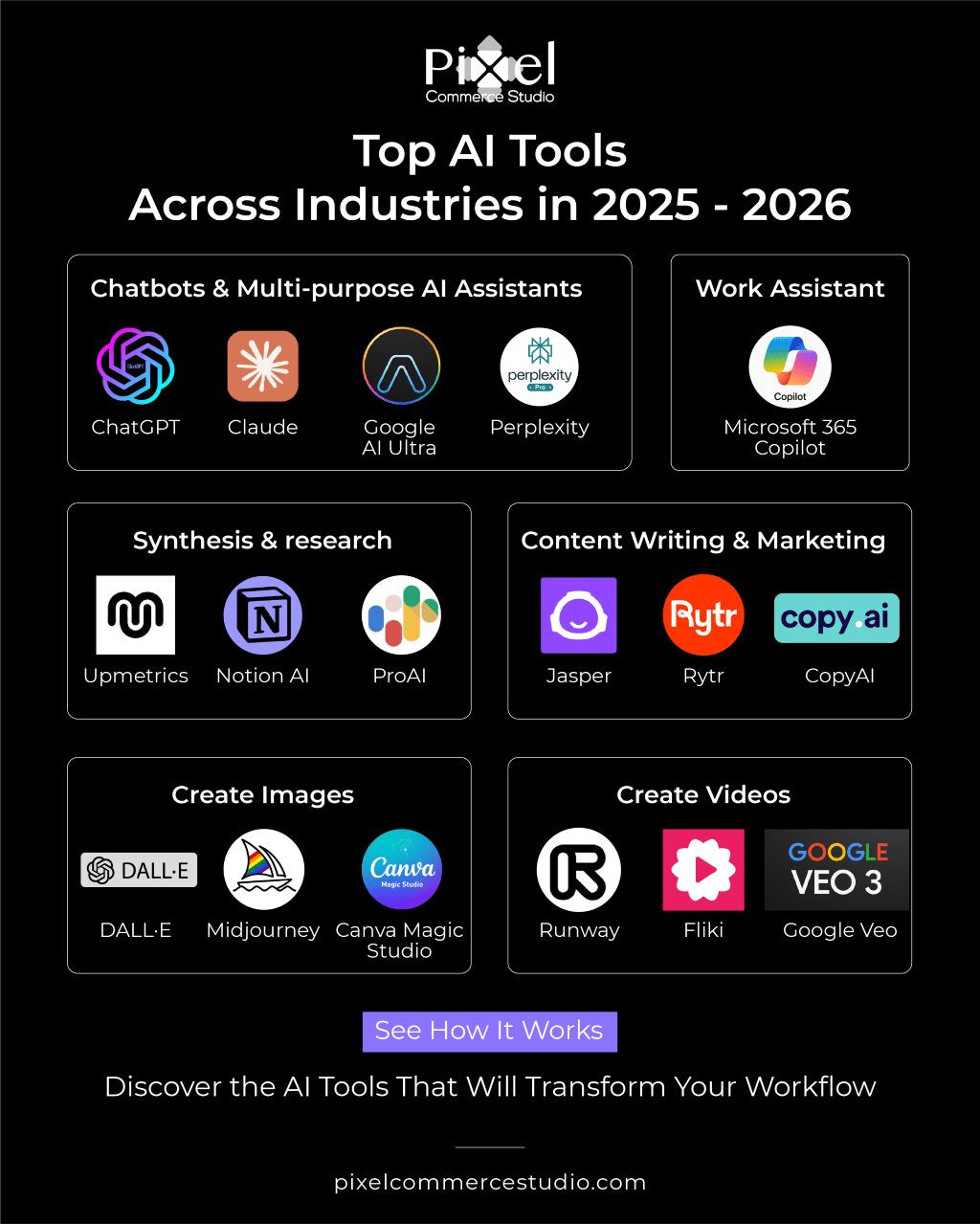
Even the best AI writing tools produce subpar content if you misuse them. Avoid these frequent pitfalls to keep quality high and your brand reputation intact.
Important Considerations: Ethics, Privacy, and the Human Element
Integrating AI writing into a professional setting goes beyond picking a tool. Ethical usage, data practices, and long-term skill development deserve careful thought.
Transparency is growing in importance. Many audiences appreciate knowing when content is AI-assisted. Disclosing usage, even subtly, can build trust. On the regulatory side, platforms like Google do not penalize AI-generated content outright but prioritize helpful, original material. Simply spinning AI words will hurt rankings if the content lacks depth or expertise.
Data privacy presents another critical layer. Free tiers often use your inputs to improve models; this could mean sensitive business data inadvertently leaks into training sets. For client work or proprietary strategies, opt for paid plans with data‑processing agreements that explicitly forbid model training on your data. Review the tool’s privacy documentation and, when necessary, rely on API-based solutions with enterprise‑grade controls.
Human oversight remains irreplaceable. The most effective workflow pairs AI efficiency with human creativity. Use AI to conquer blank pages, but maintain final editorial control. This approach not only improves quality but also sharpens your own writing skills as you refine and elevate machine outputs.
Frequently Asked Questions
What are the best AI writing tools for SEO content?
For SEO-focused content, Jasper (with its SEO mode and SurferSEO integration), Writesonic, and Frase are top choices. These tools analyze search engine results pages and help you naturally incorporate keywords, headings, and optimal word counts. ChatGPT can also be effective when you supply a detailed SEO brief and manual keyword list.
Can AI writing tools replace human writers?
AI cannot fully replace human writers. While it excels at drafting, rephrasing, and brainstorming, it lacks genuine creativity, lived experience, and emotional nuance. The best results come when humans use AI as an accelerator, providing strategy, authentic stories, and critical editing. For high-stakes or deeply personal content, the human element remains essential.
Are AI-generated texts detectable by search engines or detectors?
Yes, many AI content detectors claim to identify machine-written text, but their accuracy is inconsistent. Google cares more about content quality and helpfulness than how it was produced. Artificially spinning AI text to avoid detection often leads to poor readability and can harm rankings. Focus on creating valuable, well-edited content regardless of its origin.
How much do AI writing tools cost on average?
Costs range from free tiers offering limited words per month to enterprise plans exceeding $500 monthly. Basic individual plans usually fall between $9 and $49 per month. Team and business plans, which include collaboration features and advanced security, typically range from $75 to $200+ per month. Always compare word limits, feature sets, and data privacy before choosing.
Which AI writing tool is best for long-form content?
Jasper, Writesonic, and Claude are particularly strong for long-form content. Jasper’s document editor and recipe-based workflows guide you from outline to finished article. Claude’s large context window allows it to process and generate very long documents in one session. Sudowrite is the top pick for long-form fiction and creative writing. For purely flexible long-form drafting, ChatGPT Plus with the GPT-4o model works well when paired with a structured prompt.
Do AI writing tools offer free versions worth using?
Several tools provide genuine value in their free tiers. ChatGPT’s free version grants access to GPT-3.5, which is capable for simple tasks. Copy.ai offers 2,000 words per month, Writesonic gives 10,000 words monthly, and Rytr allows up to 10,000 characters per month free. These plans are excellent for testing workflows. However, advanced features like SEO integrations, brand voices, and higher word limits remain behind paywalls.
Conclusion
The landscape of AI-assisted writing has matured rapidly, producing a diverse set of solutions tailored for different needs. Choosing the best AI writing tools requires a clear understanding of your content goals, volume, and the level of human oversight you can maintain. General chatbots offer flexibility, while dedicated copywriting platforms provide structure and speed for marketing campaigns. Grammar-focused assistants polish the final layer, and creative tools unlock storytelling possibilities. As you evaluate options, prioritize free trials to test how each tool handles your specific prompts and topics. Always remember that AI is a powerful co-pilot—not a replacement for your expertise, voice, and judgment. By integrating the right tool thoughtfully, you can scale your content output while preserving the genuine connection that only a human touch can deliver.
Xem thêm:
- AI White Hat SEO: Mastering Ethical Search Optimization in the Age of Artificial Intelligence
- AI Content Marketing: Transform Your Strategy Without Losing the Human Touch
- AI SEO Agents: The Future of Automated Search Optimization
- AI Long Tail Keywords: The Definitive Guide to Capturing High-Intent Traffic with Intelligent Search
- AI SEO Contextual Search: The Complete Guide to Ranking in the New Search Era
Bài viết cùng chủ đề:

AI SEO SEO Automation with Make: The Complete Workflow Guide

AI SEO SEO Automation with Zapier: The Complete Workflow Guide

AI SEO SEO Automation with n8n: The Complete Workflow Guide
AI SEO SEO Automation with Gemini: The Complete Guide to Scaling Organic Growth

AI SEO SEO Automation with Claude: The Complete Guide to Scaling Content in 2025

AI SEO SEO Automation with ChatGPT: The Complete Playbook for 2025

AI SEO & SEO Automation for Affiliate Sites: The 2025 Playbook for Passive Income Growth
AI SEO & SEO Automation for Bloggers: The Complete Guide to Scaling Your Content

AI SEO & SEO Automation for Agencies: The Complete 2025 Playbook

AI SEO and SEO Automation for Ecommerce: The Complete Playbook for 2025

AI SEO & SEO Automation for WordPress: The Complete Playbook for 2025
AI SEO SEO Automation Strategy: The Complete Playbook for 2025

Mastering the AI SEO SEO Automation Process: A Complete Guide to Scaling Organic Growth
AI SEO SEO Automation System: The Complete Guide to Scaling Organic Growth in 2025
AI SEO SEO Automation Platform: The Complete Guide to Scaling Organic Growth in 2025
AI SEO SEO Automation Software: The Complete Guide to Scaling Organic Growth in 2025















