
No products in the cart.
AI Long Tail Keywords: The Definitive Guide to Capturing High-Intent Traffic with Intelligent Search
29
Jul
Jul
In the modern SEO landscape, AI long tail keywords have emerged as the engine driving sustainable organic growth. These specific, low-competition search phrases no longer rely solely on manual brainstorming or basic keyword tools. Artificial intelligence now deciphers user intent, predicts semantic relationships, and uncovers conversational queries that traditional research misses. The result is a strategic approach that targets ready-to-convert audiences while navigating algorithm updates with confidence. Understanding how to harness AI long tail keywords transforms a haphazard content plan into a precision instrument for search visibility.
Understanding AI Long Tail Keywords: What They Are and Why They Matter
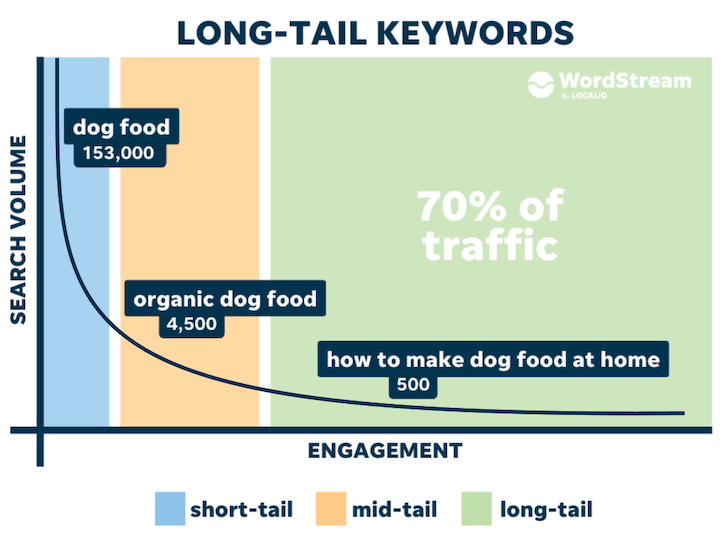
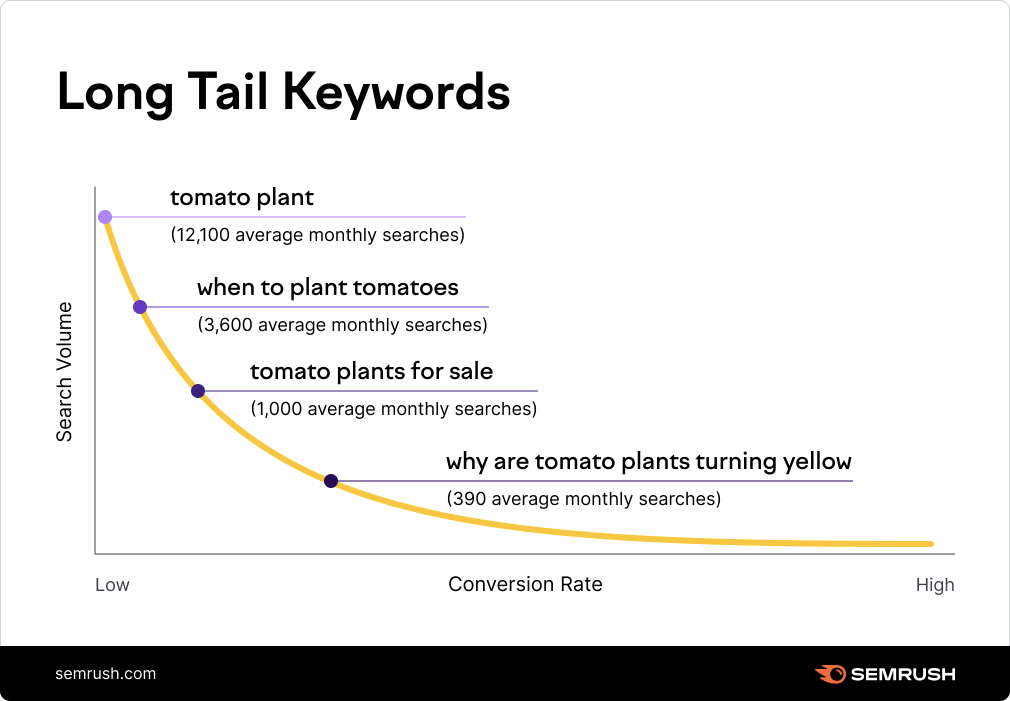
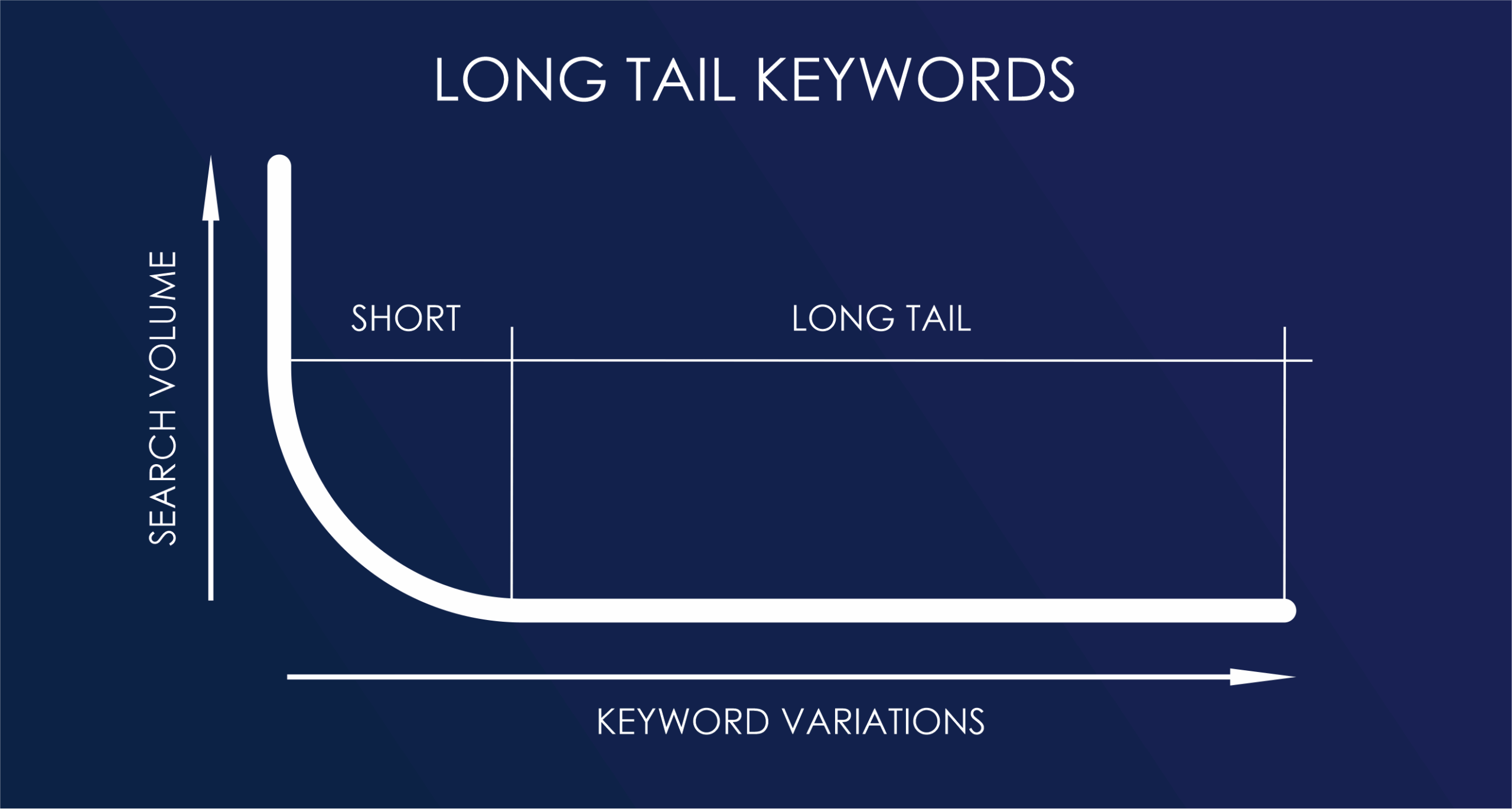
Long tail keywords are search queries that contain three or more words and exhibit highly specific intent. Unlike short, generic head terms such as “shoes”, a long tail variant might be “best waterproof trail running shoes for women with wide feet”. These phrases account for the vast majority of all web searches, collectively driving more traffic than the popular head terms combined. Their specificity indicates a searcher who knows exactly what they want, making conversion rates significantly higher.
AI long tail keywords take this foundation and supercharge it through machine learning and natural language processing. Artificial intelligence does not simply generate longer phrases; it models real human search behavior, identifies question-based queries, and clusters semantically related topics. The technology analyzes search engine results pages, user behavior data, and conversational patterns from voice search and chatbots to surface opportunities that manual researchers would likely overlook. This shift moves keyword research from a guessing game to a data-driven discipline.
The value of AI-generated long tail keywords lies in their ability to align with Google’s evolved ranking algorithms. With BERT, MUM, and other language models, search engines now grasp the meaning behind words, not just the words themselves. AI tools trained on similar architectures can reverse-engineer this understanding, helping you create content that answers actual questions. For businesses, this means capturing traffic at the moment of decision, often when competitors are still targeting only broad, high-competition terms.
The Evolution of Keyword Research: From Manual to AI-Powered Long Tail Discovery
Keyword research has traveled a long path from simple frequency counts to today’s intelligent systems. Initially, SEO professionals relied on the Google Keyword Planner and their own creativity to produce a list of seed keywords. Expansions came from adding modifiers like “best”, “cheap”, or location names, a time-consuming process that often missed the nuance of voice and conversational search.
The rise of big data and machine learning changed everything. Early AI applications clustered keywords based on SERP similarities, but modern systems go much deeper. They use transformer models to understand context, predict related questions from platforms like “People Also Ask”, and analyze thousands of competitor pages simultaneously. This allows the creation of comprehensive topic maps instead of flat lists. The focus shifted from individual keywords to intent-driven clusters where long tail queries naturally emerge as variations of a core subject.
Today’s AI keyword research platforms ingest real-time search data, social media conversations, and even customer support transcripts to surface emerging trends before they become mainstream. The process is iterative: an initial seed quickly branches into hundreds of hyper-specific long tail phrases, each weighted by search volume trend, competition level, and conversion potential. The manual approach of the past cannot match the scale, speed, or predictive accuracy of AI-powered discovery.
How AI Generates and Analyzes Long Tail Keywords
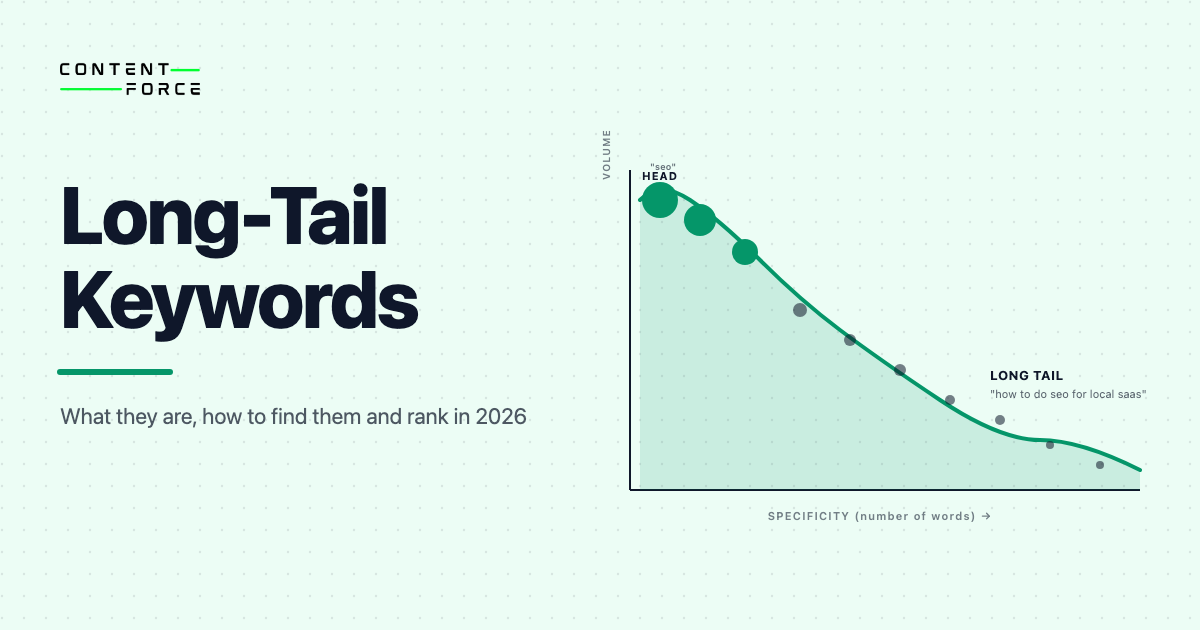
Artificial intelligence generates long tail keywords through a combination of natural language generation and predictive modeling. First, the system is fed a seed keyword or a domain, and it immediately begins constructing linguistic variants. Using pre-trained language models, it produces grammatically correct and contextually relevant phrases that mimic how real people search. These models have learned from billions of web pages, enabling them to suggest queries like “how to fix a leaking fridge without calling a repairman” that carry strong intent.
Beyond generation, AI rapidly analyzes the value of each candidate. It calculates keyword difficulty by machine-reading the top-ranking pages and identifying content gaps. Semantic analysis groups keywords into clusters where phrases like “organic dog food for allergies” and “grain-free natural puppy diet” belong to the same content piece. The technology also evaluates seasonality, user engagement metrics, and even the likely click-through rate based on SERP features present.
A key capability is intent classification. AI categorizes each long tail keyword into informational, commercial, transactional, or navigational buckets. For example, “what is a serverless architecture” is informational, while “serverless framework pricing comparison aws vs azure” signals commercial investigation. This classification allows you to map every long tail phrase to a specific stage of the customer journey and create content that directly satisfies the user’s underlying goal.
Top Benefits of Using AI for Long Tail Keyword Research
The primary advantage of AI-driven long tail keyword research is the sheer volume of quality ideas produced in minutes. What would take a human team weeks of brainstorming, competitor analysis, and spreadsheet manipulation, AI accomplishes in a single session. The output includes not only the phrases themselves but also associated metrics that prioritize which topics will deliver the quickest wins.
Accuracy in capturing natural language continues to improve. As voice search grows, queries become more conversational: “where can I find a gluten-free bakery open now near me” instead of “gluten-free bakery”. AI tools trained on dialogue patterns and voice assistant logs predict these full-sentence questions far better than static keyword tools. This ensures your content remains relevant across both text and voice interfaces, future-proofing your traffic sources.
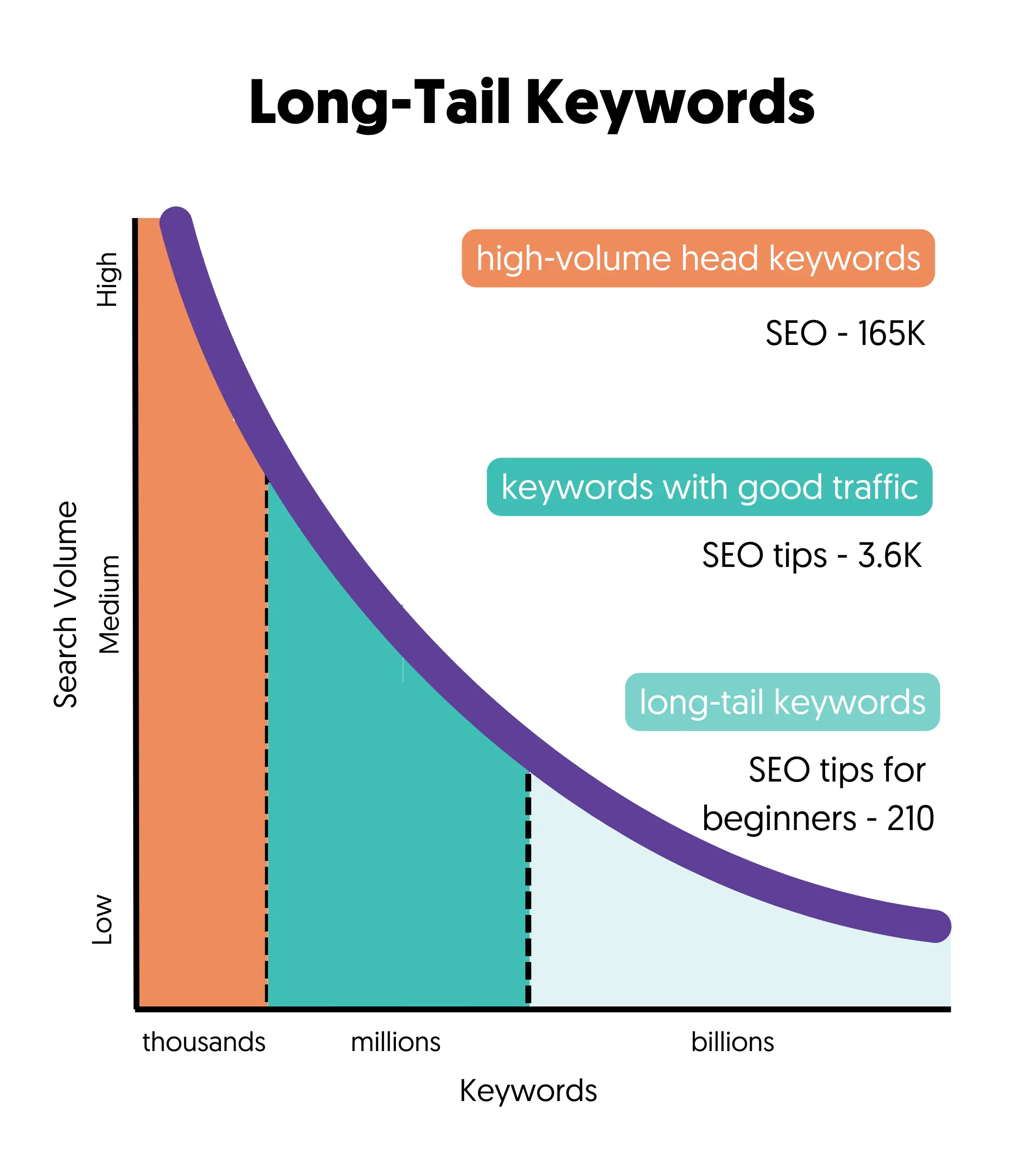
AI also uncovers hidden opportunities by finding keyword niches with a favorable ratio of search volume to difficulty. Many long tail phrases show a monthly search volume of 30-90 with near-zero competition. Individually these seem trivial, but collectively across hundreds of topics, they build a solid traffic foundation. Automated systems can identify and scale these opportunities, creating a content roadmap that steadily climbs the authority ladder without fighting for every high-difficulty term.
Limitations and Challenges of AI Long Tail Keywords
Despite impressive capabilities, AI keyword tools are not infallible. They rely on the data they are trained on, which can introduce biases toward certain regions, languages, or industries. A tool might suggest technically perfect long tail phrases that actual users would never type because they lack cultural context or local slang. Without human review, you risk optimizing for robot-friendly rather than human-friendly language.
Over-reliance on automation can also stifle creativity and brand voice. AI suggestions are derivative by nature, pulled from existing web content. This means your content strategy may become a mirror of what competitors are already doing, missing the chance to innovate with unique angles. The best results come from blending AI’s exhaustive discovery with the marketer’s own industry experience and understanding of their audience’s unspoken needs.
Cost and complexity present another barrier. The most powerful AI keyword research platforms carry subscription fees that may not be feasible for sole operators. Even with access, interpreting multi-dimensional semantic maps and prioritization scores requires a learning curve. Data privacy regulations also demand careful handling when using tools that process user search behaviors, especially in sensitive niches.
Comparing Traditional Keyword Research with AI-Driven Long Tail Strategies
| Aspect | Traditional Keyword Research | AI Long Tail Keyword Research |
|---|---|---|
| Discovery method | Manual brainstorming, seed expansion with modifiers, basic tool suggestions | Automated generation using NLP, SERP analysis, and predictive modeling |
| Scale | Limited to dozens or a few hundred phrases per project | Thousands of highly specific long tail variants in seconds |
| Intent understanding | Basic grouping by informational/commercial based on word presence | Deep intent classification using machine learning and user behavior modeling |
| Semantic clustering | Often manual grouping, prone to inconsistency | Automatic topic clustering based on shared ranking URLs and content similarity |
| Handling of voice/ conversational queries | Rarely captured; tools focus on short text queries | Strong capability to generate and analyze full-sentence, question-based queries |
| Competitor gap analysis | Manual comparison of keyword lists | AI cross-references thousands of pages to find content gaps and unaddressed questions |
| Time investment | Days to weeks for a comprehensive project | Minutes to hours, including analysis and prioritization |
| Predictive capabilities | Minimal; relies on historical search volume | Emerging trend detection and seasonality forecasting |
Step-by-Step Guide: How to Find AI Long Tail Keywords for Your Niche
1. Define your core topics and seed keywords. Start with the main categories that define your business. For a sustainable fashion store, seeds could be “ethical clothing”, “organic cotton dresses”, “vegan leather bags”. These will anchor the AI expansion. Use your own product lines, frequently asked customer questions, and the services you want to rank for as the foundation.
2. Input seeds into an AI keyword research tool. Open a dedicated platform (discussed in the next section). Enter your seeds, select your target region and language, and let the system generate suggestions. Most tools will instantly produce a list containing keyword strings, monthly search volumes, difficulty scores, and related questions. Allow the AI to work at full breadth — do not manually filter too early.
3. Apply smart filters and intent classification. Filter by keyword difficulty lower than your site’s current authority can handle, and focus on informational and commercial intent long tail phrases. For example, keep “how to wash organic cotton without shrinking” (informational) and “affordable fair trade clothing brands for work” (commercial). Exclude purely navigational terms that reference specific brands unless you are that brand.
4. Perform semantic clustering. Use the tool’s clustering feature or manually group phrases that share the same search intent. All variations asking about eco-friendly fabric properties might form one cluster. This step transforms a messy list into content pillars, each containing multiple long tail keywords you can address in a single comprehensive guide.
5. Validate with SERP analysis. For the top 10-20 clusters, manually check the search results. Do the ranking pages cover the topic in depth or are they thin? If the SERP shows forum threads and low-quality pages, the long tail opportunity is stronger. If it features authoritative domains with massive guides, you need a unique angle. AI can highlight gaps like “nobody has answered this specific question with a step-by-step video”.
6. Create a content calendar prioritizing quick wins and cornerstone assets. Schedule pieces that target extremely low difficulty long tail keywords first to start building authority. Then, tackle broader pillar content that covers an entire cluster. Assign the long tail keywords as H2 and H3 subheadings within the article, ensuring natural integration that answers the exact query and its variations.
Top AI Tools for Uncovering Hidden Long Tail Keywords
Several platforms have emerged as leaders in AI-driven keyword research. Semrush offers a comprehensive suite with its Keyword Magic Tool that uses AI to generate millions of phrase matches, questions, and related terms. Its clustering and intent filters efficiently identify long tail goldmines. Ahrefs leverages a vast database and AI-powered suggestions via its Keywords Explorer, matching terms based on parent topic identification, a form of semantic grouping. Both tools provide competitive gap analysis that reveals which long tail phrases competitors are ranking for but you are missing.
Newer AI-native tools like Copy.ai and Jasper integrate keyword generation directly into content creation workflows. While not traditional SEO platforms, they can expand a topic into dozens of long tail variations using language models trained on search patterns. Clearscope and MarketMuse use AI to analyze top-ranking content and then recommend the long tail keywords that must be included to achieve comprehensiveness. These tools focus on content optimization rather than discovery, but their recommendations reveal gaps that competitors have not fully addressed.
For a free option, Google’s own “People Also Ask” and “Related Searches” can be mined manually, but AI Chrome extensions like Keywords Everywhere overlay volume and difficulty data, making the process more efficient. The best approach often combines an enterprise SEO tool with an AI content optimizer, ensuring your long tail strategy spans from discovery to publication and refinement.
Common Mistakes When Using AI for Long Tail Keywords and How to Avoid Them
- Selecting keywords solely by low difficulty. Some long tail phrases have low competition because they carry no real traffic or commercial intent. Always validate search volume trends and the intent behind the query. An AI tool might suggest “history of brown shoelaces” with a difficulty of 1, but if nobody searches for it or it never converts, it wastes resources. Overlay intent classification and conversion potential before committing.
- Publishing a separate page for every slight variant. AI may generate “best vegan protein powder for athletes” and “top plant-based protein supplements for runners”. Creating distinct pages for each can lead to keyword cannibalization and thin content. Cluster these into one definitive guide, using the variants as subheadings. The AI’s job is to find all angles for a single, powerhouse resource.
- Ignoring content quality in favor of keyword density. Forcing every generated long tail phrase verbatim into text reads as spam. Search engines understand synonyms and related concepts. Use the AI’s list as a topical checklist, ensuring you cover each subtopic naturally, not as a mandatory word-for-word insertion.
- Neglecting to update keyword lists. AI long tail keywords are not a one-time harvest. Search behavior evolves with seasonality, news cycles, and new slang. Schedule quarterly re-scans to capture fresh queries, especially for industries like technology, fashion, and finance that change rapidly.
- Allowing the tool to dictate strategy without human editorial oversight. The AI does not know your brand’s unique value proposition or its ethical boundaries. It might suggest long tails around “cheapest” when your brand is premium, or around a sensitive topic that misaligns with your values. Marketing judgment always remains the final filter.
Important Notes on Ethical and Effective Use of AI Keyword Research
Responsible use of AI long tail keywords requires respecting user privacy and data regulations. When using tools that collect search behavior data, confirm that they aggregate and anonymize information in compliance with GDPR, CCPA, or other applicable laws. Avoid any service that scrapes individual user data without consent. Ethical AI use also means not generating deceptive content that targets long tail queries with misleading information simply to capture clicks.
Transparency with your team about how keywords are sourced builds trust and improves content. Marketers should clearly label AI-generated suggestions so writers understand the origin and can adapt the language to be natural and human-centric. The most effective content blends AI’s exhaustive research with a writer’s ability to add lived experience, expert quotes, and original insights — elements no algorithm can replicate.
Continual learning keeps your strategy sharp. Even the best AI models lag behind real-time cultural shifts. Regularly monitor search console data to see which long tail keywords are actually driving impressions and clicks. Sometimes the queries users type are even more specific than your AI tool suggested, revealing new avenues to explore. Use this feedback loop to refine your seed terms and retrain your focus.
Frequently Asked Questions About AI Long Tail Keywords
What exactly are AI long tail keywords?
AI long tail keywords are specific, multi-word search phrases identified or generated using artificial intelligence algorithms. Unlike manual research, AI processes vast amounts of search data, user behavior patterns, and natural language models to uncover queries that are highly targeted, low in competition, and closely aligned with user intent. These keywords typically have a search volume that is individually modest but collectively powerful for driving qualified traffic.
How do AI tools find long tail keywords that humans miss?
AI tools analyze semantic relationships between words much like search engines do. They crawl and compare millions of pages, looking at which queries lead users to which results, how questions are phrased in “People Also Ask” boxes, and even what patterns emerge in voice assistants. This allows them to predict variations and deeply conversational queries that a human marketer would likely never brainstorm, such as long, question-based phrases combining niche details.
Are AI long tail keywords still relevant with Google’s focus on topics over keywords?
Absolutely. While Google has moved towards understanding topic clusters and context, long tail keywords remain the linguistic representation of specific search intents within those topics. AI helps you identify the exact questions and subtopics that must be covered to achieve topical authority. Instead of viewing each long tail as a separate keyword, modern SEO treats a cluster of related long tails as a content brief, ensuring your article answers every nuance of a user’s query.
Which industries benefit most from AI long tail keyword strategies?
Every industry with an online presence benefits, but the impact is greatest in sectors with complex buying decisions, high research volume, or niche specializations. E-commerce sees large gains through product-specific queries like “blue non-toxic nursery paint for wood trim”. B2B companies win with long tail questions around implementation and pricing. Healthcare, legal, and finance attract cautious searchers who formulate very precise queries. Local businesses also gain from hyper-localized long tail phrases containing neighborhood names and service specifics.
Can small businesses compete using AI long tail keywords?
Small businesses are ideally positioned to win with this strategy. Since AI long tail keywords generally have low keyword difficulty, a well-optimized, authoritative page from a smaller site can often rank above huge brands that target only head terms. By creating in-depth content around very specific problems their audience faces, small businesses can accumulate traffic across hundreds of pages, each bringing a handful of highly convertible visitors per month.
Do AI-generated long tail keywords require special content formats?
Not necessarily, but the format should match the intent. A long tail starting with “how to” demands a step-by-step guide or tutorial; a question-based phrase fits an FAQ section or a dedicated answer post. AI clusters often recommend that you group related queries into an ultimate guide, a comprehensive page that uses the long tail phrases as H2 and H3 subheadings. The key is using the AI’s output to create the most complete resource on a topic, not merely a page crammed with exact-match phrases.
What is the biggest mistake when filtering AI long tail keywords?
The biggest mistake is discarding extremely low-volume phrases that seem insignificant. Many AI tools will suggest keywords with a search volume of 10-40 per month. Marketers often ignore these, but when combined across a topic cluster, they add up to meaningful traffic with almost guaranteed ranking success. The better approach is to bundle dozens of these micro-volume long tails into a single, authoritative piece that captures the compound traffic while building site relevance for broader terms.
Conclusion
AI long tail keywords represent more than a tactical shortcut; they reshape how businesses connect with audiences at the exact moment of need. By leveraging machine intelligence to decode search behavior, content strategies gain precision that manual research never achieved. The result is a portfolio of content assets that steadily attracts high-intent visitors, converts them, and builds lasting organic visibility. The technology does not replace the strategist — it empowers you to make smarter, faster, and more confident decisions. Adopt an AI-augmented approach, remain vigilant about human editorial standards, and watch as your niche authority grows one perfectly targeted long tail query at a time.
Xem thêm:
- AI SEO Contextual Keywords: The Complete Guide to Smarter Search Rankings
- AI SEO Authority Building: The Complete Playbook for Dominating Search in 2025
- AI SEO Broken Link Opportunities: The Complete Guide to Automated Link Recovery
- AI Introduction Generator: Write Perfect Openings Effortlessly With Smart Technology
- AI SEO Trends 2028: The Complete Blueprint for Search Dominance
Bài viết cùng chủ đề:

AI SEO SEO Automation with Make: The Complete Workflow Guide

AI SEO SEO Automation with Zapier: The Complete Workflow Guide

AI SEO SEO Automation with n8n: The Complete Workflow Guide
AI SEO SEO Automation with Gemini: The Complete Guide to Scaling Organic Growth

AI SEO SEO Automation with Claude: The Complete Guide to Scaling Content in 2025

AI SEO SEO Automation with ChatGPT: The Complete Playbook for 2025

AI SEO & SEO Automation for Affiliate Sites: The 2025 Playbook for Passive Income Growth
AI SEO & SEO Automation for Bloggers: The Complete Guide to Scaling Your Content

AI SEO & SEO Automation for Agencies: The Complete 2025 Playbook

AI SEO and SEO Automation for Ecommerce: The Complete Playbook for 2025

AI SEO & SEO Automation for WordPress: The Complete Playbook for 2025
AI SEO SEO Automation Strategy: The Complete Playbook for 2025

Mastering the AI SEO SEO Automation Process: A Complete Guide to Scaling Organic Growth
AI SEO SEO Automation System: The Complete Guide to Scaling Organic Growth in 2025
AI SEO SEO Automation Platform: The Complete Guide to Scaling Organic Growth in 2025
AI SEO SEO Automation Software: The Complete Guide to Scaling Organic Growth in 2025















