
No products in the cart.
How to Rank in AI Overviews: The Complete Guide to Appearing in Google’s Generative Search Results
29
Jul
Jul
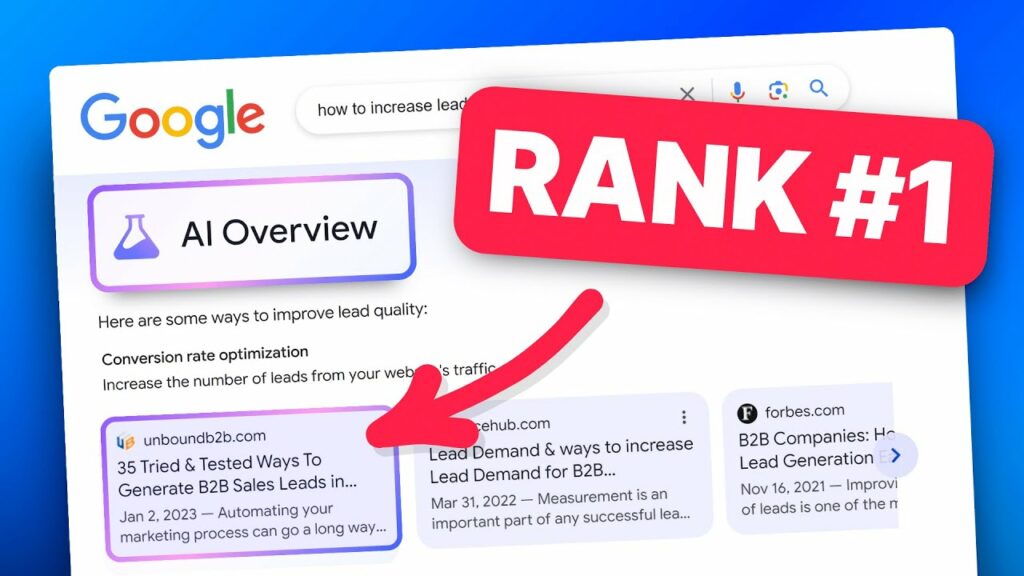
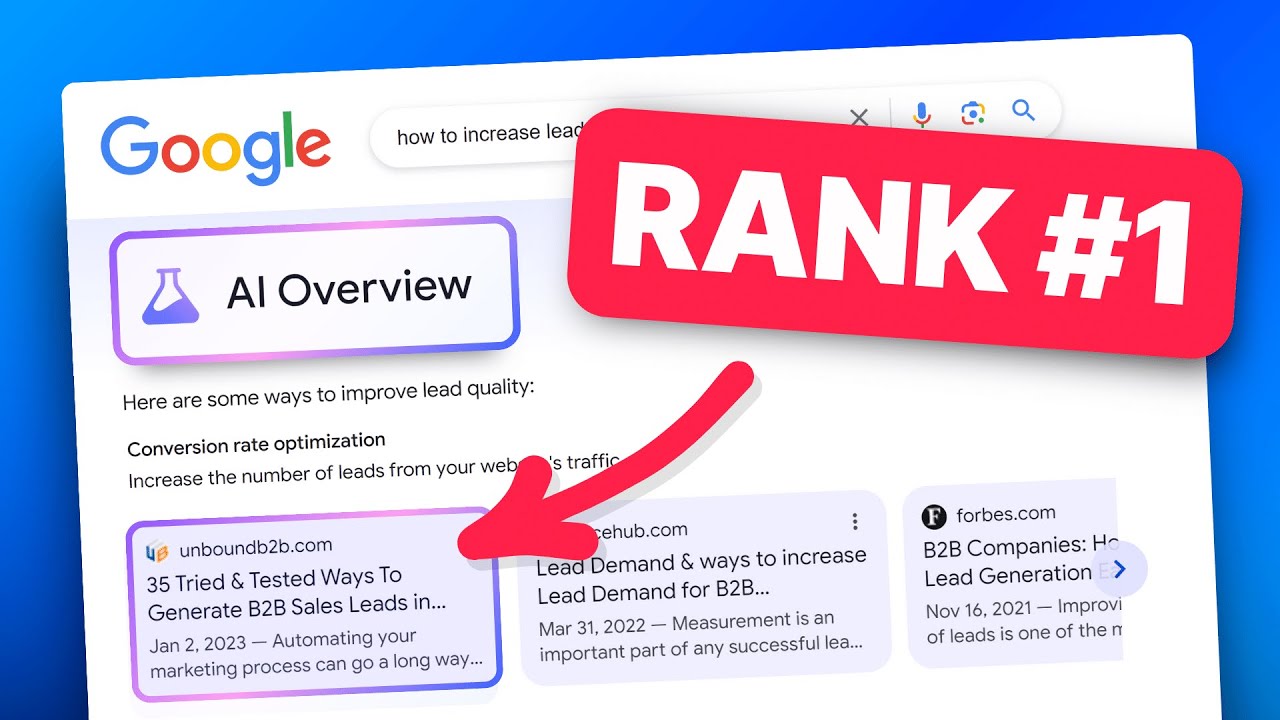
Securing a spot in Google’s AI Overviews has become the new frontier of search engine optimization. Unlike traditional blue links, these AI-generated snapshots sit at the very top of the search results, synthesizing information from multiple sources and presenting a concise answer. Learning how to rank in AI Overviews is no longer optional—it is the key to maintaining organic visibility as generative search reshapes the digital landscape. This guide breaks down exactly what these overviews look for, how they source content, and the concrete steps you can take to become a cited source within them.
What Are AI Overviews and Why Do They Matter?
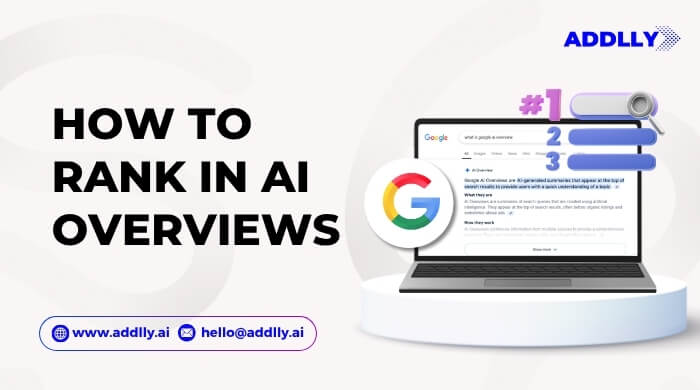
AI Overviews, formerly part of Google’s Search Generative Experience (SGE), are AI-powered summaries that appear above the traditional search results for certain queries. They combine information from across the web, generating a paragraph-style answer, often accompanied by links to supporting pages, images, and follow-up questions. These overviews are rolled into the core Google Search experience and are visible to users even when they haven’t opted into any experimental lab.
The significance for site owners is massive. An AI Overview can occupy the most valuable screen real estate, potentially reducing click-through rates for the organic positions below it. However, pages that are cited as sources within the overview can see a surge in traffic, as users click the linked citations to verify information or dive deeper. Understanding the mechanics behind these generative summaries is the first step toward making your content the go-to reference for Google’s AI.
How Google’s AI Overviews Select and Source Content
AI Overviews don’t function like a traditional search ranking algorithm. Instead, they leverage a large language model (LLM) that has been fine-tuned to pull from the web’s corpus of high-quality information. The process involves two key phases: retrieval and generation. During retrieval, Google’s standard core ranking systems identify a set of authoritative, relevant pages. The generative model then synthesizes an answer, prioritizing content that exhibits clarity, factual consistency, and direct alignment with the user’s intent.
Importantly, the sources cited in an AI Overview are often the same pages that would rank highly in the top organic results. This means foundational search engine optimization—expertise, trustworthiness, and technical excellence—remains the bedrock. However, the LLM also evaluates content at a finer grain, favoring pages that state answers succinctly, use unambiguous language, and cover subtopics comprehensively enough to satisfy the model’s need for confidence.
Key Ranking Factors for AI Overviews
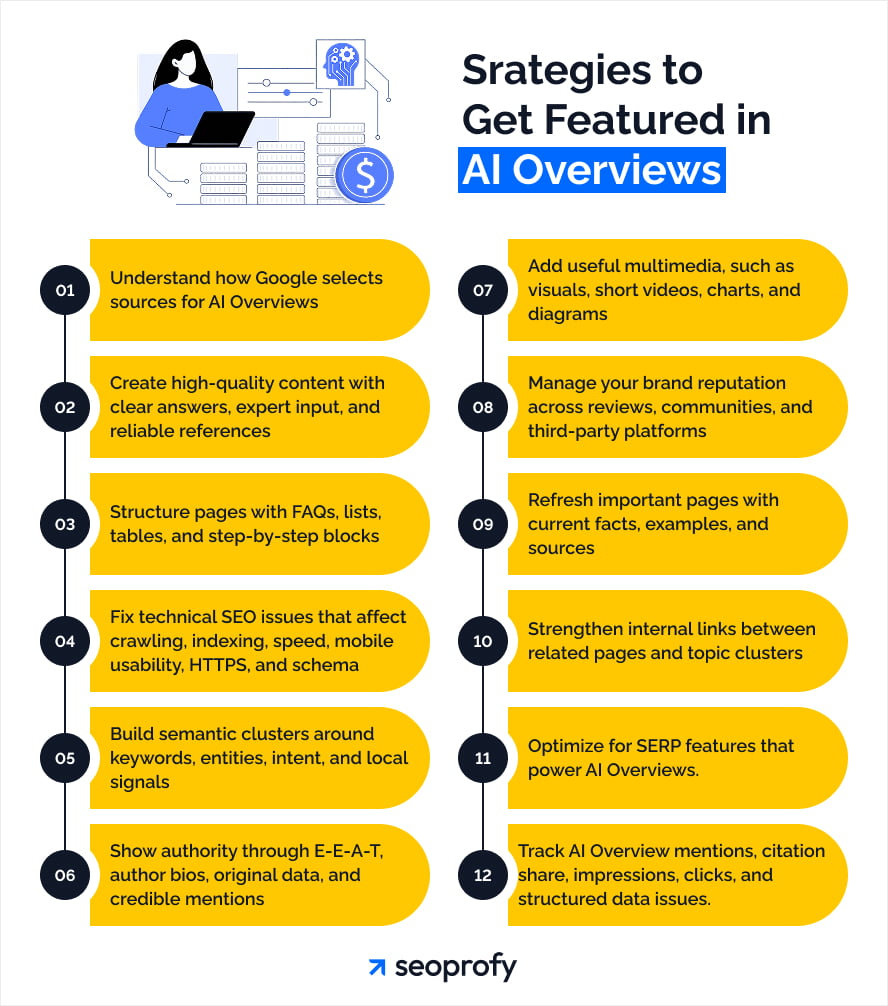
While Google hasn’t released an official checklist for how to rank in AI Overviews, extensive testing and analysis reveal several consistent patterns. The following factors heavily influence whether a page gets cited within these generative results.
Unassailable Content Quality and E-E-A-T Signals
Experience, Expertise, Authoritativeness, and Trustworthiness (E-E-A-T) are non-negotiable. Google’s AI models are trained to prefer sources that demonstrate firsthand experience, recognized credentials, and a strong reputation. Content backed by author bios linking to verified professional profiles, original research, and citations from trusted third-party sites consistently outperforms generic, uncredited material.
Perfect Semantic Alignment with the Query
AI Overviews excel at understanding nuanced search intent. Pages that thoroughly answer the “why,” “how,” and “what” behind a query—without forcing keyword density—are parsed more effectively by the generative model. Using natural language, covering related subtopics, and structuring content with clear headings that mirror common user questions helps the LLM map your content to the query’s latent intent.
Structured Data and Entity Clarity
Structured data markup, especially schema types like Article, FAQ, HowTo, and Product, gives the AI explicit clues about the meaning of your content. When entities (people, places, organizations, concepts) are properly defined and linked to recognized knowledge bases such as Wikipedia or Wikidata, the model can anchor its synthesis in an authoritative framework, increasing the likelihood of citation.
Concise, Fact-Dense Snippet-Worthy Passages
The LLM often pulls short, self-contained sentences or paragraphs to build its overview. Pages that feature a “definition-style” opening paragraph, a clear answer sentence followed by supporting detail, and scannable bullet points for key facts make it effortless for the model to extract and repurpose information. A page cluttered with fluff or buried in complex prose rarely becomes the primary source.
Link Graph Authority and Co-Citation Relevance
Traditional backlink authority still matters, but the emphasis shifts toward topic-specific authority. A site that is heavily referenced by other authoritative sources within the same niche passes a strong signal of credibility to the AI. Co-citation—being mentioned alongside already trusted entities—reinforces that your page belongs in the network of resources the model should consult for that subject area.
A Step-by-Step Guide to Ranking in AI Overviews
Applying these principles requires a systematic approach. The following steps translate research into actionable tactics that directly improve your chances of appearing as a cited source.
Step 1: Perform an AI Overview Gap Analysis
Start by identifying the queries that currently trigger an AI Overview in your niche. Use a manual inspection through an incognito window or specialized rank tracking tools that detect AI Overview presence. For each query, note the sources being cited. Analyze their content structure, word count, included entities, and the specific passage used. This reveals the exact format and depth Google’s AI currently favors. Document where your existing pages fall short—whether in comprehensiveness, schema markup, or authority—and prioritize filling those gaps.
Step 2: Rewrite Content for Generative Readability
Revamp your top-performing pages to serve both human readers and language models. Lead each section with a direct answer before providing context. For example, if the target query is “how does solar panel efficiency drop in shade,” your first sentence should be “Solar panel efficiency can drop by 40–60% even in light partial shading due to the way cells are wired in series.” Follow up with an explanation of bypass diodes and real-world scenarios. Use em tags for critical definitions and strong tags for takeaway points, as these micro-formatting signals help the model identify key assertions.
Step 3: Implement Comprehensive Structured Data
Go beyond basic meta tags. For informational articles, deploy Article schema with author properties and FAQ schema for question-answer pairs that appear directly in the content. If the topic revolves around a process, use HowTo schema to break down each step. For entity-rich pages, connect your content to Google’s Knowledge Graph using sameAs properties pointing to authoritative hubs like a verified social profile or a Wikipedia entry. Validate every structured data element with Google’s Rich Results Test to ensure error-free interpretation.
Step 4: Build Topical Authority Through Content Networks
Instead of isolated blog posts, construct interconnected content clusters that fully cover a subject domain. A pillar page covering “complete guide to electric vehicle charging” should link out to, and be linked from, cluster pages on home charger installation, public charging etiquette, battery degradation, and cost comparisons. This internal linking architecture signals to the AI that your site holds a corpus of deep expertise, making the model more likely to pull from your content when generating overviews on any related sub-topic.
Step 5: Earn Contextual Backlinks from Topic-Authoritative Sources
Proactively secure mentions on websites that are already cited within AI Overviews for your target queries. Contribute expert quotes to journalists writing for those domains, offer original data for their research roundups, or publish guest analyses that naturally earn a citation back to your core resource. When the AI model sees your page linked from its already trusted sources, it reinforces your page’s reliability and significantly boosts inclusion probability.
Step 6: Monitor and Refine Using SERP Fluctuation Data
AI Overviews are volatile. A cited position today can disappear tomorrow as the model refines its answers. Maintain a tracking sheet of your target queries, noting whether your URL appears, which passage is used, and any competitor displacement. When you drop out, compare the newly cited page against yours. Often, the winning page added a fresh statistic, incorporated a more recent study, or provided a clearer explanatory diagram—prompting you to update accordingly.
Common Content Optimization Tactics That Actually Move the Needle
| Tactic | Why It Works for AI Overviews | Implementation Tip |
|---|---|---|
| Use inverted pyramid writing | Puts the most crucial answer first, matching the model’s extraction pattern | Place a 2–3 sentence summary paragraph immediately after the H1, containing the core factual answer |
| Incorporate direct quotes from recognized experts | Provides verifiable, attributable claims that increase confidence | Embed a quote box with the expert’s name, credentials, and a link to their professional profile |
| Reference primary sources and link out | Shows rigorous fact-checking; the AI can verify claims against original studies | Always link to the actual study, government dataset, or official documentation, not a secondary blog |
| Add a “Key Takeaways” list at the top | Extracts principal points instantly; offers a clean bullet list the model can repurpose | Use simple, standalone sentences. Each bullet should be a complete thought that could stand alone in a summary |
| Leverage comparative tables | Organizes data into a structured format the LLM can parse easily when comparing topics | Create tables with clear headers, concise rows, and unmerged cells for straightforward parsing |
Common Mistakes That Prevent Ranking in AI Overviews and How to Avoid Them
Even well-intentioned optimization can backfire. Steering clear of these pitfalls is just as important as executing the right tactics.
Mistaking Keyword Stuffing for Relevance
Loading a page with exact-match phrases harms readability and triggers unhelpful content classifiers. AI models prioritize natural language and coherent explanations. Write for humans first, and the model will follow. Use related terms and synonyms that reflect genuine topic depth instead of repeating “how to rank in AI overviews” unnaturally.
Neglecting Entity Consistency Across the Site
If your author name is “Dr. Jane Smith” on one page and “J. Smith, PhD” on another, the AI may treat them as separate entities, diluting authority. Standardize naming conventions, ensure all author pages link to the same consolidated bio with verified credentials, and use sameAs schema to connect to a single Google Knowledge Panel or LinkedIn profile.
Hiding Crucial Information in Non-Text Formats
Crucial data locked inside complex images, unoptimized PDFs, or interactive JavaScript elements remains invisible to the generative model. While AI Overviews can sometimes parse image alt text, they rely primarily on HTML text. Convert important charts into HTML-based tables with descriptive captions, transcribe key video segments, and place critical statistics directly in the body copy.
Ignoring Page Experience and Core Web Vitals
Although not a direct ranking factor for citation, poor page experience can prevent a page from being retrieved in the initial pool of candidates. Slow loading, intrusive interstitials, and mobile-unfriendly layouts lower your organic rankings, which indirectly excludes you from the generative model’s retrieval set. Maintain green Core Web Vitals and a clean, accessible mobile design.
Creating Thin, Overly Simulated FAQ Sections
Some sites try to game AI Overviews by stuffing pages with dozens of unrelated questions in hopes of capturing a citation. The model detects this low-value pattern. Genuine FAQ sections that mirror the natural follow-up questions users ask— and that deliver substantial, unique answers—are far more effective. Each question should reflect real search data and receive a dedicated, thoughtful response.
Comparing Traditional SEO vs. AI Overview Optimization
| Aspect | Traditional SEO Focus | AI Overview Optimization Focus |
|---|---|---|
| Goal | Rank in top 10 blue links | Be the primary cited source in AI-generated summary |
| Content Structure | Intro, body, conclusion; keyword prominence | Inverted pyramid with immediate answer, entity-rich passages |
| Authority Signals | Domain-level backlinks, general DA/DR metrics | Topic-level co-citation, author E-E-A-T, linked Knowledge Graph entities |
| Formatting Importance | Headings for hierarchy, alt text for images | Highly concise bullet lists, FAQ schema, definition sentences, HTML tables |
| Success Metric | Click-through rate, organic traffic | Citation frequency, passage extraction, zero-click brand lift |
Important Considerations When Targeting AI Overviews
This landscape is fluid. Google continues to adjust how AI Overviews are displayed, including the introduction of ad formats and a gradual expansion to more complex query types. The models underlying these overviews are updated frequently, meaning a tactic that works brilliantly this quarter could be less effective the next. Staying informed requires tapping into official Google announcements, participating in SEO testing communities, and continuously running your own experiments on a subset of pages before rolling out changes site-wide.
Additionally, a citation in an AI Overview doesn’t guarantee a click. Some overviews answer the query so completely that the user never feels the need to visit a source. For that reason, it’s essential to structure your cited content in a way that invites deeper exploration—teasing a unique angle, proprietary data, or a practical tool that only exists on your page. The AI may provide the immediate answer, but your site can capture the high-intent visitor who wants to implement and verify that information.
Frequently Asked Questions About Ranking in AI Overviews
How long does it take to rank in AI Overviews?
T Newly published or updated pages can be picked up within days if they fill a clear content gap and are hosted on an already trusted domain. For newer sites, building the necessary authority often takes several months of consistent high-quality publishing and earning relevant backlinks. Monitoring after each core algorithm update or confirmed model refresh often reveals shifts in which pages are cited.
Can small websites rank in AI Overviews?
Absolutely. While large, established publishers have an advantage, Google’s AI rewards precise, experience-driven answers. A niche blog written by a practicing professional with firsthand case studies and unique data can outrank a generalist publication. The key is to demonstrate undeniable subject-matter depth and authentic expertise that a mass-market site cannot replicate.
Do I need structured data to appear in AI Overviews?
Structured data isn’t a required ticket, but it is a powerful enabler. Pages without schema can still be cited if their textual content is exceptionally strong. However, implementing FAQ, HowTo, and Article schema correctly gives your content a higher probability of being parsed accurately and considered as a primary source, especially for fact-oriented queries.
Are links in AI Overviews nofollow or dofollow?
The citation links within AI Overviews appear to be standard anchor elements without a nofollow attribute applied. This means they pass link equity in the traditional sense. Being cited not only drives referral traffic but also contributes to your page’s authority profile through organic link acquisition, making it doubly beneficial.
How can I check if my page appears in an AI Overview?
Manual checking in an incognito browser window is the most straightforward approach—search for your target query and note whether your URL appears among the cited links. For scale, several enterprise SEO platforms now include “SGE visibility” or “AI Overview presence” tracking. Setting up automated daily checks for critical keywords helps you react quickly to changes.
Does blocking Googlebot from AI crawlers help or hurt?
Harming your visibility is the only likely outcome. Using robots.txt to disallow Google-Extended or any AI-related crawler prevents your content from being included in the training data and may remove you from the pool of sources the generative model can access. To maintain eligibility for AI Overview citations, you must allow these crawlers. The control mechanisms are evolving, but exclusion generally means forfeiting the opportunity entirely.
Conclusion
Mastering how to rank in AI Overviews demands a fusion of classic search fundamentals and a new attentiveness to how language models consume and synthesize content. The sites that will thrive are those that couple undeniable topical authority with content engineered for extraction—clear, direct, fact-rich, and meticulously structured. Rather than chasing a moving target with shortcuts, build a brand that Google’s AI recognizes as the definitive source for your niche. As generative search becomes the standard interface, that approach transforms your pages from mere listings into the very answers the world sees first.
Xem thêm:
- AI SEO Content Research: The Complete Guide to Data-Driven Content That Ranks
- AI SEO Website Architecture: The Complete Blueprint for 2025
- AI SEO Content Freshness: The Complete Guide to Keeping Your Rankings Alive in 2025
- AI SEO Webinars: How Virtual Training Is Reshaping Modern Search Strategy
- AI Outreach: The Ultimate Guide to Automating and Personalizing Your Sales Engagement
Bài viết cùng chủ đề:

AI SEO SEO Automation with Make: The Complete Workflow Guide

AI SEO SEO Automation with Zapier: The Complete Workflow Guide

AI SEO SEO Automation with n8n: The Complete Workflow Guide
AI SEO SEO Automation with Gemini: The Complete Guide to Scaling Organic Growth

AI SEO SEO Automation with Claude: The Complete Guide to Scaling Content in 2025

AI SEO SEO Automation with ChatGPT: The Complete Playbook for 2025

AI SEO & SEO Automation for Affiliate Sites: The 2025 Playbook for Passive Income Growth
AI SEO & SEO Automation for Bloggers: The Complete Guide to Scaling Your Content

AI SEO & SEO Automation for Agencies: The Complete 2025 Playbook

AI SEO and SEO Automation for Ecommerce: The Complete Playbook for 2025

AI SEO & SEO Automation for WordPress: The Complete Playbook for 2025
AI SEO SEO Automation Strategy: The Complete Playbook for 2025

Mastering the AI SEO SEO Automation Process: A Complete Guide to Scaling Organic Growth
AI SEO SEO Automation System: The Complete Guide to Scaling Organic Growth in 2025
AI SEO SEO Automation Platform: The Complete Guide to Scaling Organic Growth in 2025
AI SEO SEO Automation Software: The Complete Guide to Scaling Organic Growth in 2025















